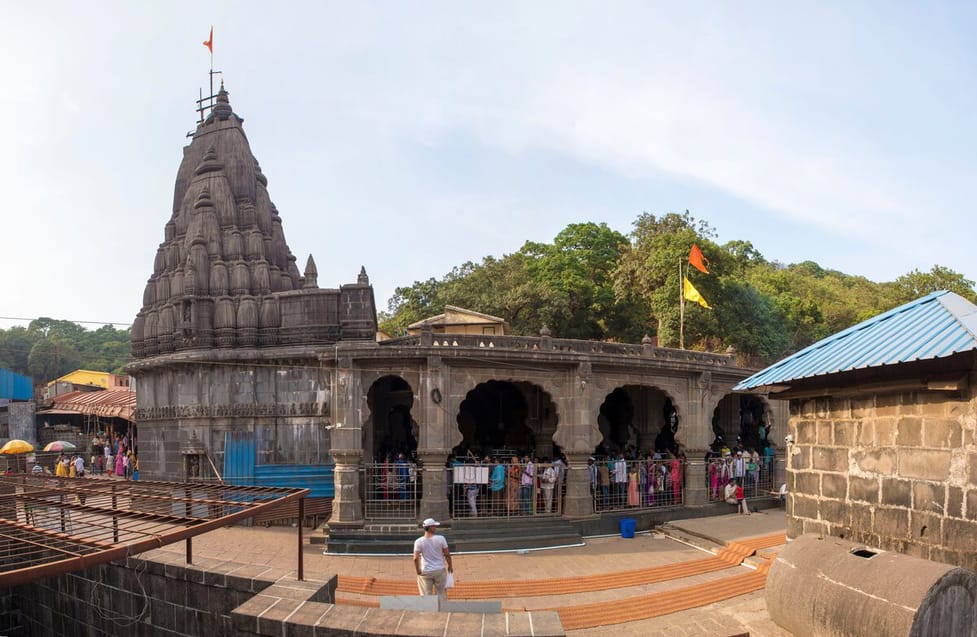
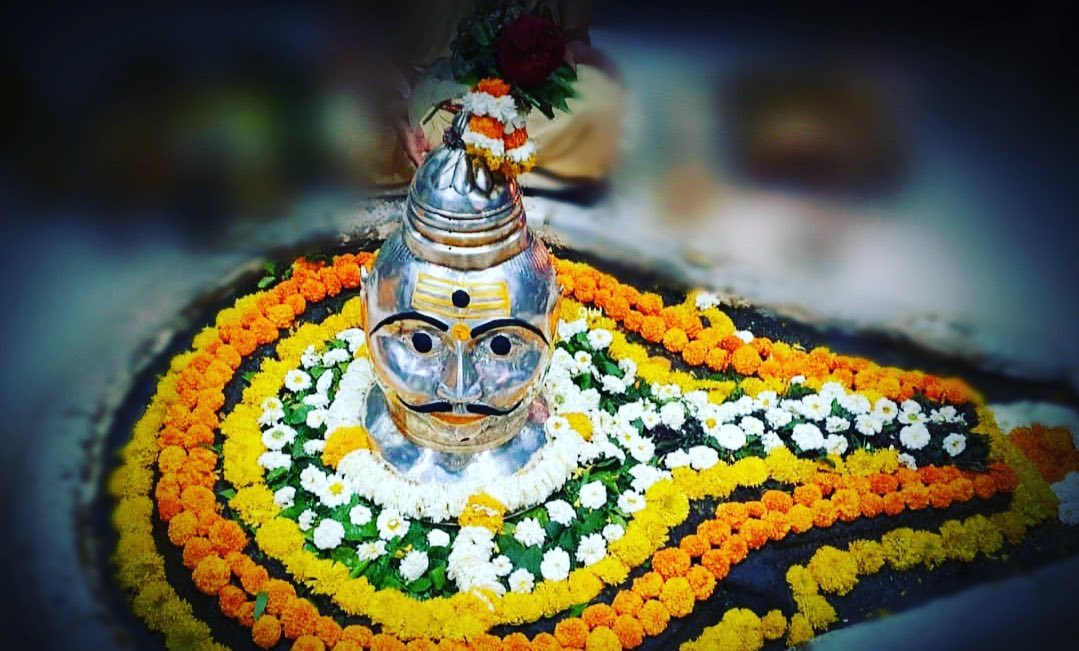
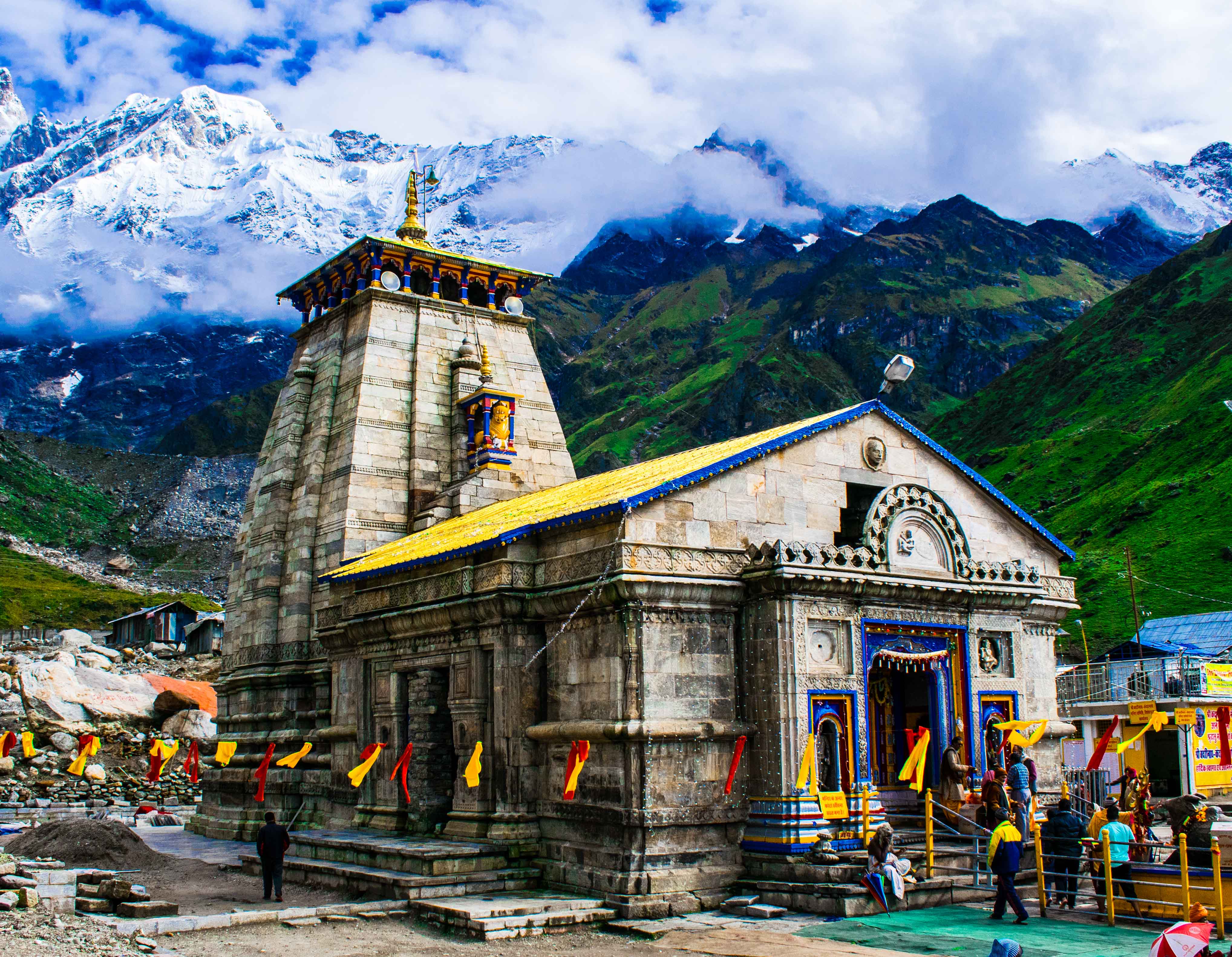
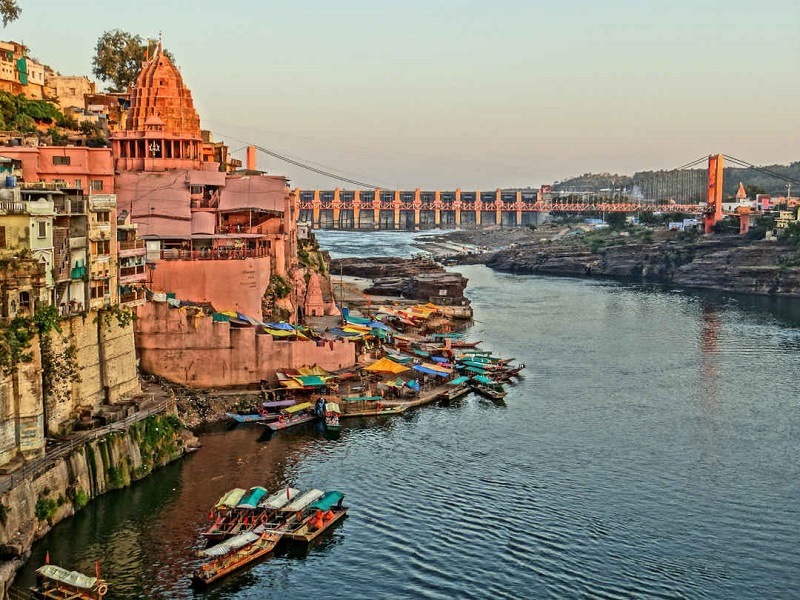
Sacred Stones, Spaces, and Stories: Jyotirlingas Part 2 – Somnath Temple

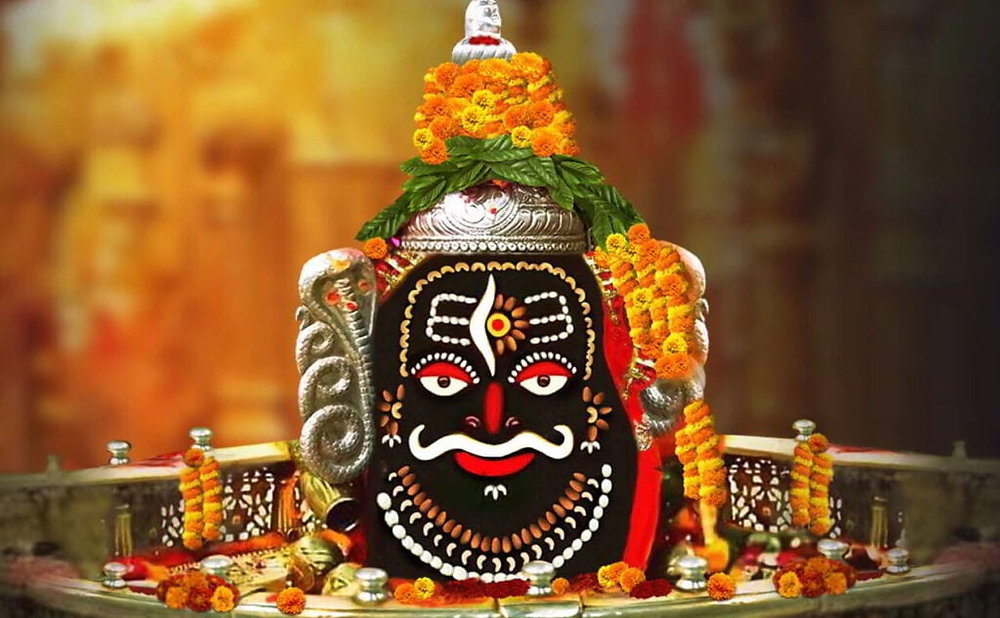
Somnath Temple, located in Prabhas Patan near Veraval on the western coast of Gujarat, India, is renowned as the first among the twelve sacred Jyotirlinga temples of Lord Shiva. Revered as Somnath, which means “Lord of the Moon,” the temple is intimately tied to ancient Hindu mythology and spiritual tradition. Positioned at the confluence of three rivers: Kapila, Hiran, and Saraswati, Somnath is not only a centre of profound religious significance but also a testimony to India’s enduring faith, resilience, and heritage. The temple serves as a radiant beacon for devotees seeking spiritual upliftment and a connection to the divine cosmic light that Shiva embodies.

The legends surrounding Somnath are as ancient as they are captivating, weaving together cosmic elements and divine intervention. The temple’s origins trace back mythologically to the Moon God, Soma or Chandra, who, according to legend, was cursed by his father-in-law, Daksha, for favouring his wife Rohini over his 27 other wives. This curse gradually dimmed Soma’s luminescence, threatening his celestial brilliance.

Desperate to redeem himself, Soma came to this sacred confluence, bathed in the Saraswati River, and prayed intensely to Lord Shiva for relief. Impressed by his devotion, Shiva lifted the curse, restoring Soma’s radiance, symbolising the waxing and waning moon cycles. In gratitude, the Moon God established the first temple of Lord Shiva here, dedicating it as Somnath, the protector of Soma’s lost lustre.

Another symbolic legend connects Somnath to the mythical Syamantaka jewel, associated with Lord Krishna, intertwining it with epic lore. The temple is also seen as a place where Lord Shiva manifests directly in the form of a Jyotirlinga, a column of radiant, unending light, representing the formless infinite. Devotees visit Somnath believing it to be a gateway to the divine and a powerful purifying force for the soul.

Somnath’s history is a tapestry of spiritual glory, cultural riches, repeated devastations, and resilient restoration. It is one of the earliest known Hindu pilgrimage sites, mentioned in sacred texts like the Skanda Purana and the Rigveda. Its sanctity as a Jyotirlinga dates back thousands of years.

The temple site, originally called Prabhas, was visited by ancient kings, including the Gurjara-Pratihara Nagabhata II in the 9th century. The first major stone temple is believed to have been constructed or renovated by the Solanki ruler Bhima I in the 10th century. However, Somnath is no stranger to destruction. It was famously looted and demolished by Mahmud of Ghazni in 1025 AD, an event deeply etched in Indian history. Though he broke and took rich temple treasures, the temple’s sacred Jyotirlinga was said to have been protected or quickly restored by faithful custodians, and the site continued as a pilgrimage destination. Over the centuries, Somnath experienced multiple waves of destruction by invaders and periodic restorations by devout kings like the Chaulukya ruler Kumarapala in the 12th century.

In the medieval period, the temple was sacked again in 1299 by Alauddin Khalji’s forces. Yet, the resilience of Somnath is legendary, each destruction was met with reconstruction, underscoring the indomitable spirit of Hindu worshippers. The most momentous reconstruction in modern times was completed in 1951, spearheaded by Sardar Vallabhbhai Patel, India’s first Deputy Prime Minister, as a symbol of India’s unity and revival after independence.

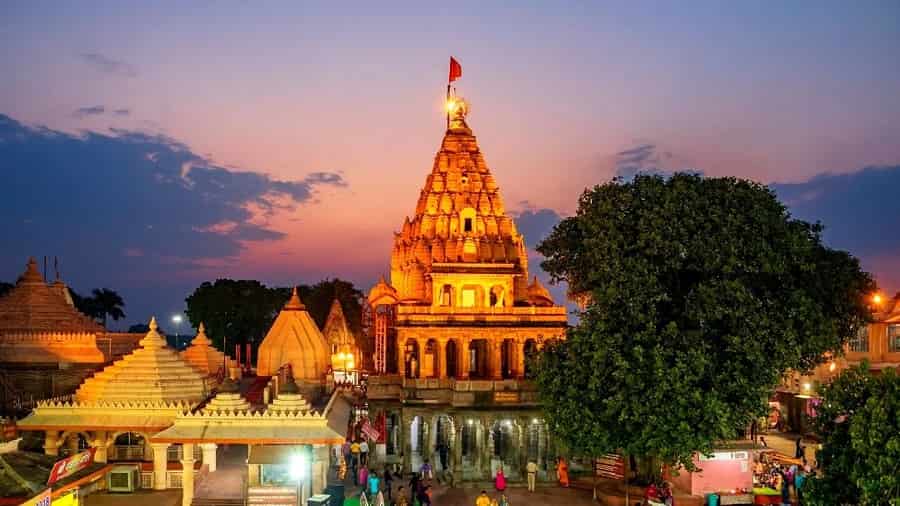
Today’s Somnath Temple blends tradition and grandeur in its architecture, reflecting the classic Chalukyan style infused with contemporary architectural revivalism. Positioned majestically on a rocky promontory overlooking the Arabian Sea, the temple’s striking silhouette is a blend of solid stonework and intricate carvings.

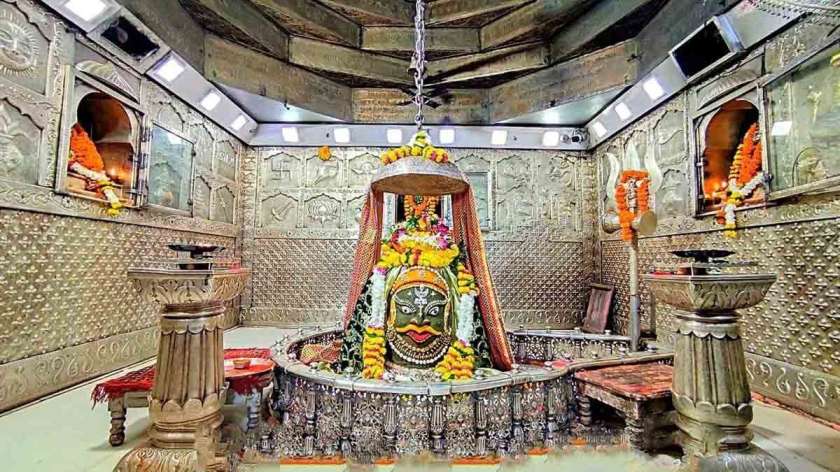
The temple complex is built predominantly of sandstone and marble, structured with multiple spires or shikharas that mimic the radiant cosmic pillar of light symbolised by the Jyotirlinga. Its massive walls and gateways bear sculpted depictions of Hindu deities, mythological tales, and floral motifs. The temple’s sanctum sanctorum houses the main Shiva lingam, enshrined beneath a large shikhara that draws the eyes heavenward. The temple layout adheres to traditional Hindu temple design principles, with an imposing mandapa or assembly hall leading to the garbhagriha or sanctum. The outer halls and corridors accommodate multitudes of pilgrims, emphasizing accessibility and communal worship.

The temple’s coastal location is architecturally significant, achieved by careful stone construction resistant to salt air corrosion and sea winds. The sound of the waves around the temple adds a dynamic aesthetic, enriching the spiritual atmosphere.

Beyond its spiritual and historical significance, Somnath Temple also houses a unique monument that reflects the advanced scientific and geographical knowledge of ancient India: the Baan Stambh or Arrow Pillar, which connects the temple’s sacredness with an extraordinary understanding of Earth’s geography. Dating back to approximately the 6th or 7th century CE, the pillar bears an inscription stating that if one were to draw a straight line due south from Somnath, there would be no landmass until reaching the South Pole or Antarctica. This claim: “there is no hindrance or no piece of land till the South Pole on this path”, has been confirmed by modern geographical knowledge and satellite imaging, making it a stunning testament to the advanced understanding of geography, astronomy, and Earth’s spherical nature held by ancient Indian scholars. This knowledge, inscribed centuries before the advent of modern navigation, points to a rich scientific heritage where spiritual sanctity and empirical observation coexisted. The pillar stands not only as a physical monument but as a symbol of India’s profound legacy in merging cosmic insight with earthly wisdom.

Somnath Temple’s ritual calendar is rich and vibrant, overseen by a dedicated group of priests who maintain continuous worship. Daily worship begins at dawn with the abhisheka, ceremonial bathing of the Shiva lingam with holy water, milk, honey, and bilva leaves, the sacred trifoliate leaves associated with Shiva. Devotees witness elaborate chants of the Vedas alongside the ringing of temple bells and burning of incense.

The temple celebrates all major Shiva festivals with grandeur, especially Mahashivaratri, attracting tens of thousands of devotees who vow fasting, night vigils, and special prayers to honor Shiva’s cosmic dance and benevolence. Other notable observances include Somvati Amavasya or New Moon days falling on Monday and Pradosham, days auspicious for Shiva worship.

Distinctive traditions include pilgrim offerings of coconuts, flowers, and silver bells, and the distributing of prasad or blessed food. Local communities participate actively in festival preparations, processions, and maintenance, highlighting the temple’s role as a shared spiritual and social space.

The journey to Somnath is as much a spiritual pilgrimage as a physical voyage. Located some 400 km from Ahmedabad, the temple is accessible by road, rail, and nearby airports at Diu and Rajkot. Pilgrims often combine visits with other nearby sacred sites in the Saurashtra region.

The town of Prabhas Patan around Somnath is known for its warm hospitality, with countless accommodations, eateries, and shops catering to pilgrims. The experience is enriched by the coastal ambience, sea breeze, and views of the Arabian Sea, making the temple visit soothing and contemplative. Many pilgrims recount tales of healing and peace upon arriving at the temple, reflecting its atmosphere of solemnity mingled with jubilant devotion. Local folklore includes stories of miraculous events, divine interventions, and blessings that have drawn believers for centuries.

Somnath Temple’s significance transcends religion; it has inspired literature, music, and art through ages. Praises of Somnath appear in Bhakti poetry, classical Sanskrit texts, and folk songs, celebrating Shiva’s power, the temple’s sanctity, and the heroic resilience of its custodians. The temple is a cultural symbol of Gujarat and India’s Hindu heritage, frequently invoked in nationalist narratives, especially post-independence, as an emblem of cultural integrity against adversity. Artistic depictions of Somnath adorn paintings, sculptures, and modern media, captivating visitors and devotees alike. The temple’s resilient history and spiritual aura continue to inspire performances, lectures, and pilgrim tales, contributing to the living cultural fabric of the region.

In the present day, Somnath Temple operates under the Shri Somnath Trust, which manages its maintenance, festivals, and visitor amenities. The temple is a major tourist and pilgrimage destination attracting millions annually, boosted by government initiatives to improve infrastructure and global awareness campaigns. Modern restoration efforts utilise advanced conservation techniques, blending heritage preservation with accessibility upgrades. The temple’s security and administration reflect contemporary needs while honoring traditional customs. Somnath’s festivals remain vibrant, incorporating large-scale events coupled with spiritual discourse, outreach, and cultural programs. Besides worship, the temple premises host charitable activities and community services.

The Somnath Temple stands as a luminous sentinel of India’s spiritual heritage: the first Jyotirlinga, a symbol of Shiva’s infinite light, lunar cycles, and divine resilience. Its history embodies the oscillation between destruction and spiritual revival, mirroring the eternal cycles Shiva governs. As the southern gateway of the Jyotirlinga pilgrimage circuit and a beacon for seekers of faith and renewal, Somnath not only enriches the religious landscape but also reflects the enduring cultural soul of India. Its sacred stones, rituals, and stories continue to draw pilgrims and culture lovers, ensuring that the eternal flame of Somnath shines brightly for generations to come.

Sacred Stones, Spaces, and Stories: Jyotirlingas Part 1

In the vast and intricate tapestry of Indian spirituality, certain symbols resound across centuries, uniting story, devotion, architecture, and memory. Among these, the concept of Jyotirlinga occupies a place of deep reverence. These are not simply temples, not merely shrines, but radiant embodiments of the infinite cosmic light of Lord Shiva, that manifest in forms that bridge the seen and unseen, the earthly and transcendent.

In Sanskrit, Jyoti means “light” and Linga means “mark” or “sign.” Thus, a Jyotirlinga is the “radiant sign of Shiva.” Devotees believe that these shrines are not representations of Shiva crafted by human effort but are rather natural manifestations of his infinite energy, breaking through the earthly veil as columns of light.

There is a famous story in the puranic tradition: once, the gods Vishnu and Brahma debated the supremacy of creation and preservation. To settle their disagreement, Shiva manifested as an endless pillar of light, extending beyond all measure. No beginning, no end, just infinite brilliance. Brahma and Vishnu, even with all their might, failed to find its origin or terminus. That boundless beam is the essence of the Jyotirlinga.

Each Jyotirlinga temple is thus not merely a place of worship but a cosmic reminder that divinity cannot be contained, only glimpsed. While many Shiva temples exist across the subcontinent, thousands upon thousands, the twelve Jyotirlingas are especially sacred, each considered a direct site where Shiva revealed himself as light.

The Shiva Mahapurana recounts that originally Shiva manifested in innumerable Jyotirlingas, but twelve came to hold supreme prominence. These are spread across India, forming not a neat geographical circle but a sacred web binding disparate landscapes into a single spiritual network.

The 12 Jyotirlingas are traditionally named as: Somnath, Mallikarjuna, Mahakaleshwar, Omkareshwar, Kedarnath, Bhimashankar, Vishwanath (Kashi Vishwanath), Trimbakeshwar, Vaidyanath, Nageshwar, Rameshwaram, and Grishneshwar.

Each has its unique legends, but collectively, they narrate a larger cultural truth: the omnipresence of Lord Shiva. From the Himalayan slopes of Kedarnath to the coastal waves of Rameshwaram, from the deserts of Gujarat to the dense temples of Maharashtra, the Jyotirlingas embody the principle that divinity pervades all terrain, all time, all people.

Unlike pilgrimages that cluster around one region, the circuit of Jyotirlingas cuts across the entire Indian subcontinent. This makes them not only holy destinations but also cultural highways through which stories, practices, and communities travelled.

North and South: Kedarnath rises in the snow-clad Himalayas, while Rameshwaram marks the southern reach of the Tamil coast.
East and West: Vaidyanath lies in today’s Jharkhand, while Somnath shines on Gujarat’s western shoreline, carrying centuries of resilience in the face of invasions.
The Central Heartland: Madhya Pradesh hosts temples like Omkareshwar and Mahakaleshwar, where Narmada and timeless cityscapes converge.

In this way, the Jyotirlingas collectively become not just a religious map but also a civilizational geography, showcasing the range of India’s landscapes, heritage, and local traditions. For pilgrims over centuries, undertaking journeys to one, several, or all of the Jyotirlingas was not just about devotion but about experiencing the vastness of their own homeland: mountain, river, plain, forest, desert, and sea, each sanctified by Shiva’s light.

At the heart of every Jyotirlinga is a story. But unlike fixed myths, these narratives exist in multiple versions, layered and adapted across regions. Somnath tells of the moon god’s relief from a curse; Omkareshwar emerges from the tale of divine contest on the Narmada; Kedarnath is linked with the penance of the Pandavas after Kurukshetra; Rameshwaram connects to Rama’s journey before crossing the sea to Lanka. In these stories, we glimpse a pattern: the Jyotirlinga shrines don’t emerge only from abstract theology but are deeply entwined with epic history, cosmic events, and moral lessons. Some legends highlight the consequences of pride, others the power of repentance, still others the compassion of Shiva as healer, protector, or cosmic witness. These stories also underscore a uniquely Indian way of sacralising geography: temples are not arbitrary but spring from mythic episodes rooted in the very soil, waters, or mountain where the shrine arose.

Though united in sanctity, the Jyotirlinga temples are strikingly diverse in architectural style. This diversity mirrors India’s regional creativity with each temple absorbing the styles of dynasties, local artisans, and materials at hand. Somnath rebuilt multiple times, embodies defiance and renewal, its sandstone spire rising against the Arabian Sea. Mahakaleshwar holds its sanctum underground, where rituals unfold in the raw intimacy of stone. Kedarnath, perched high in the Himalayas, stands austere and unyielding amid glacier and storm. Rameshwaram is famed for its magnificent corridors, among the longest in the world, echoing with chant and silence. Grishneshwar, smaller in scale, radiates intimacy with its sculpted beauty.

In each, stone becomes story, architecture becomes theology. Shikhara towers stretch skyward like frozen prayers. Mandapas receive wandering pilgrims. Intricate carvings unfold symbolic worlds: snakes, lotuses, cosmic wheels—all testifying to Shiva’s manifold nature.

The Jyotirlinga temples remain not relics of the past but vibrant centres of living tradition. Daily rituals unfold in sequence: dawn abhisheka with waters, milk, and flowers; chants of Vedic mantras; fragrance of incense; the rhythmic ringing of bells. Pilgrims arrive with hopes, vows, burdens, and gratitude. Water from sacred rivers is poured over the linga. Ashes are smeared on brows. Offerings are carried with devotion in baskets of marigold and bilva leaves. Nights resound with hymns and processions.

Beyond individual worship, festivals magnify the spirit of the Jyotirlingas: Mahashivaratri, in particular, transforms each temple into a vibrant ocean of chanting and fasting devotees, who hold vigil through the night to honour Lord Shiva’s cosmic dance.

The core symbolism of Jyotirlinga worship is profound. Where icons depict form, the Jyotirlinga signifies the formless infinite. The lingam is not an idol in the conventional sense but a symbol, a reminder of the ineffable, suggesting that the divine cannot be confined within anthropomorphic imagery. The idea of Shiva as formless light aligns with deep philosophical currents in Indian thought, especially Advaita philosophy: reality as one without a second, beyond image, beyond time, infinite like light itself. Worship of the Jyotirlinga thus becomes not just an act of bhakti or devotion, but also a gateway into contemplative realisation: the one who bows before the linga is also bowing before the boundless within themselves.

Perhaps one of the most remarkable aspects of the Jyotirlinga temples is their resilience. They have faced invasions, destruction, natural calamities, and yet have been rebuilt time and again, symbolising not just survival but renewal of faith. Somnath, for example, was desecrated multiple times across centuries, yet always rose anew. Kedarnath witnessed devastating floods, but continues to be a magnet of devotion. Rameshwaram has absorbed tidal rhythms of history and faith.

In this resilience lies a lesson: that the sacred, even when broken, is never truly destroyed. Faith finds ways to rebuild, to sing, to remember, to sanctify again. The Jyotirlingas are living examples of this civilisational continuity.

The Jyotirlingas are not only pilgrimage sites but cultural fountains. They have inspired poetry, devotional songs, art, and ritual practices across centuries. Saints and mystics, such as Tulsidas, Adi Shankaracharya, and countless regional poets, have sung of Shiva’s presence in these sacred shrines. Economically, the temples have long sustained communities of artisans, priests, and pilgrims. Socially, they facilitate gatherings that dissolve barriers: rich and poor, scholar and villager, all queue together to pour water over the same linga. They also serve as cultural markers: to say one has walked to Somnath, climbed to Kedarnath, bathed at Rameshwaram, is not only to claim devotional merit but to claim a deeper cultural identity.

In today’s world of fast travel, the Jyotirlinga circuit has taken new shapes. Devotees sometimes attempt to visit all twelve within a single journey, aided by trains, flights, and tour packages. For others, the pilgrimage is spread across a lifetime, an unfolding quest where each temple marks a personal milestone. Yet, even amidst modernity, the essence remains untouched: to travel to a Jyotirlinga is to step outside ordinary routine, to participate in a timeless cycle, to stand beneath stone spires and remember the infinite light.

Finally, the significance of the Jyotirlingas is not limited to geographical shrines. Many teachers remind us that the truest Jyotirlinga resides within, as the spark of consciousness and light at the core of being. The pilgrim’s outer journey, through dust roads and mountain passes, is mirrored by an inward journey, through meditation and realisation. The twelve Jyotirlingas may be seen as stations of the larger inner pilgrimage: toward recognizing the self as shaped by nothing but light, infinite and eternal.

The Jyotirlinga temples are not twelve stones scattered across India. They are twelve flames in a greater fire, twelve windows into infinity, twelve markers reminding us of the endless dance of destruction and renewal that is Shiva himself. To reflect on them is to reflect on a civilisation’s memory, on resilience against time, and on humanity’s longing to touch the infinite. So follow me along, as together we will walk more slowly into each temple’s world, pausing to hear its legends, study its architecture, savor its rituals, and glimpse how community and culture intertwine around its sacred space.

For now, let us hold this wider vision: that across mountains, coasts, rivers, forests, and deserts, the Jyotirlinga temples stand as luminous testimonies to the eternal light of Lord Shiva: stones that carry story, spaces that breathe devotion, shrines that forever point beyond themselves to the formless, radiant source of all.

Sacred Stones, Spaces, and Stories: Ashtavinayaka Part 9

Rising from the fertile plains of the Pune district, the Mahaganapati Temple at Ranjangaon stands as the culminating jewel of Maharashtra’s Ashtavinayak pilgrimage. Revered as the seat of Mahaganapati, the “Great Ganesha”, this temple is steeped in legend, history, and architectural grandeur. Here, Lord Ganesha is worshipped in his most potent form, invoked even by Lord Shiva himself in the cosmic battle against the demon Tripurasura. For centuries, devotees and warriors alike have sought Mahaganapati’s blessings, making Ranjangaon not just a spiritual destination but a living testament to the enduring power of faith and myth.

Ranjangaon is a tranquil village located about 50 km from Pune, along the Pune-Ahmednagar highway. The temple’s strategic location made it a favoured stop for Maratha chieftains and pilgrims journeying through the Deccan. Today, it is the eighth and final stop for those completing the revered Ashtavinayak Yatra, a circuit of eight self-manifested Ganesha temples across Maharashtra.

Historical records and the temple’s stone pillars suggest that the Mahaganapati Temple was originally constructed in the 9th or 10th century, with significant enhancements during the Peshwa era. Shrimant Madhavrao I, the Peshwa ruler, was a devout worshipper who regularly visited the temple before heading to battle. He built a stone sanctum around the idol and created a special cellar to safeguard the deity during times of turmoil. The temple’s hall and surrounding apartments, or owaris, were commissioned by Sardar Kibe, Sardar Pawar, and Sardar Shinde, prominent nobles of the time. In modern times, the temple’s Nagarkhana, or drum house, above the entrance, was inaugurated by Chief Minister Manohar Joshi in 1997, reflecting ongoing reverence and restoration.

The temple boasts a massive and ornate entrance gate, flanked by two imposing dwarapalas, or gatekeepers, visible from the main road. The temple is ingeniously constructed so that during Dakshinayana, the sun’s southern movement, the rays of the rising sun fall directly on the main idol in the sanctum, a marvel of ancient engineering. The drum house above the entrance is used during festivals and processions, adding to the temple’s festive aura. The sanctum houses the swayambhu, or self-manifested idol, of Mahaganapati, seated on a lotus and accompanied by his consorts, Riddhi and Siddhi. Local tradition holds that the original idol, known as “Mahotkat,” is hidden in a basement and is said to have ten trunks and twenty arms, though the visible idol is more conventional in form.

The temple’s enduring myth centres on the cosmic battle between good and evil, with Mahaganapati as the divine catalyst. According to legend, the esteemed sage Grutsamad once sneezed, and from this act, a boy named Tripurasura was born. Tripurasura, raised with spiritual wisdom, learned the Ganesh mantra from his father and performed severe penance to Lord Ganesha. Pleased, Ganesha granted him a boon: Tripurasura would become the most powerful being in the universe and could only be defeated by Lord Shiva, after which he would attain liberation.

Empowered by this boon, Tripurasura’s pride grew unchecked. He conquered the underworld, the heavens, and even threatened the gods themselves. Lord Brahma hid in a lotus, and Lord Vishnu retreated to the cosmic ocean, unable to withstand Tripurasura’s might. Desperate, the gods turned to sage Narada, who advised them to worship Lord Ganesha. Ganesha, taking the form of a Brahmin, approached Tripurasura and offered to create three flying chariots that could only be destroyed by Shiva. In exchange, he asked for the Chintamani jewel from Kailash. When Tripurasura demanded the jewel, Lord Shiva refused, leading to a fierce battle.

Despite his power, Shiva could not defeat Tripurasura. Realising his mistake in not honouring Ganesha first, Shiva paused and recited the Shadaakshar Mantra to invoke Ganesha. Blessed with a special beejmantra, or seed mantra, Shiva was finally able to destroy Tripurasura with a single arrow]. This victory was possible only after seeking Ganesha’s grace, emphasising the deity’s role as the remover of all obstacles, even for the gods!

The site where Shiva invoked Ganesha and achieved victory became Ranjangaon, and the form of Ganesha worshipped here is known as Mahaganapati or Tripurarivade Mahaganapati, the destroyer of Tripurasura.

The idol at Ranjangaon is revered as one of the most powerful forms of Ganesha. Mahaganapati is depicted seated on a lotus, flanked by his consorts Riddhi, or prosperity, and Siddhi, or spiritual power. The idol is Swayambhu, believed to have emerged naturally from the earth. In some traditions, the idol is described as “Mahotkat,” possessing ten trunks and twenty arms, though it is more commonly seen with eight, ten, or twelve arms.. The idol’s serene yet commanding presence embodies both the gentle and formidable aspects of the deity.

Each day, the idol is ritually bathed with water, milk, and fragrant substances, accompanied by the chanting of Vedic mantras. Morning and evening aartis are performed with lamps, bells, and devotional songs, filling the temple with a vibrant spiritual energy. Offerings of modaks, coconut, and flowers are made to the deity, and prasad is distributed to devotees as a blessing.

Sahastravartan is an elaborate ritual that involves the recitation of Ganesha’s names or mantras a thousand times, seeking his blessings for the removal of obstacles and the fulfilment of wishes. The Satyavinayak Pooja is a special worship performed for significant life events or to fulfil vows. During the Bhadrapada festival, devotees perform “Lotangan”, which means rolling their bodies in prostration along the path to the temple as an act of surrender and devotion.

Unlike many other villages, the people of Ranjangaon do not bring Ganesha idols into their homes during Ganesh Chaturthi. Instead, the entire community gathers at the Mahaganapati Temple for collective worship, reinforcing the temple’s role as the spiritual heart of the region.

Ganesh Chaturthi is celebrated with immense fervour at Ranjangaon. The temple is adorned with flowers and lights, and special rituals, abhisheks, and aartis are performed. On the fifth day of the festival, a grand feast called a mahabhog is offered to the deity, and the idol is taken in a flower-bedecked palkhi, or palanquin procession, around the temple grounds. Wrestling matches and cultural events are also organised, drawing large crowds from nearby villages.

A unique sixth-day celebration during Bhadrapada sees devotees flocking to the temple, performing special rituals, and participating in communal festivities. The atmosphere is one of joy, devotion, and unity.

The Mahaganapati Temple is more than a place of worship; it is a symbol of the triumph of wisdom and humility over pride and chaos. The legend of Tripurasura underscores the importance of invoking Ganesha before any new undertaking, a tradition now embedded in Hindu practice. The temple’s sun-aligned architecture, powerful idol, and living rituals all reinforce the message that with faith, even the greatest obstacles can be overcome.

Ranjangaon is the eighth and final stop in the Ashtavinayak circuit, making it the spiritual culmination of the pilgrimage. Pilgrims often report a sense of completion and fulfilment upon receiving Mahaganapati’s blessings, believing that their prayers and efforts throughout the yatra have been acknowledged and rewarded.

After Ranjangaon, pilgrims go back to the Moreshwar Temple to complete the Ashtavinayak circuit. And with that visit, they complete the pilgrimage. This circuit is something I have wanted to do for a while, given that the circuit is in my home state, and it is a pilgrimage for my ishtadev! I will do this sooner rather than later; that’s my promise to myself.

Sacred Stones, Spaces, and Stories: Ashtavinayaka Part 8

Renowned as the “Remover of Obstacles,” the Vighneshwar Temple at Ozar lies on the banks of the Kukadi River. Here, Lord Ganesha is worshipped as Vighneshwar or Vighnahar, the vanquisher of Vighnasura, the demon of obstacles, making Ozar a beacon for those seeking the removal of life’s impediments and the fulfilment of their aspirations.

Ozar is a small town in the Pune district, about 85 km from Pune city and near the famed Lenyadri caves. The temple’s riverside location, close to the Yedagaon dam, and its proximity to the Lenyadri shrine and Shivneri Fort imbue the site with a sense of history and natural beauty. The approach to the temple is marked by a fortified stone gateway, flanked by deep malas, or lamp towers, and meditation rooms.

The lore of Vighneshwar Temple is rooted in ancient scriptures such as the Mudgala Purana, Skanda Purana, and Vinayaka Purana and is central to its spiritual identity. Once, King Abhinandana performed a grand sacrifice but neglected to offer due respect to Indra, the king of gods. Feeling slighted, Indra commanded Kala (time/death) to disrupt the sacrifice. Kala assumed the form of the demon Vighnasura, “the demon of obstacles,” and not only destroyed the ritual but unleashed havoc across the universe, creating impediments in the virtuous deeds and sacrifices of sages and mortals alike.

Distressed by the chaos, the sages sought help from Brahma, or Shiva in some versions, who advised them to worship Lord Ganesha. Responding to their prayers, Ganesha confronted Vighnasura. Realising he could not defeat the divine child, Vighnasura surrendered and promised to desist from troubling those who invoked Ganesha’s name. In some retellings, Vighnasura became Ganesha’s attendant, tasked with testing the devotion of those who neglected his worship.

To commemorate this cosmic victory, the sages consecrated an idol of Ganesha as Vighneshwar at Ozar. From that day, it was decreed that obstacles, or Vighnas, would only trouble those who failed to honour Ganesha, cementing his role as the universal remover of obstacles.

The Vighneshwar Temple’s historical prominence is closely linked to the Maratha Peshwas. After the victorious Battle of Vasai or Bacaim in 1739, Chimaji Appa, the younger brother and military commander of Peshwa Baji Rao I, renovated the temple and adorned its shikhara, or spire, with gold as an offering of gratitude for his triumph. The temple underwent further restoration in 1967 under the guidance of Appa Shastri Joshi, a devoted follower of Ganesha.

The Vighneshwar Temple exemplifies classic Hindu temple architecture, blending grandeur with spiritual symbolism. The temple faces east, welcoming the rising sun and symbolising new beginnings. It is set within a large, walled courtyard with a prominent gateway, flanked by two massive stone Dwarapalas, or gatekeepers, and adorned with bas-reliefs of musicians. Two large deepmalas, or lamp towers, stand near the entrance, and small meditation rooms on either side offer spaces for contemplation. The temple features three intricately carved entrances, with the eastern gate serving as the main access point. The first hall houses an image of Dhundiraj Ganesha, while the second contains a white marble statue of Mushika, Ganesha’s mouse vehicle. The temple walls are decorated with vibrant murals and sculptures depicting scenes from Ganesha’s legends and the Ashtavinayak pilgrimage. The sanctum’s shikhara is covered in gold foil, a legacy of Chimaji Appa’s offering.

The presiding deity is a swayambhu, or self-manifested idol, naturally formed as an elephant-faced stone. The idol faces east, with its trunk turned to the left, and is covered in indoor, or vermilion. The eyes are set with emeralds, and diamonds adorn the forehead and navel. Brass images of Ganesha’s consorts, Riddhi and Siddhi, flank the main idol, symbolising prosperity and spiritual power.

The temple opens early, and devotees offer flowers, durva grass, and modaks to the deity. Ritual bathing of the idol is performed, especially on auspicious days. Morning and evening aartis are conducted with great devotion, accompanied by the ringing of bells and the chanting of hymns. Circumambulation, or pradakshina, of the sanctum is a common practice, with devotees seeking the removal of obstacles from their lives. On Sankashti Chaturthi, the fourth day after the full moon, special pujas and offerings are made, drawing large crowds of devotees.

The deepmalas are lit during festivals, creating a mesmerising spectacle of light that symbolises the victory of knowledge over ignorance. The marble statue of Mushika is also worshipped, as he is considered Ganesha’s loyal vehicle and a symbol of humility and service.

Ganesh Chaturthi or Bhadrapada Shuddha Chaturthi, is the most important festival at Ozar. The temple is adorned with flowers and lights, and thousands of devotees gather for special abhisheks, aartis, and processions. The atmosphere is charged with devotion, music, and communal harmony.

Other major festivals include Tripuri Pournima, the full moon in the month of Kartik and Magh Chaturthi in January or February, when fairs are organised and the temple becomes a hub of religious and cultural activities.

Vighneshwar’s legend is a powerful reminder that obstacles are an inevitable part of life, but with faith and devotion, they can be overcome. The temple’s rituals, architecture, and festivals all reinforce the message that invoking Ganesha brings clarity, strength, and the removal of impediments.

Ozar is traditionally the seventh temple visited on the Ashtavinayak pilgrimage, though many pilgrims visit it fifth for convenience. The temple’s association with the defeat of Vighnasura makes it a crucial stop for those seeking to complete the spiritual circuit and receive Ganesha’s blessings.

The temple stands as a radiant beacon of faith, resilience, and triumph over adversity. Its legends speak of cosmic battles and divine grace; its architecture embodies the grandeur and serenity of Hindu sacred spaces; its rituals and festivals unite communities in celebration and prayer.

In My Hands Today…

Gods, Guns and Missionaries: The Making of the Modern Hindu Identity – Manu S. Pillai

When European missionaries arrived in India in the sixteenth century, they entered a world both fascinating and bewildering. Hinduism, as they saw it, was a pagan a worship of devils and monsters by a people who burned women alive, performed outlandish rites and fed children to crocodiles. But it quickly became clear that Hindu ‘idolatry’ was far more layered and complex than European stereotypes allowed, surprisingly even sharing certain impulses with Christianity.

Nonetheless, missionaries became a threatening force as European power grew in India. Western ways of thinking gained further ascendancy during the British while interest in Hindu thought influenced Enlightenment thinkers like Voltaire in Europe, Orientalism and colonial rule pressed Hindus to reimagine their religion. In fact, in resisting foreign authority, they often adopted the missionaries’ own tools and strategies. It is this encounter, Manu S. Pillai argues, that has given Hinduism its present shape, also contributing to the birth of an aggressive Hindu nationalism.

Gods, Guns and Missionaries surveys these remarkable dynamics with an arresting cast of characters – maharajahs, poets, gun-wielding revolutionaries, politicians, polemicists, philosophers and clergymen. Lucid, ambitious, and provocative, it is at once a political history, an examination of the mutual impact of Hindu culture and Christianity upon each other, and a study of the forces that have prepared the ground for politics in India today. Turning away from simplistic ideas on religious evolution and European imperialism, the past as it appears here is more complicated – and infinitely richer – than previous narratives allow.