In My Hands Today…

Dinosaurs at the Dinner Party: How an Eccentric Group of Victorians Discovered Prehistoric Creatures and Accidentally Upended the World – Edward Dolnick

In the early 1800s the world was a safe and cozy place. But then a twelve-year-old farm boy in Massachusetts stumbled upon a row of fossilized three-toed footprints the size of dinner plates—the first dinosaur tracks ever found. Soon, in England, Victorians unearthed enormous bones—bones that reached as high as a man’s head.

Outside of myths and fairy tales, no one had imagined that creatures like three-toed giants once lumbered across the land. And if anyone conjured up such a scene, they would never imagine that all those animals could have vanished hundreds of millions years ago. The thought of sudden, arbitrary disappearance from life was unnerving and forced the Victorians to rethink everything they knew about the world. Celebrated storyteller and historian Edward Dolnick leads readers through a compelling true adventure as the paleontologists of the first half of the 19th century puzzled their way through the fossil record to create the story of dinosaurs we know today.
In My Hands Today…

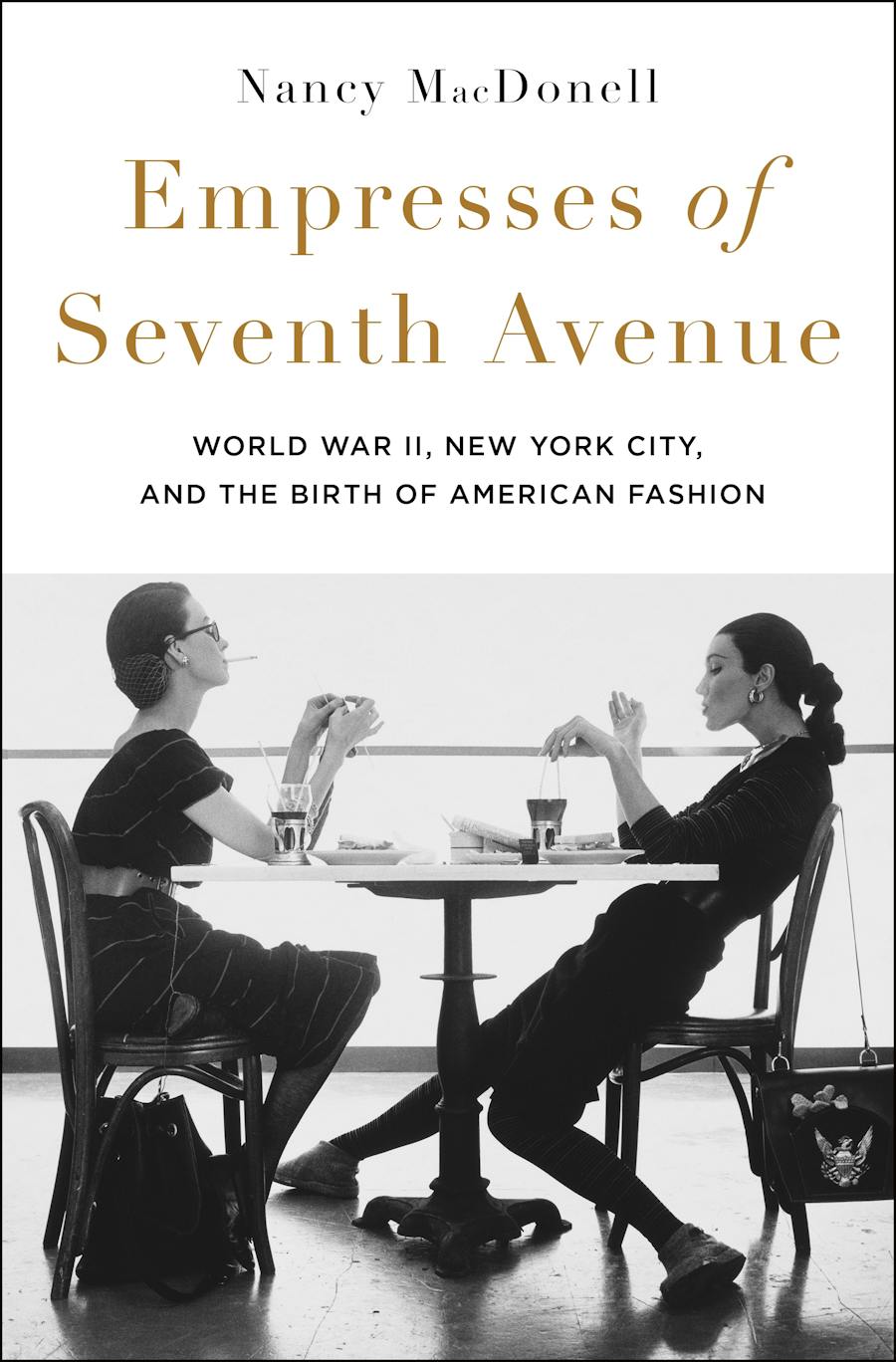
Empresses of Seventh Avenue: World War II, New York City, and the Birth of American Fashion – Nancy MacDonell

Calvin Klein. Ralph Lauren. Donna Karan. Halston. Marc Jacobs. Tom Ford. Michael Kors. Tory Burch. Today, American designers are some of the biggest names in fashion, yet before World War II, they almost always worked anonymously. The industry, then centered on Seventh Avenue in Manhattan, had always looked overseas for “inspiration”—a polite phrase for what was often blatant copying—because style, as all the world knew, came from Paris.

But when the Nazis invaded France in 1940, the capital of fashion was cut off from the rest of the world. The story of the chaos and tragedy that followed has been told many times—but how it directly affected American fashion is largely unknown.

Defying the naysayers, New York-based designers, retailers, editors, and photographers met the moment, turning out clothes that were perfectly suited to the American way of life: sophisticated, modern, comfortable, and affordable. By the end of the war, “the American Look” had been firmly established as a fresh, easy elegance that combined function with style. But none of it would have happened without the influence and ingenuity of a small group of women who have largely been lost to history.

Empresses of Seventh Avenue will tell the story of how these extraordinary women put American fashion on the world stage and created the template for modern style—and how the nearly $500 billion American fashion industry, the largest in the world, could not have accrued its power and wealth without their farsightedness and determination.

In My Hands Today…

The Bookshop: A History of the American Bookstore – Evan Friss

Bookstores have always been unlike any other kind of store, shaping readers and writers, and influencing our tastes, thoughts, and politics. They nurture local communities while creating new ones of their own. Bookshops are powerful spaces, but they are also endangered ones. In The Bookshop, we see those stakes: what has been, and what might be lost.

Evan Friss’s history of the bookshop draws on oral histories, archival collections, municipal records, diaries, letters, and interviews with leading booksellers to offer a fascinating look at this institution beloved by so many. The story begins with Benjamin Franklin’s first bookstore in Philadelphia and takes us to a range of booksellers including The Strand, Chicago’s Marshall Field & Company, Gotham Book Mart, specialty stores like Oscar Wilde and Drum and Spear, sidewalk sellers of used books, Barnes & Noble, Amazon Books, and Parnassus. The Bookshop is also a history of the leading figures in American bookselling, often impassioned eccentrics, and a history of how books have been marketed and sold over more than two centuries—including, for example, a 3,000-pound elephant who appeared to sign books at Marshall Field’s in 1944.

The Bookshop is a love letter to bookstores, a charming chronicle for anyone who cherishes these sanctuaries of literature, and essential reading to understand how these vital institutions have shaped American life—and why we still need them.

In My Hands Today…

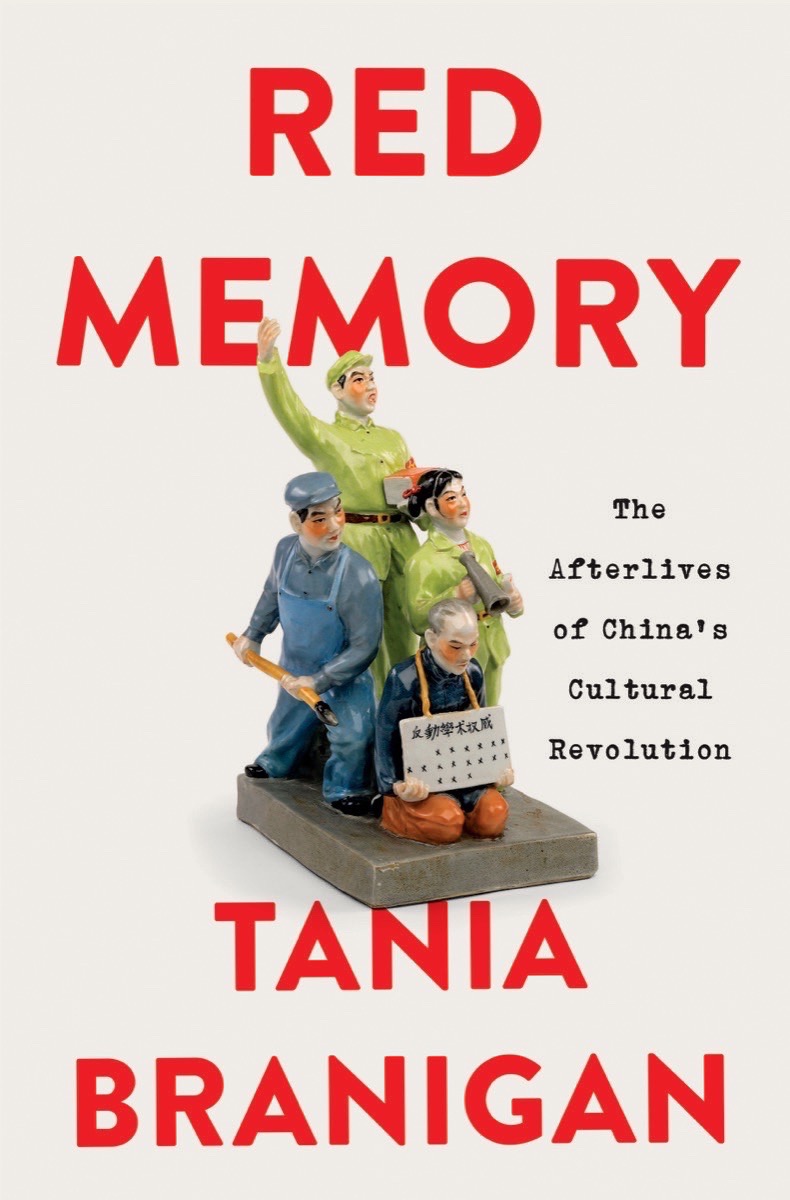
Red Memory: The Afterlives of China’s Cultural Revolution – Tania Branigan

“It is impossible to understand China today without understanding the Cultural Revolution,” Tania Branigan writes. During this decade of Maoist fanaticism between 1966 and 1976, children condemned parents, students condemned teachers, and as many as two million people died for their supposed political sins, while tens of millions were hounded, ostracized, and imprisoned.

Yet in China this brutal and turbulent period exists, for the most part, as an absence; official suppression and personal trauma have conspired in national amnesia. Red Memory uncovers forty years of silence through the stories of individuals who lived through the madness. Deftly exploring how this era defined a generation and continues to impact China today, Branigan asks: What happens to a society when you can no longer trust those closest to you? What happens to the present when the past is buried, exploited, or redrawn? And how do you live with yourself when the worst is over?

In My Hands Today…

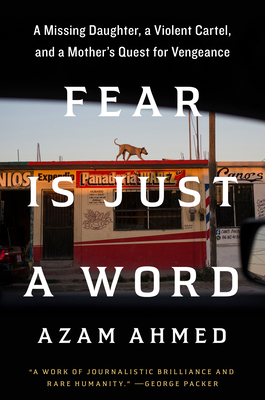
Fear Is Just a Word: A Missing Daughter, a Violent Cartel, and a Mother’s Quest for Vengeance – Azam Ahmed

Fear Is Just a Word begins on an international bridge between Mexico and the United States, as fifty-six-year-old Miriam Rodríguez stalks one of the men she believes was involved in the murder of her daughter Karen. He is her target number eleven, a member of the drug cartel that has terrorized and controlled what was once Miriam’s quiet hometown of San Fernando, Mexico, almost one hundred miles from the U.S. border. Having dyed her hair red as a disguise, Miriam watches, waits, and then orchestrates the arrest of this man, exacting her own version of justice.

Woven into this deeply researched, moving account is the story of how cartels built their power in Mexico, escalated the use of violence, and kidnapped and murdered tens of thousands. Karen was just one of the many people who disappeared, and Miriam, a brilliant, strategic, and fearless woman, begged for help from the authorities and paid ransom money she could not afford in hopes of saving her daughter. When that failed, she decided that “fear is just a word,” and began a crusade to track down Karen’s killers and to help other victimized families in their search for justice.

What do people do when their country and the peaceful town where they have grown up become unrecognizable, suddenly places of violence and fear? Azam Ahmed takes us into the grieving of a country and a family to tell the mesmerizing story of a brave and brilliant woman determined to find out what happened to her daughter, and to see that the criminals who murdered her were punished. Fear Is Just a Word is an unforgettable and moving portrait of a woman, a town, and a country, and of what can happen when violent forces leave people to seek justice on their own.