In My Hands Today…

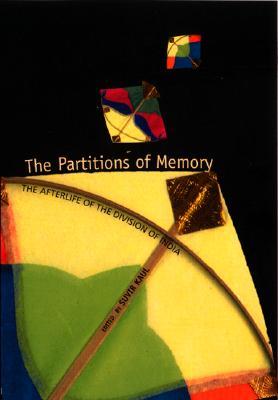
The Partitions of Memory: The Afterlife of the Division of India – edited by Suvir Kaul

Echoes of the traumatic events surrounding the Partition of India in 1947 can be heard to this day in the daily life of the subcontinent, each time India and Pakistan play a cricket match or when their political leaders speak of “unfinished business.” Sikhs who lived through the pogrom following the assassination of Indira Gandhi recall Partition, as do, most recently, Muslim communities targeted by mobs in Gujarat.

The eight essays in The Partitions of Memory suggest ways in which the tangled skein of Partition might be unraveled. The contributors range over issues as diverse as literary reactions to Partition; the relief and rehabilitation measures provided to refugees; children’s understanding of Partition; the power of “national” monuments to evoke a historical past; the power of letters to evoke more immediately poignant pasts; and the Dalit claim, at the prospect of Partition, to a separate political identity. The book demonstrates how fundamental the material and symbolic histories of Partition are to much that has happened in South Asia since 1947.

Contributors:
Mukulika Banerjee, Urvashi Butalia, Joya Chatterji, Priyamvada Gopal, Suvir Kaul, Nita Kumar, Sunil Kumar, Richard Murphy, and Ramnarayan S. Rawat.

In My Hands Today…

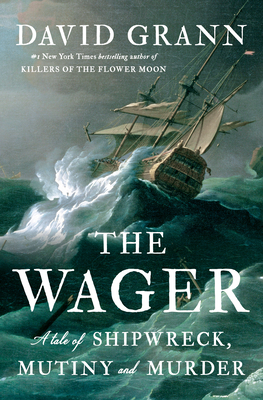
The Wager: A Tale of Shipwreck, Mutiny and Murder – David Grann

On January 28, 1742, a ramshackle vessel of patched-together wood and cloth washed up on the coast of Brazil. Inside were thirty emaciated men, barely alive, and they had an extraordinary tale to tell. They were survivors of His Majesty’s Ship the Wager, a British vessel that had left England in 1740 on a secret mission during an imperial war with Spain. While the Wager had been chasing a Spanish treasure-filled galleon known as “the prize of all the oceans,” it had wrecked on a desolate island off the coast of Patagonia. The men, after being marooned for months and facing starvation, built the flimsy craft and sailed for more than a hundred days, traversing nearly 3,000 miles of storm-wracked seas. They were greeted as heroes.

But then … six months later, another, even more decrepit craft landed on the coast of Chile. This boat contained just three castaways, and they told a very different story. The thirty sailors who landed in Brazil were not heroes – they were mutineers. The first group responded with countercharges of their own, of a tyrannical and murderous senior officer and his henchmen. It became clear that while stranded on the island the crew had fallen into anarchy, with warring factions fighting for dominion over the barren wilderness. As accusations of treachery and murder flew, the Admiralty convened a court martial to determine who was telling the truth. The stakes were life-and-death–for whomever the court found guilty could hang.

In My Hands Today…

A Woman of Influence: The Spectacular Rise of Alice Spencer in Tudor England – Vanessa Wilkie

Alice Spencer was born in 1560 to a family on the rise. Her grandfather had amassed a sizeable estate of fertile grazing land and made a small fortune in sheep farming, allowing him to purchase a simple but distinguished manor house called Althorp.

With her sizable dowry, Alice married the heir to one of the most powerful aristocratic families in the country, eventually becoming the Countess of Derby. Though she enjoyed modest renown, it wasn’t until her husband’s sudden death (after he turned in a group of Catholics for plotting against Queen Elizabeth I) that Alice and her family’s future changed forever.

Faced with a lawsuit from her brother-in-law over her late husband’s fortune, Alice raised eyebrows by marrying England’s most powerful lawyer. Together, they were victorious, and Alice focused her attentions on securing appropriate husbands for her daughters, increasing her land ownings, and securing a bright future for her grandchildren and the entire Spencer family. But they would not completely escape scandals, and as the matriarch, Alice had to face an infamous trial that threatened everything she had worked so hard for.

Now, the full story of the remarkable Alice Spencer Stanley Egerton is revealed in this comprehensive and colorful biography. A woman both ahead of and part of her time, Alice’s ruthless challenging of the status quo has inspired future generations of Spencers and will change the way you view Tudor women.

In My Hands Today…

An Era of Darkness: The British Empire in India – Shashi Tharoor

In 1930, the American historian and philosopher Will Durant wrote that Britain’s ‘conscious and deliberate bleeding of India… [was the] greatest crime in all history’. He was not the only one to denounce the rapacity and cruelty of British rule, and his assessment was not exaggerated. Almost thirty-five million Indians died because of acts of commission and omission by the British—in famines, epidemics, communal riots and wholesale slaughter like the reprisal killings after the 1857 War of Independence and the Amritsar massacre of 1919.

Besides the deaths of Indians, British rule impoverished India in a manner that beggars belief. When the East India Company took control of the country, in the chaos that ensued after the collapse of the Mughal empire, India’s share of world GDP was 23 per cent. When the British left it was just above 3 per cent.

The British empire in India began with the East India Company, incorporated in 1600, by royal charter of Her Majesty Queen Elizabeth I, to trade in silk, spices and other profitable Indian commodities. Within a century and a half, the Company had become a power to reckon with in India. In 1757, under the command of Robert Clive, Company forces defeated the ruling Nawab Siraj-ud-Daula of Bengal at Plassey, through a combination of superior artillery and even more superior chicanery. A few years later, the young and weakened Mughal emperor, Shah Alam II, was browbeaten into issuing an edict that replaced his own revenue officials with the Company’s representatives. Over the next several decades, the East India Company, backed by the British government, extended its control over most of India, ruling with a combination of extortion, double-dealing, and outright corruption backed by violence and superior force. This state of affairs continued until 1857, when large numbers of the Company’s Indian soldiers spearheaded the first major rebellion against colonial rule. After the rebels were defeated, the British Crown took over power and ruled the country ostensibly more benignly until 1947, when India won independence.

In this explosive book, bestselling author Shashi Tharoor reveals with acuity, impeccable research, and trademark wit, just how disastrous British rule was for India. Besides examining the many ways in which the colonizers exploited India, ranging from the drain of national resources to Britain, the destruction of the Indian textile, steel-making and shipping industries, and the negative transformation of agriculture, he demolishes the arguments of Western and Indian apologists for Empire on the supposed benefits of British rule, including democracy and political freedom, the rule of law, and the railways.

The few unarguable benefits—the English language, tea, and cricket—were never actually intended for the benefit of the colonized but introduced to serve the interests of the colonizers. Brilliantly narrated and passionately argued, An Era of Darkness will serve to correct many misconceptions about one of the most contested periods of Indian history.

In My Hands Today…

Knowing What We Know: The Transmission of Knowledge: From Ancient Wisdom to Modern Magic – Simon Winchester

From the creation of the first encyclopedia to Wikipedia, from ancient museums to modern kindergarten classes–this is a look at how humans acquire, retain, and pass on information and data, and how technology continues to change our lives and our minds.

With the advent of the internet, any topic we want to know about is instantly available with the touch of a smartphone button. With so much knowledge at our fingertips, what is there left for our brains to do? At a time when we seem to be stripping all value from the idea of knowing things–no need for math, no need for map-reading, no need for memorization–are we risking our ability to think? As we empty our minds, will we one day be incapable of thoughtfulness?

Addressing these questions, Simon Winchester explores how humans have attained, stored, and disseminated knowledge. Examining such disciplines as education, journalism, encyclopedia creation, museum curation, photography, and broadcasting, he looks at a whole range of knowledge diffusion–from the cuneiform writings of Babylon to the machine-made genius of artificial intelligence, by way of Gutenberg, Google, and Wikipedia to the huge Victorian assemblage of the Mundanaeum, the collection of everything ever known, currently stored in a damp basement in northern Belgium.

Throughout this tour, Winchester forces us to ponder what rational humans are becoming. What good is all this knowledge if it leads to lack of thought? What is information without wisdom? Does Rene Descartes’s Cogito, ergo sum–“I think therefore I am,” the foundation for human knowledge widely accepted since the Enlightenment–still hold? And what will the world be like if no one in it is wise?