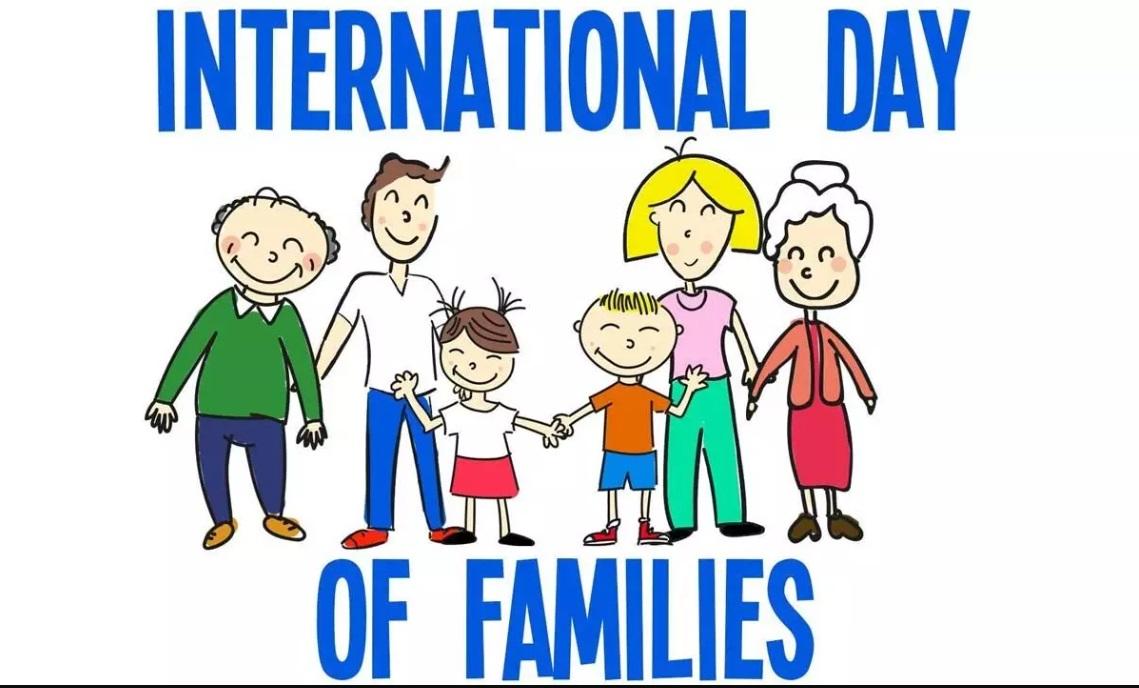
International Day of Families: Celebrating Family Connections

The International Day of Families is an annual observance recognised by the United Nations on May 15th. This day aims to raise awareness of the importance of families and the role they play in society. Families come in many shapes and sizes, but they all share the fundamental purpose of providing love, support, and a sense of belonging for their members.

The theme for the International Day of Families in 2024 is “Strengthening Family Connections in a Digital World.” This theme reflects the growing influence of technology on modern family life and the need to find a healthy balance between digital engagement and quality time together. As families navigate an increasingly online landscape, it is crucial to explore ways of using technology to enhance family bonds rather than allowing it to become a barrier.

The International Day of Families was first established in the 1980s, when the United Nations started to focus attention on issues related to families. In 1993, the UN General Assembly passed a resolution designating May 15 as the International Day of Families. The fundamental goal of establishing this observance was to raise awareness of the importance of families and the issues affecting them globally. The day is meant to encourage people worldwide to improve their living standards and promote social progress.

The traditional nuclear family model of a married mother and father with children is no longer the only accepted family structure. Families today come in diverse forms, including single-parent households, blended families, same-sex couples, multigenerational homes, and families formed through adoption or surrogacy. This diversity is a testament to the resilience and adaptability of the family unit.

Regardless of their composition, families serve as the foundation for individual development and social cohesion. They provide a haven where children can grow, learn, and thrive. Families also play a crucial role in transmitting cultural values, traditions, and beliefs from one generation to the next.

While technology has brought many benefits to modern families, it has also introduced new challenges that require thoughtful navigation. The ubiquity of digital devices and the constant connectivity they enable can sometimes come at the expense of face-to-face interaction and quality time spent together.

Parents today often struggle to find the right balance between allowing their children to explore the digital world and setting boundaries to protect them from potential online risks, such as cyberbullying, excessive screen time, and exposure to inappropriate content.  Additionally, the blurring of work and home life due to remote work and the always-on nature of digital communication can make it difficult for families to truly disconnect and enjoy uninterrupted quality time.

The 2024 theme of the International Day of Families, “Strengthening Family Connections in a Digital World,” encourages families to embrace technology in a way that enhances their relationships and supports their overall well-being. Here are some strategies families can consider:

  • Establishing Digital Boundaries: Setting clear boundaries and guidelines around technology use can help families maintain a healthy balance. This may include designating tech-free zones or times, such as during mealtimes or before bedtime, and encouraging everyone to be present and engaged with one another.
  • Fostering Digital Literacy: Educating family members, especially children, on the responsible and safe use of digital technologies is crucial. Families can learn together about online privacy, cybersecurity, and the importance of critical thinking when consuming digital content.
  • Leveraging Technology for Connectivity: While excessive screen time can be detrimental, technology can also be used to strengthen family connections. Families can utilise video calls, messaging apps, and social media to stay in touch with loved ones who live far away, share important moments, and coordinate family activities.
  • Engaging in Digital Activities Together: Families can find ways to use technology as a tool for shared experiences and bonding. This could include playing interactive games, watching movies or shows together, or even collaborating on creative projects using digital tools.
  • Prioritising Offline Interactions: Despite the convenience and allure of digital devices, families need to make time for face-to-face interactions, outdoor activities, and unplugged experiences. These offline moments allow for deeper connections, uninterrupted conversations, and the cultivation of meaningful memories.

The International Day of Families in 2024 presents an opportunity for families around the world to reflect on the importance of their relationships and explore ways to strengthen their connections in the digital age. The day serves as a timely reminder of the enduring significance of the family unit and the need to adapt to the evolving digital landscape. By embracing technology in a way that enhances family connections, families can navigate the challenges of the modern world while preserving the core values and traditions that have sustained them throughout history.

As we celebrate this day, let us be inspired to cultivate stronger, more resilient family bonds that can withstand the test of time and the ever-changing digital landscape. Together, we can create a future where families thrive, both online and offline, and where the power of human connection remains at the heart of our lives.


International Day of Families

Today is the International Day of Families. Families are the basic unit of society and play a critical role in shaping individuals and communities. A Family is the smallest and the primary focus of human attachment, nurturance and socialisation. All the lessons of life are learnt from the family and these stay on the psyche for the entire life. Family, which comes from the Latin, familia, is a group of people related either by consanguinity or affinity. The purpose of the family is to maintain the well-being of its members and society. Ideally, families offer predictability, structure, and safety as members mature and learn to participate in the community.

United Nations declared in 1993 that 15 May would be the International Day of Families to raise awareness of the importance of families and to promote family-oriented policies and programs. The day is an opportunity to recognise the importance of families and to promote their well-being. It also aims to raise awareness of the challenges faced by families and to encourage the adoption of policies and programs that support families.

The theme for the 2022 edition was Families and Urbanisation. Urbanisation is one of the most important megatrends shaping the world and the life and well-being of families worldwide. Sustainable urbanisation is related to the achievement of several Sustainable Development Goals and targets that depend on how well urbanisation is managed towards benefitting families and enhancing the well-being of all generations living in cities. The theme thus aims to raise awareness of the importance of sustainable, family-friendly urban policies.

The world is becoming increasingly urbanised. According to the United Nations, 55% of the world’s population currently lives in urban areas, and this number is expected to reach 68% by 2050. Urbanisation has many benefits, such as access to better healthcare, education, and job opportunities. However, it also presents challenges for families, such as higher living costs, limited space, and a lack of social support.

One of the biggest challenges facing families in urban areas is housing. In many cities, housing is becoming increasingly unaffordable, forcing families to live in small apartments or even on the streets. Another challenge facing families in urban areas is the lack of social support networks. In traditional, rural communities, families often have access to extended family members, neighbours, and community organizations that provide social and emotional support which may be unable in urban areas. Despite these challenges, families in urban areas also have unique opportunities for growth and development.

Preparations for the thirtieth anniversary of the International Year of the Family in 2024 have been centring on megatrends and their impact on families. The focus on selected megatrends, including technological change, migration, urbanization, demographic and climate change, aims to facilitate the analysis of their impacts on family life and to recommend responsive family-oriented policies to harness the positive aspects of those trends and counteract their negative facets.

International Day of Families

Today is the International Day of Families. The day was proclaimed by the UN General Assembly in 1993 and reflects the importance the international community attaches to families. The International Day of Families provides an opportunity to promote awareness of issues relating to families and to increase knowledge of the social, economic and demographic processes affecting families.

Families—both traditional and non-traditional—are the foundation of society. Some of the most formative years of our lives are spent growing up with our families, so they should be celebrated! A parent is the the first and most important teacher in every child’s life. There’s an Indian adage in Sanskrit which goes, “Mata, Pita, Guru, Daivam”. This shows the four most important people in a person’s life – their mother, father, followed by their teacher and finally the divine or God. So the first teacher for a child is his or her mother who is responsible for giving him life and sustaining him. So the importance of family starts at birth and stays constant throughout life. As children grow into their teens and early adulthood, families can be a bedrock of support during times of change. Families meet a child’s physical and emotional needs, model good values to them, provide them with sustenance and protection, advocate for them and offer guidance in all areas of their lives.

Although families all over the world have transformed greatly over the past decades in terms of their structure and as a result of global trends and demographic changes, the United Nations still recognizes the family as the basic unit of society. This day provides an opportunity to promote awareness of issues relating to families and to increase knowledge of the social, economic and demographic processes affecting them. It has inspired a series of awareness-raising events, including national family days. In many countries, this day is an opportunity to highlight different areas of interest and importance to families.

Families are both beneficiaries but most importantly the agents of development. The role of families in development was recognized by the World Summit for Social Development in its Copenhagen Declaration. The message of Copenhagen still rings true after a quarter century of development: “The goals and objectives of social development require continuous efforts to reduce and eliminate major sources of social distress and instability for the family and for society.” Then, governments pledged to “place particular focus on and give priority attention to the fight against the world-wide conditions that pose severe threats to the health, safety, peace, security and well-being of our people”.

The Copenhagen Declaration recognized that the family was the basic unit of society and acknowledged that it plays a key role in development and is entitled to receive comprehensive protection and support. Governments further recognized that the family should be strengthened, with attention to the rights, capabilities and responsibilities of its members. It is important to remind us that the Declaration also recognized that “in different cultural, political and social systems various forms of family exist”.

This year, the 25th anniversary of the World Summit for Social Development, is probably one of the most challenging times globally with the COVID-19 panademic making everything topsy-turvy. We now know that governments world over have to put into place social policies protecting the most vulnerable individuals and families. It is the families who bear the brunt of the crisis, sheltering their members from harm, caring for out of school children and at the same time continuing their work responsibilities. Families become the hub of intergenerational interactions that support us in the crisis. Under economic duress poverty deepens. In times of uncertainty stress increases often resulting in growing violence against women and children. That is why the support for vulnerable families, those who lost income, those in inadequate housing, those with young children, older persons and persons with disabilities is imperative now more than ever. So the theme this year is “Families in Development: Copenhagen & Beijing + 25”.

This year’s celebration of the International Day of Families reminds us that the goals of Copenhagen are still relevant in the rapidly changing world. The World Social Summit as well as the International Year of the Family and its follow-up processes have served as catalysts for integrating a family perspective into overall social policy making. Further advancement of family policy in the context of the 2030 Agenda for Sustainable Development depends on how well issues of family policy are integrated into the overall development planning at national levels. It is imperative that such policies effectively respond to the numerous challenges faced by families in a rapidly changing world now facing an unprecedented global health and social crisis.

How can you observe this day? Today, you can’t get out of the home, so since it’s a day for family, spend more time with your family and today reflect what family means to you. Family can also mean the family you choose – your friends and extended family who love and accept you no matter what.

The International Day of Families is important because it highlights the importance of family in society. A stronger family leads to a stronger community and help each member in the family lead fulfilling lives while caring for each other. Not all families look like yours, but they are also a family. This day bring that reality in focus and helps us understand that different families exist. Finally this day is an opportunity to have conversations with your own family, those serious conversations with your children and significant other which you may have been postponing.

So how will you celebrate this day? Will you have ‘that’ conversation with your family and if yes, which one will that be?