International Day of the Girl Child

Girls play multiple roles in the household, society and the economy. They go to school, help with housework, work in factories, make friends, care for elder and younger family members and prepare themselves to take on the responsibilities of adulthood. While today, in many countries, the right to basic education is ingrained in their constitutions, there are many countries where girls are denied this right and even when girls are encouraged to continue their education, they face major challenges that make it difficult for them to attend regularly, sometimes receiving an unequal share of the household tasks due to customary practices in many regions of the world. Though life for the girl child is steadily improving, many are still subjected to horrific practices, such as female genital mutilation, son preference – often resulting in female infanticide – as well as child marriage, sexual exploitation and abuse. Girls are also more likely to experience discrimination in food allocation and healthcare, and are often outpaced and outranked by boys in all spheres of life. It is under this backdrop that upholding the rights of a girl child is not just important, it is absolutely essential.

Today is the International Day of the Girl Child which is also known as the Day of Girls and the International Day of the Girl and was first observed in 2012. The day supports more opportunity for girls and increases awareness of gender inequality faced by girls worldwide based upon their gender including areas such as access to education, nutrition, legal rights, medical care, and protection from discrimination, violence against women and forced child marriage. The day increases awareness of issues faced by girls around the world which do not include or consider girls and and their issues become invisible. The Day of Girls helps raise awareness not only of the issues that girls face, but also of what is likely to happen when those problems are solved.
Around 33,000 girls are married off every day around the world, focing their bodies and mind to changes in ways they are just not ready for. An estimated 340,000 girls and young women are infected with the HIV virus every year and currently more than 3 million girls and young women are living with the virus all over the world. Around 44% of the girls between 15 to 19 years of age think it’s okay for a husband to beat his wife. Girls between five to 14 spend more than 28 hours doing labor, which is twice the time spent by boys and do more unpaid child labour and not astonishingly 96% of human trafficked individuals for sexual exploitation are girls and women.

The theme for the 2021 edition of the International Day of the Girl Child is Digital generation. Our generation. In 2021, the Generation Equality Forum launched five-year commitments for bolder solutions to gender inequality – just as the world entered the second year of the COVID-19 pandemic. While the pandemic has accelerated digital platforms for learning, earning and connecting, some 2.2 billion people below the age of 25 still do not have internet access at home. Girls are more likely to be cut off. The gender gap for global internet users grew from 11 per cent in 2013 to 17 per cent in 2019. In the world’s least developed countries, it hovers around 43 per cent. But the gender digital divide is about more than connectivity. Girls are also less likely than boys to use and own devices, and gain access to tech-related skills and jobs. Only by addressing the inequity and exclusion that span geographies and generations can we usher in a digital revolution for all, with all.

So why is this day important? It is important because it empowers girls and works to eliminate deep-rooted gender-based issues that have have been passed on for generations and have made gender-based discrimination and oppression threateningly common in every household, particularly in developing countries. An empowered girl grows up to be an empowered woman. The adolescence is a critical point in every person’s life and determines the trajectory of girls’ lives, which is why caring for girls in their youth benefits all. If they are empowered at a vulnerable age, they can mature into liberated, wise women of the future and when this happens, as a society, we all win. Investing in girls is the smart thing to do because when women and girls earn an income, they are likely to reinvest 90% of their income into their families. So empower girls around you, so they can grow up to be empowered women who will be an asset to society.

International Day of the Girl Child

Also called the Day of Girls and the the International Day of the Girl, the International Day of the Girl Child was first declared by the United Nations on 11 October 2012 to increase awareness of the gender inequality faced by girls worldwide and support more opportunity for girls. The inequality faced by girls include areas such as access to education, nutrition, legal rights, medical care, and protection from discrimination, violence against women and forced child marriage. The celebration of the day also reflects the successful emergence of girls and young women as a distinct cohort in development policy, programming, campaigning and research.

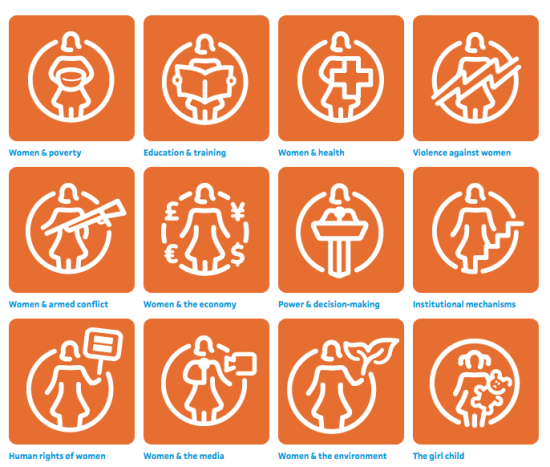
In 1995, before the girls of today were even born,the fourth World Conference on Women made history for the women’s rights agenda with the adoption of the Beijing Declaration and Platform for Action was adopted, the most visionary blueprint for the empowerment of women and girls. The Beijing Declaration and Platform for Action is the most progressive blueprint ever for advancing the rights of not only women but girls. Now, about half a century later, the Platform for Action remains a powerful foundation for assessing progress on gender equality. It calls for a world where every girl and woman can realize all her rights, such as to live free from violence, to attend and complete school, to choose when and whom she marries, and to earn equal pay for equal work. The Platform for Action specifically calls on the global community to eliminate all forms of discrimination against girls; eliminate negative cultural attitudes and practices against girls; promote and protect the rights of girls and increase awareness of their needs and potential; eliminate discrimination against girls in education, skills development and training; eliminate discrimination against girls in health and nutrition; eliminate the economic exploitation of child labour and protect young girls at work; eradicate violence against girls; promote girls’ awareness of and participation in social, economic and political life and strengthen the role of the family in improving the status of girls. 

The International Day of the Girl increases awareness of issues faced by girls around the world. Many of the global development plans do not include or consider girls, and their issues have become “invisible.” More than 62 million girls around the world had no access to education, as of 2014, according to USAID. Worldwide and collectively, girls ages 5 to 14 spend more than 160 million hours more on household chores than boys of the same age do. Globally, one in four girls are married before the age of 18. Each year, 12 million girls under 18 are married; 130 million girls worldwide are still out of school; and approximately 15 million adolescent girls aged 15-19 have experience forced sex. The International Day of the Girl Child helps to raise awareness not only of the issues that girls face, but also of what is likely to happen when these problems are solved. For example, educating girls helps reduce the rate of child marriage, disease and helps strengthen the economy by helping girls have access to higher paying jobs.

This day began as a project of Plan International, a non-governmental organisation that operates worldwide through their “Because I Am a Girl” campaign, which raised awareness on the importance of nurturing girls globally and in developing countries in particular. Awareness for the initiative grew internationally and soon the United Nations got involved in this campaign which finally became the International Day of the Girl Child with the inaugural day on October 11, 2012.

The resolution states that the Day of Girls recognises the empowerment of and investment in girls, which are critical for economic growth, the achievement of all Millennium Development Goals, including the eradication of poverty and extreme poverty, as well as the meaningful participation of girls in decisions that affect them, are key in breaking the cycle of discrimination and violence and in promoting and protecting the full and effective enjoyment of their human rights, and recognizing also that empowering girls requires their active participation in decision-making processes and the active support and engagement of their parents, legal guardians, families and care providers, as well as boys and men and the wider community.

Each year’s Day of Girls has a theme; the theme for this year’s celebrations is “My voice, our equal future” where girls, especially adolescent girls will focus their their demands to live free from gender-based violence, harmful practices, and HIV and AIDS; learn new skills towards the futures they choose and lead as a generation of activists accelerating social change

If you want to get involved in the International Day of the Girl Child, you can do so by sharing stories of inspiring adolescent girls or girl-led organisations who are developing innovative solutions or leading efforts towards positive social change, including gender equality, in their communities and nations. Let’s amplify their leadership, actions and impact to inspire others. You can also participate in a youth-led digital activation which will be launched on the 11th. This will be led by young people across the world who are developing a digital activism campaign, aiming to raise the diversity of girls’ voices and their vision for a reimagined future.