International Women’s Day: Balance the Scales

Yesterday was International Women’s Day (IWD). Around the world, people will mark this day with events that highlight women’s achievements and focus on the long road left for gender equality. This year’s themes, chosen by two of the main voices in the movement, say a lot about how the world talks about women’s rights today. The UN has set its banner around balancing the scales, while the IWD organisation has also chosen “Balance the Scales” as its call to action for 2026. It’s rare to see both align so closely, but it raises real questions. What exactly does “balance” mean? Is the metaphor useful? Or does it make things too simple in a world where the weight isn’t just on one side of the scale?

What Does “Balance the Scales” Actually Mean?
“Balance the Scales” sounds like a cliché at first. But both the UN and the IWD organisation are using it this year, so let’s unpack it. The clearest way to understand the phrase is as a demand for fair treatment. In blunt terms, too many rules, official or unspoken, still stop women and girls from being safe, heard, or free to make choices. Think of discriminatory laws. Think of violence. Think of missed jobs, unequal pay, or leadership doors shut in their faces.

The image of scales is meant to show justice. Balance implies fairness. But here’s the rub: real life rarely acts like a perfect set of scales. The problems aren’t all the same everywhere. For example, women in Afghanistan face different struggles than those in Norway. Not every barrier is visible, and not every answer is a change in law. The theme’s simplicity risks making the battles all seem equal when they aren’t.

Celebrating Progress, But Not Mistaking it for the End
IWD is, at heart, a day for both celebration and protest. There has been genuine movement. Women vote, lead, and shape their countries in ways their grandmothers couldn’t dream of in much of the world. But pointing out the progress often masks the scale of what’s left. The pay gap still hasn’t closed. Gender-based violence remains a fact of life for millions. Parliamentary seats and CEO chairs are mainly filled by men even in nations with free elections and stable economies.

Even the way we talk about “progress” can hide the truth. Some changes are surface-level. A woman named CEO isn’t a sign of equal opportunity if her company’s board is still stacked against her or if her appointment is used to hide the deeper bias that never vanished. When “balance” is claimed too soon, it keeps us from seeing that old habits and prejudices are only evolving, not disappearing.

Are the Scales the Right Metaphor?
Let’s be honest: the scales are easy to picture, but they flatten the complexity. What does a “balanced” world look like? Equal pay? Equal numbers in parliament? Or something deeper, where difference doesn’t mean disadvantage? Some would argue that perfect parity is neither possible nor desirable if it ignores choice and culture.

And then there’s backlash. The word “balance” draws protest from people who believe women are already favoured, or who see these campaigns as blaming all men. The metaphor of scales, if pushed too far, risks framing equality as a zero-sum contest. But gender justice isn’t a math problem where more for one side means less for the other. The metaphor would work better if it made room for nuances: race, class, sexuality, and culture. Power sits at intersections. Some women have more privilege than many men ever will. The risk is that we talk of “all women” as if they’re the same, when the real world is far more tangled.

Shifting the Narrative: Who Owns Women’s Day?
Both UN Women and the IWD organisation are pushing collective action this year. The language is everywhere: “shared ownership,” “movement powered by all.” It’s a way of trying to prevent top-down dictates, making IWD something that grows from millions of people acting in their own streets and workplaces. The idea is that the struggle belongs to no one person or group, but to everyone. In practice, of course, not all voices carry the same weight. Celebrities, corporate partners, and big NGOs often shape IWD in public, while local actions and unglamorous fights for justice are often drowned out.

That means a real challenge for “shared ownership.” When businesses use the day for branding, it dilutes the meaning. The risk is that companies pay lip service to gender equality while avoiding hard questions, like how they treat staff or whose stories get told. It’s not hard to imagine a world where IWD becomes another hashtag event, with slick meetings, speeches, and awards, while women on the margins see nothing change.

Beyond Slogans: What Needs Fixing?
So, what’s really stopping progress? It’s not just about the law. Sure, in some countries, girls still can’t go to school, and that’s a direct result of policy. But even where rights are protected, invisible barriers persist. Who does the housework? Who stops working when a child is born? Who gets believed when they report abuse?

Balance, if it’s more than a slogan, would mean real shifts in all these areas. Not just fairness in numbers, but also in attitudes. Research shows that just changing laws isn’t enough; cultures need to shift, too. That happens slowly and by constant pushback.

Why Do Some People Oppose International Women’s Day?
Any talk of IWD sparks anger in some circles. Some see it as divisive or outdated. Some claims celebrating women push aside men’s problems. But this kind of pushback often misses the point. Acknowledging women’s problems doesn’t mean ignoring others. In fact, a better balance for women often spills over to help society in general. For example, when women earn more or have safer workplaces, families as a whole benefit. Health outcomes improve, children thrive, and economies grow stronger.

But it’s important to address criticisms honestly. Not every IWD event is meaningful, and some do slip into empty virtue signalling. If a company signs on for IWD but pays its female workers less or sponsors events while ignoring harassment in its own ranks, the critique is fair. The day is not inherently radical or transformative. It only works when actions back up the slogans.

Is the Day Still Needed?
Some people claim that women have “made it” and that a special day is no longer necessary. The numbers tell another story. Globally, women still earn less than men and own fewer assets. They’re more likely to be in insecure work and more likely to do unpaid labour. In many parts of the world, violence against women remains common, and impunity often protects abusers.

If anything, the day matters more now than ever. It’s not just a time to repeat old victories but to reckon with unfinished business, sharpen the debate, and keep pressure on systems that claim equality while delivering little change.

What About Tradition and Culture?
Some critics argue that pushing for more equality upsets traditional cultures. But culture is not static. In many societies, the same people who defend “tradition” also benefit most from old power structures. That doesn’t mean all tradition is bad, but it does mean it’s worth asking whose interests are being served when someone says a change is “too much, too fast.”

Not every tradition by default deserves protection. And culture can adapt. In fact, history shows us that social norms change when enough people push for it. The very fact that IWD is mainstream now, rather than a fringe protest, shows how ideas can evolve.

Why “Balance” Isn’t the End Goal
Even if the scales were truly level, the work wouldn’t be done. Human relationships aren’t about perfect symmetry. The focus shouldn’t be on mathematical equality—one for one, fifty-fifty—but on dignity, respect, and the freedom for everyone, regardless of gender, to live fully and safely. “Balance” as a theme makes sense if it means breaking the old forms of bias and letting new, fairer arrangements emerge.

But if “balance” means small improvements while big patterns of inequality remain, it risks stopping progress dead. Slogans should guide, not chain, the movement.
What Would a Real “Balance” Look Like?
If we take the metaphor seriously, real balance is structural change. That means more than just more women in boardrooms. It means closing the pay gap, ending violence, making reproductive rights real, supporting care work, and making space for every kind of woman, not just those who match the dominant ideal.

It also means dismantling the systems that keep men from being full caregivers or that force gender stereotypes on everyone. True balance reshapes assumptions all the way down. It won’t happen overnight. And it won’t come from slogans alone.

What’s Next?
International Women’s Day will come and go, as it does every year. There’ll be speeches and banners and maybe even a few legal changes. But if the day is to be more than a yearly ritual, it needs more than words. Balance the Scales should be a starting point for a much tougher conversation, one where old ideas can be questioned, and the messy, lived experience of all women can guide the work.

So, when marking the day this year, or any year, don’t just settle for slogans. Ask hard questions. Demand real accountability. And respect that the “balance” many talk about still needs to be fought for, piece by piece, in changing rooms, offices, streets, and parliaments everywhere.
Short Story: Celebrating Women – The Circle of Life

In a quaint village nestled between rolling hills and whispering forests, the rhythm of life flowed gently, like the melody of a timeless lullaby. Here, amid the cobblestone streets and rustic cottages, lived women whose stories wove together to create a tapestry of resilience, strength, and sisterhood.

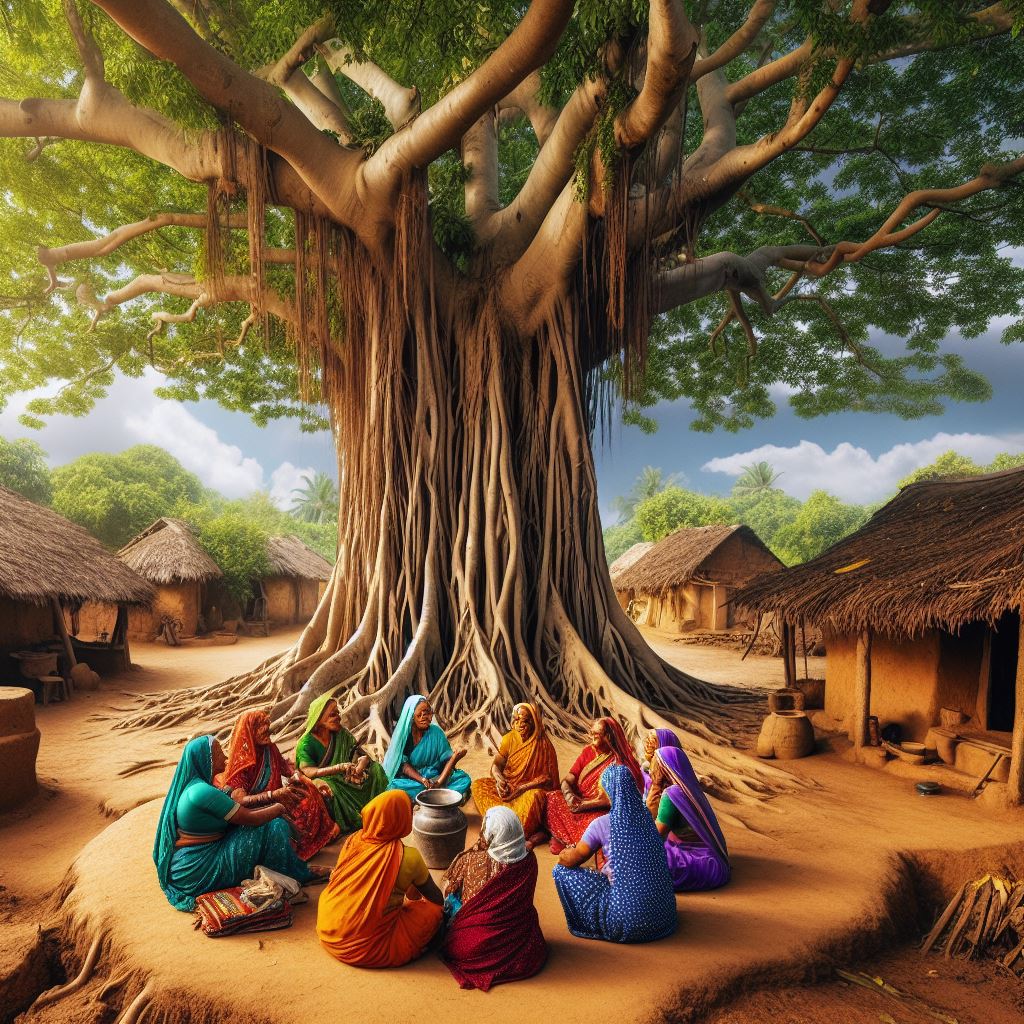
In the heart of the village, beneath the sprawling branches of an ancient banyan tree, sat young Lila, her eyes alight with wonder as she listened to her grandmother’s tales. Sitamma, with her silver hair and twinkling eyes, spoke of a time long past, when women were the keepers of tradition and wisdom.

Lila hung on her grandmother’s every word, her imagination ignited by stories of brave heroines and fierce warriors who had defied the odds and changed the course of history. As the sun dipped below the horizon, casting a golden glow upon the village, Sitamma whispered words of encouragement to her granddaughter.

“Remember, my dear,” she said, her voice a gentle breeze that stirred the air, “you carry within you the strength of generations past. Let your heart be your guide, and never forget the power of your voice.”

With those words echoing in her heart, Lila embarked on her journey, her spirit ablaze with the fire of possibility. She knew that she was but a bud, waiting to bloom into the fullness of her potential. And so, with each passing day, she embraced the challenges and triumphs that awaited her, knowing that her story was just beginning.

In a cottage nestled on the edge of the village, lived Kaveri, a mother whose love knew no bounds. With her gentle touch and nurturing spirit, she tended to the needs of her children, weaving a tapestry of love and warmth that enveloped their home like a cosy blanket.

Kaveri’s days were filled with laughter and chaos, the music of her children’s laughter a melody that danced through the halls. From dawn until dusk, she juggled the demands of motherhood with grace and poise, her heart overflowing with the joy of watching her children grow. But amidst the laughter, Sarah carried with her the weight of responsibility, the knowledge that she was the guiding light in her children’s lives. Through sleepless nights and tear-stained cheeks, she held their hands and whispered words of comfort, knowing that her love would carry them through even the darkest of days.

As she watched her children grow, Kaveri marvelled at the beauty of motherhood – the highs and lows, the triumphs and challenges, all woven together in a tapestry of love. She knew that her role was sacred, a privilege bestowed upon her by the universe, and she embraced it with open arms, knowing that she was fulfilling her purpose with every beat of her heart.

In the heart of the village square, beneath the shade of a blossoming cherry tree, sat Gowri Patti, an elderly woman whose wisdom was as deep as the ocean and as vast as the sky. With her weathered hands and kind eyes, she watched over the village like a guardian angel, her presence a source of comfort and guidance to all who sought her counsel.

Gowri Patti had lived a life rich with experience, her journey marked by triumphs and tribulations, victories and defeats. But through it all, she had remained steadfast in her belief in the power of sisterhood, the unbreakable bond that connected women of all ages and walks of life.

As the village gathered around her, eager to hear her tales of wisdom, Gowri Patti spoke of the importance of embracing one’s true self, of standing tall in the face of adversity, and of cherishing the bonds of friendship and sisterhood that bound them together. Her words were like poetry, weaving a tapestry of hope and inspiration that enveloped the village like a warm embrace. For in the wisdom of age, she found the courage to speak her truth, knowing that her voice held the power to ignite the flames of change and transformation.

And so, as the sun set on another day in the village, the women gathered beneath the banyan tree, their hearts intertwined like the branches above. They knew that their stories were but threads in the tapestry of sisterhood, each one unique and precious, yet connected by the unbreakable bonds of love and solidarity.

As the seasons turned and time marched onward, the women of the village continued to weave the threads of their lives together, creating a tapestry of strength, resilience, and sisterhood. From the blossoming innocence of youth to the quiet wisdom of age, each stage of life brought with it its joys and challenges, its triumphs and tribulations.

But through it all, the women remained united in their shared journey, their stories intertwined like the branches of the banyan tree, rooted deep in the soil of tradition and love. For in the heart of the village, amid the laughter and tears, the triumphs and defeats, there beat the timeless rhythm of sisterhood, a melody that echoed through the ages, celebrating the resilience and beauty of women everywhere.

International Women’s Day 2023

Today is International Women’s Day, a day which brings to the fore the women’s rights movement, bringing attention to issues such as gender equality, reproductive rights, and violence and abuse against women.

Spurred on by the universal female suffrage movement that had begun in New Zealand, IWD originated from labour movements in North America and Europe during the early 20th century. The earliest version was purportedly a Women’s Day organised by the Socialist Party of America in New York City on February 28, 1909. This inspired German delegates at the 1910 International Socialist Women’s Conference to propose a special Women’s Day be organised annually, albeit with no set date; the following year saw the first demonstrations and commemorations of International Women’s Day across Europe. After women gained suffrage in Soviet Russia in 1917 which was the beginning of the February Revolution, International Women’s Day was made a national holiday on March 8; it was subsequently celebrated on that date by the socialist movement and communist countries. The holiday was associated with far-left movements and governments until its adoption by the global feminist movement in the late 1960s. International Women’s Day became a mainstream global holiday following its adoption by the United Nations in 1977. The UN observes the holiday in connection with a particular issue, campaign, or theme in women’s rights.

International Women’s Day is a day when women can imagine a gender-equal world, a world free of bias, stereotypes, and discrimination. A world that’s diverse, equitable, and inclusive an a world where difference is valued and celebrated. Together and collectively, women’s equality can be forged and equity embraced.

And Embrace Equity is the theme for this year’s IWD. Equity isn’t just a nice-to-have, it’s a must-have. A focus on gender equity needs to be part of every society’s DNA and it is critical to understand the difference between equity and equality. The words equity and equality are often used interchangeably. Etymologically, the root word they share is aequus, meaning even, fair or equal – which led to equity being from the Latin aequitas, and equality from aequalitas. Yet, despite these similarities, equity and equality are inherently different concepts, and the IWD 2023 #EmbraceEquity campaign theme seeks to help forge worldwide conversations about this important issue and its impact. 

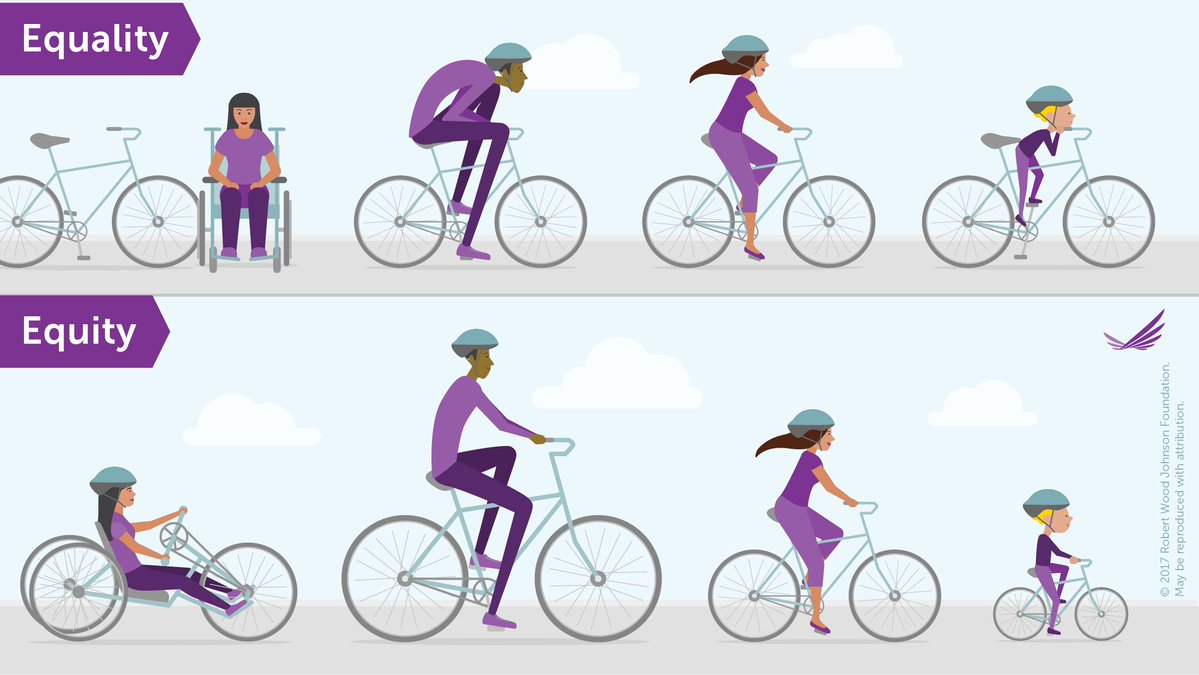
So, what’s the difference between equity and equality – and why is it important to understand and acknowledge this? Equality means each individual or group of people is given the same resources or opportunities. Equity recognizes that each person has different circumstances, and allocates the exact resources and opportunities needed to reach an equal outcome. Equity can be defined as giving everyone what they need to be successful. In other words, it’s not giving everyone the same thing. If we give everyone the same thing, expecting that will make people equal, it assumes that everyone started in the same place – and this can be vastly inaccurate because everyone isn’t the same.

We can all truly embrace equity. It should not be just something we say or write about. It’s something we need to think about, know, and embrace. It’s what we believe in, unconditionally. Equity means creating an inclusive world. All of us, irrespective of gender can play a part in creating an inclusive world by actively supporting and embracing equity within our sphere of influence. We can and should challenge gender stereotypes, call out discrimination, draw attention to bias, and seek out inclusion. Collective activism is what drives change. From grassroots action to wide-scale momentum, we can all embrace equity. Forging gender equity isn’t limited to women solely fighting the good fight. Allies are incredibly important for the social, economic, cultural, and political advancement of women.

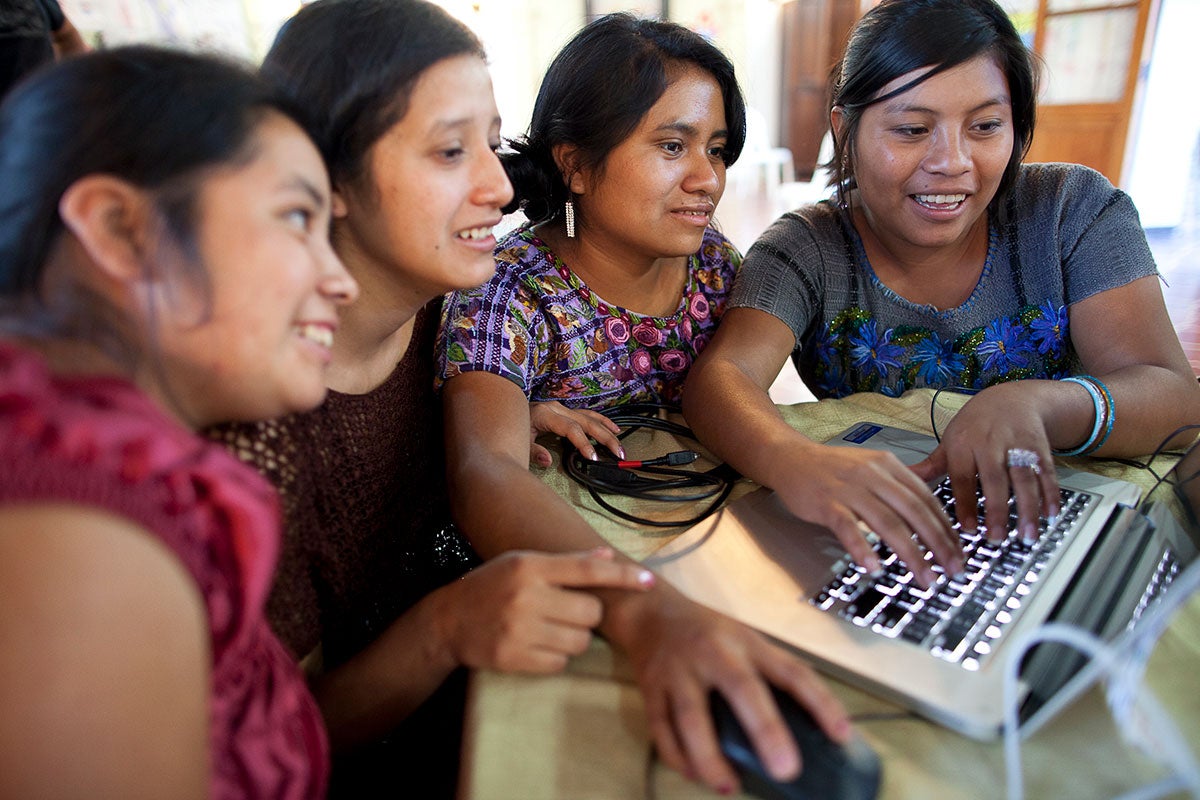
Over at the United Nations, the theme for International Women’s Day is DigitALL: Innovation and technology for gender equality. This theme highlights the need for inclusive and transformative technology and digital education.

The United Nations recognises and celebrates the women and girls who are championing the advancement of transformative technology and digital education. This IWD will explore the impact of the digital gender gap on widening economic and social inequalities and will also spotlight the importance of protecting the rights of women and girls in digital spaces and addressing online and ICT-facilitated gender-based violence. Bringing women and other marginalised groups into technology results in more creative solutions and has greater potential for innovations that meet women’s needs and promote gender equality. Their lack of inclusion, by contrast, comes with massive costs. As per the UN Women’s Gender Snapshot 2022 report, women’s exclusion from the digital world has shaved $1 trillion from the gross domestic product of low-and middle-income countries in the last decade—a loss that will grow to $1.5 trillion by 2025 without action. Reversing this trend will require tackling the problem of online violence, which a study of 51 countries revealed 38 percent of women had personally experienced.

A gender-responsive approach to innovation, technology, and digital education can increase the awareness of women and girls regarding their rights and civic engagement. Advancements in digital technology offer immense opportunities to address development and humanitarian challenges and to achieve the 2030 Agenda’s Sustainable Development Goals. Unfortunately, the opportunities of the digital revolution also present a risk of perpetuating existing patterns of gender inequality. Growing inequalities are becoming increasingly evident in the context of digital skills and access to technologies, with women being left behind as the result of this digital gender divide. The need for inclusive and transformative technology and digital education is therefore crucial for a sustainable future.

Lets us all celebrate women’s achievements today and raise awareness about the discriminations we face. Let’s take action to drive gender parity and embrace equity.