In My Hands Today…

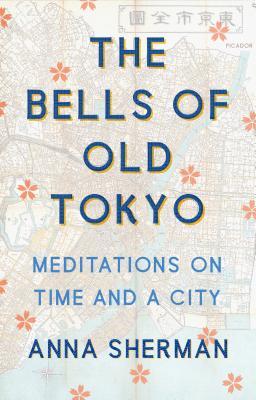
The Bells of Old Tokyo: Meditations on Time and a City – Anna Sherman

From 1632 until 1854, Japan’s rulers restricted contact with foreign countries, a near isolation that fostered a remarkable and unique culture that endures to this day. In hypnotic prose and sensual detail, Anna Sherman describes searching for the great bells by which the inhabitants of Edo, later called Tokyo, kept the hours in the shoguns’ city.

An exploration of Tokyo becomes a meditation not just on time but also on history, memory, and impermanence. Through Sherman’s journeys around the city and her friendship with the owner of a small, exquisite cafe, who elevates the making and drinking of coffee to an art form, The Bells of Old Tokyo follows haunting voices through the labyrinth that is the Japanese an old woman remembers escaping from the American firebombs of World War II. A scientist builds the most accurate clock in the world—a clock that will not lose a second in five billion years. The head of the Tokugawa shogunal house reflects on the destruction of his grandfathers’ “A lost thing is lost. To chase it leads to darkness.”

In My Hands Today…

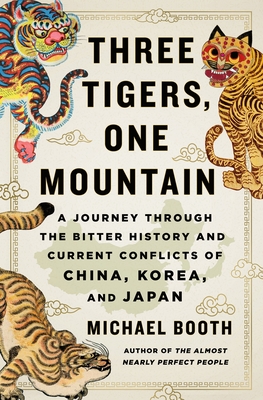
Three Tigers, One Mountain: A Journey Through the Bitter History and Current Conflicts of China, Korea, and Japan – Michael Booth

There is an ancient Chinese proverb that states, “Two tigers cannot share the same mountain.” However, in East Asia, there are three tigers on that mountain: China, Japan, and Korea, and they have a long history of turmoil and tension with each other. In his latest entertaining and thought provoking narrative travelogue, Michael Booth sets out to discover how deep, really, is the enmity between these three “tiger” nations, and what prevents them from making peace. Currently China’s economic power continues to grow, Japan is becoming more militaristic, and Korea struggles to reconcile its westernized south with the dictatorial Communist north. Booth, long fascinated with the region, travels by car, ferry, train, and foot, experiencing the people and culture of these nations up close. No matter where he goes, the burden of history, and the memory of past atrocities, continues to overshadow present relationships. Ultimately, Booth seeks a way forward for these closely intertwined, neighboring nations.

An enlightening, entertaining and sometimes sobering journey through China, Japan, and Korea, Three Tigers, One Mountain is an intimate and in-depth look at some of the world’s most powerful and important countries.

In My Hands Today…

Geisha, a Life – Mineko Iwasaki, translated and contributed by Rande Brown

“No woman in the three-hundred-year history of the karyukai has ever come forward in public to tell her story. We have been constrained by unwritten rules not to do so, by the robes of tradition and by the sanctity of our exclusive calling…But I feel it is time to speak out.””

Celebrated as the most successful geisha of her generation, Mineko Iwasaki was only five years old when she left her parents’ home for the world of the geisha. For the next twenty-five years, she would live a life filled with extraordinary professional demands and rich rewards. She would learn the formal customs and language of the geisha, and study the ancient arts of Japanese dance and music. She would enchant kings and princes, captains of industry, and titans of the entertainment world, some of whom would become her dearest friends. Through great pride and determination, she would be hailed as one of the most prized geishas in Japan’s history, and one of the last great practitioners of this now fading art form.

In “Geisha, a Life,” Mineko Iwasaki tells her story, from her warm early childhood, to her intense yet privileged upbringing in the Iwasaki okiya (household), to her years as a renowned geisha, and finally, to her decision at the age of twenty-nine to retire and marry, a move that would mirror the demise of geisha culture. Mineko brings to life the beauty and wonder of Gion Kobu, a place that “existed in a world apart, a special realm whose mission and identity depended on preserving the time-honored traditions of the past.” She illustrates how it coexisted within post-World War II Japan at a time when the country was undergoing its radical transformation from apost-feudal society to a modern one.

“There is much mystery and misunderstanding about what it means to be a geisha. I hope this story will help explain what it is really like and also serve as a record of this unique component of Japan’s cultural history,” writes Mineko Iwasaki. “Geisha, a Life” is the first of its kind, as it delicately unfolds the fabric of a geisha’s development. Told with great wisdom and sensitivity, it is a true story of beauty and heroism, and of a time and culture rarely revealed to the Western world.

In My Hands Today…

Stranger in the Shogun’s City: A Japanese Woman and Her World – Amy Stanley

The daughter of a Buddhist priest, Tsuneno was born in a rural Japanese village and was expected to live a traditional life much like her mother’s. But after three divorces—and a temperament much too strong-willed for her family’s approval—she ran away to make a life for herself in one of the largest cities in the world: Edo, a bustling metropolis at its peak.

With Tsuneno as our guide, we experience the drama and excitement of Edo just prior to the arrival of American Commodore Perry’s fleet, which transformed Japan. During this pivotal moment in Japanese history, Tsuneno bounces from tenement to tenement, marries a masterless samurai, and eventually enters the service of a famous city magistrate. Tsuneno’s life provides a window into 19th-century Japanese culture—and a rare view of an extraordinary woman who sacrificed her family and her reputation to make a new life for herself, in defiance of social conventions.

In My Hands Today…

Goodbye, Things: The New Japanese Minimalism – Fumio Sasaki, translated by Eriko Sugita

Fumio Sasaki is not an enlightened minimalism expert or organizing guru like Marie Kondo—he’s just a regular guy who was stressed out and constantly comparing himself to others, until one day he decided to change his life by saying goodbye to everything he didn’t absolutely need.

The effects were remarkable: Sasaki gained true freedom, new focus, and a real sense of gratitude for everything around him.

In Goodbye, Things Sasaki modestly shares his personal minimalist experience, offering specific tips on the minimizing process and revealing how the new minimalist movement can not only transform your space but truly enrich your life. The benefits of a minimalist life can be realized by anyone, and Sasaki’s humble vision of true happiness will open your eyes to minimalism’s potential.