
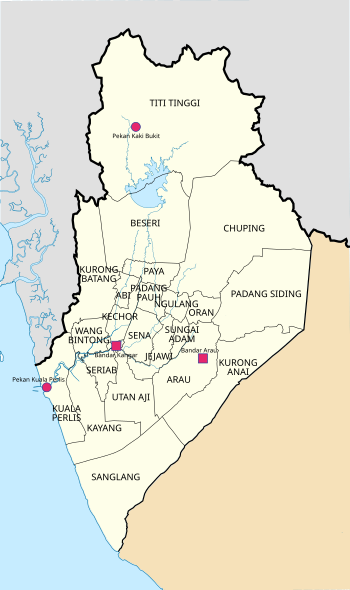
Also known by its honorific title, Perlis Indera Kayangan, Malaysia’s smallest state by area and population, Perlis lies on the northwestern coast of Peninsular Malaysia and is also the northernmost state in the country. The state borders the Thai provinces of Satun and Songkhla to the north and the Malaysian state of Kedah to the south. Perlis is the only Malaysian state that is not divided into any districts, due to its small size, but it is still divided into several communes. It was called Palit by the Siamese when it was under their influence.
Much of the state’s highlands are part of the Nakawan Range, a subrange of the Tenasserim Hills system that spans through southern Myanmar, Southern Thailand, and Peninsular Malaysia, with Mount Perlis as the highest point at 733 m. The Nakawan also forms a natural frontier between the state and Thailand.
The capital of Perlis is Kangar, and the royal capital is Arau. Another important town is Padang Besar, at the Malaysia-Thailand border and Kuala Perlis, the ferry town to Langkawi. The main port and ferry terminal is at the small village of Kuala Perlis, which links mostly to Langkawi Island. Perlis has a famous snake sanctuary and research centre at Sungai Batu Pahat. Perlis State Park and Gua Kelam are among the popular tourist attractions.
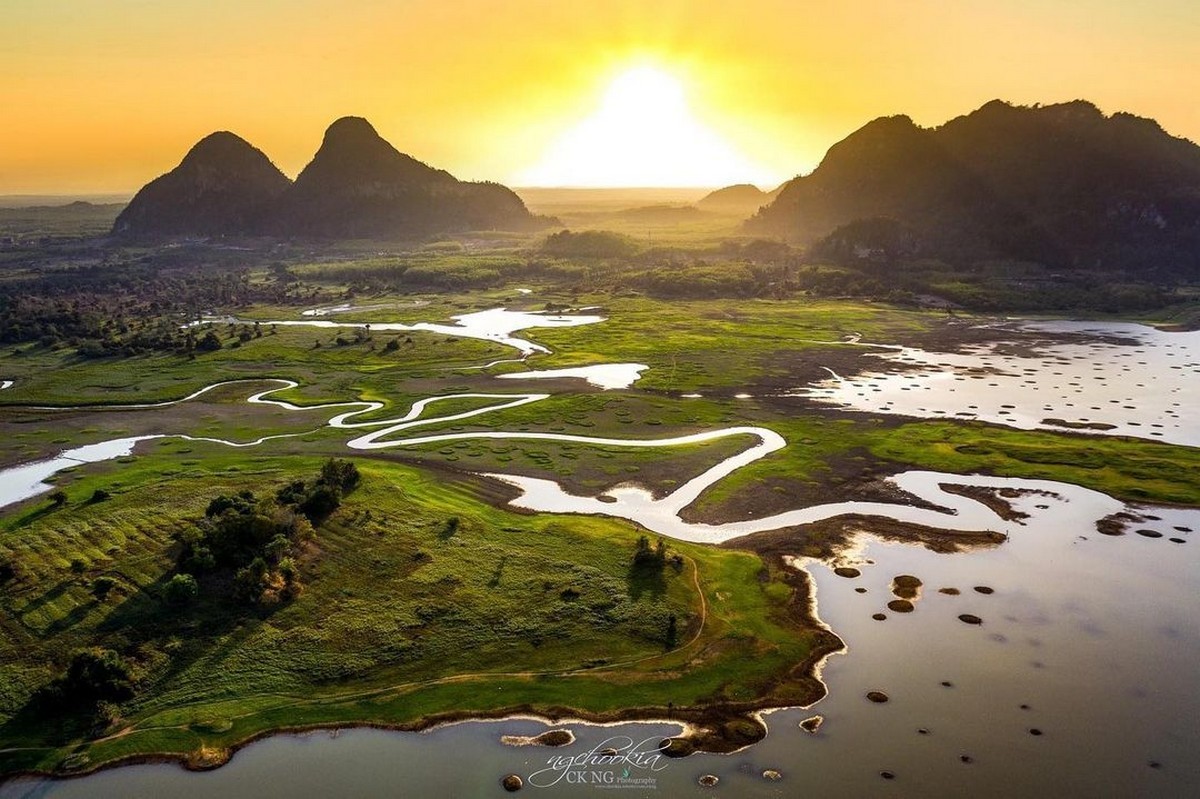
The origin of the toponym Perlis is vague. However, there are several theories. According to a Malaysian historian, Mohd Yusuf bin Adil, the name comes from the Thai phrase “phrao loi,” which means a coconut washed ashore, since there were many coconuts found on the shores of Kuala Perlis. The phrase has been shortened by locals until it sounded like “pereleh” or Perlis. It has also been suggested that Perlis may be a shortened form of a Malay word “peroleh,” meaning to obtain, as the state was a gift from Kedah since it was a part of Kedah before becoming a state on its own. According to Negeri Perlis Indera Kayangan: Sejarah Pembentukan Sebuah Negeri Berdaulat by Ahmad Ismail, the name comes from a tree of the same name, which may have gone extinct. Some researchers suggest the name is derived from a Northern Malay dialect word “perelus” which roughly translates as “foot falling into a crack”, since Perlis is said to have a wide land filled with mud, and the people’s feet may sink into the mud. Additional suggestions include being named after someone or derived from the French word “perlite,” which means “rock,” due to a huge rock near Sungai Perlis. The honorific Indera Kayangan was given by Tuanku Raja Syed Hussin Jamalullail, who ruled Perlis from 1843 to 1873, after the royal town of Indera Kayangan, where he was raised.
Perlis was originally part of Kedah, although it occasionally came under rule by Siam or Aceh. Sultan Dhiauddin II of Kedah was honorifically titled Raja Muda of Perlis and Kedah, akin to the title Prince of Wales in the United Kingdom. This fact depicts Perlis as a special realm within the Kedah sultanate. Sultan Dhiauddin then made Syed Harun Jamalullail, father of the future first Raja of Perlis, chieftain of Arau as a wedding gift for his marriage with his daughter, Tengku Sofiah.
After the Siamese conquered Kedah in 1821, the British felt their interests in Perak were threatened. This resulted in the 1826 Burney and Low Treaties formalising relations between the two Malay states and Siam, their nominal overlord. In the Burney Treaty, the exiled Sultan of Kedah, Ahmad Tajuddin, was not restored to his throne. Sultan Ahmad and his armed supporters then fought in a series of wars known as Perang Musuh Bisik for his restoration over twelve years between 1830 and 1842. Towards the end of the conflict and the death of Siam’s Ligor governor, the main authority on behalf of Siam over Kedah, in 1839, Perlis was separated from Kedah.

In 1842, the Sultan finally agreed to accept Siamese terms and was restored to his throne of Kedah. However, Siam separated Perlis into a separate principality directly vassal to Bangkok. The Siamese made Raja Long Krok the Governor of Siam in Perlis. Finally, on May 20, 1843, the Siamese made Sayyid Hussain Jamalulail, the paternal grandson of a Hadhrami Arab Sayyid immigrant and maternal grandson of the Sultan of Kedah, the first Raja of Perlis, making Perlis a sovereign state. His descendants still rule Perlis, but as rajas, instead of sultans. In 1897, Kedah, led by its Prime Minister, Wan Mat Saman, began efforts to end the sovereignty of Perlis. After several tense occasions and disputes, the Siamese King Chulalongkorn sided with Perlis. Perlis also had several disputes with the state of Setul before the 1900s.
As with Kedah, the Anglo-Siamese Treaty of 1909 forced Siam to relinquish its southern Malay vassal states of Kelantan, Trengganu, and Monthon Syburi, comprising Kedah, Perlis, and Satun, which remained with Thailand and Great Britain. The British installed a resident in the Perlis royal capital of Arau. Perlis was returned to Siam in World War II as a reward for Siam’s alliance with Japan, but this brief annexation ended with the Japanese surrender. After World War II, Perlis returned to British rule until it became part of the Malayan Union, then the Federation of Malaya in 1957, and lastly, Malaysia in 1963.
Perlis is Malaysia’s smallest state and like other west coast states, it has a coastline facing the Strait of Malacca from Kuala Sanglang near the border with Kedah’s Kubang Pasu District up north towards the Malaysia-Thailand border near Pos Batu Putih, in the vicinity of Kuala Perlis. Unlike other Malaysian monarchical states, in which the ruler is a Sultan, the Perlis ruler is called the Raja. The Pesta Air Kuala Perlis or Perlis Water Festival and the Perlis East Wind Festival are the main festivals of the state.

Kangar
The state capital of Perlis as well as its largest town, Kangar is located next to the Thailand border, in the northernmost point of Peninsular Malaysia by the Perlis River. The town is also a gathering centre for the paddy rice production of the surrounding district. The town is the smallest state capital in Malaysia and its inhabitants are mostly farmers and civil servants. Its industries include cement, saw milling, rubber, paper, and processing of sugar and prawns.
Kangar existed from about1653 when Kota Sena was built as the administrative centre for the 14th Sultan of Kedah, Sultan Muhyiddin Mansor Shah. Kangar was then a land port or pengkalan where boats and tongkangs anchor at the confluence of Perlis River, which runs through Kangar town to Kuala Perlis. The name Kangar was derived from a type of tree. It was here at the port that trading was done, under a big tree that gave shade and respite to the traders. This tree that became a witness to many business deals was called Pohon Kangar. Every trader and merchant who came and went to this place began calling it the Pohon Kangar Port, in honour of the tree. Downtown Kangar is a mixture of old and new shophouses and has an elegant colonial State Secretariat Building and clocktower from the 1930s.
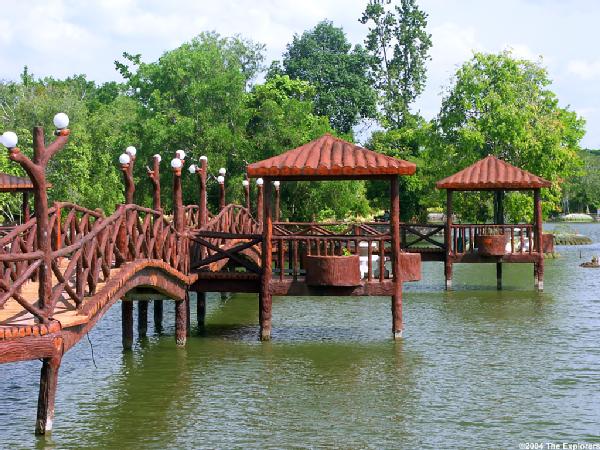
Situated in Kangar, the Tasik Melati Recreational Park is a beautiful natural wetland which is famous for its crystal clear lake surrounded by lush green trees and beautiful mountains. Over 150 sandbars or islands can be spotted amidst the lake. The Tasik Melati Recreational Park features Chinese architectural elements and the park is adorned with pavilions, floating footbridges, benches, lotuses and other tropical vegetation. The footway bridge that has been constructed over Melati Lake provides a splendid view of the park. The recreational park is a great spot for picnics as well. Here, one can also indulge in activities like jogging, trekking, fishing and boating. The park also houses a playground for children. If you are interested in bird watching, you must carry a pair of binoculars.
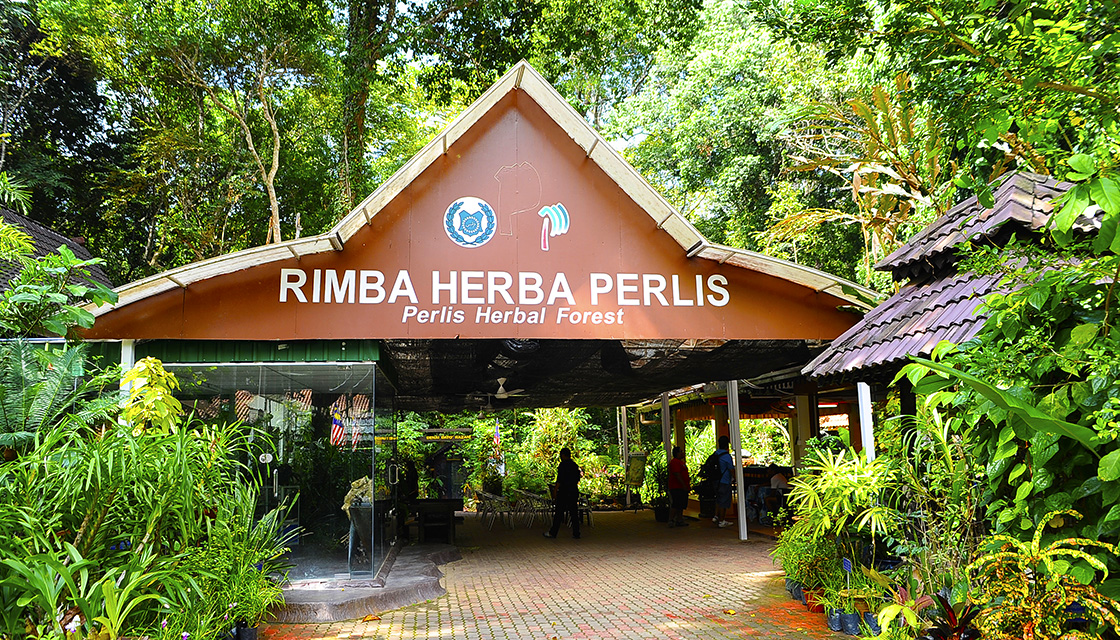
Taman Herba is a herb garden located near the Bukit Ayer Recreational Forest. Sprawling across an area of about 12 hectares, this garden houses about 1000 species of wild herbs or medicinal plants. While some of the wild herbs are grown inside the garden, some are exported from other places. If one wishes to gain an insight into the various plant species, one can opt for a guided tour or interpretation trail of the garden. One can also take herbal treatments, herbal massages or taste herbal drinks at Taman Herba as well as bag home herbal products from the souvenir kiosks of the garden. The herb garden is open daily between 8 am and 5 pm and has entry fees of RM 2 for adults and RM 1 for children.
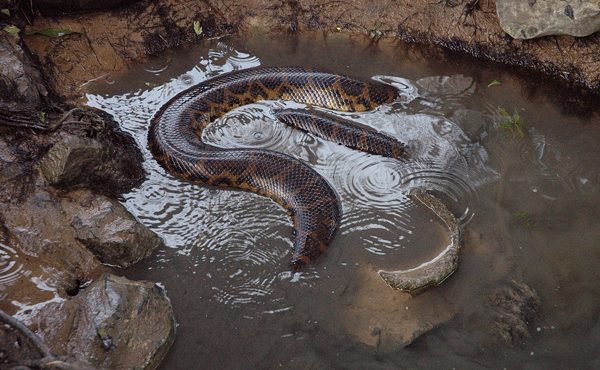
Situated in Sungai Batu Pahat, the Perlis Snake and Reptile Farm houses about 300 snakes belonging to 30 different species. One can also find crocodiles, lizards, horses, turtles, otters, monitor lizards, iguanas, deer, monkeys, ostriches, poultry and macaques inside the farm. The spitting cobra is the most poisonous snake on the farm, while the heaviest python weighs about 80 kg. Some of these creatures are kept inside enclosed exhibits, while others are in open-air enclosures for visitors to admire. The snake and reptile farm is open from 9 am to 5 pm on Saturdays and Thursdays, while on Fridays, it is open from 9 am to 12:15 pm and then from 2:45 to 5:30 pm. Entry fees are RM 4 for adults and RM 1 for children, while RM 1 is charged as a camera fee.
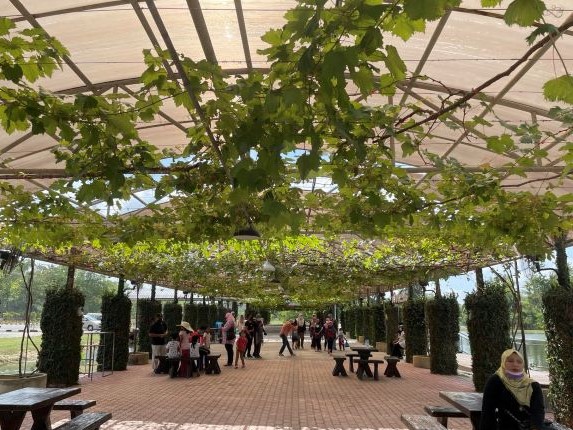
Taman Anggur Perlis, also known as the Perlis Vineyard, is located on the outskirts of Kangar. Visitors can sample the nine different kinds of grapes available in this 0.2-hectare vineyard and buy some to take them back as well. The grapes here are of a seedless variety. The vineyard is surrounded by places like the Snake Farm and Herbs Farm, and the location can make for a fun day out.

Located in the heart of Kangar, Masjid Alwi or Alwi Mosque, is named after the Raja of Perlis at that time, Raja Syed Alwi Ibni Almarhum Tuan Syed Saffi Jamalullail. The mosque was built in a unique style, including an onion-shaped dome seated on an octagonal drum. The mosque has a Mughal-style minaret and a balcony, with multiple onion-shaped domes along the entrances at the front and sides. Inside the mosque is a prayer hall with eight pointed arches and another onion-shaped mini dome, with a mihrab to its right. Efforts to collect funds to construct the mosque began in the 1920s. Construction began in 1931 and was completed in 1933. It was then officially opened by Raja Syed Alwi. The mosque was declared a national heritage site in 1988 under the National Heritage Act 2005.
Chuping
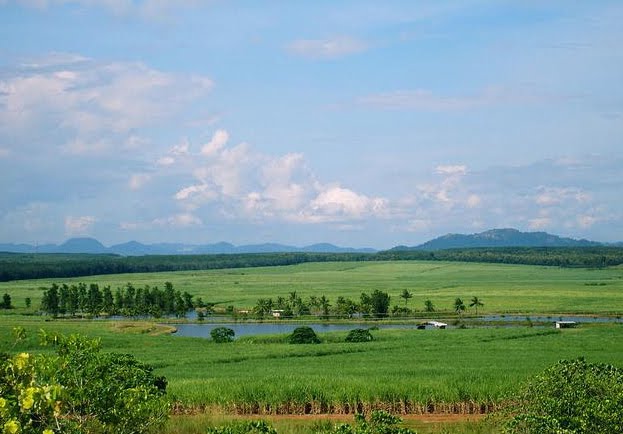
Chuping is Malaysia’s largest sugar cane growing area and one of the Malaysia Rally Championship circuit. A suburb of Kangar and a small town, it is located to the northeast of Kangar. The town has 22,000 hectares of plantations, which consist of rubber estates and the largest sugar cane plantation in Malaysia. Chuping’s name may be taken from a limestone hill in the area called Bukit Chuping. There are many limestone hills in the area, and several caves containing bats. The guano used to be collected for use as a fertiliser for crops such as rice, as it contains nitrates and iron phosphate. Chuping is considered one of the driest areas in Malaysia.
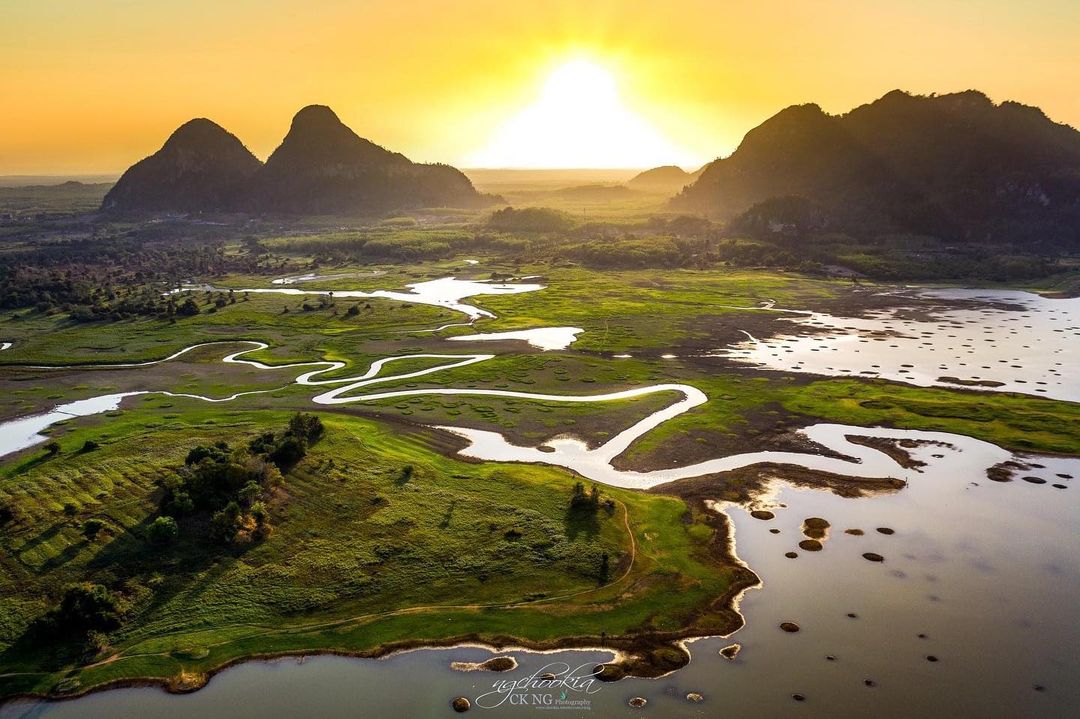
The man-made Timah Tasoh Lake is located 17 km from Kangar and 15 km from Chuping. Serving as a water catchment to surrounding areas, this 1300-hectare lake offers great views of the hills and the greenery surrounding it. During winter, over 100 species of migratory birds flock to this lake, and the lake also is a site for fish breeding and aquaculture projects.
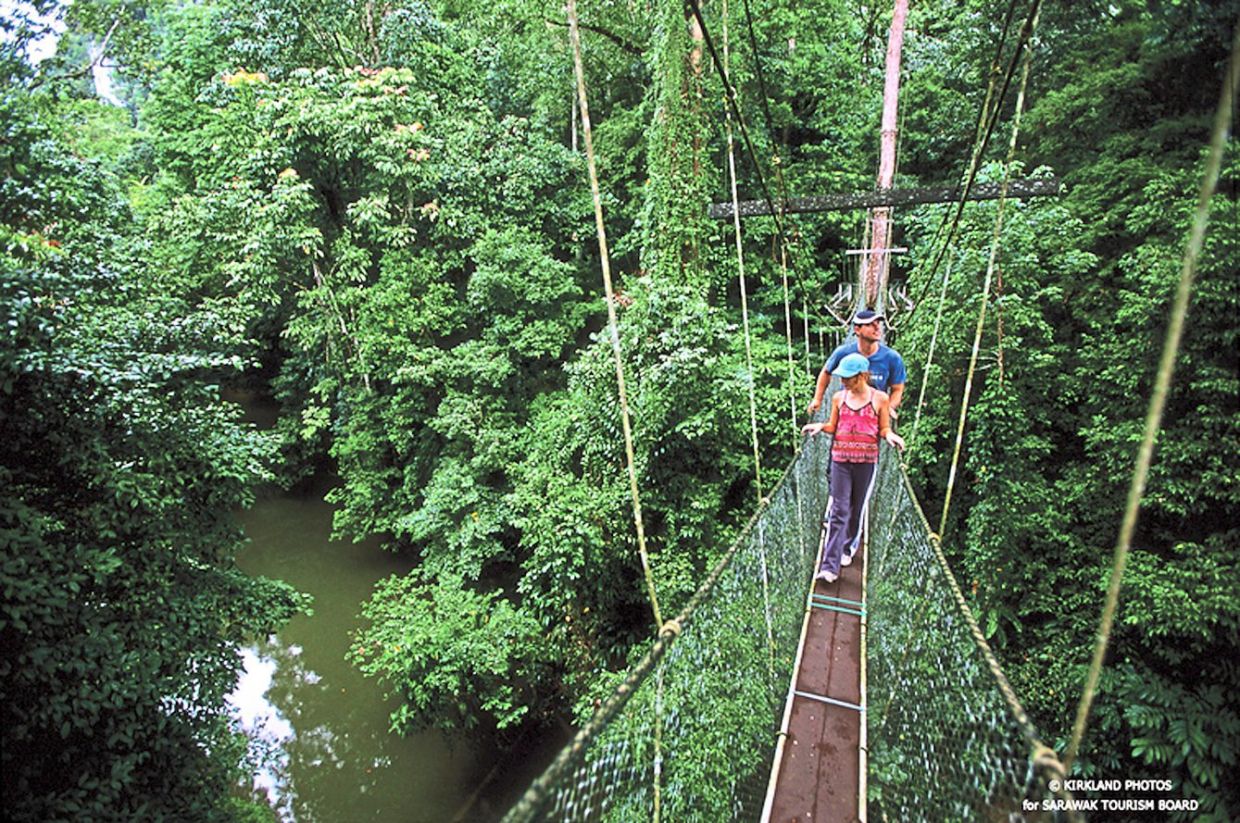
Built as an area for research into Malaysian flora and fauna, the canopy walk at the Ayer Reserve in Perlis is open to the public all weekdays. Visitors can walk along the 100-metre route through the canopy of teak trees and enjoy the richness of nature Malaysia offers. It is open daily from 6 am to 9 pm.
 Memories and Such