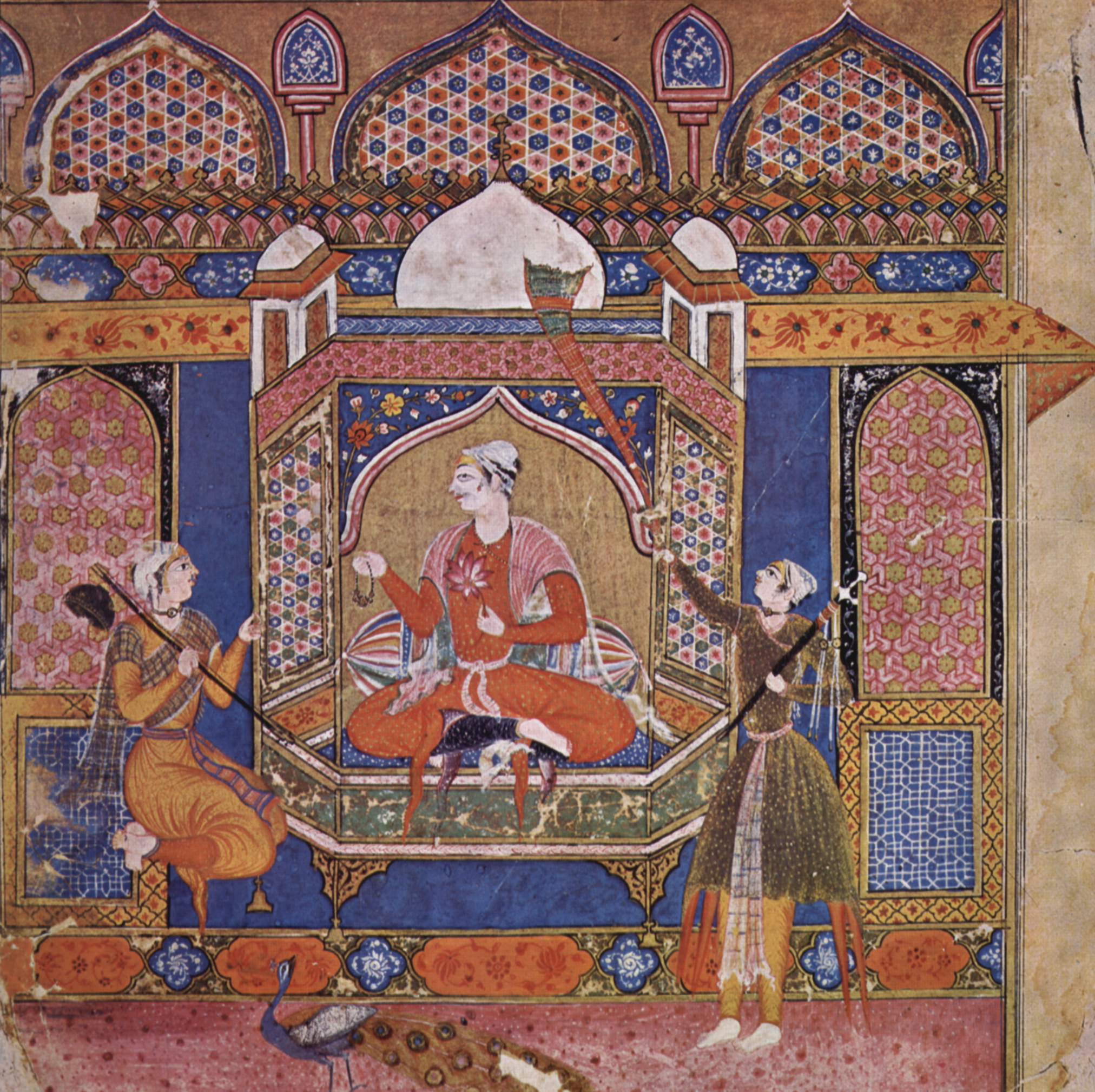
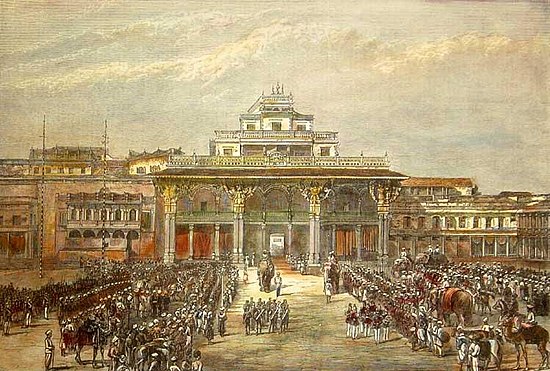
Travel Bucket List – India: Karnataka Part 3

If Bengaluru is the head of Karnatka, then Mysore or as it is called today, Mysuru is definitely it’s heart and is known as the cultural capital of the state.
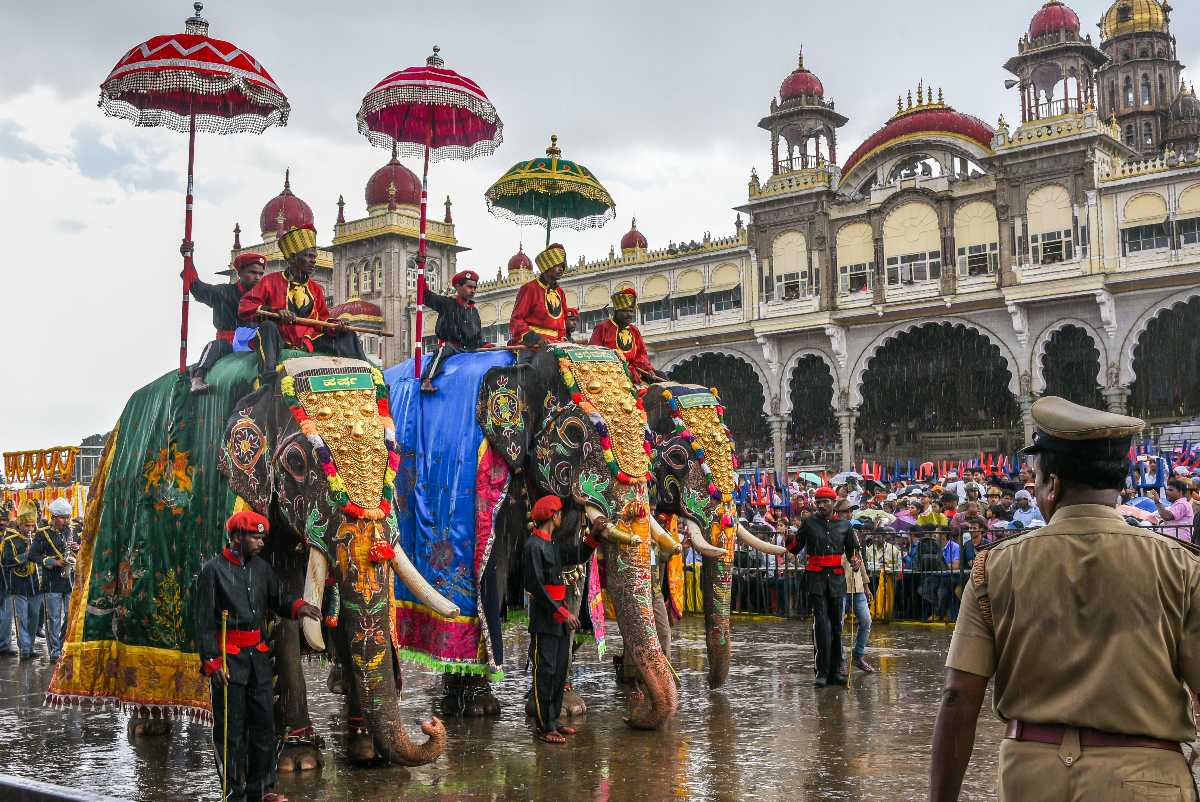
Located at the foothills of the Chamundi Hills at an altitude of about 2,427 ft, southwest of Bengaluru, Mysuru served as the capital city of the Kingdom of Mysore for nearly six centuries from 1399 until 1956. The Kingdom was ruled by the Wadiyar dynasty, with a brief period of interregnum in the late 18th century when Hyder Ali and Tipu Sultan were in power. The Wadiyars were patrons of art and culture while Tipu Sultan and Hyder Ali also contributed significantly to the cultural and economic growth of the city and the state by planting mulberry trees introducing silk in the region and fighting 4 Anglo-Mysore wars against the British. Known for its heritage structures and palaces, including the Mysore Palace, and for the festivities that take place during the Dasara festival it lends its name to various art forms and culture, such as Mysore Dasara, Mysore painting; the sweet dish Mysore Pak, Mysore Masala Dosa; brands such as Mysore Sandal Soap, Mysore Ink; and styles and cosmetics such as Mysore Peta (a traditional silk turban) and the Mysore silk sarees.

The name Mysore is an anglicised version of Mahishuru, which means the abode of Mahisha in the vernacular Kannada. This refers to Mahishasura, a mythical demon who could assume the form of both human and buffalo, who, according to Hindu mythology, ruled the ancient parts of the Mysore Kingdom, known in Sanskrit as Mahíshaka, centred at Mahishapura. He was killed by the Goddess Chamundeshwari, whose temple is situated atop the Chamundi Hills, after whom it is named. Mahishapura later became Mahisuru, a name which the royal family uses even now, and finally came to be anglicised as Mysore by the British and Maisuru or Mysuru in the vernacular Kannada language. On 1 November 2014, the name was officially changed to Mysuru.

I have been to Mysore twice, one when I was very young when my aunt used to live there. We must have spent a good part of our summer holiday there, but I don’t really have many memories of that trip. The second time was a girls day trip from Bangalore to Mysore. We were six of us girl cousins plus a friend and we did this trip using a tour company. This used to be quite common then, no idea whether it exists now. The trip also included a side trip to Srirangapatna and I have many memories of trip!

On to discover Mysuru….

An incredibly breathtaking example of the Indo-Saracenic style of architecture, the Mysore Palace is a magnificent edifice also known as the Amba Vilas Palace. It is the former palace of the royal family of Mysore and is still their official residence. Built in the year 1912 for the 24th ruler of the Wodeyar dynasty, the Mysore Palace is counted amongst one of the biggest palaces in the country. The construction of the palace was orchestrated by Maharaja Krishnaraja Wadiyar IV and then further expanded by his son and the last Maharaja, Maharaja Jayachamaraja Wadiyar. The facade of the palace is a harmonious blend of Hindu, Muslim, Rajput and Gothic styles which imparts it a regal quality. With the Chamundi Hills towards its eastern side, the Mysore Palace is an enchanting sight to behold. Located inside the Old Fort, the palace is renowned for its light & sound show and vibrant Dussehra celebrations. The Palace is open from 10 am to 5:30 pm and you will need atleast two to three hours to cover the palace. The entry fee to enter the palace is INR 70 for both Indians and foreigners while children between the ages of 10 and 18 pay INR 18.
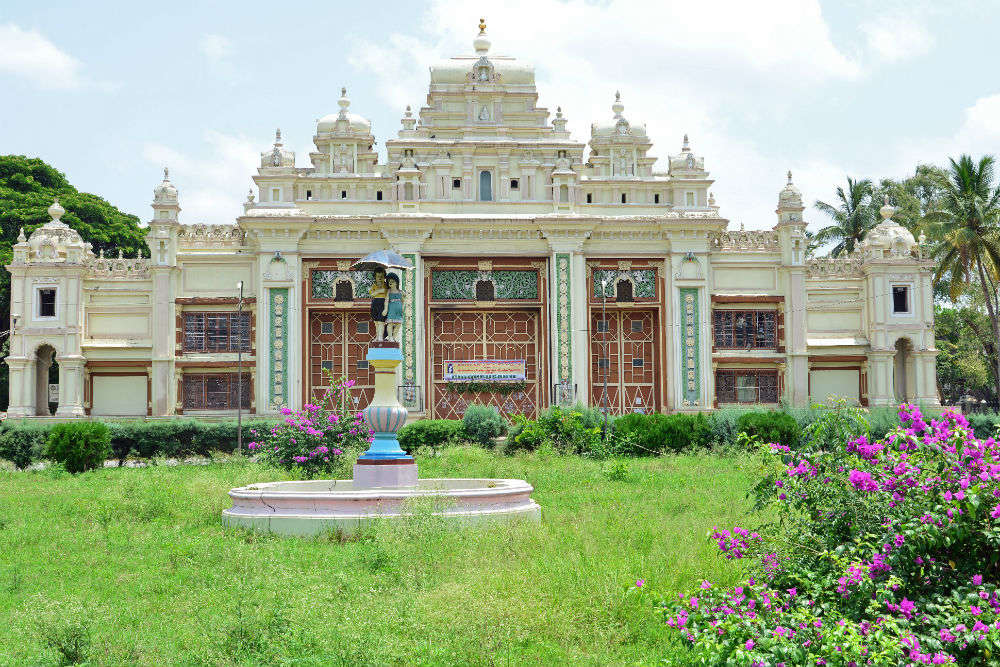
The Jaganmohan Palace has an illustrious history attached to its name. Used by the Wodeyars when their main residence Amba Vilas Palace was under renovations post a fire incident, it is one of the seven palaces that are situated in the city and is counted as one of the most beautiful. The Jaganmohan Palace was converted into a magnificent art gallery in 1915 and today hosts some of the most exquisite pieces of artwork. It currently holds more than 2000 paintings pertaining to various art forms like the Mughal, Shantiniketan and Mysore. The architecture of Jaganmohan Palace is intricate and detailed beautifully with the main door being a beautiful example of the typical Hindu style of architecture and two wooden displays illustrating the ten incarnations of Lord Vishnu embellishing the premises as well. The palace also held an important position in the administrative and legislative affairs of Mysore for a long period. From hosting the early convocations of the Mysore University to holding the first session of the Legislative Council of Mysore, this palace has seen it all. The Jaganmohan Palace is open from 10 am to 5:30 pm daily and you will need to pay INR 20 for an adult and INR 10 for a child to enter the premises.

Built in the year 1921, the Lalitha Mahal is the second largest palace in Mysore and was built at the orders of Maharaja Krishnaraja Wodeyar IV of Mysore for the stay of the then Viceroy of India, The Earl of Reading. The architecture of the grand palace was inspired by the St. Paul’s Cathedral in London, which makes visiting the palace an enjoyable pause to your day. The entry fee to the Lalitha Mahal Palace is INR 100 and the palace is open between 10 am and 6 pm daily.
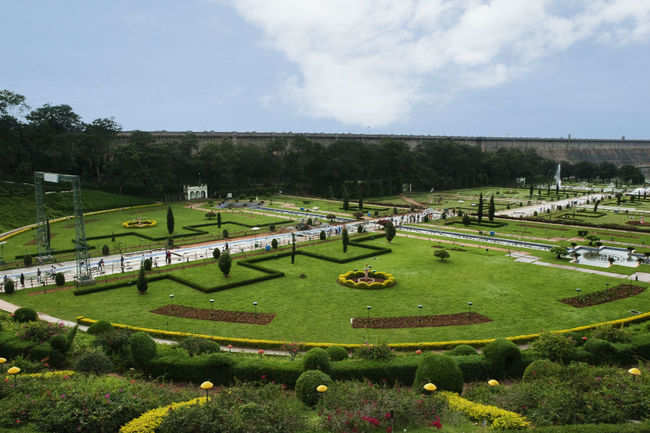
Spread over 60 acres and located about 21 kms from Mysuru, the Brindavan Gardens is visited by millions of tourists yearly and is a must-see destination in Mysuru. You can’t visit Mysuru and not make a trip to these gardens. The gardens were constructed in 1932 by the Diwan of Mysore, Sir Mirza Ismail, who was inspired by Hyder Ali who had built the Lalbagh Botanical Gardens in Bengaluru. Built across the Cauvery river, the gardens took around five years to construct and has a boating facility offered by the Karnataka State Tourism Development Corporation which connects the two parts of the garden along with a walkway bridge. The well-synchronised fountain show with music is the highlight of the garden and is not to be missed. The Gardens are open from 7 am to 8 pm on weekdays and from 7 am to 9 pm on weekends. The Musical Fountain show runs from 6:30 to 8 pm during weekdays and from 6:30 to 9 pm on weekends. You will need a good three to four hours to explore the gardens. Entrance fees are INR 50 for an adult and INR 10 for a child. If you plan to bring in your DSLR camera, you will need to pay INR 100. If you are interested in the boating experience, a round trup from the north garden to the southern part of the garden will cost you INR 30 per person before 6 pm and INR 60 per person after 6 pm. If you only want to boat on one side after 6 pm, it will cost you INR 30.

Popularly known as the Mysore Zoo, the Sri Chamarajendra Zoological Gardens is located near the Mysore Palace and is known as one of the oldest and best zoological gardens in India. It was established in 1892 by the then Maharaja, Chamaraja Wodeyar as a royal zoo with an area of 157 acres and after India’s independence, was handed over to the state government department of parks and gardens. The zoo has created natural habitats for over a hundred and sixty-eight species of animals, birds and reptiles. The zoo also plays the role of an orphanage for abandoned animals and was the first zoo in the world to perform a caesarean delivery on an elephant which made news all over the world. The zoo has various exhibitions regularly held.
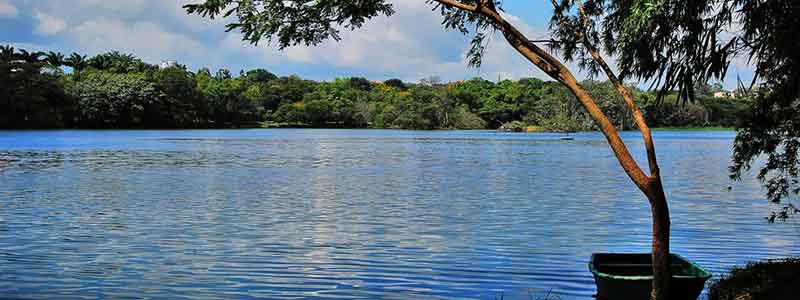
The Karanji Lake, a popular picnic spot was put under the Zoo’s jurisdiction in 1976. The lake has different species of birds and is said to possess the largest aviary in the country with over 147 species under it’s domain. The lake also has a waterfall with two water bodies alongside as well as a butterfly park, home to more than 45 species of butterflies. You can also visit the Regional Museum of National History which is situated on the banks of the lake and find out more on the natural environment of South India and how to maintain it. The zoo and the lake are open from 8:30 am to 5:30 pm and closed on Tuesdays. Entry fee for the zoo is INR 50 for adults and INR 20 for children under 12 during the weekday and INR 60 for an adult and INR 30 for a child during weekends. For the lake, you need to pay INR 10 for an adult while a child pays INR 5.

Home to over 2000 birds, the Shuka Vana is a must visit for ornithophiles and nature lovers. With over 450 varied species, this striking 50m high aviary spanning an area of 1 acre currently holds the record for most bird species in an aviary in the Guinness Book of World Records. This unique park, commonly known as parrot park, is a part of the Avadhoota Datta Peetham in the Sri Ganapathi Sachidananda Ashram, and also serves as a rehabilitation centre for abused, injured and abandoned birds. One can also find many rare species of parrots flying around this beautiful enclosure. The place is closed on Wednesdays and on other days is open between 9:30 am and 12:30 pm and then again between 3:30to 5:30 pm. There is no entry fee to access the Shuka Vana.
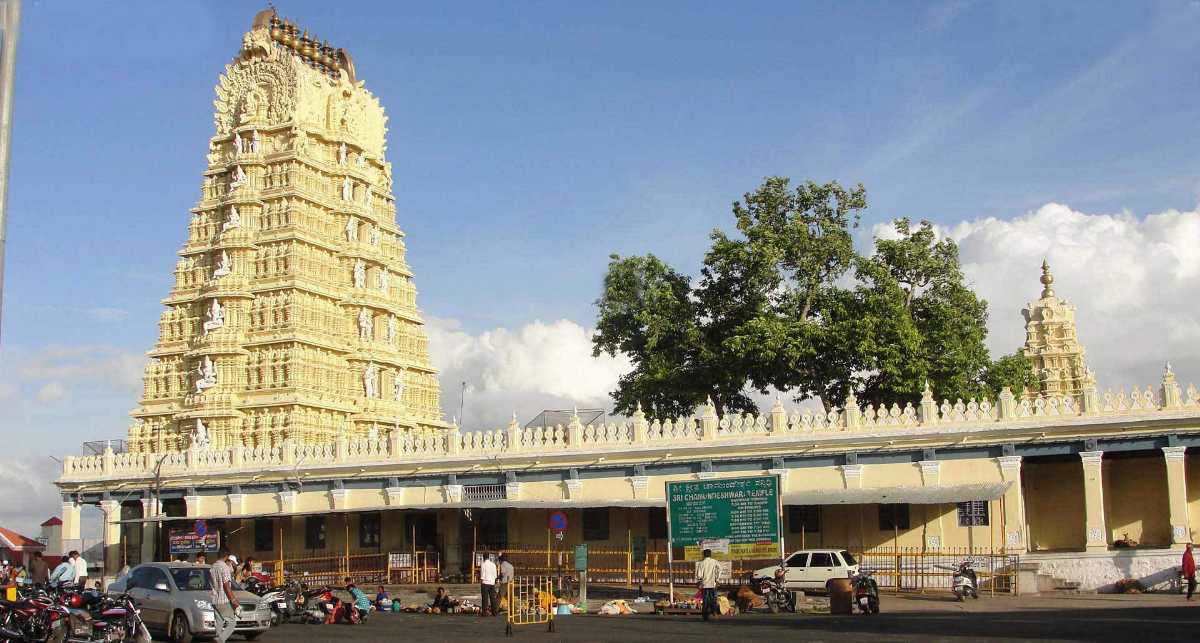
The Chamundeshwari Temple is a traditional Hindu temple located on the eastern edge of Mysore at the height of 1000 ft on the Chamundi hills. Dedicated to and named after goddess Durga, the temple also has statues of Nandi and Mahishasura, the demon. The Chamundeshwari Temple is considered as a Shakti Peetha and is one among the 18 Maha Shakti Peethas. The temple showcases the fierce form of Shakti, a tutelary deity that was held in reverence for centuries by the Maharajas of Mysore; hence deriving its name from goddess Durga. The idol of goddess Durga here is adorned every day and worshipped by a number of priests. The deity is offered a variety of fruits, coconuts and flowers to show respect and reverence. You can reach the temple either by walking up the steps or by driving through the interwoven valley road. Usually not very crowded, the view of the city of Mysuru from the temple is stunning, as you can see many significant structures of the city including the Lalitha Mahal Palace. The temple has also been declared as the No Plastic Zone. The temple is open from 7:30 am t0 2 pm and then from 3:30 to 6 pm and then again from 7:30 to 9 pm.

The ancient temple of Trinesvaraswamy is located outside the Mysore Fort, with the main deity being Trinesvara i.e. the three-eyed Shiva. The gopura of this temple was destroyed in the 18th century, but the beauty of the Dravidian architecture is still on display here.

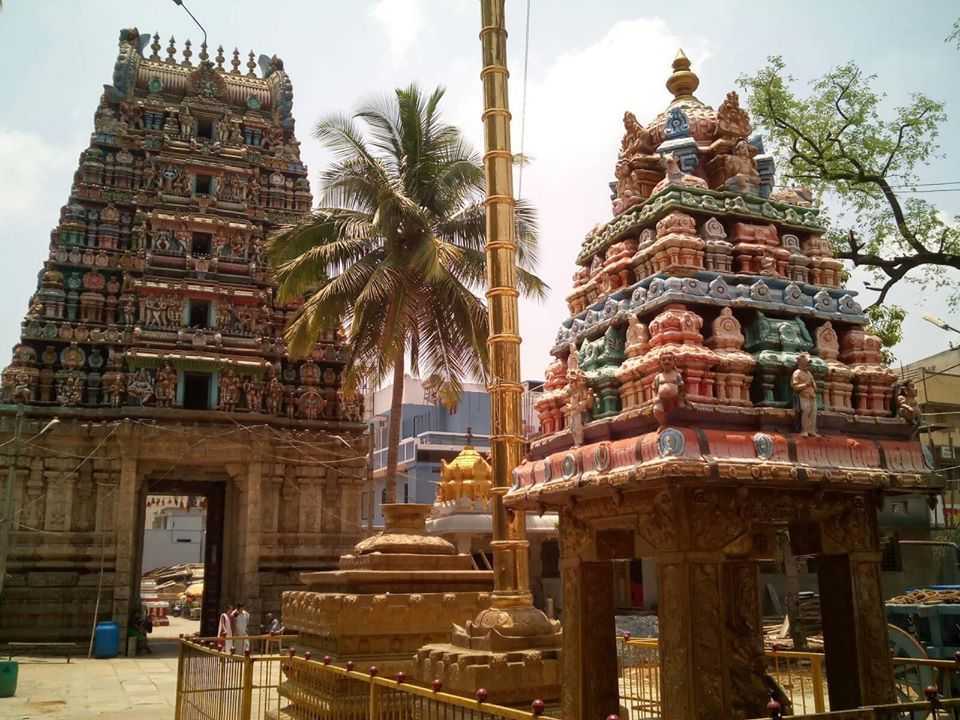
The Srikanteshwara Temple is built in the Dravidian style and is dedicated to Lord Shiva and said to have healing powers. The 125 feet tall Gopura along with the 7 gold kalash are a must see on visiting this temple. The temple is open from 6 am to 1 pm and then again between 4 to 8:30 pm
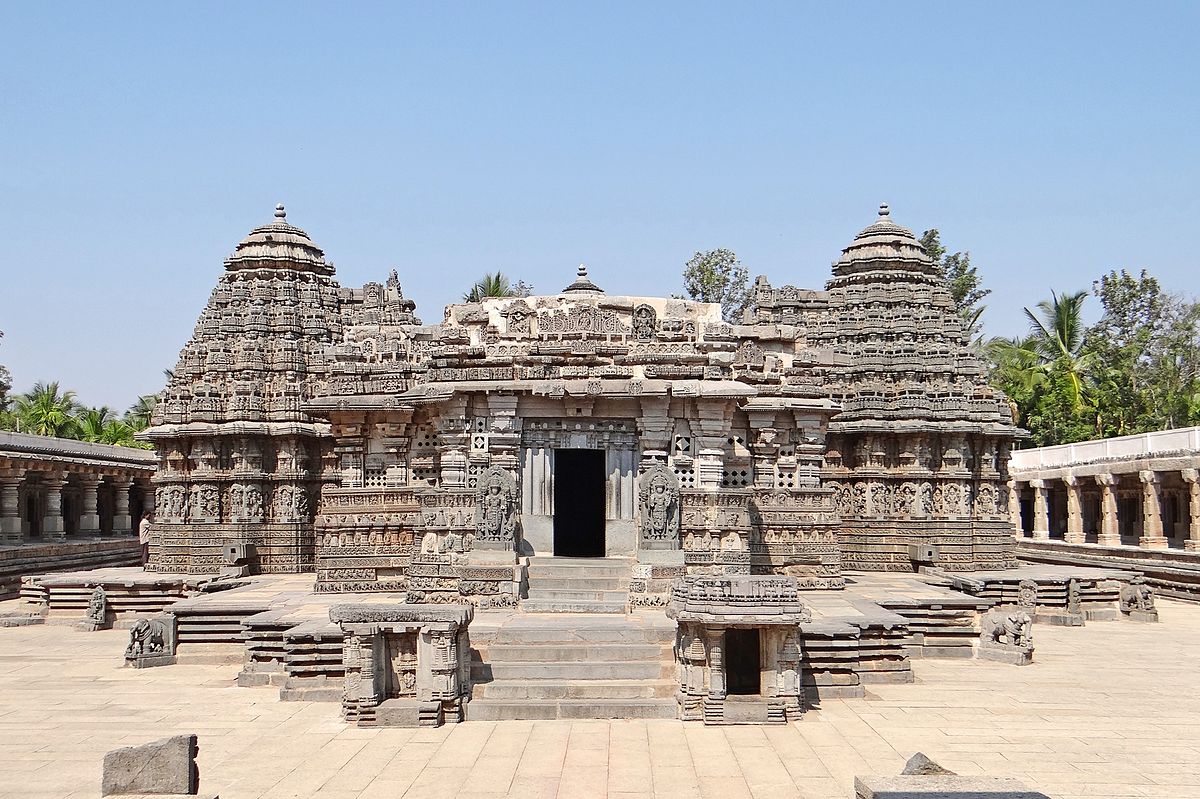
On the banks of river Kaveri, about 35 km east of the centre of Mysuru lies the tiny tranquil town of Somanathapura. Here you can find the finest example of Hoysala architecture known as the Prasanna Chennakesava Temple or simply the Kesava Temple. Consecrated in the year 1258 CE, it is a Vaishnav Hindu Temple dedicated to might and beauty of Lord Krishna. The temple’s name comes from Chenna which means beautiful and Kesava which is another name of Lord Krishna. The Chennakesava temple is one of the 1500 Temples built by the Hoysala Empire kings in different parts of their kingdom, and is said to be the climax development in Hoysala temple style and yet is unique in many other ways. This temple is one of the three to be nominated in the UNESCO World Heritage Site list. Unfortunately, this temple is no longer used as a place of worship because the idols have been broken and desecrated by invading Muslim armies. But you can still see the beauty and charm of the structure and admire the delicate carvings and sculptures. The temple is open from 9 am to 5:30 pm and entry fee for Indians is INR 20 if using cashless payment and INR 25 if paying by cash. For foreign nationals, cashless payment is INR 250 and cast payment is INR 300. There is no entry fee for children below the age of 12. Videography equipment needs an entry fee of INR 25.
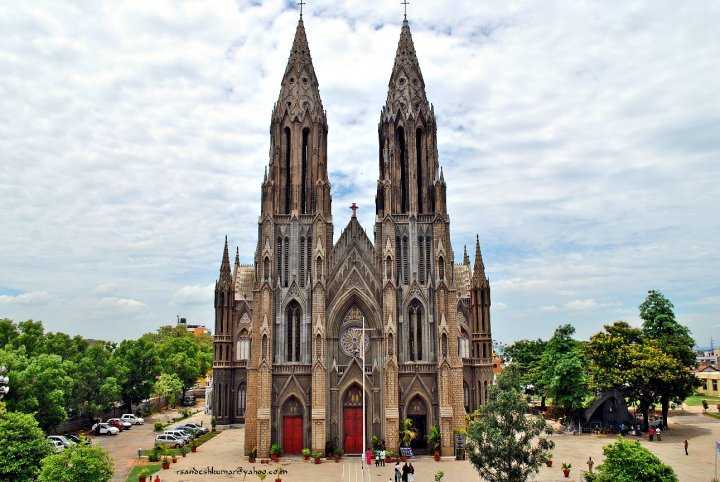
Recognised as the second tallest church in Asia, St. Philomena’s Church was constructed to pay tribute to the Catholic Saint and martyr, Saint Philomena. Built in a Neo-Gothic style, it is a distinctive landmark in the city. The foundation for the church was laid in the year 1933 by the then king, Sri Krishnarajendra Wodeyar Bahadur IV for the European residents in the city. After eight years of construction, the church started functioning in 1941. The remains of Saint Philomena have been preserved here and are present even today. A daughter of the Greek King, Saint Philomena had always been a devotee of God. She was taken to meet the Emperor when she was 13 years old, after which, the Emperor, mesmerised by her beauty, wanted to marry her. She refused and the emperor ordered to have her executed. The church stands as a symbol of the secular viewpoint and the religious accord of Mysore. Open from 5 am to 6 pm daily, there is no entry fee to enter the church.

A part of Mysore University, the Folklore Museum is home to one of the most elaborate collections of folk art, products and articles. Visit the museum to witness one of the most sprawling depictions of the state’s folk art.

The Mysore Rail Museum is the second of its kind in India, right after the National Railways Museum of Delhi. Built in 1979 by Indian Railways, the museum depicts the journey and development of the Indian railways through an opulent collection of photographs and other items. With a plethora of information and insight into the intricacies of the railway engine, Mysore Rail Museum is especially enjoyable for children up to 10 years of age. Most of the exhibits were earlier placed at the Mysore Palace which was later shifted here. The first steam engine along with the first signals made is exhibited here. There are also wooden pillars and doors belonging to the Old Srirangapatna railway station. The other fascinating display here includes a wide range of lights, tickets, ticketing machines, clocks, signal signs, and a hand-operated the steam water pump. There is a battery-operated mini toy train that takes the tourists around the grounds of the museum. The museum is closed on Mondays and on other days is open from 10 am to 5:30 pm. Entry fee is INR 15 per person.

Two items which are synomous with Mysuru, the Mysore Silk and the Mysore Sandal Soap have their factory and retail outlets in this city. The Government Silk-Weaving Factory is an interesting place to visit. Given that Mysuru’s prized silk is made under its very sheds, this government-run outlet, set up in 1912, is the best and cheapest place to shop for the exclusive textile. Behind the showroom is the factory, where you can drop by to see how the fabric is made. It’s around 2km south of town. The Government Sandalwood Oil Factory, located in the heart of the city, was established almost a century ago in 1917 to harvest the oil to be used for a variety of purposes, most importantly the state’s signature and iconic sandalwood soap. There are strict restrictions on the felling of sandalwood trees and hence the factory might sometimes be closed, but it is well worth the visit. A guide usually explains and takes visitors through the process of powdering the wood, then the laborious process of boiling, distilling, condensing and extracting the oil. A store on the premises offers a variety of products made with the oil including soaps, incense sticks, cosmetics and perfumes.

Now let’s head 250 km northwest of Mysuru to the coastal town of Mangalore.
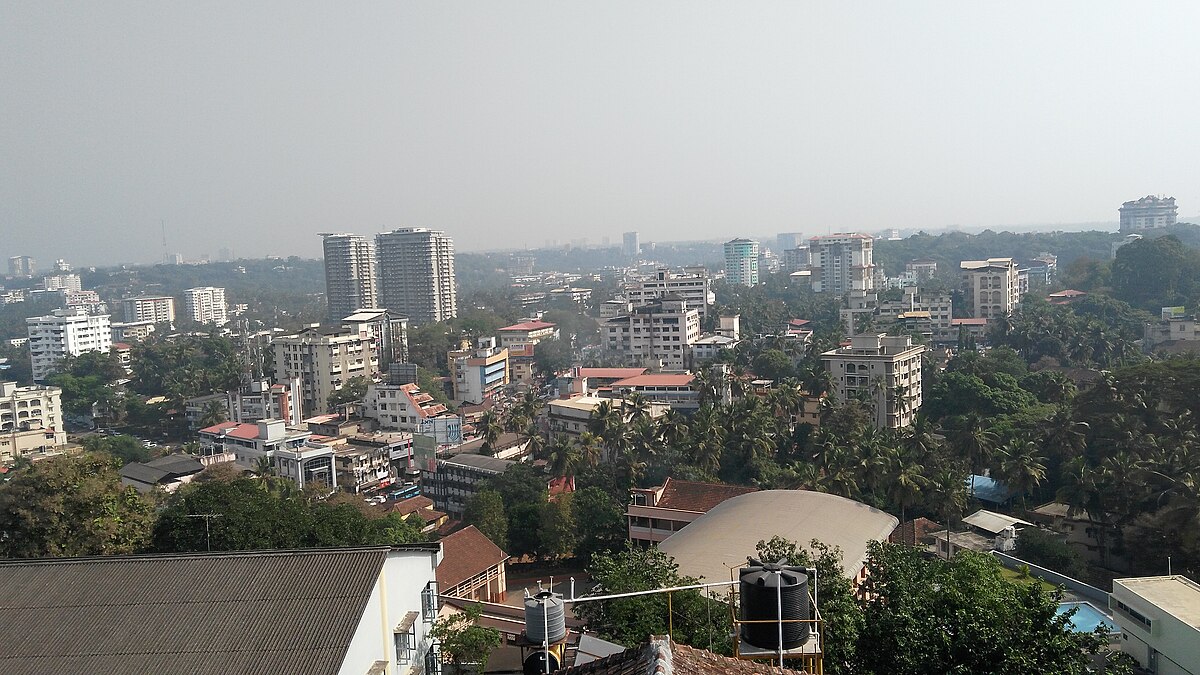
Mangalore
Officially known as Mangaluru, Mangalore is the second largest city and a major port in Karnataka and is located between the Arabian Sea and the Western Ghats mountain range. The city has been ruled by several major powers, including the Kadambas, the Alupas, the Vijayanagar Empire, the Keladi Nayaks and the Portuguese. The city was a source of contention between the British and the Kingdom of Mysore rulers Hyder Ali and Tipu Sultan, and was eventually annexed by the British in 1799. Mangalore remained part of the Madras Presidency until India’s independence in 1947 and was unified with Mysore State and then the state of Karnataka in 1956.

Mangalore was named after the deity Mangaladevi, the presiding deity of the Mangaladevi Temple or a synonym of Tara Bhagvati of the Vajrayana Buddhist sect. According to local legend, a princess named Parimala or Premaladevi from Malabar renounced her kingdom and became a disciple of Matsyendranath, the founder of the Nath tradition. Having converted Premaladevi to the Nath sect, Matsyendranath renamed her Mangaladevi. She arrived in the area with Matsyendranath but had to settle near Bolar in Mangalore because she fell ill on the way. When she died, the Mangaladevi temple at Bolar was consecrated in her honour by the local people and the city got its name from the temple.
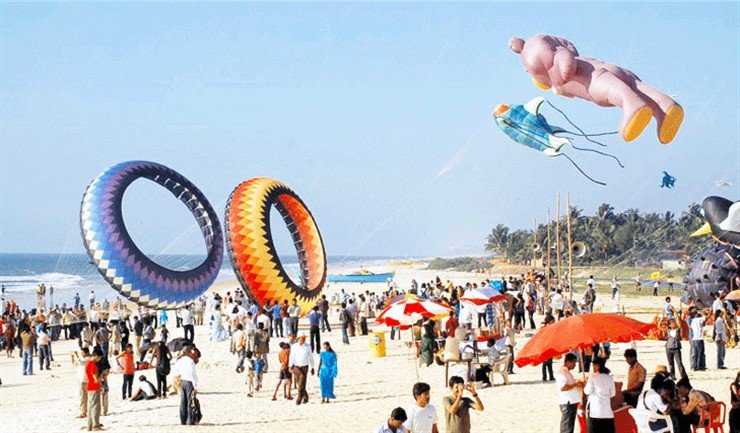
Being a coastal city, Mangalore’s beaches are quite famous. The Panambur beach is located about 13 km south of Mangalore port. The name of the beach has been derived from ‘Panam’ meaning money and ‘ur’ meaning place. Every year it is visited by hordes of tourists and locals as it hosts several events like boat racing, kite festival and sand sculptures competitions. Despite a massive footfall, it is one of the cleanest beaches one can come across in the western coastline of India. It is the first beach in the country which is wholly owned by a private enterprise, i.e. the Panambur Beach Tourism Development Project. The International Kite Festival is organised every two years at the Beach which is very popular.

A popular beach with locals, the Tannirbhavi beach’s coastline with its golden sand and cool, fresh air makes people revisit the place time and again, making it crowded on weekends and public holidays. Entering the sea is not advisable, but one can try their hand at one of the water sports at the beach.
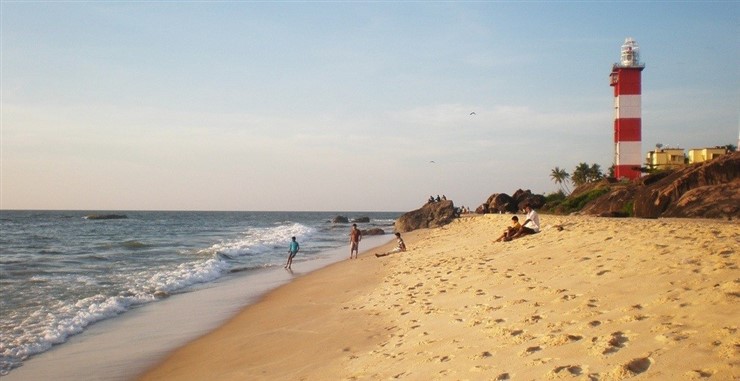
Located about 13 kms north of Mangalore, the Surathkal beach with its beautiful rocks that delightfully punctuating the smooth coastline, is a great location for those looking to enjoy the pleasure of the Konkan coast without a herd of people marring the lovely view of the ocean. The sunsets here are breathtaking and definitely worth the drive from Mangalore. The enchanting Sadashiv temple found here encases the piece of the Shiv Lingam that gives this beach its name. A charming lighthouse completes the picture perfect scene of coastal beauty.
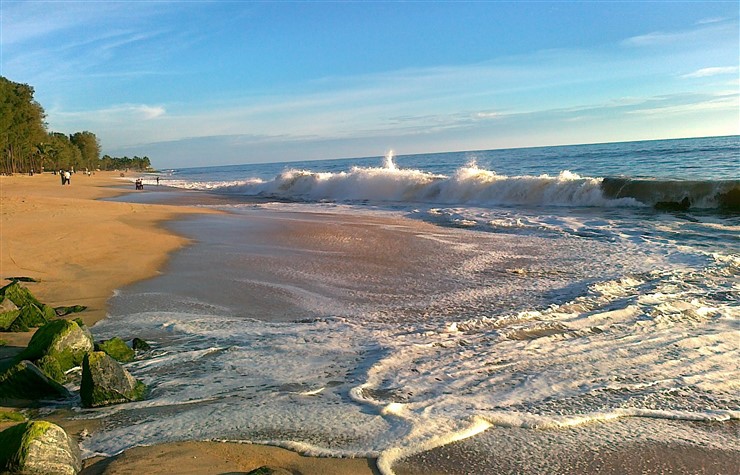
Located in Ullal, a small fishing village 12 kms away from the city centre of the bustling city of Mangalore, Ullal beach mesmerises its visitors with a panoramic view of a long coastline and the majestic Arabian Sea. The entire coast of the beach is flanked with tall lush casuarinas and dense palm trees and the the beach is set in a 14-acre casuarina grove. The waters off the beach are very clean and you can also do water sporting activities there. You can also explore the nearby attractions like the Someshwara Temple, St. Sebastian’s Church and Queen Abbakka’s Fort.
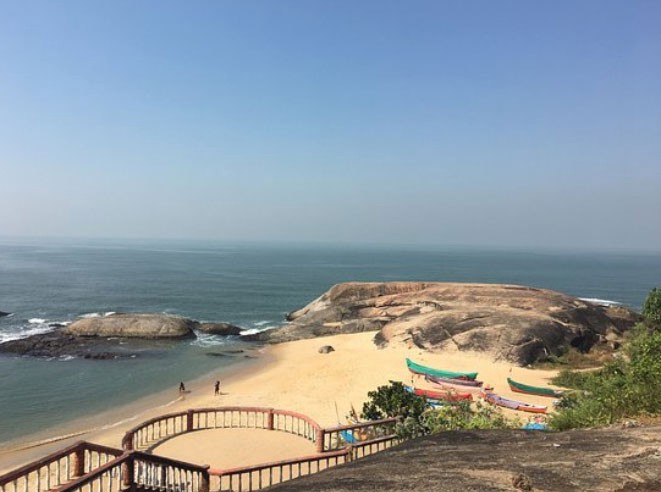
Another beach in Ullal is the Someshwara Beach, a quaint hidden gem boasting of shimmering golden sands with a long and beautiful coastline and peppered with rock boulders called Rudra Shile, making it unique from other beaches. The beach also houses the Someshwara Temple, dedicated to the Hindu God Lord Shiva and it is believed that the rocks dotting the beach are present because of the God’s presence. However, due to the presence of these rocks and also because of the strong currents, the waters are not ideal for swimming. Make sure you visit the Ottinene Hill which is a beautiful vantage point near the beach which gives mesmerising glimpses of the city below, the river Netravati and the big beautiful Arabian Sea.
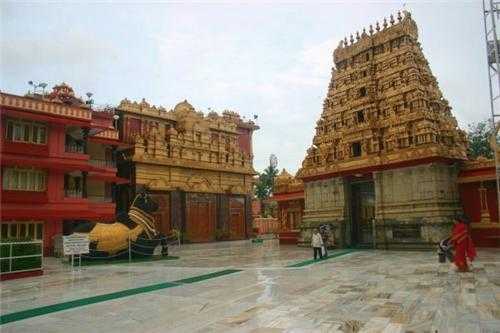
The Mangaladevi Temple dedicated to Goddess Mangaladevi, a form of Goddess Shakti or Goddess Durga is the oldest temple in Mangalore, built in 9000 AD. The city’s name is derived from the name of this temple and the city is built from around its geographical centre. The spacious temple complex allows devotees to sit and meditate or chant after offering their prayers to feel rejuvenated and at peace. The temple is open from 6 to 10 am and then between 12 – 1 pm and again between 4 to 8 pm.

The Kudroli temple was consecrated by Sri Narayana Guru for the Billava community in 1912, who were prohibited entry into any other temple in the area. The deity in this temple is Gokarnanatheshwara, an incarnation of Lord Shiva. The surrounding temples and the main temple itself are built in Tamil Nadu style, decorated with murals showing various mythological legends. During Dusshera, the temple is lit and the entire Kudroli road is filled with stalls selling food and souvenirs. The temple is open between 6 am to 2 pm and then again between 4:30 to 9 pm.

Built in 1068 AD, the Kadri Manjunatha temple has the typical Hindu architectural style of the basic Vijayanagari style with it’s presiding diety being Lord Manjunatha. It is situated at the base of the Kadri hills, and has many caves around it as it is located on hillocks. These caves have murals dating back to prehistoric times. Kadri was once the centre of Buddhism and over time, when Buddhism declined, the Natha Prantha, a new religion, came to prominance. The Natha Pranthas were believers of Lord Shiva and devotees called Jogis. The temple has been renovated many times, with the current structure dating back to the 14th century. The temple has a connection to Lord Parasurama and it is believed that when Lord Parashurama was asked to find a new abode called Kadrivana for Lord Shiva, Lord Manjunatha with his many wives stayed here, and with the help of Vishwakarma, the temple was constructed here. Behind the temple on the hill is the Kashi Bhageerathi Theerth where it is believed that the water here comes from River Bhageerathi in Kashi or Varanasi in present day Uttar Pradesh. As a tradition, devotees visit here before entering the temple. The temple is open from 6:30 am to 8:30 pm daily. This temple has a dress code for both men and women. Men have to wear full length pants or a dhoti with or without a shirt. Women are expected to wear modest clothing with full length pants or a skirt and should not wear sleeveless clothes or short dresses or shorts.
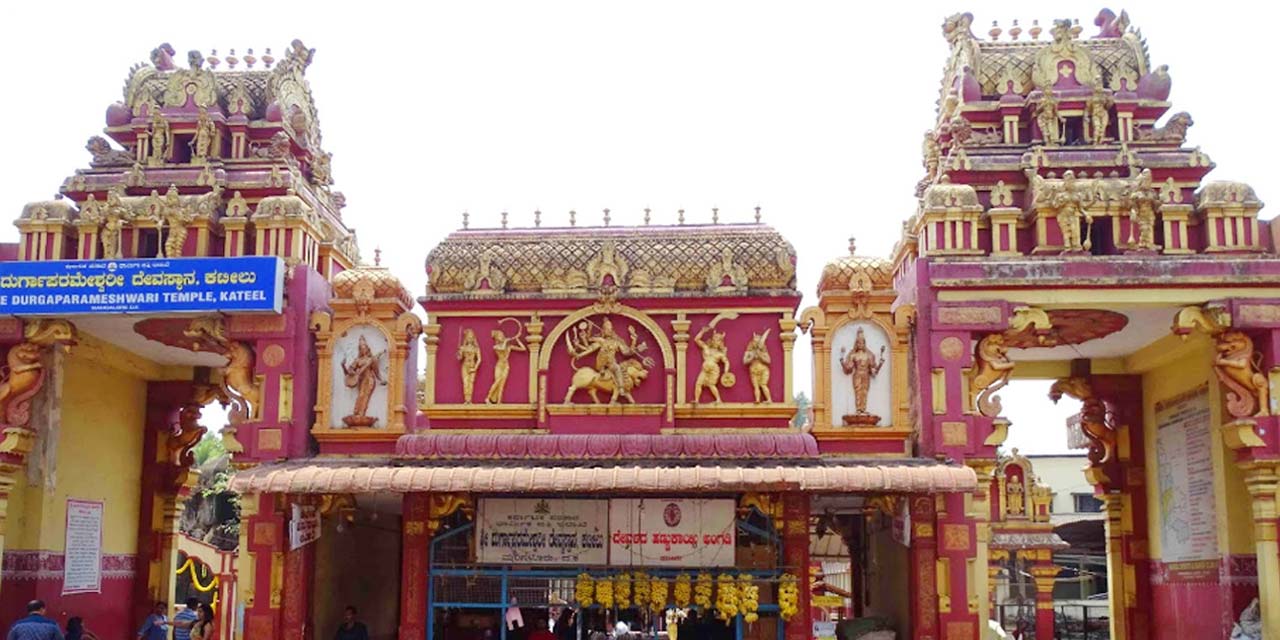
One of the holiest temples in the region, the Kateel Shri Durgaparameshwari Temple is situated on an islet in the middle of River Nandini amidst a serene and natural landscape. The temple is dedicated to Goddess Durga Parameshwari and is located at a distance of 27 kilometres from Mangalore. When visiting the temple, one must take a moment to appreciate the panoramic view of the location, especially during the monsoon. The temple is open from 5:30 am to 10 pm.

The Sharavu Mahaganapathi Temple is an ancient temple, around 800 years old, dedicated to Lord Shiva and Lord Ganesha. The name Sharavu is derived from the word ‘Shara’ which means arrow and has an interesting legend attached to it. According to the legend, the temple was built by a Tulu King, Maharaja Veerabahu to pay for the sin he caused when he mistakenly killed a cow instead of killing a tiger who was standing just beside the cow. The king was not aware of the harmonious life of the animals in the jungle and thought the tiger would kill the holy cow and in an attempt the save the cow, he shot an arrow which hit the cow instead of the tiger. To pay for the mistake, he was instructed to install a Shivalinga and a sanctum sanctorum around it and worship the Lingam every day of his life. It is also believed that the images of Siddhilakshmi and Dashabhuja Maha Ganapati appeared on the southern wall of the temple after a few years. Ever since, Maha Ganapati is also worshipped in the temple which came to be known as Shri Sharavu Mahaganapathi Temple. The temple is especially crowded on the important festival days like Sankranthi, Ganesh Chaturthi and Dussehra. The temple is open from 6 am to 7 pm daily.

The Saavira Kambada Basadi is a 15th century Jain temple, located about 35 km east of Mangalore. The temple depicts the mighty past of the Jain rulers of Moodabidri and is dedicated to the 8th Tirthankar Chandraprabha, whose massive 8-foot idol is worshipped in the temple. The temple’s talking point are its beautifully carved pillars, standing on mandapas, each narrating a different story of its glorious past. The temple in itself is a 3-storeyed granite structure.

A magnificent 16th century Roman Catholic church, the Rosario Cathedral is also called Church of Our Lady of Rosary of Mangalore. It is a magnificent structure with a beautiful interior and one of the few places in Mangalore where one can find peace and tranquillity away from the chaotic city life. The magnificent cross and the dome on the Cathedral are said to be prominent features which are easily visible to the ships approaching the Mangalore Harbour. The Cross is lit every evening and serves as guiding light for fishermen and seamen. The catherdral is open from 9 am to 5 pm daily
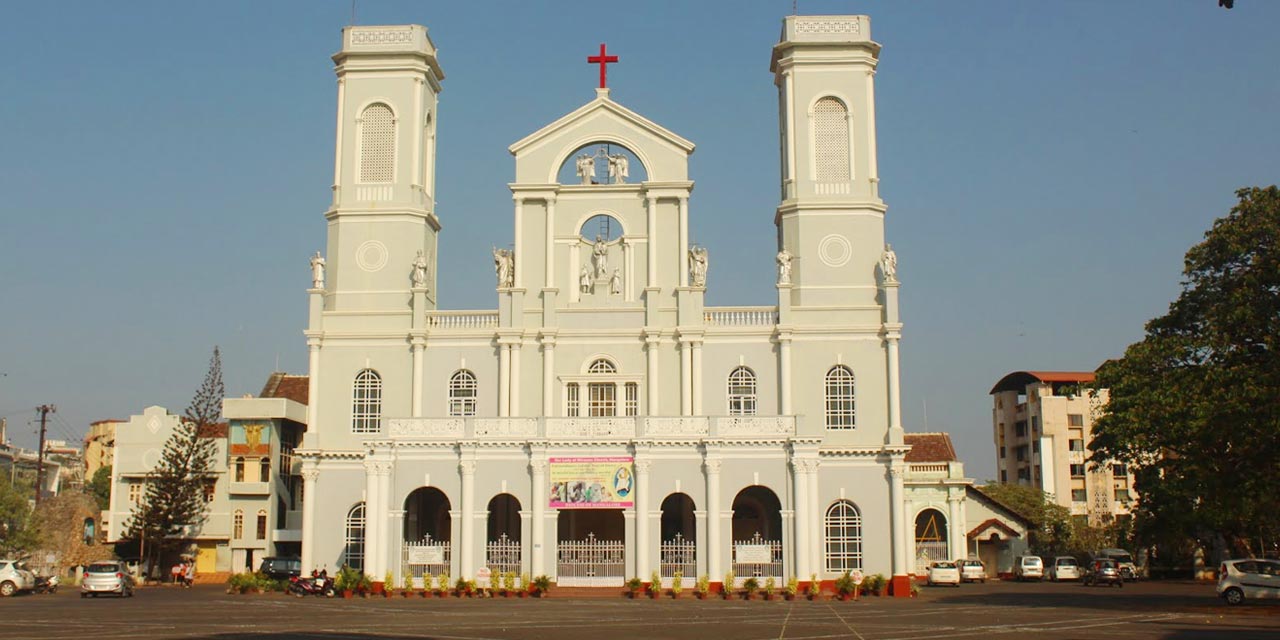
A late 16th century Roman Catholic Church, the Milagres Church is one of the oldest in Dakshina Karnataka dedicated to Church of Our Lady of Miracles. The original Milagres Church doesn’t exist anymore as it was demolished by Tipu Sultan, but a cemetery and a chapel which was built years later are still present. Tourists are drawn to its tranquil vibe, its century-old architecture, its religious significance and historical importance.

The St Aloysius Chapel is located atop the Lighthouse Hill and has a breathtaking view from its entrance. The unique wall paintings in the St. Aloysius Chapel, which were painted in 1899 by Antonio Moscheni, an Italian Jesuit when he visited Mangalore on a mission in 1878 attract a large number of visitors. The paintings have suffered damage over the years, what we see today are the mostly restored paintings. The view of the Arabian Sea from the chapel is worth the trip up the hill. The chapel is open from 7 am to 7 pm.

Sultan Battery isa watchtower constructed by Tipu Sultan to keep a lookout for the entry of warships into the Gurpur River. The battery, made from black stones had been given the look of a miniature fortress. Not being able to withstand the ravages of time, this tower stands in ruins today. This is a popular tourist spot as you get beautiful views when on the battery. This is also a boating point to get to Thannirbhavi Beach.
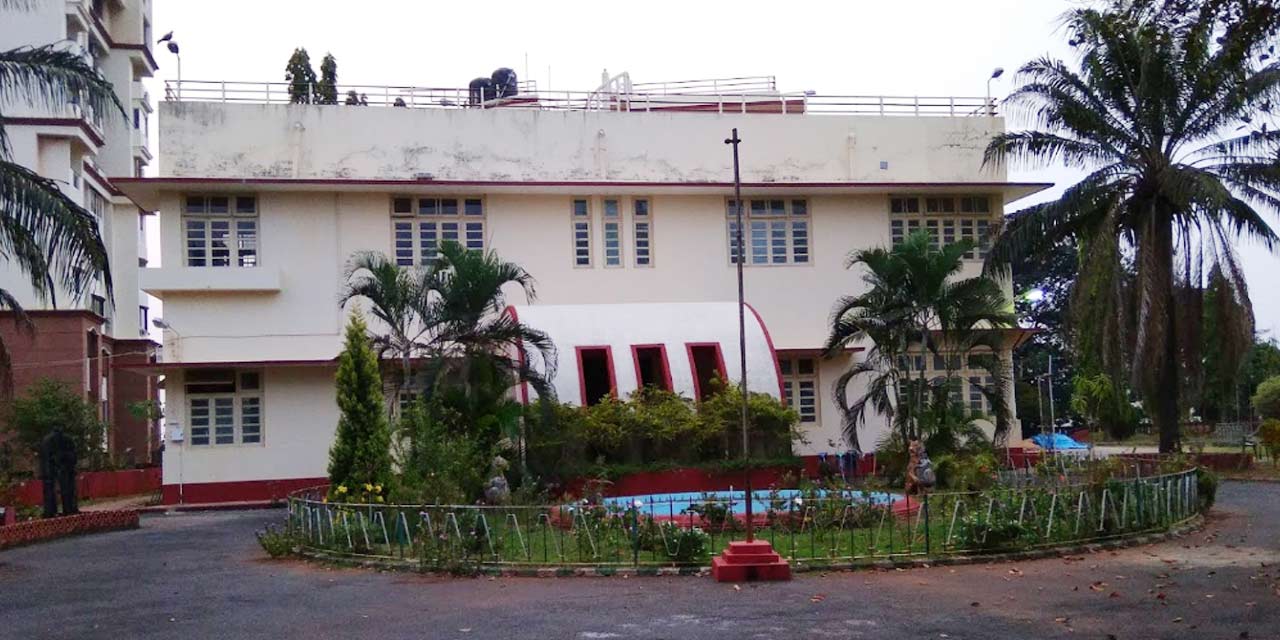
The Srimanthi Bai Government Museum or the Bejai Museum is located in the heart of the city and is also Mangalore’s only museum. It has a collection of ancient coins, paintings, statues and inscriptions which display the rich heritage of India. The copper inscription containing the verses of Keladi Venkatappa Nayaka dating back to 1624 AD is the highlight here. Entry to the museum is free and the museum is open from 6 am to 5:30 pm and is closed on Mondays.

From Mangalore, lets make our way to Belgaum which lies almost on the Maharashtra Karnataka border, part of a border dispute between the two states and which is about 420 km north of Mangalore.

Belgaum
Belgaum was founded in late 12th century AD by the Ratta dynasty, who shifted from nearby Saundatti. Pillars found inside Belgaum fort have Kannada inscriptions in Nagari scripts, one from 1199 by Ratta King Kartaveerya IV. The city original name was Venugrama, a Sanskrit word which means “village of bamboo”. Alternatively, it is referred to as Venupura in early Indian texts, which means “city of bamboo”. Belgaum became a part of the Yadava dynasty kingdom (Sevunas) in early 13th century. The region was invaded by Khalji dynasty of Delhi Sultanate in 14th century and shortly thereafter, Belgaum came under the rule of Vijayanagara. In 1474, the Bahmani Sultanate conquered Belgaum with an army led by Mahamood Gawan. In 1518, the Bahamani sultanate splintered into five small states and Belgaum became part of the Bijapur Sultanate. In 1686, the Mughal emperor Aurangzeb overthrew the Bijapur sultanate and Belgaum passed nominally to the Mughals, who called it “Azamnagar”.The Maratha confederacy took control of the area during the rule of the Peshwas and in 1776, the region was overrun by Hyder Ali and Tipu Sultan after Hyder Ali’s coup in the Kingdom of Mysore. The Peshwa regained Belgaum, after Tipu Sultan was defeated by the British forces. In 1818, the British annexed Belgaum and the region in the control of the Peshwa. After India’s independence, Begaum was part of Bombay State and when states were reorganised in 1956 along linguistic lines, Belgaum district was transferred to Mysore State, which was later renamed Karnataka in 1972. In 2006, the Government of Karnataka announced that Belgaum would be made the state’s second capital, and that the city would be a permanent venue for the annual 15-day winter session of the state legislature with the inauguration of the second state Suvarna Vidhan Soudha on 11 October 2012.
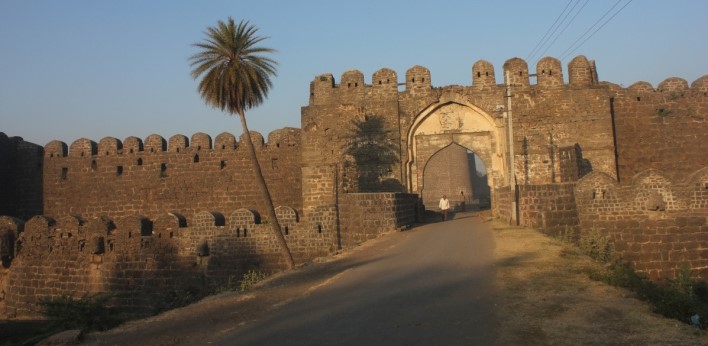
Belgaum Fort has a long and varied history and having played host to several dynasties, it has undergone many renovations and additions. An oval shaped structure, constructed after demolishing 108 Jain temples and 101 Shiva temples, the fort is surrounded by a deep, wide moat in soft, red stone, the fort’s original entry gate with a bridge is no longer operational. The gate currently being used is often quoted as an example of exquisite Indian architecture. The exterior of the gate is adorned with large motifs of birds and animals. The changing dynasties are reflected in the variety of religious shrines in its limits. The fort displays Jain, Hindu and Muslim architectural styles and is home to Jain temples, Hindu temples and mosques. The entrance of the fort has two shrines dedicated to Lord Ganapathi and Goddess Durga that exist in perfect harmony with two ancient mosques, Jamia Masjid and Safa Masjid demonstrating how the Belgaum Fort is a manifestation of the legacy of religious tolerance. There is a lake adjoining the fort called Fort Lake which has a floating cafeteria as well as pedal and motor boats available for a short spin across the lake. During India’s independence movement, Mahatma Gandhi was imprisoned here and the fort was recently honoured it as a state heritage monument. The Belgaum Fort is open from 8 am to 6:30 pm daily and Indians pay INR 24 and foreigners pay INR 50 as entry fees. If you plan on taking a camera inside, you need to pay INR 50 per camera.

Source

Fort Lake, also known locally as Kote Kere is located right in front of the Durga Temple entrance of the Belgaum Fort and has lush greenery surrounding it with walkways along its boundary. The lake is crowded most evenings with visitors coming to view the sunset. There are pedal and motor boats and a floating café in the lake premises. Every weekend there is a fountain show between 6 – 8 pm as well as a mini amusement park for children. The lake is open daily from 6 am to 8 pm.

Also known as the Kashi of the south, the Kapileshwar Temple is dedicated to Lord Shiva and located beside the Shahpur Flyover which connects the Belgaum to Shahpur. It is believed that the visit and darshan of the 12 Jyotirlinga scattered all over India will remain incomplete unless started from the Kapileshwar Temple. The Shivalinga here is said to have self-incarnated and the inscriptions in Kamal Basti have references to the temple and say that the temple might have been conscrecated in 1000 AD. Similar to the Kashi temple, devotees to the Kapileshwar Temple are allowed access to the Shivalinga up close. There is a rare cluster of Banyan, Peepal and Ficus trees in the compound of the temple which is open to devotees from 5 am to 9 pm every day. The crowds during Mahashivratri are to be seen to be believed.
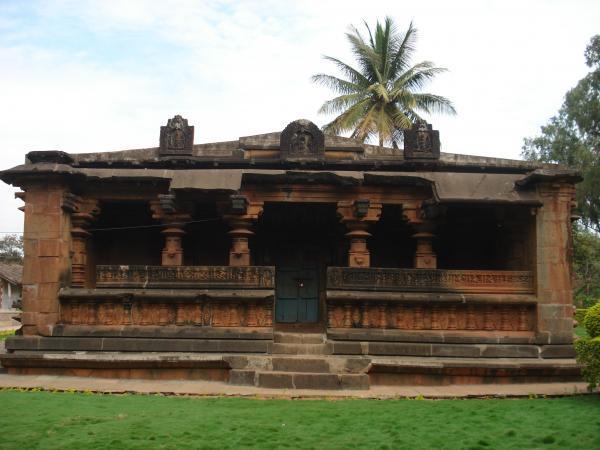
Kamal Basadi also known as Kamal Basti is a 10th century Jain temple built during the reign of the Ralta Dynasty in the Chalukya style. Two hundred years before the temple was built, the idol of lord Neminath was found in the jungle and the temple was built inside the Belgaum fort, along with Chikki Basti, which today lies in ruins. The name Kamal Basti is derived from the appearance of the temple as a lotus with 72 petals. Each petal consists of the name of the 24 Tirthankaras, for each period, carved on them. The structure comprises of entrances and pillars beautifully carved out of stones. The polishing of the pillars has enhanced the intricacy of the temple. The ceiling consists of projected Jain Tirthankaras on an upside-down lotus carving, made of stone. The structure stands on stone pillars, carved beautifully with images of Jain gods on them. There exists a Garbhagriha, located in the temple itself, with the idol of Lord Neminatha in it. The temple also comprises of a stone carving of the Sinhasan of Lord Neminath. The temple consists of idols from 11th century AD, of lord Sumatinath in standing position and idol of Lord Adinath in padmasana position. It also has an idol of lord Parsvanatha under the shade of 7 hooded Nagraj.
Source

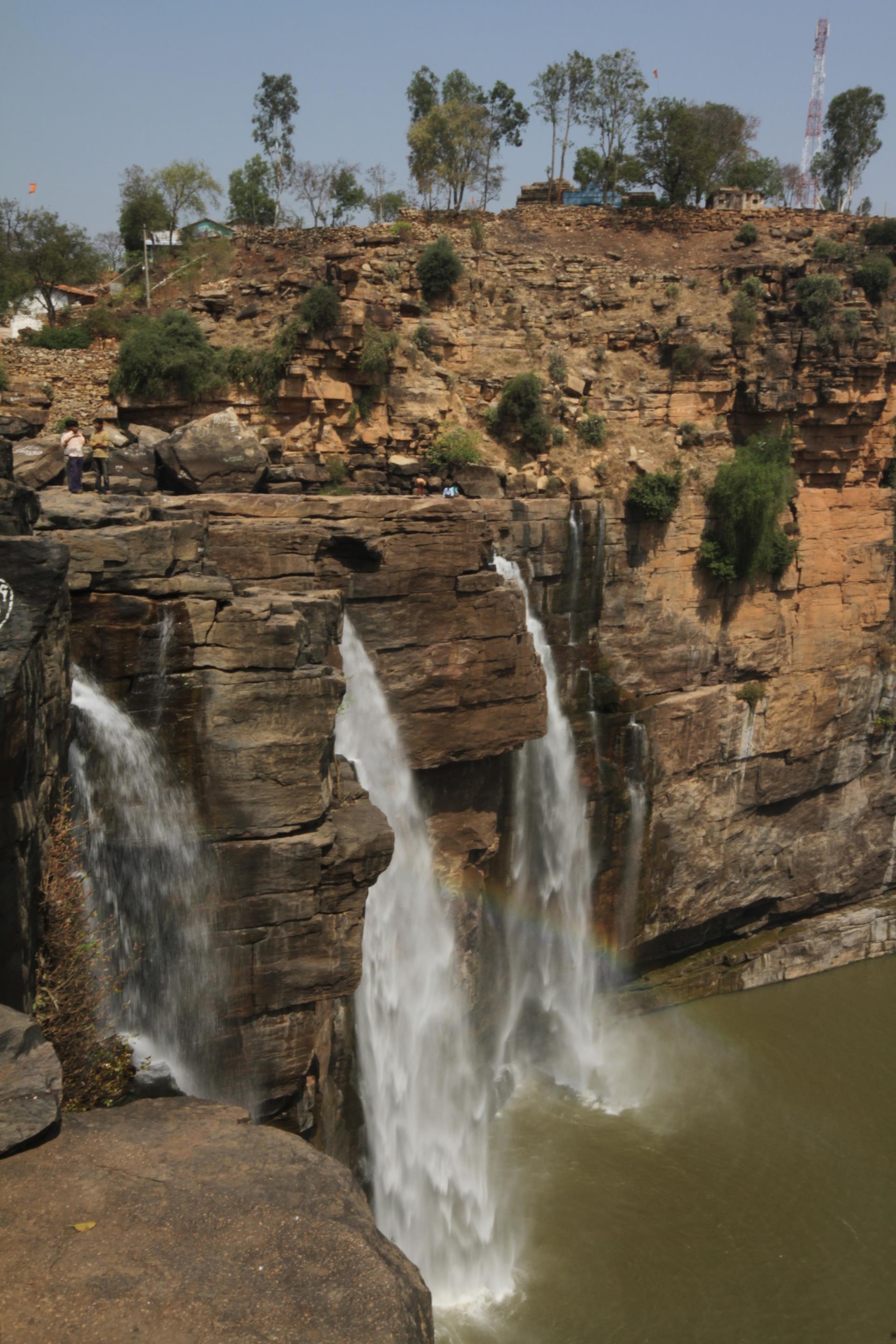
Gokak Falls which gets its name from the Goki river is known for its beautifully turbulent waters gushing over the rocks and down to a fall of 52 metres or 170 feet starting from the Ghataprabha river, that traverses a long distance before entering the rocky belt of Gokak. Falling into the Gokak valley, the falls crash against the valley and form a horseshoe at its crest. Apart from the colour of the water and its width of 177 metres, the general features of Gokak Falls give it a resemblance with the Niagara Falls. The falls has a 170 meter long hanging rope suspension bridge built over it that allows visitors to walk right above the fall and feel the wind pushed by the river. The falls are located 60 km from Belgaum city.

This is all for today. In the next part, we’ll see some of the smaller, but interesting Karnataka towns and then some wonderful bounties of nature.

Travel Bucket List – India: Karnataka Part 2

Bengaluru or Bangalore as I always think of it holds a special place in my heart. My paternal grandparents moved to Bangalore when I quite young, first to live with my uncle who was unmarried then and then they decided to spend their retirement years there after he married and moved out because they fell in love with the place by then. The Bangalore of the mid eighties to late nineties was a completely different place to the Bengaluru of today. We used to spend every single of our summer holidays there with our grandparents and I still have very fond memories of the time we spent there. Life was much slower than it was in Bombay and I remember office workers coming back home around 5 pm and around 8 pm, everyone used to be snug at home and the streets used to be deserted. Bangalore used to also be so green and the climate pleasant. In fact, when the power used to go off in May which is the hottest month of the year in India, our biggest worry was not the heat, but the fact that we could not watch television. The weather was so nice that even in the summer months we had to use blankets. Today, I doubt anyone in Bengaluru do this and probably need air conditioning to get through the summer months.

On to Bangalore which is today the third most populous city and fifth most populous urban agglomeration in India. The city which stands over 900 meters above sea level used to be called a Garden City and a Pensioners Paradise is today the second fastest-growing major metropolis in India and is regarded as India’s Silicon Valley or the IT Capital of India.

The city’s history dates back to around 890 AD, as seen in a stone inscription found at the Nageshwara Temple in Begur. The Begur inscription is written in Halegannada, which is an ancient Kannada script which mentions ‘Bengaluru Kalaga’ or the battle of Bengaluru. It was a significant turning point in the history of Bangalore as it bears the earliest reference to the name ‘Bengaluru’. In 1537 CE, Kempe Gowda, a feudal ruler under the Vijayanagara Empire, established a mud fort considered to be the foundation of modern Bengaluru and its oldest areas, or petes, which exist till today. After the fall of the Vijayanagar empire in 16th century, the Mughals sold Bangalore to Chikkadevaraja Wodeyar, the then ruler of the Kingdom of Mysore for three lakh rupees. When Haider Ali seized control of the Kingdom of Mysore, the administration of Bangalore passed into his hands. It was captured by the British East India Company after victory in the Fourth Anglo-Mysore War of 1799, who returned administrative control of the city to the Maharaja of Mysore. The old city developed in the dominions of the Maharaja of Mysore and was made capital of the Princely State of Mysore, which existed as a nominally sovereign entity of the British Raj.

In 1809, the British shifted their cantonment to Bangalore, outside the old city, and a town grew up around it, which was governed as part of British India. Following India’s independence in 1947, Bangalore became the capital, first of Mysore State and then of the new state of Karnataka, The two urban settlements of Bangalore, city and cantonment, which had developed as independent entities merged into a single urban centre in 1949. The existing Kannada name, Bengaluru, was declared the official name of the city in 2006.

Known for its gardens and green spaces, let’s start our visit of Bangalore with it’s most famous park, Cubbon Park. Spread over an area of 300 acres, Cubbon Park is a major sightseeing attraction rich in green foliage. It is a green belt region of the city and is an ideal place to recharge body and soul. The park is named in honour of Lord Cubbon, who laid the foundation for the park. It is home to more than 6,000 trees that support a vibrant ecosystem. In addition to being a natural sightseeing destination, some of the major structures of the city such as the Attara Kacheri, Cubbon Park Museum and Sheshadri Iyer Memorial Park are also situated here. Another famous attraction in the Cubbon Park is The Bangalore Aquarium, which is the second largest aquarium in India. Cubbon Park was originally spread over 100 acres, which was later extended to 300 acres. First established in the year 1870 by Sri John Meade who was the acting Commissioner of Mysore, Cubbon Park has a long history. Major General Richard Sankey, Chief Engineer of the state conceived this park in honour of Sir John Meade. Initially, the park was called “Meade’s Park” and later came to be known as the Cubbon Park. In the year 1927, the park was officially renamed as “Sri. Chamarajendra Park” to mark the Silver Jubilee of Sri Krishnaraja Wodeyar’s rule in Mysore State. The best time to visit the park is between September to February when temperatures remain mild and breezy. The park is open from 6 am to 6 pm and is closed on Mondays and the second Tuesday of each month. The park is open only for morning walkers from 6 to 8 am.

One of the oldest botanical gardens in India, the Lalbagh Botanical Gardens is not only one of the largest botanical gardens in India, but also the first of its kind, with planned routes, glasshouses and ornamental flowers growing throughout the property as well as for botanical artwork, scientific study of plants and also conservation of plants. The garden is spread over an area of 240 acres in the heart of the city and has nearly 1,854 species of plants. Its construction was commissioned by Hyder Ali in 1760 and completed by his son Tipu Sultan who designed the gardens keeping in mind the beautiful gardens of Sira in Tumkur. The garden features rare plants of French, Persian and Afghani origin and has attained the status of a Government Botanical Garden. The Lal Bagh Rock which is over 3000 years old and is one of the oldest rocks in the world is found in the centre of the garden and is a major tourist attraction. Visitors can also catch the sight of some rare birds including the myna, pond heron, purple moorhen, parakeets, Brahminy kites and the common egret.

This botanical garden, a delight for photographers, also consists of the famous glass house where a bi-annual flower show is held every year and is also a home to an aquarium and a lake. People travel from far and wide from India and even from abroad to witness millions of flowers, thousands of plants and the incredible artistry that goes into making the figurines and flower structures. The show takes place twice a year- once during January in the same week as the Indian Republic Day, and another time in August, during Independence Day. Each year, a different theme is chosen and flower arrangements are made according to the theme which is open from 9 am to 6 pm daily. Even though the best time to witness the show is in the morning when you can see all the flowers in full bloom and in all their vibrant colours, night time is a whole different experience. The whole Glass House lights up in a golden glow which makes the structures look even more magical and ethereal.

The botanical garden is open from 6 am to 7 pm daily with an entry fee of INR 25 for adults after 8 am. Children below the age of 12 can enter in free while to use a camera inside the garden requires you to pay INR 60 per camera. Make sure you keep at least half a day to soak in the atmosphere of the garden.

Located just 22 km from Bangalore’s city centre, the Bannerghatta National Park or locally known as BBBP for Bengaluru Bannerghatta Biological Park is a sanctuary for a large variety of flora and fauna and is a local favourite for nature and wildlife enthusiasts. Spread over a massive area of around 104.27 sq. km, this national park was established in the year 1971 and has a number of establishments within the park, including the country’s first butterfly park. The park was declared a biological reserve in 2002 and is also one of the only places in the world where one can experience wilderness in such a close proximity to the city. The park is also the first biological park in India which has a fenced forested elephant sanctuary covering an expanse of 122 acres and sponsored by PETA India.

In addition to a Zoo and the popular Jungle Safari, the Bannerghatta Biological Park also has a butterfly park and a rescue centre where the animals who were in captivity are conserved and protected. Other attractions include the ten Reserve Forests of Anekal Range of the Bangalore Forest Division, an aquarium, a Children’s parka, a Crocodile Farm, a Snake Park and a Prehistoric Animals’ Park. The best part about Bannerghatta National Park is the small well-defined zones for animals that almost guarantees that you will spot the animals. People go in caged vehicles during the safari.

The park is also home to a large variety of butterfly species and on the safari, you can catch a glimpse of various animals, including tigers, bears, deer, elephants as well as monkeys. You can also get to see many beneficial herbs and plants, like neem, tamarind, eucalyptus and sandalwood. Many people also visit the park due to the presence of several ancient temples in its premises. The Bannerghatta Biological Park is also a great place for photography, with shutterbugs getting an opportunity to capture a lot of amazing sights in their camera. Although open throughout the year, the best time to visit the park is between the months of October and February when the weather is cool and pleasant and perfect for spotting the blooming trees and wildlife. The first week of October is also the Wildlife Week in the city, with the Karnataka State Forest Department organising several wonderful nature programmes in the park. The park is open from 9:30 am to 5 pm on all days except Tuesdays. Most attractions within the park close around 5 pm with the Grand Safari opening between 10 am to 4:30 pm. The entry fee to the Park is INR 80 for adults and INR 40 for children for Indian nationals and INR 400 for adults and INR 300 for foreigners.

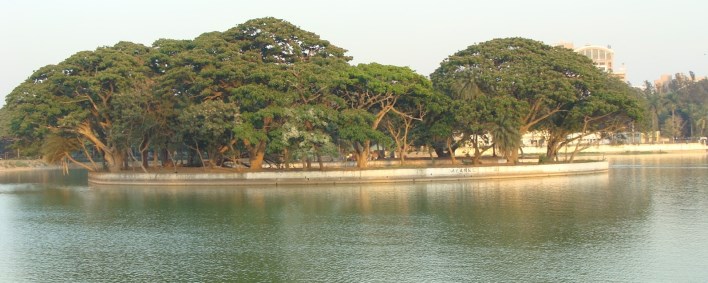
One of the largest lakes in Bangalore, Ulsoor Lake also called Halasuru is sprawled over an area of 50 hectares. Built by Sir Lewin Bentham Bowring, Bangalore’s commissioner at that time Ulsoor lake is the biggest lake in the city and a favourite boating spot for locals which take them to several of the small islands dotting the lake. The lake is an important venue for the Ganesh Chaturthi celebration when idols of the Lord are immersed in the lake at the end of the festival. The best time to visit is around August and September when you can witness the immersion of the Ganesh idols. The lake is also beautiful post monsoon from October to February. The lake is open every day except Wednesdays from 5 am to 8 pm and there is no entry fee to access the lake.

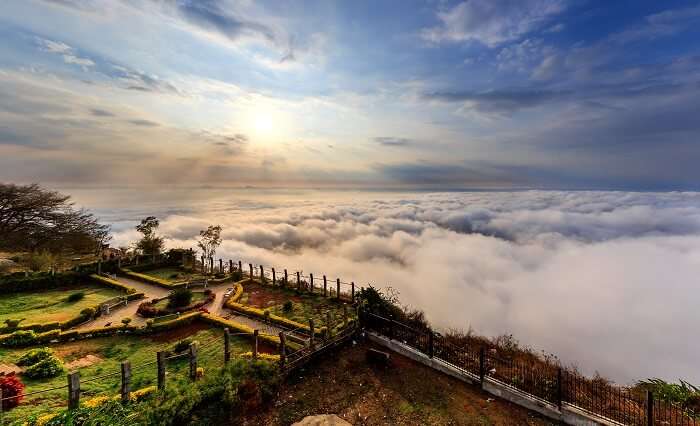
Located around 60 kilometres away from Bangalore, Nandi Hills used to be relatively unknown, but has now become a local favourite weekend getaway. Featuring beautifully carved arches and majestic pillars with intricately painted walls and ceilings, Nandi Hills is scattered with shrines and monument and is surrounded by mesmerizing views. Situated at a height of 4851 feet above sea level, the place was previously used by Tipu Sultan as a summer retreat, and several traces of the Sultan’s life and legacy can be found in the area. His summer residence called Tashk-e-Jannat, whose painted walls, intricate archways, high pillars and artfully crafted ceilings attract tourists and visitors even today can still be found there. The hills is also home to some famous temples and shrines including the Bhoga Nandeeshwara Temple which is dedicated to Lord Shiva and his companions – Parvati and Nandi. One of the oldest temples in the area, the temple is an architectural wonder and pilgrimage spot. The hills are also famous for its trekking trails, cycling routes and adventure sports such as paragliding.

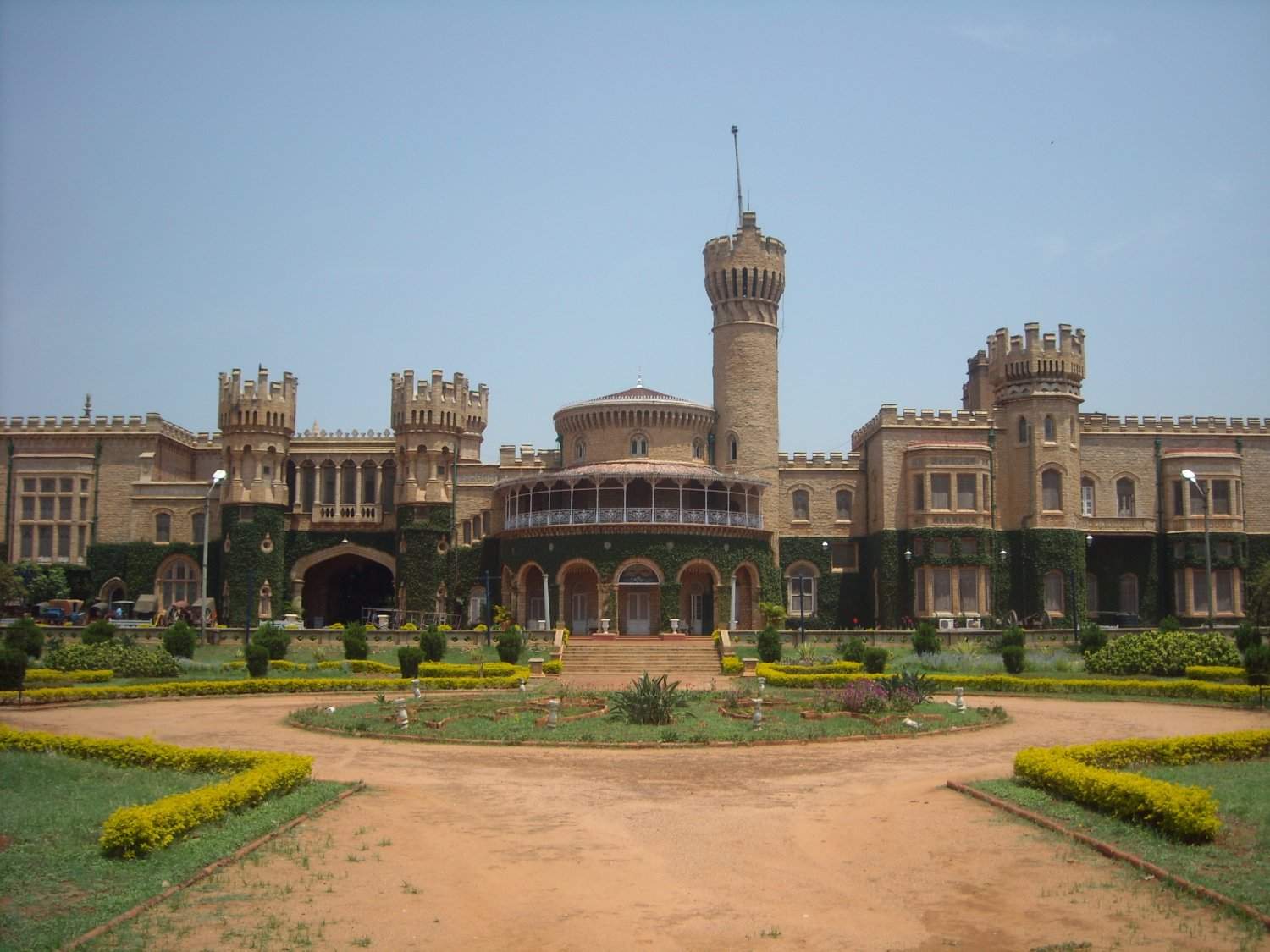
Built in the year 1878, the Tudor style Bangalore Palace boasts of massive courtyards, bright interiors, kingly grounds, splendid spiral staircases, stately towers and a luscious garden in a proud display of posh regality. Chamarajendra Wadiyar’s British guardians bought the original property in 1873 from the principal of Bangalore Central High School, Rev, J Garret for 40,000 rupees. The palace is vast and spread across 45,000 square feet and is built in a mixture of Tudor and Scottish Gothic architectural styles. The wooden structure of the palace along with the beautiful carvings both inside and outside showcases the royal culture in different ways. It is believed that the inspiration for the palace came from Windsor Castle in London.

The most prominent features of the Palace like the two-level granite structure of the fortified towers and turreted parapets take direct inspiration from the Tudor building styles. The entrance is decorated with grand Roman arches. The exterior of the building is covered in eccentric shapes and angles. The exterior walls are of a blushing cinnabar shade that gives the building a quaint Victorian vibe. The floor of the open courtyard of the Palace is adorned with granite seats covered with azure ceramic tiles. The ground floor also contains a beautifully decorated ballroom. On the first floor, there is a distinct chamber known as the Durbar Hall attached to an ornate staircase. The hall is famous for the enormous elephant head that is mounted in it and its gothic style tinted glass windows. The Palace houses some of the most famous paintings of the 19th Century, including the works of one of India’s most celebrated artists Raja Ravi Verma. You can avail of audio tapes, available in English and Hindi to understand its history. The palace is open from 10 am to 5:30 pm and the entry fee is INR 230 for Indian nationals and INR 460 for foreigners.

Originally built as a mud fort by Kempe Gowda I in 1537, Bangalore Fort was transformed into a stone fort by Haider Ali in 1761. Unfortunately, 20 years later, the fort fell into the hands of the British and the entire fort was dismantled and reconstructed into schools, hospitals and roads etc. Today, only the ruins remain of what was once a stronghold of Tipu Sultan; Delhi Gate and two primary bastions. The fort premises include several structures which include Tipu Sultan’s Summer Palace. Also called Rash-e-Zannat or the Envy of Heavens, the Summer Palace was entirely made up of teakwood framework and Islamic interiors. Inside the ruins, you can see several artificial ponds, arsenals, rest areas and half a century old Ganpati shrine. The beautiful paintings and murals on the walls narrate the ruler’s bravery and chivalry and his hatred towards the British.

The fort was spread across a mile and was flanked by wide ditches which were commanded by 26 towers encircling its ramparts and protecting the palace from all the sides. In 1791, the fort was attacked by the British East India Company led by Lord Cornwallis, after killing almost 2,000 people. Following the bloody battle, the British Army captured the palace and ruptured through the walls during the Third Mysore War near the Delhi Gate. With an unusual oval shape, protected by thick walls, you can, even today see the marks caused by the British. One of the distinct features of the fort is a tall gate with three massive iron knobs that suggest guarded quarters and is reminiscent of the ancient Karnataka architecture with carvings of lotus, peacocks, elephants, birds and other elaborate motifs.

An exquisite example of Indo- Islamic architecture, the opulent palace was once used as a summer retreat by the king. The palace boasts of ornamental frescoes, magnificent arches, protruding balconies and brilliant motifs. The construction of the fort started during the reign of Hyder Ali and was completed in 1791, during Tipu Sultan’s rule. Among the several unique aspects of the two-storeyed palace are its stone plinths, exquisitely carved huge wooden pillars, glorifying brackets and its all- around idyllic and placid setting. The walls and ceilings are handsomely painted in vivid colours and intricately carved in beautiful floral patterns and designs that portray Indo-Islamic architecture. After the death of Tipu Sultan, the British used the monument for its Secretariat until about 1868, before moving to Attara Kacheri. Recently a small part of the fort has also been converted into a museum showcasing various events of the life and times of Tipu Sultan. The fort and palace are open all days of the week, except Sundays from 10 am to 5:30 pm and from 8:30 am to 5 pm on Sundays and entry fees are INR 5 for Indians and INR 200 for foreigners. You also need to pay INR 25 per camera you plan on taking inside the fort and palace.

The Devanahalli Fort is located 35 kms north of Bangalore and is a living example of the extensive battles fought and won. In ruins today, the fort once was the birthplace and residence of Tipu Sultan. Sprawling over a vast area of 20 acres, the building is essentially made of stone and mortar and was originally built in 1501 by the Mallebyre Gowda during the reign of Saluva Dynasty, until the Dalwai of Mysore Nanjarajaiah occupied it in 1749. Later it was taken over by Hyder Ali before finally being passed on to Tipu Sultan. The fort boasts of twelve semi-circular bastions, each with a gun-point view and a spacious battlement. The entrances, though relatively small are decorated with cut- plasterwork, and the main attraction is the chief residence of Hyder Ali and Tipu Sultan. The memorial is a six foot tall enclosure with pillars. The fort is currently a residence for many as several families inhabit the place. Among the umpteen temples located inside the premises of the fort, the Venugopalswamy temple is the oldest and houses several idols of local deities. Other temples include the Siddheswar Swamy temple, the Raghabendraswamy Math, the Chandramouleswar Temple etc. Though in a dilapidated state and crumbling with most of the walls covered in graffiti, the fort manages to retain some of its yesteryear grandeur and glory. The best time to visit the fort is during the summer season due to the many mango and tamarind plantations which bear fruit in summer and which you can enjoy while visiting the fort. Although the fort is open 24 hours a day for the visitors, it is advisable to visit during the day time.

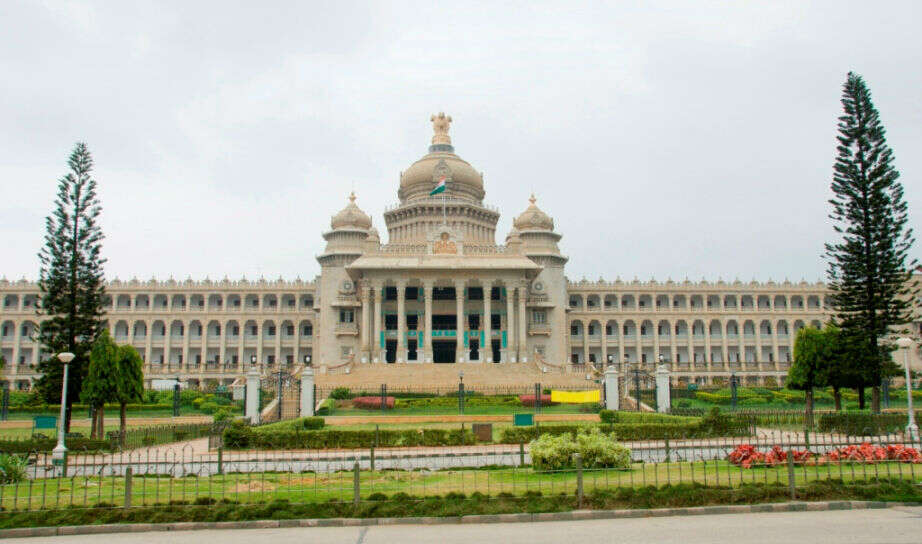
Described by Pandit Jawaharlal Nehru as ‘a temple dedicated to the nation’, the Vidhana Soudha, which is influenced by the House of Commons in London, houses the State Legislature and the Secretariat of the Karnataka State is the largest state legislative building in the country. With four entrances in all four directions and four floors above the ground level and one below it, the structure is known as the ‘Taj Mahal of South India’ and is seen as one of the most magnificent buildings in the city. The entire monument is illuminated on Sundays and public holidays, usually between 6-8 pm and is a sight for sore eyes. The foundation stone was laid down by the then Prime Minister of India, Pandit Jawaharlal Nehru along with then Karnataka Chief Minister K.C. Reddy on 13 July 1951 construction took five years and it was inaugurated in 1956. The Vidhana Soudha stands 150 feet tall and boasts of an elegant and truly exquisite Neo-Dravidian style of architecture. Spread over an expanse of 60 acres, this stunning white building has many carved pillars, pediments, bases, arches as well as cornices. With four different floors, the building has a porch on its eastern side, with 12 huge columns of granite. Additionally, the central dome of the building is supported by eight pillars, with a crown of the four-headed lion, the national emblem of the country. The structure has almost 300 rooms, which accommodate around twenty-two different departments of the State Government. As of now, its replica, called the Vikasa Soudha has been built by the Karnataka Government adjacent to it, which acts as a secretariat building. The Vidhan Soudha is open from 10 am to 5:30 pm and is closed on weekends and public holidays. You do need to take permission to enter as this is a highly sensitive building.

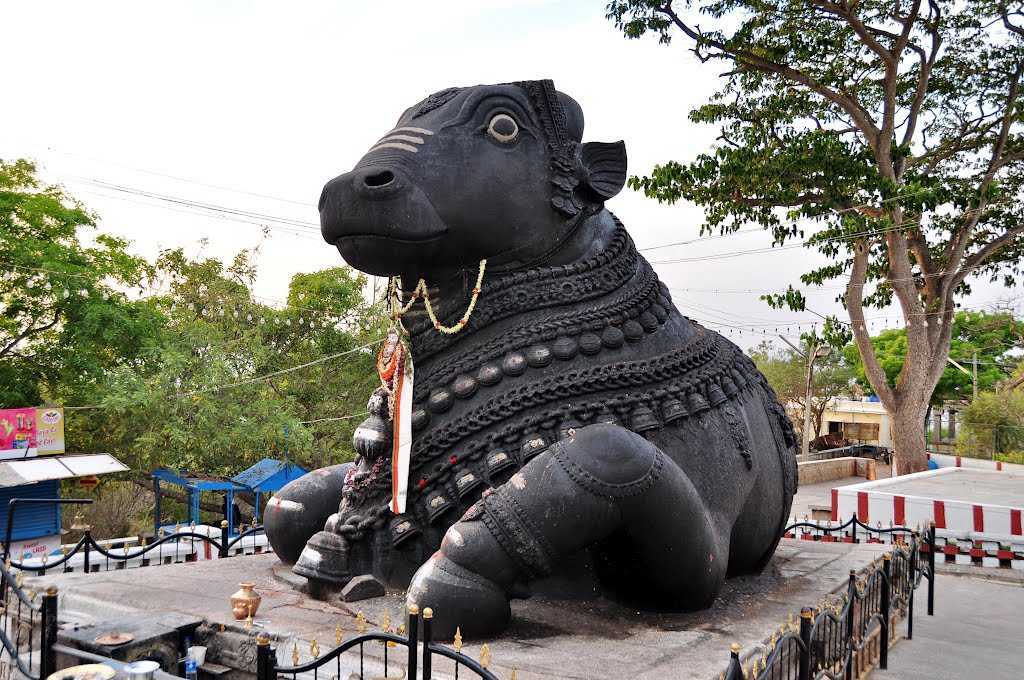
The Bull Temple, also known as Nandi Temple, is one of the oldest temples in Bangalore. Popularly called the ‘Dodda Basavana Gudi’ by locals, the temple is the biggest temple dedicated to Nandi in the world and is located the Bugle Rock park. Nandi or the bull in Hindu mythology is the mount or vahana of Lord Shiva and the guardian deity of Lord Shiva’s abode, Kailashagiri; according to Hindu traditions. This temple is a must-visit destination because Nandi holds great importance to Lord Shiva. The architectural style of the Bull Temple is mainly Dravidian and was constructed by Kempe Gowda. It is believed that the origin of the river Vrishabhavati is at the feet of Nandi. The entire sculpture of the bull is carved out of one single granite rock. The statue is 4.5 meters high and 6.5 meters long. Coconut oil and butter which are regularly applied to this statue has led to the originally grey statue to turn black. On the premises of the Bull Temple, there is also a beautiful temple of Ganesh, the beloved son of Lord Shiva. An interesting fact about this temple is that the statue of Lord Ganesh is made entirely of butter! It takes about 110 kilos of butter to make this artistic statue, and a new statue is made every four years. What is really astonishing and noteworthy is that in the four-year tenure of each butter sculpture, the butter doesn’t melt or change shape even once. The butter that makes the statue of the deity is then distributed to the devotees as Prasad or offerings. The temple is open daily from 6 am to 8 pm.

Built in 1972, the Ragigudda Sri Prasanna Anjaneya temple is dedicated to Lord Hanuman for his unconditional divinity and devotion towards Lord Sri Rama. Located on top of a quaint hillock, believed to have originated out of a mound of Ragi or Finger Millet in the Jayanagar area, the temple houses a Shivaling in addition to a huge gorgeous idol of Hanuman and beautiful shrines of Ram, Sita and Lakshman. Spread over 5 acres, the temple complex boasts of a beautiful water tank called the Pushkarni, an auditorium, a tiny prasad division and an amphitheatre. It also flaunts an artificially created waterfall which prettifies the already enchanting hill top view. The temple has gained immense popularity in the last few years with the foot of the shrine having tiny temples of Lord Ganesha, Rajarajeshwari, Devi and the Navgrahas. The most important festival of the temple is the Hanuman Jayanti, which is a 12- day long festival and is a grand event, celebrated with a lot of zeal and fervour. The temple is open from 8 am to 12 noon and again from 5 to 8:30 pm on weekdays and from 8 am to 1 pm and then again between 5 to 8:30 pm on weekends.

Located in the suburbs of Ulsoor, the Halasuru Someshwara Temple is dedicated to the Hindu deity Lord Shiva. Dating back to the Chola period, the temple is the oldest in Bangalore and was built around the 12th and the 13th centuries by the Hoysalas, but major modifications and additions were made during the Vijayanagar empire. Today the temple is managed and maintained by the Endowment Department of the Karnataka government. There is an interesting story about the temple’s origin which goes that once Kempe Gowda travelled far away from his town while hunting and he took rest napping under a tree where he dreamt that Lord Someshwara asked him to construct a temple using the treasure buried there. The most fascinating feature of the temple are the elaborate sculptures of Ravana holding the Kailash Parvat to please Lord Shiva, Goddess Durga slaying the demon Mahishasura, scenes from the wedding of Lord Shiva and Parvati, images of the Saptarishis etc. Constructed in the Vijayanagar style of architecture, the shrine has beautiful carvings on the walls and serene interiors. Other than the main temple, the premises are dotted with smaller shrines of other deities including Kamakshamma, Arunachaleswara, Bhimeswara, Nanjundeswara and Panchalingeswara. The temple is very popular among the locals and you can see throngs of worshippers, especially during the time of Mahashivrathri. The temple is open daily from 6 am to 12 noon and again from 5:30 to 9 pm but the best time to visit the temple is either during the early morning or in the evening.

Built in the 16th century by Kempe Gowda, the rock-cut architectural temple is also known as the Gavipuram Cave Temple. In the forecourt of the temple lies mysterious stone discs that allow the sun’s rays to shine on the shrine during a particular time of a year. The temple is basically carved on a rock where the major sections of the outside appearance include monolithic pillars and two fans on the patio where the pillars represent Trishul and Damaru. The two granite pillars holding the gigantic disks of the Sun and the Moon and the other two showcasing several Nandi bulls are some of the outer features of the temple with few other monolithic structures. The temple is dedicated to Lord Shiva where on the day of Makar Sankranti the arc over the horns of Nandi allows the sunbeams to pass through the cave and illuminate the Shiva lingam. This unique phenomenon and the technical excellence of this cave temple attracts devotees from all over the world to witness the surreal sight. The temple is located in the Gavipuram area which is about 3 km from the city market. The best time to visit is during the Maha Shivratri celebrations or during the sunrise time. Otherwise the the temple is open from 6 am to 8 pm on all days of the week.

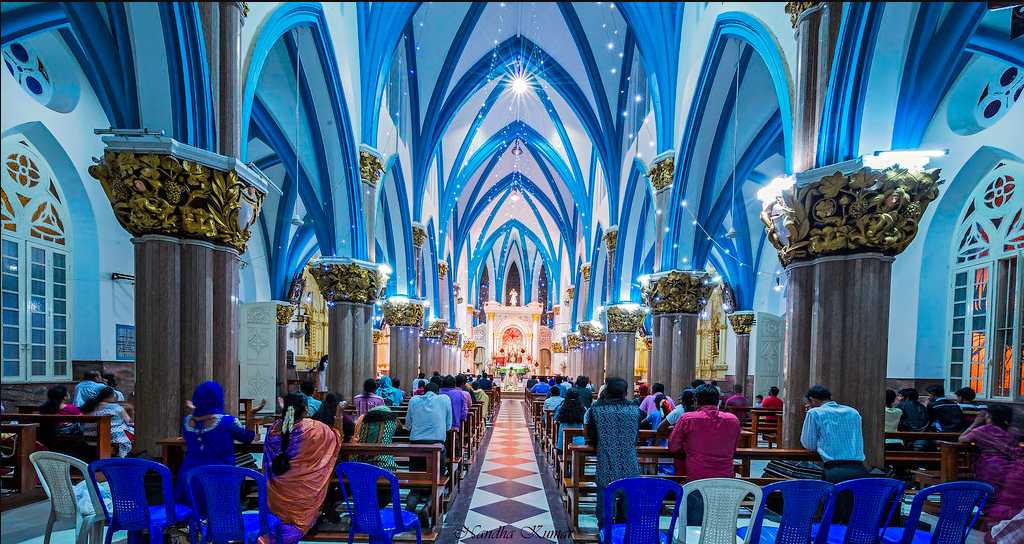
Built in 1882, the St. Mary’s Basilica is the oldest church in Bangalore and is the only church in the state that has been elevated to the status of a minor basilica. A spacious gothic-style Church built in the form of a cross, designed by a French architect, the basilica is 172 feet long and 50 feet broad. The imposing and magnificent tower forming the facade of the Church is 160 feet in height. A beautiful statue of Mother Mary holding Child Jesus in her arms, 6 feet in height, is set up in an attractive shrine just outside the Church building. The exterior is built in the shape of a cross arranged in gothic style architecture by a French artist. Every day, Our Mother Mary is draped in a saree, and it is said that when the new Church was built, people tried to remove this statue to install it on a prominent altar inside the Church, but they failed in their effort since the statue remained immovable. This strange occurance is considered to date a sign of Our Lady’s miraculous power. The Main Feast of the Church is celebrated with all grandeur on the 8th of September, the Feast day of the Nativity of Blessed Virgin Mary, every year. This feast, which is celebrated for 10 days annually, is considered one of utmost importance by the people, in the whole of the Archdiocese and the state of Karnataka. It is a marvellous sight to behold with its towering façade, glass windows and the loving statues of Mother Mary. On the tenth day, which falls on the 8th of September, is celebrated as the birthday of Mother Mary where the entire church brims with colors and joys followed by conducting social services that include feeding the needy and underprivileged. The best time to visit is in September during the feast of St. Mary and the basilica is open daily between 6 am to 8 pm.

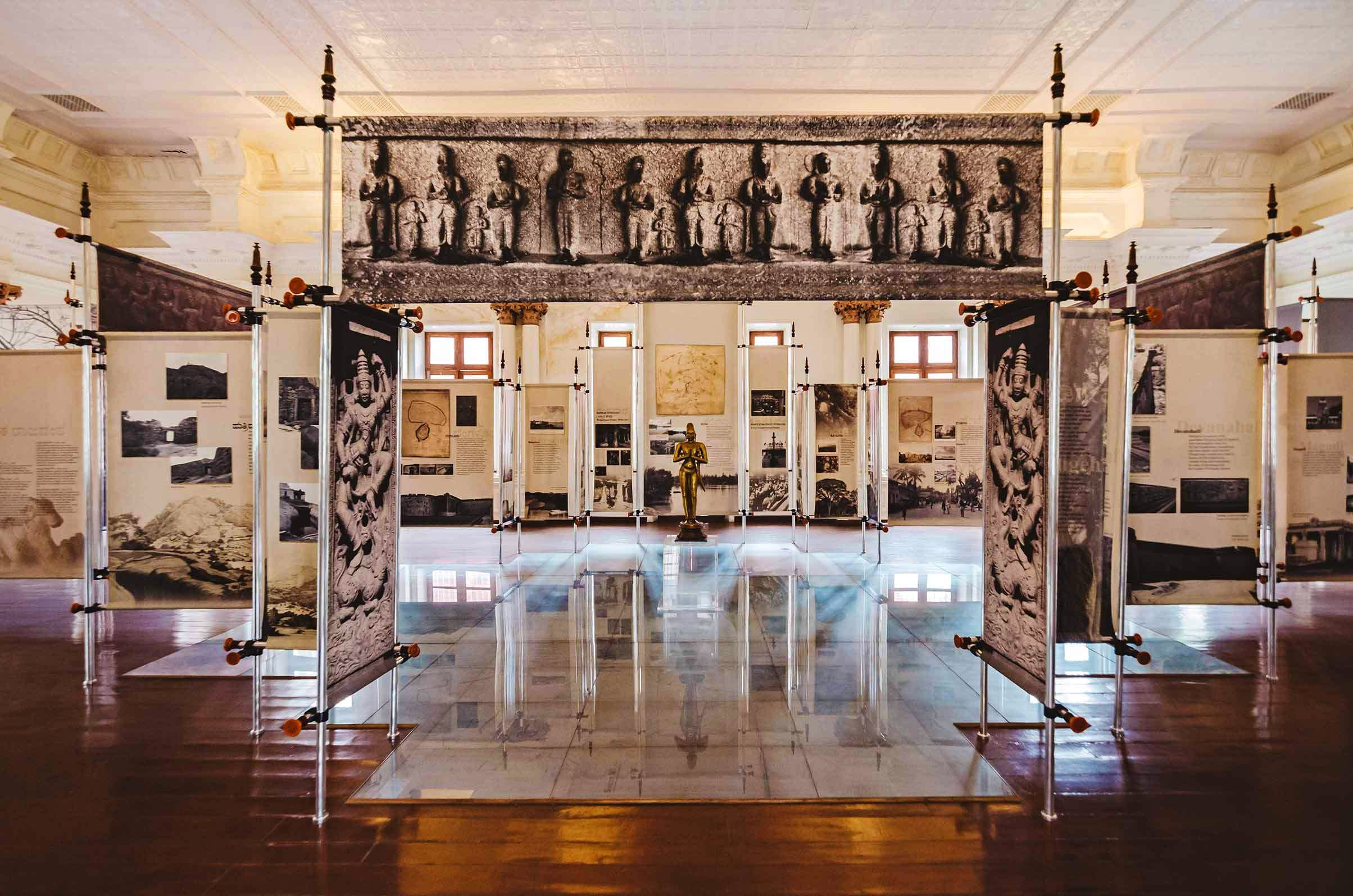
Named of the founder of Bengaluru, the Kempegowda Museum is situated on the first floor of Mayo Hall. The enticing glass floor with an 18th-century map that runs throughout is one of the enticing features of the museum and second being the fiberglass statue of Kempe Gowda in the center of the museum. It is an interesting place to visit for the archeology and history buffs as it exhibits paintings and statue of the time when Kempe Gowda actually initiated the foundation or the blueprint of the town, the four towers which marked the boundary of the city with various old names for the places which are recognized differently today. Located in the Ashok Nagar suburb, the best time to visit is during the weekday when it is not as packed as it usually gets during weekends. Open from 10 am to 5 pm daily on weekdays, you need to pay INR 50 for an adult and INR 30 for a student as entry fee.

Source

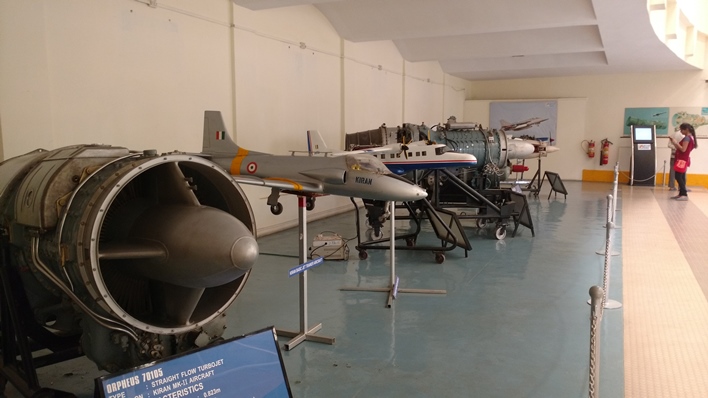
The HAL Aerospace Museum was inaugurated in 2001 at the Hindustan Aeronautics Limited premises, the museum being established with the objective of educating the public about the journey of HAL, one of Asia’s largest and most important aeronautical companies, be it historical, scientific or academic. The museum proudly boasts of the giant leaps Indian aviation has taken, both commercially as well as in terms of defence, giving the visitors an all-inclusive aerospace experience in the most effective environment possible. The museum gives the visitor the best possible insight into the aeronautical history of HAL and India – its experiments, achievements and possibilities; and at the same time, they also get to have a glimpse of some of the most powerful possessions of the Indian Air Force. Currently, the HAL Heritage Centre and Aerospace Museum together form the most massive aeronautical complex of South Asia in terms of production, maintenance, development and exhibition of fighter and commercial aircrafts, helicopters and all their engineering parts and accessories. If you are an aviation enthusiast, this museum can’t be missed if you are in Bangalore. The museum is open from 9 am to 4:30 pm on all days of the week. Adults pay INR 50 to enter while entry is free for children under three years of age. Students upon showing a valid ID and children between the ages of 4 to 18 pay INR 30. You need to pay INR 50 for bringing in a still camera while it costs INR 75 to bring inside a video camera. If you want to have a go at the simlutators in the museum, you need to pay INR 50 for the Basic Simulator Game and INR 100 for the Motion Simulator.

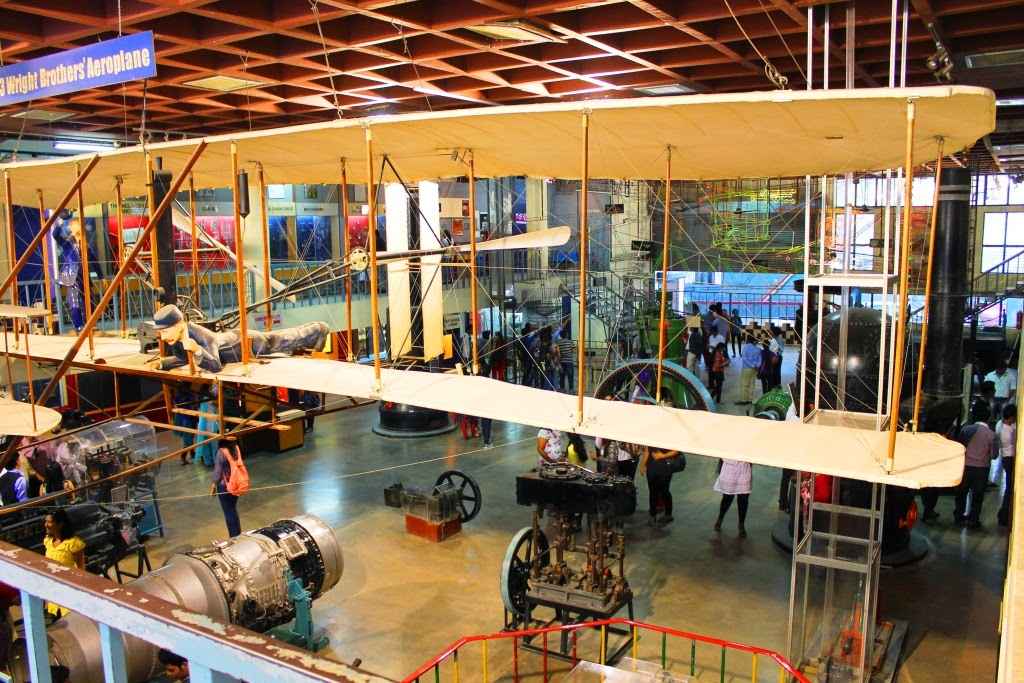
Built to honour the famous scientist and Bharat Ratna receipient, Sir M Visvesvarya, the Visvesvaraya Industrial and Technological Museum, spread over an area of 43,000 sq feet is located in Kasturbha Road amongst the Cubbon Park area. The museum was inaugurated by India’s first Prime Minister, Pandit Jawaharlal Nehru, in 1962. The place is utterly engaging for both children and adults who once enter the building get engrossed various age-old fossils, mechanical gadgets, and gears, information on space with space models, satellite, electrical, biotech and chemistry models etc. The first ever gallery exhibition displayed by the museum was based on the principles of Electricity and was open to the public on the 27 July 1965. Designed on the theme of a Science Museum, the museum houses four floors dedicated to a scientific discipline each, with the topmost floor, the fifth floor which is now converted into a food court. The museum’s décor has been inspired by the ancient scientific tools and machinery like Wright Brothers’ Kitty Hawk, flying stimulators and other similar objects. The backdrop shows surreal pictures and animations of changing the climate, various sea and land dynamics and different planetary positions. The centre has seven permanent gallery displays consisting of copious exhibits of a steam engine, aeroplanes, motor power etc. In addition to this, the museum has a virtual gaming zone, a tiny planetarium and a 3D visual display centre for recreation. The centre aims to promote the importance of science in everyday life by its interactive demonstrations and by conducting experiments. Open from 10 am to 6 pm daily, adults need to pay INR 50 as entry fees.

This was Bangalore or Bengaluru and in the next post, we’ll visit Mysore or Mysuru as it’s called now as well as some other places.

Travel Bucket List – India: Karnataka Part 1

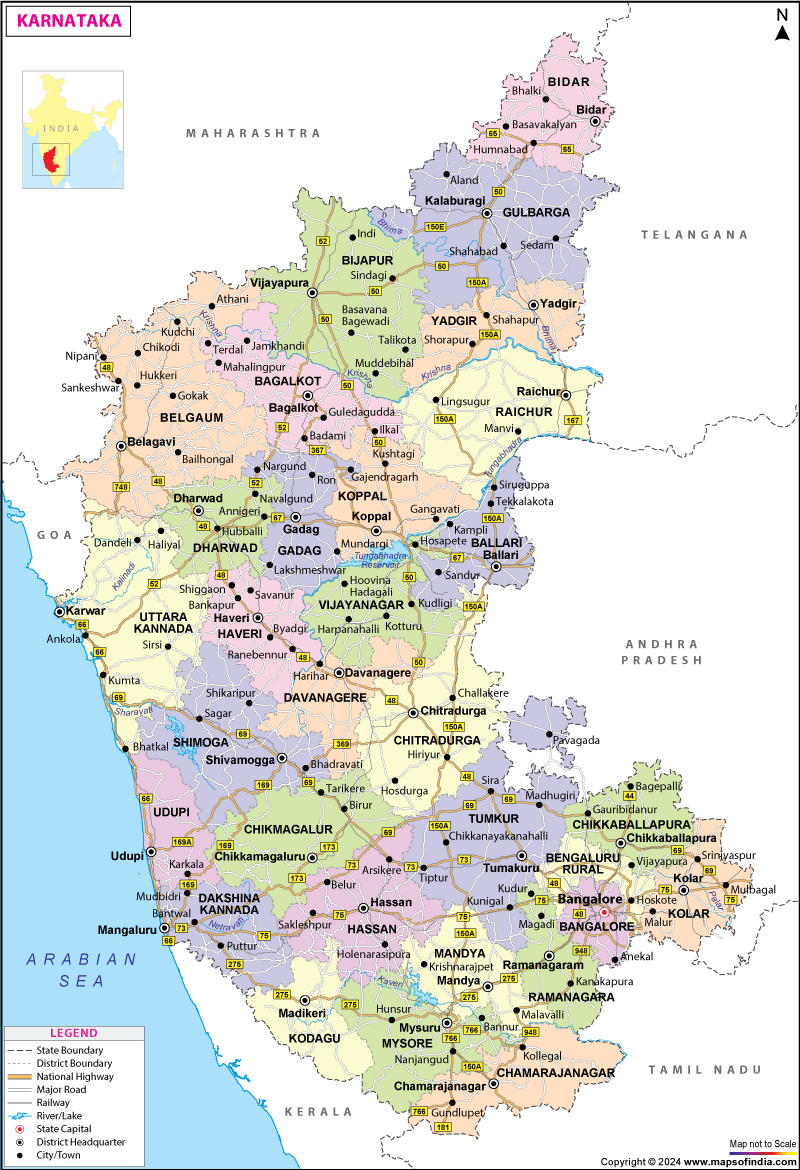
The southwestern state of Karnataka was formed on 1 November 1956, with the passage of the States Reorganisation Act. Originally known as the State of Mysore, it was renamed Karnataka in 1973 and the state corresponds to the Carnatic region with the capital and its lagest city being Bengaluru.

The state is bordered by the Arabian Sea to the west, Goa to the northwest, Maharashtra to the north, Telangana to the northeast, Andhra Pradesh to the east, Tamil Nadu to the southeast, and Kerala to the south. It is the only southern state to have land borders with all of the other 4 southern Indian sister states. The state covers an area of about 5.83 percent of the total geographical area of India and is the sixth largest Indian state by area and the eighth largest state by population. Karnataka is the fourth largest state in terms of economy. The state language is Kannada, which is one of India’s classical languages. One unique aspect of Karnataka is that the state contains some of India’s only villages where the ancient language of Sanskrit is primarily spoken.

The generally accepted notion for the state name is that the word Karnataka is derived from the Kannada words karu and nādu, which means “elevated land”. Karu Nadu may also be read as karu, meaning “black” and nadu, meaning “region”, as a reference to the black cotton soil found in the Bayalu Seeme region of the state. The ancient Tamil scripture, Shilappadigaram has references to Karunaadaar, which refer to this region, which some experts believe is the sanskritised version of Kannadar referring to the two tribes of Kanna and Nadar who lived in this area. There is also some reference to Karnata Desa in ancient texts which could also be why the state got the name Karnataka. The early references to Karnata Desa can be found in texts like Sambhava Parva and Bhisma Parva of the Mahabharata. The British used the word Carnatic, sometimes Karnatak, to describe both sides of peninsular India, south of the Krishna.

With an antiquity that dates to the paleolithic, Karnataka has been home to some of the most powerful empires of ancient and medieval India. The philosophers and musical bards patronised by these empires launched socio-religious and literary movements which have endured to the present day. Karnataka has contributed significantly to both forms of Indian classical music, the Carnatic and Hindustani traditions.

Karnataka’s pre-history goes back to a paleolithic hand-axe culture as evidenced by discoveries of, among other things, hand axes and cleavers in the region. Gold discovered in Harappa was found to be imported from mines in Karnataka, prompting scholars to hypothesise about contacts between ancient Karnataka and the Indus Valley Civilisation. Prior to the third century, most of Karnataka formed part of the Nanda Empire before coming under the Mauryan empire of Emperor Ashoka. Four centuries of Satavahana rule followed, allowing them to control large areas of the state. The decline of Satavahana power led to the rise of the earliest native kingdoms, the Kadambas and the Western Gangas, marking the region’s emergence as an independent political entity. The Kadamba Dynasty, founded by Mayurasharma, had its capital at Banavasi in northern Karnataka while the Western Ganga Dynasty was formed with Talakad as its capitalclose to the border with Tamil Nadu. These were also the first kingdoms to use Kannada in administration.

These were followed by imperial Kannada empires such as the Badami Chalukyas, the Rashtrakuta Empire of Manyakheta and the Western Chalukya Empire, who ruled over large parts of the Deccan and had their capitals in what is today the state of Karnataka. The Western Chalukyas patronised a unique style of architecture and Kannada literature which became the precursor to the Hoysala art of the 12th century. Parts of modern-day Southern Karnataka, also known as Gangavadi were occupied by the Chola Empire at the turn of the 11th century. In early 12th century, this region was the bone of contention between the Cholas and the Hoysalas before eventually coming under Hoysala rule.

At the turn of the first millennium, the Hoysalas gained power in the region. Literature flourished during this time, which led to the emergence of distinctive Kannada literary metres and the construction of temples and sculptures adhering to the Vesara style of architecture and the expansion of the Hoysala Empire brought minor parts of modern Andhra Pradesh and Tamil Nadu under its rule. In the early 14th century, Harihara and Bukka Raya established the Vijayanagara empire with its capital, Hosapattana, later named Vijayanagara, on the banks of the Tungabhadra River in modern Bellary district. The empire rose as a bulwark against Muslim advances into South India, which it completely controlled for over two centuries.

In 1565, Karnataka and the rest of South India experienced a major geopolitical shift when the Vijayanagara empire fell to a confederation of Islamic sultanates in the Battle of Talikota. The Bijapur Sultanate, soon took control of the Deccan but was defeated by the Mughals in the late 17th century.  The Bahmani and Bijapur rulers encouraged Urdu and Persian literature as well as the Indo-Saracenic architecture, the Gol Gumbaz being one of the high points of this style. During the 16th century, Konkani Hindus migrated to Karnataka, mostly from Salcette, Goa, while during the 17th and 18th centuries, Goan Catholics migrated to the North Canara and South Canara regions, as a result of food shortages, epidemics and heavy taxation imposed by the Portuguese.

In the period that followed, parts of northern Karnataka were ruled by the Nizam of Hyderabad, the Maratha Empire, the British, and others. The Mysore Kingdom, a former vassal of the Vijayanagara Empire, in south Karnataka was briefly independent, but with the death of Maharaja Krishnaraja Wodeyar II, Haidar Ali, the commander-in-chief of the Mysore army, gained control of the region. After his death, the kingdom was inherited by his son Tipu Sultan, both of whom four significant Anglo-Mysore wars to contain the European expansion in South India, the last of which resulted in Tippu Sultan’s death and the incorporation of Mysore into the British Raj in 1799. The Kingdom of Mysore was restored to the Wodeyars and Mysore remained a princely state under the British Raj.

Dissent and resistance from princely states from across the country fanned the flames of rebellions in Karnataka in 1830 and by the late 19th century, the independence movement had gained momentum leading to India’s independence in 1947. After independence, the Maharaja of Mysore, Jayachamarajendra Wodeyar, acceded his kingdom’s to India and in 1950, Mysore became an Indian state of the same name with the former Maharaja serving as its Rajpramukh or head of state until 1975. Following the long-standing demand of the Ekikarana Movement, the Kodagu and Kannada-speaking regions from the adjoining states of Madras, Hyderabad and Bombay were incorporated into the Mysore state, under the States Reorganisation Act of 1956 and the newly expanded state was renamed Karnataka, in 1973.

The state has three principal geographical zones – the coastal region of Karavali, the hilly Malenadu region comprising of the Western Ghats and the Bayaluseeme region comprising the plains of the Deccan Plateau. The bulk of the state is in the Bayaluseeme region, the northern part of which is the second-largest arid region in India.

Source

The diverse linguistic and religious ethnicities native to the state, combined with their long histories, have contributed immensely to the varied cultural heritage of Karnataka. Apart from Kannadigas, Karnataka is home to the Tuluvas, Kodavas and Konkanis. Minor populations of Tibetan Buddhists and tribes like the Soligas, Yeravas, Todas and Siddhis also live here. Yakshagana of Malnad and coastal Karnataka, a classical dance drama, is one of the major theatrical forms of Karnataka. Sringeri in   previously. The Dusshera festival of Mysore is a highlight of the state and is famous all over the world.

In terms of tourism, the state has something for everyone. Be it ancient sculptured temples, modern cities, scenic hill ranges, forests or beaches, this state has everything. Karnataka has been ranked as the fourth most popular destination for tourism among the states of India and has the second highest number of nationally protected monuments in India, second only to Uttar Pradesh. In addition to 752 monuments protected by the State Directorate of Archaeology and Museums, there are 25,000 monuments yet to receive protection.

As I explore each state, I will start with the capital city of Bengaluru which is very close to my heart, then it’s cultural heart, Mysuru followed by other major cities and then some beaches from its coastline, wildlife reserves and hillstations. So let’s explore Bengaluru in our next post.