
Continuing our exploration of Kelantan

The architecture of the Sultan Ismail Petra Silver Jubilee Mosque is unique because it combines Chinese and Islamic architecture and resembles the 1,000-year-old Niujie Mosque in Beijing. Construction on the mosque started on September 12, 2005, and the mosque was inaugurated in August 2009 and boasts an area of 3.7 acres and can accommodate 1,000 worshipers at one time. The mosque’s interiors are a fascinating mixture of Chinese, Islamic, Indian, and Uzbek styles of architecture and elements. It has a towering minaret where one can see the names of all 25 Prophets inscribed on tiles. The mosque is open to people of all faiths except during prayer time.

The Muhammadi Mosque was built as a tribute to the late Sultan Muhammad IV’s contribution and service to the state. Masjid Al-Ismaili is a significant and beautiful mosque. It is said that this mosque was a gift to Sultan Ismail Petra from his son, Sultan Muhammad Ⅴ. That’s why it is a great testimony to father-son bonding. The mosque has five minarets and a five-step staircase leading to the entrance, and the number five symbolizes the five pillars of Islam. At the same time, it has six domes, symbolizing six pillars of faith. The mosque is open to people of all faiths during non-prayer times.

The Wat Photivihan Sleeping Buddha is one of the 25 temples found in Tumpat and one of the most popular in the country. Also called the Phothivihan Buddhist Temple or Wat Yamu, the temple was established in 1973 by Abbot Phra Krurasapia Chakorn and attracts thousands of Thai pilgrims every year. The temple houses a 40-metre statue of the sleeping Buddha, considered the largest and longest in the state since its construction in 1975. Upon its completion in 1979, the statue was recognised as one of the two reclining Buddha statues in Malaysia and also the largest in Southeast Asia, until it was surpassed by the 66-metre statue in Chaukhtatgyi Buddha Temple in Myanmar. Devotees of this temple are mainly ethnic Thais since the temple itself is a typical Thai Buddhist temple of Theravada Buddhism. There is also a Chinese Pavilion, a Tibetan-style hall featuring a statue of the Bodhisattva Avalokitesvara with 18 arms and Phra Phrom, the four-faced goddess. The compound also includes accommodation for monks and visitors. There is plenty of free parking and entrance to the temple is free. Any donations from visitors are always welcome.
Wat Machimmaram Temple is an amazing Thai Buddhist temple located in Tumpat with a 30-meter-high sitting Buddhist statue. The temple’s architecture is a mixture of Chinese and Thai styles, with guardian deity statues in Chinese style. There is a turtle pool and many food and drink stalls. Wat Maisuwankiri, near the village of Kampung Bukit Tanah, boasts a floating temple and a richly decorated dragon boat surrounded by a murky moat. At Wat Pikulthong, on the apex of a mound of earth, this gold mosaic standing Buddha shimmers under a tropical sun. Wat Kok Seraya features a golden stupa and a statue of a standing female Buddha.
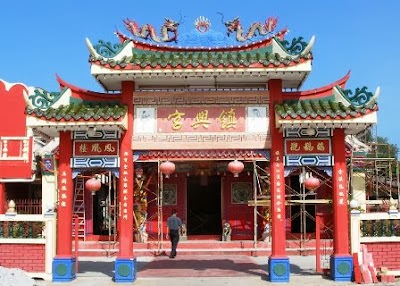
The Seng Choon Kiong, also known as Mazu Temple, is an approximately 300-year-old temple in Kampung Tok’kong and is a site of pilgrimage for worshippers of Mazu in Malaysia. The Water and Moon Temple is a must-visit because it has a history spanning more than 500 years. The temple’s statues are nearly 600 years old. It is locally believed that the temple grants the wishes of the needy. Zi Xia Dong, or Princess Cave, is a Chinese cave temple that is located just opposite the Water and Moon Temple. To reach the temple, one must cross the metal bridge, a pebbled path, and a rubber plantation before climbing up a 20-meter-high staircase to reach the peak of the limestone hill. Inside the cave is a giant figure of the Goddess of Mercy, which is worshipped. There are many stories about this cave. One story is that there was a princess who was ferrying a ship through this land with her father and other crew members. When the ship arrived here, the Princess fell in love with the Pulai settlement, and she was reluctant to go back with her father. So to escape from her father, she hid in the cave and gradually became the guardian of the hill.

The town of Gua Musang is famous for its limestone hills and caves. The name Gua Musang means Cave of the Fox. One can explore numerous caves here, including Gua Musang, Princess Cave, Gua Batu Hijau, Bombed Cave, and many more. One should take enough precautions while climbing and exploring these caves, as some of them are filled with insects and bats. Gua Ikan is one of the most commonly visited caves in Kelantan. It is very famous because the cave’s rock formation resembles a fish shape, which is why it earned the name Fish Cave. Due to the complexity of the cave’s geology, it is recommended to hire a guide from the nearby Gunung Stong State Park. The cave is made of limestone and hosts animals like bats, whip scorpions, spiders, and lots of mosquitos. The caves are open between 8 am and 5 pm daily. Close to Dabong, this cave features a limestone grotto carved out by a flowing river that can rise rapidly and dangerously after rain. Usually, however, it is a pleasant, if slightly overused, picnic spot.
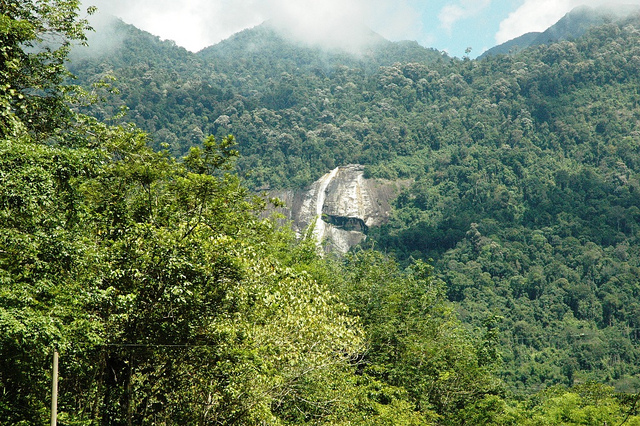
Gunung Stong State Park is home to one of the highest waterfalls in Malaysia, the seven-tiered Jelawang Waterfall. Named for the 1422 m-high Gunung Stong mountain, this 219.5 sq km park, only 15km from Dabong, features beautiful stepped waterfalls and offers amazing hiking, swimming and trekking. It is believed to be home to elephants, tigers and tapirs. The beauty of Jelawang Waterfall can be seen from a distance as one travels towards the park entrance. From the park, you can hire a guide to lead you, or you can hike yourself, following the trails given.
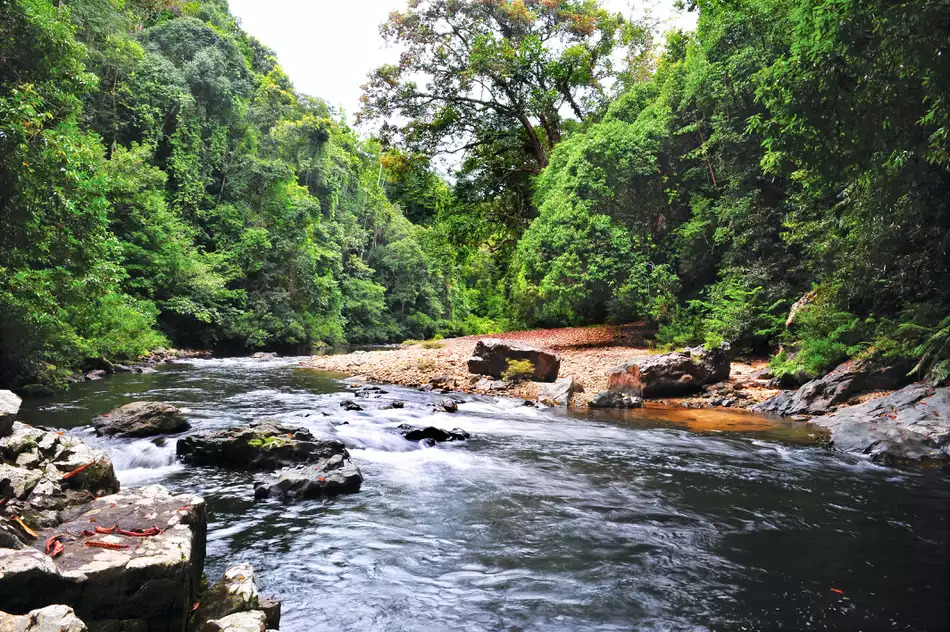
Located in the Gua Musang Region near Kelantan’s borders with Pahang and Terengganu, Taman Negara is located in the Hantu Hill and Lebir Reserve forests. Also known as Kuala Koh National Park, because it is located across three states, visitors sometimes get confused about which state the national park is located in. In truth, the park is located in the district of Gua Musang in Kelantan State. The park is mostly tropical rainforest and is home to Malaysia’s highest mountain, Mount Tahan. There are a vast number of exotic birds, animals, insects, and even reptiles and amphibians. The park is open from 9 a.m. to 5:30 p.m. on Mondays and Saturdays and from 9:30 a.m. to 5:30 p.m. on Sundays. Taman Tasik Gua Musang is a relaxing and beautiful lake garden where one can enjoy walking, jogging, and exercising.
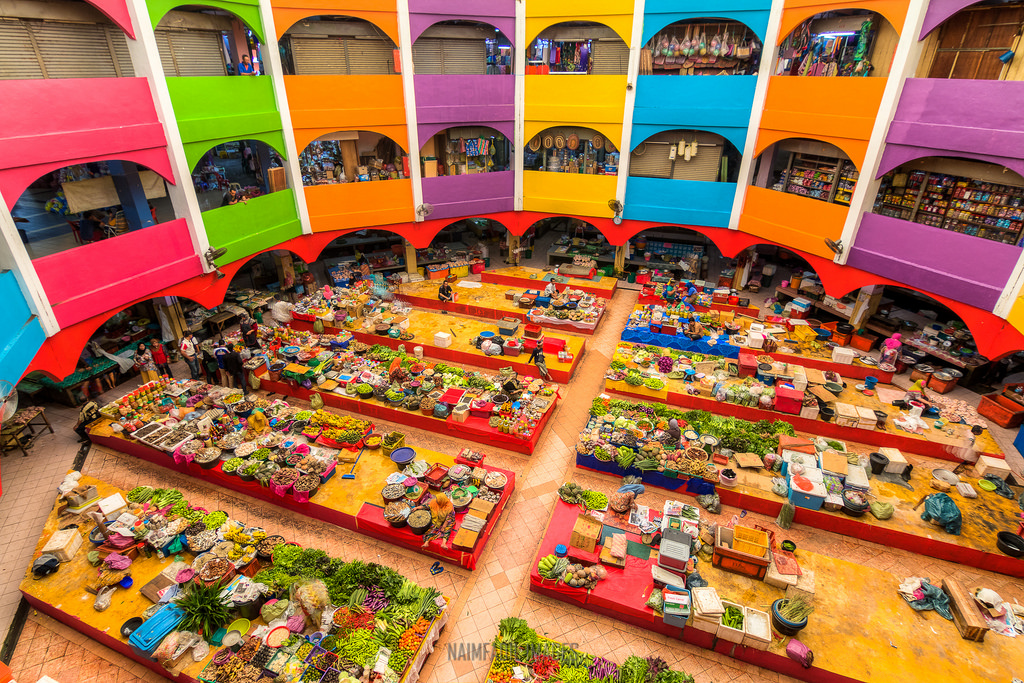
Named after Prophet Muhammad’s entrepreneurial wife, Siti Khadijah Market is a fitting name for a market mostly run by women. The market was originally established as Buluh Kubu Market in 1985 and opened to the public by Sultan Ismail Petra. The market was then renamed Kelantan Menteri Besar Nik Abdul Aziz Nik Mat in 1997. The market is housed in a four-story building and features an octagonal shape. Fresh goodies, ready-to-eat foods, local snacks and drinks can be found in the market. The bottom floor is dedicated to wet items such as fish, vegetables, chicken and so on. Level 1 is allocated to dry food items such as serundeng. They additionally sell traditional Kelantan cakes, chicken, spiked fish, rice noodles, glazed rice, nasi dagang, laksam and somtam. The second and third floors are for non-food items.
Also known as Balai Getam Guri, the Handicraft Village and Craft Museum houses many fine examples of Kelantanese craftsmanship such as traditional embroidery, songket weaving, batik printing, silver work and wood carving. Kampung Kraftangan is a handicraft market, a touristy affair opposite Istana Batu, with a one-room museum with displays of woodcarving, batik-making and other crafts.
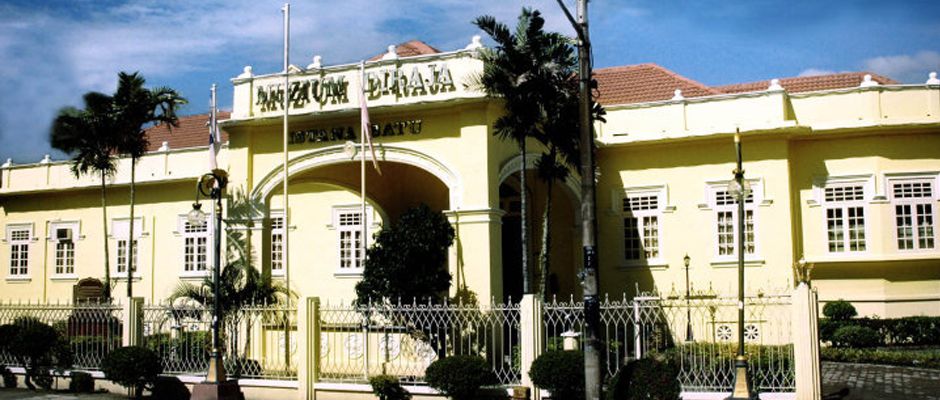
The pale-yellow Istana Batu building, constructed in 1939, was the crown prince’s palace until it was donated to the state. Now a museum, the richly furnished rooms give a surprisingly intimate insight into royal life, with family photos and personal belongings scattered among the fine china, chintzy sofas and the late sultan’s collection of hats.
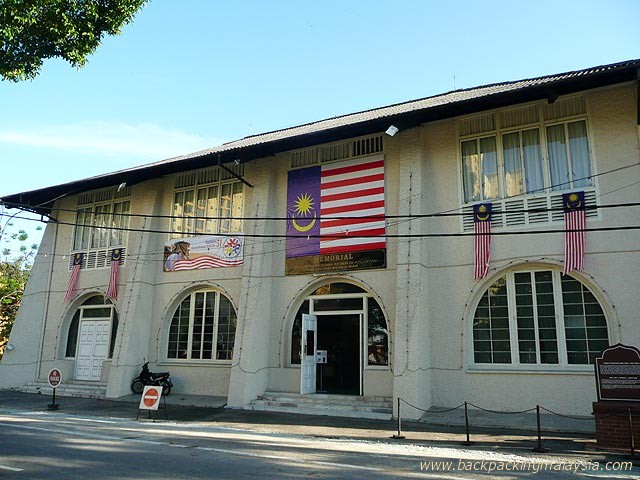
The Bank Kerapu War Museum was the Japanese headquarters during their occupation during WWII. Before that, this building was the first trading bank in Kelantan. This museum displays more than 1000 exhibits relating to war such as Japanese tools that were used during the occupation. It is open from 8:30 am to 4:45 pm daily except Fridays.

Next to the tourist information centre, the Muzium Negeri Kelantan is the official state museum. The exhibits on Kelantan’s history and culture are interesting, but the accompanying signage can be poor. Muzium Islam occupies an old villa once known as Serambi Mekah or Verandah to Mecca, a reference to its days as Kelantan’s first school of Islamic instruction. Nowadays, it displays a small collection of photographs and artefacts relating to the history of Islam in the state.

Istana Jahar, Kota Bharu’s best museum, focuses on Kelantanese rituals and crafts. It’s housed in a beautiful chocolate-brown building that dates back to 1887 and is easily one of the most attractive traditional buildings in the city. The collection here includes detailed descriptions of batik weaving, the elaborate ceremonies of coming-of-age circumcision, wedding nights and funerary rights. It is known as Jahar because of a tree that grew on the palace grounds. The museum is open from 8:30 am to 4:45 pm on all days except Fridays. For locals, adults need to pay RM 2 and children pay RM 1, while foreign adults will pay RM 4 and children will pay RM 2.
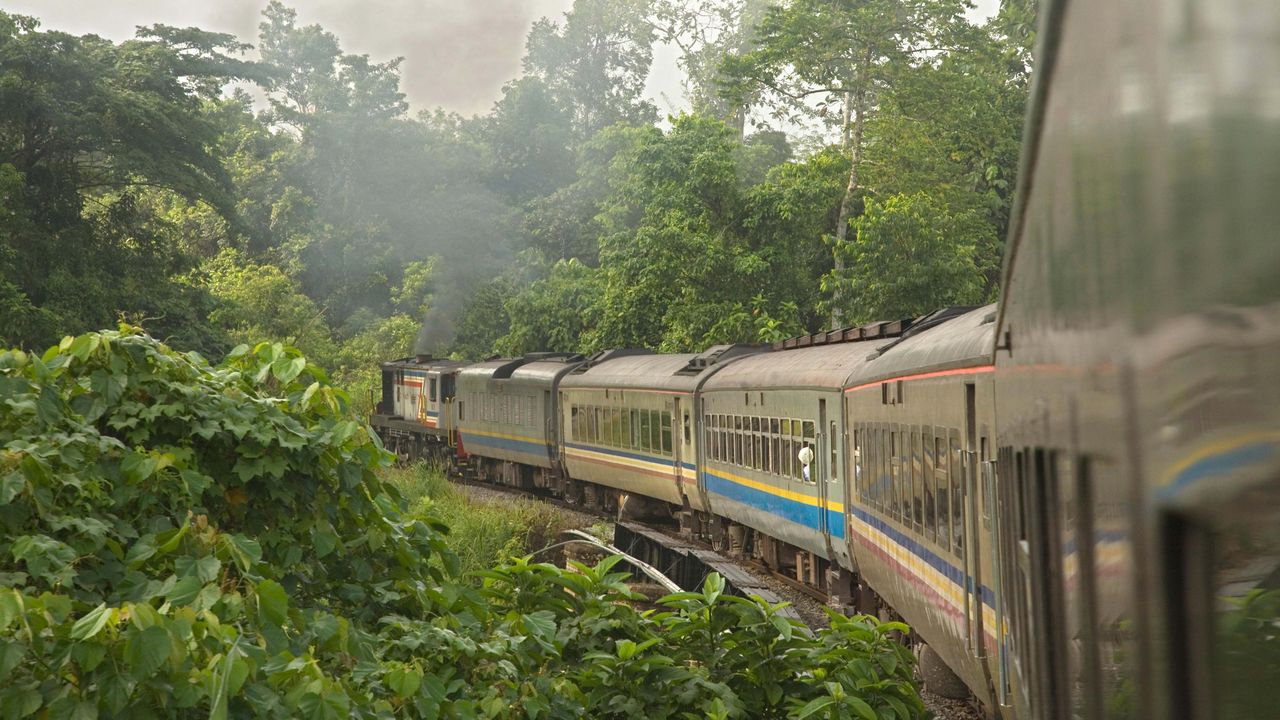
The Jungle Railway is a must-see attraction of Kota Bharu. The railway runs along the east coast and through the centre of Malaysia and passes through Kelantan, where it stops at the city of Tumpat. It is described as one of the world’s most picturesque journeys. Throughout the journey, one can get to see the luxurious green jungle with the best scenery of the journey once it heads north. While travelling from Kuala Lipis to Kuala Krai, one can see huge rivers and limestone hills around the town of Gua Musang. And that, according to tourists, holds the best scenery of the entire journey. To travel from Tumpat to Kuala Lumpur, a first-class ticket will cost between RM 101 and RM 130 and a second-class ticket will be about RM 31 per person.
This is all that I could find about the state of Kelantan. I believe that this state is very underrated and has a lot of potential for tourism. Let’s see when I can make it here. Keep watching this space for the next state we will be exploring, the state of Terengganu.




 Memories and Such