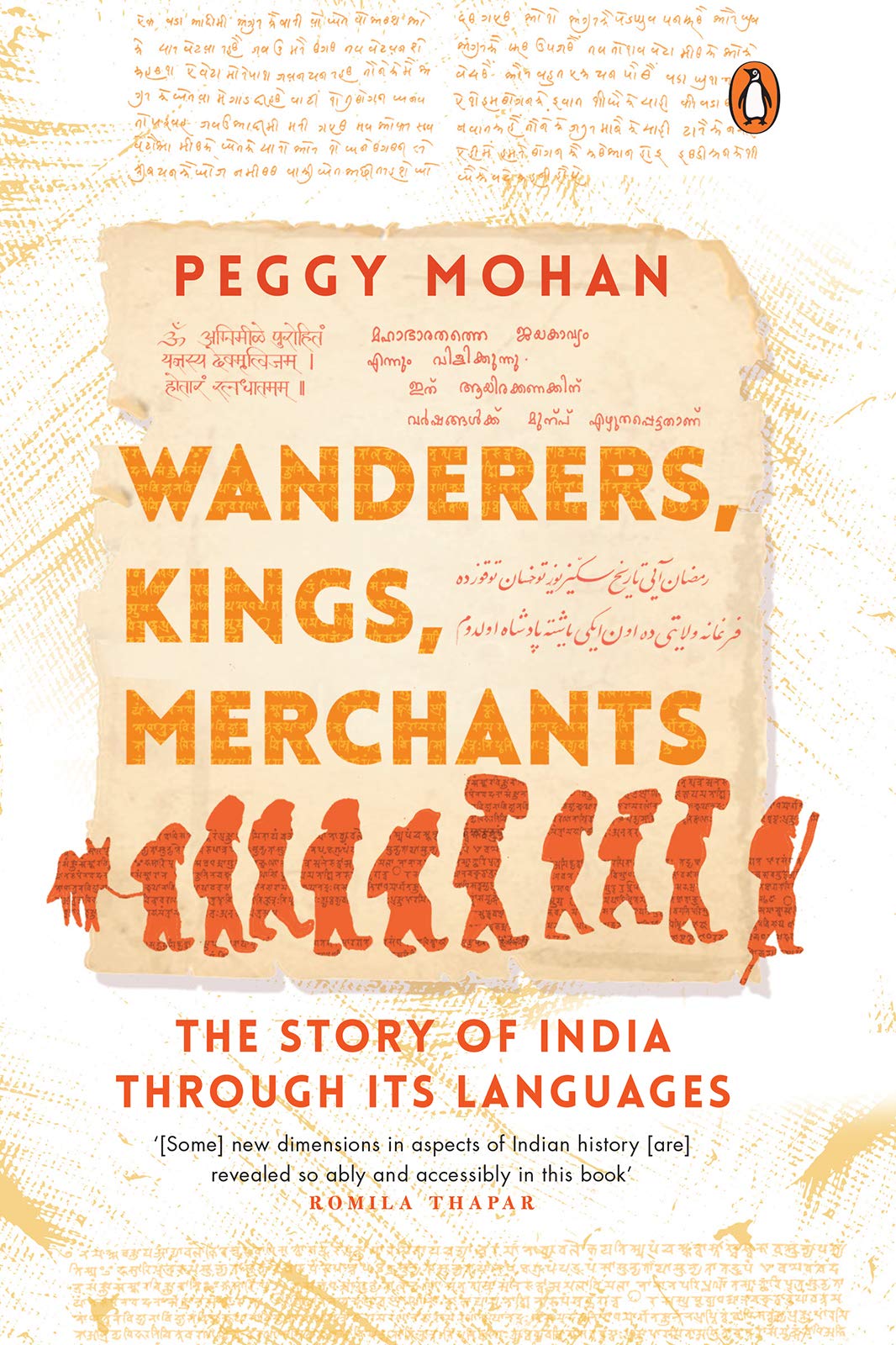
In My Hands Today…

Bird by Bird: Some Instructions on Writing and Life – Anne Lamott

“Thirty years ago my older brother, who was ten years old at the time, was trying to get a report on birds written that he’d had three months to write. [It] was due the next day. We were out at our family cabin in Bolinas, and he was at the kitchen table close to tears, surrounded by binder paper and pencils and unopened books on birds, immobilized by the hugeness of the task ahead. Then my father sat down beside him, put his arm around my brother’s shoulder, and said. ‘Bird by bird, buddy. Just take it bird by bird.'”

With this basic instruction always in mind, Anne Lamott returns to offer us a new gift: a step-by-step guide on how to write and on how to manage the writer’s life. From “Getting Started,’ with “Short Assignments,” through “Shitty First Drafts,” “Character,” “Plot,” “Dialogue.” all the way from “False Starts” to “How Do You Know When You’re Done?” Lamott encourages, instructs, and inspires. She discusses “Writers Block,” “Writing Groups,” and “Publication.” Bracingly honest, she is also one of the funniest people alive.

If you have ever wondered what it takes to be a writer, what it means to be a writer, what the contents of your school lunches said about what your parents were really like, this book is for you. From faith, love, and grace to pain, jealousy, and fear, Lamott insists that you keep your eyes open, and then shows you how to survive. And always, from the life of the artist she turns to the art of life.

In My Hands Today…

On Writing: A Memoir of the Craft – Stephen King

“Long live the King” hailed Entertainment Weekly upon the publication of Stephen King’s On Writing.

Part memoir, part master class by one of the bestselling authors of all time, this superb volume is a revealing and practical view of the writer’s craft, comprising the basic tools of the trade every writer must have.

King’s advice is grounded in his vivid memories from childhood through his emergence as a writer, from his struggling early career to his widely reported near-fatal accident in 1999 — and how the inextricable link between writing and living spurred his recovery.

Brilliantly structured, friendly and inspiring, On Writing will empower and entertain everyone who reads it — fans, writers, and anyone who loves a great story well told.

In My Hands Today…

Eats, Shoots & Leaves: The Zero Tolerance Approach to Punctuation – Lynne Truss

In Eats, Shoots & Leaves, former editor Lynne Truss, gravely concerned about our current grammatical state, boldly defends proper punctuation.

She proclaims, in her delightfully urbane, witty, and very English way, that it is time to look at our commas and semicolons and see them as the wonderful and necessary things they are. Using examples from literature, history, neighborhood signage, and her own imagination, Truss shows how meaning is shaped by commas and apostrophes, and the hilarious consequences of punctuation gone awry.

Featuring a foreword by Frank McCourt, and interspersed with a lively history of punctuation from the invention of the question mark in the time of Charlemagne to George Orwell shunning the semicolon, Eats, Shoots & Leaves makes a powerful case for the preservation of proper punctuation.

In My Hands Today…

The Sense of Style: The Thinking Person’s Guide to Writing in the 21st Century – Steven Pinker

Why is so much writing so bad, and how can we make it better? Is the English language being corrupted by texting and social media? Do the kids today even care about good writing? Why should any of us care?

In The Sense of Style, the bestselling linguist and cognitive scientist Steven Pinker answers these questions and more. Rethinking the usage guide for the twenty-first century, Pinker doesn’t carp about the decline of language or recycle pet peeves from the rulebooks of a century ago. Instead, he applies insights from the sciences of language and mind to the challenge of crafting clear, coherent, and stylish prose.

In this short, cheerful, and eminently practical book, Pinker shows how writing depends on imagination, empathy, coherence, grammatical knowhow, and an ability to savor and reverse engineer the good prose of others. He replaces dogma about usage with reason and evidence, allowing writers and editors to apply the guidelines judiciously, rather than robotically, being mindful of what they are designed to accomplish.

Filled with examples of great and gruesome prose, Pinker shows us how the art of writing can be a form of pleasurable mastery and a fascinating intellectual topic in its own right.

International Mother Language Day

If you talk to a man in a language he understands, that goes to his head. If you talk to him in his language, that goes to his heart – Nelson Mandela

Source

21st February 1952, around 9 am, students began gathering in the premises of University of Dhaka in defiance of Section 144 which banned public gathering. This gathering was because the then Pakistan government led by Jinnah’s successor, Governer-General Khawaja Nazimuddin staunchly defended the ‘Urdu only’ policy during a speech on 27 January 1952. Then later that month, at a meeting, the central government’s proposal of writing the Bengali language in Arabic script was vehemently opposed and the meeting’s action committee called for an all out protest on 21 February, including strikes and rallies, to prevent which the government imposed section 144 in Dhaka.

Later that morning, as armed police surrounded the campus, students gathered at the university gate attempted to break the police line. In retaliation, the police fired fired tear gas shells towards the gate to warn the students. A section of students ran into the Dhaka Medical College while others rallied towards the university premises cordoned by the police. The vice-chancellor asked police to stop firing and ordered the students to leave the area. However, the police arrested several students for violating section 144 as they attempted to leave. Enraged by the arrests, the students met around the East Bengal Legislative Assembly and blocked the legislators’ way, asking them to present their insistence at the assembly. When a group of students sought to storm into the building, police opened fire and killed a number of students, including Abdus Salam, Rafiq Uddin Ahmed, Sofiur Rahman Abul Barkat and Abdul Jabbar. As the news of the killings spread, disorder erupted across the city. Shops, offices and public transport were shut down and a general strike began.

Soon dissorder spread across the then East Pakistan as large processions ignored section 144 and condemned the actions of the police. During the continued protests, police actions led to the death of four more people.

Today, 21 February, which is a public holiday in Bangladesh is also called State Language Day or Language Martyrs’ Day which was also proclaimed by the United Nations in November 1999 as International Mother Tongue Language Day. In Bangladesh, on this day, people visit the Shaheed Minar, a solemn and symbolic structure erected at the location of the massacre in memory of the language movement which led to the country’s independence.

Languages, especially what we refer to mother tongue languages, which are the ones we first learn to speak with our parents and family are one of the most powerful ways to preserve and develop culture and to promote it all across the world.

With their complex implications for identity, communication, social integration, education and development, languages are of strategic importance for people and planet. Yet, due to globalization processes, they are increasingly under threat, or disappearing altogether. When languages fade, so does the world’s rich tapestry of cultural diversity. Opportunities, traditions, memory, unique modes of thinking and expression — valuable resources for ensuring a better future — are also lost.

At least 43% of the estimated 6000 languages spoken in the world are endangered. Only a few hundred languages have genuinely been given a place in education systems and the public domain, and less than a hundred are used in the digital world.

Source

International Mother Language Day has been observed every year since February 2000 to promote linguistic and cultural diversity and multilingualism.

Languages are the most powerful instruments of preserving and developing our tangible and intangible heritage. All moves to promote the dissemination of mother tongues will serve not only to encourage linguistic diversity and multilingual education but also to develop fuller awareness of linguistic and cultural traditions throughout the world and to inspire solidarity based on understanding, tolerance and dialogue.

Every two weeks a language disappears taking with it an entire cultural and intellectual heritage.

Linguistic diversity is increasingly threatened as more and more languages disappear. Globally 40 per cent of the population does not have access to an education in a language they speak or understand. Nevertheless, progress is being made in mother tongue-based multilingual education with growing understanding of its importance, particularly in early schooling, and more commitment to its development in public life.

Multilingual and multicultural societies exist through their languages which transmit and preserve traditional knowledge and cultures in a sustainable way.

Today there is growing awareness that languages play a vital role in development, in ensuring cultural diversity and intercultural dialogue, but also in strengthening co-operation and attaining quality education for all, in building inclusive knowledge societies and preserving cultural heritage, and in mobilizing political will for applying the benefits of science and technology to sustainable development.

The theme for the 2020 edition is “Languages without borders”. Today, make it a point to communicate in the language you were first exposed to, your Mother Tongue. And if it is a language or dialect that is in danger of becoming extinct, then all the more, you owe it to yourself and the future generations to preserve it.

Here’s an interesting Youtube video from a TEDx talk by Dr. Colleen Fitzgerald who speaks about the future of endangered languages. Do watch it!

And another TEDx talk by linguist Mandana Seyfeddinipur on why endangered languages matter.