
Lumbini
The birthplace of Lord Buddha, Lumbini, aka ‘the lovely’, is a UNESCO World Heritage site as well as a Buddhist pilgrimage site. According to the sacred texts of the Buddhist Commentaries, Maya Devi gave birth to Siddhartha Gautama in Lumbini in c.624 BC, who then achieved Enlightenment, and became Shakyamuni Buddha, the founder of Buddhism. He later passed into parinirvana at the age of 80 years, in 544 BC. Lumbini is one of four most sacred pilgrimage sites pivotal in the life of the Buddha.
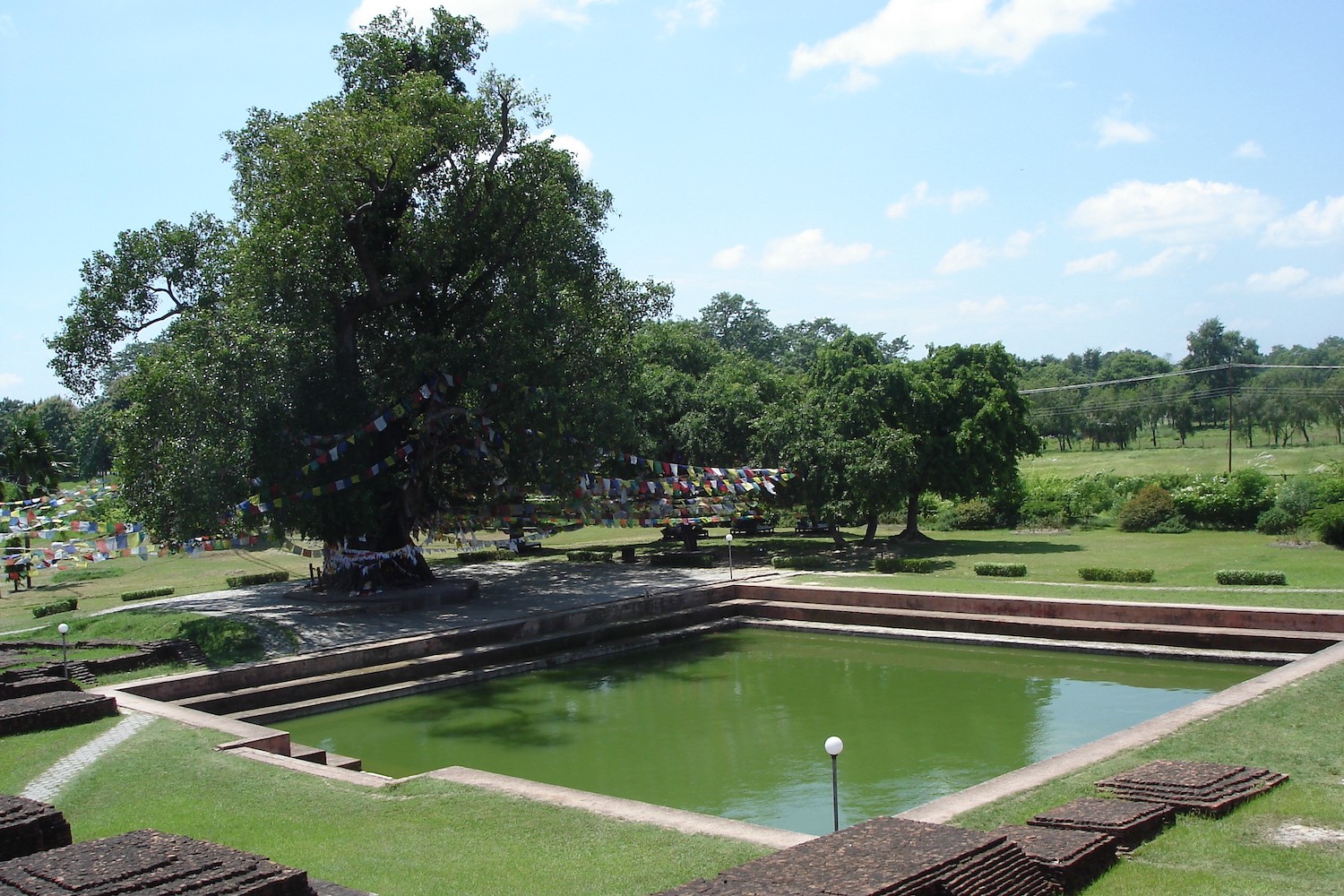
Lumbini has a number of old temples, including the Mayadevi Temple, and several new temples, funded by Buddhist organisations from various countries. Most of the temples have already been completed and some are still under construction. The Puskarini, or Holy Pond, is where Mayadevi, the Buddha’s mother, is believed to have taken the ritual bath prior to his birth and where the Buddha also had his first bath. At other sites near Lumbini, earlier Buddhas were born, then achieved ultimate Enlightenment and finally relinquished their earthly forms. Lumbini was made a World Heritage Site by UNESCO in 1997. The Lumbini Development Zone, designed by Japanese architect Kenzo Tange, offers a deeper dive into Buddhist heritage. Divided into eastern and western monastic zones, it houses impressive monasteries from countries like Thailand, Myanmar, China, and Japan. Beyond its spiritual and historical treasures, Lumbini is surrounded by the natural beauty of the Terai plains. The nearby Lumbini Crane Sanctuary is a haven for the endangered Sarus cranes and other wildlife, promoting conservation and offering a serene escape into nature.
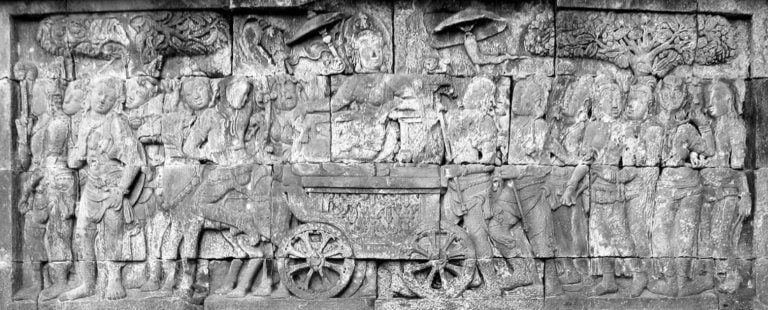
In the time of the Buddha, Lumbini was situated east of Kapilavastu and south-west of Devadaha of Shakya, an oligarchic republic. According to the Buddhist tradition, it was there that the Buddha was born. The Ashoka Pillar of Lumbini, a monolithic column with an inscription in the ancient Brahmi script discovered at Rupandehi in 1896, is believed to mark the spot of Ashoka’s visit to Lumbini.
In 1896, former Commander-In-Chief of the Nepalese Army General Khadga Shamsher Jang Bahadur Rana and Alois Anton Führer discovered a great stone pillar at Rupandehi, according to historical records made by the ancient Chinese monk-pilgrim Xuanzang in the 7th century and by another ancient Chinese monk-pilgrim Faxian in the early 5th century. The Brahmi inscription on the pillar gives evidence that Ashoka, emperor of the Maurya Empire, visited the place in 3rd-century BCE and identified it as the birth-place of the Buddha.
Lumbini is 4.8 km in length and 1.6 km in width. It is bordered by a large monastic zone in which only monasteries can be built, no shops, hotels or restaurants. It is separated into an eastern and western monastic zone, the eastern having the Theravadin monasteries, the western having Mahayana and Vajrayana monasteries. There is a long water filled canal separating the western and eastern zones, with a series of brick arch bridges joining the two sides along the length. The canal is serviced by simple outboard motor boats at the north end which provides tours.

The Lumbini complex is divided into three areas: the Sacred Garden, the Monastic Zone and the Cultural Centre and New Lumbini Village. The Sacred Garden remains the epicenter of the Lumbini area and consists of the birthplace of Buddha and other monuments of archaeological and spiritual importance such as the Mayadevi Temple, the Ashoka Pillar, the Marker Stone, the Nativity Sculpture, Puskarini Sacred Pond and other structural ruins of Buddhist stupas and viharas. The Monastic Zone, spanning one square mile is divided into two zones: the East Monastic Zone which represents Theravada school of Buddhism and the West Monastic Zone which represents Mahayana and Vajrayana school of Buddhism, with their respective monasteries on the either side of a long pedestrian walkway and canal. Marking the monastic spot as a sacred pilgrimage site, many countries have established Buddhist stupas and monasteries in the monastic zone with their unique historical, cultural and spiritual designs. The Cultural Centre and New Lumbini Village comprises Lumbini Museum, Lumbini International Research Institute, World Peace Pagoda of Japan, Lumbini Crane Sanctuary and other administrative offices. New excavations in the Mayadevi temple in Lumbini in 2013 revealed a series of the most ancient Buddhist shrines in South Asia extending the history of the site to a much earlier date.
The Lumbini Monastic Site is a sacred complex dedicated to preserving the spiritual and historical significance of Lord Buddha’s birthplace. This expansive area is part of the larger Lumbini Development Zone, a UNESCO World Heritage Site. The site features an array of monasteries, meditation centres, and monuments, as well as numerous meditation centres. It is designed to accommodate pilgrims and visitors, offering them a place for meditation, study, and reflection. The site is divided into two zones: the East Monastic Zone, dedicated to Theravada Buddhism, and the West Monastic Zone, which primarily features Mahayana and Vajrayana monasteries. The Monastic Site is adjacent to the Sacred Garden, which contains the Maya Devi Temple, the Ashoka Pillar, and the sacred Bodhi tree.
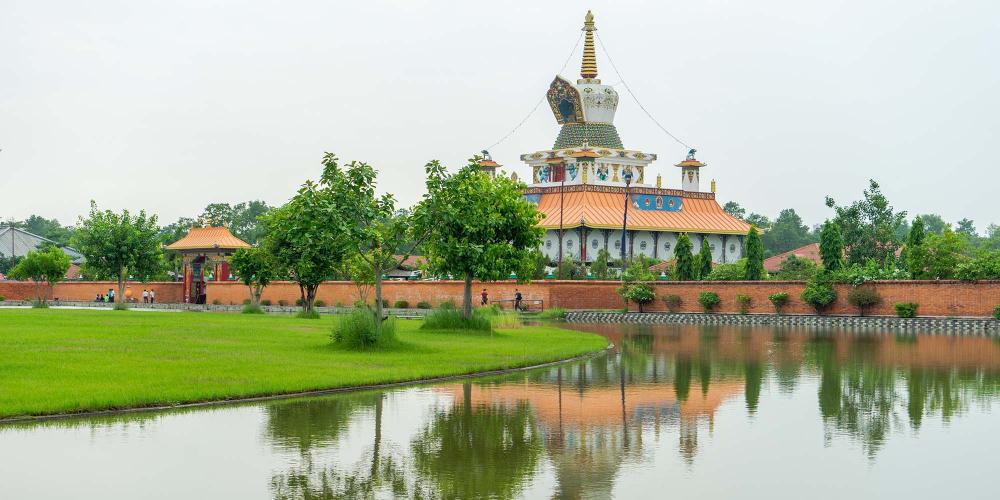
The West Monastic Zone houses fourteen Mahayana Monasteries and two Vipassana meditation centres. Vajrayana includes traditions of Tantra and Mantra in Buddhism. The name is derived from a mythical weapon, Vajra, and revolves around rituals and practices using Mudras, Dharanis, Mandalas and Mantras. Vajrayana is considered one of three paths that lead to enlightenment. The Mahayana Temples are devoted to the classification & traditions of Buddhism and its philosophies. It refers to the path of the Bodhisattva where one seeks enlightenment that doesn’t just benefit them but also all the living beings. Those who have attained this stage are called Samyaksambuddha who are believed to have the ability to teach the technique and help others attain enlightenment in one lifetime.
The East Monastic Zone has monasteries where Theravada Buddhism is specifically practised and is also called the Southern Buddhism Zone. The temples in this zone function as per the principles of the senior Buddhist monks. These principles have helped maintain the true essence of Buddhism and keep it as close as possible to the genuine techniques taught by Gautama Buddha. It is one of the ways to live life in complete harmony with other living things on the planet. Up until now, they have helped devotees understand the reality behind the teachings and provided a way of attaining self-liberation by dedicating their lives to a long-term monastic way of living and genuine meditation practices.
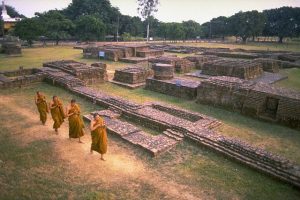
Located 24 km from Lumbini, Tilaurakot houses remains of Kapilavstu and is considered to be where Lord Gautama Buddha spent 29 years if his life. Its unearthing is marked as a significant event that reveals the historical life of Gautama Buddha. It is set in the district of Kapilavastu which is believed to be the site of the ancient city of the Shakyas. The exposed ruins include foundations of a structure that resemble a residential complex. Studies reveal that Gautama Buddha had lived his life as a prince and received all the royal luxuries before renouncing his throne and walking out of the Eastern Gate. Tilaurakot is termed as a UNESCO tentative site and is a significant tourist attraction. It is situated on the banks of Banaganga Rice and is surrounded by trees. A small museum in the vicinity has some of the objects that were found during excavation. Tilaurakot was discovered in the 19th century when archaeologists began their search of Kapilavastu based on the information documented by two Chinese Buddhist Monks, Faxian and Xuanzang.

The Maya Devi Temple is a revered and historically significant site marking the birthplace of Siddhartha Gautama, who later became known as Buddha. Situated in the Lumbini Garden, it is a UNESCO World Heritage Site. The temple complex includes ancient ruins, stupas, and monuments dating back to the 3rd century BCE and later. Inside the temple, a marker stone is placed on the exact spot where Buddha is believed to have been born. The temple is next to the sacred pool called Pushkarini and a sacred garden. A significant bas-relief sculpture within the temple depicts Queen Maya Devi holding onto a Sal tree while giving birth to Siddhartha Gautama. This image is one of the most iconic representations of the birth of Buddha. The temple complex is surrounded by ancient stupas and pillars, including the famous Ashoka Pillar. Erected by Emperor Ashoka in 249 BC, the pillar bears inscriptions that commemorate his visit to Lumbini and the significance of the site.
The history of the temple goes back to 2013 when an international team of archaeologists found a few ruins dating back to the sixth century BC. It was the remains of an ancient tree shrine that belongs to 550 BC. The researchers found out that the site is the earliest evidence of Buddhism as well as of Gautam Buddha.

Maya Devi Temple has a number of places within its complex to explore. The famous Ashoka Pillar is located in Maya Devi Temple. The inscription says that the pillar was erected by the people who were in charge of Emperor Ashoka’s visit to the park in 249 BC. The inscription is oldest in Nepal. The sacred bathing pond is located right next to the shrine, is where Maya Devi took a bath before giving birth. The most beautiful and well-decorated sight at Maya Devi Temple is the Bodhi Tree. It is related to the ancient fig tree and is characterised by heart-shaped leaves. The heart shape refers to the time when Buddha achieved enlightenment. The Bodhi tree is kept clean and is decorated with colourful prayer flags. The temple is open daily from 6 am to 6 pm. Entry is free for Indian and Nepali citizens, SAARC passport holders pay NPR 100 while foreigners pay NPR 200.
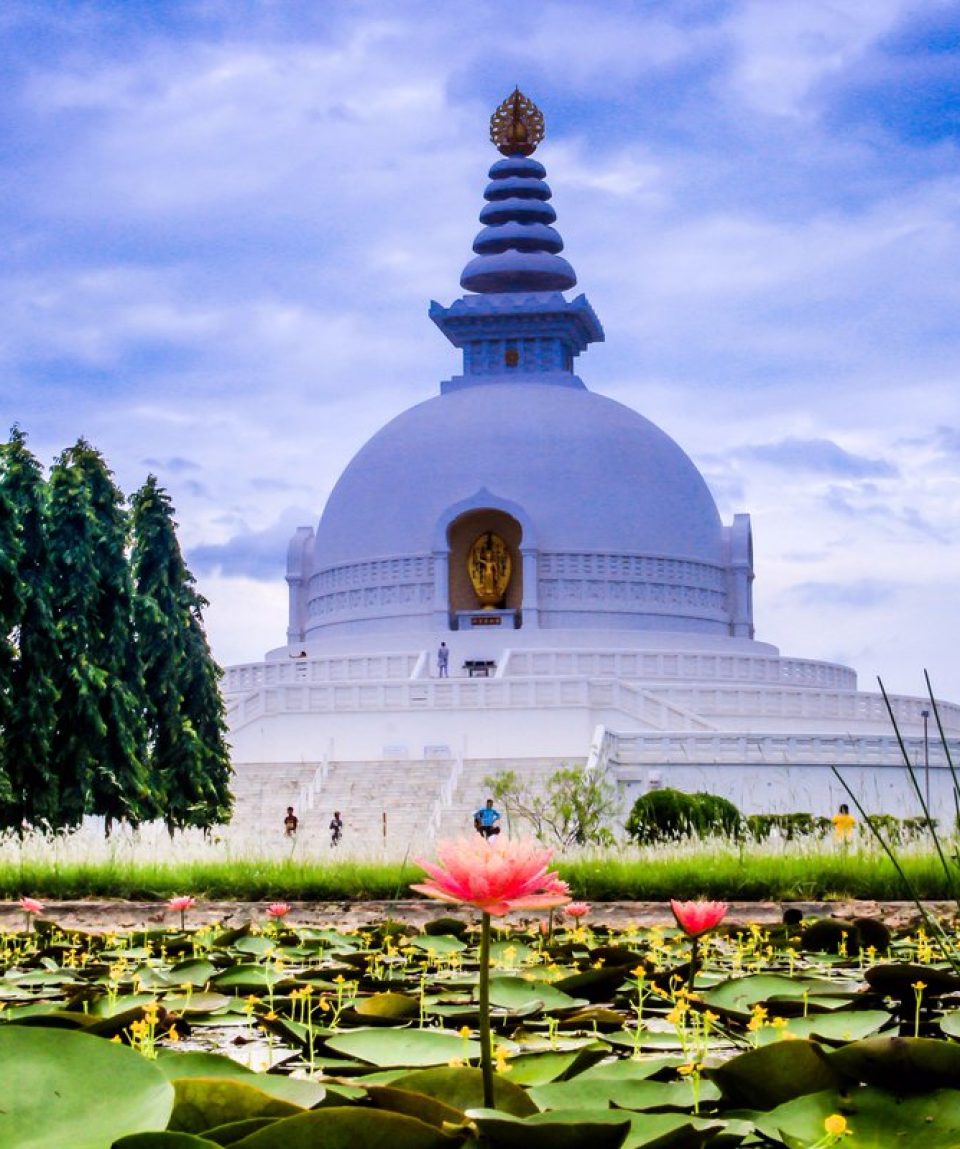
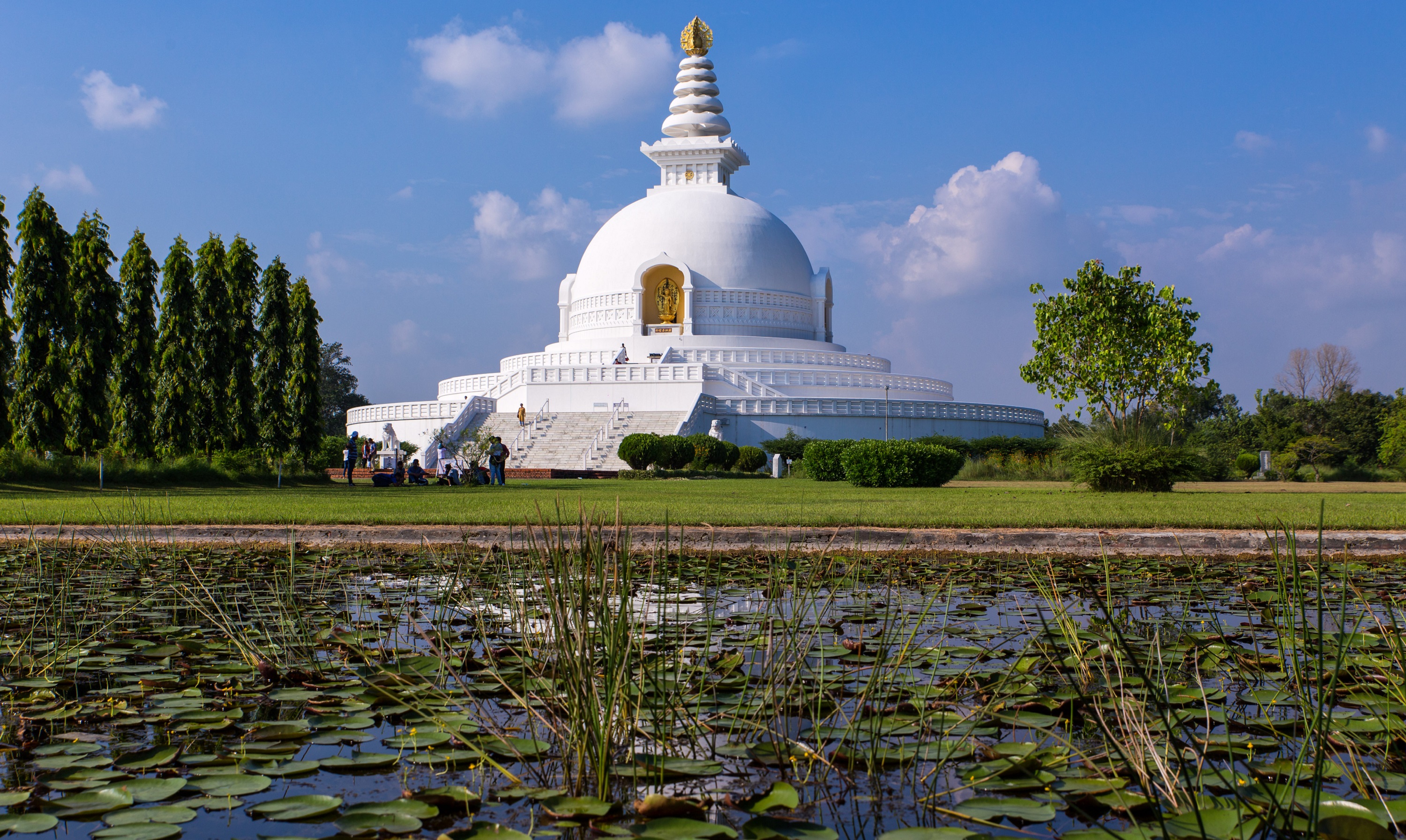
The Japan Peace Stupa, also known as World Peace Pagoda is an early 21st century monument. Located outside the main compound, the structure is a glorious stupa with traditional pagoda style architecture. Constructed by Japanese Buddhists at a cost of US $1 million, the monument is coloured white with a golden Buddha statue. The majestic structure has a dome in the centre that can be reached by climbing one of the two flights of stairs leading to it. On the second level, there’s a corridor encircling the dome. The Symbol of Peace is open all days of the week. The pagoda is open daily between 8 am and 8 pm.
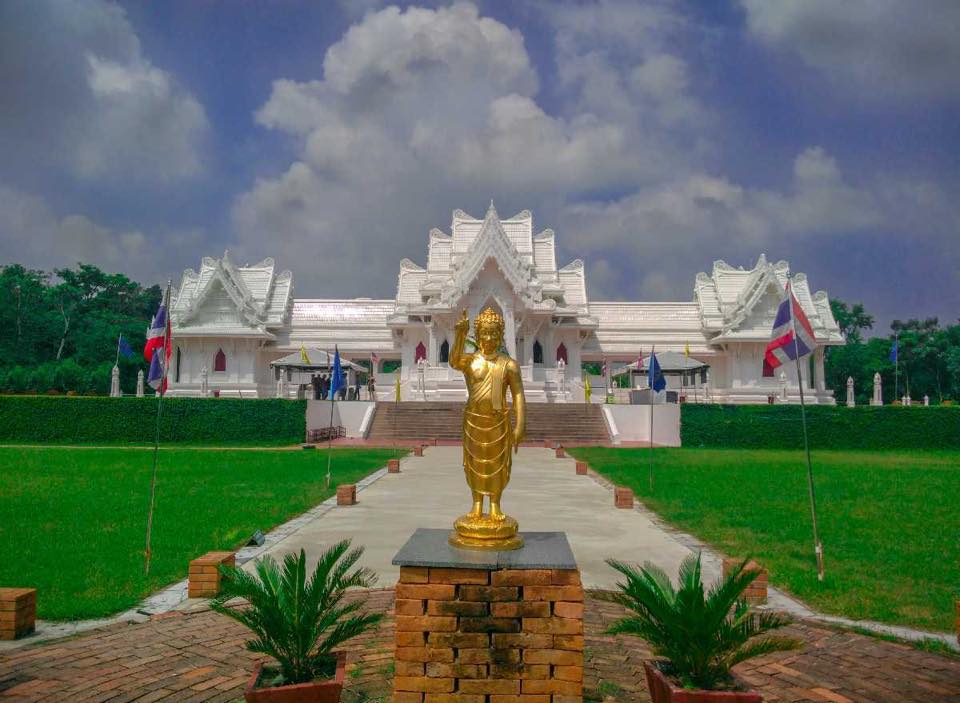
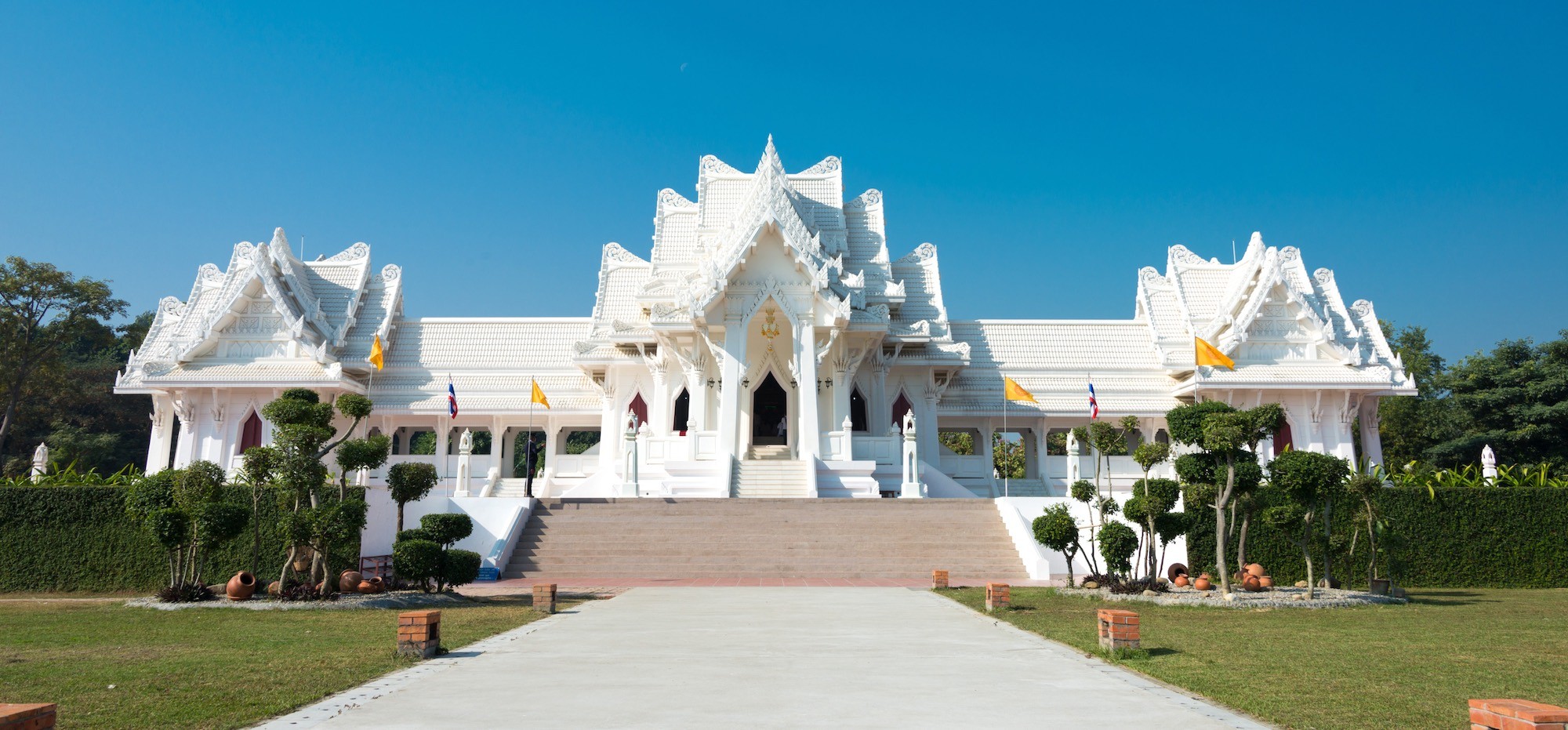
The Royal Thai Monastery in Lumbini is an imposing and stunning wat-style monastery. The gleaming building is constructed from white marble with a blue-roofed meditation centre closeby. The Dharma Swami Maharaja Buddha Vihar is a Buddhist Gompa belonging to the Sakyapa order. It was established by His Eminence Chogya Trichen Rinpoche. Every day, Tara Pooja is performed by the 600 monks residing in the monastery.
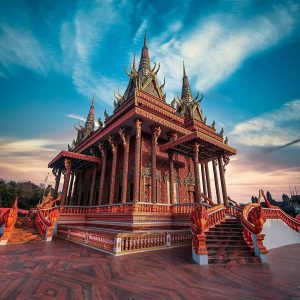
The Cambodian Monastery is an amalgamation of colourful fantasy and spiritual forces making it one of the most fascinating temples in the region. Built in a architectural design matching the famous Angkor Wat, the charming monastery is surrounded by a square railing, each having four 50m green snakes. The large compound has an outer wall covered with beautiful and intricate designs.
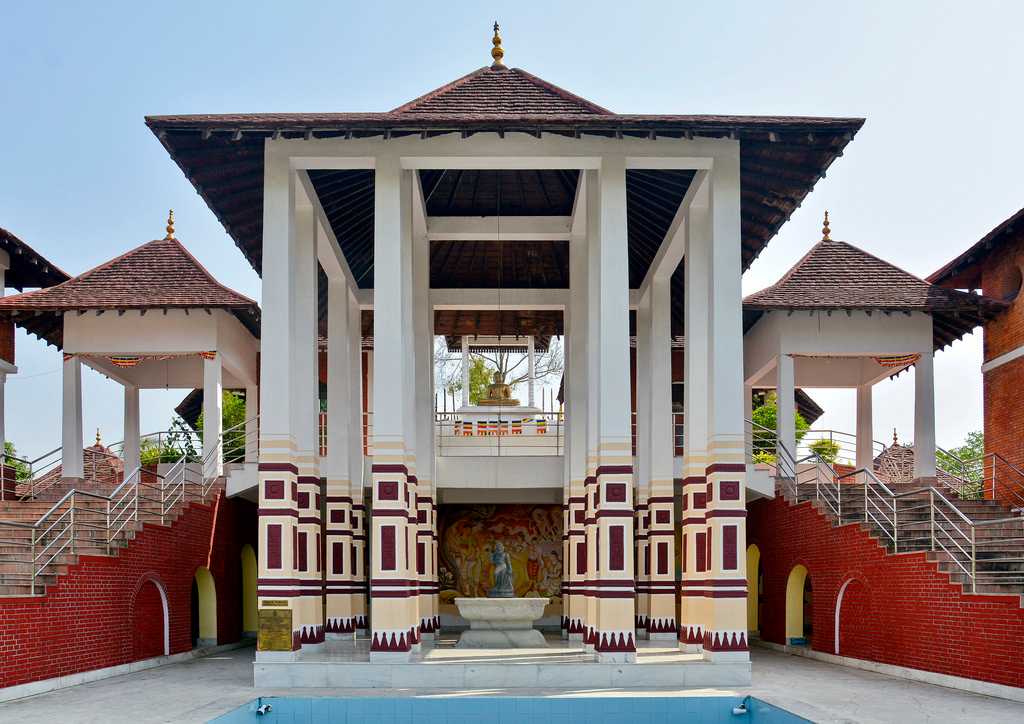
The Sri Lankan Monastery also known as the Sri Lanka Maha Vihara, showcases traditional Sri Lankan architectural elements. The monastery is a Theravada Buddhist establishment dedicated to Sri Lanka. It is a striking monastery nestled in the East Monastic Zone, which has a spherical raised platform with a traditional Pagoda. Underneath the Pagoda is a beautiful golden idol of Lord Buddha, seen seated in a meditating posture. This arrangement has a pathway that encircles the structure and provides an area for circumambulation. The monastery holds several critical religious events and practices, especially those followed in Sri Lanka.

The Thrangu Vajra Vidya Monastery is a monastery dedicated to Thrangu Rinpoche. He believed in the teachings of Buddha, building his principles on peace, knowledge and unity. Today, this monastery has a number of students who are aspiring monks. The monastery is open daily from 8 am to 5 pm.
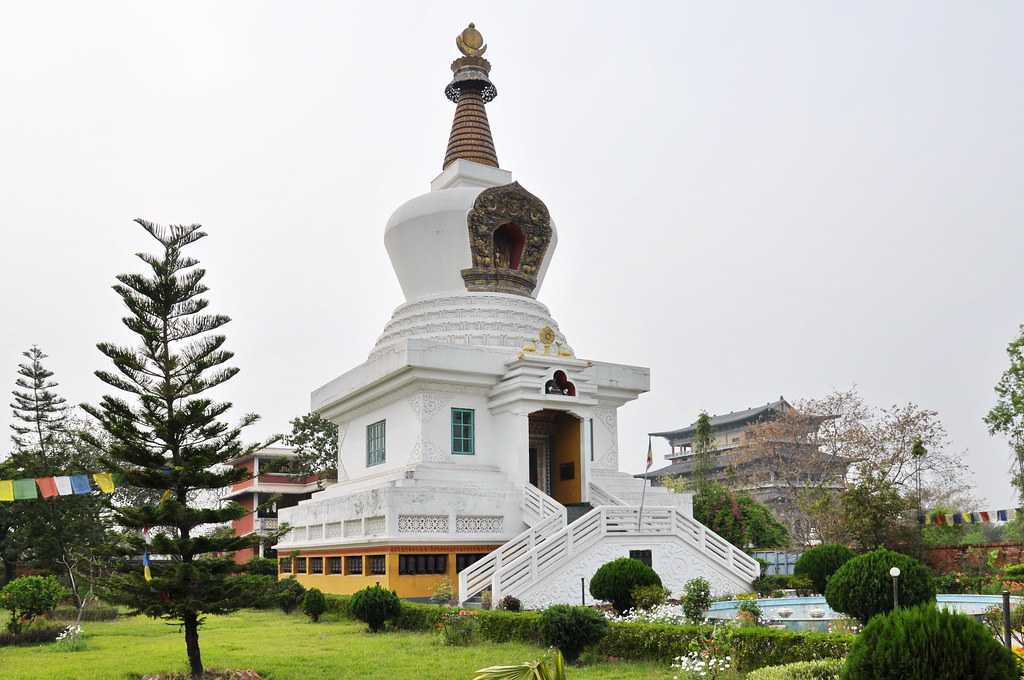
A chorten created by Buddhists from Manang in Northern Nepal, the Manang Samaj Stupa is known to be one of the oldest Stupas in Nepal, dating back to the birth of Gautam Buddha in 600 BC. There is a golden Buddha Statue in the middle of this building and is surrounded by colourful murals. At present, this attraction is believed that it will go under renovation soon. The monastery is open daily from 8 am to 5 pm.

The Great Drigung Lotus Stupa is one of the most religiously important Stupas in Lumbini and was built by the German Tara Foundation. The building contains a hollow crown partly covered in glass which reveals the Buddha statue inside. The domed ceiling of the Stupa is covered with Buddhist murals. The gold, wood and carvings represent the beliefs and teachings of Buddha that spreads the message of peace and non-violence.
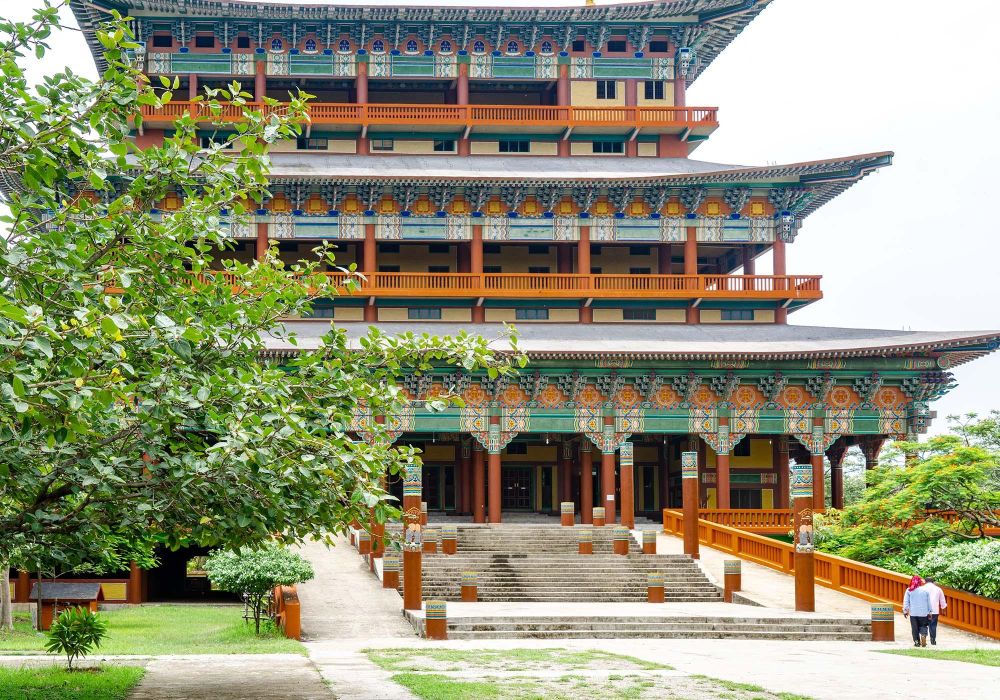
Dae Sung Shakya Sa, popularly known as the Korean Temple is an impressive structure built in a Korean style of architecture with colourful murals on the ceiling. It even offers community sleeping area as well as three meals a day to visitors for a few days at a minimal cost of NOR 500 per day. Meditating in the courtyard full of monks and pilgrims is a peaceful and refreshing experience. Entry fee to the monastery is NPR 400.
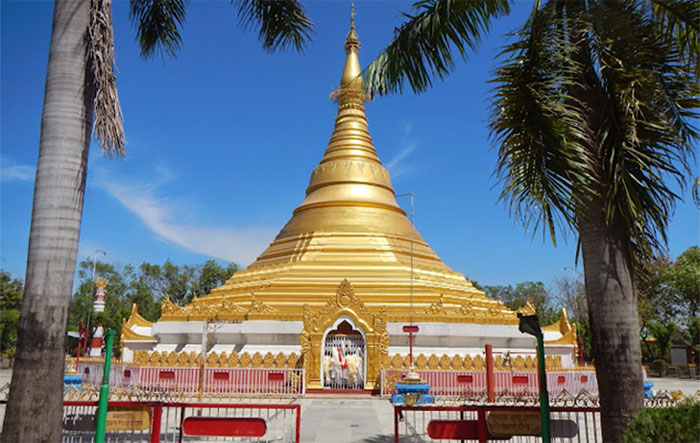
The Myanmar Golden Temple in Lumbini is the oldest structure of the city. Built in the Burmese style of architecture, the impressive corncob-shaped shikhara, styled after the temples of Bagan gives a regal look to the whole structure. There are three prayer halls and a Lokamani Pula Pagoda inside the building. The temples is open daily from 8 am to 12 noon and then again between 1 to 5 pm.
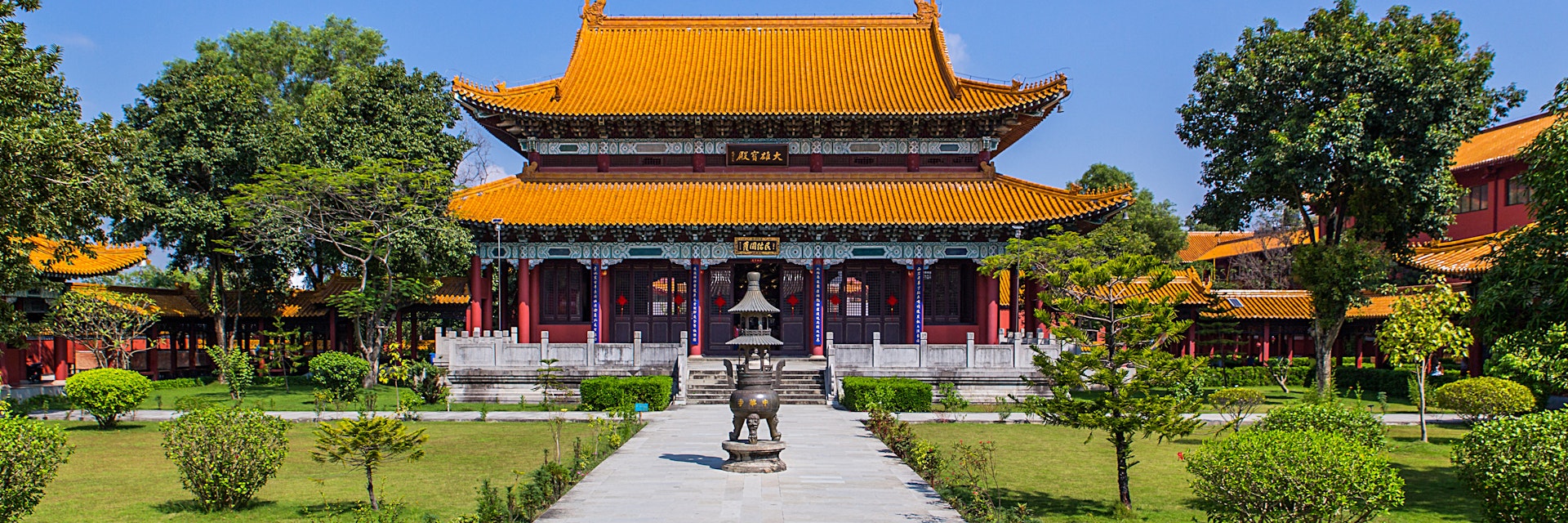
The Zhong Hua Chinese Buddhist Monastery, popularly known as the China Temple is an impressive structure is built in a pagoda-style of architecture and resembles the look of the famous forbidden city of China. As one enters, the perfectly manicured internal courtyard fills the heart with peace and joy. The Vietnam Phat Quoc Tu Temple has a facade flanked with artificial mountains and a grand roof.

The Supa Deurali Temple, located near Lumbini in the Arghakhanchi District is a significant Hindu shrine dedicated to the goddess Durga. It is a popular pilgrimage site, especially for those traveling to or from Lumbini. Devotees believe that worshipping at the Supa Deurali Temple brings protection, prosperity, and the fulfillment of wishes. The temple showcases traditional Nepalese architectural elements with an inner sanctum housing the idol of the Goddess Durga, where devotees offer prayers, flowers, and other offerings. The temple is built using local stone and wood, reflecting the vernacular architecture of the region. It is particularly vibrant during Hindu festivals of Dashain and Navratri. The temple is associated with numerous local legends and myths, which enhance its spiritual allure. One popular belief is that those who pray earnestly at Supa Deurali and make a vow will have their wishes fulfilled by the goddess.
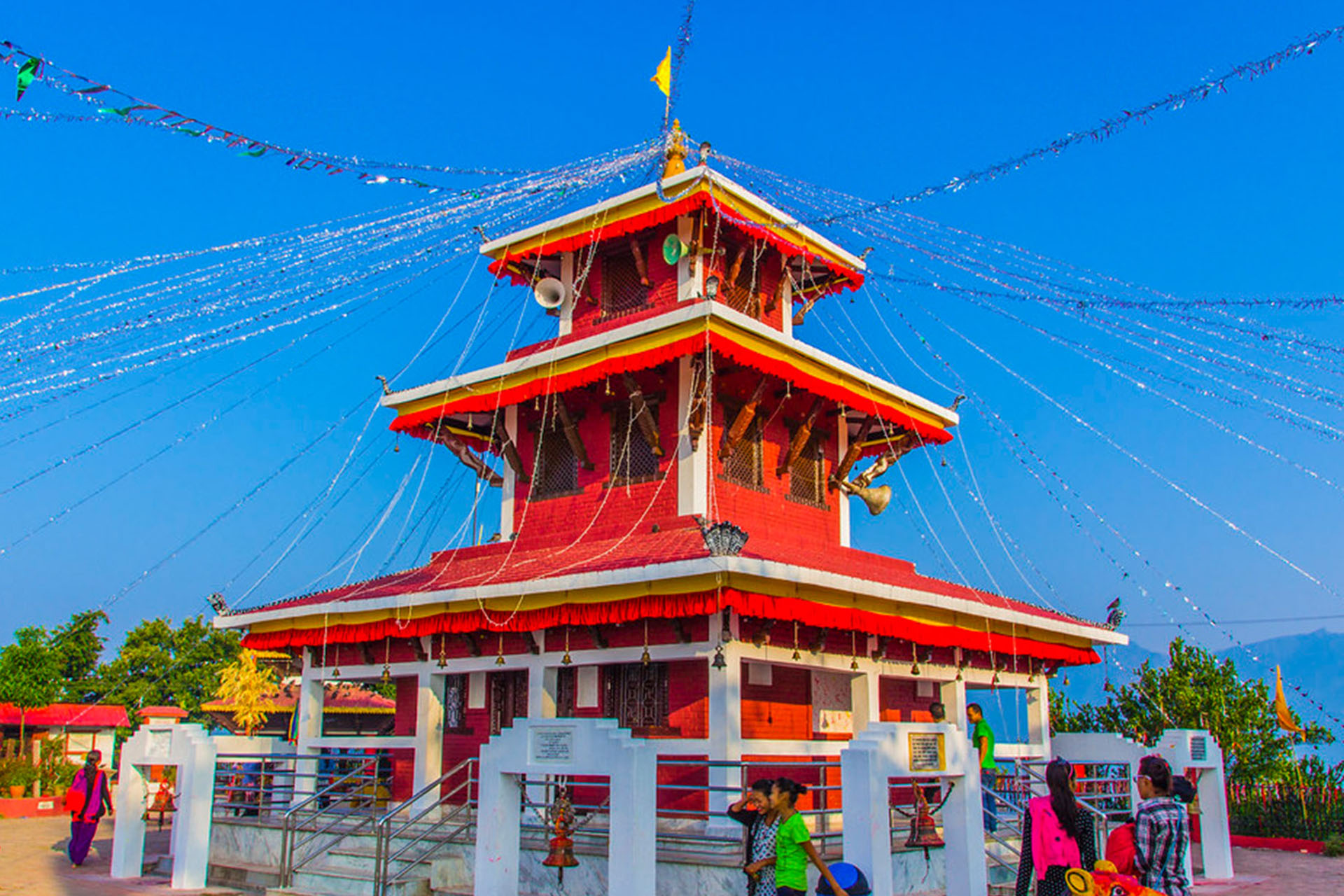
Maula Kalika, a revered Hindu temple located near Gaindakot, is dedicated to the goddess Kali. Perched atop Maula Hill, the temple offers stunning panoramic views of the surrounding landscapes. While it is not in immediate proximity to Lumbini, it is accessible from the region. The journey to the temple includes ascending stone steps, which are surrounded by lush greenery. Devotees visit Maula Kalika to seek blessings, protection, and the fulfillment of their wishes. The temple holds particular importance during the festivals of Dashain and Navaratri. The temple features traditional Nepalese temple architecture with the inner sanctum housing the idol of the Goddess Kali, adorned with flowers, offerings, and traditional decorations. Symbols of the goddess’s power and presence are prominently displayed around the temple. One of the main attractions of Maula Kalika Temple is its location. From the temple, visitors can enjoy panoramic views of the Terai plains, the Trishuli River, and the distant Himalayan peaks.

Located near Butwal, Manimukunda Sen Park is a picturesque and historically significant park. Named after King Manimukunda Sen, a medieval king of the Palpa kingdom, it is easily accessible by road, making it a convenient day trip for visitors staying in Lumbini. The park is renowned for its lush greenery, well-maintained gardens, and peaceful ambiance and is a popular spot for picnics and family outings. According to local legends, the king used the area as a summer retreat. The ruins of his palace can still be seen within the park, adding a historical dimension to the natural beauty of the area. Visitors can enjoy leisurely walks along tree-lined paths, relax on well-manicured lawns, and take in the scenic views of the surrounding hills. It also features a variety of plant species, making it a haven for botany enthusiasts. The park includes a designated play area for children, equipped with swings, slides, and other playground equipment.
Lumbini Garden, the birthplace of Siddhartha Gautama or the Buddha and an important Buddhist pilgrimage site is now a sanctuary for cranes. This sanctuary is spread over the area of 6 sq km and consists of the ruins of the palace of Tilaurakot where Siddhartha Gautam spent 29 years of his life. It is one of the most unique attractions in Nepal and is definitely worth a visit. The crane sanctuary aims at protecting the endangered Sarus Cranes in and around the wetlands of this area by creating a local community for their protection and to restore their natural habitat while creating an education facility around this conversation. It is believed that Gautam Buddha fought for the preservation of this bird, around 2500 years ago, and the Lumbini Crane Sanctuary wishes to continue his noble mission.Along with the Sarus Cranes, one may get a chance to see the antelope-like blue bull. Hence, for those who are interested in Buddhism or wildlife conservation, must visit this attraction. Entry to the sanctuary is free.
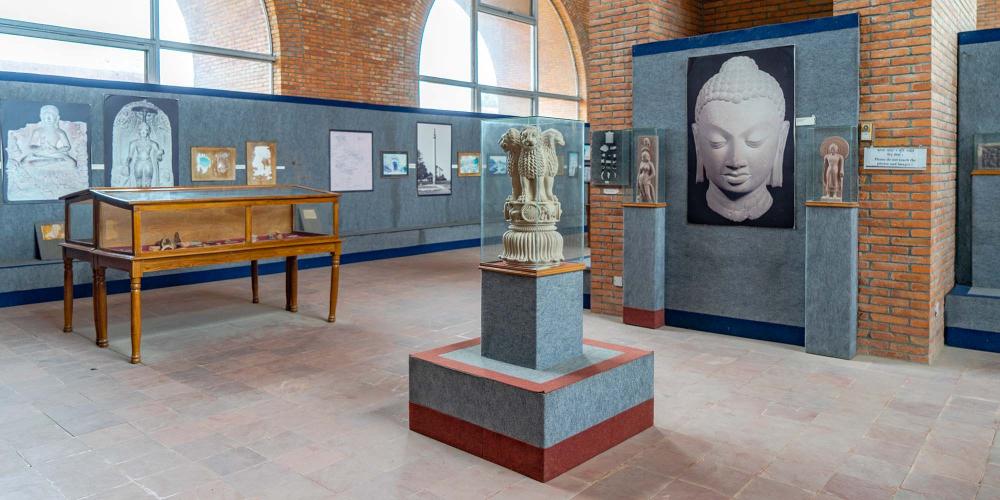
Located inside the UNESCO World Heritage Site of Sacred Garden Area, the Lumbini Museum displays about 12,000 artifacts including religious manuscripts, metal sculptures, Terra cottas, coins from Maurya and Khusana dynasty and stamps from all over the world depicting Lumbini. The Lumbini International Research Institute (LIRI), located opposite the Lumbini Museum, provides research facilities for the study of Buddhism and religion in general. This museum was built in the 1970s and is now reimagined by architect Kris Yao from Taiwan and his team.
 Memories and Such