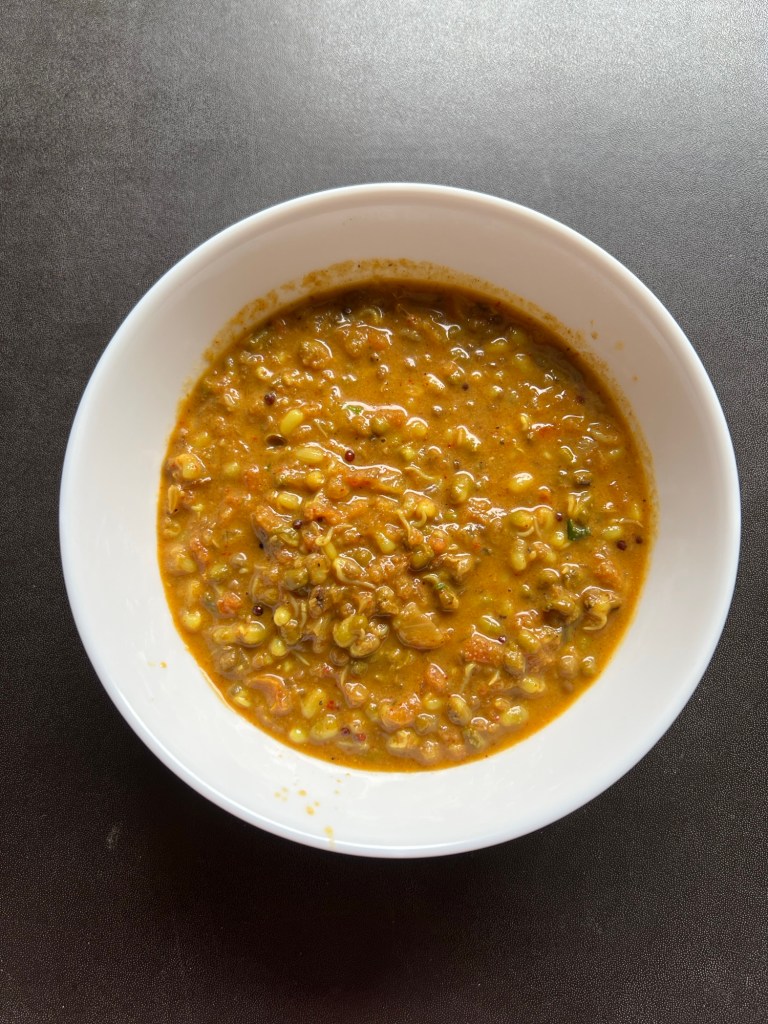
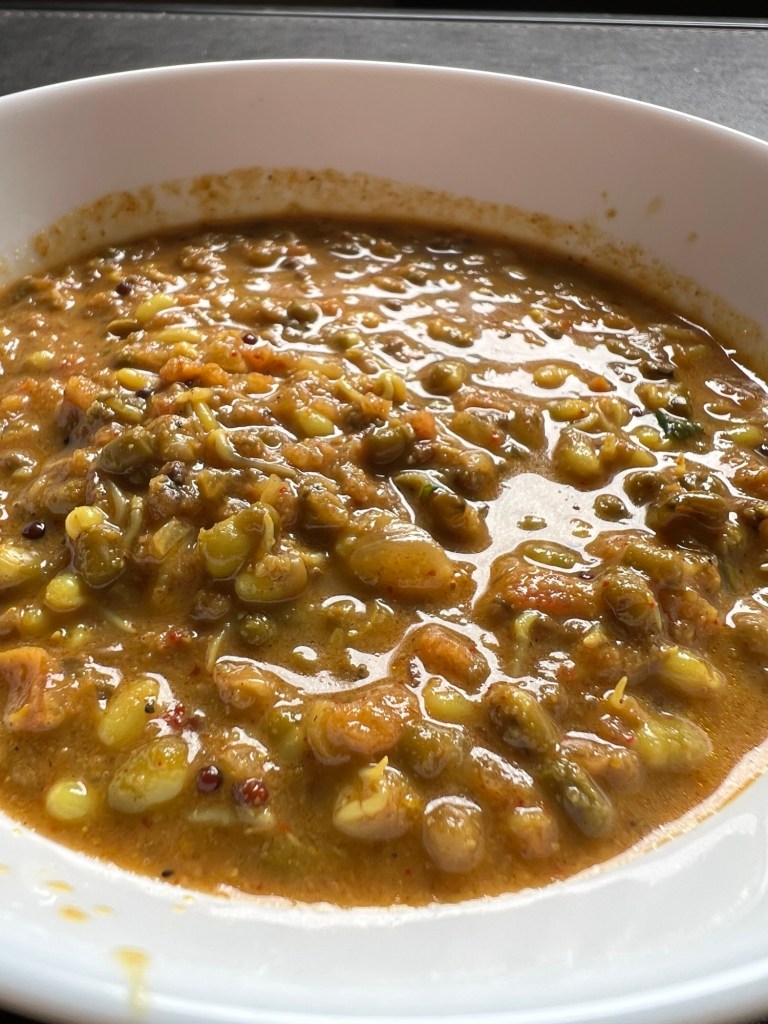
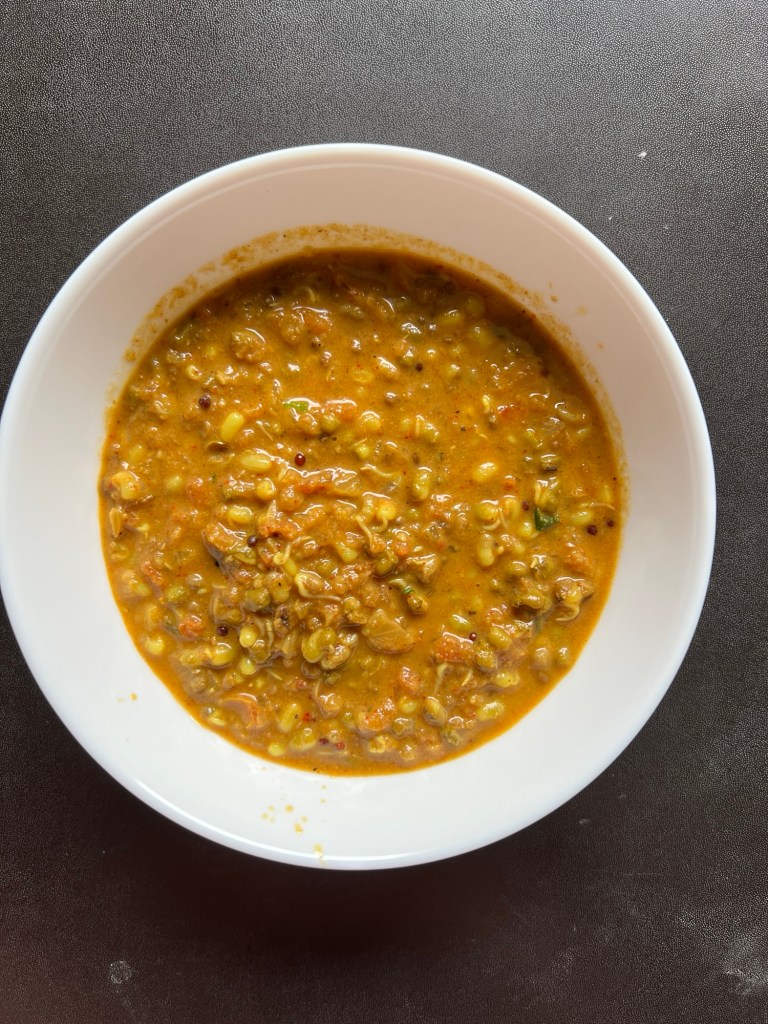
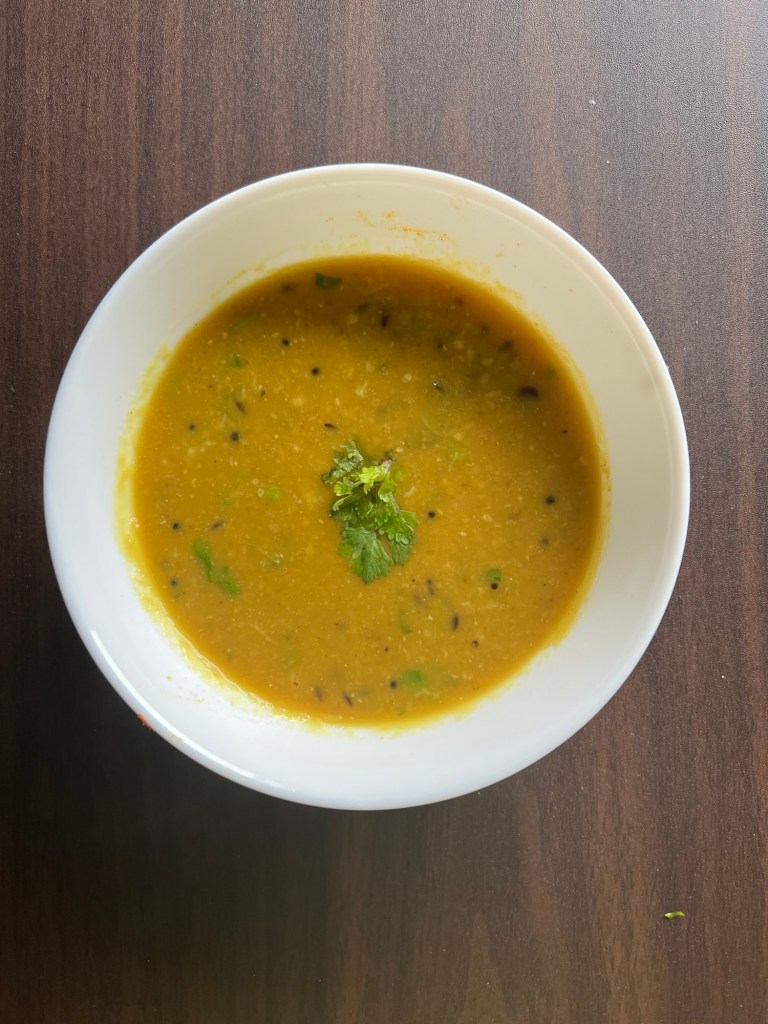
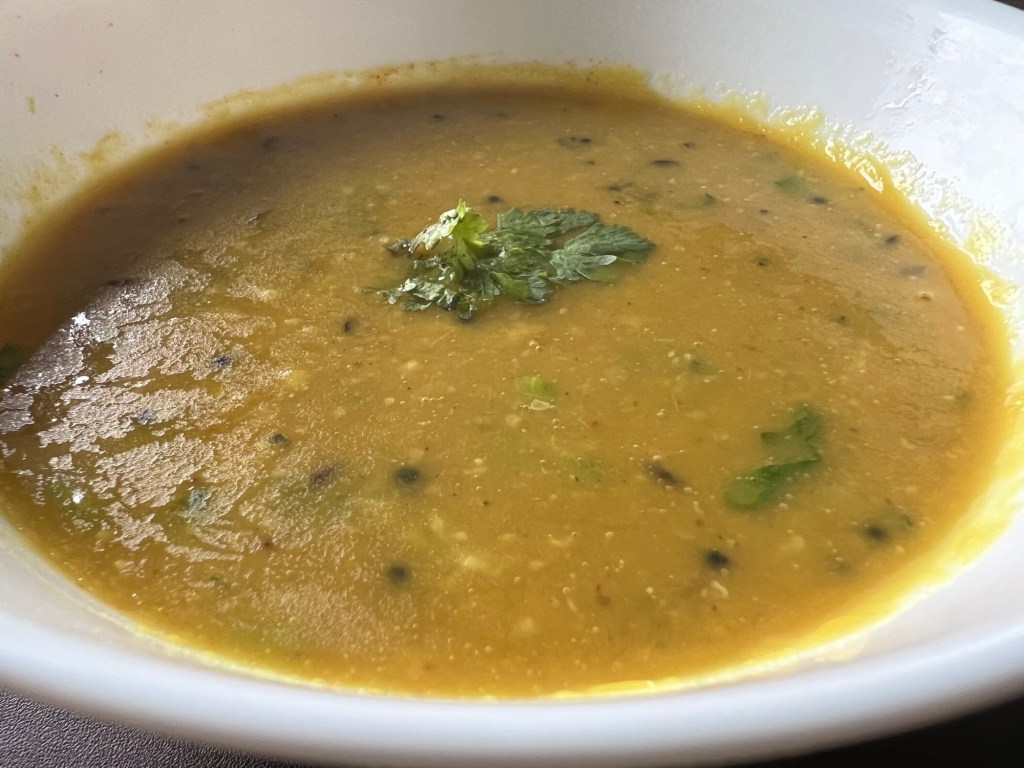
Recipes: Moth ani Mugachi Usal aka Sprouted Moong & Moth Curry

A powerhouse of nutrition, offering protein, fibre, and essential vitamins, this recipe is perfect for a balanced and wholesome meal. Served in all Maharashtrian homes, this usal is both spicy and healthy and even those who do not like sprouts will enjoy this dish. 

Sprouts are high in digestive enzymes that aid gut health, rich in *vitamins A, C, and K, boosting immunity, low in calories but high in protein and fibre, making them weight-loss-friendly, improve heart health by lowering cholesterol and blood pressure, and are great for blood sugar control due to their low glycemic index.

Moong sprouts made with whole green gram are high in protein, good for muscle repair and growth, and rich in folate, making them beneficial for pregnant women, easy to digest, suitable for all age groups, and help detoxify and promote glowing skin. Moth or Matki sprouts are packed with iron and folate, helping to prevent anaemia, are excellent for gut health, promote better digestion, are a good source of complex carbs, provide sustained energy, and are rich in antioxidants, supporting cell repair and reducing inflammation.  

Moth ani Mugachi Usal 

Ingredients:  

  • 1 cup sprouted moong or green gram  
  • 1 cup sprouted moth beans or matki  
  • 2 tbsp oil or ghee  
  • 1 tsp mustard seeds  
  • ½ tsp cumin seeds  
  • ¼ tsp asafoetida 
  • 1 sprig of curry leaves  
  • 2 green chillies, chopped  
  • 2 medium-sized onions, 1 finely chopped and 1 sliced
  • 1 medium-sized tomato, finely chopped 
  • 3-4 cloves of garlic
  • 1 inch piece of ginger
  • 2 tbsp coconut (either dry or fresh) 
  • ½ tsp turmeric powder  
  • 1 tsp red chilli powder  
  • 1 tsp goda masala 
  • 1 tsp coriander powder  
  • ½ tsp jaggery 
  • Salt to taste  
  • Water as needed
  • 2 tbsp grated coconut 
  • 2 tbsp fresh coriander leaves, chopped  

Method:

  • Wash and soak moong and moth beans overnight with enough water to cover the beans. In the morning, drain the beans and put them in a colander and keep covered for another 10-12 hours. Depending on the climate you are in, this make take less than 8 hours or upto 2 days to sprout. 
  • Heat 2 tbsp oil and in a pan and once the oil is hot, add the sliced onions, garlic and ginger and saute on medium flame until it changes colour slightly.
  • Then add the coconut and saute until it turns golden brown and the coconut is completely devoid of water. This is important because if the coconut is still fresh and wet, the curry may spoil if kept outside. You could also use dry coconut and if using dry coconut, just saute till it turns brown.
  • Cool completely and blend to a smooth paste adding enough water. Keep aside.
  • Heat oil in a pan. Add mustard seeds and let them splutter.  
  • Add cumin seeds, asafoetida, curry leaves, and chopped green chillies. Sauté for a few seconds.  
  • Add chopped onions and sauté until golden brown.  
  • Add tomatoes and cook until soft.  
  • Add turmeric, red chilli powder, coriander powder, and goda masala. Stir well.  
  • Add the sprouted moong and moth beans. Stir to coat them with spices.  
  • Add salt, jaggery (if using), and about ½ to 1 cup of water.  
  • Cover and cook for 10-15 minutes on low-medium heat until the sprouts soften but remain slightly crunchy.  
  • Garnish with finely chopped coriander leaves and serve hot with rice or rotis.
  • You can also squeeze a lemon wedge before eating for extra flavour. 

Recipes: Chincha Gul Amti

Known for its tangy and sweet flavour, Chincha Gul Amti is a traditional Maharashtrian dal made from tamarind or chincha and jaggery or gul. I got this recipe from one of the many recipe books I own (so old school, right). This version of the recipe includes coconut, which enhances the richness and texture of the dish, but you can opt to omit this if you don’t like the taste. 

Chincha Gul Amti

Ingredients:

  • 1 cup toor dal or pigeon pea lentils
  • 2 tbsp tamarind pulp or paste 
  • 2 tbsp jaggery powder
  • 2 tbsp grated coconut, either fresh or desiccated
  • 1 tbsp oil or ghee
  • ½ tsp mustard seeds
  • ½ tsp cumin seeds
  • ¼ tsp asafoetida 
  • 2 dried red chilies
  • 8-10 curry leaves
  • ½ tsp turmeric powder
  • 1 tsp red chili powder 
  • 1 tsp goda masala (optional) or garam masala
  • Salt to taste
  • Water as needed
  • Finely chopped coriander leaves to garnish

Method:

  • Wash the dal well and soak in hot water for 30 minutes. 
  • Then pressure cook the dal with 2-3 cups of water until soft. This should take around 3-4 whistles. Mash or whisk the cooked dal to a smooth paste and set it aside.
  • If using tamarind pulp, soak tamarind in warm water for about 10-15 minutes. Extract the tamarind pulp by squeezing the tamarind, and set it aside. 
  • If using rock jaggery, dissolve the jaggery in a small amount of water, ensuring no lumps, and set aside.
  • In a deep pan or kadai, heat the oil or ghee on medium heat. Add mustard seeds and cumin seeds, and let them splutter. Add asafoetida, dried red chilies, and curry leaves. Saute for a minute until fragrant.
  • Add turmeric powder, red chili powder, and goda or garam masala and stir for a few seconds. Then add the grated coconut and sauté for another 2-3 minutes until the coconut turns slightly golden.
  • Pour the cooked and mashed dal into the pan. Stir well and adjust the consistency by adding water as needed. Bring it to a gentle simmer.
  • Add the tamarind pulp or paste and jaggery to the simmering dal. Stir well to combine the sweet and tangy flavors. Cook for another 5-7 minutes, allowing the flavours to meld.
  • Add salt to taste and adjust the level of tamarind and jaggery according to your preference. If the amti is too thick, add a bit more water to achieve a medium consistency.
  • Once done, turn off the heat and garnish with freshly chopped coriander leaves.
  • Serve Chincha Gul Amti hot with steamed rice or roti.

Festivals of India: Marleshwar Yatra Sangameshawar

Nestled amidst the emerald embrace of the Sahyadri Mountains in Maharashtra, India, lies the ancient cave temple of Marleshwar, a hallowed sanctuary dedicated to Lord Shiva. The Marleshwar Yatra Sangameshwar is a unique pilgrimage that converges at the sacred confluence of the Marleshwar and Sangameshwar rivers. Located in Sangameshwar in Ratnagiri in the state of Maharashtra, the temple has 300–400 steps, which need to be climbed to reach the cave where the temple is located and has a small viewing platform from which the magnificent Dhareshwar Waterfalls can be admired. Surrounded by the Sahyadri range and the Dhareshwar Waterfalls, the temple has treacherous yet exhilarating pathways and its natural environment makes it a nature lover’s getaway destination. Marleshwar’s name may have been inspired by Maral village.

Every year on the day of Makarsankranti, on January 15, the temple witnesses the marriage of Marleshwar and Girijadevi. This two-day festival, steeped in myth and vibrant tradition, celebrates the divine union of Lord Marleshwar, or Lord Shiva and Goddess Girija Devi, or Goddess Parvati. In a tapestry woven with threads of faith, folklore, and the raw beauty of nature, the celebration draws thousands of devotees from across the country.

Legend has it that Marleshwar is associated with the sage Parashurama, an avatar of Lord Vishnu. Devotees believe that Parashurama, in search of penance and solitude, created the Marleshwar Linga at this location. The Sangameshwar River, a tributary of the Shastri, flows nearby, adding to the spiritual aura of the site.

The legend behind the yatra is as captivating as the landscape itself. It’s said that Lord Shiva, disguised as a hunter, fell in love with a beautiful cowherd named Girija. Impressed by his strength and unwavering resolve, Girija’s father, King Daksha, agreed to their marriage on the condition that Shiva complete a series of arduous tasks. Undeterred, Shiva conquered each challenge, and the sacred union was blessed.

The Marleshwar Yatra celebrates this divine marriage, with the temple becoming a symbol of their eternal bond. The cave itself, formed by a natural spring, adds a mystical touch to the experience. The ancient carvings and sculptures adorn the walls, whispering stories of faith and devotion, while the gentle flow of the spring water creates a soothing ambience.

The most unusual phenomenon related to the Marleshwar Temple, which also makes it extremely popular among pilgrims, is the presence of cobra snakes in the temple complex. It is widely believed that Lord Shiva lived here with these snakes. Legend says that these snakes are harmless and do not bite the visiting pilgrims and one can even touch them if they want to. So far, there have been no reports or incidents involving the snakes, and this occurrence makes the temple extremely renowned among devotees. The sighting of these cobras has, however, reduced drastically over the past few years because tourists tend to annoy or scare away the snakes.

The Yatra transcends a mere religious event; it’s a vibrant explosion of colours, music, and cultural immersion. The air thrums with devotional chants and the rhythmic beats of drums. Devotees adorned in their finest attire offer prayers and seek blessings from the deities. The surrounding fairground comes alive with a kaleidoscope of stalls selling traditional handicrafts, sweets, and souvenirs. Cultural performances like dance dramas depicting the story of Shiva and Parvati add to the festive spirit, filling the atmosphere with captivating narratives. There are also fairs on Mahashivratri and Tripuri Poornima.

The journey to Marleshwar itself is an adventure in its own right. Nestled amidst verdant forests and cascading waterfalls, the path to the temple winds its way through breathtaking scenery. The air is crisp and invigorating, and the sounds of nature create a symphony of their own. The trek to the cave temple, although challenging, is a rewarding one, offering panoramic vistas of the surrounding Konkan region. For those seeking a deeper connection with nature, the yatra provides an opportunity to explore the surrounding beauty. The cascading Dhareshwar waterfall, a short distance from the temple, offers a refreshing respite. Adventure enthusiasts can trek further to explore nearby forts and ancient caves, each whispering tales of a bygone era.

Central to the Marleshwar Yatra Sangameshwar is the unwavering faith and devotion of the pilgrims. The act of undertaking this pilgrimage is not merely a tradition; it is an expression of deep-rooted belief and commitment to spiritual growth. Pilgrims approach the yatra with humility, surrendering to the divine forces that guide their journey.

While the Marleshwar Yatra Sangameshwar embodies the timeless traditions of Maharashtra, it is not immune to the challenges of the modern era. Environmental conservation, infrastructural development, and the preservation of cultural authenticity pose complex challenges. Efforts are underway to strike a balance between preserving the sanctity of the pilgrimage and adapting to the needs of the contemporary world. Conservation initiatives, awareness campaigns, and community involvement play crucial roles in ensuring the sustainable continuation of this sacred tradition.

For those who undertake the yatra, it is a transformative experience—a journey that transcends the physical and delves into the spiritual. The Marleshwar Yatra Sangameshwar is more than a pilgrimage; it is a celebration of faith, community, and the timeless connection between humans and the sacred landscapes they traverse.

Festivals of India: Bhagoria

The Bhagoria festival is a vibrant and colourful festival celebrated by the tribal communities of Madhya Pradesh and Maharashtra, which was originally the Malwa region. The festival is held annually in the Hindu month of Phalguna, which corresponds to February or March in the Gregorian calendar. The Bhagoria festival is a celebration of the arrival of spring and marks the beginning of the harvest season. It is a time for the tribal communities to come together, dance, sing, and exchange gifts. The tribes who participate include the Bhil, Bhilala, and Pateliya.

The festival takes place in the Badwani, Dhar, Alirajpur, Khargone and Jhabua districts of Madhya Pradesh and Maharashtra. It has agricultural significance and coincides with the end of harvesting crops. It is celebrated for seven days in March before the Holi Festival. Traditionally, celebrants travel to the festival grounds with their families on decorated bullock carts. There they purchase the things required to celebrate Holi, dance to traditional musical instruments, sing songs called Lokgeet, and enjoy meeting family and friends.

The Bhagoria festival is unique to the tribal communities of Madhya Pradesh and northeastern Maharashtra and is one of the largest tribal festivals in India. It is a celebration of the vibrant and diverse culture of these communities and attracts visitors from all over the world. The festival is celebrated in different parts of Madhya Pradesh, with the largest celebrations taking place in Jhabua, Alirajpur, and Dhar districts.

One of the highlights of the Bhagoria festival is the ‘Bhagoriya Mela’ or fair. This fair is a gathering of tribal communities from all over the region and is a place for people to come together, socialise, and participate in various activities. The Bhagoriya Mela is a lively and colourful affair, with stalls selling food, drinks, and handmade goods. There is also a wide range of entertainment available, including music, dance, and theatre performances.

The Bhagoria festival is famous for its traditional dance and music. The tribal communities of Madhya Pradesh have a rich tradition of music and dance, and the Bhagoria festival provides a platform for these traditions to be showcased. The dances performed during the festival are an expression of joy and happiness and are performed by both men and women. The music played during the festival is characterized by its use of traditional instruments such as the dhol, nagara, and manjira.

One of the most unique and interesting aspects of the Bhagoria festival is the ‘Haldi-Kumkum’ ritual. During this ritual, married women apply turmeric paste and vermilion powder to each other’s foreheads. The ritual symbolizes the bond between the women and is believed to bring good luck and prosperity. The ‘Haldi-Kumkum’ ritual is an important part of the Bhagoria festival and is performed by women from all the tribal communities that participate in the festival.

The Bhagoria festival is also a time for love and courtship. During the festival, young men and women come together to meet and get to know each other. If two people are interested in each other, they can exchange gifts and formalize their relationship. This exchange of gifts is known as ‘Bhagoria Haat’. The Bhagoria Haat is an important part of the Bhagoria festival and is a time for the young people of the tribal communities to come together and celebrate their relationships.

The Bhagoria festival is a celebration of the rich and diverse culture of the tribal communities of Madhya Pradesh. It is a time for people to come together, socialize, and celebrate the arrival of spring and the beginning of the harvest season. The Bhagoria festival is an important part of the cultural heritage of India and is a unique and vibrant celebration that attracts visitors from all over the world.

The Bhagoria festival is a celebration of life, love, and joy and a time for the tribal communities of Malwa to come together and celebrate their culture and traditions. The Bhagoria festival is a true expression of the rich and diverse culture of India and is a celebration that should not be missed.

Travel Bucket List: India – Consolidated List of all States

As I started planning my travel, I started relying on my research for where to go and found it slightly ungainly to search through all the material I have to reach a specific destination. So here’s a consolidated list of all Indian states, in alphabetical order with the cities and towns next to each part which makes it easier to get to the place you are interested in.

Photo by Ravigopal Kesari on Unsplash

Andaman and Nicobar Islands
Part 1 – Introduction and Overview
Part 2 – Port Blair
Part 3 – Corbyn’s Cove Beach, Wandoor Beach, Viper Island, Ross Island, North Bay Island, Red Skin Island, Middle Andaman Island, Long Island, Baratang Island, Parrot Island, North Passage Island, Guitar Island
Part 4 – Aves Island, North Andaman Island, Diglipur, Stewart Island, Ross & Smith Island, Jolly Buoy Island, Havelock Island
Part 5 – Neil Island, South Andaman Island, Rutland Island, Little Andaman Island, Cinque Island, Barren Island, Narcondom Island, Kathchal Island, Campell Bay & Indira Point
Part 6 – Mahatma Gandhi Marine National Park, Chidiya Tapu, The Chidiya Tapu Biological Park, Mount Harriet National Park, Saddle Peak National Park, Campbell Bay National Park, Galathea National Park, Middle Button Island National Park, North Button Island National Park, South Button Island National Park

Photo by Gowrisha CV on Unsplash

Andhra Pradesh
Part 1: Introduction and Overview, Vishakhapatnam
Part 2: Araku Valley, Vizianagaram, Annavaram, Samalkot, Kakinada, Rajahmundry
Part 3: Amaravathi, Vijayawada, Machilipatnam
Part 4: Guntur, Chirala, Nagarjunakonda, Srisailam, Cumbum, Nellore
Part 5: Kurnool, Mantralayam, Gandikota, Tadipatri, Anantapur, Puttaparthi
Part 6: Lepakshi, Horsley Hills, Chittoor, Srikalahasthi, Tirupati

Photo by Mayur More on Unsplash

Arunachal Pradesh
Part 1: Introduction and Overview, Itanagar, Bhalukpong
Part 2: Bomdila, Tawang
Part 3: Ziro, Yinkiong, Mechuka, Roing, Tirap
Part 4: Khonsa, Changlang, Miao, Anini, Pasighat, Aalo, Daporijo, Anjaw, Tezu

Photo by Nilotpal Kalita on Unsplash

Assam
Part 1: Introduction and Overview, Guwahati, Dispur
Part 2: Kokrajhar, Bongaigaon, Goalpura, Barpeta, Nalbari, Hajo, Sualkuchi
Part 3: Darrang, Mayong and Morigaon, Nagaon, Tezpur, Jorhat
Part 4: Sivasagar, Majuli, Dhemaji, Dibrugarh, Tinsukia, Digboi
Part 5: Sadiya, Haflong, Jatinga, Diphu, Karimganj, Hailakandi, Silchar
Part 6: Raimona National Park, Manas National Park, Orang National Park, Kaziranga National Park, Nameri National Park, Dibru Saikhowa National Park, Dihing Patkai National Park

Photo by ARTO SURAJ on Unsplash

Bihar
Part 1: Introduction and Overview
Part 2: Patna
Part 3: Hajipur, Nalanda
Part 4: Rajgir, Sasaram, Kaimur
Part 5: Bodh Gaya, Vaishali
Part 6: Muzzafarpur, Sitamarhi, Madhubani, Lauriya Nandangarh, Bhagalpur, Valmiki National Park Tiger Reserve and Wildlife Sanctuary

Photo by Ayiman Mohanty on Unsplash

Chhattisgarh
Part 1: Introduction and Overview, Raipur, Champaran
Part 2: Bhilai, Durg, Rajnandgaon, Chirmiri, Madku Dweep, Bhoramdeo Temple, Guru Ghasidas National Park
Part 3: Achanakmar Tiger Reserve, Bilaspur, Raigarh, Korba, Ambikapur, Barnawapara Wildlife Sanctuary, Mainpat, Malhar
Part 4: Mahasamund, Sirpur, Rajim, Jagdalpur, Dhamtari, Dhamtari, Dantewada, Kanger Ghati National Park

Dadra and Nagar Haveli and Daman and Diu
Part 1: Introduction and Overview, Daman
Part 2: Diu
Part 3: Dadra and Nagar Haveli

Delhi
Part 1: Introduction and Overview, India Gate, Red Fort, Qutub Minar, Jantar Mantar, Rajghat
Part 2: Iron Pillar, National War Memorial, Rajpath, Rashtrapati Bhavan, Agrasen Ki Baoli, Ghalib Ki Haveli, Alai Darwaza/Minar, Bhool Bhulaiya ka Mahal, Purana Qila,
Part 3: Tughlaqabad Fort. Siri Fort, Feroza Kotla Fort, Swaminarayan Akshardham Temple, ISKON Mandir, Birla Temple, Chhatrapur Temple, Kalkaji Temple, Kali Bari Temple, Yogmaya Temple, Sri Digambar Jain Lal Mandir, Lotus Temple
Part 4: Jama Masjid, Quwwat-ul-Islam Mosque, Fatehpuri Masjid, Jamali Kamali Mosque and Tomb, Nizamuddin Dargah, Humayun’s Tomb, Safdarjung’s Tomb, Isa Khan’s Tomb, Hijron ka Khanqah, Nicholson Cemetery
Part 5: Gurudwara Bangla Sahib, Gurudwara Sis Ganj Sahib, Rakab Ganj Gurdwara, Sunder Nursery, Lodhi Gardens, Garden of Five Senses, National Rose Garden, Mehrauli Archaeological Park, Pradhanmantri Sangrahalaya, National Museum, Nehru Memorial Museum and Library, Rashtrapati Bhavan Museum, Indian War Memorial Museum, National Handicrafts Museum
Part 6: Indira Gandhi Memorial Museum, Sanskriti Museums, Charkha Museum, Sulabh International Museum of Toilets, Shankar’s International Dolls Museum, Museum of Archaeology, National Railway Museum, Museo Camera, National Gallery of Modern Art, Kiran Nadar Museum of Art, Museum of Illusions, National Zoological Park, National Bal Bhavan, Connaught Place, Chandni Chowk, Dilli Haat, Sarojini Market, Lajpat Nagar, Majnu ka Tila, Pragati Maidan

Photo by Sarang Pande on Unsplash

Goa
Part 1: Introduction and Overview
Part 2: North Goa, Vagator Beach, Anjuna Beach, Calangute Beach, Sinquerim Beach, Candolim Beach, Arambol Beach, Mandrem Beach, Morjim Beach, Miramar Beach, Siridao Beach, Bogdeshwara Temple, Mangeshi Temple, Mahalaxmi Temple, Fort Aguada, Chapora Fort, Reis Magos Fort, Basilica of Bom Jesus, Church of Our Lady of Immaculate Conception, Chapel of St. Catherine, Church of Mae De Deus, Goa State Museum, Houses of Goa Museum, Museum of Christian Art, Casino Palms, Chorao Island, Harvalem Waterfalls
Part 3: South Goa, Butterfly Beach, Betalbatim Beach, Agonda Beach, Mobor Beach, Hollant Beach, Palolem Beach, Cansaulim Beach, Colva Beach, Talpona Beach, Kakolem Beach, Benaulim Beach, Our Lady of Remedios Church, Saviour of the World Church, St. Alex Church, Shantadurga Temple, Tambdi Surla Mahadev Temple, Chandreshwar Bhoothnath Temple, Naval Aviation Museum, Goa Chitra Museum, Big Foot Museum, The Grande Island, Pequeno Island, Bhagwan Mahaveer Wildlife Sanctuary, Netravali Wildlife Sanctuary, Cotigao Wildlife Sanctuary, Dudhsagar Falls, Bamanbudo Waterfalls, Netravali Bubbling Lake, Cabo de Rama Fort, Chandor

Photo by Parth Kateliya on Unsplash

Gujarat
Part 1: Introduction and Overview
Part 2: Surat, Vapi, Udvada, Valsad, Bilimora, Navsari, Bharuch, Saputara
Part 3: Ahmedabad, Lothal, Vadodara, Anand
Part 4: Gandhinagar, Patan, Mehsana, Palanpur
Part 5: Rajkot, Jamnagar, Dwarka, Porbandar, Junagadh, Bhavnagar, Palitana,
Part 6: Kutch, Bhuj, Mandvi, Rann of Kutch, Anjar

Photo by Sooraj Dev on Unsplash

Haryana
Part 1: Introduction and Overview, Gurugram, Manesar, Sohna
Part 2: Faridabad, Nuh, Murthal, Rohtak, Meham
Part 3: Hisar, Panipat, Karnal
Part 4: Kurukshetra, Ambala
Part 5: Panchkula, Morni Hills, Narnaul

Photo by Naman Pandey on Unsplash

Himachal Pradesh
Part 1: Introduction and Overview, Shimla, Kufri, Fagu, Theog, Hatkoti Valley, Chanshal Valley
Part 2: Chail, Solan, Barog, Nahan, Sirmour, Paonta Sahib, Shoghi, Kasauli, Arki, Nalagarh, Dadasiba, Bilaspur, Dalhousie,
Part 3: Kangra, Khajjiar, Bharmour, Chamba, Tattapani, Jalori Pass, Jibhi, Mandi
Part 4: Trithan Valley, Bhuntar, Sainj Valley, Barot, Bir Billing, Palampur, Kasol, Nagar, Manikaran Sahib, Tosh, Parvati Valley
Part 5: Kullu, Manali, Dharamsala, McLeodganj
Part 6: Keylong, Pin Valley National Park, Spiti Valley, Narkanda, Mashroba, Kinnaur, Sarahan, Sangla Valley, Kalpa, Pangi Valley, Nako

Jammu & Kashmir and Ladakh
Part 1: Introduction and Overview, Kashmir, Srinagar, Gulmarg, Sonmarg, Pahalgam, Amarnath, Pulwama, Kupwara, Poonch, Anantnag, Baramulla, Dachigam National Park
Part 2: Jammu, Patnitop, Rajouri, Udhampur, Kathua, Katra, Vaishno Devi, Kishtwar
Part 3: Ladakh, Leh, Leh Palace, Thiksey Gompa, Pangong Lake, Magnetic Hill, Nubra Valley and Khardung La Pass, Kargil, Drass, Hemis High Altitude Wildlife Sanctuary, Lamayuru, Lake Tso Moriri

Photo by Aryan Singh on Unsplash

Jharkhand
Part 1: Introduction and Overview, Ranchi
Part 2: Hazaribagh, Bokaro Steel City
Part 3: Jamshedpur, Neterhat
Part 4: Dhanbad, Shikarji, Deoghar, Dumka

Karnataka
Part 1: Introduction and Overview
Part 2: Bengaluru
Part 3: Mysuru, Mangalore, Belgaum
Part 4: Hubli-Dharwad, Gulbarga, Bidar, Badami, Bijapur, Hassan, Shimoga, Hampi, Sharavathi Valley Wildlife Sanctuary, Bhadra Wildlife Sanctuary, Brahmagiri Wildlife Sanctuary, Nagarhole National Park, Bandipur National Park, Ranganathittu Bird Sanctuary, Jog Falls, Shivanasamudra Falls, Kodasalli Backwater
Part 5: Coorg, Chikmagalur, Sakleshpur, Kudremukh, Kemmanagundi, Kotagiri, Masinagudi, Devarayanadurga, Karwar, Devbagh, Kumta, Netrani Island, Murudeshwar, Maravanthe, St. Mary’s Island, Udipi
Part 6: Udipi, Kollur, Sringeri, Dharmasthala, Horanadu, Talakadu, Belur, Shravanbelagola, Gokarna, Murudeshwar, Koodli, Srirangapatna, Pattadakal, Aihole, Kalasa

Kerala
Part 1: Introduction and Overview
Part 2: Kasaragod, Kannur, Kozhikode
Part 3: Wayanad, Mallapuram, Palakkad
Part 4: Thrissur, Ernakulam, Alappuzha
Part 5: Kottayam, Idukki, Patanamthitta
Part 6: Kollam, Tiruvanathapuram

Photo by Sachin Benny on Unsplash

Lakshadweep Islands
Part 1: Introduction and Overview
Part 2: Aminidivi, Cora Divh, Sesostris Bank, Bassas de Pedro, Cherbaniani Reef, North Islet, Byramgore Reef, Chetlat Island, Bitra Par, Kilthan Island, Kadmat Island, Kadmat Beach, Elikalpeni Bank, Perumal Par, Amini Island
Part 3: Laccadive, Amindivi, Agatti Island, Bangaram, Pakshipitti, Andrott Island, Kavaratti, Kalpeni, Suheli Par
Part 4: Minicoy, Maliku Atoll, Investigator Bank, Viringili

Madhya Pradesh
Part 1: Introduction and Overview
Part 2: Bhopal
Part 3: Indore, Ujjain, Alampur
Part 4: Maheshwar, Omkareshwar, Mandu, Burhanpur
Part 5: Chanderi, Shivpuri, Orchha, Khajurao
Part 6: Gwalior, Jabalpur, Bhedaghat, Panchmarhi, Amarkantak, Bandhavgarh National Park, Kanha National Park, Pench National Park

Photo by Raj Rana on Unsplash

Maharashtra
Part 1: Introduction and Overview, Mumbai
Part 2: Pune
Part 3: Matheran, Lonavala, Khandala, Rajmachi, Lavasa, Kamshet, Mahabaleshwar, Panchgani, Kaas Plateau, Maval, Bhandardara, Chikhaldara, Bhimashankar
Part 4: Amravati, Aurangabad, Ajanta and Ellora Caves, Lonar, Chiplun, Kolhapur, Nagpur, Nanded, Nashik, Triambakeshwar, Shirdi, Shani Shinganapur, Raigad, Ratnagiri, Satara
Part 5: Dahanu, Alibaug, Kashid, Diveagar, Harihareshwar, Murud, Karade, Ganpatipule, Tarkarli, Vengurla, Tadoba National Park, Bhamragarh Wildlife Sanctuary, Chandoli National Park, Gugumal National Park, Navegaon National Park, Malvan Marine Sanctuary, Rehekuri Blackbuck Sanctuary

Photo by WAIKHOM JAMES on Unsplash

Manipur
Part 1: Introduction and Overview, Imphal
Part 2: Moirang, Tamenglong, Thoubal
Part 3: Chandel, Tengnoupal, Moreh, Kaina, Ukhrul, Mount Koubru, Baruni Hill, Thangjing Hill, Sadu Chiru Waterfall

Photo by Utkarsh B on Unsplash

Meghalaya
Part 1: Introduction and Overview
Part 2: Shillong
Part 3: Mawphlang, Cherrapunji, Nongpoh, Mawsynram
Part 4: Jowai, Mawlynnong, Dawki, Balpakram National Park, Williamnagar, Baghmara, Tura
Part 5: Khasi Hills, Jaintia Hills, Garo Hills

Photo by Vanlaldin puia on Unsplash

Mizoram
Part 1: Introduction and Overview, Aizwal, Falkawn Village
Part 2: Reiek, Hmuifang, Kolasib, Tamdil or Tam Lake, Mamit, Vantawng Falls, Serchhip
Part 3: Dampa Tiger Reserve, Lunglei, Champhai
Part 4: Murlen National Park, Phawngpui, Phawngpui National Park, Saiha,

Photo by Suraj Jadhav on Unsplash

Nagaland
Part 1: Introduction and Overview, Dimapur
Part 2: Kohima
Part 3: Mokokchung, Tuensang, Phek, Mon, Pfutsero

Photo by Ayiman Mohanty on Unsplash

Odisha
Part 1: Introduction and Overview, Bhubaneshwar, Dhauli
Part 2: Cuttack, Rayagada, Daringbadi, Berhampur, Jeypore
Part 3: Puri, Baripada, Sambalpur, Rourkela
Part 4: Konark, Paradeep, Gopalpur, Chandipur
Part 5: Lake Chilika, Tikarpada Wildlife Sanctuary, Satkosia Tiger Reserve, Bhitarkanika National Park & Wildlife Sanctuary, Simlipal National Park, Duduma Waterfalls, Chandaka Forest, Kotgarh Elephant Reserve, Karlapat Wildlife Sanctuary

Photo by nullvoid on Unsplash

Puducherry
Part 1: Introduction and Overview, Puducherry
Part 2: Karaikal, Mahé, Yanam

Photo by Prerna Sharma on Unsplash

Punjab
Part 1: Introduction and Overview
Part 2: Chandigarh, Sirhind
Part 3: Rupnagar, Patiala
Part 4: Ludhiana, Bhatinda
Part 5: Jalandhar, Kapurthala
Part 6: Pathankot, Amritsar

Rajasthan
Part 1: Introduction and Overview, Jaipur, Udaipur
Part 2: Jodhpur, Jaisalmer, Sawai Madhopur, Pushkar

Photo by Apurba Nag on Unsplash

Sikkim
Part 1: Introduction and Overview
Part 2: Gangtok
Part 3: Tinkitam Rayong, Namchi, Barsey Rhododendron Sanctuary, Kabi Longstok, Tendong Hill, Aritar, Zuluk, Pangolakha Wildlife Sanctuary, Pelling, Yuksom, Ravangla
Part 4: Maenam Wildlife Sanctuary, Geyzing, Yangtey, Borong, Mangan, Chopta Valley, Lachung, Lachen, Yumthang Valley, Thangu Valley, Gurudongmar Lake, Cholamu Lake, Shingba Rhododendron Sanctuary, Khangchendzonga National Park, Fambong Lho Wildlife Sanctuary, Goecha La

Tamil Nadu
Part 1: Introduction and Overview, Chennai
Part 2: Coimbatore, Tiruchirappalli, Tiruppur, Tirunelveli
Part 3: Ooty, Kodaikanal, Yercaud, Coonoor, Yelagiri, Bellikkal
Part 4: Kanchipuram, Tiruvannamalai, Chidambaram, Vaitheeshwaran Kovil,
Part 5: Kumbakonam, Thanjavur, Swamimalai, Rameshwaram, Madurai
Part 6: Mahabalipuram, Kanyakumari, Mudumalai Wildlife Sanctuary, Hogenakkal Falls, Kutralam Falls

Photo by Aman Upadhyay on Unsplash

Telangana
Part 1: Introduction and Overview, Hyderabad Part 1
Part 2: Hyderabad Part 2
Part 3: Secunderabad
Part 4: Warangal, Nizamabad
Part 5: Khammam, Karimnagar, Adilabad, Mahbubnagar, Medak
Part 6: Nalgonda, Bhadrachalam, Koti Linga, Somasila, Vemulawada

Photo by Sourav Debnath on Unsplash

Tripura
Part 1: Introduction and Overview
Part 2: Agartala
Part 3: Kailashahar, Unakoti, Udaipur, Ambassa, Pilak Archaeological Sites, Chabimura, Mahamuni Pagoda, Manubankul, Buddhist Stupa, Boxanagar
Part 4: Baramura Eco Park, Kalapania Nature Park, Tepania Eco Park, Khumulwang Eco Park, Jampui Hills, Dumboor Lake, Dhalai, Rudrasagar Lake, Sepahijala Wildlife Sanctuary & Clouded Leopard National Park, Trishna Wildlife Sanctuary, Rajbari National Park, Rowa Wildlife Sanctuary, Gomati Wildlife Sanctuary

Uttar Pradesh
Part 1: Introduction and Overview, Noida, Loni, Ghaziabad, Meerut, Muzzafarnagar
Part 2: Hastinapur, Vrindavan, Mathura
Part 3: Fatehpur Sikri, Agra, Garhmukteshwar
Part 4: Aligarh, Firozabad, Jhansi, Piilbhit, Bithoor, Naimisharanya
Part 5: Kanpur, Lucknow
Part 6: Ayodhya, Sravasti, Prayagraj
Part 7: Chitrakoot, Vindhyachal, Varanasi, Sarnath, Kushinagar

Photo by Akshay syal on Unsplash

Uttarakhand
Part 1: Introduction and Overview, Dehradun
Part 2: Mussoorie, Dhanaulti
Part 3: Auli, Joshimath, Chopta, Tungnath, Ukhimath, Lansdowne, Nainital
Part 4: Sattal, Bhimtal, Naukuchiatal, Kausani, Ranikhet, Almora, Binsar, Jalna, Kasar Devi, Jageshwar, Champawat, Munsiyari, Pithorgarh
Part 5: Bageshwar, Chamoli, Mana, Badrinath, Pandukeshwar, Hemkund Sahib, Kedarnath, Gomukh, Madhyamaheshwar, Gangotri, Gauri Kund, Yamunotri
Part 6: Rudranath, Guptakashi, Nandprayag, Rudraprayag, Devprayag, Rishikesh, Haridwar, Roopkund Lake, Nelong Valley, Gangotri National Park, Kedarnath Wild Life Sanctuary, Valley of Flowers, Nanda Devi National Park, Govind Pashu Vihar Wildlife Sanctuary, Rajaji National Park, Jim Corbett National Park

Photo by Nitish Narayan on Unsplash

West Bengal
Part 1: Introduction and Overview, Kolkata
Part 2: Howrah, Barrackpore, Chandan Nagar, Chinsurah, Bardhaman, Haldia, Midnapore
Part 3: Shantiniketan, Durgapur, Jhargram, Asansol, Murshidabad, Mukutmanipur, Malda, Siliguri, Jalpaiguri, Cooch Behar, Bagdogra
Part 4: Kurseong, Mirik, Darjeeling, Tinchuley, Dooars, Kalimpong
Part 5: Rishyap, Lava and Lolegaon, Buxa Tiger Reserve, Rajabhatkawa, Jaldapara National Park, Jaldhaka, Chapramari Wildlife Sanctuary, Gorumara National Park, Neora Valley National Park, Lataguri, Purulia, Sonajhuri Forest, Deulti, Sundarbans, Mayapur, Nabadwipa, Bakreswar
Part 6: Bankura, Bishnupur, Jayrambati, Kamarpukur, Tarapith, Falta, Raichak, Taki, Piyali Island, Machranga Dwip, Kakdwip, Mousuni Island, Bakkhali, Junput, Mandarmani, Tajpur, Shankarpur