A recipe that instantly takes me back to Mumbai and to a time when I was younger Sabudana Khichdi is a recipe I always associate with my home state of Maharashtra. This recipe is the quintessential fasting recipe and can be found in all restaurants. Made from soaked tapioca pearls or sabudana, it is typically prepared in the states of Maharashtra, Karnataka, Uttar Pradesh, Madhya Pradesh, Rajasthan and Gujarat. A popular comfort food, it is often served with crunchy roasted peanuts and sautéed with potatoes using spices with a generous squeeze of lemon. It has a chewy texture and takes on the taste of its accompaniments and is known as Sabudana Usal in the Vidarbha region of Maharashtra. Sabudana Khichdi is nearly pure carbohydrate and has very little protein, vitamins, or minerals. The addition of peanuts adds to the protein making it a more balanced meal. It has a high caloric content, due to the quantity of starch and fat present. This makes it a great fasting food.
Sabudana Khichdi
Ingredients:
1 cup tapioca pearls or Sabudana
2 medium-sized potatoes
½ cup raw peanuts
2-3 tbsp ghee
1 tsp cumin seeds
½ tsp green chilli paste or 2 green chillies, finely chopped
1 tbsp lemon juice (or to taste)
Salt to taste
Sugar to taste
Method:
Wash the Sabudana and soak it for about 4-5 hours. This will depend on the type of the pearls with some need less soaking time and some more. Make sure there is water just above the pearls, any more and they will oversoak.
While the pearls are soaking, dry roast the raw peanuts till they are crunchy. You will know when it’s done when the skin starts to split and becomes brown. Keep aside.
When the peanuts are completely cool, blitz them into a coarse powder. You can also keep about a tbsp of peanuts aside and use them in the khichdi.
Peel the potatoes and cut them into bite-sized pieces. Make sure they are not too small, but not too large also.
Heat the ghee in a wide-bottomed pan and fry the potatoes till they are cooked, but not roasted. Stop when the potatoes start to brown.
While the potatoes are cooking, add the salt, sugar and peanut powder to the sabudana and mix gently. Make sure to do the mixing gently and not break the pearls.
At this point, add the cumin seeds and let them pop and at this point, add the minced green chillies or chilli paste and cook for a few seconds.
Add the soaked sabudana and mix gently. Cover and cook for about 5 minutes until the sabudana pearls start becoming translucent. If you are not planning to eat the Khichdi immediately, then switch off the gas just before the pearls start becoming translucent. If it’s cooked longer, the pearls will start to clump and become lumpy.
Sprinkle lemon juice and garnish with coriander leaves. Serve hot.
Misal is probably a quessiantial Maharashtrian dish, you will find it in every corner of the state and each city, town or district has their own variation of this dish. Misal pav consists of usal which is a spicy curry usually made from moth beans, which I think is called haricot beans and pavwhich is a type of an Indian bread roll. The final dish is topped with farsan which are dry snacks or sev, onions, lemon and coriander. It is served as a breakfast dish, as a snack and also as a full meal.
I have been wanting to try and make this for the longest time, but somehow the fact that this is quite a lengthy recipe to make always put me off. Then one Sunday, I finally decided to make it. I read up a few recipes and then did it my own way. Traditionally Misal is made with sprouted green gram or sprouted brown gram, but I decided to make this more healthy by incorporating many dried beans and also since this was a fairly last minute decision, I did not sprout the beans and just soaked them in water. The version I have made is in the Pune style which incorporates poha or flattened rice flakes, while the Nashik version is usually spicy and served with pav, curd, chopped coriander and onion.
Pune Style Maharashtrian Misal
Ingredients:
For the Usal
1.5 – 2 cups mixed dried beans soaked in water overnight (I used a mixture of dried chickpeas, dried black-eyed peas, dried green peas, dried black beans and black chickpeas, but you can use what you have in the kitchen)
1 tbsp oil
1 tsp mustard seeds
5-8 curry leaves
2 medium sized onions, chopped finely
3-4 medium sized tomatoes, chopped finely
1 tbsp tamarind pulp
Kashmiri red chilli powder to taste
1 tsp coriander powder
1 tsp cumin powder
¼ tsp turmeric powder
¼ tsp asafoetida powder
For the dry masala paste
1 tbsp cumin seeds
1 tbsp coriander seeds
1 tbsp sesame seeds
7-8 pepper corns
5-6 dried red chillies
1 inch piece of cinammom
4-5 cloves
¼ cup dessicated coconut
For the wet masala paste
1 medium sized onion
1 bulb garlic, peeled
1 inch piece ginger
For the poha
1 cup poha or flattened rice flakes
¼ tsp plus a pinch turmeric powder
1 tsp sugar
¼ tsp asafoetida powder
1 small onion, finely chopped
Salt to taste
1 tsp oil
To serve
2-3 onions, finely chopped
2 medium sized potatoes, boiled, peeled and chopped into small pieces
1 cup mixed farsan
Date Tamarind chutney (optional)
Green Coriander chutney (optional)
1 cup beaten yoghurt mixed with rock salt
Method:
Cook the soaked dals in a pressure cooker with a bit of salt and cook till the beans are soft, but not overcooked. Let it cool and keep aside. Don’t drain the water it has been cooked in.
For the dry masala
In a dry pan, heat the masala ingredients except the coconut and let them brown.
When the dry spices become brown and start to emit an aroma, add the desiccated coconut and continue stirring until the coconut becomes crisp and brown and loses its moisture.
Remove from the flame and keep aside till it becomes cool.
Then grind it to a fine powder and keep aside. If there is any left over after using it for the usal, you can use it to spice other stir fries.
For the wet masala
Grind together the ginger, garlic and onion to a smooth paste and keep aside.
For the Poha
Wash the poha in running water till it softens and then let the water drain.
Add some salt and the sugar plus a pinch of turmeric powder and mix well. Keep aside.
Heat 1 tsp oil in a pan and when the oil heats up, add 1 tsp mustard seeds and let the mustard crackle. Next add the curry leaves and let the leaves become crisp.
Then add ¼ tsp turmeric powder and ¼ tsp asafoetida powder and stir for a few seconds.
Then add the finely chopped onions and a pinch of salt and let the onions soften.
When the onions soften and become translucent, add the soaked poha and mix well.
Cover and cook for 3-4 minutes. Remove into a serving dish and keep aside.
For the Usal
Heat oil in a large pan and when the oil heats up, add the mustard seeds and let it crackle.
When the mustard seeds crackle, add the curry leaves, turmeric powder and asafoetida and let the curry leaves crisp up.
Then add the finely chopped onions and let it cook for a while.
When the onions are translucent, add the wet masala paste and let it cook for a while.
Add the finely chopped tomatoes and cover and cook till the tomatoes become mushy and disintegrate.
Now add about 3-4 tbsps of the dry masala (or as much as you want) and then add the cooked beans along with the water it was cooked in.
Add in the dry spice powders – cumin powder, coriander powder as well as salt and cook covered for about five minutes.
Add in the tamarind paste and about 1 to 2 cups of water (you can make this as thick or thin as you like it) and continue cooking covered for about 10 minutes more.
Cover and keep aside till it’s time to assemble it.
To assemble the Misal Pav and Dahi Misal
In a bowl, layer some poha and pour in some usal above the poha.
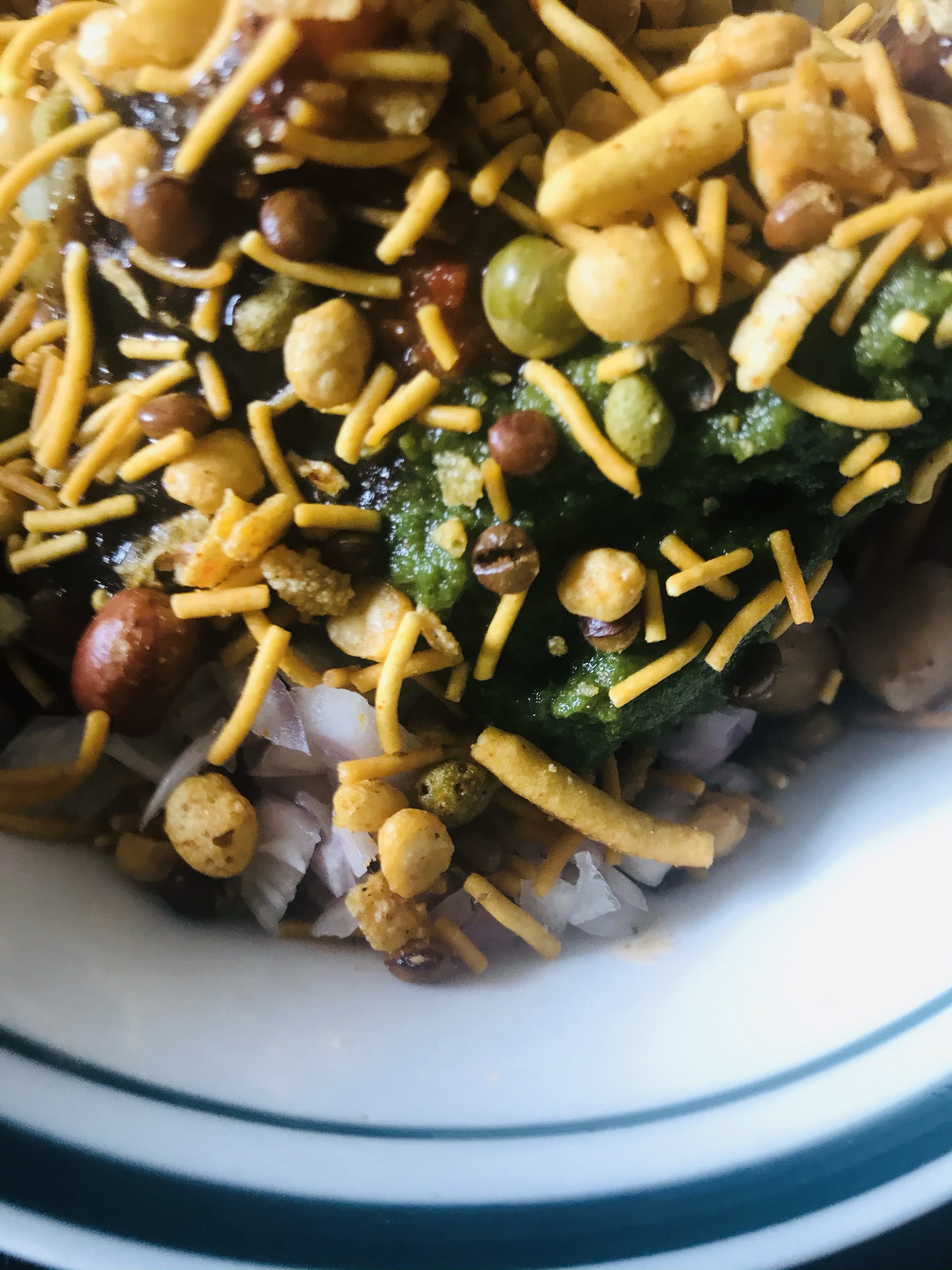
Top with some of the onions and potatoes and finally add some farsan on top of it.
Add some of the green and tamarind chutney if you want and also a squeeze of lime.
You can eat it as it is or with some pav or bread.
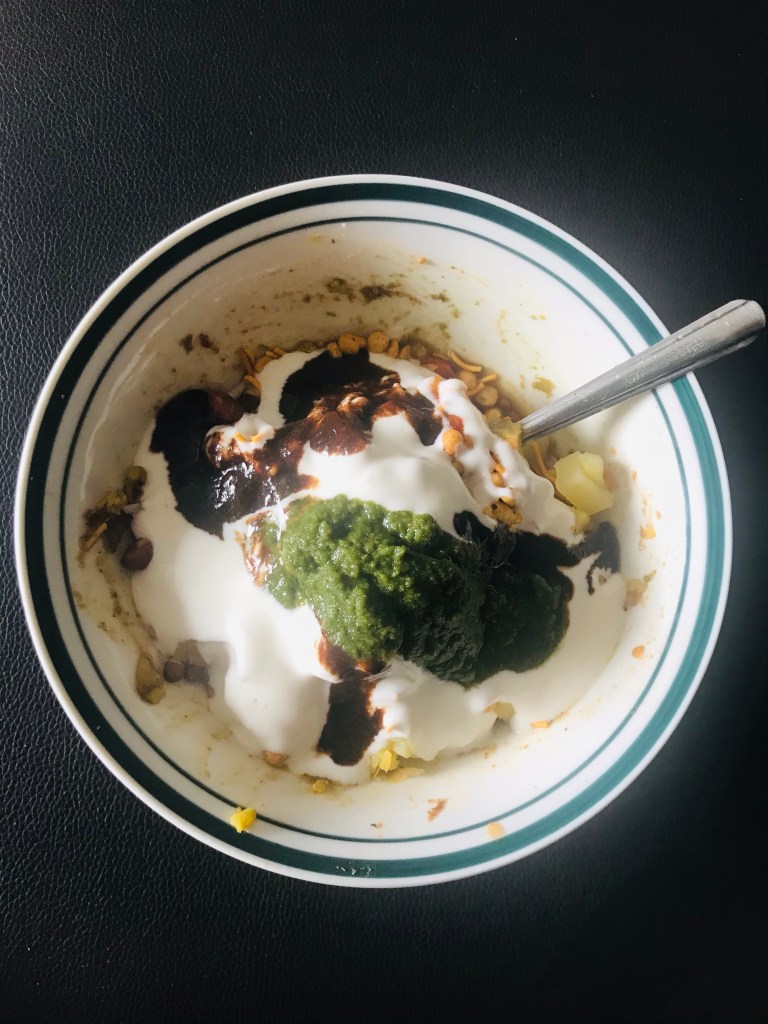
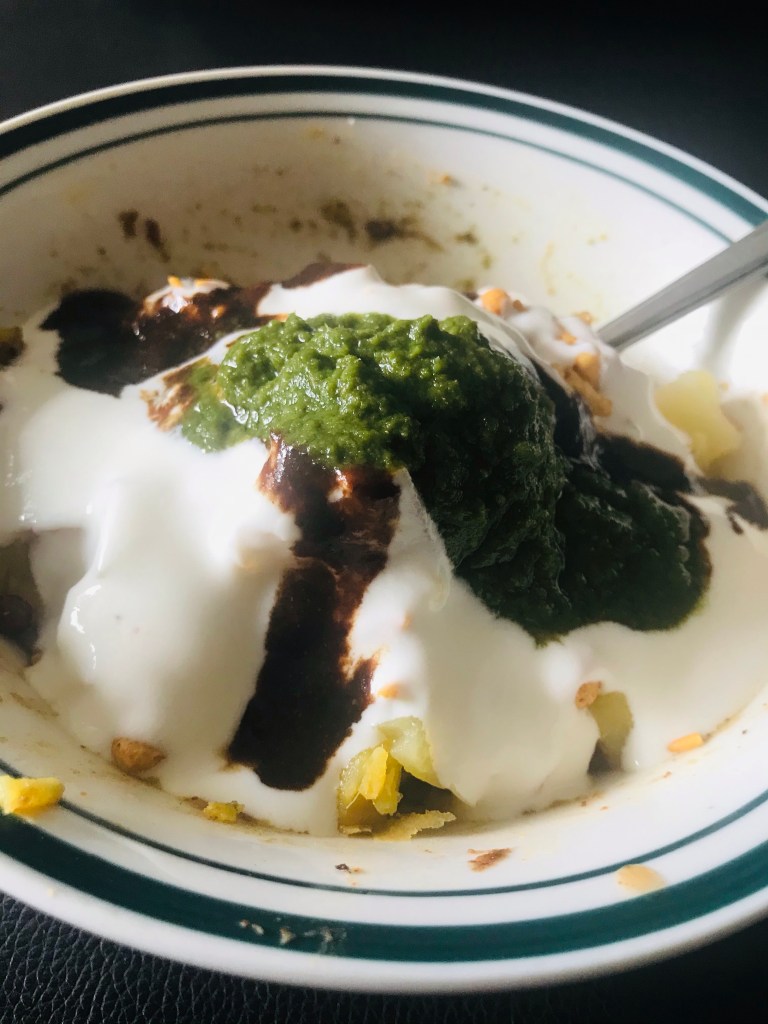
To make dahi missal after you top the farsan, add some of the prepared yoghurt and tp with the chutneys and then eat as it is.
It’s a tad long to make and takes time, but the taste is totally worth it!
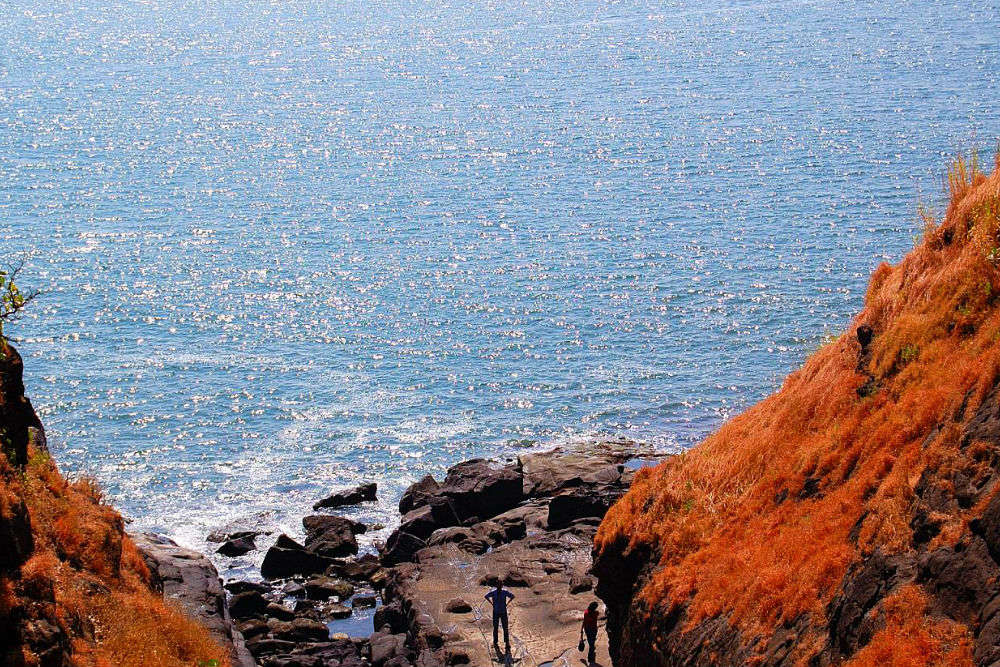
Being a state with a rich western coastline of about 720 kms along the Arabian Sea, Maharashtra has some stunning beaches. This post is all about the beaches and some of the wildlife sanctuaries found in the state. The beaches are categorised from north to south
Dahanu Dahanu is a coastal town in the Palghar district of Maharastra. Located at a distance of 135 km north of Mumbai, it is situated along the coast of Arabian Sea. The name of the city was obtained from Dahanu Gram which means village of cows. This emerged because, back in time, most people in the town used to cattle cows. At an elevation of 9.88 metres, the city has several beautiful mountains. There are a few famed beaches around the city which are commonly visited by the locals and tourists. There are also some dams, which are a nice spot for sightseeing. The vegetation in the city is also extraordinary. With a variety of plant life, ranging from tadee, coconuts, chickoo and palm, the town offers an excellent look of greenery. Bordi, which is about 30 minutes drive from Dahanu also offers some stunning pristine beaches.
Alibag A little coastal town tucked away in the Konkan region of Maharashtra, Alibaug is a very popular weekend getaway holiday destination and has earned itself the name of ‘mini-Goa’, owing to the high tourist footfall all year round. Steeped in colonial history, Alibaug is a quaint little town located about 110 kilometres from Mumbai, and is replete with sandy beaches, clean unpolluted air and plenty of forts and temples, ensuring that despite being a small town, you never run out of activities to do. Alibaug has numerous beaches, and all the beaches are only a few minutes’ drives away from each other, so you won’t have to worry about which beach to visit and which one to leave out. The most visited in the beach in Alibaug is, of course, Alibag beach, which offers a spectacular of view of not only the sunrise and sunset but of the Colaba fort as well, which you can take a short boat ride to. The Colaba fort was once the cornerstone of the Maratha Empire, and most of the fort is still in good shape. Other popular beaches in the area include Kihim Beach, and Nagaon Beach, with Kihim beach being a photographer’s paradise. The Mandwa beach offers a stunning view of the Gateway of India in Mumbai from its bay. The best time to visit Alibag is between November to July and you should avoid the monsoon season. Other local attractions include the Kanakeshwar Devasthan Temple, Vikram Vinayak Temple, Versoli Beach, Nagaon Beach, Akshi Beach, Kashid Beach and Kulaba or Colaba Fort
Kashid A beach town, popular for its white sand and blue seas situated in Konkan region of Maharashtra, Kashid is the perfect destination for a quiet weekend getaway from Mumbai. Kashid is mildly enchanting with its quiet environment and picturesque location. This beach town is known also for its majestic mountains and whispering Casuarinas. Kashid’s spotless water and clean beach makes it one of the most beautiful spots in the nearby areas. A drive through the area in itself is a great experience. Chaul, which lies near Kashid, has many Buddhist caves that are of public interest, and also famous churches and temples. The Korlai Fort is another beautiful attraction here.
Diveagar Gleaming white sand, pristine blue water, swaying coconut palms and betel nut trees and gentle breeze producing a serene and calming effect, this is not a dream but the enchanting place called Diveagar. This place is a beautiful beachside village nestled on the Konkan coast of Maharashtra offering its visitors a sight of pure bliss. Diveagar is better referred to as seashore extending up to 6 kms and serves as prime attraction of the region. Tourists can also catch an unusual sight of rarely found Suru (Casuarina equisetifolia, or Australian pine tree) trees on the coast. Where one end of the beach is fishing settlement, the other end is blessed with an eye catching sight of thousands of migratory seagulls in the sanctuary. Apart from that, a temple dedicated to Lord Ganesha is another prime attraction of the region. In fact it is a perfect destination where one can unclutter their minds and relax with family and friends amid the glory of immaculate nature. With Mumbai-Goa National highway located just 40 kms off the village; the place is highly accessible and waiting to be explored.
Harihareshwar Surrounded by four hills and with river Savitri flowing through the town, Harihareshwar is famous for its temple of Lord Harihareshwar and is a popular weekend beach destination especially for people in Mumbai and Pune. Harihareshwar comes across as a pleasant surprise with some of the most peaceful and beautiful beaches along the Konkan Coast. The nearby Pushpadri hill and surrounding dense woods only make the beaches more attractive. The name literally translates into the abode of Lord Shiva and the place assumes significant spiritual and religious importance. Harihareshwar’s ancient temples also let the visitors view a unique blend of the Indian and Maratha architecture
Murud and Karde Murud and Karde form what is apparently the longest stretch of beach on the Konkan Coast. Hotels and homestays have mushroomed in the area, and there are many options for a beachfront stay. The main attraction is dolphin watching, especially during the winter when sightings are frequent. A little further north, Harnai is renowned for its massive daily fish market. The nearby Suvarnadurg Fort can also be visited.
Ganpatipule A beach town on the Konkan coastline, Ganpatipule has temples of Lord Ganesha as major attractions apart from the beautiful virgin beaches. There is a hill shaped like Lord Ganesh, from which Ganpatipule probably got its name. The village of Ganapatipule is famous for its 400-year-old Ganesha temple. The idol is said to be a self-created monolith of Lord Ganesha, allegedly discovered 1600 years ago. Ganpatipule also has water sports to offer between the months of November-May. Ganpatipule is typically clubbed with Ratnagiri and other smaller villages like Velneshwar, Malgund and Pawas for a perfect 2-3 day trip.
Tarkarli Tarkarli is famous for its long and narrow stretch of beach, with its pristine water, white sand, and of course Singhudurg, Maharashtra’s popular sea fort. Tarkarli with a series of pristine beaches made up of white sand makes it an ideal choice for a holiday weekend. If lucky enough, you might spot dolphins too. Tarkarli boasts of the finest talcum-powder sand to be found along Konkan. It could be called the most beautiful beach in all of Maharashtra, if not in India. As this place is just being discovered, you might be in time to find it untarnished by commercialization. The pristine white beaches shrouded with Suru trees (Casuarina equisetifolia, or Australian pine trees) are a perfect place to relax, get in touch with nature and eat amazing Malvani food. The choice ranges from a long stroll along pristine white sand beaches to revisiting the past glory of Maratha bastion and forts.
Vengurla Located only 30 minutes from the Goa border, semi-circular Vengurla beach is surrounded by lush hills. The road leading down to the beach provide dramatic vistas. Attractions in the area include a lighthouse, a jetty where fishermen return with the evening catch, and Vengurla Rocks (also known as Burnt Island) which is excellent for bird watching.
Tadoba National Park Overlooked by tourism until recently because it was off the beaten track and lacked accommodations, these days Tadoba National Park and Tiger Reserve in Maharashtra is fast gaining a reputation as one of the best places to see a tiger in the wild in India. Famous for its natural heritage, Tadoba Andhari Tiger Reserve is definitely one of India’s most exciting and best protected Tiger Reserve, with most visible tiger sightings in the state of Maharashtra. Tadoba national park is located in Chandrapur district of Maharashtra. This place is an ideal weekend gateway for wildlife and nature lovers. Spotted in this region are rare species of flora and fauna, soothing your very being. Tadoba is famous for Tadoba national park, Tadoba-Andhari Tiger Reserve, Tadoba lake, Erai dam, Moharli and Khosla village. These attractions serves the tourists of an enchanting wildlife experience.
Bhamragarh Wildlife Sanctuary The Bhamragarh Wildlife Sanctuary of the Bhamragarh town is located in the Chandrapur district of Maharashtra and is home to various animal species like leopards, the blue bull, peacock, flying squirrel, wild boar, etc. Spread over an area of about 104.38 sq.km, the sanctuary is very green and is covered by various species from the plant kingdom including mango, jamun, Kusum, Bamboo trees along with shrubs of Neel, Tarota, Kuda, etc. The Pamalgautam and Parlkota rivers flow through the sanctuary providing water to the flora and fauna and as well as to the tribes living nearby namely Gonda and Madia tribes which depend on the forest for their habitation.
Chandoli National Park Located in Sangli district of Maharashtra, the Chandoli National park is famous for the Sahyadri tiger reserve and the Koyna Wildlife sanctuary. It was established in the year 2004 and is spread over an area of 317.67 sq.km. Located near the Chandoli dam, the Sahyadri Tiger reserve as well as the entire area under the Chandoli National Park was declared as a ‘Project Tiger Reserve’ by the National Tiger Conservation Authority in the year 2007. Home to 9 tigers and 66 leopards, the area is abundant with forts from the era of Shivaji and other Maratha Kings. The park also has major falls as well as a dam namely; Kandardoh falls, Tanali falls and the Vasant Sagar reservoir that attract tourist attention. The best time to visit is between October to February while heavy rainfall is usually expected between June to September.
Gugumal National Park Built in 1974, the Gugumal National Park is located in Amravati in Maharashtra. It is the home to a variety of diverse flora and fauna like tigers, crocodiles, wild deer and the bison. This wildlife reserve oers a glimpse into the lives of animals and birds in their natural habitat. The hills of the area known as Melghat have the southern deciduous forest which has about 750 dierent species of plants and herbs. Crocodiles were artificially introduced into the area in 1990 near the rivers that flow through the park. The best time to visit the Gugumal National Park is from March to the month of June.
Navegaon National Park Based in the Gondia District which is the easternmost part of Maharashtra, Navegaon National Park is a forest reserve nestled in the lush green hills of Navegaon. Built in the 1800s, the park also has a serene lake and a watchtower just adjacent to it. You get to see breath-taking views of the natural sceneries and marvel at the sight of exotic wildlife: a bird sanctuary, a deer park, and three lovely gardens. The bird sanctuary, known as Dr Salim Ali Bird Sanctuary houses almost 65% of the bird species that are found in the state of Maharashtra. Flocks of stunning migratory birds visit the park every winter and unwind by the lake – an eye-catching view. The national park also boasts diverse types of flora – ranging from moist to dry deciduous forest. A unique experience here is staying in tree houses, going on a jungle safari in the dense forest, and sailing boats in the pristine lake. The park is open from 6 am to 6 pm daily and remains closed on Fridays and from 16 July to 30 September each year. The park also remains closed on the festivals of Holi and Buddha Poornima (the first and second days only)
Malvan Marine Sanctuary The only marine sanctuary in the state, Malvan Marine Sanctuary was established in 1987 to preserve this biologically rich coastal region. The core zone of the sanctuary expands over an area of 27 square kilometres and offers an unexploited environment for marine flora and fauna including coral, Pearl oysters, seaweed, molluscs and over 30 species of fish.
Rehekuri Blackbuck Sanctuary Spread across an area of 2.17 sq km, the Rehkuri Sanctuary is home to one of the rare and famous animals, Indian Black Buck. The Sanctuary is located at a distance of about 80 km away from the city of Ahmednagar. The Sanctuary serves as a safe haven for nearly 400 Black Bucks. The Blackbuck, called ‘Kalvit’ in Maharashtra, is easily recognised by its magnificent spiral horns, colour and long jump. It is the only member of its genus and is found predominantly in India. Also, known as the Indian Antelope there are only four sanctuaries in India that can boast of the presence and conservation of the blackbuck. The Rehekuri Blackbuck Sanctuary in Maharashtra is one of the best places for blackbuck sightings. The sanctuary was established in the 1980s and at one point the number of blackbucks dwindled to 15. Today Rehekuri is home to about 400 blackbucks making it an excellent example of sustained conservation. Besides, the sanctuary is also the abode to various other wildlife and birds. The jeep safari from 7:00 AM to 3:00 PM, as well as, walking or trekking along with a guide are the best ways to explore the sanctuary.
Other than Mumbai and Pune, Maharashtra has a rich culture, which shows in its smaller cities and towns. Some of the important cities in the state, in alphabetical order are:
Amravati Amravati is the second most populated city in the Vidarbha district, after Nagpur. Situated at a height of 1125 feet above the mean sea level, the city of Amravati is often referred to as the Land of the Immortals. It is a quaint place located amidst the lush greenery of the Vidarbha region. Also known as Ambanagari, Amravati is a place of great religious significance and is aptly called the Cultural Capital of Vidarbha. It is also known as the city of Lord Indra and is home to numerous temples dedicated to Lord Krishna and Goddess Ambadevi. The most famous tourist attraction of Amravati is the Ambadevi Temple. This ancient temple is located in the heart of the city and is known for the connected tunnel through which Lord Krishna had eloped with princess Rukmini on the eve of her wedding. Apart from being known for its religious significance, Amravati is also known for its Varhadi cuisine and grand celebrations of prominent festivals. Agriculture and its related activities form the primary source of income for the people in this region. The Melghat Tiger Reserve, located in the Satpura range, is famous for its unique mix of flora and fauna.
Aurangabad Aurangabad, which was declared by the Government as the Tourism Capital of Maharashtra back in 2010, is a famous tourist hub which greets its visitors with a richly woven tapestry of sights and sounds. The city got its name for being the erstwhile capital of Mughal Emperor Aurangzeb in the 17th century AD. The town is used as the base to explore the extremely famous caves of Ajanta and Ellora, Daulatabad Fort which is renowned for its strong defence systems, Mausoleums of Aurangzeb and Bibi-Ka-Maqbara famous for its architecture and the Grishneshwar Temple, one of the only 12 Shiva Jyotirlingas in India.
From UNESCO World Heritage Sites to bustling markets brimming with delicate silk items and exquisite hand-woven garments, Aurangabad promises all tourists an exciting holiday experience. While the city is rapidly heading towards industrial growth and globalisation, it still retains most of its past glory, heritage, charms and traditions.
The most famous tourist attraction of Aurangabad is the Ajanta and Ellora Caves. Declared a World Heritage Site by UNESCO, the Ajanta Caves is home to 29 different caves, all of which showcase Buddhist artwork belonging to the period ranging from 200 B.C to 650 A.D. All paintings and sculptures in the caves were constructed painstakingly by Buddhist monks using only simple tools such as chisels and hammers. These paintings and sculptures portray a varied range of stories, starting from the Jataka Tales to intriguing accounts of ancient nymphs and princesses. The Ellora Caves, a little distance away from the Ajanta Caves, houses a total of 34 caves and has sculptures and paintings depicting not one, but three different religions – Hinduism, Buddhism and Jainism. The sheer diversity of the sculptures, the architectural expertise, and the centuries of hard work undertaken by artisans are enough to leave you speechless.
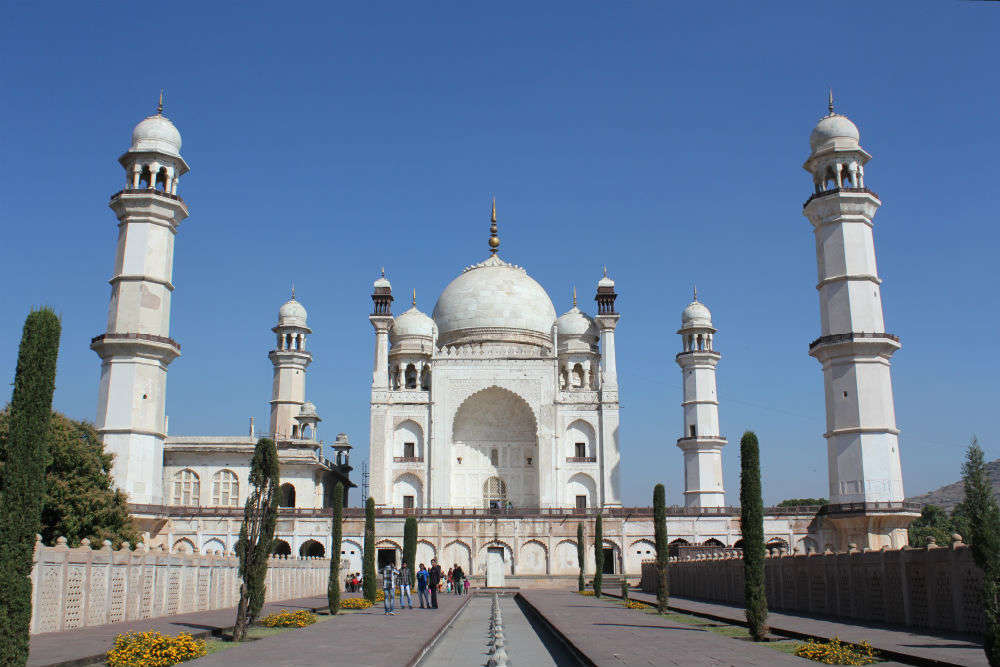
The sole remaining example of Mughal architecture in this part of the country, Bibi ka Maqbara is a mausoleum dedicated to Rabia-ul-Daurani, wife of Mughal Emperor Aurangzeb. Designed by the Persian architect Ustad-Ata-Ullah, Bibi ka Maqbara has a structure similar to that of the Taj Mahal, with the main structure bordered by four towering minarets on four sides. The entire building is a sight to behold, and sunrises and sunsets are resplendent, with the rays of the sun beautifully casting the reflection of the mausoleum on the water of the canal in front of the building.
Aurangabad is also home to temples such as the Jyothirlinga Grishneshwar temple and the Bhadra Maruti Temple, both of which have legends and myths of their own. The erstwhile Mughal capital has retained most of its traditional Tughlaq cuisine, with Tandoors and Kebabs being local staples that you will find at almost every roadside eatery. Known for its arts and crafts, and especially its silk, Aurangabad has plenty of markets from where you can buy various local handicrafts, exotic gems, shawls, and of course, the region’s famous paithani silk sarees.
Ajanta and Ellora Caves Located around 400 km from Mumbai and near Aurangabad, the famous UNESCO World Heritage Site of Ajanta and Ellora Caves are a must-see destination, both when you visit Maharashtra and if you are in the Marathwada region of Maharashtra. The Ajanta Caves lie around 99 km north of Aurangabad while the Ellora Caves are just 15 km west of the city. There are 34 caves at Ellora dating from between the 6th and 11th centuries AD, and 29 caves at Ajanta dating back to between the 2nd century BC and 6th century AD. While the Ajanta caves are rich in paintings and sculpture, the Ellora caves are renowned for their extraordinary architecture. The most incredible thing about all these caves is that they were crafted by hand, with only a hammer and chisel.
Adorned with beautiful sculptures, paintings and frescoes, Ajanta and Ellora caves are an amalgamation of Buddhist, Jain and Hindu monuments as the complex includes both Buddhist monasteries as well as Hindu and Jain temples.
One of the most famous sites in the entire Ajanta and Ellora Caves is the Kailash Temple, which is also the single largest monolithic structure in the world. These rock-cut caves containing carvings are some of the best examples of ancient Indian architecture and sculpture.
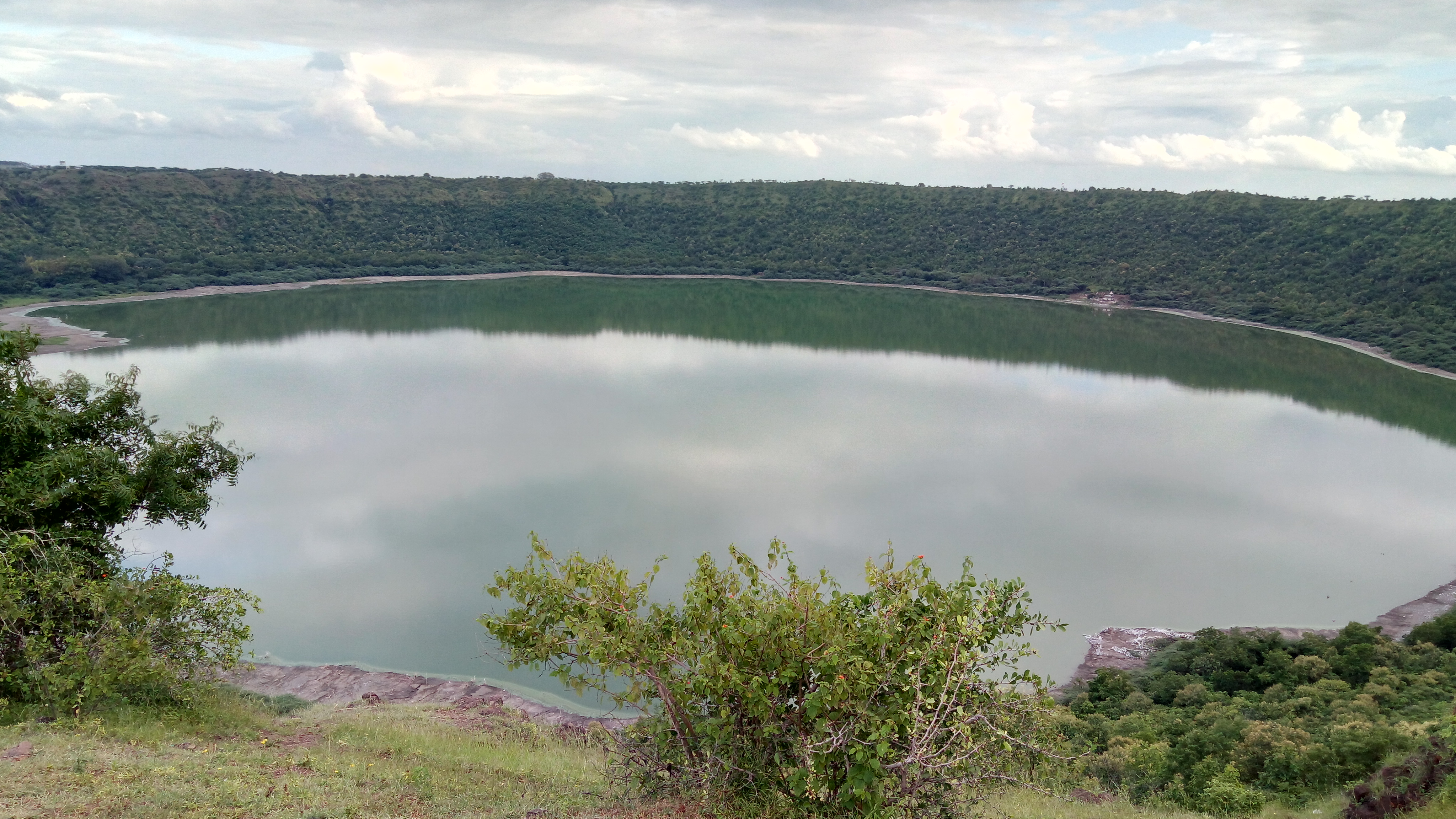
Lonar Along with being famous for a crater that was formed over 50,000 years ago due to the collision of a meteorite on the surface of the region, Lonar is also famous for its rich natural heritage. Lonar is a mesmerizingly beautiful place famous for the Lonar crater and the lake formed due to a meteorite hitting the earth around 52, 000 years ago. This 6,000 feet wide and 500 feet deep lake is, therefore, an important source of scientific research and educational importance. It is the only salt water lake in the basaltic rock in the world. The area is also surrounded by a lot of flora and fauna which makes the place even more beautiful. There is also a famous Gomukh temple located at the boundary of the lake where snakes and other animals like fox, mongoose, deers can be spotted. Daitya Sudan temple, another temple located in Lonar is very famous for its architectural style as it reminds of the world famous Khajuraho temples.
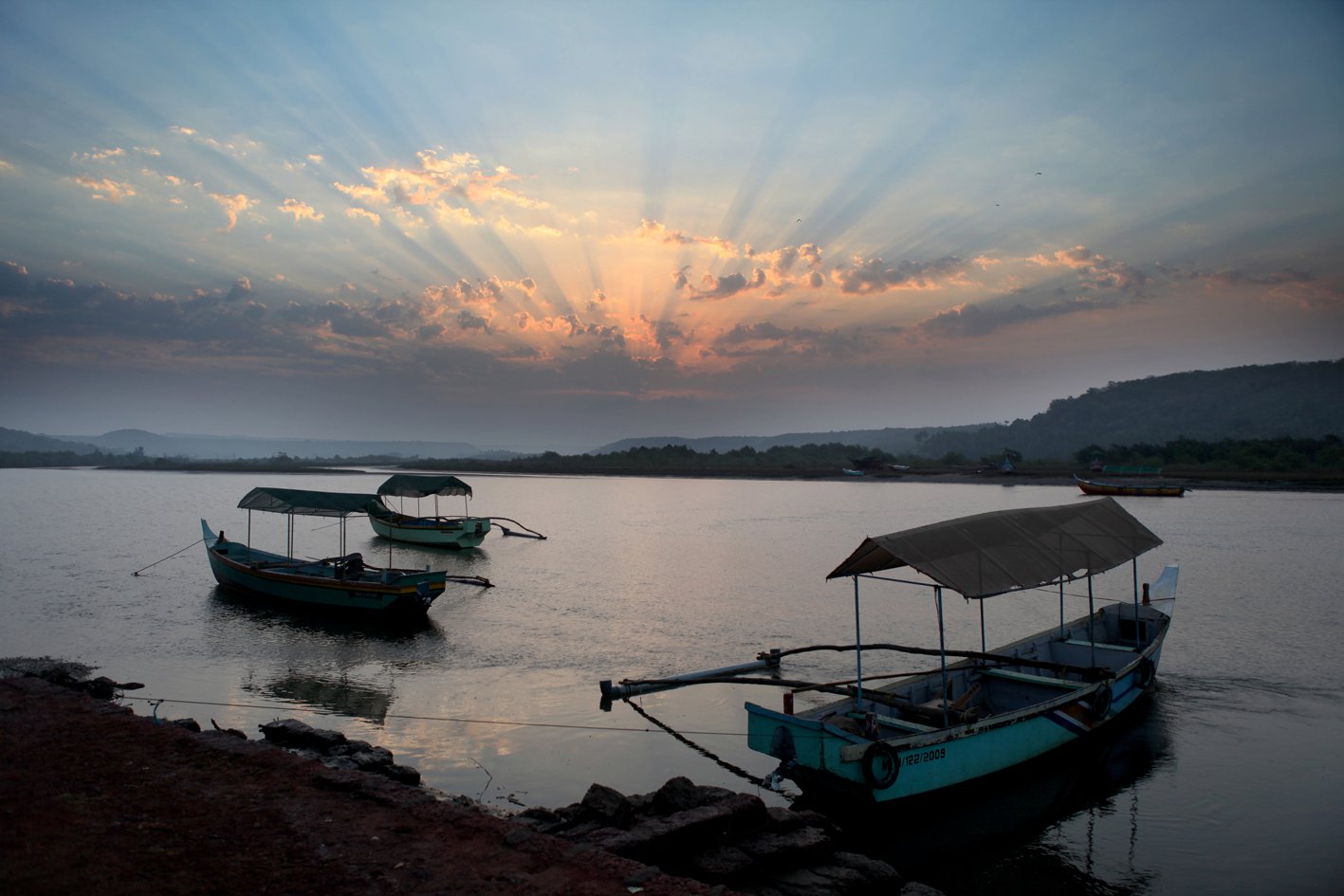
Chiplun In the quiet, far away from the city port district of Ratnagiri in Maharashtra, lies Chiplun, the city that offers you time among mango groves next to the beautiful lake, Vashishti. This town is most known for its white sand beaches and beautiful mango and cashew groves by the Vashishti river. Chiplun, meaning ‘The abode of Lord Parashurama’ got its name because of the famous temple it houses. Chiplun also happens to be an industrial town and most people coming to this side tend to go to the River view resort, a popular getaway on weekends. The sunsets that can be seen from both the Vashishti river and Koyna Dam are so attractive that people book rooms to wake up to the sight of the brilliant scenery. Chiplun falls as an important station on the Konkan railway route for trains heading to Mumbai from Goa and South India. This gives you all the more reason to stop by at this little heavenly place for a breath of fresh air before you greet the city of dreams, Mumbai and all the chaos that comes with it. Travellers describe their experience here as the perfect picnic spot, with the scent of mangoes wafting through the air.
Kolhapur Situated on the banks of the river Panchganga, Kolhapur is located in the south-western part of Maharashtra. The city boasts of a rich princely legacy dating back to the times of the Maratha kings. Its magnificent temples are one of the main attractions, with the Mahalaxmi Temple being the focus. Kolhapur derives its name from a mythological story of Kolhasur – a demon who was slain by Goddess Mahalakshmi. The famous Mahalakshmi temple is situated here in the honour of Goddess Mahalakshmi. The city has a long line of both Hindu and Muslim rulers, and has been the site of intense confrontations. Prior to India’s Independence, from 1700 it was controlled by the Maratha Empire and the British. The new palace of the Maharaja of Kolhapur, built in 1884, has grandiose Indo-Saracenic architecture. It now houses the Shree Chhatrapati Shahu Museum, containing memorabilia of Kolhapur’s rulers. Kolhapur also has a couple of interesting claims to fame: the famous Kolhapuri chappals or slippers originated from there and the city is said to produce the best Kushti wrestlers. The spicy veg and mutton Kolhapuri, ubiquitous in most restaurant menus offering Indian food, originated in this city.
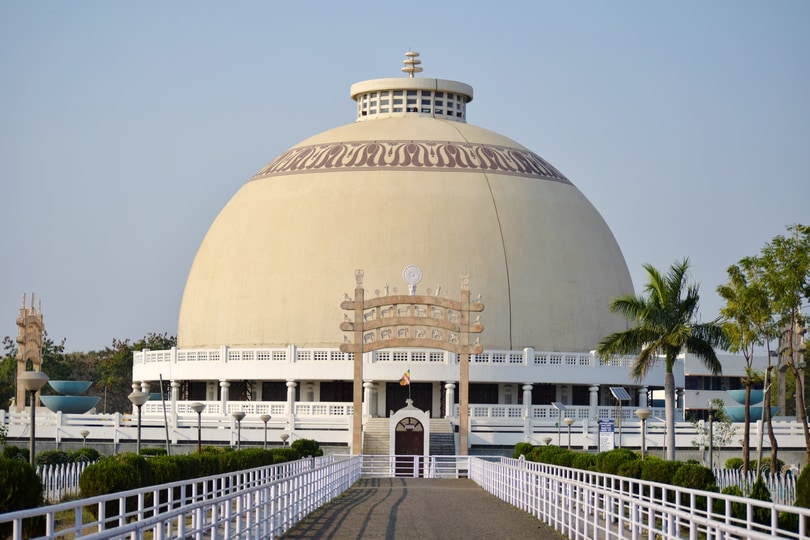
Nagpur Commonly associated with its delectable juicy varieties of oranges, Nagpur also known is ‘Orange City’ is the winter capital of Maharashtra. With temples, lush green gardens, lakes, connectivity and a rich cultural heritage, the city enchants visitors. Located at the geographical centre of India, Nagpur has plateaus, flat tablelands with rivers and streams flowing through it. Deekshabhumi – the largest hollow Buddhist stupa in the world, Ambazari Lake, Futala Lake, Ramtek fort temple, Bohra Masjid and orange orchards are a must-visit in Nagpur.
Nanded Nanded is the second-largest city in the Marathwada region of Maharashtra. Nanded is a historic city whose name is believed to have originated from the Nandi, Lord Shiva’s vehicle of consciousness. Lord Shiva is also believed to have performed penance on the banks of River Godavari that flows in the Nanded region. It is famous for its Gurudwara, ancient forts, street food and unique saucer-shaped boats. The city boasts of an exciting blend of the old form with the modern. It has so much historical importance and is home to the Sikh Gurudwara and several Sufi shrines as well. The historic city is also very rich in natural resources such as granite, calcium, magnesium and limestone. The presence of one of the five Takthas of Sikhs, Hazur Sahib, make Nanded the second holiest city among the Sikhs. Another popular tourist attraction is the Kaleshwar Temple that is dedicated to Lord Shiva. Kandahar, Kunthaligiri and Dharur are ancient forts that draw tourist crowds as well.
Nashik Nashik, approximately four hours northeast of Mumbai in Maharashtra, is a city of contrasts. On one hand, it’s an ancient and sacred pilgrimage destination with a fascinating Old City and temples, such as Naroshankar and Kalaram. On the other, its home to the biggest winery region in India. Nasik is a religious Hindu city, host to the Kumbh Mela every 12 years. It also makes for a perfect wine tasting destination. Nashik or Nasik, named after a relic associated with Ramayana plays host to the famous Kumbh Mela every 12 years. The city is home to plenty of exotic temples and is known in Hindu mythology as the place where Ravana’s sister, Surpanakha, tried to seduce Lord Ram and got her nose cut off by Lakshman in the process. Its religious importance doesn’t end there. It also plays host to the thousands of tourists visiting Shirdi and Trimbakeshwar. Apart from its temples, Nashik also has forts, waterfalls and vineyards to look out for. With multiple vineyards present in Nashik, the most popular being Sula, the wine-tourism industry is mushrooming in this part of Maharashtra. Nashik gives you the chance to experience a fabulous cocktail of extremes – from temples to vineyards, hills to waterfalls, this place offers a lot to see.
Trimbakeshwar Counted as the holiest temple of India, the Trimbakeshwar Temple houses one of the most important twelve Jyotirlingas, a form of Lord Shiva. Perched on the foot of Brahmagiri Hills, the temple is situated in the pious city of Trimbak close to Nashik city, which finds its mention in the powerful Mrityunjaya Mantra that bestows immortality and longevity. Built in the 18th century by Maratha ruler, Peshwa Nana Saheb, the temple is a perfect epitome of classic architecture. The sacred river Godavari originates near Trimbak. There is a kunda in temple premises that is considered to be the source of river Godavari. The fascinating feature of the Jyotirlinga is its three faces symbolizing Lord Brahma, Lord Vishnu and Lord Rudra. The fecund mountains clad in rich vegetation with cascades falling, encloses the town and makes it even more serene and bewitching.
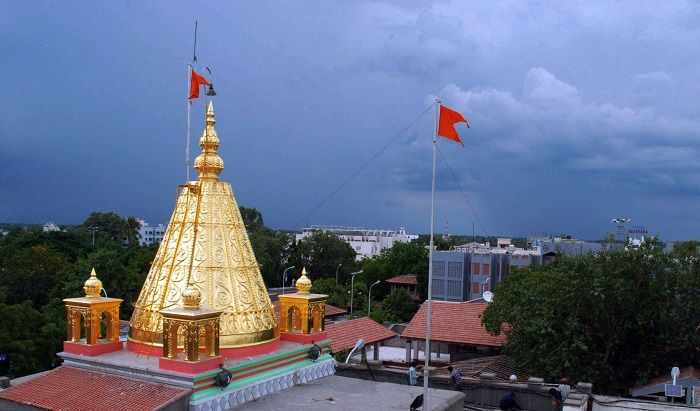
Shirdi The home of great saint Sai Baba, Shirdi is a religious site close to Nasik with various temples apart from the famous Sai Baba temple and a few historical sites. Shirdi holds a strong importance as a holy and pilgrim place by Sai Baba devotees. The small town is filled with religious spots and activities which will soothe and calm your soul on its visit. The air here carries chants lingering with spirituality and the whole grandness about the same too will leave you spellbound. There are many religious places to be seen in Shirdi such as Chavadi, Samadhi Mandir, Dwarkamai masjid, Shani Shignapur, to name a few.
Shani Shingnapur The Shani Shignapur Temple is a Jeet Devasthan (alive temple), well-known for the magical and powerful Lord Shani, who is believed to reside in a black stone till date. The Hindu God symbolising the planet Saturn is referred to as Swayambhu, which means that he has emerged himself in the form of the black stone that scores lakhs of devotees every year. The trust of people in the lord is so strong that none of the houses in the wondrous village has doors and locks as people believe that Lord Shani is protecting their valuables from thieves. On some of the holiest days like Saturdays, Amavasya and Shri Shaneshchar Jayanti, the enthusiasm and vehemence rise to the next level. Some Hindus worship Lord Shani to please him as the influence of planet Saturn on anyone’s life is considered as bad luck.
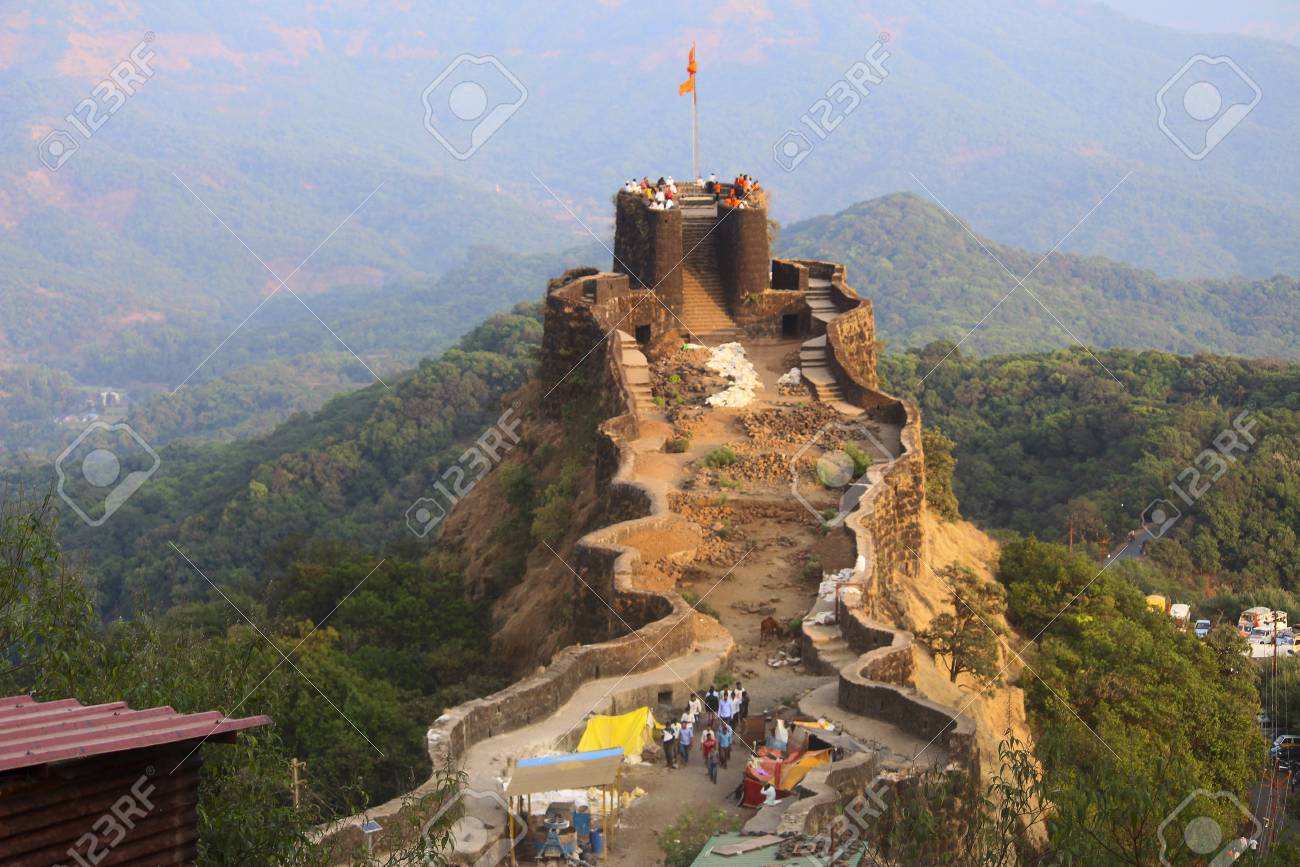
Raigad Raigad, is a historically rich district is situated in the Konkan region of Maharashtra. Located at 2,851mts, it is surrounded by Mumbai Harbour, Thane, Pune, Ratnagiri and the Arabian Sea. Chatrapati Shivaji Maharaj, renowned Maratha ruler, won this place in 1656 and his Maratha kingdom thus shifted base to Raigad. His prized win, the Raigad Fort is one of the main attractions of this place. The fort is built on an irregular mould of rock at a considerable height from the sea level. The Samadhi(tomb) of Shivaji is placed in this fort. Raigad is also known for it’s other forts all once under the reign of Shivaji, it is primarily preferred by tourists because it has, as yet managed to preserve the culture of it’s ancestors through it’s historical sites, art and cuisine.
Ratnagiri Situated in pretty surroundings, Ratnagiri is blessed with hills, sea shores, creeks, beautiful rivers, hot water springs, forests and water falls and offers a rejuvenating experience to travelers. Ratnagiri is a travelers dream come true destination with its majestic Sahyadri range and Arabian sea with virginal white beaches, cascading waterfalls, hot water springs palm groves, majestic monuments and the most famous, Alphonso mangoes. Ratnagiri has some of the magnificent forts built during the Shivaji period. One of the gems in Konkan region, Ratnagiri is now a big district comprising of several touristy small villages and towns and it forms for a brilliant weekend getaway from the cities of Maharashtra including Mumbai. Ratnagiri was also where the last Burmese King Thibaw Min was exiled by the British in 1885. The King and his family lived in a specially constructed palace called Thibaw Palace which is open to the public.
Satara Located in Western Maharashtra, Satara gets its name from the seven (Saat in the local language of Marathi) hills (Tara in Marathi) that envelope Satara. This historic site of Maratha Kingdom is located near the confluence of Krishna and its tributary Venna. Satara was established in the 16th century and had the honour of being the seat of Chatrapati Shahu, Raja of Satara. It was conquered by Shivaji once in 1663 and after his death, his half-brother, Sambhaji was made the king until the release of Shahu, Shivaji’s son from the Mughals. Chhatrapati Shahu was crowned in 1708 at the Satara fort, and Chhatrapati Shivaji’s descendants continue to live in Satara till date. The major attractions in Satara are Ajinkyatara fort, and a statue Chhatrapati Shivaji Maharaj standing near a canon (as opposed to generally seen statue of him riding a horse). Located at about 130 km from Pune, and 270 km from Mumbai, Satara is a great weekend getaway option. As a bonus to a trip to Satara, Mahabaleshwar, Panchgani and Kaas Plateau are situated in the vicinity of just 50 km. Do relish some Kandhi Pedha when you happen to be in Satara.
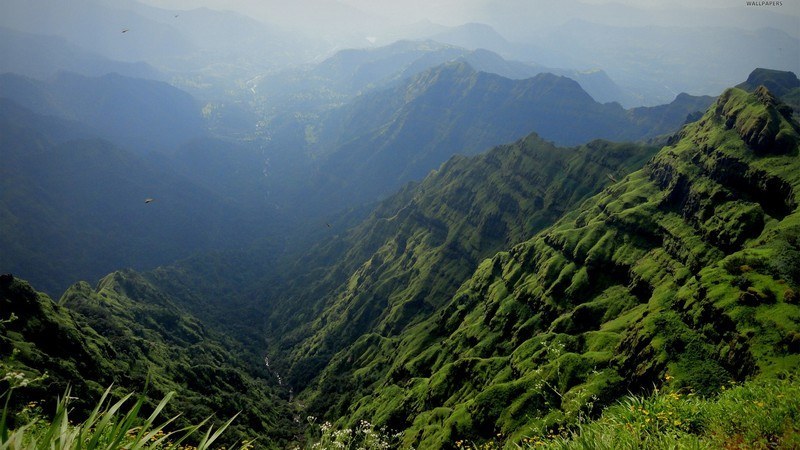
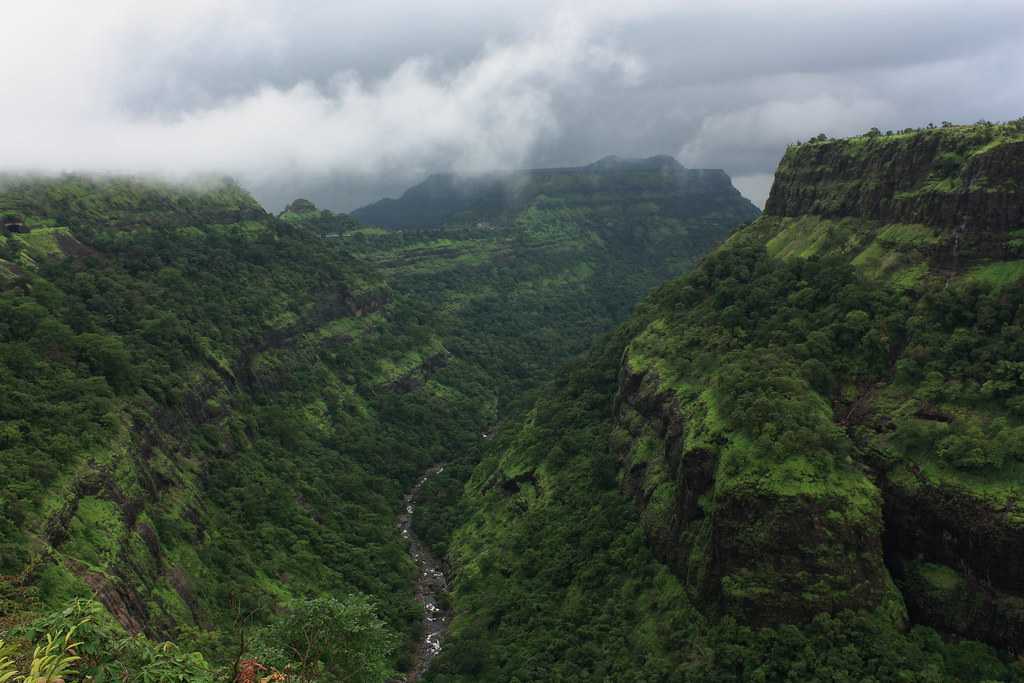
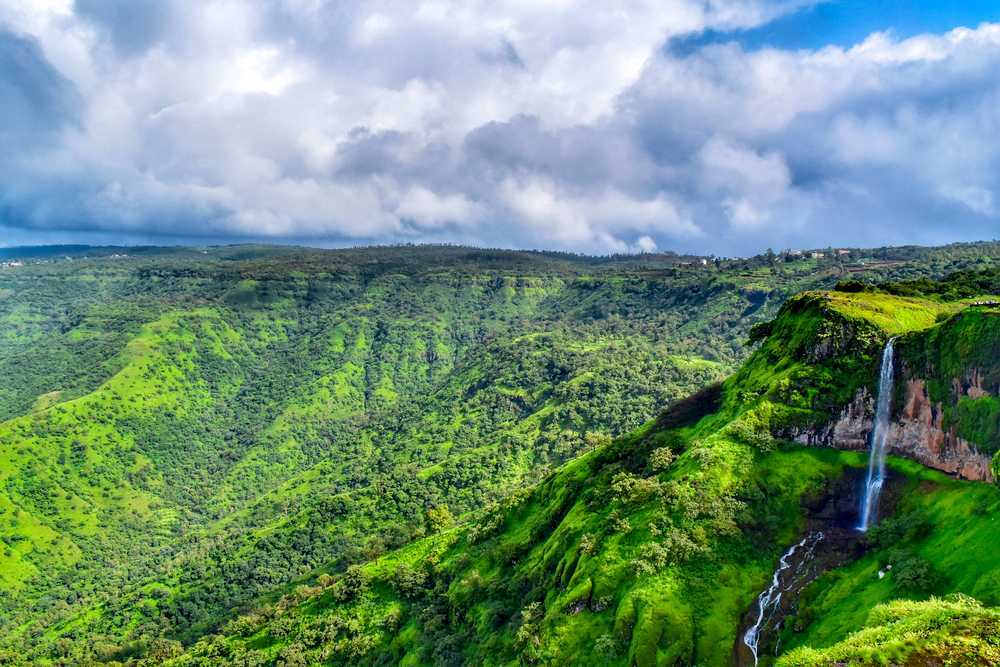
Matheran The closest hill station to Mumbai (around 100 km away), Matheran is nestled amidst the Sahyadri range on the Western Ghats. This cozy town was discovered in 1850 by the British during their occupation of India and subsequently developed into a popular summer retreat. At height of 800 meters (2,625 feet) above sea level, this serene place provides a cooling escape from searing temperatures. With its name literally translating to “overhead forest”, Matheran is the smallest hill station in all of India, but it is extremely popular in terms of tourists looking for a short trip amid spectacular vistas and serenity. However, the most unique thing about it and what makes it so special, is that all vehicles are banned there — even bicycles. It’s a soothing place to relax away from any noise and pollution. Get there by taking the scenic toy train. As with any other hill station, Matheran is famous for its viewpoints. It has a total of 36 viewpoints from where you can enjoy alluring views of the Sahyadri mountain range, the most popular of them being Echo Point, Alexander Louisa Point, Panorama Point and Porcupine Point. Most of these points have easy trekking trails, and they offer sweeping views of the mountains, the sunrise, sunset, and everything in between! Charlotte Lake, close to Echo Point, is a very popular picnic spot where nature enthusiasts love to go and take a stroll in.
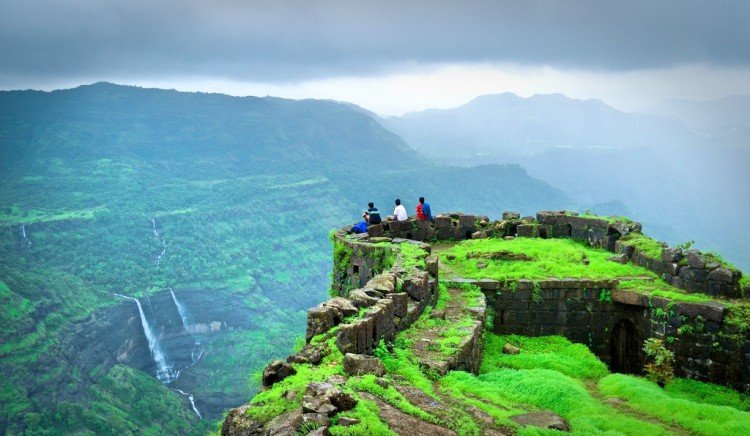
Lonavala One of the most popular hill stations in the state, Lonavala is a perfect weekend getaway, from both Mumbai and Pune, especially during the monsoons. Mists rising from the Sahyadri hills, waterfalls cascading down from the hills to the spiral roads, pristine lakes accompanied by well-built dams and countless places to stay amid the abundance of nature—this is Lonavala for you. The place is a favourite of both nature lovers and hikers. The panoramic views of the mountains are stunning. The best time to visit is between October to May and the main attractions in the town are Tiger’s Leap, Bushi Dam, Lonavala Lake, Lohagad Fort and Karla Caves.
Khandala Another hill station around 3 km from Lonavala and around the midpoint between Mumbai and Pune, Khandala stands in the Western Ghats on the Mumbai-Pune highway. It is a popular weekend holiday destination due to its natural charm. Residents of both Pune and Mumbai find it a convenient weekend getaway. The best to visit to get the full beauty of Khandala is between October and April. You can visit attractions like the Duke’s nose, which is a cliff shaped like a nose, overlook the ravishing valley, Rajmachi Fort, Lohagad Fort, Bedse Caves, Visapur Fort and Kune Waterfalls.
Rajmachi Rajmachi is a small village situated in the Sahyadri mountain range of the Konkan region of Maharashtra. Rajmachi has two fortified peaks – Shrivardhan and Manaranjan forts, located near two famous hills of Lonavala and Khandala. At the base of the fort is the village Udhewadi which is another name for Rajmachi. Rajmachi has seen many change of hands from Shivaji Maharaj, Emperor Aurangzeb, Shahu Maharaj and eventually the British reign. The fort of Rajmachi is famous among trekkers and adventure enthusiasts. If you want to experience a full-fledged trek, you can start from the Kondhane caves side which will take 3-4 hours of climbing, but otherwise you can drive right upto Udhewadi village (from the Lonavala side) and then trek for hardly 20-30 minutes to the top of the fort. The simple and clearly marked trail on both the paths make Rajmachi a very popular beginner’s trek.
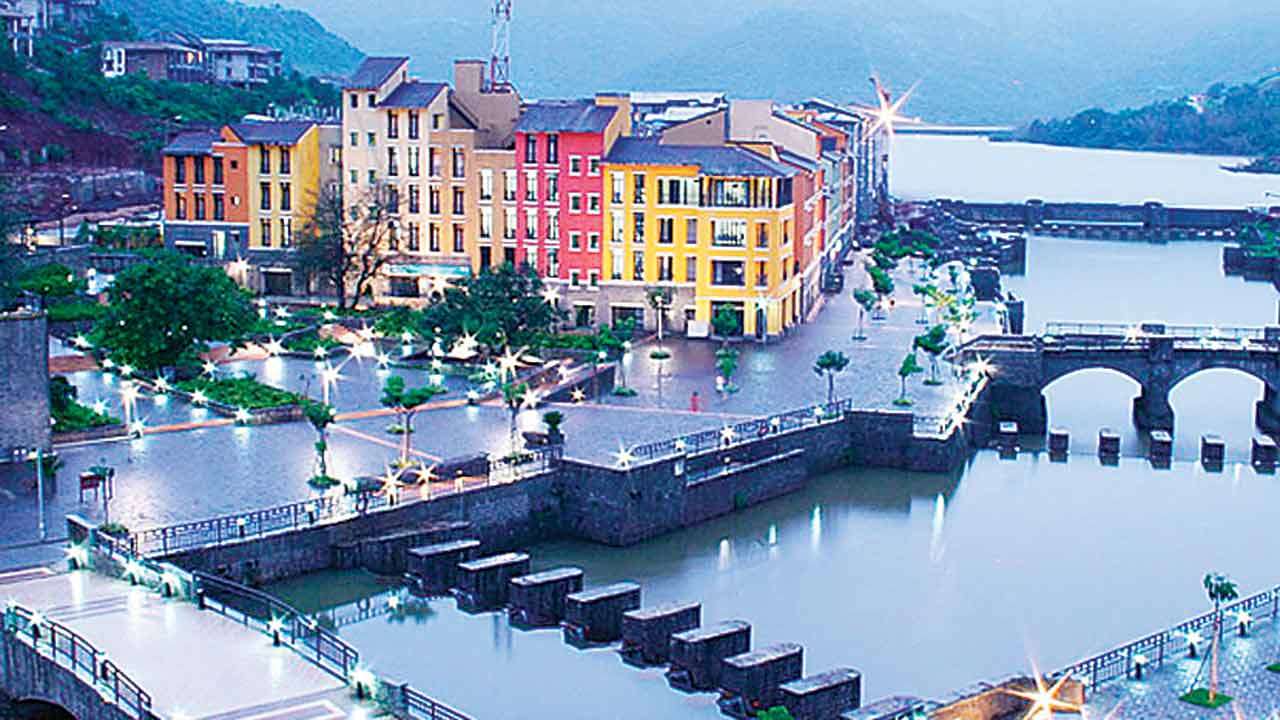
Lavasa Known as India’s newest hill station, the Lavasa Corporation is constructing this private city. The city is a beautiful project, stylistically based on the Italian town Portofino. Spreading across 7 hills, covering an area of 25000 acres, Lavasa is a perfect blend of beauty and infrastructure. The place is dotted with colourful buildings, vibrant hotels, and beautiful streets that offer scenic lake views. Lavasa has a pleasant weather all year long but monsoon is an exceptional time to visit Lavasa. Located in the Western Ghats, Lavasa is around 65 km from Pune and around 200 km from Mumbai. There, you can visit the Mose River, Varasgaon Dam, Laser Animation and Musical Fountain.
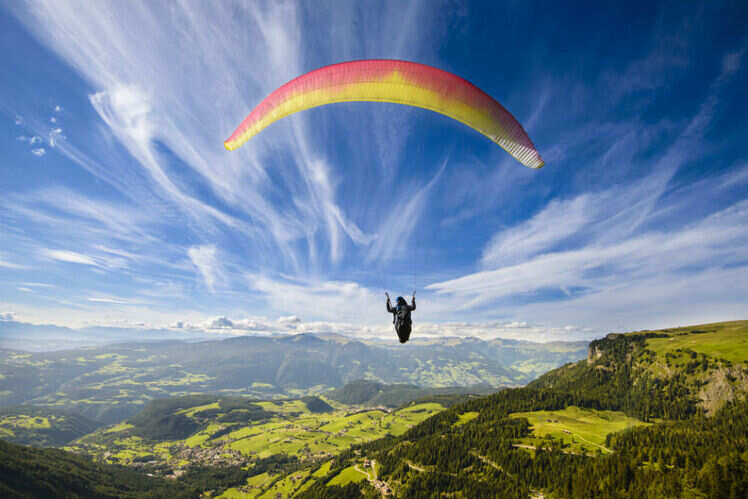
Kamshet Kamshet is a picturesque hill station in Western Ghats, renowned for paragliding and flying schools. Surrounded by Western Ghats, this place is regularly featured in the top 10 must visit destinations of India for an adventurous junkie. Located just 45 km from the main town of Pune, Kamshet is a paragliders paradise. It’s a beautiful place with small villages with natural scenery and fresh air. The area is surrounded by paddy and sunflower fields and it provides an awesome view while you are enjoying the world class paragliding facilities here. Among other important attractions in this region are the Bhairi caves, Bhedsa caves, Khondeshwar temple, Pavana lake and Shinde wadi hills. Due to its proximity to other hill stations like Lonavla andÊKhandala, one can include those places in this trip as well. October to May is the best time to visit Kamshet and
Mahabaleshwar With its breathtaking waterfalls and majestic peaks, Mahabaleshwar is a serene escapade for people in Maharashtra. This erstwhile summer capital of the Bombay Presidency located in Satara district is a quaint hill station located in the Western Ghats and famous for its mesmerising natural beauty that is blessed with beautiful lakes, dense forests, charming valleys and many ancient temples. It is also famous for its gorgeous strawberry farms and offering a variety of delicious foods. October to June are the best months to plan a trip to Mahabaleshwar where you can see attractions like Wilson Point (Sunrise Point), Mumbai Point (Sunset Point), Arthur’s Seat, Mahabaleshwar Temple, Babington Point, Kamalgad Fort, Chinaman’s Falls and Elephant’s Head Point
Panchgani Deriving its name from the five hills surrounding it, Panchgani is a popular hill station near Mahabaleshwar, famous for its various sunset/sunrise points and scenic valley view. With a pleasant climate throughout the year, it appealed to the Britishers who established this place as a summer retreat and it continues to lure tourists to date. Panchgani is located around 1,334 meters above sea level and the picturesque backdrop of hills on one side and coastal plains on the other makes for an amazing view. In the British era, the place was treated as a summer resort and hence many colonial period establishments can be seen here. Mahabaleshwar is like a twin city to Panchgani. The best time to visit both Mahabaleshwar and Panchgani is between September and February. Attractions in Panchgani include Sydney Point, Lingmala Falls, Kamalgarh Fort, Rajpuri Cave, Kaas Plateau, Wai and Devil’s Kitchen
Kaas Plateau Declared as a UNESCO World Natural Heritage Site in 2012, Kaas Plateau in Panchgani is a magical place with landscapes with lakes, flowers and butterflies all around. The Kaas Plateau is a biodiversity hotspot situated at an altitude of 1200 metres and is a major biodiversity hotspot owing to the many varieties of endemic flowers and butterflies that are found here. Housing about 850 species of beautiful wildflowers, the 1000 hectare area of the plateau is now a reserved forest which is famous for its natural beauty and flora, Kaas Lake and how it turns into a valley of flowers during monsoon. To preserve the virgin charms of this location, the number of visitors have been restricted to 3,000 per day. State Transport buses ply from the parking area to Kaas Plateau and cost INR 10 per person each side. The months beginning from August to October witness the Kaas Valley transforming into a blooming beauty of endemic flowers such as Anjani, Paner, Sonki, Kondal, Deepkadee and Kaasa. The sheer variety of colours, shapes and sizes is a delightful sight to behold and makes Kaas Valley an undeniable hit among scientists, naturalists and adventure lovers alike. The many blossoms of the valley stand in stark contrast to the azure of the sky with numerous delicate butterflies fluttering their way through this kaleidoscopic maze. Other attractions in the area include the Kaas Lake, Vajrai Waterfall, Banmoli, Thoseghar Waterfall and Sajjangad Fort
Maval A gorgeous and rustic hamlet, Maval is located along the beautiful green and dark ranges of the Sahyadris. The village is also one of the most prosperous biodiversity regions in Maharashtra. Here, you can not only spot vegetation but also wildlife in all its glory. While the awe inspiring ranges of the Sahyadris add a good measure of beauty and diversity to its backdrop, the quiet and clutter free life of the villagers presents for a getaway in the arms of nature. The best time to visit is during the months of October and May. Attractions near and around Maval include Mangarul Fort, Adesh Green House, Bhaja Caves, Sinhagad Fort, Shivneri Fort and Saras Baug
Bhandardara Bhandardara, a hill station nestled in the Sahyadri ranges of Maharashtra, has all the nature’s blessings a place can get. The lush greenery, the humble waterfalls and surrounded by high mountains makes for the perfect holiday spot for city dwellers. Situated in the Ahmednagar district of Maharashtra, Bhandardara is 117 km. from Mumbai and is easily accessible through roadways. Attractions in Bhandardara include Wilson Dam, Umbrella Falls, Kalsubai Peak, Randha Falls and Arthur Falls.
Chikhaldara The scent of coffee enchants you as you enter the hill station city of Chikhaldara in Amravati district. Being the only coffee growing area in the region, Chikhaldara also boasts of beautiful lakes, breathtaking panoramic viewpoints and exotic wildlife. Featured in the epic of the Mahabharata, this is the place where Bheema killed the villainous Keechaka in a herculean bout and then threw him into the valley. It thus came to be known as Keechakadara—Chikhaldara is its corruption. The sole hill resort in the Vidarbha region, it is situated at an altitude of 1118 m with highest vairat point 1188m. It abounds in wildlife, such as tigers, panthers, sloth bears, sambars, wild boar, and rarely seen wild dogs. Close by is the famous Melghat Tiger Project which has 82 tigers. The scenic beauty of Chikhaldara can be enjoyed from Hurricane Point, Prospect Point, and Devi Point. Other interesting excursions include Gavilgad and Narnala Fort, the Pandit Nehru Botanical Gardens, the Tribal Museum and the Semadoh Lake.
Bhimashankar Bhimashankar, located about 100 km from Pune and 223 km from Mumbai, is a popular temple town. It is located in the village of Bhorgiri in the ghat region of the Sahyadri range at around 3,250 feet above sea level. It is among one of the twelve traditional ‘Jyotilingam’ shrines of Lord Shiva in India. Legend has it that the name Bhimashankar was originated from the river Bhima which evaporated due to the generated between the war of Lord Shiva and the demon Tripurasura. It is considered to be one of the holiest places in India because of the jyotirlinga. Bhimashankar Wildlife Sanctuary is another important reason why people come here.









.jpg.jpg?1458195687)











.jpg.jpg?1458196297)


 Memories and Such


