In My Hands Today…

All in Her Head: The Truth and Lies Early Medicine Taught Us About Women’s Bodies and Why It Matters Today – Elizabeth Comen

For as long as medicine has been a practice, women’s bodies have been treated like objects to be practiced on: examined and ignored, idealized and sexualized, shamed, subjugated, mutilated, and dismissed. The history of women’s healthcare is a story in which women themselves have too often been voiceless—a narrative instead written from the perspective of men who styled themselves as authorities on the female of the species, yet uninformed by women’s own voices, thoughts, fears, pain and experiences. The result is a cultural and societal legacy that continues to shape the (mis)treatment and care of women.

While the modern age has seen significant advancements in the medical field, the notion that female bodies are flawed inversions of the male ideal lingers on—as do the pervasive societal stigmas and lingering ignorance that shape women’s health and relationships with their own bodies.

Memorial Sloan Kettering oncologist and medical historian Dr. Elizabeth Comen peels back the curtain on the collective medical history of women to reintroduce us to our whole bodies—how they work, the actual doctors and patients whose perspectives and experiences laid the foundation for today’s medical thought, and the many oversights that still remain unaddressed. With a physician’s knowledge and empathy, Dr. Comen follows the road map of the eleven organ systems to share unique and untold stories, drawing upon medical texts and journals, interviews with expert physicians, as well as her own experience treating thousands of women.

Empowering women to better understand ourselves and advocate for care that prioritizes healthy and joyful lives—for us and generations to come—All in Her Head is written with humor, wisdom, and deep scientific and cultural insight. Eye-opening, sometimes enraging, yet always captivating, this shared memoir of women’s medical history is an essential contribution to a holistic understanding and much-needed reclaiming of women’s history and bodies.

In My Hands Today…

Lady Doctors: The Untold Stories of India’s First Women in Medicine – Kavitha Rao

At a time when medicine is a highly sought-after career for Indian women, it is hard to imagine what it was like for the pioneers. The story of how firmly they were bound in fetters of family, caste, and society and how fiercely they fought to escape needs to be told. In Lady Doctors, Kavitha Rao unearths the extraordinary stories of six women from the 1860s to the 1930s who defied the idea that they were unfit for medicine by virtue of their gender.

From Anandibai Joshi, who broke caste rules by crossing an ocean, to Rukhmabai Raut, who escaped a child marriage, divorced her husband, and studied to be a doctor; from Kadambini Ganguly, who took care of eight children while she worked, to child widow Haimabati Sen, who overcame poverty and hardship—these women had a profound and lasting impact. And in their forgotten lives lie many lessons for modern women.

In truth, the compelling stories of these radical women have been erased from our textbooks and memories because histories have mostly been written by men, about men. In an immensely readable narrative and with impeccable research, Lady Doctors rectifies this omission.

In My Hands Today…

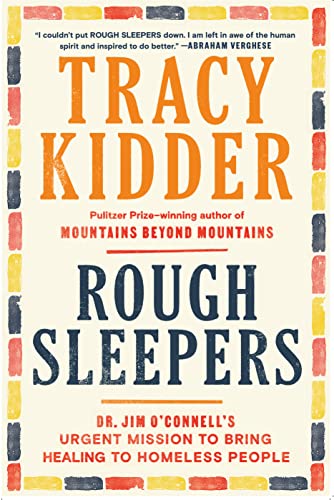
Rough Sleepers – Tracy Kidder

When Jim O’Connell graduated from Harvard Medical School and was nearing the end of his residency at Massachusetts General Hospital, the chief of medicine made a proposal: Would he defer a prestigious fellowship and spend a year helping to create an organization to bring health care to homeless citizens?

Jim took the job because he felt he couldn’t refuse. But that year turned into his life’s calling. Tracy Kidder spent five years following Dr. O’Connell and his colleagues as they served their thousands of homeless patients.

In this book, we travel with O’Connell as he navigates the city, offering medical care, socks, soup, empathy, humor, and friendship to some of the city’s most vulnerable citizens. He emphasizes a style of medicine in which patients come first, joined with their providers in what he calls “a system of friends.”

In My Hands Today…

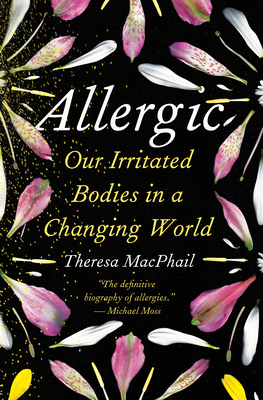
Allergic: Our Irritated Bodies in a Changing World – Theresa MacPhail

An eye-opening exploration of allergies, from their first medical description in 1819 to the cutting-edge science that is illuminating the changes in our environment and lifestyles that are making so many of us sick

Hay fever. Peanut allergies. Eczema. Either you have an allergy or you know someone who does. Billions of people worldwide—an estimated 30 to 40 percent of the global population—have some form of allergy. Even more concerning, over the last decade the number of people diagnosed with an allergy has been steadily increasing, placing an ever-growing medical burden on individuals, families, communities, and healthcare systems.

Medical anthropologist Theresa MacPhail, herself an allergy sufferer whose father died of a beesting, set out to understand why. In pursuit of answers, MacPhail studied the dangerous experiments of early immunologists as well as the mind-bending recent development of biologics and immunotherapies that are giving the most severely impacted patients hope. She scaled a roof with an air-quality controller who diligently counts pollen by hand for hours every day; met a mother who struggled to use WIC benefits for her daughter with severe food allergies; spoke with doctors at some of the finest allergy clinics in the world; and discussed the intersecting problems of climate change, pollution, and pollen with biologists who study seasonal respiratory allergies.

This is the story of what they are, why we have them, and what that might mean about the fate of humanity in a rapidly changing world.

In My Hands Today…

The Curious History of the Heart: A Cultural and Scientific Journey – Vincent M. Figueredo

For much of recorded history, people considered the heart to be the most important organ in the body. In cultures around the world, the heart–not the brain–was believed to be the location of intelligence, memory, emotion, and the soul. Over time, views on the purpose of the heart have transformed as people sought to understand the life forces it contains. Modern medicine and science dismissed what was once the king of the organs as a mere blood pump subservient to the brain, yet the heart remains a potent symbol of love and health and an important part of our cultural iconography.

This book traces the evolution of our understanding of the heart from the dawn of civilization to the present. Vincent M. Figueredo–an accomplished cardiologist and expert on the history of the human heart–explores the role and significance of the heart in art, culture, religion, philosophy, and science across time and place. He examines how the heart really works, its many meanings in our emotional and daily lives, and what cutting-edge science is teaching us about this remarkable organ. Figueredo considers the science of heart disease, recent advancements in heart therapies, and what the future may hold. He highlights the emerging field of neurocardiology, which has found evidence of a “heart-brain connection” in mental and physical health, suggesting that ancient views hold more truth than moderns suspect.

Ranging widely and deeply throughout human history, this book sheds new light on why the heart remains so central to our sense of self.