In My Hands Today…

A Well-Trained Wife: My Escape from Christian Patriarchy – Tia Levings

“Today it hit me when he hit me, blood shaking in my brain. Maybe there wasn’t a savior coming. Maybe it was up to me to save me.”

Recruited into the fundamentalist Quiverfull movement as a young wife, Tia Levings learned that being a good Christian meant following a list of additional life principles—a series of secret, special rules to obey. Being a godly and submissive wife in Christian Patriarchy included strict discipline, isolation, and an alternative lifestyle that appeared wholesome to outsiders. Women were to be silent, “keepers of the home.”

Tia knew that to their neighbors her family was strange, but she also couldn’t risk exposing their secret lifestyle to police, doctors, teachers, or anyone outside of their church. Christians were called in scripture to be “in the world, not of it.” So, she hid in plain sight as years of abuse and pain followed. When Tia realized she was the only one who could protect her children from becoming the next generation of patriarchal men and submissive women, she began to resist and question how they lived. But in the patriarchy, a woman with opinions is in danger, and eventually, Tia faced an urgent and extreme stay and face dire consequences, or flee with her children.

Told in a beautiful, honest, and sometimes harrowing voice, A Well-Trained Wife is an unforgettable and timely memoir about a woman’s race to save herself and her family and details the ways that extreme views can manifest in a marriage.
In My Hands Today…

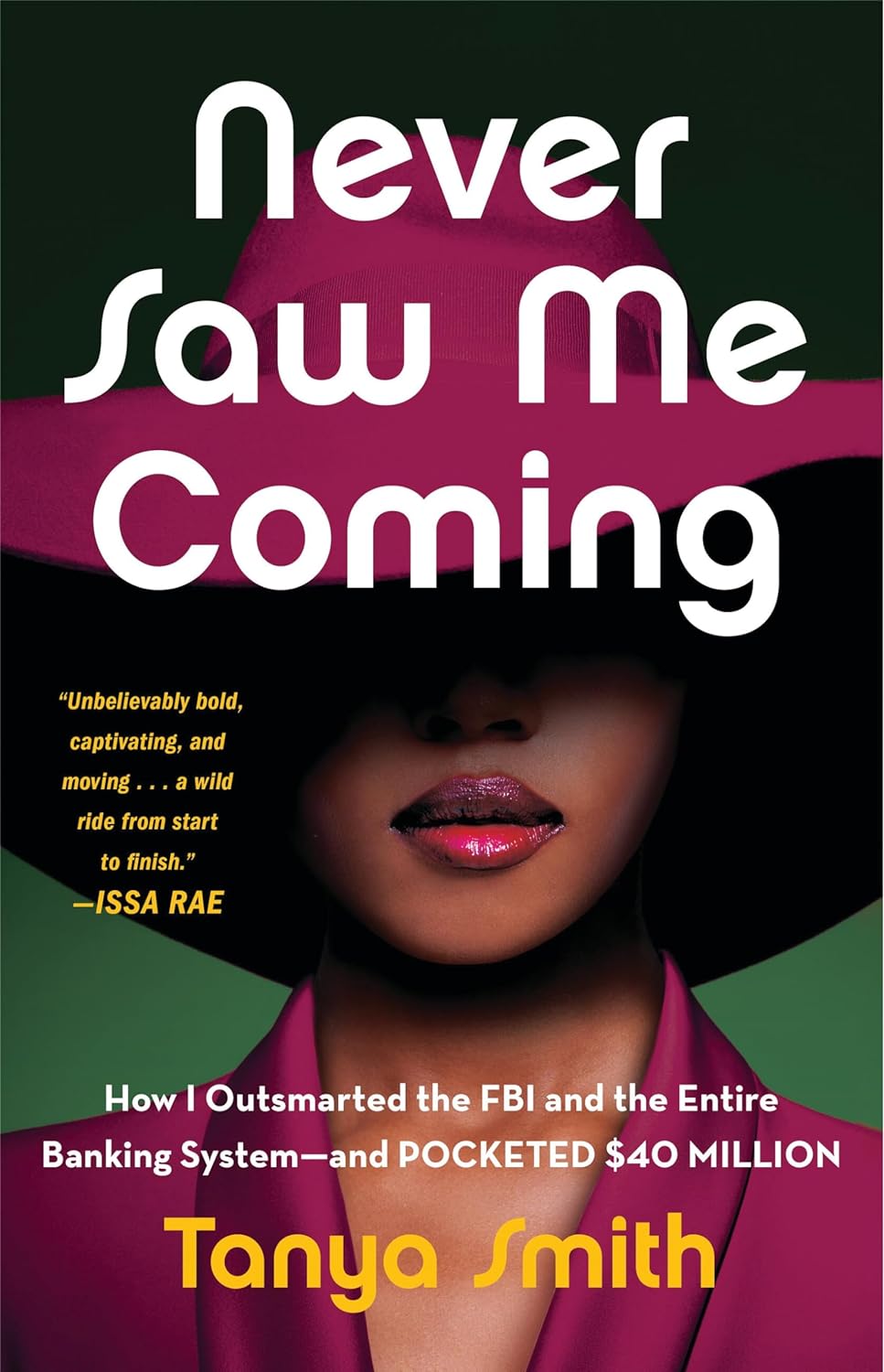
Never Saw Me Coming: How I Outsmarted the FBI and the Entire Banking System—and Pocketed $40 Million – Tanya Smith

Tanya Smith fancied herself a folk hero, a kind of Robin Hood, using her powers of persuasion to buck the system and help the poor and needy.

It started innocently enough, with calls to celebrities’ houses with her teenage twin sister. Soon, Tanya realised she could convince utility companies to amend the balances of her friends, relatives and neighbours, clearing their overdue electricity bills with a single phone call. Eventually, as she tested the limits and realized she could get past any gatekeeper, she started to want the actual money herself.

By the time she was 18, Tanya had ‘confiscated’ some $40 million in cash and commodities from US banks, using hacked wire transfers. It didn’t take long before the FBI was on her tail. But when interviewing her, they made clear that they were using her to get to the person actually running things – clearly, she wasn’t smart enough to do this on her own (Black people she was told, rob people, they don’t hack computers).

Thus began a cat and mouse game with the authorities that would drive her to unthinkable limits, breaking the hearts of her parents, putting Tanya’s life in jeopardy, and costing her custody of two children before finally sending her to Federal prison (where she escaped twice) with the longest sentence ever given for a white-collar crime.

In the spirit of true crime narratives like Catch Me If You Can, Molly’s Game, and Ben Mezrich’s Bringing Down the House, Never Saw Me Coming is a gripping caper, but it’s also the deeply personal journey of a young Black woman finding her way in a world that underestimated her brilliance.

In My Hands Today…

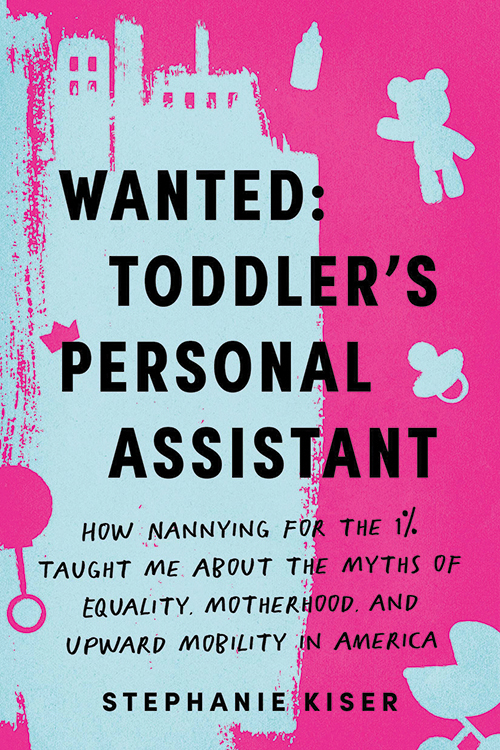
Wanted: Toddler’s Personal Assistant – Stephanie Kiser

What are the lives of America’s richest families really like? Their nannies see it all…

When Stephanie Kiser moves to New York City after college to pursue a career in writing, she quickly learns that her entry-level salary won’t cover the high cost of living―never mind her crushing student loan debt. But there is one in-demand job that pays more than enough to allow Stephanie to stay in the city: nannying for the 1%. Desperate to escape the poverty of her own childhood, Stephanie falls into a job that hijacks her life for the next seven years: a glorified personal assistant to toddlers on Manhattan’s Upper East Side.

At first, nannying seems like the perfect solution―the high pay covers Stephanie’s bills, and she’s surprised by how attached she becomes to the kids she cares for, even as she gasps over Prada baby onesies and preschools that cost more than her college tuition. But the grueling twelve-hour days leave her little time to see her friends, date, or pursue any creative projects that might lead to a more prestigious career. The allure of the seemingly-glamorous job begins to dull as Stephanie comes to understand more about what really happens behind the closed doors of million-dollar Park Avenue apartments―and that money doesn’t guarantee happiness. Soon she will have to decide whether to stay with the children she’s grown to love, or if there’s something better out there just beyond her reach.

Wanted: Toddler’s Personal Assistant is alternately poignant and funny, a portrait of a generation of Americans struggling to find work they love balanced against the headwinds of global uncertainty and an economy stacked against anyone trying to work their way up from the bottom. It’s a provocative story of class, caregiving, friendship, and family―and a juicy, voyeuristic peek behind the curtain of obscene wealth and the privilege and opportunity that comes with it. In this unputdownable memoir, Stephanie chronicles her journey from newbie nanny to beloved caregiver—and the painful decision to eventually say goodbye to the children she has grown to love.

In My Hands Today…

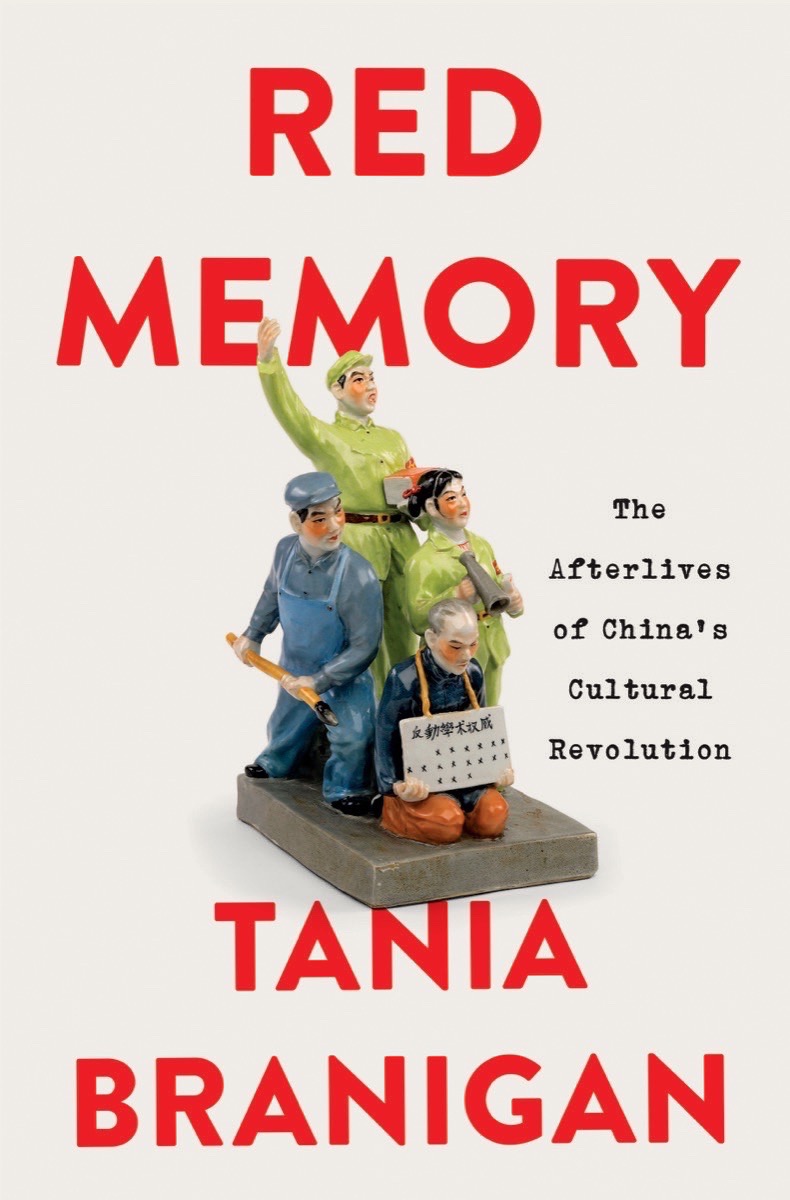
Red Memory: The Afterlives of China’s Cultural Revolution – Tania Branigan

“It is impossible to understand China today without understanding the Cultural Revolution,” Tania Branigan writes. During this decade of Maoist fanaticism between 1966 and 1976, children condemned parents, students condemned teachers, and as many as two million people died for their supposed political sins, while tens of millions were hounded, ostracized, and imprisoned.

Yet in China this brutal and turbulent period exists, for the most part, as an absence; official suppression and personal trauma have conspired in national amnesia. Red Memory uncovers forty years of silence through the stories of individuals who lived through the madness. Deftly exploring how this era defined a generation and continues to impact China today, Branigan asks: What happens to a society when you can no longer trust those closest to you? What happens to the present when the past is buried, exploited, or redrawn? And how do you live with yourself when the worst is over?

In My Hands Today…

Waiting to Be Arrested at Night: A Uyghur Poet’s Memoir of China’s Genocide – Tahir Hamut Izgil, translated by Joshua L Freeman

One by one, Tahir Hamut Izgil’s friends disappeared. The Chinese government’s brutal persecution of the Uyghur people had continued for years, but in 2017 it assumed a terrifying new scale. The Uyghurs, a predominantly Muslim minority group in western China, were experiencing an echo of the worst horrors of the twentieth century, amplified by China’s establishment of an all-seeing high-tech surveillance state. Over a million people have vanished into China’s internment camps for Muslim minorities.

Tahir, a prominent poet and intellectual, had been no stranger to persecution. After he attempted to travel abroad in 1996, police tortured him until he confessed to fabricated charges and sent him to a re-education through labor camp. But even having endured three years in the camp, he could never have predicted the Chinese government’s radical solution to the Uyghur question two decades later. Was the first sign when Tahir was interrogated for hours after a phone call with a fellow poet in the Netherlands? Or when his old friend was sentenced to life in prison simply for calling for Uyghurs’ legal rights to be enforced? Perhaps it was when the police seized Uyghurs’ radios and installed jamming equipment to cut them off from the outside world.

Once Tahir noticed that the park near his home was nearly empty because so many neighbors had been arrested, he knew the police would be coming for him any day. One night, after Tahir’s daughters were asleep, he placed by his door a sturdy pair of shoes, a sweater, and a coat so that he could stay warm if the police came for him in the middle of the night. It was clear to Tahir and his wife that fleeing the country was the family’s only hope.

Waiting to Be Arrested at Night is the story of the political, social, and cultural destruction of Tahir Hamut Izgil’s homeland. Among leading Uyghur intellectuals and writers, he is the only one known to have escaped China since the mass internments began. His book is a call for the world to awaken to the unfolding catastrophe, and a tribute to his friends and fellow Uyghurs whose voices have been silenced.