In My Hands Today…

To Have and to Hold: Motherhood, Marriage, and the Modern Dilemma – Molly Millwood
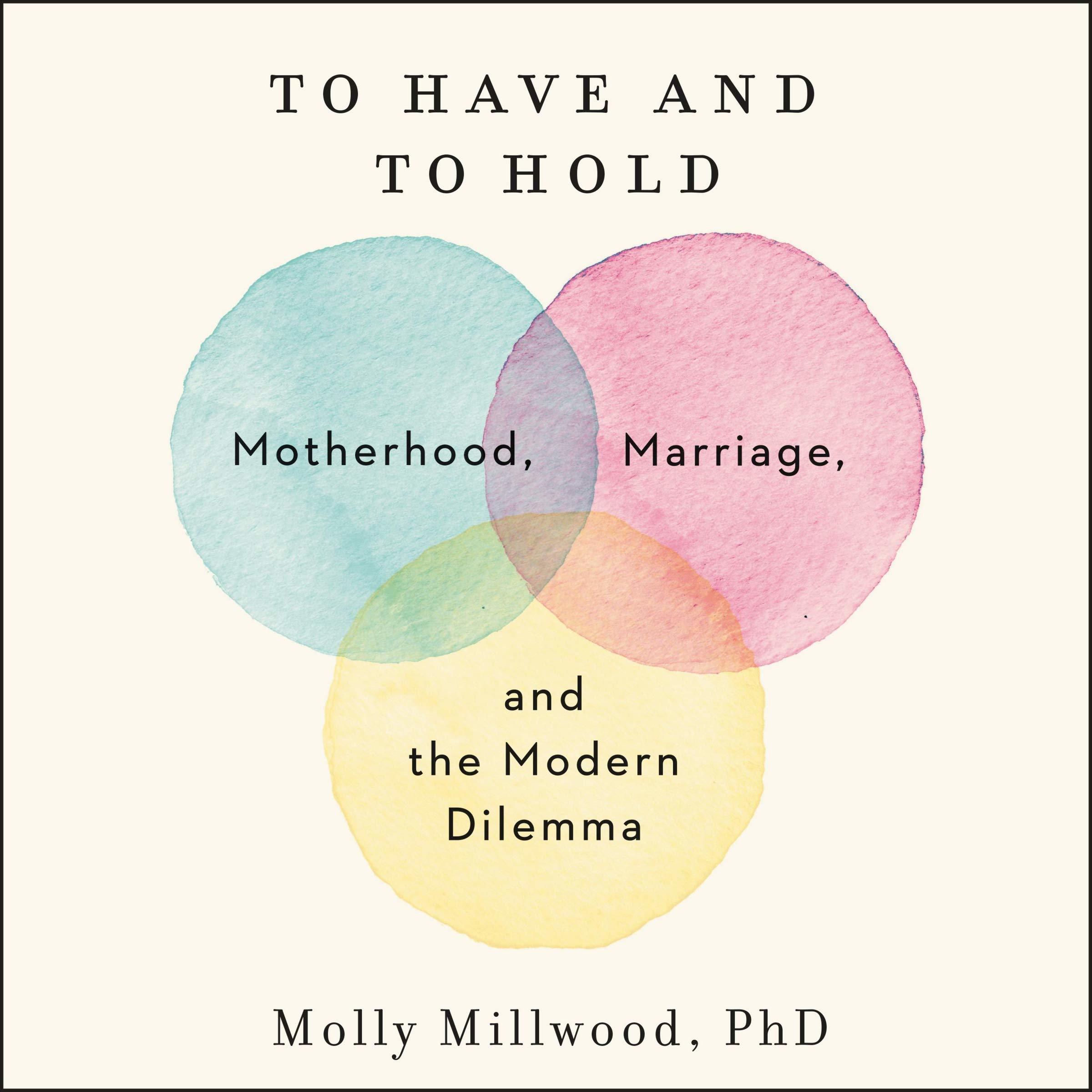
When Molly Millwood became a mother, she was fully prepared for what she would gain: an adorable baby boy; hard-won mothering skills; and a messy, chaotic, beautiful life. But what she did not expect was what she would lose: aspects of her identity, a baseline level of happiness, a general sense of wellbeing. And though she had the benefit of a supportive husband during this transition, she also at times resented the fact that the disruption to his life seemed to pale in comparison to hers.

As a clinical psychologist, Molly knew her experience was a normal response to a life-changing event. But without the advantage of such a perspective, many of the patients she treated in her private practice grappled with self-doubt, guilt, and fear, and suffered the dual pain of not only the struggle to adjust but also the overwhelming shame for struggling at all.

In To Have and to Hold, Molly explores the complex terrain of new motherhood, illuminating the ways it affects women psychologically, emotionally, physically, and professionally—as well as how it impacts their partnership. Along with the arrival of a bundle of joy come thorny issues such as self-worth, control, autonomy, and dependency. And for most new mothers, these issues are experienced within the context of an intimate relationship, adding another layer of tension, conflict, and confusion to an already challenging time.

As Molly examines the inextricable link between women’s well-being as new mothers and the well-being of their relationships, she offers guidance to help readers reclaim their identities, overcome their guilt and shame, and repair their relationships. A blend of personal narrative, scientific research, and stories from Molly’s clinical practice, To Have and to Hold provides a much-needed lifeline to new mothers everywhere.

In My Hands Today…

The Family Firm: A Data-Driven Guide to Better Decision Making in the Early School Years – Emily Oster

In The Family Firm , Brown professor of economics and mom of two Emily Oster offers a classic business school framework for data-driven parents to think more deliberately about the key issues of the elementary school, health, extracurricular activities, and more.

Unlike the hourly challenges of infant parenting, the big questions in this age come up less frequently. But we live with the consequences of our decisions for much longer. What’s the right kind of school and at what age should a particular kid start? How do you encourage a healthy diet? Should kids play a sport and how seriously? How do you think smartly about encouraging children’s independence? Along with these bigger questions, Oster investigates how to navigate the complexity of day-to-day family logistics.

Making these decisions is less about finding the specific answer and more about taking the right approach. Parents of this age are often still working in baby mode, which is to say, under stress and on the fly. That is a classic management problem, and Oster takes a page from her time as a business school professor at the University of Chicago to show us that thoughtful business process can help smooth out tough family decisions.

The Family Firm is a smart and winning guide to how to think clearly–and with less ambient stress–about the key decisions of the elementary school years.

Parenting is a full-time job. It’s time we start treating it like one.

In My Hands Today…

Generations: The Real Differences Between Gen Z, Millennials, Gen X, Boomers, and Silents―and What They Mean for America’s Future – Jean M. Twenge

A groundbreaking, revelatory portrait of the six generations that currently live in the United States and how they connect, conflict, and compete with one another—from the acclaimed author of Generation Me and iGen

The United States is currently home to six generations: the Silents, Baby Boomers, Generation X, Millennials, Generation Z, and Generation Alpha. They have had vastly different life experiences and thus, one assumes, they must have vastly diverging beliefs and behaviors–but what are those differences, what causes them, and how deep do they actually run?

Professor of psychology Jean Twenge does a deep dive into a treasure trove of long-running, government-funded surveys and databases to answer these questions. Are we truly defined by major historical events, such as the Great Depression for the Silents and September 11 for Millennials? Or, as Twenge argues, is it the rapid evolution of technology that differentiates the generations?

With her clear-eyed and insightful voice, Twenge explores what the Silents and Boomers want out of the rest of their lives; how Gen X-ers are facing middle age; the ideals of Millennials as parents and in the workplace; and how Gen Z has been changed by COVID-19, among other fascinating topics. Surprising, engaging, and informative, Generations will forever change the way you view your parents, peers, coworkers, and children, no matter what your generation.

In My Hands Today…

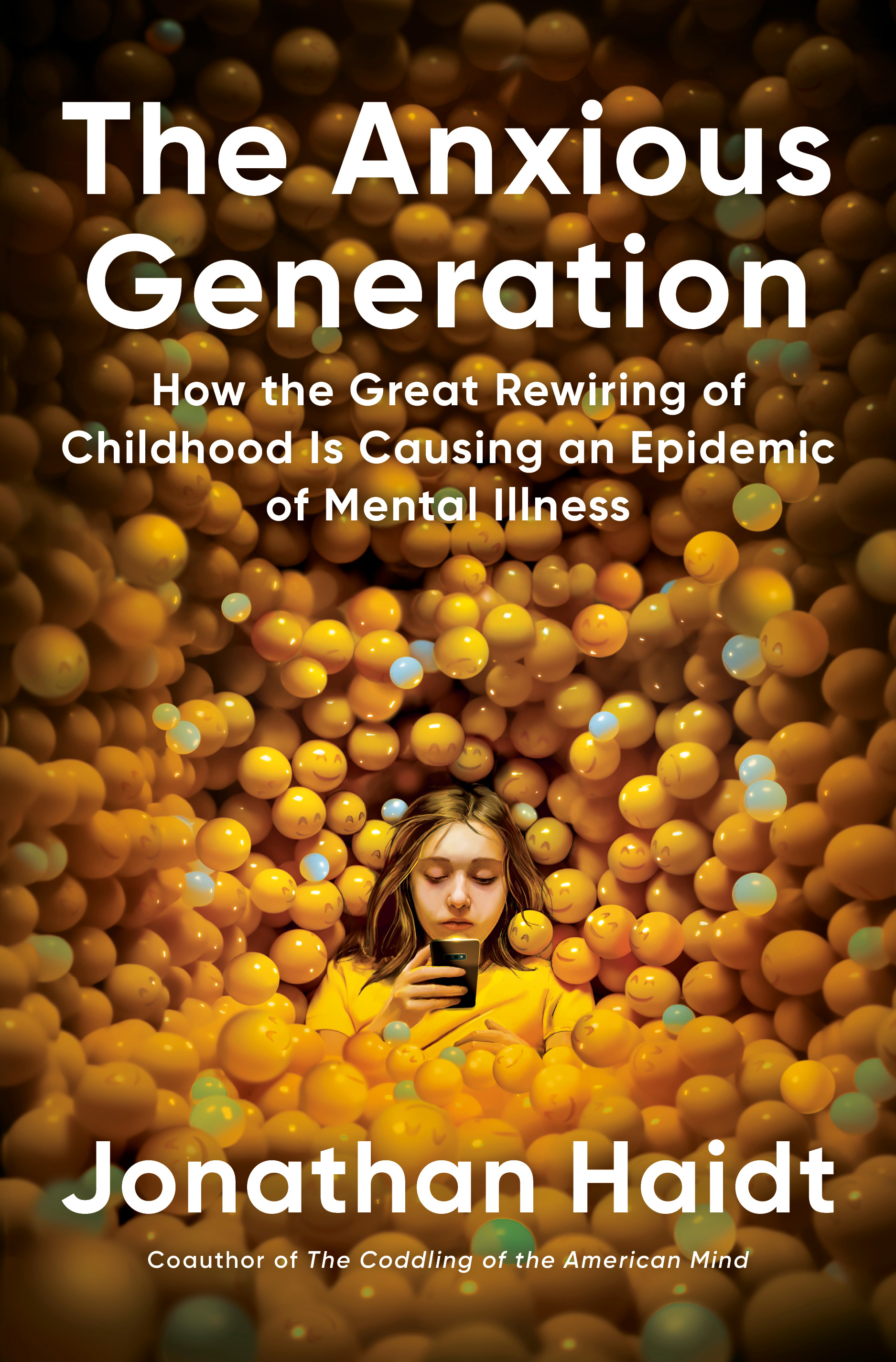
The Anxious Generation: How the Great Rewiring of Childhood Caused an Epidemic of Mental Illness – Jonathan Haidt

A must-read for all parents: the generation-defining investigation into the collapse of youth mental health in the era of smartphones, social media, and big tech—and a plan for a healthier, freer childhood.

After more than a decade of stability or improvement, the mental health of adolescents plunged in the early 2010s. Rates of depression, anxiety, self-harm, and suicide rose sharply, more than doubling on many measures. Why?

In The Anxious Generation, social psychologist Jonathan Haidt lays out the facts about the epidemic of teen mental illness that hit many countries at the same time. He then investigates the nature of childhood, including why children need play and independent exploration to mature into competent, thriving adults. Haidt shows how the “play-based childhood” began to decline in the 1980s, and how it was finally wiped out by the arrival of the “phone-based childhood” in the early 2010s. He presents more than a dozen mechanisms by which this “great rewiring of childhood” has interfered with children’s social and neurological development, covering everything from sleep deprivation to attention fragmentation, addiction, loneliness, social contagion, social comparison, and perfectionism. He explains why social media damages girls more than boys and why boys have been withdrawing from the real world into the virtual world, with disastrous consequences for themselves, their families, and their societies.

Most important, Haidt issues a clear call to action. He diagnoses the “collective action problems” that trap us, and then proposes four simple rules that might set us free. He describes steps that parents, teachers, schools, tech companies, and governments can take to end the epidemic of mental illness and restore a more humane childhood.

Haidt has spent his career speaking truth backed by data in the most difficult landscapes—communities polarized by politics and religion, campuses battling culture wars, and now the public health emergency faced by Gen Z. We cannot afford to ignore his findings about protecting our children—and ourselves—from the psychological damage of a phone-based life.

In My Hands Today…

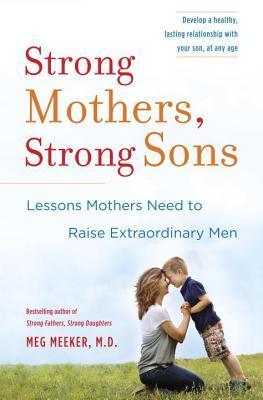
Strong Mothers, Strong Sons: Lessons Mothers Need to Raise Extraordinary Men – Meg Meeker

From the moment a mother holds her newborn son, his eyes tell her that she is his world. But often, as he grows up, the boy who needs her simultaneously pushes her away. Calling upon thirty years of experience as a pediatrician, Meg Meeker, M.D., a highly sought after national speaker, assistant professor of clinical medicine, and mother of four, shares the secrets that every mother needs to know in order to strengthen—or rebuild—her relationship with her son.

Boys today face unique challenges and pressures, and the burden on mothers to guide their boys through them can feel overwhelming. This empowering book offers a road map to help mothers find the strength and confidence to raise extraordinary sons by providing encouragement, education, and practical advice about

The need for mothers to exercise courage and be bolder and more confident about advising and directing their boys, the crucial role mothers play in expressing love to sons in healthy ways so they learn to respect and appreciate women as they grow up, the importance of teaching sons about the values of hard work, community service, and a well-developed inner life, the natural traps mothers of boys often fall into—and how to avoid them, the need for a mother to heal her own wounds with the men in her life so she can raise her son without baggage and limitations, and the best ways to survive the moments when the going gets tough and a mom’s natural ways of communicating—talking, analyzing, exploring—only fuel the fire.

When a mother holds her baby boy for the first time, she also instinctively knows something else: if she does her job right and raises her son with self-esteem, support, and wisdom, he will become the man she knows he was meant to be.