

Situated near the ancient coastal city of Dwarka in Gujarat, the Nageshwar Temple stands as one of the revered twelve Jyotirlingas dedicated to Lord Shiva. Known as Nageshwar or Naganath, meaning Lord of the Serpents, this temple combines powerful spiritual symbolism with mythological richness. The temple has special significance as a protector from snakebites and poisons, both literal and metaphorical, offering devotees liberation from earthly and spiritual toxins. Nestled in a region steeped in Krishna lore and early Hindu civilisation, Nageshwar Temple reflects both timeless faith and regional cultural vibrancy, drawing countless seekers seeking solace, protection, and the light of Shiva.
Nageshwar Temple’s deep mythology intertwines Shiva’s cosmic power with tales of demons, devotion, and divine protection. According to the Shiva Purana, a treacherous demon named Daruka lived in a forest area called Darukavana, along with his wife Daruki. Daruka and Daruki were empowered by Parvati through severe penance, becoming ruthless obstructors of spirituality. They imprisoned the sage and great devotee of Shiva, Supriya, along with many others.
Supriya continued worshiping Shiva with unwavering devotion, performing daily rituals, chanting the sacred Maha Mrityunjaya mantra, and adorning himself with sacred ash or bhasma and rudraksha beads. Moved by this steadfast faith, Shiva manifested in the form of a Jyotirlinga to defeat Daruka and liberate the devotees. The cosmic battle resulted in Shiva’s victory and the establishment of the Nageshwar Jyotirlinga at the site.
Nageshwar is closely associated with serpents; Lord Shiva is often pictured wearing a cobra around his neck, symbolising his power over deadly forces and his role as protector against poisons in the body and mind. It is believed that worshipping at Nageshwar grants liberation from snakebites and spiritual toxins like sin and illusion, or maya.

Local legend also ties Nageshwar to the Pandavas of the Mahabharata. It is said that during their exile, Bhima discovered a self-manifested Shiva lingam beneath the sea (or river) waters, which became the basis for this temple, fortifying its sanctity as part of the cosmic cycle of dharma and divine protection.
Nageshwar Temple’s history spans ancient lore and royal patronage across centuries. The temple’s ancient significance is mentioned in the Shiva Purana and other scriptures, identifying Darukavana near Dwarka as its legendary location. Archaeological artefacts and inscriptions confirm the temple’s existence since early medieval times.
The temple was constructed in its present form in the 16th century, with notable renovations under regional rulers who patronised Hindu temples to affirm cultural identity during times of political change. The temple’s upkeep was continuous, surviving sometimes harsh coastal weather and occasional political turmoil.
The proximity of Nageshwar to the Krishna-centric city of Dwarka adds to its importance. Dwarka, one of the sacred Char Dham, shares a deep theological and pilgrimage link with Nageshwar, highlighting the unity of Shiva and Krishna worship.
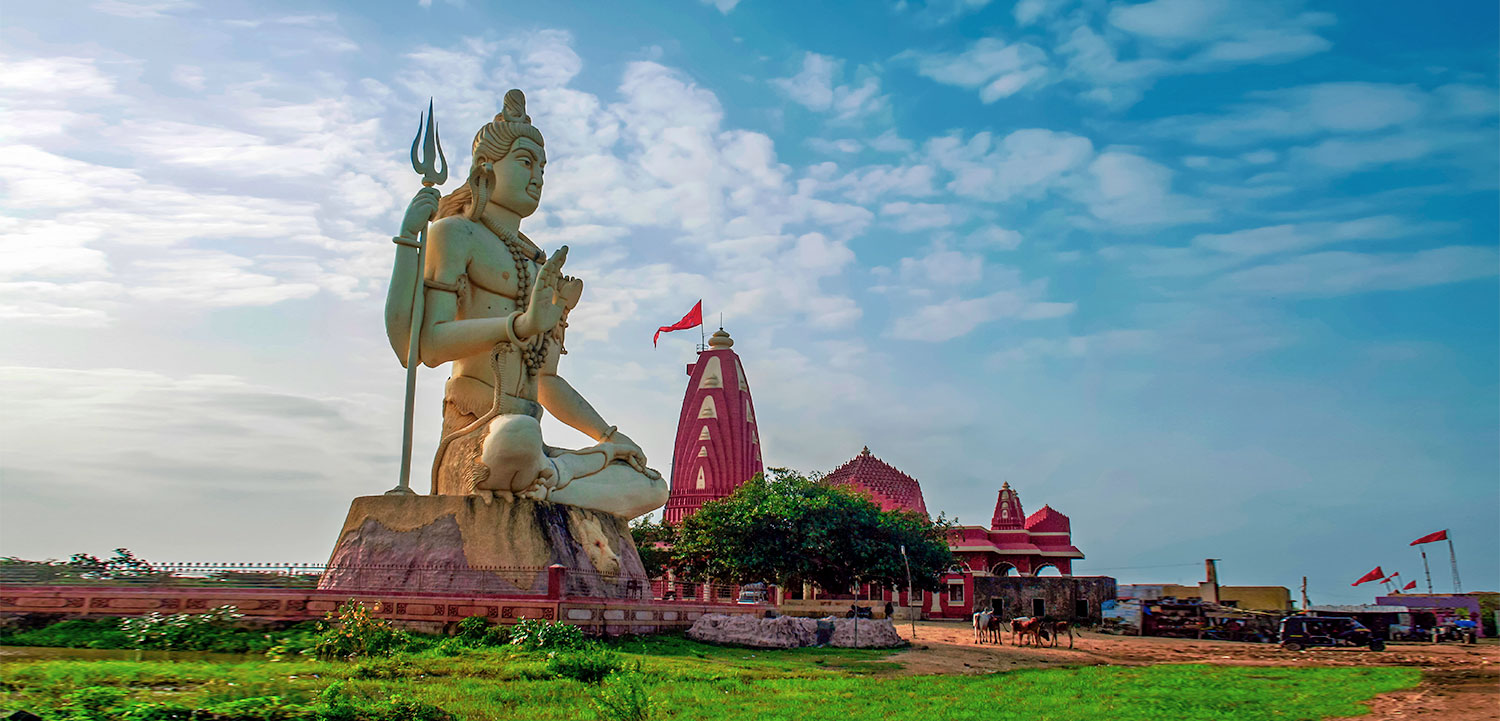
The Nageshwar Temple shows a blend of traditional Gujarati and Somnath temple architectural styles, expressive yet solemn. The temple is made primarily of sandstone and adorned with intricately carved pillars and arches. Its towering shikhara rises prominently over the sanctuary, adorned with intricate carvings depicting Shiva, snakes, and Hindu motifs. The temple courtyard allows pilgrims to circumambulate and participate in collective worship with ease. The main sanctum contains the self-manifested Jyotirlinga, decorated with a silver serpent symbolising Shiva’s protective power. Exquisite relief carvings on the temple walls portray mythological scenes relating to Shiva, the demon Daruka, and the cosmic dance of destruction and creation. The sanctum also features a statue of Goddess Parvati, reinforcing the divine union central to Shaiva tradition.
Daily rituals imbue the temple with sacred energy and community connection. The lingam is bathed with holy water, milk, and honey, accompanied by chanting of mantras and Rudra stotras. Morning, noon, and evening aarti ceremonies fill the temple with the sound of bells, conch shells, and devotional music. Devotees present bilva leaves, flowers, metal snakes, and sacred ash to receive blessings. Unique rituals to remove Sarpa Dosha (snake-related afflictions in horoscopes) are prominent here. The temple is a centre for Nag Panchami celebrations, dedicated to serpent worship. Other festivals include Mahashivaratri, when massive crowds attend a night of continuous worship, and regional fairs drawing thousands. Local priests, artisans, and residents actively participate in temple upkeep and festival organisation, blending devotional fervour with cultural tradition.

Nageshwar Temple is integral to pilgrimages in the coastal and western Gujarat region. Located about 17 km from Dwarka city, it is connected by road and served by Dwarka Airport and railway stations. Pilgrims often combine visits here with Somnath and other nearby spiritual sites for an enriching pilgrimage experience. Accommodations range from basic dharamshalas to guest houses. Local cuisine reflects Gujarati coastal flavours. The temple’s peaceful surroundings, near the Arabian Sea coast, enrich the pilgrim’s spiritual and sensory experience. Devotees recount stories of protection from snakebites, fulfilment of vows, and divine appearances. The temple’s potent energy is frequently described as calming, protective, and transformative.
Nageshwar Temple has deep roots in regional tradition and broader Hindu spirituality. The temple and its legends appear in Gujarati and Sanskrit devotional literature. Folk songs and bhajans composed in praise of Nageshwar are performed during festivals, permeating the local cultural soundscape. Temples in the region incorporate serpent motifs, inspired by Nageshwar’s emblematic snake. Regional artisans produce religious icons and crafts influenced by the temple’s themes. Nageshwar is integral to the spiritual and cultural identity of the Saurashtra region and coastal Gujarat.
Today, Nageshwar Temple thrives as a spiritual centre, adapting to contemporary needs. The temple is managed by local temple trusts and Gujarat’s tourism department, ensuring smooth religious ceremonies and visitor services. There are increasing numbers of national and international visitors, particularly during Nag Panchami and Mahashivaratri, which boosts the local economy while preserving heritage. Conservation and upgrades are ongoing while restoration maintains temple structures and art. Infrastructure improvements accommodate growing pilgrim flows while respecting temple sanctity.
Nageshwar Temple in Dwarka embodies the potent divine power of Shiva as Lord of Serpents, protector from hidden dangers, and bestower of spiritual liberation. Rooted in ancient mythology and resilient history, it stands as a vital pillar among the twelve Jyotirlingas. For devotees and travellers alike, Nageshwar offers a unique blend of faith, myth, culture, and nature—an eternal sanctuary where the cosmic and earthly intertwine in timeless worship.
 Memories and Such