
Continuing on the tour of Bhaktapur…

The Bhairavnath temple is one of the temples in Bhaktapur Durbar Square and is built in the pagoda style. The entry ticket to the Darbar Square also guarantees a visit to this temple. The temple is dedicated to Lord Bhairav, which is supposed to be the most ferocious form of Lord Shiva. Originally, the temple had just one storey which was built by King Jagat Jyoti Malla. However, in 1717, two more storeys were added to this temple by King Bhupatindra Malla. The statue of Lord Bhairav is about 12 feet long and is one of the largest statues in Kathmandu Valley. Thousands of people visit Bhairavnath temple during Bhairav Ashtami or Bhairav Jayanthi as it is celebrated religiously. Even though the temple was slightly damaged during the earthquake in November 2015, it still has retained most of its structure.
The inner part of the temple consists of the head of Lord Bhairav. There are many stories as to why and how Lord Bhairav’s head was cut off and worshipped here. According to one legend, when Sati wanted to marry Shiva, Daksha, Sati’s father, was against it and did not agree on Shiva becoming his son-in-law. One day, Daksha organised a yagna and invited everyone except Shiva. But when Daksha saw Shiva enter the yagna uninvited, Daksha got angry and killed Shiva. Hearing this, Sati jumped into the yagna fire. Shiva became very furious at Daksha and beheaded him. Then he carried Sati’s body out of the fire an danced around the world for days. On seeing this, Vishnu was afraid this would be the cause of the end of the world and transformed Sati’s body into pieces with the help of his Sudarshana Chakra. Shakti peeth emerged wherever her body pieces fell.
Another legend of this temple says that Lord Bhairav was very fond of the Lingo festival that was celebrated in Bhaktapur. It was believed that he used to come to watch the festival in a human form. When the King got to know, he wanted to capture Bhairav and keep him in the city. So, he commanded his ministers and Aachaju to look out for Bhairav. During the Lingo festival, Bhairav was caught and beheaded by Aachaju. Later, Aachaju was found feeling guilty for killing Lord Bhairav and therefore, started to worship Lord Bhairav’s head.
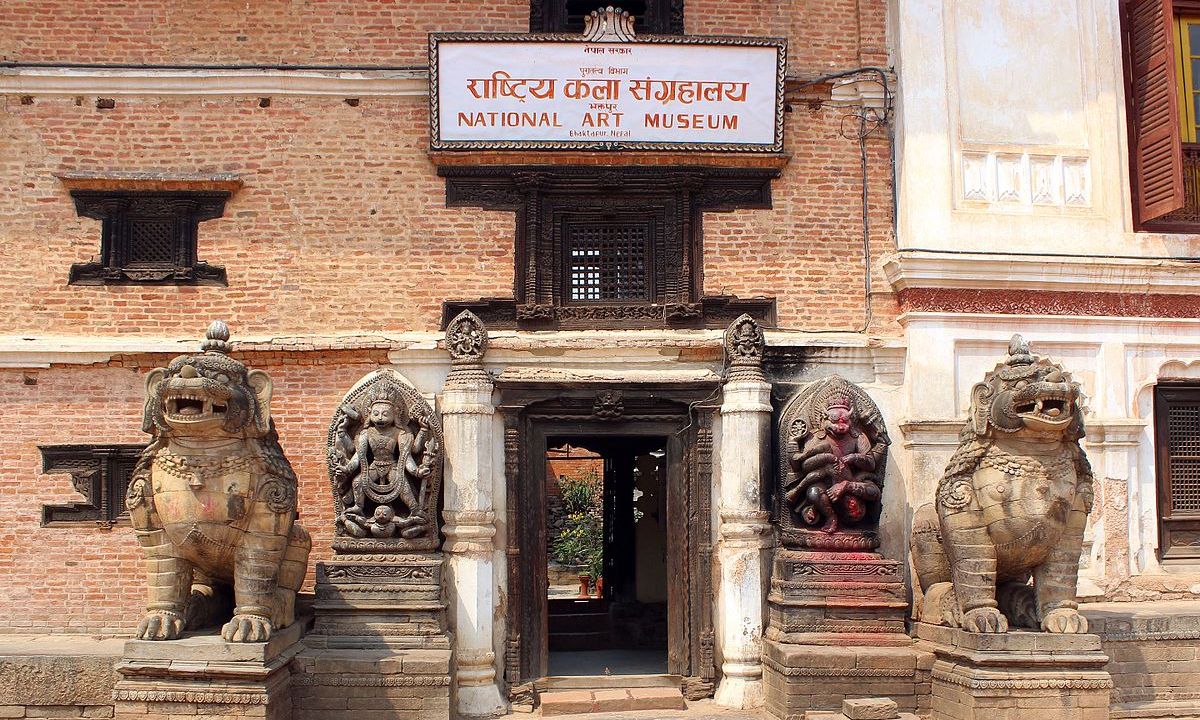
The Lion Gate is a 17th-century structure, created with the belief that it will protect the ancient city. The gate has two large and majestic lion statues placed on either side. The Lion Gate is located inside the Bhaktapur Durbar Square along with several other ancient buildings and artefacts, which is accessible through many well-maintained pathways. Popular belief holds the King to have chopped off the hands of the artisans who built the Lion Gate, an attempt to ensure that to Lion Gate would never be replicated. Sculptures of Lord Bhairava and his consort Goddess Ugrachandi are also installed beside the lion statues, one on each side. The legend emphasises on how significant the structure is for the locals. It thus has immense cultural significance too. A visit to check out its stunning ancient craftsmanship is highly recommended.

The magnificent Taleju temple, located in Durbar Square is dedicated to the clan Goddess of Malla kings, Devi Taleju Bhawani. Traditionally, entry into the temple was restricted to kings but has now been extended to the Hindus. It is believed that the temple was constructed in the shape of a Yantra, a form of Mandala, as was directed by the Devi herself. In the middle of Durbar Square, the temple, set atop a pedestal, is a stunning sight. The Degu Taleju Temple is not open to all. However, on the ninth day of Dasain, Hindu devotees can enter to offer prayers to the Goddess. Everyone else can explore the shrine from the outside.
Before Nepal was founded, Kathmandu was majorly ruled by the Newars who were ardent worshippers of Goddess Taleju who was believed to be an incarnation of Goddess Durga and the guardian of the kings. She is, therefore, considered to be a powerful deity and is worshipped in the region since the 14th century. The place of worship, Taleju Temple, is proof of this history and has been considered as an essential tourist attraction.
The temple is a 35-metre high monument that stands prominently on a pedestal with twelve levels or steps made of stone. On the eighth level, a wall has been built all around the shrine that acts as a compound for the temple. There are 12 smaller shrines in front of this wall. On the other side, there are four more shrines other than the main one. This ancient place of worship has traditional pagoda-style architecture with a three-tiered roof, wooden doors and window frames decorated with intricate carvings.
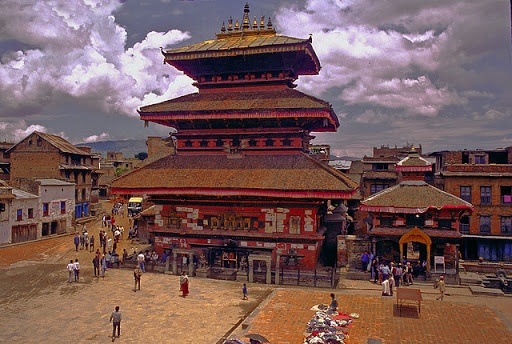
Located right next to the famous Durbar Square, Taumadhi square is often left unnoticed while travelling to Bhaktapur but one has to explore it in order to know about ancient legends and adore ancient architecture. The square is very popular among tourists because of the beautifully structured stones and carvings on the wood. The stone sculptures are a major attraction in this square. It represents the ancient life in Bhaktapur. Also known as Taumadi Tole, it owes much of its reputation to be the site for Nyatapola Temple, the tallest temple in Nepal towering to a height of 30 metres.
The traditional New Year celebrations are held in Taumadi Square. The idols are placed inside the chariots and the chariots are pulled by the youths. This event is followed by a tug of war between Thane and Kone, which determines who will be blessed with a good fortune. Nyatapola temple is the tallest and one of the most popular temples in Nepal. Made out of wood and bricks, this five-storey temple is dedicated to Goddess Siddhi Lakshmi. The structure and architecture of this temple are so strong that it withstood two earthquakes without causing any damage. The Til Madhav Narayan Temple is one of the hidden temples in Taumadi Square. It is often left unnoticed as it is located behind a dance platform. Inside this temple, there is the main double roof of a Narayan Temple. This is one of the oldest in the valley. An inscription in this Narayan temple denotes that it dates back to atleast 1080 AD.
Thimi
Thimi is the fourth largest town in Kathmandu Valley and is situated in between Kathmandu, Lalitpur and Bhaktapur. The Kings of Bhaktapur often called this city as Chhemi which means capable people, thus praising the people of Thimi for their constant and loyal support towards Bhaktapur. The town is a large producer of pottery and masks. Che city is filled with Newari culture and traditions. Thimi is elevated and one must climb up the valley in order to reach the city. The city was originally known as Madhyapur which translates it to ‘middle place’ which is now more often used than Thimi.
Thimi is famous for its pottery art. Chapacho, Nasanani, Tulanani, Pacho and Digutole are some of the famous pottery squares in Thimi. Bisket Jatra is celebrated every year in the mid-April to signify an end of the year and the beginning of a new year according to the calendars of Bikram Samvet. This festival is celebrated in many parts of Bhaktapur in different ways with different rituals. In this event, hundreds of people pull a chariot which consists of Lord Bhairav’s statue or there will be a number of chariots which carries Devthas (God) in them and the chariots are circulated among the youngsters. Nearly 32 chariots are circulated every year. In Bhaktapur Tamadhi, a tug of war is conducted between the upper and lower part of the city, that is, Thane and Kone.
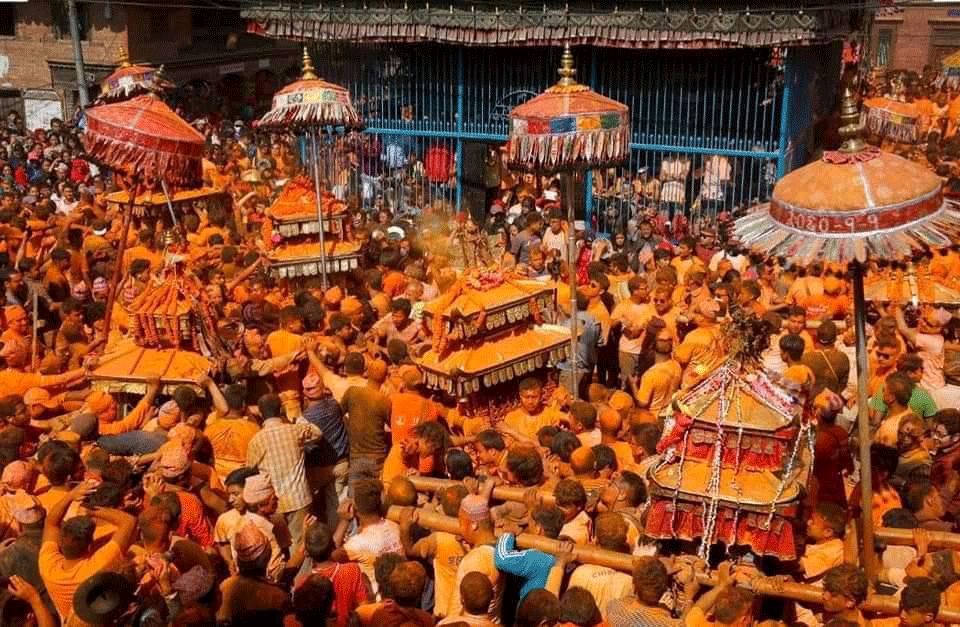
Sindhur Jatra is a festival, when people from different parts of Thimi gather and throw coloured powders at each other while listening to Dhimay music. Neelbarahi Naach is a famous dance festival held every year in Bode. People wear various masks and dance to spiritual music. Masked people are not allowed to talk, eat or even drink water. The Layaku Bhaila Naach is a festival is performed in the month of August. The number of people taking part in this dance festival will be 5, which includes 4 youths and one child. Two out of the four youths wear masks of Lord Bhairab and the other two youths wear the masks of Daagi. The child will be a Jyapuga. The five people dance to a piece of spiritual music. Once they are done dancing, the youths start shivering and lose their sense. According to the dancers, it feels like the god himself is asking them to dance more and more. They will not be aware of what will be happening. The four youth dancers who are dancing, get hypnotised when they hear the sound of Daaga Baja, Bhusya Baja and Ponga Baja.
Thimi holds a tongue piercing ceremony where a person’s tongue is pierced by a 13-inch iron spike and he is told to walk around the city for the whole day. Many people walk around the city with the person with the pierced tongue. In the end, the person (whose tongue is pierced) must give a feast party to the ones who walked around the city with him. The legend behind this festival is that back in the days, there were man-eating demons in Thimi. The people were so haunted by these demons that they could not even walk around in the streets in the daylight. The people in the town one day requested the king to help them. The King immediately ordered the guards to catch the demons and punish them in front of Lord Bhairab. Once the demons were caught, their tounges were bored and they were made to carry 108 Dhani on their shoulders and walk around the city. Hence, this festival is celebrated even now to remind that people will be punished if they cause any trouble to other people or the country.
Dhulikhel
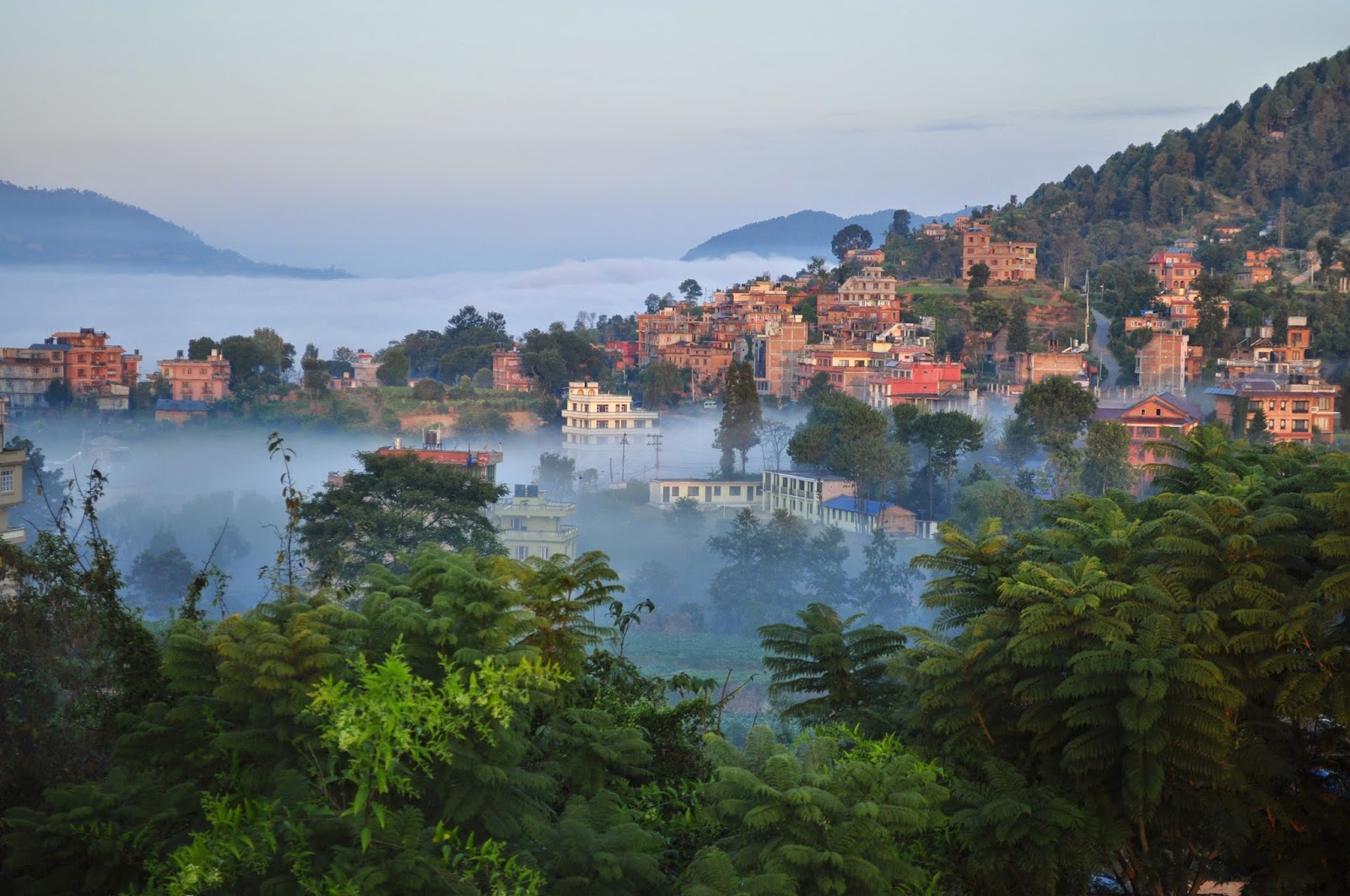
Located in the eastern rim of the Kathmandu Valley, Dhulikhel lies about 31 km east of the capital city at 1550 masl. Dhulikhel is a genuine Newari town and is thus the perfect place to visit if one wants to explore authentic Newari culture and heritage. The mountain bike trip from Dhulikhel to Namobuddha, a favourite tourist activity also why Dhilikhel is popular in the tourism circuit. The three-hour trek passes through the Kali Temple, then through the villages of Kavre and Faskot, and finally through a Tibetan monastery on the hilltop, below which one will find Namobuddha.
Dhulikhel boasts as a major touristic destination with attractions that range from natural scenario to cultural and historical elements. One can view the Himalayan range at an 180 degree panoramic view of mountains including Annapurna, Ganesh Himal, Langtang, Phuribichyachu, Gaurishankar, Lhotse among others. Other natural attractions include locations like Tundikhel plus cultural and religious sites like Bhagawati, Kalidevi, Gita Mandir, Gaukhureshwor.
The name Dhulikhel comes from the Nepal Bhasha word Dhali_Khela, which is the earlier form of the present Nepal Bhasha name Dhau_khyo. Dhali or Dhau means yogurt and Khela or Khyo means field in Nepala Bhasha. It is said to have come from the Lichchhi name Dhawalasrotapura. Dhulikhel was the eastern border of ancient Nepal Mandala, and it was one of the territories of Bhaktapur kingdom. Dhulikhel was among the last places to be annexed to the country by the Gorkha Kingdom that was being expanded by Prithvi Narayan Shah.
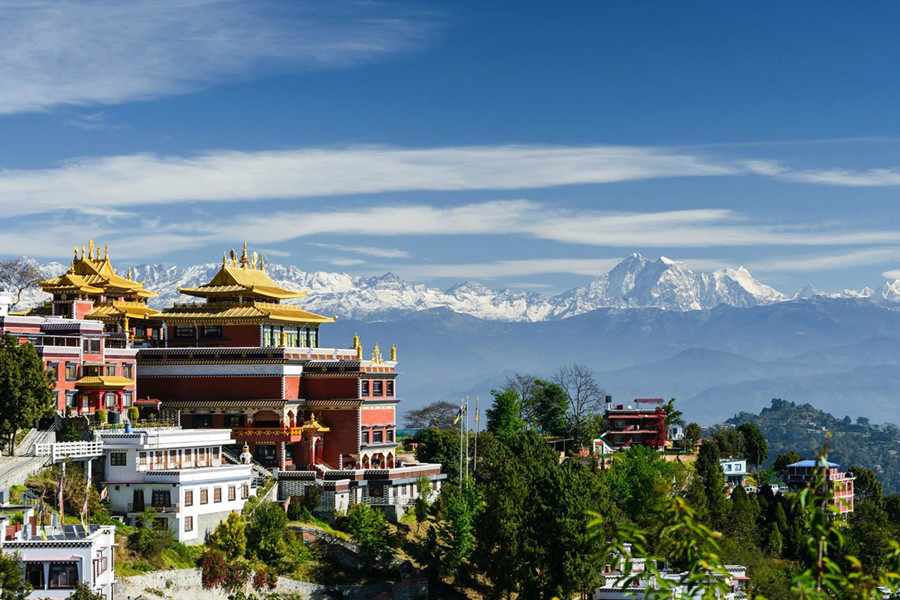
Dhulikhel is a major part of the Kathmandu Valley Cultural Trekking Trail. This five-day trail provides a short trek with Himalayas in the background and showcases a number of cultural highlights and rich biodiversity. Visits to hill stations like Chisapani, Nagarkot along with Dhulikhel will be less challenging than going to the Himalayan routes but with equal thrill and rewards. Dhulikhel is one of the starting or the middle points for hiking routes. These include walks to Panauti, Kavre village, Opi village as well as to Hazaar Sindhi all of which take as long as a half day. A longer walking route includes trail to Nagarkot and Namobuddha. The town also forms one of the points for Mountain Biking with challenging terrains as well as the site of people with rich ethnic culture and the scenery of mountain ranges along the way. Routes include Dhulikhel-Panauti, Dhulikhel-Khopasi, Dhulikhel-Palanchowk-Dhulikhel, Dhulikhel-Namobuddha-Dhulikhel.
At Dhulikhel, one can also do activities like bird and butterfly watching from various points. Hazaar Sindhi, Thulochaur Kavre, and Gosaikunda forests has as many as 72 species of birds that can be sighted. Dhulikhel is also the perfect place to stop to spend the night on the way and back from Tibet. The oldest area in the town is located in the southern end comprises of old Newari houses adorned with stunning windows and beautifully carved doors.

There are also located numerous temples in the town, including Hindu temples and a few Buddhist stupas. The Narayan Temple located in the centre of the old town with its yellow metal roofs is dedicated to Lord Krishna while the Harisidhhi Temple, also located nearby, boast of intricate wood carvings. Both the temples are fronted by two Garudas.The Bhagwati Temple, the Gaukhureshwor Mahadev Temple and the Bhagwati Kali Temple are other temples that must be visited.
Dhulikhel has been for centuries an important trading centre on the commercial route linking Nepal to Tibet. The Nepali people travel to Tibet to bring salt and gold and Tibetans, with their flocks of sheep enter Nepal during Dashain to purchase chilies and other daily necessities. Previously, walking between Kathmandu and Dhulikhel used to be a day’s walk which was easily done by the Tibetans, with an overnight stay at Dhulikhel, but after a motorable road was constructed in 1965, Dhulikhel got a face lift and developed as a tourist destination. The snowfed mountains seen from Dhuklikhel are a fine panoramic view. When a blue haze covers the lower portion of the mountains, they seem to be floating in the air. Geographically, the plains rise gradually up to the green mountains and further into the snow-capped Himalayas. The panorama offers a view of the Himalayan ranges stretching from Mount Annapurna in the far west to Mount Karolung in the far east. More than twenty Himalayan peaks including Mt. Annapurna, Mt. Ganesh Himal, Mt. Langtang, Mt. Phuribichyachu, Mt. Gaurishanker, Mt. Lhotse, and many others can be seen from Dhulikhel.

Panauti, another historical and culturally rich town located to the south east of Dhulikhel. One can reach Panauti by bus via Banepa or walk there along the trails of Namobuddha or walk along the DBP corridor. The town hosts one of the biggest festivals of Nepal, Makar Mela held every 12 years. Namobuddha is where a prince sacrificed himself for a hungry and sick tigress. This story is etched in a stone in the town. Palanchowk Bhagwati lies about a half-hour ride from Dhulikhel. The shrine is dedicated to a goddess of the same name, who is 18-armed and is the goddess of protection from danger and misfortune. The temple dates back to 503 AD. The Chandeshwori Temple is located around 1 km northeast of Banepa, and commemorates the mother goddess Chandeshwori who defeated the demon Chanda. Nala is one of the seven villages established by Ari Malla about 700 years ago, Nala boasts of temples of Karunamai Lokeshwor and Bhagawati. Located 4 km north west of Banepa, the valley is fertile and produces a number of vegetables. It can be reached from Dhulikhel through Gosaikunda Hill, Opi village and Sumara. Deriving from local language meaning village of cows, Sanga is gateway to Kavrepalanchowk district. It now has a massive statue of Lord Shiva which is 143 ft tall.

Nuwakot
Located on the banks of the Trishuli and Tandi Rivers, Nuwakot lies around 60 km west of Kathmandu, and is known as a historic town which was the capital of the Valley in the days before the unification of Nepal by Prithvi Narayan Shah. For more than 1,000 years the hilltop had served as a lookout and fort or kot guarding the western entrance to Kathmandu Valley. Nuwakot served as an important trading hub for the Malla kings of the Valley, and was along a major transit route used for trade between India and Tibet, via Kerung. The name comes from the belief that there are nine or nawa hills in the region, each of which stands for a sacred site or kort, dedicated to a particular deity. Together they look after the valley, giving Nuwakot district the name city of nine hills. This makes the Nuwakot hill the main fort including other eight forts: Malakot, Simalkot, Bhairabkot, Belkot, Kalikot, Salyankot, Dhuwankot and Pyaskot in its surrounding area, collectively named as Nawakotta or nine forts.
Because of its significance, the fort was a target for conquest by neighboring kingdoms, including the Kingdom of Gorkha. The founder of modern Nepal, Prithvi Narayan Shah attacked and finally captured the hill fort in a surprise attack on September 26, 1744. The Malla king Jaya Prakash Malla made one final attempt to get victory over Nuwakot the following year after Malla forces under Kasi Ram Thapa Magar, the chief commander of Kantipur and Nuwakot, had defeated the Gorkha army at Naldum. However, the Gorkha army was able to repel the attack and secured Nuwakot as a permanent fort under Gorkha control. Nuwakot would afterwards serve as one of the key staging grounds for the eventual conquest of all three Malla kingdoms in the Kathmandu Valley, viz. Kathmandu, Patan, and Bhadgaon, which fell between 1768 and 1769 to Prithvi Narayan Shah.
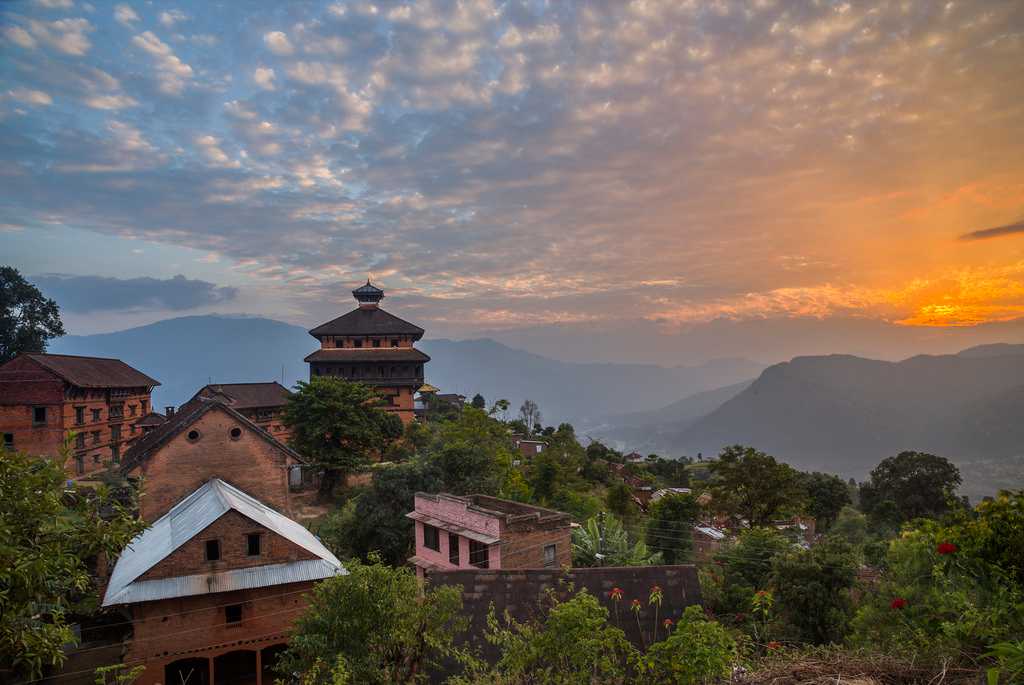
Nuwakot has featured in several prominent moments of Nepali history. Chinese forces under General Fu-k’ang-an nearly captured Nuwakot during the Nepal-China conflict in 1792. It was also the location of the first meeting between the British envoy Captain William J. Kirkpatrick and the acting Regent Bahadur Shah in 1793, shortly after the war with China ended.

The current seven-story Nuwakot Durbar and surrounding complex was expanded in the 18th century by Prithvi Narayan Shah to support the growing trade routes linking Kathmandu with India and Tibet. Built in the Malla style, the architecture of the complex is divided into the main palace, the Bhairab Temple, as well as other temples and shrines. In 2008 the site was submitted for consideration as a UNESCO World Heritage Site. Some of the temple complexes and buildings were damaged in the 2015 Nepal earthquake.
From afar, the block fortress of Nuwakot perched atop a hill looks like a painting on canvas. The road winding up to the fortress is dusty and offers a spectacular view of the valley. There is a barrack of Nepal army in front of the palace, maintaining the tradition of it being a strong holdfast. The Nuwakot fortress on the other side still stands with all its seven storeys of Newari architectural glory but with only a fraction of its strength. In front of the citadel, a beautifully curated garden marks the path to the old barracks and prison cells called Garad Ghar and the dance hall namely Ranga Mahal. They too are in a state of ruin, but the once-prominent magnificence can be observed from whatever is left. There are a couple of Vishnu shrines right in front of them.

Nearby stands the Bhairav Temple, dedicated to Lord Shiva, in his incarnation as the god of annihilation, the destructive manifestation of Shiva. The temple has similar red brick construction and a traditional Newari origin and is looked after by the local community. The smear marks of sindoor or vermillion on the ancient carved door is a mark of how revered they consider the shrine to be. A bell hangs in front of it for the devotees to pay their respects. Beyond the temple, the edge of the land offers a breathtakingly beautiful view of the western part of the valley, covered in small toyland-ish villages and rice terraces.

There is another small shrine in the region, but it is not in use anymore. Right before the Nuwakot fortress there lies the Taleju Temple on a small hillock. Built in around 1564, this is the temple for goddess Taleju, whom the Malla dynasty followed. The local tradition of worshipping a young girl as goddess Kumari Devi comes from this deity – Kumari is considered as a reincarnation of Taleju.
The Durbar Square turns into a festive arena full of colours and celebrations during the Sindure Jatra festival. It is one of the main festivals of Nuwakot, celebrated during mid-April. It marks the Nepali New Year and corresponds with the local New Year celebrations of many Indian ethnicities like Bengali, Punjabis and Tamils. It is also a harbinger of spring. The festival is celebrated by worshipping the deity of Goddess Bhairabi on a wooden chariot, singing and dancing to traditional music.

Being close to Langtang Himal, opportunities for hiking, trekking and mountain biking are within proximity of the town. In fact, the one hour climb from the bustling Trisuli Bazaar down the hill up to Nuwakot is a route that many tourists opt for.
For those looking for an even quieter mountain retreat at an even higher altitude and perfect sunrise view, Kakani is the perfect location. It is famous for strawberry farming and the memorial park for the victims of the 1992 Bangkok-Kathmandu plane crash.
 Memories and Such