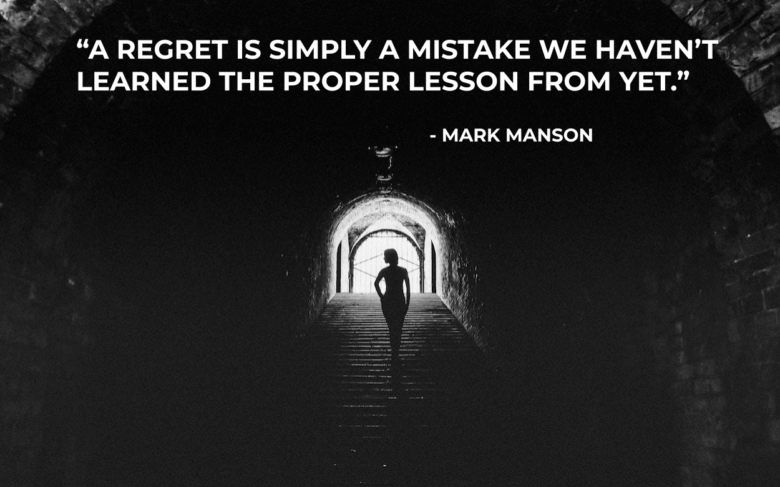
The Psychology of Regret: How to Make Decisions You Won’t Regret

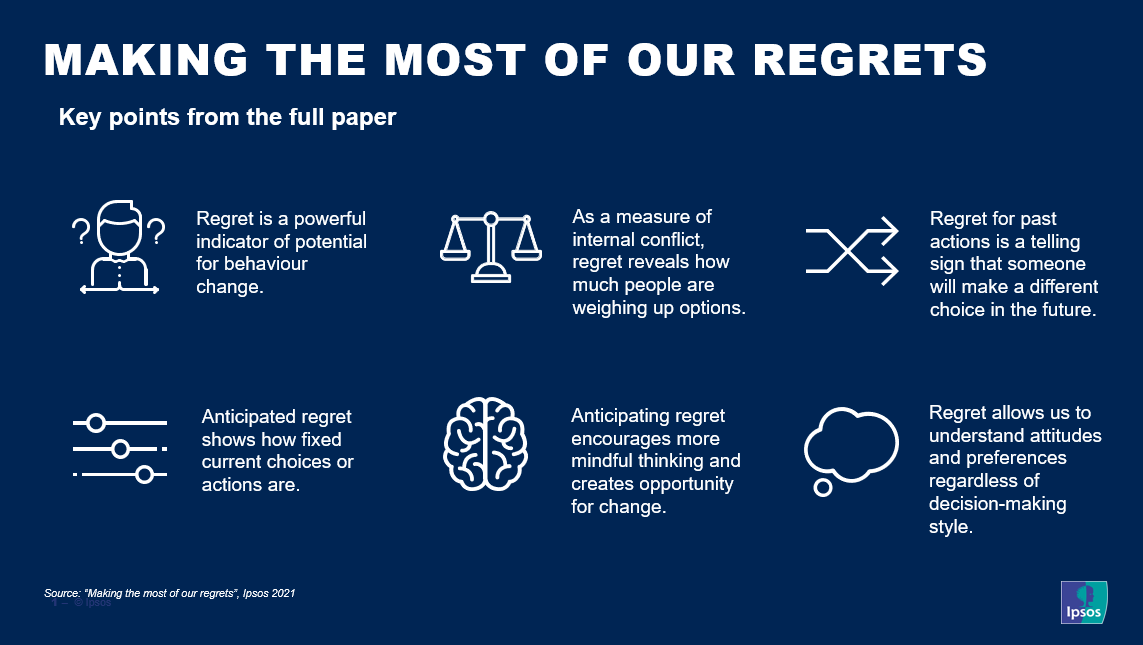
Regret is a complex and multifaceted emotion that plays a significant role in the decision-making process and one’s overall well-being. It involves the cognitive and emotional recognition that something desirable did not occur, often due to our actions or inactions. While regret can be challenging to grapple with, understanding its psychology and learning strategies to make better decisions can help us lead more fulfilling lives with fewer regrets.

Regret is an inevitable part of the human experience, particularly in modern times when we are faced with many choices. This emotion can range from mild and fleeting to intense and long-lasting, potentially haunting individuals for years or even a lifetime.

Regret is often characterised by several key components. Self-reproach is a sense of responsibility for the negative outcome, while sadness is about the emotional distress over what could have been. Ruminations are persistent thoughts about the decision and its consequences, and a desire for change is a wish to undo or alter the past decision. Regret can be triggered by both actions taken and opportunities missed. Interestingly, research suggests that regrets related to inaction—the roads not taken—tend to be more persistent and harder to overcome than those stemming from actions.

While regret is a natural and sometimes beneficial emotion, excessive or chronic regret can have significant negative impacts. Regret has been linked to anxiety, depression, and sleep problems. It can increase stress levels and negatively affect hormones and immune systems. Regret, which is also the fear of future regret, can lead to decision paralysis or overly cautious choices. However, when managed effectively, regret can also serve as a catalyst for personal growth and improved decision-making.

To better understand regret and how to manage it, it’s crucial to explore the psychological mechanisms at play.

Several cognitive biases can influence our experience of regret. Negativity bias is the tendency to focus more on negative experiences than positive ones. In black-and-white thinking, one views situations as entirely good or bad, with no middle ground. Catastrophising is assuming the worst possible outcome in a given situation. These biases can amplify feelings of regret and make it more difficult to move past negative experiences.

Regret is closely tied to counterfactual thinking – the process of imagining alternative outcomes to past events. While this type of thinking can sometimes lead to rumination and increased distress, it also plays a crucial role in learning from our experiences and improving future decision-making.

Not everyone experiences regret in the same way. Factors that can influence an individual’s propensity for regret include perfectionism, where those with perfectionistic tendencies may be more prone to regret. Maximisers who seek optimal outcomes tend to experience more regret than satisficers who are content with good enough results. The more opportunities one perceives, the greater the potential for regret.

While it’s impossible to completely eliminate regret from our lives, there are several strategies we can employ to make better decisions and minimise future regrets.

Embrace Self-Compassion: Practicing self-compassion is crucial in managing regret and making better decisions. This involves acknowledging that everyone makes mistakes and experiences regret, treating yourself with kindness and understanding, and using past experiences as learning opportunities rather than sources of self-criticism.

Develop Emotional Intelligence: Improving your emotional intelligence can help you better understand and manage your feelings of regret. Practice identifying and naming your emotions accurately, learn to accept and sit with uncomfortable emotions rather than avoiding them, and use emotional awareness to inform your decision-making process.

Utilise Counterfactual Thinking Constructively: Instead of getting stuck in unproductive rumination, use counterfactual thinking to your advantage. Analyse past decisions objectively to identify areas for improvement, focus on controllable factors that you can change in the future, and use insights gained from this process to inform future decisions.

Implement a Structured Decision-Making Process: Adopting a systematic approach to decision-making can help reduce the likelihood of future regrets. Clearly define the decision to be made, gather relevant information and consider multiple perspectives, identify and evaluate potential alternatives, make a choice based on your values and priorities, implement your decision and monitor the results, and reflect on the outcome and learn from the experience.

Practice Mindfulness: Incorporating mindfulness into your decision-making process can help you make more thoughtful choices. Stay present in the moment and avoid getting caught up in past regrets or future anxieties, pay attention to your thoughts and feelings without judgment, and use mindfulness techniques to reduce stress and enhance clarity when facing important decisions.

Cultivate a Growth Mindset: Adopting a growth mindset can help you view regret as an opportunity for learning and personal development. Embrace challenges as chances to grow and improve, see failures and mistakes as valuable learning experiences, and focus on the process of improvement rather than fixating on outcomes.

Consider Long-Term Consequences: When making decisions, try to look beyond immediate gratification and consider the long-term implications. Visualise how you might feel about your choice in the future, consider how the decision aligns with your core values and life goals, and use techniques like the “10-10-10” rule: How will you feel about this decision in 10 minutes, 10 months, and 10 years?

Seek Multiple Perspectives: Gathering input from others can help you make more well-rounded decisions. Consult with trusted friends, family members, or mentors, seek out diverse viewpoints to challenge your assumptions, and be open to constructive feedback and alternative perspectives.

Learn to Forgive Yourself: Developing the ability to forgive yourself for past mistakes is crucial in managing regret. Acknowledge that you did the best you could with the information and resources available at the time, practice self-forgiveness exercises, such as writing a letter of forgiveness to yourself, and use the REACH model: Recall the hurt, Empathise, Altruistically offer forgiveness, Commit publicly, and Hold onto forgiveness.

Embrace Uncertainty and Imperfection: Accepting that life is inherently uncertain and that perfect decisions are rarely possible can help reduce regret. Recognise that some level of risk is inevitable in decision-making, focus on making good enough decisions rather than striving for perfection, and embrace the idea that mistakes and regrets are part of the human experience and can lead to personal growth.

While regret is often viewed negatively, research suggests that people value regret more than many other negative emotions. This seemingly paradoxical finding highlights the potential benefits of regret when managed effectively. Regret can serve as a powerful motivator for personal development and behaviour change. The experience of regret can inform future choices, helping us avoid similar mistakes. Reflecting on regrets can provide valuable insights into our values and priorities. The counterfactual thinking associated with regret can improve our ability to identify and address issues. Sharing regrets can foster empathy and strengthen relationships.

To make the most of regret’s potential benefits, reflect on the lessons learned from past regrets, identify patterns in your regrets to uncover areas for personal growth, use regret as motivation to take positive action in the present, and share your experiences with others to gain new perspectives and foster connection.

Regret is a complex emotion that plays a significant role in our lives and decision-making processes. While it can be challenging to experience, understanding the psychology of regret and implementing strategies to make better decisions can help us lead more fulfilling lives with fewer regrets. By embracing self-compassion, developing emotional intelligence, utilising counterfactual thinking constructively, and implementing structured decision-making processes, we can learn to navigate life’s choices more effectively. By cultivating a growth mindset, considering long-term consequences, seeking multiple perspectives, and learning to forgive ourselves, we can transform regret from a source of distress into a catalyst for personal growth and improved decision-making.

The goal is not to eliminate regret entirely—as it is a natural and sometimes beneficial part of the human experience—but to develop a healthier relationship with this emotion. By doing so, we can make decisions that align more closely with our values and aspirations, leading to a life of fewer regrets and greater satisfaction. Perfection is not attainable, and some level of regret is inevitable. But, by maintaining a balanced perspective, we can learn to make peace with our regrets and use them as stepping stones toward a more fulfilling future.

In My Hands Today…

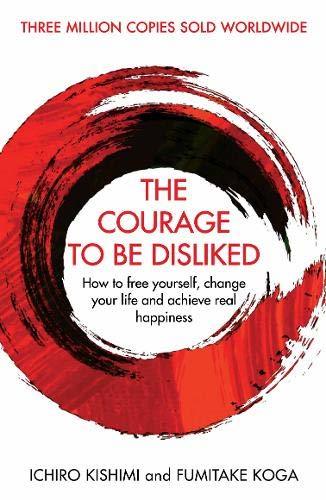
The Courage to Be Disliked: How to Free Yourself, Change your Life and Achieve Real Happiness – Ichiro Kishimi, Fumitake Koga

The Japanese phenomenon that teaches us the simple yet profound lessons required to liberate our real selves and find lasting happiness.

The Courage to Be Disliked shows you how to unlock the power within yourself to become your best and truest self, change your future and find lasting happiness. Using the theories of Alfred Adler, one of the three giants of 19th-century psychology alongside Freud and Jung, the authors explain how we are all free to determine our own future free of the shackles of past experiences, doubts and the expectations of others. It’s a philosophy that’s profoundly liberating, allowing us to develop the courage to change, and to ignore the limitations that we and those around us can place on ourselves.

In My Hands Today…

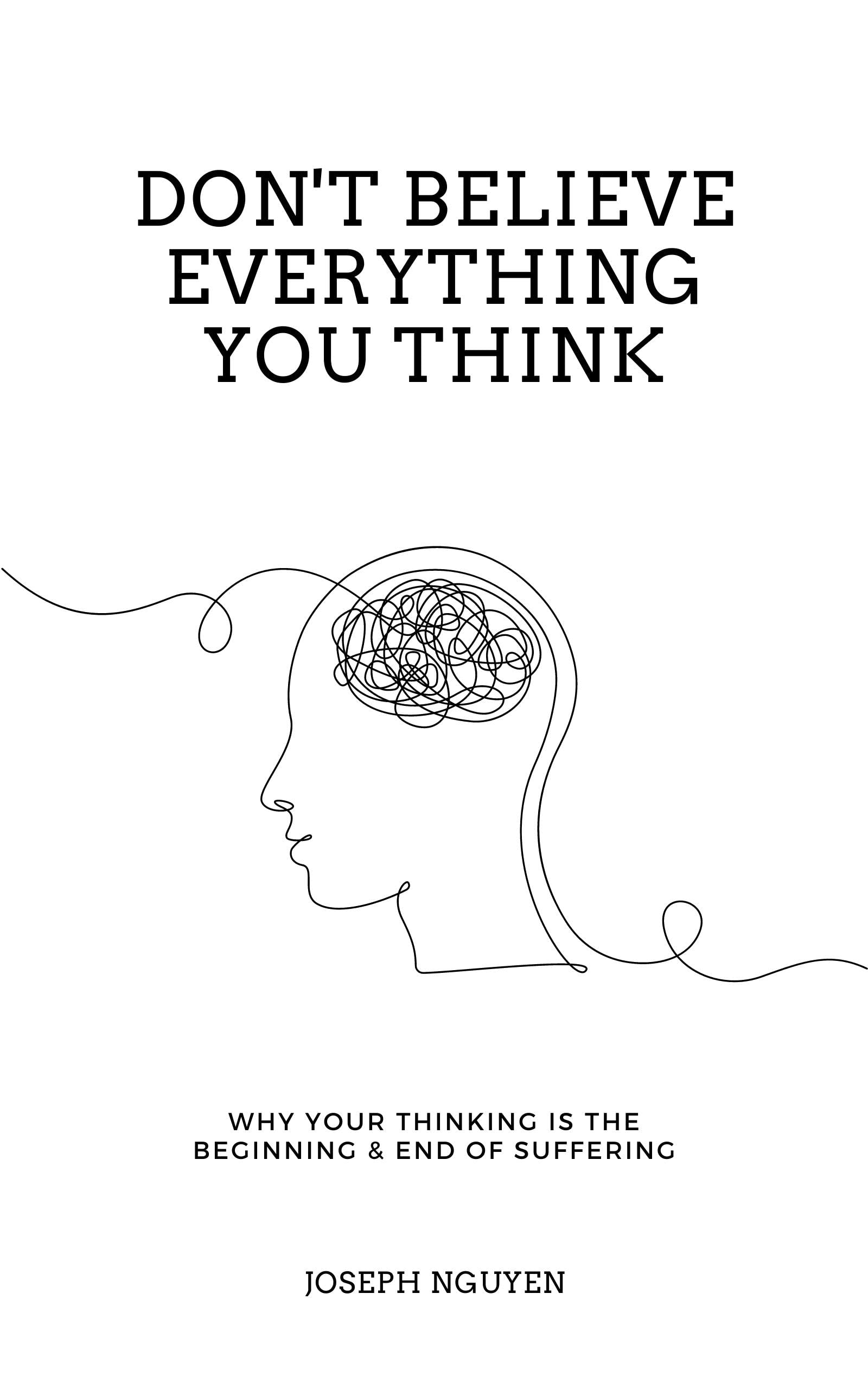
Don’t Believe Everything You Think – Joseph Nguyen

In this book, you’ll discover the root cause of all psychological and emotional suffering and how to achieve freedom of mind to effortlessly create the life you’ve always wanted to live.

Although pain is inevitable, suffering is optional.

This book offers a completely new paradigm and understanding of where our human experience comes from, allowing us to end our own suffering and create how we want to feel at any moment.

No matter what has happened to you, where you are from, or what you have done, you can still find total peace, unconditional love, complete fulfillment, and an abundance of joy in your life.

No person is an exception to this. Darkness only exists because of the light, which means even in our darkest hour, light must exist.

Within the pages of this book, contains timeless wisdom to empower you with the understanding of our mind’s infinite potential to create any experience of life that we want no matter the external circumstances.

Don’t Believe Everything You Think is not about rewiring your brain, rewriting your past, positive thinking or anything of the sort.

We cannot solve our problems with the same level of consciousness that created them. Tactics are temporary. An expansion of consciousness is permanent.

In My Hands Today…

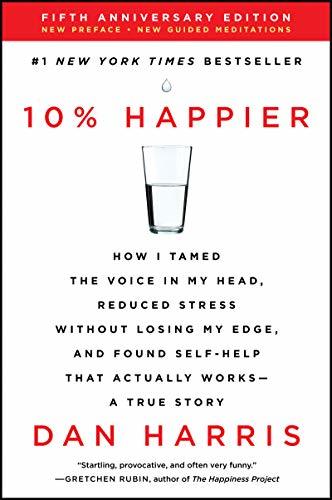
10% Happier: How I Tamed the Voice in My Head, Reduced Stress Without Losing My Edge, and Found Self-Help That Actually Works: A True Story – Dan Harris

Nightline anchor Dan Harrisembarks on an unexpected, hilarious, and deeply skeptical odyssey through the strange worlds of spirituality and self-help, and discovers a way to get happier that is truly achievable.

After having a nationally televised panic attack, Dan Harris knew he had to make some changes. A lifelong nonbeliever, he found himself on a bizarre adventure involving a disgraced pastor, a mysterious self-help guru, and a gaggle of brain scientists. Eventually, Harris realized that the source of his problems was the very thing he always thought was his greatest the incessant, insatiable voice in his head, which had propelled him through the ranks of a hypercompetitive business, but had also led him to make the profoundly stupid decisions that provoked his on-air freak-out.

Finally, Harris stumbled upon an effective way to rein in that voice, something he always assumed to be either impossible or meditation, a tool that research suggests can do everything from lower your blood pressure to essentially rewire your brain. 10% Happier takes readers on a ride from the outer reaches of neuroscience to the inner sanctum of network news to the bizarre fringes of America’s spiritual scene, and leaves them with a takeaway that could actually change their lives.

Impact of Social Media on Our Lives

Social media has become an integral part of modern life, shaping how we communicate, share information, and perceive the world around us. With the advent of platforms like Facebook, Instagram, Twitter, and TikTok, social media has transformed from a mere communication tool to a dominant force influencing various aspects of our lives.

Social media usage has skyrocketed over the past decade. According to recent statistics, approximately 69% of adults and 81% of teens in the U.S. engage with social media platforms regularly. This widespread adoption has made it increasingly difficult for individuals to disconnect from these platforms, leading to concerns about addiction and dependency.

As of 2024, there are over 2.5 billion social media users in the Asia Pacific region, making it the largest market globally for social media engagement. Approximately 97.3% of social network users in Asia access these platforms via mobile devices, spending an average of two to four hours daily on social media. Countries like South Korea lead with a social media penetration rate of 93.4%, followed by Hong Kong at 86.2%. India ranks high with a substantial user base, being the second-largest country in terms of absolute numbers of social media users, following China.

In Singapore, the social media penetration rate is 85%, ranking it 10th globally for social media adoption relative to its total population. The number of active social media users in Singapore is approximately 4.3 million, and Singaporeans spend an average of 2 hours and 14 minutes daily on popular social media platforms like Facebook, Instagram, and YouTube, with users averaging about 6.9 different social media accounts, which is higher than the global average of 6.7 accounts per user.

India has a rapidly growing number of social media users, with estimates suggesting that there are around 500 million active users, making it one of the largest markets for social media globally. Indian users are increasingly engaging with platforms like Facebook, Instagram, and WhatsApp, and the country also sees significant use of local platforms. Users in India spend an average of about 2 hours and 30 minutes daily on social media with the majority of users falling within the age group of 18 to 34 years, but older demographics are also becoming more active on these platforms.

Social media is designed to be engaging and addictive. Platforms utilise algorithms that promote content based on user interests, often leading to excessive scrolling and prolonged usage. This engagement activates the brain’s reward centre by releasing dopamine, reinforcing the behaviour and making it challenging for users to moderate their consumption.

Despite its challenges, social media offers several benefits that enhance our lives. Social media provides a platform for individuals to connect with friends and family across distances. It fosters community building by allowing users to join groups based on shared interests or experiences. This connectivity can be especially beneficial for marginalised groups seeking support and understanding. Social media serves as a powerful tool for disseminating information quickly. It has become a primary source for news updates and educational content. Users can access resources related to health, wellness, and mental health support through various platforms. For instance, many people find comfort in sharing their health journeys on platforms like Instagram or TikTok, creating spaces for peer support. Platforms like Instagram and TikTok also encourage creativity through visual storytelling. Users can express their thoughts, feelings, and artistic talents in innovative ways. This self-expression can enhance individual identity and foster a sense of belonging within online communities.

While social media has its advantages, it also presents significant drawbacks that can adversely affect users’ lives. Numerous studies have linked social media use to increased rates of anxiety, depression, and other mental health issues. A systematic review indicated that adolescents who spend more than three hours daily on social media are at a higher risk for negative mental health outcomes. The constant exposure to curated images can lead to feelings of inadequacy and low self-esteem, particularly among young women who may compare themselves unfavourably against unrealistic beauty standards.

The anonymity provided by social media can lead to harmful behaviours such as cyberbullying. Victims often experience severe emotional distress due to online harassment, which can contribute to long-term psychological issues. The prevalence of negative interactions online underscores the need for better moderation and support systems within these platforms.

Excessive social media use can lead to physical health issues as well. Sedentary behaviour associated with prolonged screen time contributes to obesity and related health problems. Additionally, disrupted sleep patterns due to late-night scrolling can further exacerbate mental health challenges among users.

Social media’s influence extends beyond individual mental health and affects social interactions. Social media has altered how we communicate with one another. While it facilitates instant communication, it may also diminish face-to-face interactions. Many individuals report feeling more comfortable communicating online than in person, which can hinder the development of deep interpersonal relationships. The curated nature of social media often leads users to experience FOMO — anxiety over missing out on experiences shared by others online. This phenomenon can lead to feelings of isolation and dissatisfaction with one’s life circumstances.

The impact of social media on our lives is profound and multifaceted. While it offers significant benefits in terms of connectivity and access to information, it also poses serious challenges related to mental health, physical well-being, and social interactions. As society continues to navigate this digital landscape, it is essential to strike a balance between harnessing the positive aspects of social media and effectively addressing its negative consequences. By fostering awareness around responsible usage and advocating for necessary changes within these platforms, we can work towards a healthier relationship with social media that enriches our lives rather than detracts from them.

Social media has profoundly influenced our perception of reality, shaping how we view ourselves, others, and the world. This influence is multifaceted, encompassing positive and negative aspects that impact our mental health, self-perception, and social interactions. One of the most significant ways social media affects our perception is through the presentation of curated lives. Users often share only their “highlight reels,” showcasing moments of joy, success, and beauty while omitting the mundane or challenging aspects of life. This selective sharing creates a distorted view of reality where everyone appears to be living a perfect life. As Dr. Jazayeri notes, this phenomenon can lead individuals to compare themselves unfavorably against these idealized portrayals, fostering feelings of inadequacy and unhappiness.

The use of filters and photo editing tools further exacerbates this distortion. Social media platforms like Instagram and Snapchat allow users to present an enhanced version of themselves that may not reflect their true appearance. This constant exposure to filtered images can skew perceptions of beauty and success, particularly among adolescents who are still forming their identities. Research indicates that when teens encounter these unrealistic standards, they may struggle with self-esteem issues and body image dissatisfaction.

Social media’s impact on self-perception is profound. Users often develop a digital persona that may differ significantly from their real-life identity. A study from Cornell University highlights discrepancies between how individuals perceive themselves and how others perceive them based on their social media posts. This misalignment can lead to feelings of alienation and confusion about one’s identity, as individuals grapple with the difference between their online persona and their authentic self.

The psychological ramifications of social media use are increasingly concerning. Studies have linked excessive social media engagement with anxiety, depression, and loneliness. For instance, a study found that participants who limited their social media use reported significant reductions in feelings of loneliness compared to those who continued their habits. The constant need for validation through likes and comments can create a cycle of dependency that undermines mental well-being.

Beyond personal identity and relationships, social media also influences collective perceptions of right and wrong. The rapid spread of information—both factual and misleading—can shape public opinion in ways that may not align with reality. Social media platforms serve as echo chambers where users are exposed primarily to viewpoints that reinforce their existing beliefs, potentially leading to polarization and misinformation.

As we look toward the future, several trends may shape the evolution of social media. There is growing advocacy for stricter regulations on social media platforms regarding user safety and mental health considerations. Initiatives may include implementing warning labels about potential mental health risks associated with excessive use or harmful content exposure. There is a growing recognition of the need for digital literacy education that empowers users to critically assess the content they consume and share. By fostering awareness about the curated nature of social media, individuals may become more adept at distinguishing between reality and illusion.

Educating users about responsible social media use is crucial in mitigating negative impacts. Digital literacy programs could empower individuals to evaluate content and recognise unhealthy patterns in their usage critically. As user preferences shift, new platforms may emerge that prioritise user well-being over engagement metrics. These platforms could focus on fostering genuine connections rather than promoting addictive behaviors.

Social media companies are beginning to face scrutiny regarding their role in shaping perceptions. Efforts to mitigate harmful effects—such as Instagram’s suppression of likes—are steps toward creating healthier online environments. However, these measures must be part of broader strategies that prioritize user well-being over engagement metrics. As users become more aware of the impacts of social media on their lives, there may be a shift towards more mindful usage patterns. This could involve setting boundaries around social media consumption or seeking out platforms that promote authenticity over perfection.

The influence of social media on our perception of reality is profound and complex. While it offers opportunities for connection and self-expression, it also poses significant challenges related to mental health, self-perception, and social dynamics. As we move forward in this digital age, it is crucial to cultivate a balanced relationship with social media—one that recognizes its potential for both positive engagement and detrimental distortion. By fostering awareness and encouraging responsible usage, we can work towards a healthier interaction with these powerful platforms that enrich our understanding rather than diminish it.