Travel Bucket List: India – Punjab Part 6

After Jalandhar and Kapurthala, let’s move on to the last post in this series on the state of Punjab. Today’s two cities are Pathankot and Amritsar.
Pathankot
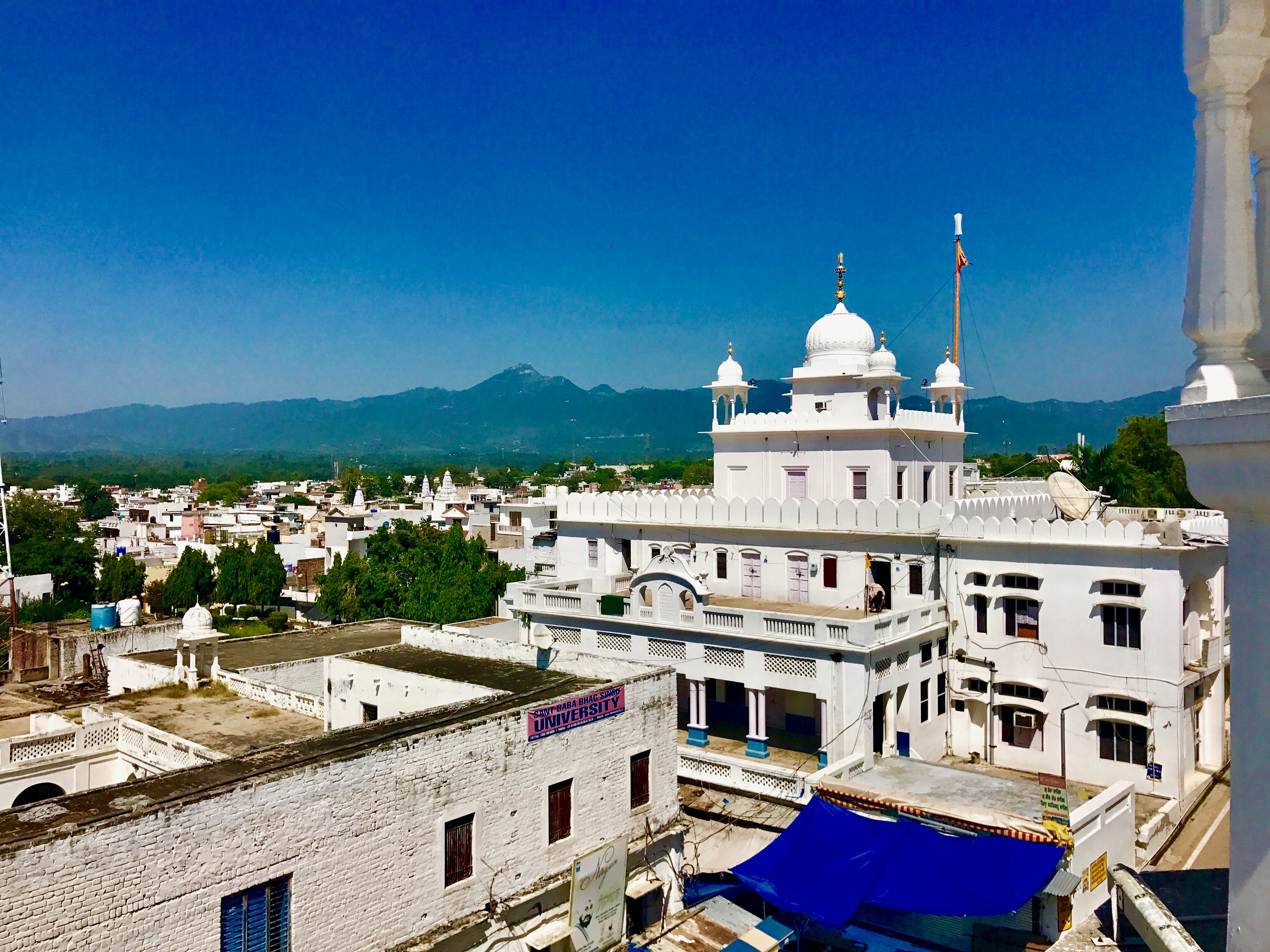
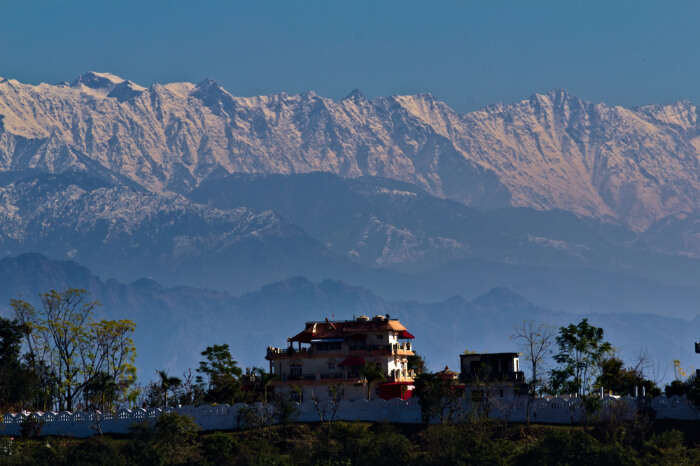
Located about 130 km north of Kapurthala and on the border between Punjab and Himachal Pradesh, and close to the border between Punjab and the union territory of Jammu & Kashmir, Pathankot is a border district, sharing an international border with Pakistan on its west. Due to its location, Pathankot serves as a travel hub for these three northerly states. The city is the sixth largest in the state and is situated in the picturesque foothills of Kangra and Dalhousie, with the river Chakki flowing close by. The city is often used as a rest-stop before heading into the mountains of Jammu and Kashmir, Dalhousie, Chamba, Kangra, Dharamshala, Mcleodganj, Jwalaji, Chintpurni and deep into the Himalayas. Pathankot also serves as the education hub for the nearby areas of Jammu & Kashmir and Himachal Pradesh with many students from rural areas of these states coming to Pathankot to complete their education.

An ancient city with historical significance, Pathankot’s ancient name may have been Audumbara. Numerous coins of antiquity found at Pathankot prove that it is one of the oldest sites in the Punjab region. Pathankot was the capital of Nurpur State and its name was changed to Dhameri Nurpur during the Akbar reign. The Pathania clan of Rajput derived its name from ancient name of Pathankot which was Paithan at that time. After the independence of India, Pathankot, has developed as an important township because of it’s strategic location which has prompted the establishment of an army presence and air force station. After the liberalisation of the Indian economy, Pathankot emerged as a commercial center of wholesalers and distributors of consumer goods and services, catering to Himachal Pradesh, J&K and northwest Punjab.

Nurpur Fort is a 900 year old fort, popular for its ancient Krishna temple located in the inner sanctum. It was built by Pathania Rajputs and later Shah Jahan named it after his beloved wife Nur Jahan. The fort was quite badly damaged during the 1905 earthquake and is located about 25 km away from Pathankot.
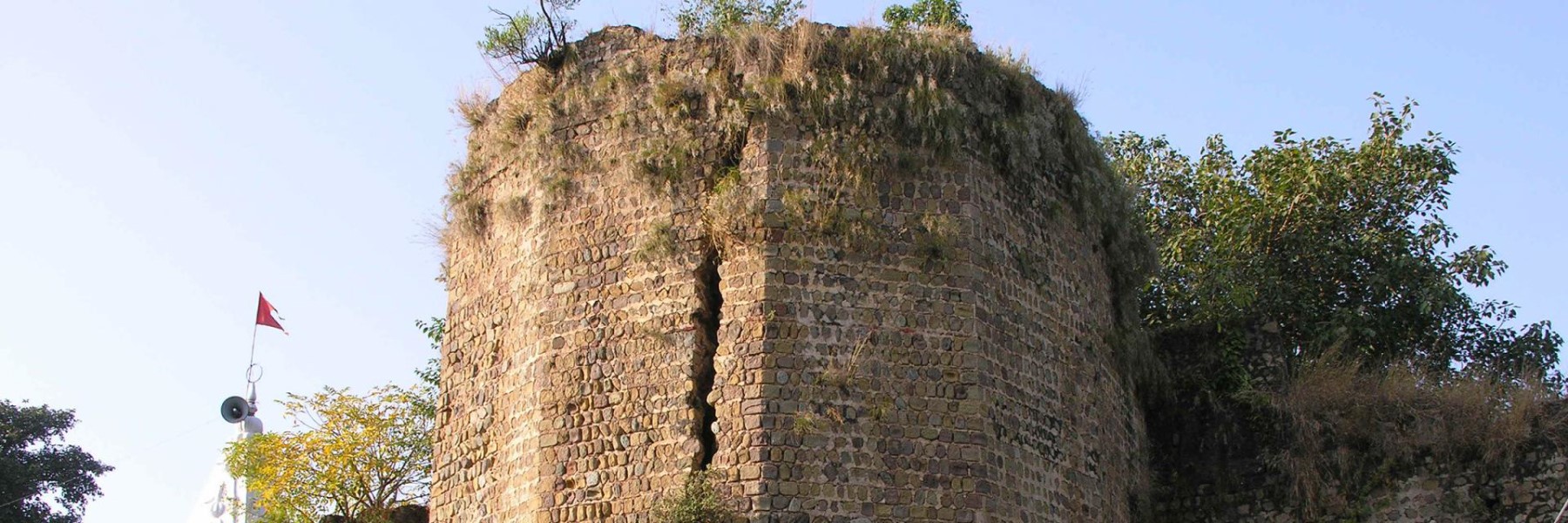
The Shahpurkandi fort is located approximately 20 km from Pathankot City and was built in 1505 by a Rajput chief named Jaspal Singh Pathania who was a subordinate of the Mughal emperor Shah Jahan. It was strategically located to have control over the Kangra and Nurpur region, but today, the fort is in ruins.
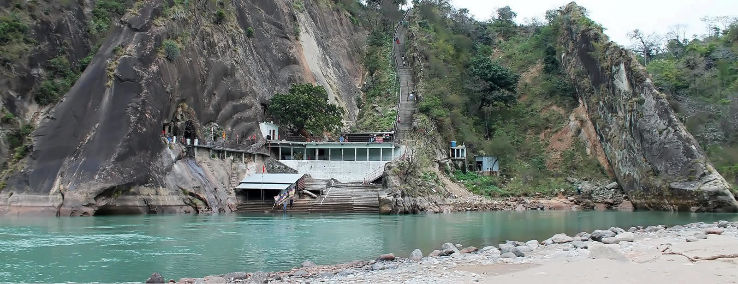
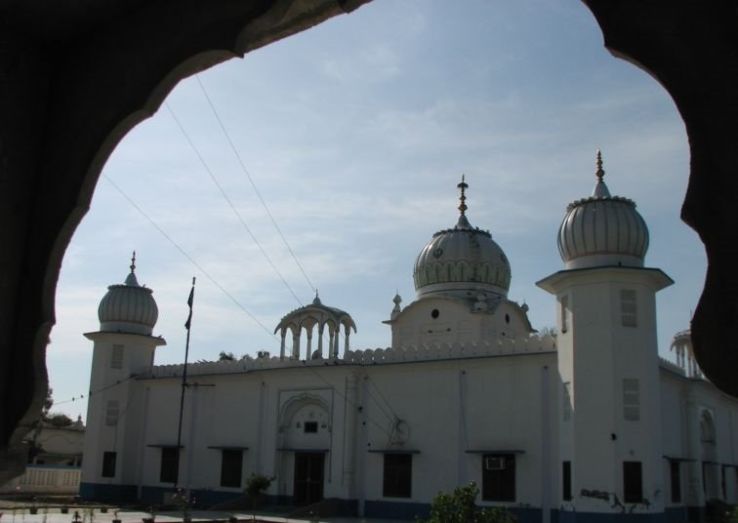
One of the most popular local shrines, the Mukteshwar temple is an ancient temple which is almost 350 years old and is dedicated to Lord Shiva. The shrine is about 25 km from the city in the village of Doong on the banks of the river Ravi. Perched on top of the highest point in Mukteshwar, a beautiful hill station that got its name after the shrine, the temple lies approximately 2312 m above the sea level. The temple is the perfect location for breathtaking views of the area and you can click some wonderful photos from here. This grand temple is identified as one of the eighteen most important temples dedicated to Lord Shiva in the Hindu scripture. A white marble Shiva Linga is also present here which has a copper yoni. In addition to the Shiva Linga, there are idols of other deities as well including Lord Ganesha, Brahma, Vishnu, Parvati, Hanuman, and Nandi. There are some caves which purportedly date to the time of the Mahabharata. According to legend, the Pandavas stayed in those caves for a night during their exile. This temple is said to be 5,500 years old, dating it to the time of Mahabharata.[citation needed]The Mukteshwar temple is considered vital and holds a lot of significance for the community of iron ore miners known as ‘agaries’. You can trek to the temple and the trek is said not to be very challenging with the way up to the temple covered with fruit orchards and forests and the trek should take around 2 hours to complete.
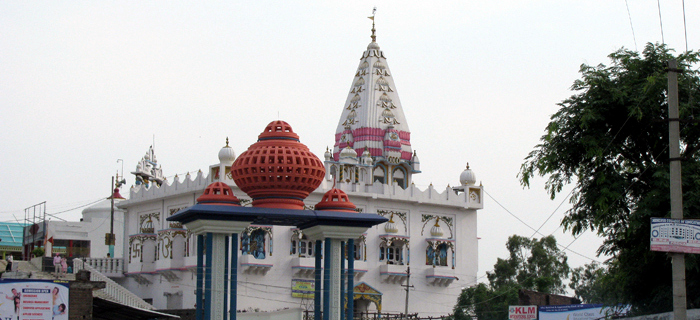
Located in the village of Kathgarh, the Pracheen Shiv Mandir Kathgarh temple is renowned for its 6 ft high Shivalinga. Devoted to Lord Shiva and Parvati, this temple is 25 km from Pathankot on the confluence of the Beas and the Choch rivers. The temple is built in the Roman architectural style, housing two Lingas of light grey sandy stone of 6 feet and and 4.7 feet in height having an octagonal base with every side measuring 1.3 feet above the ground level, personifying Lord Shiva and Parvati respectively. These lingas stand 3.5 feet apart at the bottom, and incline towards each other, being just two inches away from each other at the top.
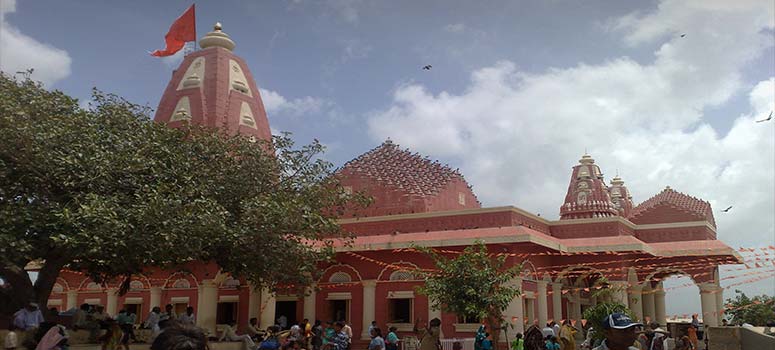
The Ashapurni Mandir is one of the oldest temples in Pathankot, dedicated to Mata Ashapurni, who is considered to be an extremely powerful deity. The Kanya Poojas and the annual festival of Navratri are celebrated at the temple with great enthusiasm.
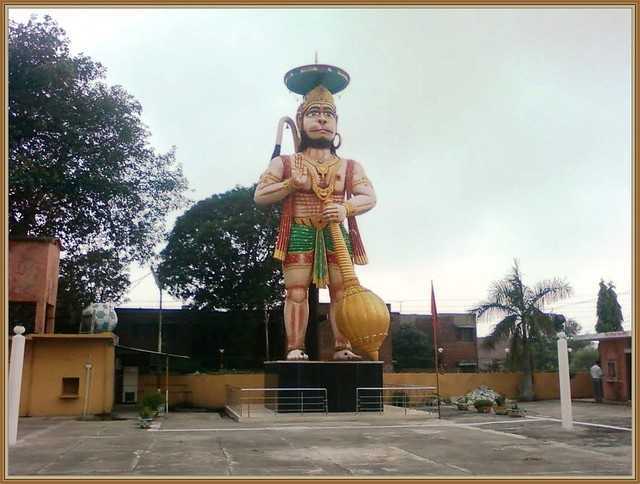
Dedicated to Lord Vishnu and Goddess Lakshmi, the Lakshmi Narayan Mandir is a famous temple in the region. It is one of the largest temples in Pathankot and has the idols of the deity in the main shrine and a large statue of Lord Hanuman in the courtyard. With ample space and greenery all around, the temple is a perfect attraction to quite a troubled soul.
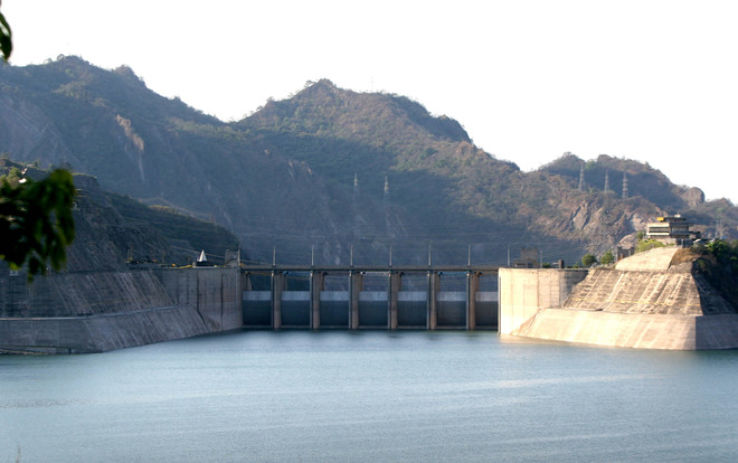
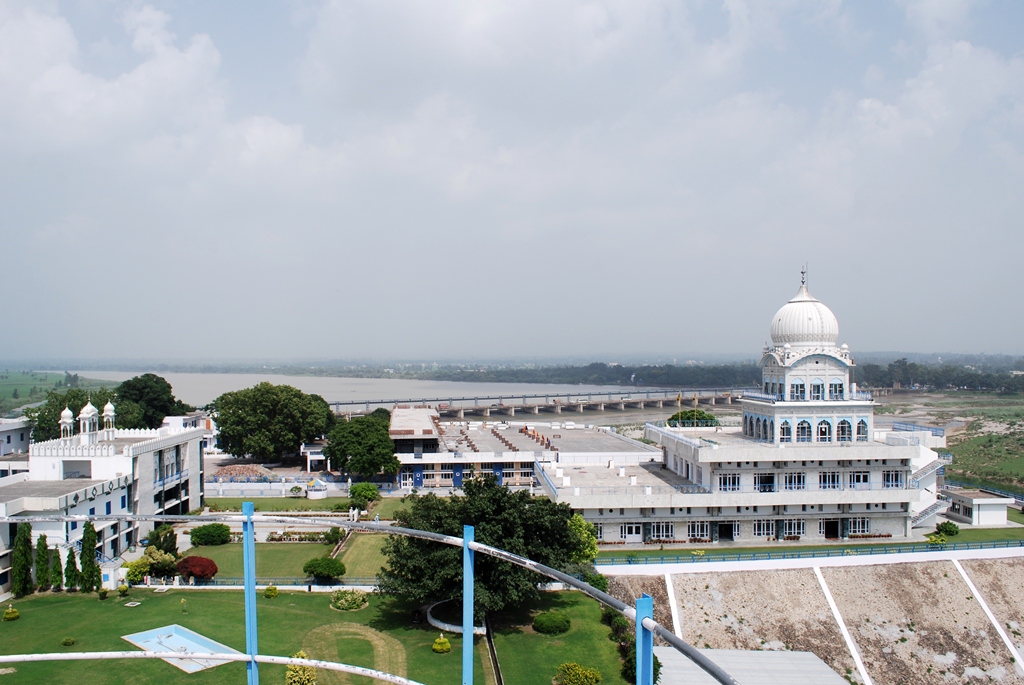
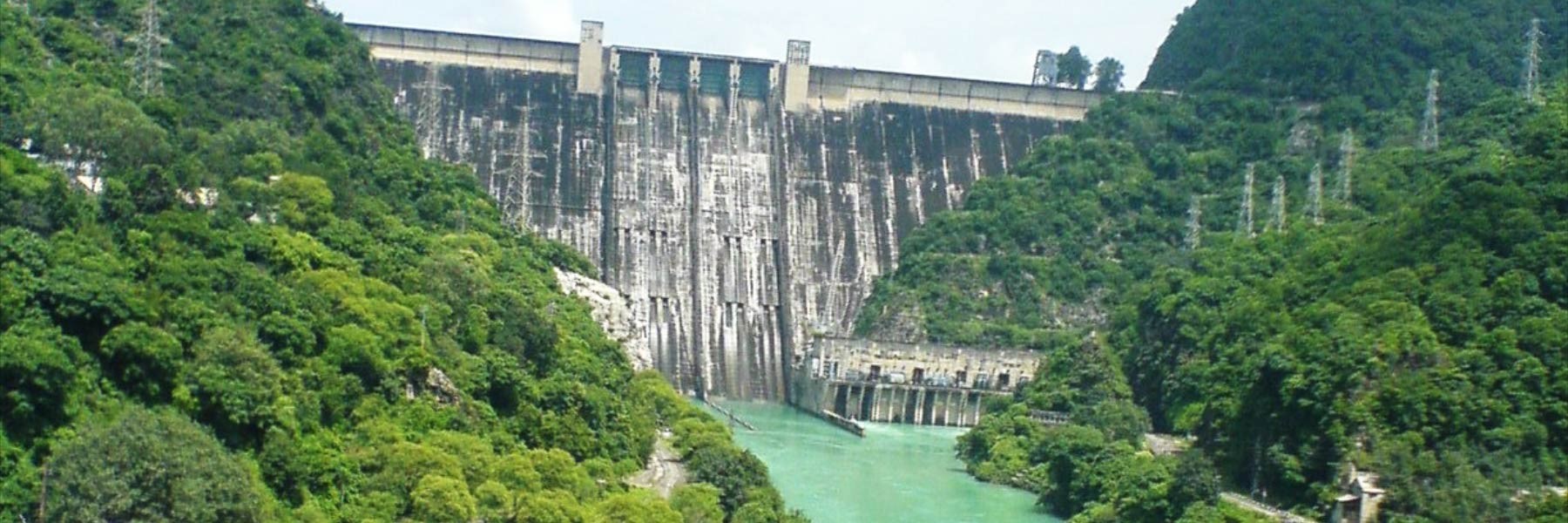
The Ranjit Sagar Dam was built for irrigation and power generation on the river Ravi. It is a stunning work of engineering, the highest gravity dam in Asia and the biggest hydroelectric project in Punjab. 60% of the 32 billion cubic metre capacity reservoir formed falls in the Jammu and Kashmir region while the remaining 40% falls in Pathankot. The power plant has four turbines that generate 600 mw of total electricity.

The Hydraulic Research Station is a perfect attraction for engineers and engineering enthusiasts, especially those interested in hydraulics and civil engineering. The station has an impressive display of dam models and models of systems used for irrigation and one can make the most of the simulations and the research information readily available at the station.

Amritsar
This is a city that has been on my bucket list for more than a decade now. I have made failed plans to visit Amritsar three times now, the most recent being early this year before the panademic struck, making all travel in 2020 impossible! I am still hopeful that next year, I make it here.

The holiest of all cities in India for adherents of the Sikh faiths, Amritsar, also colloquially known a Ambarsar and historically known as Ramdaspur is home to the Harmandir Sahib or as we know it, “the Golden Temple”. Amritsar is the second-largest city of Punjab and is also one of the fastest growing cities of the state. In the mid 1980s the city was famous for its textile industry, but after the 1984 Sikh riots, the city faced a blow to its industrial growth but there are still many textile mills present in the city. Amritsar is famous for its Pashmina shawls, woolen clothes and blankets. The craft of the Thatheras of the Jandiala Guru in the district got became a part of the UNESCO’s List of Intangible Cultural Heritage in 2014. Amritsar is very close to India’s border with Pakistan and one of the border crossing called Wagah is in the outskirts of Amritsar at a distance of about 28 km.

The Bhagwan Valmiki Tirath Sthal situated at Amritsar is believed to be the Ashram site of Maharishi Valmiki, the writer of Ramayana. As per the Ramayana, Goddess Sita gave birth to her twin sons, Lava and Kusha, sons of lord Rama at the Ramtirth ashram. A large number of people visit the Ramtirth Temple during its annual fair. Cities close to Amritsar which are Lahore and Kasur, both in today’s Pakistan, were said to be founded by Lava and Kusha respectively. During the Ashvamedha yagna by Lord Rama in the Ramayana, Lava and Kush captured the ritual horse and tied Lord Hanuman to a tree near what is today the Durgiana Temple.

Guru Ram Das, the fourth Sikh guru is credited with founding the holy city of Amritsar in the Sikh tradition. Two versions of stories exist regarding the land where Ram Das settled. In one, based on the gazette record, the land was purchased with Sikh donations, for 700 rupees from the owners of the village of Tung. According to the Sikh historical records, the site was chosen by Guru Amar Das and called Guru Da Chakk, after he had asked Ram Das to find land to start a new town with a man-made pool as its central point. After his coronation in 1574, and the hostile opposition he faced from the sons of Amar Das, Ram Das founded the town named after him as “Ramdaspur”. He started by completing the pool, and building his new official Guru centre and home next to it. He invited merchants and artisans from other parts of India to settle into the new town with him. The town expanded during the time of Arjan financed by donations and constructed by voluntary work. The town grew to become the city of Amritsar, and the pool area grew into a temple complex after his son built the gurdwara Harmandir Sahib, and installed the scripture of Sikhism inside the new temple in 1604. The construction activity between 1574 and 1604 is described in Mahima Prakash Vartak, a semi-historical Sikh hagiography text likely composed in 1741, and the earliest known document dealing with the lives of all the ten Gurus.

The Jallianwala Bagh massacre, involving the killings of hundreds of Indian civilians on the orders of a senior British military officer, Reginald Edward Harry Dyer, took place on 13 April 1919 in the heart of Amritsar, on a day sacred to them as the birth anniversary of the Khalsa, which is Vaisakhi day.

In Punjab, during World War I which took place between 1914 and 1918, there was considerable unrest particularly among the Sikhs, first on account of the demolition of a boundary wall of Gurdwara Rakab Ganj at New Delhi and later because of the activities and trials of the Ghadarites, almost all of whom were Sikhs. On 10 April 1919, Satya Pal and Saifuddin Kitchlew, two popular proponents of the Satyagraha movement led by Gandhi, were called to the deputy commissioner’s residence, arrested and sent off by car to Dharamsetla, a hill town, now in Himachal Pradesh. This led to a general strike in Amritsar. Excited groups of citizens soon merged into a crowd of about 50,000 marchings on to protest to the deputy commissioner against the arrest of the two leaders. The crowd, however, was stopped and fired upon near the railway foot-bridge.

Three days later, on 13 April it was the traditional festival of Baisakhi and thousands of Sikhs, Muslims and Hindus gathered in the Jallianwala Bagh. An hour after the meeting began as scheduled at 4:30 pm, Dyer arrived with a group of sixty-five Gurkha and twenty-five Baluchi soldiers. Without warning the crowd to disperse, Dyer blocked the main exits and ordered his troops to begin shooting toward the densest sections of the crowd. Firing continued for approximately ten minutes. A British inquiry into the massacre placed the death toll at 379. The Indian National Congress determined that approximately 1,000 people were killed.

Operation Blue Star which took place between 1 to 6 June 1984, was an Indian military operation ordered by Indira Gandhi, the Prime Minister of India at that time to curb and remove Sikh militants from the Golden Temple in Amritsar. The operation was carried out by Indian army troops with tanks and armoured vehicles. Militarily successful, the operation aroused immense controversy, and the government’s justification for the timing and style of the attack are hotly debated. Official reports put the number of deaths among the Indian army at 83, with 493 civilians and Sikh militants killed. Four months after the operation, on 31 October 1984, Indira Gandhi was assassinated by two of her Sikh bodyguards in what is viewed as an act of vengeance. Following her assassination, more than 3,000 Sikhs were killed in anti-Sikh pogroms.
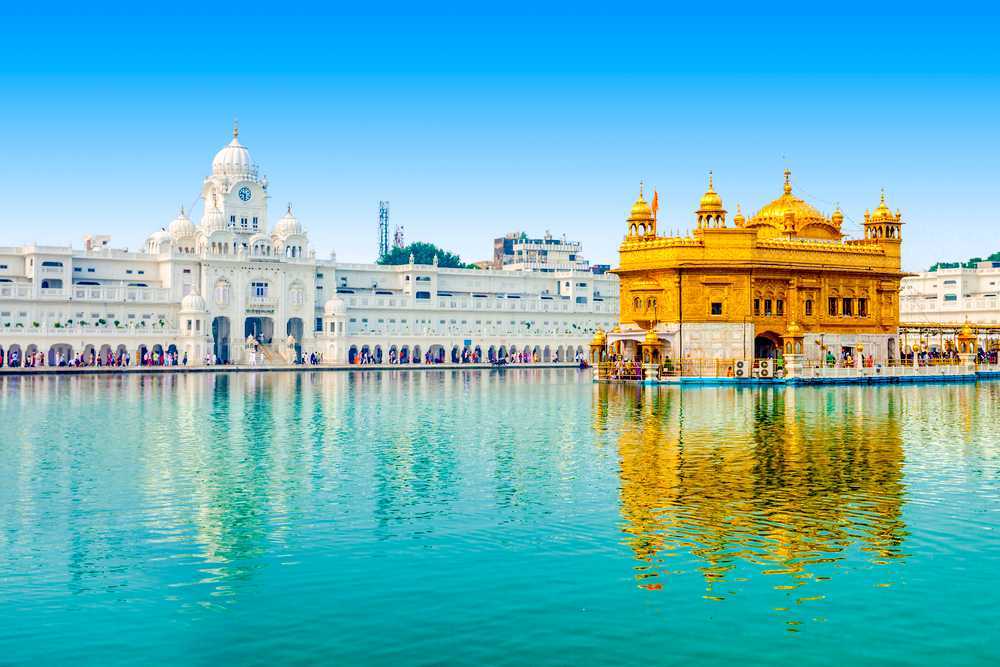
The reason most people visit Amritsar, the Golden Temple, also known as Sri Harmandir Sahib, is the holiest shrines in Sikhism. Located right in the heart of Amritsar and is easily reachable from any part of the city, it is seen as a symbol of brotherhood and equality. The Golden Temple is just a small part of the vast complex known as Harmandir Sahib or Darbar Sahib to the Sikhs. You can’t describe the divinity which emanates from this place, you need to experience it. After going through a tumultuous period of demolitions, it was rebuilt by Maharaja Ranjit Singh in 1830 purely with marble and gold. The view of the resplendent shrine, glistening in the centre of the tank brings an infinite calmness to the soul. The spiritual focus of the complex is the tank, the Amrit Sarovar, which surrounds the glistening central shrine. Around the edge of the compound, there are more shrines and monuments. The Sikh Museum is located inside the main entrance clock tower which shows the oppression endured by the Sikhs at the hands of the Mughals, the British and the Indian Government of 1984. The Ramgarhia Bunga is a protective fortress located at the southeast end of the tank and is surrounded by two Islamic-style minarets. The Guru Granth Sahib or the Sikh holy book, is placed inside the temple premises every morning and returned to the Akal Takhat or the timeless throne, which is the temporal seat of the Khalsa brotherhood, every night. This ceremony is called the Palki Sahib, and it provides male visitors with a chance to participate in the veneration of this holy book. The Guru Granth Sahib is carried in a heavy palanquin. The male visitors form a line in the front and back of the palanquin, shouldering the burden for a few seconds before passing it on. This allows every person a chance to participate and rest. The ceremony takes place at 5 am and 9:40 pm during winters and 4 am and 10:30 pm during summer. The temple also has the largest kitchen in the world offering free langar food to people of all religions and faiths. The Guru-Ka-Langar is an enormous dining room located at the southeast end of the temple complex where an estimated 60,000 to 80,000 pilgrims a day come to eat after praying at the Golden Temple. The food is free of charge, but the pilgrims often make donations and offer help with the staggering pile of dishes to be washed. It is a humbling projection of the Sikh doctrine of hospitality, catering to everyone from paupers to millionaires. The food served here is vegetarian to ensure that all people can eat together here, as equals and is often touted as the World’s Largest Free Kitchen.
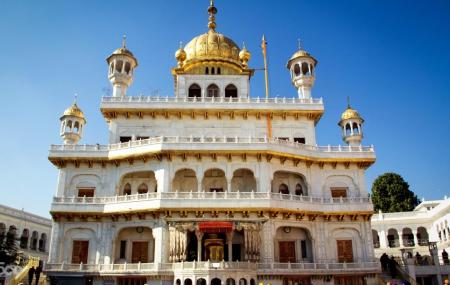
The Akal Takht or the Throne of the Immortal is the highest political institution of the Sikhs, founded by the sixth Sikh Guru, Guru Hargobind in 1606. Located in the famous Golden Temple complex of Amritsar, the Akal Takht is one of the five Takhts of the Sikhs. The Akal Takht is meant to be a symbol of political sovereignty and justice, where the spiritual and earthly concerns of the Sikh people could be addressed and examined. Situated directly opposite the Harmandir Sahib, this creation was originally a 9-foot high concrete slab built by Guru Hargobind, Baba Buddha and Bhai Gurdas without any external help. The two tall flags symbolise the two swords of Guru Hargobind representing his spiritual authority or Piri and earthly power or Miri by the Akal Takht.Today, the structure is a modern five-story building with marble inlay and gold-leafed dome. The elevated platform inside stands as a symbol of rebellion against Emperor Jehangir, who had ruled that only an emperor can sit on a raised platform. Guru Arjan Dev used to sleep under the cot meant for the Guru Granth Sahib, now known as Kotha Sahib.
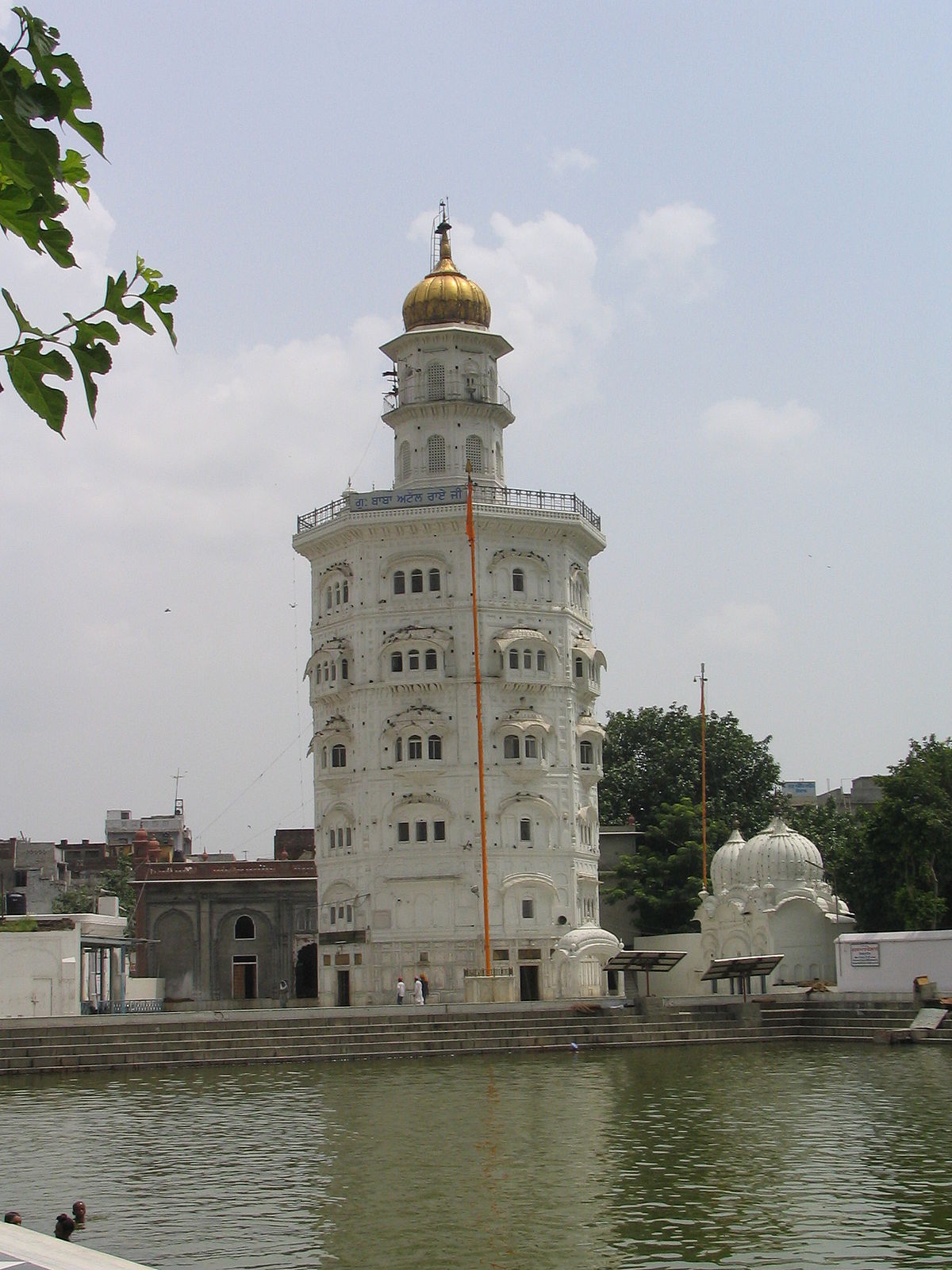
The Gurudwara Baba Atal Rai is located inside the Golden Temple complex built in honour of Baba Atal Rai, son of Guru Har Gobind Singh. The 9 storey octagonal tower represents a year in Atal Rai’s life. It is the tallest tower in Amritsar alongside the Kaulsar Sarovar. The last storey of the tower offers visitors a birds-eye view of the bustling town of Amritsar. Devotees believe that having a dip in the holy water of Kaulsar Sarovar brings mysterious wide-spread showers in Amritsar. The langar at the Gurudwara serves the visitors 24 hours a day and is said to be the only continuous langar in Amritsar.

Found within the Golden Temple complex, the Dukh Bhanjani Ber Tree is considered the most sacred tree in Amritsar. The 400-year-old jujube tree, situated on the eastern side of the great Amrit Sarovar, is greatly revered due to the legend and faith of Bibi Rajni, whose leprosy stricken husband was miraculously cured after a dip in the pond close to the tree. It was then named Dukh Bhanjani which means ‘eradictator of suffering’. The sacred pond in the Golden Temple Complex, believed to be the holy pond of healing prophecised by the third Sikh Guru Guru Amar Das Ji, was developed into the famous Amrit Sarovar. While the access to the Amrit Sarovar is restricted, a small portion of it next to the Dukh Bhanjani Beri Tree is available to devotees who wish to take a dip in the holy water. Visitors to the Golden Temple believe that doing so would cure them of their pain and afflictions and that they would receive blessings from the sacred tree.
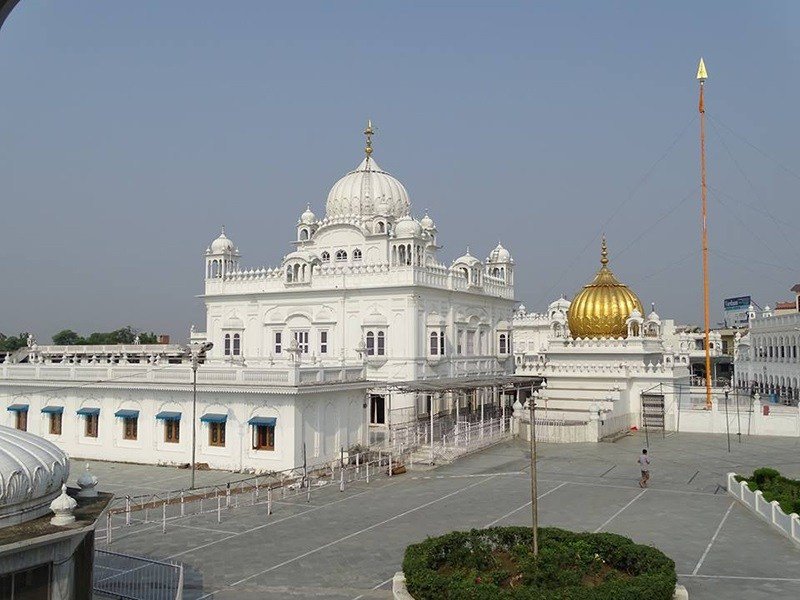
Located on the banks of river Beas is Gurdwara Goindwal Sahib and around 50 km southeast of Amritsar. It is known as the 1st Sikh pilgrimage site and is where the 3rd Sikh Guru, Sri Guru Amar Das Ji, lived and preached for 33 years. It is also where he coined the idea of langar or community kitchen and where he built a baoli or well from where people of all caste, colour, creed and religion could drink from. The baoli constructed here has 84 steps and many believe that by reciting the Japji Sahib and taking a bath in this well will provide salvation and unity with the Divine by liberating the soul from 84 lakh cycles of living and dying.
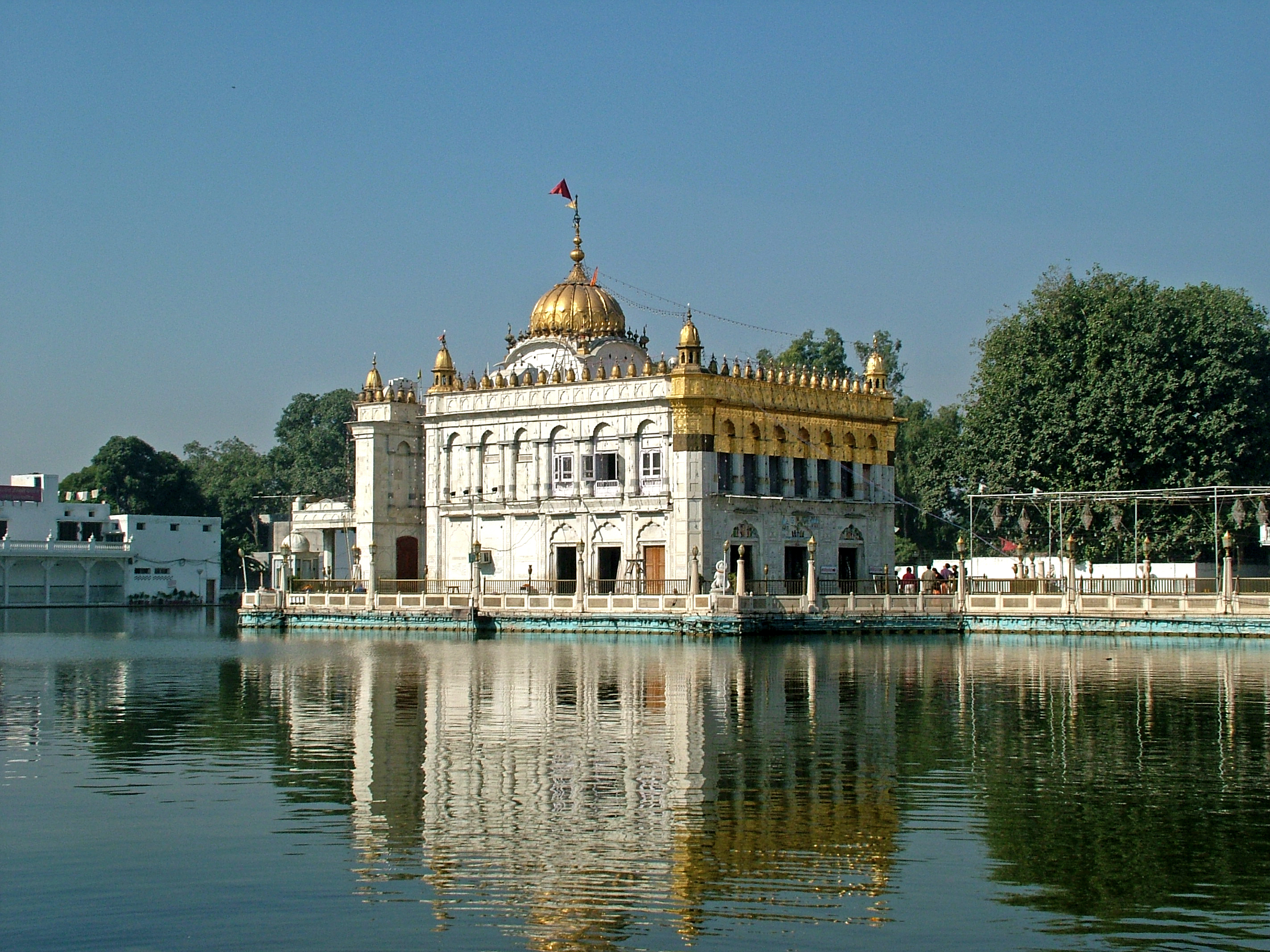
The Durgiana Temple, also known as the Lakshmi Narayan Temple, bears a stark resemblance to the famous Golden Temple while also carrying the same sense of peace, tranquillity and spirituality. Within this historic temple lies a beautiful sarovar or lake where one can find idols of Goddess Lakshmi and Lord Vishnu floating. Gur Shai Mal Kapoor, whose statue can be found at the main entrance of the temple, laid the foundation for this temple. The rare sculpture of the sitting Hanuman, considered one of a kind, is found in this temple. Apart from the main temple, one can find many subsidiary temples here. The Bara Hanuman Mandir is where Hanuman was said to be captured by the twins of Rama and Sita. The Mata Sitla Mandir which is dedicated to Sitla, an incarnation of Goddess Durga, sits beside a Shiva Linga and a brass lion. Idols of Sat Narain and Radha Krishna can be found in the premises of the Sat Narain Mandir and the Goswami Tulsidas Mandir is dedicated to Tulsidas where one can find a rare handwritten copy of the Ramayana.

The Shri Ram Tirth Temple was built to honour the birthplace of Luva and Kusha, the twin sons of Rama and Sita. Constructed in lime yellow stone, the temple dates back to the time of the epic Ramayana where Sita was given sanctuary in the Ashram of the sage Valamiki after being abandoned by Rama. The battle of Ram’s Ashwamedha force with Luv-Kush is said to have taken place here. The ancient temple organizes a five-day fair a fortnight after the festival of Diwali, where almost one hundred thousand pilgrims visit to seek blessings. Devotees take a dip in the ancient tank next to the temple on Purnamashi or the full moon night. A tradition called Tulla Torana is practised where lamps made of kneaded flour and ghee are released into the water on the night of the full moon. The practice of this tradition is said to wash away any sins and is said to please Lord Rama. There is a unique belief that the pilgrimage is not complete without giving money or food to charity to the needy.
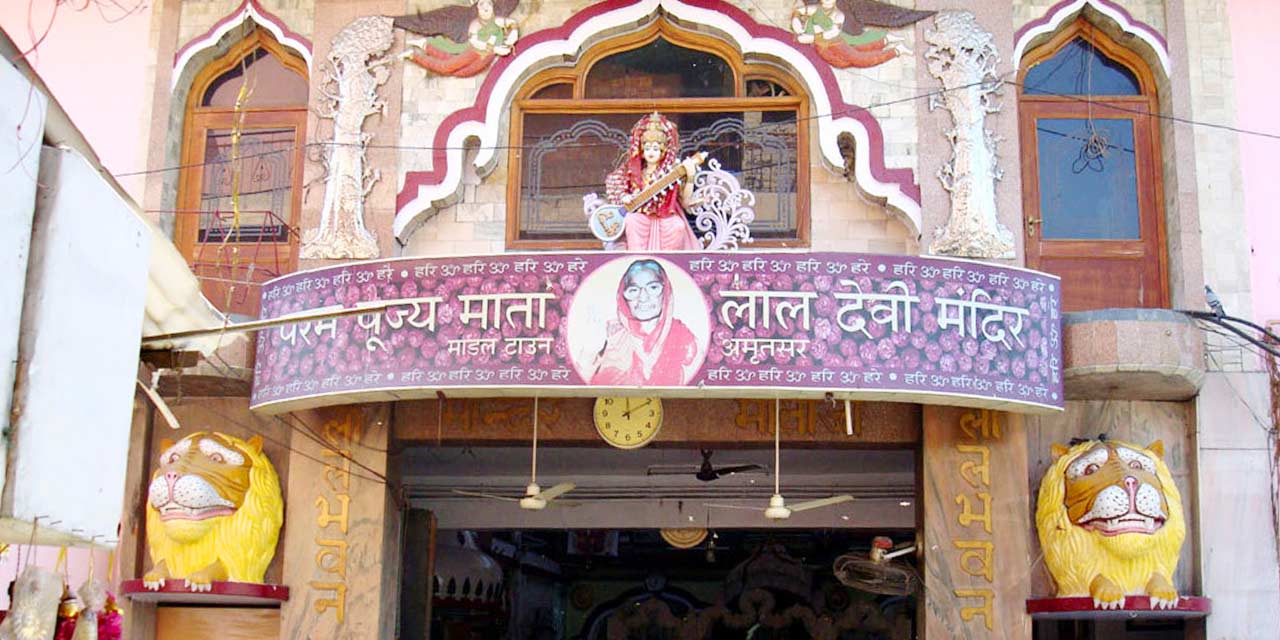
The Mata Lal Devi Temple, popularly known as the Sheesh Mahal of Amritsar, is famous among pilgrims for its miraculous fertility-improving powers. The temple is dedicated to the female saint Lal Devi and is considered a miniature dimension of the popular Vaishno Devi temple in Jammu. The temple is decorated with shining mirrors that light up the area through the reflecting sunlight and numerous diyas. A man-made cave leads pilgrims to the Goddess’s shrine which can be reached only by crawling or bowing completely. Women from across the country visit this mystic temple in order to seek blessings to bear a child, as the mysterious temple is famous for its ability to improve fertility among women.

The Gobindgarh Fort is a historic fort which represents the glorious past of 257 years, starting with the Bhangi Misl era and ending with the Indian Army after The British East India Company. Gobindgarh Fort was first known as ‘Bhagian da Qilla’ and was built by Gujar Singh in the 1760s. The area has now been developed into a live museum and acts as a repository of Punjab’s history. The Tokshakhana which is now a museum in the fort was used to store the famous Kohinoor diamond. Maharaja Ranjit Singh enhanced the fort, adding elements which were influenced by the French architecture. The monument was opened to the public in 2017 after being restored. The bungalow, one of the attractions at the fort, used to serve as a residence to Garrison Commanders during the British era.

Located near the Golden Temple, Jallianwala Bagh is a public garden that also houses a memorial to commemorate the massacre by the British forces. Spread over 6.5 acres of land, Jallianwala Bagh is associated with one of the saddest days in Indian history when thousands of innocent people were killed on the orders of General Dyer as they gathered for a peaceful celebration of Baisakhi. The place has now been turned into a beautiful park and is managed by the Jallianwala Bagh National Memorial Trust. There is a memorial tablet at the entrance which serves as a record of history. A number of structures are present inside the premises which bear the marks of bullets that were shot at the civilians gathered at the park and a well in which many people jumped to save themselves from the onslaught of the bullets. It is estimated that over a 1000 people, from all religions, lost their lives in this brutal assault. Even after a century, you can still feel the sense of sadness that emanates from this place.
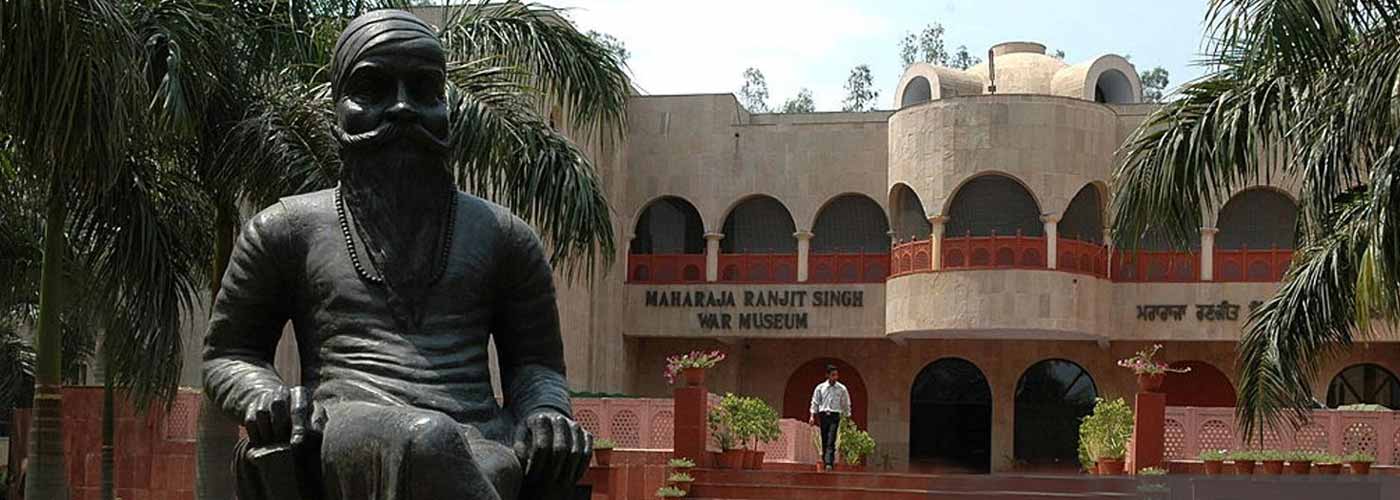
The Maharaja Ranjit Museum is right in the middle of Ram Bagh garden, and used to serve as the summer palace of the first king of the Sikh Empire, Maharaja Ranjit Singh, after whom the museum is named. The museum provides insightful information on the life of the first Sikh monarch, along with history, art and architecture of the Sikh community between the 18th and 19th centuries. Converted to a museum in 1977, the museum consists many artefacts and personal items of the Maharaja such as his armour and weaponry. It also displays fantastic paintings, various manuscripts and coins from centuries, long gone. The museum reflects the rich history of the Sikh empire. The paintings mostly depict scenes from the Sikh monarch’s court and camp. Among all of them, the most famous among observers is the one depicting the city of Lahore. The museum is open from 10 am to 5 pm on all days except on Mondays and Public holidays with an entry fee of INR 10 per person.

The Partition Museum is the first-ever museum in the entire world to focus on the stories and trauma of the millions who had to suffer the consequences of the partition of undivided India. Located at the Town Hall in Amritsar and developed by the Arts and Cultural Heritage Trust (TAACHT), the museum is a part of the newly inaugurated Heritage Street at Amritsar, which begins from the Golden Temple and ends at the Town Hall. The collections at the Partition Museum include newspaper clippings, photographs as well as personal items that were donated by people who had witnessed and lived during the Partition. The museum is devoted primarily to the victims & survivors, and their lasting legacy. The partition of India saw the disorganised displacement of twelve million people to a new land, causing the painful demise of over two million people. The museum is open every day except Monday from 10 am to 6 pm and the entry fee for Indians is INR 10 and that for foreigners is INR 250 per person.
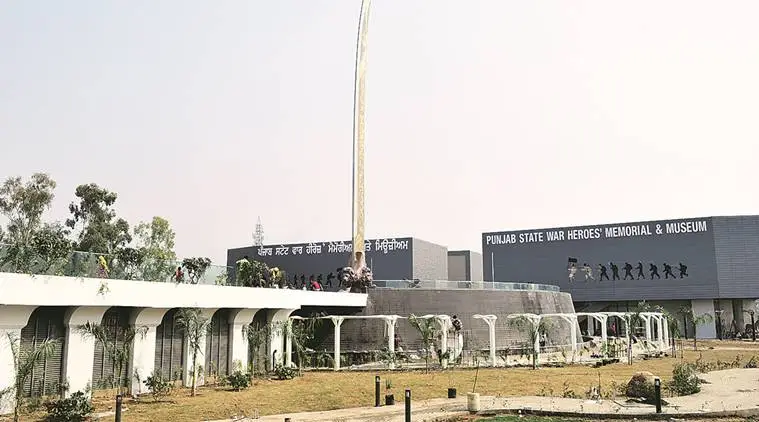
The Punjab State War Heroes Memorial and Museum showcases the bravery of Punjab. Built in both a traditional and modern architectural style, it houses a state-of-the-art gallery where Punjab’s martial tradition and military campaigns can be viewed. Numerous illustrations, photographs, paintings, artefacts, weapons and interactive panels can be found here, letting the tourists go back in time. The museum has a collection of photographs of the 1965 and 1971 war. A mural has been built to commemorate the work and pay tribute to the 21 Sikh soldiers who were martyred in the 1971 war. Tourists can travel back 3 eras, through the pre-British, British and post-independence periods with the special light and sound show organised here. The 7D auditorium is a must-do experience during your visit here, transporting visitors to the war zones of the past. The chief appeal of this fascinating museum is the 45-metre stainless steel sword preserved at the centre of the place. The sword represents the strength and courage of the people defending the nation at the peak hour of war. The glorious sword is placed on a water body with 3500 martyr names inscribed on the memorial wall. The decommissioned aircraft carrier ship MiG-23, INS Vikrant, and 3 tanks are also exhibited here. Open from 10 am to 5 pm every day, the entry fee for the museum is INR 100 per person.

Pul Kanjari, popularly known as Amritsar’s Taj Mahal, is a village located close the Wagah border. Historically significant, this place was the site where Maharaja Ranjit Singh and his troops would rest while travelling between Amritsar and Lahore. An important trading centre during the 18th century, the town was named after a small bridge built by Maharaja Ranjit Singh over the canal between Amritsar and Lahore for his favourite dancer Moran, a Muslim dancer from the nearby village of Makhanpura. Apart from the bridge, one can also admire the fortress of the Maharaja, which houses a Mosque, a Mandir, the Baradari and a Sarovar. A war memorial has been instituted to pay respect to the martyrs of the Indo-Pak wars of 1965 and 1971.
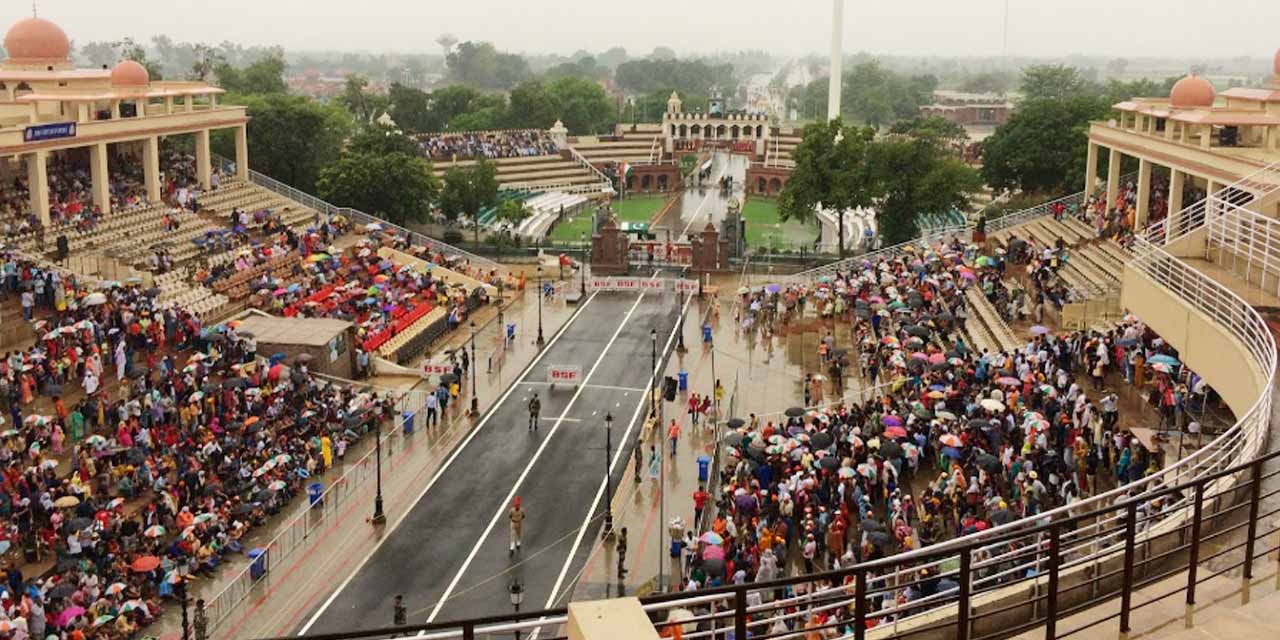
Located at a distance of 28 km from Amritsar, the Wagah Border marks the boundaries between Indian and Pakistani borders, running along the Grand Trunk Road. People from all over the country visit this place to witness the Beating Retreat Ceremony that is held every day before sunset. The flag ceremony has been conducted by the Indian Border Security Force and Pakistan Rangers since 1959. This ceremony includes the closing of the international gates and lowering the flags of both countries and is a spectacle to be witnessed. Every evening, just before the sunset, the soldiers from the Indian and Pakistan military meet at this border post to engage in a 30-minute display of military camaraderie and showmanship. Officially, the purpose of the ceremony is to formally close the border for the night and lower their respective national flags. During the build-up to the ceremony, the crowd engages in chanting the Indian national anthem, rounds of applause and Bollywood-style dancing on Hindi songs. The Beating Retreat Ceremony starts at 4:15 pm in winter and 5:15 pm in summer and lasts for about 45 minutes. Entry is limited, so make sure you are there at least an hour before the ceremony to make sure you are able to enter. The ceremony is a military practice carried out by the Indian Border Security Force and the Pakistan Rangers. It begins with a parade by the soldiers from both the sides, and ends with a coordinated lowering of the flags of both the nations. As the sun sets, the iron gate is opened, with an infantryman standing in attention at both sides of the gate. The flags of India and Pakistan are lowered simultaneously and then folded. The ceremony ends with a retreat that involves a brusque handshake between soldiers of both the sides followed by the closing of the gate.

Since the area is a very sensitive one, there is no mobile phone service available. There is proper seating arrangements for the visitors and select seats are reserved for women, while the general seating is allowed for men. Irrespective of where you sit, you should get a good view of the ceremony because the place is constructed like a stadium. There are separate stands for foreign tourists, and these stands are the second-best seat, just behind the VIP section. So if you are a foreign national, don’t forget to carry your passport to claim this seat. Cameras are permitted, but bags are prohibited. Lockers are available beside the entrance gate to keep your belongings at a cost of INR 50. There is no entry fee and seating is on a first come, first serve basis.

This ends my small series on the state of Punjab, one I have learnt a lot in the last few years from my helper R. This state, which along with West Bengal suffered the most during partition is one I hope to visit soon. Here’s a small documentary I saw some years back on the Samjhauta Express, a train that plies between Attari near Amritsar, India and Lahore, Pakistan. I recently rewatched it and thought it to be a fitting end to this series.

Travel Bucket List: India – Punjab Part 5

Today’s two Punjab cities are Jalandhar and Kapurthala, both in the notthwest region of Punjab.

Source

Jalandhar
Known as Jullundur during the British period, Jalandhar lies along the Grand Trunk Road, one of Asia’s oldest and longest major roads which is at least 2,500 years old and has linked Central Asia to the Indian subcontinent. It runs roughly 3,670 km from Cox’s Bazar in Bangladesh to Kabul, Afghanistan, passing through Howrah, Allahabad, Delhi, and Amritsar in India, and Lahore, Rawalpindi, and Peshawar in Pakistan.

The history of Jalandhar District comprises three periods — ancient, medieval and modern. It is said that the city may be named after Jalandhara, a demon king, who is named in the Puranas and Mahabharata. The city was founded by Devasya Verma as mentioned in Vedas. Other possibilities include that it was the capital of the kingdom of Lava, son of Rama or that the name derives from the vernacular term Jalandhar, meaning area inside the water,or the tract lying between the two rivers Satluj and Beas. The city was also part of the Indus Valley Civilization. Excavations in recent years have put the age of Jalandhar to be in the time of the Harrapan period. Jalandhar was conquered by the Ghaznavids during the reign of Ibrahim of Ghazni between 1058–89 and later formed part of the province of Lahore during the Delhi Sultanate and Mughal Empire. The 18th century saw upheavals in Jalandhar amidst an anarchy caused by the disintegration of the Mughal empire and power struggles involving the Persians, Afghans and Sikhs. It was captured by the Faizullahpuria Misl in 1766, and in 1811 Ranjit Singh incorporated it within the Sikh Empire.

In 1849, following the annexation of the Punjab by the East India Company, the city of Jalandhar, now spelt Jullundur, became the headquarters of the Division and District of the same name. In the mid 19th century, British officials regarded Jalandhar as densely populated and farmed to capacity. This led to the district being a chief recruitment area for settlers to colonise the newly irrigated Punjab Canal Colonies in western Punjab. The Khilafat Movement started in the district in early 1920 to bring pressure on the government to change their policy towards Turkey. Mahatma Gandhi extended sympathy and support to this movement however in response the district was declared a ‘Proclaimed Area’ under the Seditious Meetings Act. The Partition of India in 1947 saw Jalandhar become part of India. The resulting rioting and violence caused by Partition led to major demographic change in the district, with the exodus of the large Muslim population and the arrival of Hindus and Sikhs from newly created Pakistan.

Jalandhar is famous for its sports industry and equipment manufactured in Jalandhar has been used in many international sporting games including the Olympics, the Commonwealth Games and the Asian Games, among others. It is also a hub for the manufacturing of hand tools and is famous for its leather industry.

Source

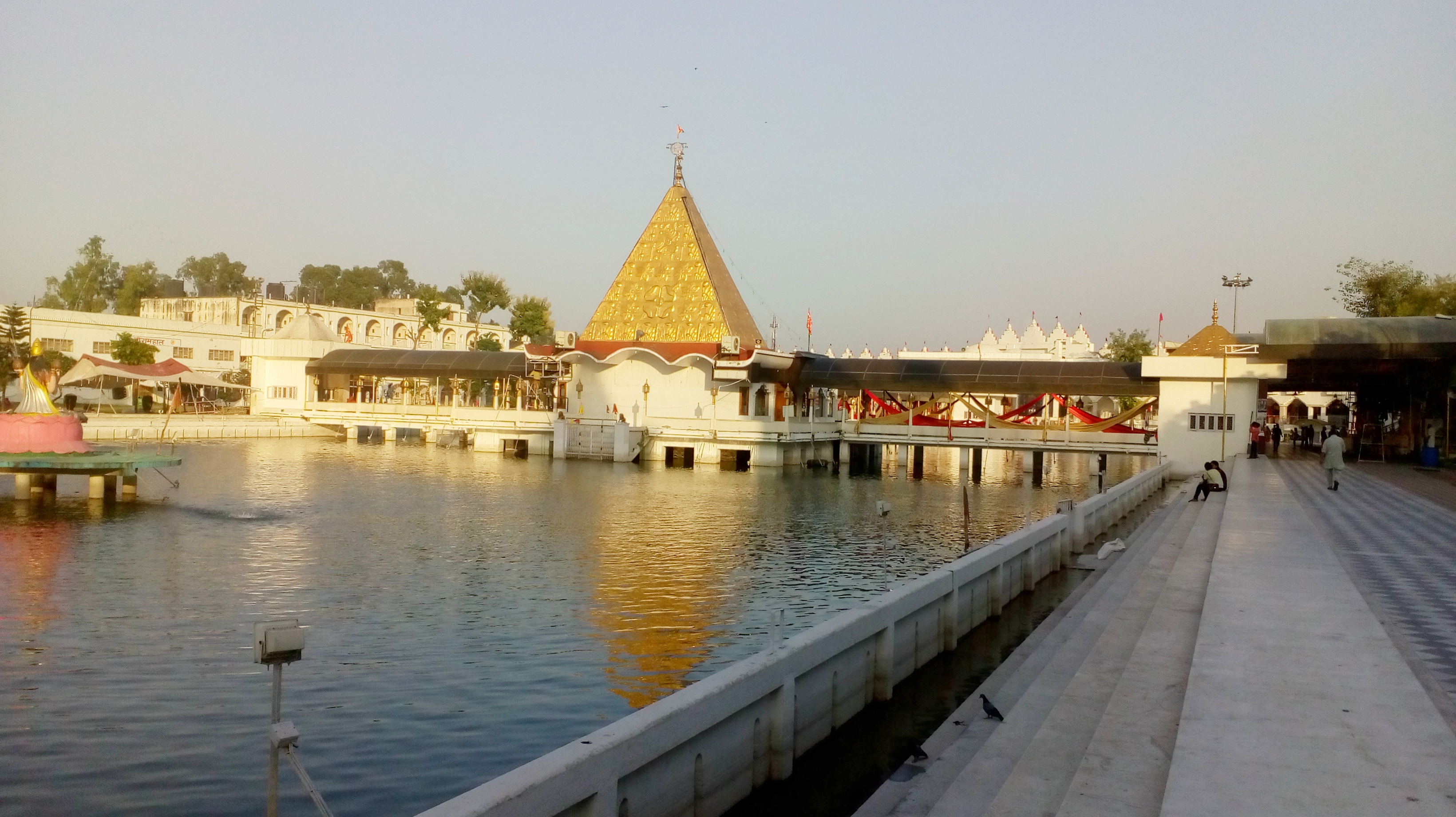
A 200-year-old Hindu temple the Devi Talab Mandir is located in the heart of the city. The main goddess in the temple is Goddess Durga, and the temple is one of the 51 Shakti Peethas in India. In recent times, the temple was renovated, and a few changes have been made to the original structure. The tank within the temple, which is just as old as the temple is considered to be sacred. You can also find a shrine for Lord Shiva inside the temple which depicts him seated on a tiger. The temple is open all day from 7 am to 8 pm.

The Sodal Mandir’s main is known as Baba Sodal and is worshipped by many. According to the legend, Baba Sodal accompanied his mother to the river bank even when told to stay home. Furious, the mother cursed her child and told him to drown himself. Baba Sodal asked his mother to repeat her orders, and when she did, he jumped into the water never to appear again. It is said that the boy transformed himself into a holy snake and bid adieu to the mortal world. A temple was built where this incident took place which is now called the Baba Sodal Temple. Devotees take a dip in the holy water reservoir beside the temple where Baba Sodal had jumped and thereservoir is now called called Baba Sodal da Sarovar. Every year on Anant Chodas, also known as Anant Chaturdashi a fair is held at Sodal Temple where pilgrims cutting across lines of religion and caste attend to enjoy the festivities and collect the blessings of Baba Sodal.

The Shiva Temple in Jalandhar was built by the Nawab of Sultanpur Lodhi and is located inside the Gur Mandi near Masjid Imam Nasar. The locals believe that the Nawab was attracted to a newly married Hindu girl but she, being a devotee of Lord Shiva, was saved by a serpent before he could deploy his devious plan to abduct her. Astonished by the sudden appearance of this serpent out of nowhere, the Nawab begged the girl for forgiveness and built this temple. The shrine has an unusual architectural design where its gate has been constructed in the style of a mosque while the remaining temple complex is in the Hindu style of architecture.

The Tulsi Mandir is an ancient temple which is dedicated to Vrinda, the wife of the demon Jalandhara and is located in Kot Kishan Chand. There is a tank on the side of the shrine that is believed to have served as the bathing place of the demon Jalandhara. Close by, within walking distance is the temple of Gupha which is dedicated to Goddess Annapurna, the Goddess of Plenty.

The Gurdwara Talhan Shaeeb Ji is the key gurudwara of the village of Talhan which is about 12 km east of the main Jalandhar city. This gurudwara is dedicated to Baba Nihal Singh and devotees flock here from all parts of the country because they believe that visiting this Gurudwara will increases their chances of moving overseas to study or work. Which is why, you will see offerings made here which are often in the form of plastic aeroplanes. This Gurudwara is famous for its annual Shaheedi Jor Mela or fair which is held in the memory of Shaheed Baba Nihal Singh.

Formerly known as Company Bagh, the Nehru Garden is one of the oldest parks in Jalandhar. The park was recently renovated with a musical fountain, fancy electric lights, an entrance via three gates located at different areas of the garden, children’s fountain and a play arena with slides and swings. The oldest clock tower of the city still stands as an attraction point of the park. A memoir for Mahatma Gandhi has been staged in the form of a white coloured statue and there is also a library documenting India’s history of her struggle for freedom. The garden’s lush green area decorated with trees and fragrant flowers welcomes locals and tourists alike to spend some time in their busy days.

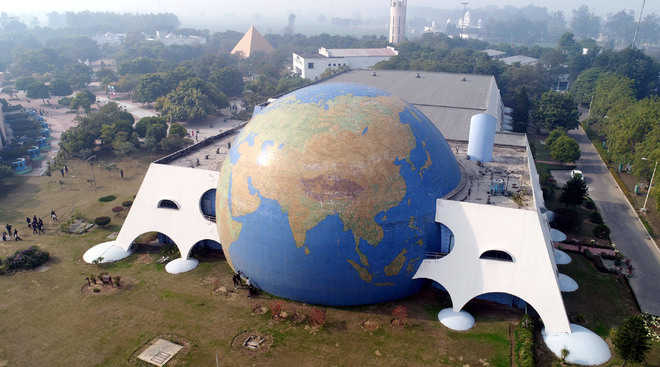
Science City, otherwise known as Pushpa Gujral Science City is a haven for science enthusiasts. Located at a distance of 15 km from Jalandhar, it is spread across an area of 72 acres. It uses concepts from physical, applied, natural and social sciences, engineering, technology, agriculture, health sciences, energy, industries, human evolution, environment, ecosystems, Jurassic parks as well as other as other intriguing aspects of space, IT, nuclear science, robotics and biotechnology. There is a theatre, a digital planetarium as well as a climate change theatre which are used to educate people about science. If you are a science enthusiast, the Science City is a must see destination while in Jalandhar. The Science City is open from 9 am to 6 pm, though tickets must be brought before 5 pm. Children below the age of 3 enter free, while adults and children pay according to the various packages you can purchase to view specific exhibits in the centre. If you plan to bring in a professional video camera, be prepared to pay INR 100 extra while that for a digital camera, it is INR 50.

Source

The Jang-e-Azadi memorial is located at Kartarpur, on the Amritsar-Jalandhar Highway about 25 km northwest of Jalandar. A new memorial, it is spread over 25 acres of land and is a memorial for all the Punjabis who sacrificed their lives during the fight for Indian independence. The memorial also has detailed exhibits which showcases the Punjabi culture and has separate galleries for various themes as well as a tower called Shaheed-e-Minar which is 45 metres high. All the galleries in the memorial have massive domes which are shaped to look like flowers. Within the galleries, there are models which depict various scenarios from history which include historical details. Inside this memorial, the use of mobile phones is prohibited and photography is not allowed. The memorial is open from 10 am to 6 pm from Monday to Saturday and from 7 am to 7 pm on Sundays. Entry fees are INR 50 for adults and INR 30 for children.

Kapurthala
Known as the city of Palaces and Gardens, Kapurthala was the capital of the Kapurthala State, ruled by the Ahluwalia Dynasty, a princely state in British India. The secular and aesthetic mix of the city with its prominent buildings based on French and Indo-Saracenic architecture speak of its princely past. According to the 2011 Census, Kapurthala is the least populated city in India.

The history of Kapurthala is the history of the Ahluwalia Dynasty. The Ahluwalia Dynasty was founded by Baba Jassa Singh Sahib. The Ahluwalia dynasty takes its appellation from the village of Ahlu near Lahore. The ascendancy of the Ahluwalia Misal, continued uninterrupted until the period when the Misals were consolidated into the Sikh Kingdom under Maharaja Ranjit Singh. Sardar Fateh Singh, the then ruler of Kapurthala co-signed the Treaty of Amritsar in 1806, and entered into a treaty with the East India Company, to halt the increasing Maratha influence. The fortunes of Kapurthala State, that once extended from Jagraon to the Beas, fluctuated during the two Anglo Sikh Wars.

Source

Once the residence of the erstwhile Maharajah of Kapurthala state, Maharajah Jagatjit Singh, the Jagatjit Palace is the home of the Sainik School which trains boys for the National Defence Academy. The palace building’s architecture is based on the Palace of Versailles and Fontainebleau and is spread over a total area of 200 acres. It was designed by the French architect M. Marcel and built by a local builder Allah Ditta. It was built in the renaissance style with a sunken park in the front, known as Baija. Its Durbar Hall or Diwan-E-Khas is one of the finest in India, and the Plaster of Paris figures and painted ceilings represent the finest elements of French and Italian art and architecture. The construction of this palace started in 1900 and ended in 1908.

Source

Built in 1962 by Kanwar Bikram Singh, in the Indo-French style architecture, the Elysee Palace is now the MGN school, but is still worth a visit for its sheer architectural beauty.

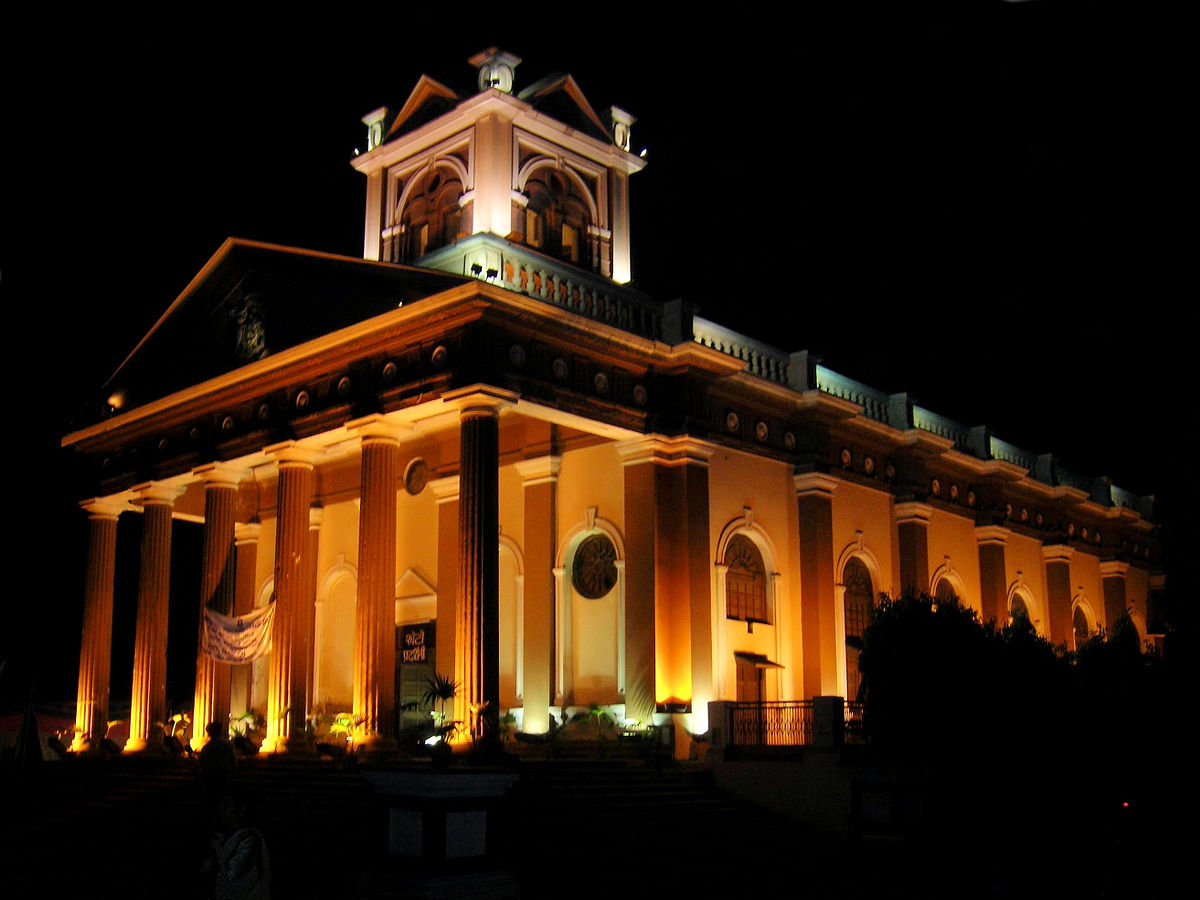
The Jagatjit Club is an elegant building situated in the heart of the city based on the Greek Roman style of architecture. Its design loosely resembles the Parthenon on the Acropolis of Athens and features the Coat of Arms of the erstwhile ruling family of Kapurthala with their royal motto “Pro Rege et Patria” which translates to “For King and Country”. The building has been used for a variety of purposes since it was constructed, it was used as a church in the early nineteenth century, as a cinema hall in the 1940s and now houses a local club which includes a well built badminton court, a card room and a dining hall.

The Shalimar Gardens are situated in roughly the centre of the city and provide an escape from the hustle-bustle of the city for locals and tourists alike. The Shahi Samadhs or the Royal Cenotaphs in the Shalimar Gardens emphasise the traditions of its ruling dynasty. Marble obelisks inside the red sandstone chambers, are memorials to the former rulers and their families. Nearby, a grand structure built in 1880 and built on a marble plinth, houses the Samadhs of Maharajas Kharak Singh, Jagatjit Singh and Paramjit Singh.

An example of the secular history of Kapurthala is the Moorish Mosque, a replica of the Grand Mosque of Marakesh, Morocco, which was built by the French architect, M Manteaux. Its construction was commissioned by the last ruler of Kapurthala, Maharajah Jagatjit Singh and took 13 years to complete between 1917 and 1930. It was then consecrated in the presence of the late Nawab of Bhawalpur. The Mosque’s inner dome contains decorations by the artists of the Mayo School of Art, Lahore. The Mosque is a National Monument under the Archaeological Survey of India. Its wooden model rests at the entrance of the Lahore Museum.

Source

The large and imposing red sandstone building which is now painted white of the State Gurudwara was consecrated in 1915 under Revail Singh. Built in the Indo-Saracenic style, it has vast expanses of marble flooring which make it very cool to the feet. Located in the center of the city on the Sultanpur road, it was recently renovated. There is a big park behind the Gurudwara building.

Source

The Gurdwara Ber Sahib is situated at Sultanpur Lodhi, which is one of the four sub-divisions of Kapurthala. This historic site is of great importance to Sikhism as it is said to be the very place where the first Sikh Guru, Guru Nanak, spent 14 years or more precisely, 14 years, 9 months and 13 days of his life . The place derives its name from a Ber or Zizyphus Jujuba tree said to be planted by Guru Nanak himself and under which he first uttered the Mool Mantra or the “Sacred Word or Revelation” of Sikhism.

The Panch Mandir or Five Temples is a place of reverence for all faiths. The temple complex is home to five small temples. Built during the reign of Sardar Fateh Singh, an extraordinary feature of this temple is that from the entry door, one can view all the five idols and pay obeisance to all. There is a temple, Mandir Shivala Dewan Banna Mal Gautam in Nawanshahr in Punjab which is replica of the Panch Mandir in Kapurthala.

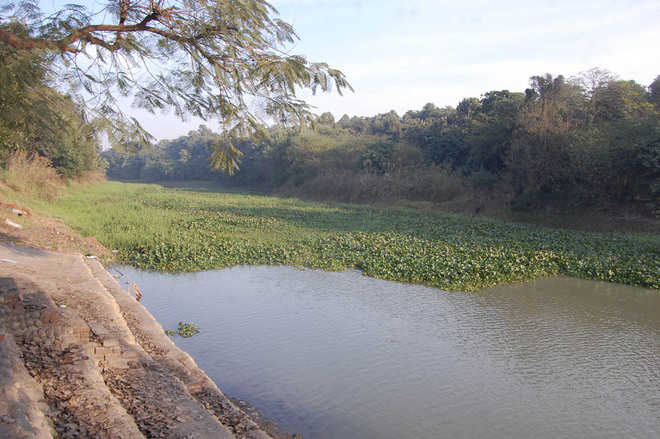
The Kanjli Wetlands, on the western Bein rivulet at the outskirts of the city, has been included in under the Ramsar Convention. It is a common site for bird watching and boating. An enormous project is currently being undertaken here to develop it into a destination for bird watching replete with modern-day facilities. Sadly the Kanjli Wetlands have been in a state of neglect lately with little attention being given by the authorities to the condition of flora and fauna and its surrounding infrastructure.

Source

The Harike Wetland also known as “Hari-ke-Pattan”, with the Harike Lake in the deeper part of it, is the largest wetland in northern India. The wetland and the lake were formed by constructing the headworks across the Sutlej river in 1953. The headworks is located downstream of the confluence of the Beas and Sutlej rivers just south of Harike village. The rich biodiversity of the wetland which plays a vital role in maintaining the precious hydrological balance in the catchment with its vast concentration of migratory fauna of waterfowls including a number of globally threatened species has been responsible for the recognition accorded to this wetland in 1990, by the Ramsar Convention, as one of the Ramasar sites in India, for conservation, development and preservation of the ecosystem. This man-made, riverine, lacustrine wetland spreads into the three districts of Tarn Taran Sahib, Ferozepur and Kapurthala in Punjab and covers an area of 4,100 hectares. This wetland is at a location of about 35 km southwest of Kapurthala.

Travel Bucket List: India – Punjab Part 4

After Patiala, let us travel about 100 km further westwards and slightly north to the city of Ludhiana and then southwest about 150 km from Ludhiana to the city of Bhatinda in this blog post.

Ludhiana
Punjab’s largest city and the largest city north of Delhi, Ludhiana has an area of 311 sq. km and stands on the Sutlej River’s old bank, which is about 13 km south of its present course. Often referred to as India’s Manchester City, the city is an industrial centre of northern India. Ludhiana has also been ranked as the easiest city in India for business according to the World Bank and is home to the Punjab Agricultural University, the largest agricultural university in Asia. Over the years, Ludhiana has established itself as a major trade hub in Northern India due to the presence of industries such as textile manufacturing, cycle parts, and steel.

A city dominated by the small scale industries producing industrial goods, machine parts, auto parts, household appliances, hosiery, apparel, and garments, Ludhiana is Asia’s largest hub for bicycle manufacturing and produces more than 50% of India’s bicycle production of more than 10 million each year. Ludhiana produces 60% of India’s tractor parts and a large portion of auto and two-wheeler parts. Many parts used in German cars such as Mercedes and BMW are exclusively produced in Ludhiana to satisfy the world requirement and it is one of the largest manufacturers of domestic sewing machines. Hand tools and industrial equipment are other specialties of the city.

The apparel industry of Ludhiana, popularly known as Ludhiana Hosiery industry provides employment to millions of people and produces India’s largest share of winter clothing. It is especially known for its woollen sweaters and cotton T-shirts with the majority of India’s woollen clothing brands being based here. Ludhiana is also famous for its industry of shawls and stoles and satisfies the demand of major domestic and international brands, which is why it is often dubbed as the Manchester of India. Ludhiana also has a growing IT sector with multiple software services and product companies having development centres in the city.

Ludhiana gets its name from the Lodhi Dynasty, which is believed to have founded the city in 1480. During the reign of the Mughal emperor Akbar the area formed part of the Sarkar of Sirhind. Chakar, Talwandi Rai in 1478 AD, Raikot in 1648 AD and Jagraon in 1688 AD were founded by the Rai family of Raikot. In the latter period of Mughal rule the western part of the district was leased to the Rais of Raikot. By the early eighteenth century, they had become semi-independent of the Mughals. The villages in Ludhiana district remained independent and under the rule of local powerful village Sikh chieftains, from 1707 to 1835. In 1747 Ahmad Shah Durrani invaded and battled the imperial army near Khanna. Although the Mughals were able to stop Ahmad Shah, his subsequent invasions weakened the Mughals, which allowed the Rais to take control of Ludhiana town in 1760. During the reign of Maharaja Ranjit Singh, Ludhiana became an important British cantonment. Initially, in 1805, Ranjit Singh occupied Ludhiana. However, in 1809, the British decided to curb his advance eastward and sent troops to confront him. Ranjit Singh was forced to sign the treaty of ‘perpetual friendship’ with the British, which confined his activities to the right bank of the Sutlej. British troops were permanently stationed in Ludhiana and the Cis-Sutlej states came under British protection. There was also the battle of Saragarahi fought on 12 September 1897. In 1947 due to violence and strife between the communities, most of the Muslim population in the city left for Pakistan.

So what can we, as a tourist see and visit in this city?

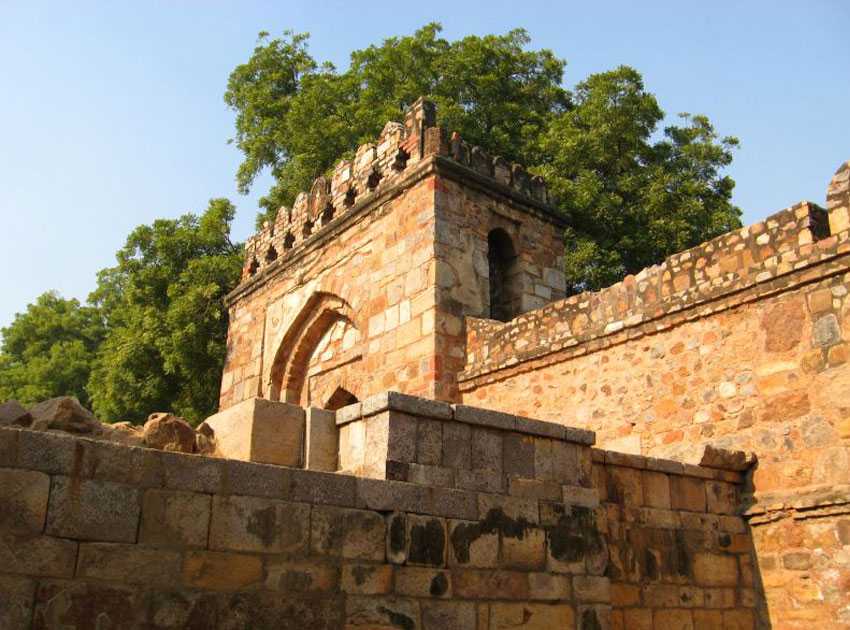
Locally known as Purana Qila or Old Fort, Lodhi Fort was built by the Muslim ruler Sikander Lodhi around 500 years ago and is a grand structure which now lies in ruins due to poor maintenance. The fort stands on a large piece of land which has now been encroached from all sides. The fort was erected as a military castle to stop intruders from entering the city. What was once the gateway to Sikander Lodhi’s empire and the pride of Maharaja Ranjit Singh, now lies forgotten and in ruins. Surprisingly, a large percent of the local population is not even aware of the whereabouts of this fort. This majestic castle shows traces of its grand past, of its once beauty, great architecture, lush green landscapes, and a splendid view of the river Sutluj.

The 200-year old Phillaur Fort started life as a serai constructed by Sher Shah Suri at Phillaur, which was converted to a military fort and a post office by Shah Jahan and later used by the British as a part of the military camp. Designed by Dewan Mokham Chand, general of Maharaja Ranjit Singh, the magnificent Phillaur Fort has a distinct European architecture designed by the Maharaja’s Italian and French generals. It has an extensive moat and its outer walls were used for defence attack. This ancient fort is now being operated as a police training centre and as a fingerprint bureau.

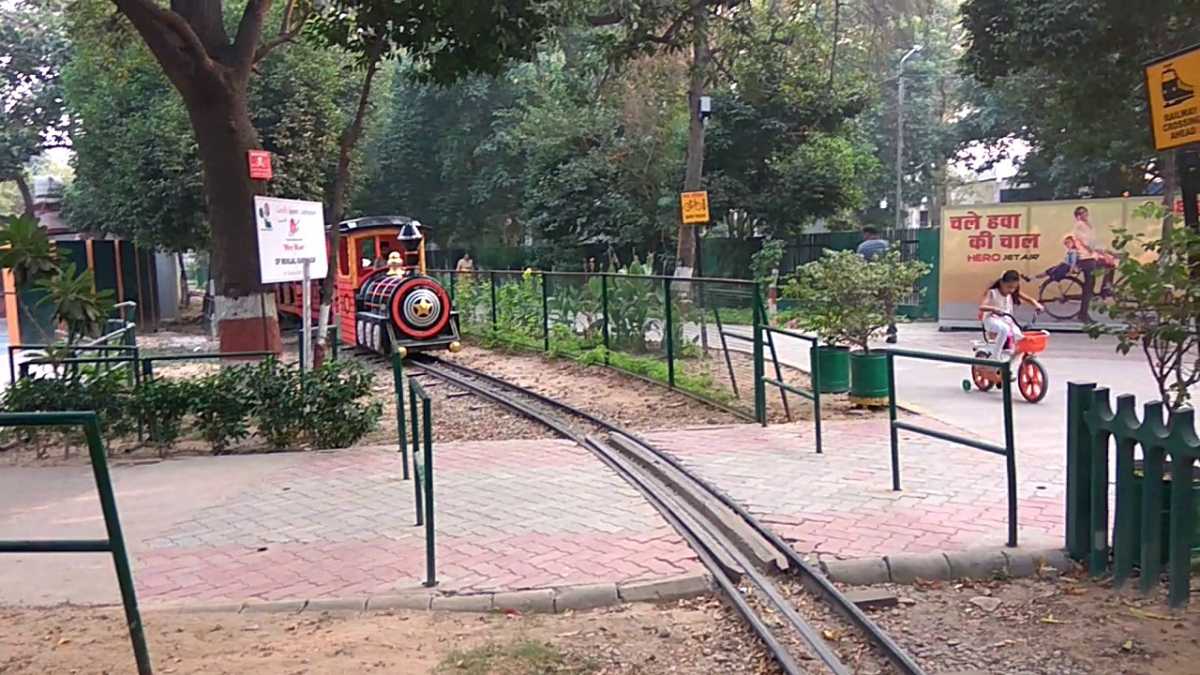
With lush green landscapes and a toy train, the Rakh Bagh Park of Ludhiana is a hot local favourite spot for children, joggers and walkers. Revamped from the British Era the toy train is a children’s favourite and never ceases to grab the attention of the children as it rides around the park. For the morning and evening walkers there is a jogging track that encloses the park. The park is surrounded by tracks for bicycle riders and it houses exercising machines on the children’s play area. There are food joints in and around the park’s premises so the visitors can munch on refreshments and also a swimming pool for learners. Renovations, landscaping and beautifications are planned for the popular garden which is usually crowded throughout the day.

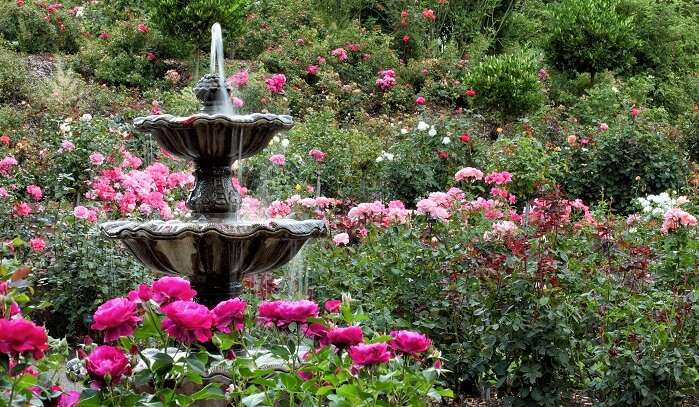
The Nehru Rose Garden is a beautifully landscaped garden in the heart of the city sprawling over an area of 27 acres, and home to over 17000 plants and 1600 varieties of roses. The vast lawns are the perfect picnic spot with water fountains around it. Every night the fountains are illuminated with colorful lights and music. This garden is one of the oldest and largest leisure spots in Ludhiana, established in the year 1967. The rose garden provides a space for jogging and walking track within the enclosure. Apart from the fountains and landscape, the garden holds a planetarium at its entrance, boat rides in the artificial pool and mini zoo. The annual rose festival, one of the most significant cultural events held every year, attract thousands of visitors around India.

Constructed by the Punjab government in 1999, the Maharaja Ranjit Singh War Museum pays homage to the brave soldiers and educate people about their role in the defence. Named after Maharaja Ranjit Singh, this museum has a statue of the king sitting on a throne at the entrance. The museum has more than twelve galleries with different sections for ancient history, post-independence, wars that India fought at its borders, war heroes, the Indian armed forces and is an extensive memoir of India’s past. Don’t forget to watch the light and sound show, which is organised every evening.

The Punjab Agriculture University Museum on the outskirts of Ludhiana, displays artifacts from the 18th and 19th centuries of life in rural Punjab. Also known locally as the Ajaib Ghar and opened in 1974, the museum is inspired by the open-air museum in Copenhagen. The museum houses various rural farming tools and several other artefacts and resembles the traditional houses in rural Punjab with long paths flanked by water channels on either side. The Museum is a hybrid of the agricultural and cultural portrayal of Punjab where one can visit the goat farm, cow farm, and horse farm. The museum depicts the rural life of Punjabis and showcases their culture in the form of household equipment used in the ancient time, pottery, coins, musical instruments, dress, jewellery, juttis (shoes), handicrafts, etc. The models of miniature mountains, rivers and water reservoirs are the crowd pleasers. The exhibit has a long path with water channels on both sides and a beautiful facade in its 4000 sq.ft of land. The 100-yard long path makes way to the etched wooden door of the museum with which holds the antique repertoire of the 18th century Punjab. This historic building houses a rare object made of six layers of camel skin. The culture of Punjab comes alive at the museum as it features traditional instruments like tumba, sarangi, vanjhili and nagara. Open daily from 9 am to 1 pm and then again from 2 to 4 pm, you will need around two to three hours to finish seeing this place. There is an entry fee of INR 10 per person for the museum.

The Gurudwara Charan Kanwal is located about 35 km from Ludhiana, in the village of Machhiwara. The serene ambiance and the beautiful aesthetic architecture of the Gurudwara attracts many tourists. Legend has it that when Aurangzeb’s army attacked, Guru Gobind Singh resisted their onslaught and escaped into the woods of Machhiwara. Here, he rested and slept under a tree where he recited ‘Mitar Pyare nu’. The old Jand tree is still preserved outside the Gurudwara. Daya Singh, Man Singh, and Dharam Singh were his three companions who found him at the site. The place he stepped on marks the site of Gurudwara Charan Kanwal, the feet of Guru Gobind Singh compared to a lotus flower. Every December, an annual congregation fair is held that marks the days of Guruji’s stay during the 9th and 10th of the Punjabi month of Poh the days Guruji stayed at Machhiwara which is also the best time to visit this Gurudwara.

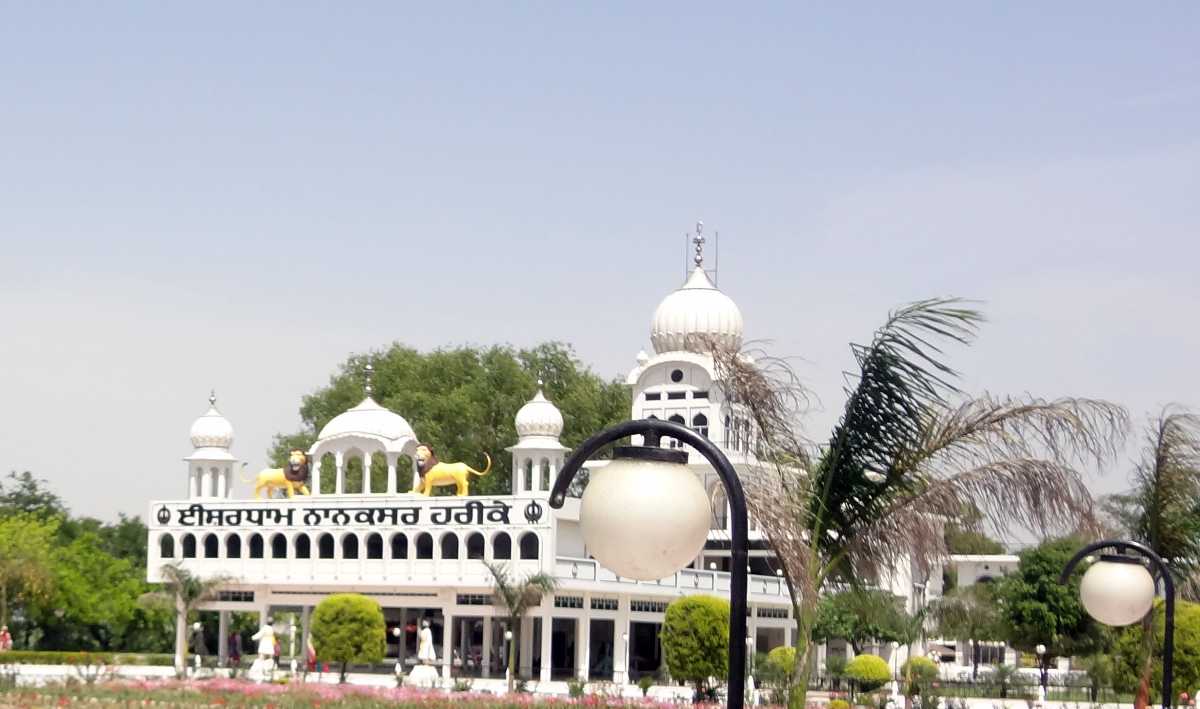
Famous as the memoir of Guru Gobind Singh, the Gurudwara Nanaksar Jagraon is situated on the banks of Nanaksar Sarovar. In the year 1975, the Sikh Saint Baba along with his followers established the Gurudwara in Kaleran. A dominant feature of this shrine is the annual festival held every year for five days in August. It is attended by nearly one-lakh devotees. This beautifully structured edifice houses three separate shrines around its premises namely Gurdwara Sahib Patshahi Pehli, Gurdwara Sahib Patshahi Chhevin and Gurdwara Sahib Patshahi Dasvin. This six storied structure is beautifully architectured with large marble floors and a Sanctum. The nearby villages offer the Langar, a communal meal of Sikhs to the Gurdwara hence the place is not just known for its peace and solace but also brotherhood. The Prakash Divas of Guru Nanak Dev Ji, Guru Gobind Singh Ji, Guru Hargobind Ji and Shahidi Divas of Guru Arjan Dev Ji along with the Jor mela are the significant festivities that are celebrated with great pomp and enthusiasm from 13th-17th of January every year.

The village of Alamgir which is located about 10 km from the centre of Ludhiana is the location of the the Shri Manji Sahib Gurudwara, more commonly known as Alamgir Gurudwara. In 1761, Guru Gobind Singh reached Alamgir soon after the Mughals executed his mother and siblings. Upon arriving the village, it is reported that the Guru shot an arrow into the ground from which a spring appeared. A lady with leprosy who bathed in that spring was cured. Ever since then, the place is known as Tissar or Arrow Lake. It is prophesied that whoever visits the holy spring with faith will be cured of his worries and pain. The guru was also presented with a horse by a devoted follower. A prominent highlight of this place is the palanquin or Manji that carried the Guru to his place which is till date preserved in the Bhora Sahib or the underground shrine, hence the name Manji Sahib. The langar hall of Shri Manji Sahib is among the biggest langar halls of all the Sikh shrines with the capacity to serve hundreds of people for free in one go.

Source

The Rara Sahib Gurudwara is visited by devotees from different parts of Punjab and outside the state. The Rara village was converted into Rara Sahib after the visit of the sixth Sikh Guru, Guru Hargobind-ji in the 17-century. And the Gurudwara was constructed in the 20-century with the visit of Sant Isher Singh-ji and Sant Kishan Singh-ji into this architectural beauty. One thing that attracts tourist to the Gurudwara is a continuous rendition of paath and kirtan day and night every single day without a break.

The Pir-I-Dastgir Shrine which is the tomb of the muslim saint, Abdul Kadir Galani, is located inside the Ludhiana Fort and is known for its unique architecture and design. Visited by both Hindu and Muslim pilgrims from around the city the tomb belongs to the members of Shah Shuja’s family whose belongings can be seen here. Take some time from your hectic trip to spend some hours in this beautiful place which will give you a sense of peace and calm.

Bhatinda
Travelling about 150 km west of Ludhiana, we arrive at one of Punjab’s oldest and fifth largest cities – Bhatinda. Nicknamed City of Lakes because of the numerous artificial lakes in the city, Bhatinda is also home to two thermal power plants.

According to Henry George Raverty, the city was previously known as Tabarhindh and the name was changed to Bhatinda to conform to the local phonetical pronounciation. The earliest mention of Tabarhindh occurs in the Jami-Ul-Hakayat written about 607 Hijri or 1211 AD. In 1004, Mahmud of Ghazni besieged the local fort, which was located on the route from the northwest into the rich Ganges valley. In 1189, Muhammad Ghori attacked and occupied the fort of Bathinda. Prithvi Raj Chauhan, the ruler of this region, managed to recover possession of the fort thirteen months later in 1191 after the First Battle of Tarain. In 1634, a battle named Battle of Lahira, which occurred at Lahira in Bathinda, was fought between Guru Hargobind and Mughals. In 1754, the town was conquered by Maharaja Ala Singh, the Maharaja of Patiala and since then it followed the history of erstwhile princely state of Patiala. With the dawn of independence and merger of Patiala and East Punjab States into a division called PEPSU, Bathinda become a full-fledged district with headquarters at Bathinda city. The first and only empress of the Delhi Sultanate Razia Sultan was imprisoned in the Chauhan Durg fort in Bathinda.

Qila Mubarak’s origin can be traced back to the period between 90 and 110 AD, and it is the oldest surviving fort in India, known to historians. Since the fort is located en route from the northwest, it was also known as Tabar-e-Hind or the gateway to India. Located in the middle of the city, this majestic architecture looks similar to the shape of a boat. Owing to its robust structure, it served an essential role in the defence strategies of Punjab. Razia Sultana, the first empress of the Delhi Sultanates, was kept imprisoned in this fort after she was defeated and dethroned. Guru Gobind Singh, the tenth guru of the Sikhs, had also visited this place. These historical associations make the Qila Mubarak a place of particular interest, especially amongst history lovers. The fort is open on all days except Mondays from 9 am to 5 pm and there is no entry fee to visit this monument.

Source

The lush 10-acre Rose Garden is a perfect spot for a short excursion or enjoy a picnic. If you love to be surrounded by natural roses, you must visit the garden during winters. The sight of natural flowers blooming amidst the mesmerizing aura of the place, is surely worth a visit. The garden is open from 5:30 am till around 10 pm.

Source

The Chetak Park is a must visit tourist site. A park full of lavish greenery and beautiful flower bed, the Chetak Park is a delightful pause in a hectic day. Surrounding the Chetak Lake in the Cantonment area, this park is a perfect place for picnickers. It also offers water boating and bird watching to its visitors.

Nestled 10 km off the Cantonment area, the Zoological Garden is a sort of mini zoo and a popular picnic destination for the locals as well as the tourists. The plant nursery is maintained by the forest department and is a kid favourite too.

The Mazaar of Peer Haji Rattan is a popular place for people of all faiths. It is commonly believed that anyone who prays here and seeks blessings will see their prayers answered. The Mazaar has a common boundary wall with a gurdwara and mosque, which attests to the religious harmony of this place.

The Takht Sri Damdama Sahib is one of the 5 takhts or Seat of Temporal Authority. In Sikhism, Takhts are religious places which hold significant importance and the Takht Sri Damdama Sahib is where the tenth Sikh Guru, Guru Gobind Singh Ji, assembled and instituted the Holy Book of Sikhs, the Guru Granth Sahibji or the Adi Granth, which was originally compiled by Guru Arjan Dev Ji, and added the verses of Guru Teg Bahadur Ji, the ninth Guru and his father. Damdama which means a place to breathe and find peace, is why Guru Gobind Singhji came here after fighting a tumultuous battle against the Mughals and having his sons die a tragic yet heroic death with two of them- Sahibzada Fateh Singh and Sahibzada Zorawar Singh- being bricked alive in Sarhind, now known as Fatehgarh Sahib, and Sahibzada Ajit Singh and Sahibzada Jujhar Singh dying leading the Sikh armies to battle. This is why this is such an important place of worship for the adherants of the Sikh faith.

Source

Situated 15 km off Bhatinda, the Lakhi Jungle is a forest shelters an ancient Gurdwara where Shri Guru Nanak Dev delivered Shri Japuli Sahibs or one lakh which is one hundred thousand holy sermons, which is where the name Lakhi comes from. The 10th Sikh Guru, Guru Gobind Singh has also marked the holy place with his visit.

Source

Located 29 km from Bhatinda on the Bhatinda- Mansa Road, the Maiser Khana Temple is an important place for the followers of Hinduism. It was built to honor Jwalaji and the goddess Durga. People generally visit this area when two melas or fairs are held. Not only Hindu devotees, but alo Sikh devotees make a beeline to the temple during the fairs.

In the next post, we will visit two more cities in Punjab!

Travel Bucket List: India – Punjab Part 3

After Chandigarh and Sirhind, using Chandigarh as a base, let’s travel around 55 km northwest to Rupnagar and then 75 km southwest of Chandigarh to Patiala.

Rupnagar
Formerly known as Ropar, Rupnagar is also known as one of the bigger sites belonging to the Indus Valley Civilization. The ancient town of Rupnagar is said to have been named by a Gujjar Raja called Rokeshar, who ruled during the 11th century and named it after his son Rupsen. Situated close to the state border, on the eastern side, Rupnagar is wedged between the Sutlej river and the Shivalik range.

Rupnagar is one of the Indus Valley sites along the Ghaggar-Hakra beds. There is an archaeological museum in the city which was opened in the year 1998 for general public. The museum exhibits the archaeological remains of excavated site in the city, the first Harappan site of Independent India. These excavations reveal a cultural sequence from Harappan to medieval times. Some of the important exhibits include antiquities of Harappan times, gold coins of Chandragupta and copper and bronze implements. There are many historical and religious places in Rupnagar, including gurdwaras such as Gurudwara Bhhatha Sahib and Gurudwara Tibbi Sahib.

Anandpur Sahib, which is believed to have been founded by Guru Teg Bahadur, is situated near the town. The Gurudwara Keshgarh Sahib at the town is considered as the birthplace of the Khalsa and is counted as one of the five holy seats of Sikhism. Because of this, Rupnagar has immense religious significance for Sikhs. The Holla Mohalla festival is celebrated with fanfare in this town. The most important of the complex of shrines at Sri Anandpur Sahib is Gurudwara Keshgarh Sahib, which stands on the place where the “Khalsa” was born. It is regarded as one of the five sacred “Takhats” or seats of Sikh religion and is built on the hillock. Climbing up some steps, Darshani Deorhi has to be crossed first, then comes the large open marbled quadrangle at the end of which steps lead up to the central shrine. In the centre of the hall is a room displaying twelve weapons used by Guru Gobind Singh in battle. There is an imposing dome on the hall with a golden kalas on the top. It was here in 1699, on the Baisakhi day or April 13, the tenth master, Guru Gobind Singh Ji created the Khalsa by baptising five beloved Sikhs known as the “Panj Piaras”. At the behest of the Guru, thousands of people had assembled on the hill where now Gurudwara Keshgarh Sahib stands. The Guru appeared before the congregation with a naked sword in his hand and told that his thirsty sword demanded the life of a volunteer. A deep hush fell over the crowd. Ultimately, Daya Ram, a Khatri of Lahore came forward. The Guru took him to a tent and returned with his sword with blood. He asked for another head and Dharam Dass, a Jat from Delhi offered himself. Three more similar calls brought out Mohakam Chand, a washerman of Dwarka, Sahib Chand, a barber from Bidar and Himmat Rai, a water carrier from Jagan Nath Puri. From the tent in which these five followers had been taken, Guru Gobind Singh brought out the five Sikhs dressed in new clothes, blue turbaned with loose long yellow shirts, a waist band round their waists, with sorts of Knicker-bockers worn as underwears and with swords dangling by their sides. It was an inspiring sight. The Guru told the congregation that these were his Five Beloved Sikhs or Panj Payaras, and he baptised them by offering them Amrit or the nectar of immortality he had prepared by dissolving sugar blocks or Patasa in water sanctifying the sweetened water by stirring it with double edged sword, khanda and reciting the holy verses. The Guru himself took the Amrit from the Panj Payaras, thus removing the distinction between himself and followers. On that day, Guru Gobind Rai became Guru Gobind Singh. The Panj Payaras were enjoined to embrace the five symbols of the new Sikh faith, Kes or unshorn hair, Kangha or comb, Kara or steel bracelet, Kachha or short drawer and Kirpan or sword. The ceremony gave the followers of the Guru, a new identity which was to prepare the Sikhs for their struggle against the Mughal State and influence the future of the country. One of the biggest festivals celebrated in this city is the Holla Mohalla, at the Anandpur Sahib, every year, after Holi. This three-day fair is attended by Sikh devotees from all across the country. On the last day, Nihangs (Sikh warriors) dressed in traditional attire and carrying traditional weapons, walk towards the Holgarh Fort and display tent pegging, riding and sword wielding on the sand-clad bed of Charan Ganga.

The Virasat-e-Khalsa, formerly known as the Khalsa Heritage Memorial Complex is a museum located at Anandpur Sahib complex. The museum gives an insight to the events that took place in Punjab five hundred years ago which gave birth to Sikhism and finally the Khalsa Panth. The museum throws light on the vision of the great Gurus, the eternal message of peace and brotherhood which they delivered to the whole mankind and the rich culture and heritage of Punjab. The museum is intended to commemorate 500 years of Sikh history and the 300th anniversary of the Khalsa, the scriptures written by the 10th and last Guru Sh. Guru Gobind Singh Ji founder of modern Sikhism. The Heritage Complex is inspired by the rich natural and architectural heritage of Sri Anandpur Sahib, while also drawing heavily from Sikh and regional architecture. Contrary to the tradition of domes which crown the sacred Sikh sites, the roofs of the Museum are concave-shaped receptors facing the sky. Sheathed in stainless steel, they reflect the sun’s light towards the Gurdwara and the Fort.

Source

Situated on the banks of Sirhind Canal, the Gurudwara Chamkaur Sahib is located around 16 km from Rupnagar. Guru Gobind Singh and his two elder sons and about 40 followers had come to this place from Kotla Nihang with his pursuers close on his heels.They came to the garden said to be belonging to Raja Bidhi Chand, where now Gurudwara Damdama Sahib stands.There are several Gurudwaras at this place marking the vistis and halts of Guru Gobind Singh. Gurudwara Katalgarh Sahib also known as Gurudwara Shahidganj. Occupying a unique place among all the Gurudwaras located at Chamkaur Sahib, it is built at the site where Baba Ajit Singh and Baba Jhujhar Singh, elder sons of Guru along with his 37 followers fell fighting against the Mughal Army.

Source

The Archaeological Museum in Rupnagar is situated on the banks of the Sutlej River. Opened to public in the year 1998, the museum houses the archaeological remains of excavated site near Ropar, the first Harappan site excavated in India after partition. The excavation revealed a cultural sequence from Harappan to medieval times. Important exhibits include antiquities of Harappan times, Painted Grey ware culture, Saka, Kushana, Gupta times such as Vina Vadini or a lady playing on the veena, steatite seal, copper and bronze implements, ring stone, yakshi image, gold coins of Chandragupta. Visitors can also have a glimpse of important protected monuments of Punjab, Haryana, Himachal Pradesh and World Heritage monuments. The museum is open from 10 am to 5 pm. Open on all days of the week, the museum is closed on Fridays and has an entrance fee of INR 5 with children up to the age of 15 getting free entrance.

Situated at the feet of the Shiwalik Hills, Nangal at a distance of 60 km from Rupnagar, is surrounded by beautiful environment of hills, river and canals and is an important tourist centre. It is divided into two parts, Nangal Township and Naya Nangal. The town was named Nangal by acquiring the lands of three villages viz. Nangal Nikku, Hambewal and Dubheta and gained importance with the starting of the construction of Bhakra Dam on Satluj river in November, 1955. Apart from Bhakra Dam, the Nangal Dam, Nangal Hydel Channel, Ganguwal and Kotla Power Houses are located here. Overlooking the Nangal lake, Gurudwara Vibhour Sahib presents a majestic view. Guru Gobind Singh is said to have mediated at this place. The Nangal lake is a beautiful artificial lake which is 6 Km long shaped by the Nangal dam. About 40,000 migratory birds fly here in winters and this lake is a heavenly paradise for bird lovers.

The Ropar Wetland, also named Ropar Lake, is a man-made freshwater riverine and lacustrine wetland. The area is biologically diverse and it is an important ecological zone is located in the Shivalik foothills of the Lower Himalayas and was created in 1952 on the Sutlej River. It was built by building a head regulator to store and divert water for beneficial uses of irrigation, drinking and industrial water supply. The endangered turtle Chitra indica and the threatened snake Python molurus, as per IUCN Red List, are reported to be resident in the wetland. The wetland once was a popular tourist attraction for bird watching and boating. A tourism complex called the ‘Pinccasia’ was located within the wetland boundary, which was run by the Punjab Tourism Development Corporation. A boat club was also functioning. However, today, only a dilapidated building of tourist bungalow exists, the boating bay is damaged and the garden is also unkept.

Patiala
About 85 km southwest of Rupnagar and about 73 km southwest of Chandigarh lies the fourth largest city in Punjab, the city of Patiala which is located around the Qila Mubarak or the ‘Fortunate Castle’ constructed by the Sidhu Jat chieftain Ala Singh, who founded the royal dynasty of Patiala State in 1763, and after whom the city is named. The word ‘Patiala’ comes from the roots pati and ala, the former is Urdu for a “strip of land” and ‘ala’ comes from the name of the founder of the city, Ala Singh. So, ‘Patiala’ can be translated into English to mean ‘the land of Ala’.

Patiala state was established in 1763 by Ala Singh, who laid the foundation of the Patiala fort known as Qila Mubarak, around which the present city of Patiala is built. After the Third Battle of Panipat in 1761 in which the Marathas were defeated by the Afghans, the writ of the Afghans prevailed throughout Punjab. It is at this stage that the rulers of Patiala began to acquire ensigns of royalty. The Patiala state saw more than forty years of a ceaseless power struggle with the Afghan Durrani Empire, Maratha Empire and the Sikh Empire of Lahore. In 1808, the Raja of Patiala entered into a treaty with the British against the Sikh ruler Maharaja Ranjit Singh of Lahore in 1808, thus becoming collaborator in the grand empire building process by the British in, the sub-continent of India. Patiala became a 17-guns salute state during the British Raj. The city of Patiala was designed and developed according to a plan akin to that of temple architecture, the first settlers of Patiala being the Hindus of Sirhind, who opened their business establishments outside the Darshani Gate.

The Qila Mubarak complex is a rampart fort cum palace built in Sikh palace architectural style- a derivative of Mughal and Rajput style of architecture in India. It was built under the patronage of Maharaja Ala Singh in 1764. The whole complex comprises of various sections including the Ran Baas or the guest house, the Darbar Hall, the Qila Androon, with an underground sewerage system within the Qila, and the Qila Bahadurgah.

Located in Moti Bagh, the Moti Bagh Palace is an ancient palace that is simply magnificent. Originally built in the 1840s by the Maharaja of Patiala, the premises of the palace were expanded in 1920 under the rule of Maharaja Bhupinder Singh. Boasting of striking architecture with chhatris and jharokas, and exuding old world charm, it is home to 15 dining halls. Lately, a part of the palace has been converted into a museum and the remaining part into the National Institute of Sports.

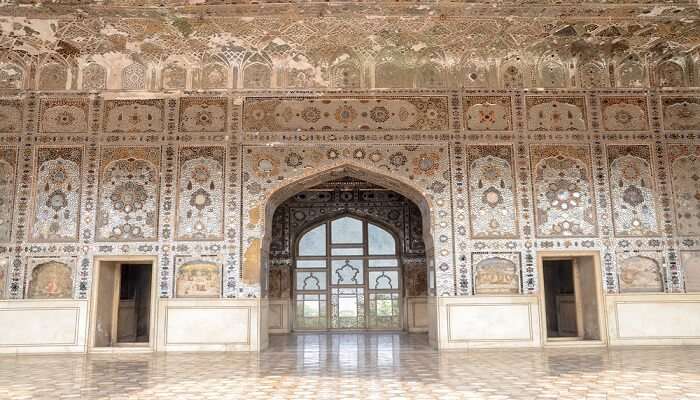
Literally meaning the Palace of Mirrors, the Sheesh Mahal was built as a part of the Old Moti Bagh Palace in the 19th century. There are a lot of frescoes, as well as is home to many relics of art and culture as well as several paintings done in the Rajput and Kangra styles, belonging to the 20th century, mostly made under the reign of Maharaja Narinder Singh. There is also an artificial lake in front of this palace along with a hanging bridge called Lakshman Jhula which was fashioned after the Lakshman Jhula of Haridwar. The museum which is located along with the palace has the largest collection of medals from across the world.

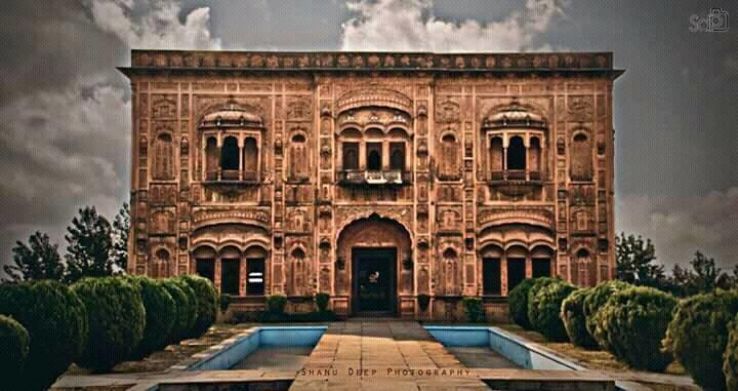
The Baradari Gardens, located north of the pld Patiala city and close to the Sheranwala Gate was built during the reign of Maharaja Rajinder Singh. It houses a lot of rare trees, shrubs and flowers along with some graceful colonial buildings. There is also a statue of Maharaja Rajinder Singh in the garden. This was built as a royal residence with cricket stadium, a skating rink and the Rajinder Kothi, which used to be a small palace and has now been turned into a heritage hotel.

The Bahadurgarh Fort is an ancient historical fort which was constructed in 1658 and originally built by Nawab Saif Khan. It was later renovated and remodelled by Maharaja Karam Singh in 1837 and sprawls over an area of 21 sq km. The fort is named after the ninth Sikh Guru – Guru Tegh Bahadur. Boasting of two ramparts and a moat, this magnificent structure is built in a circular shape with imposing and impregnable walls. Two of the circular battlement grounds are surrounded by a 25 feet deep and a 58 feet wide moat to make it difficult for the enemies to break through. Beside a Gurudwara in the fort complex that goes by the name of Gurudwara Sahib Patshai Navin, there is also a mosque setting a perfect example of peaceful coexistence. In addition to being a popular tourist attraction, the fort premises are currently used for the Punjab Police Commando Training School.

The Gurudwara Dukh Niwaran Sahib is one of the most popular gurudwaras in because it’s waters are said to have curative properties. According to the HukamNama, it is believed that anyone with ailments or illnesses who takes a dip in the pond with complete devotion and attention can be fully cured. Visitors can take part in a lot of activities apart from praying here such as volunteering to help feed people or keeping the Gurdwara clean. A number of people visit this Gurdwara, not only on special occasions such as Basant Panchmi, which was the day when Guru Tegh Bahadur Ji arrived at this place, Gurunanak Jayanti or Lohri but this place is also often visited by newly-wed couples and new-borns.

The Kali Devi Mandir at Patiala was built by the Maharaja of Patiala, Bhupinder Singh, in 1936, who was inspired to build the temple and bring the idol of Goddess Kali and the “paawan jyoti” or the “sacred fire” from Bengal to Patiala. Situated opposite the Baradari Garden, the temple, made entirely of white marble, houses a six-foot-tall idol of Goddess Kali made of black stone and standing erect in a gold-plated sanctum. The idol is seen in her popular image – bloodshot eyes, open mouth and a drooping tongue, with a bent sword and a human head in her hand. The walls of the temples are adorned with beautiful murals, inscriptions and frescoes, telling the tales of Hindu mythology and stories from Hindu epics. Because of its architectural finesse, the temple has been declared a national monument. Interestingly, an older temple to a Hindu deity Raj Rajeshwari also stands in the middle of the temple complex.

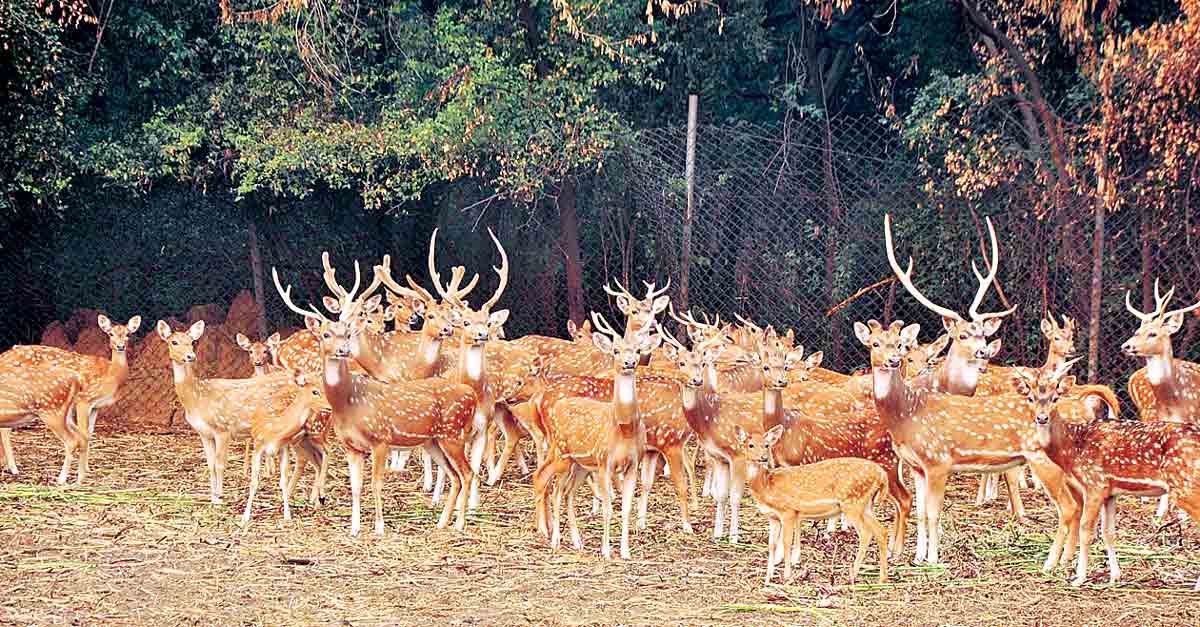
Located 5 kms from Patiala city, the Bir Moti Bagh Wildlife Sanctuary is spread over 654 hectares of land and was once the royal family’s prized hunting reserves. The Bir area was declared a wildlife sanctuary in 1952 and today, it is home to a plethora of indigenous wildlife, notably the chital, hog deer, peafowl, myna, partridge, etc. There is also a separate deer park within the Sanctuary. The best time to visit the Sanctuary is during the winter months, between October and January when migratory birds can be spotted.

Travel Bucket List: India – Punjab Part 2

We kick off our visit to the fertile Punjab starting from it’s capital of Chandigarh and will make our way westwards, culminating in Punjab’s holiest city of Amritsar. On the way, let’s see what delights the state has in store for us.

Chandigarh
A unique planned city, Chandigarh serves as the capital to the two neighbouring states of Punjab and Haryana. The city is unique as it is not a part of either of the two states but is governed directly by the Union Government. The city, also called a Tricity, is bordered by Punjab to the north, west and south, and by the state of Haryana to the east and includes Chandigarh, Panchkula in Haryana and Kharar, Kurali, Mohali and Zirakpur in Punjab. Chandigarh is located approximately at the mid-point distance between New Delhi and Amritsar.

It was one of the early planned cities in post-independence India and is internationally known for its architecture and urban design. The master plan of the city was prepared by Swiss-French architect Le Corbusier. A 2015 article published by BBC named Chandigarh as one of the few master-planned cities in the world to have succeeded in terms of combining monumental architecture, cultural growth, and modernization. Chandigarh’s Capitol Complex, which include the Punjab and Haryana High Court, Punjab and Haryana Secretariat and Punjab and Haryana Assembly along with monuments Open hand, Martyrs Memorial, Geometric Hill and Tower of Shadow and the Rock Garden was declared a UNESCO World Heritage Site in July 2016. Not only is the city one with one of the highest per capita incomes, it is also is the cleanest in India and was ranked the happiest city in India by LG Electronics in 2015.

The name Chandigarh is a compound of Chandi and Garh of which Chandi refers to the Hindu goddess Chandi and Garh means fortress. The name is derived from Chandi Mandir, an ancient temple devoted to the Hindu Goddess Chandi, near the city in the Panchkula district.

Chandigarh was the dream city of India’s first Prime Minister, Jawaharlal Nehru. After partition in 1947, Punjab was divided into two provinces, East Punjab in India with mostly Sikhs and Hindus and West Punjab in Pakistan with mostly Muslims. The Indian Punjab required a new capital because the former capital, Lahore, had become part of Pakistan after partition. In 1949 the American planner and architect Albert Mayer was tasked to design a new city to be called “Chandigarh”, which was to be from about fifty Puadhi-speaking villages in the then-state of Punjab.Shimla was the temporary capital of Punjab until Chandigarh was completed in 1960.

Albert Mayer developed a superblock-based city interspersed with green spaces which with an emphasis on cellular neighborhoods and traffic segregation taking advantage of natural land characteristics which promoted proper drainage. Mayer stopped work after his architect-partner Matthew Nowicki died in a plane crash in 1950, after which Le Corbusier was recruited to succeed Mayer and Nowicki, who enlisted many elements of Mayer’s original plan without attributing them to him. Le Corbusier designed many administration buildings, including the High Court, the Palace of Assembly, and the Secretariat Building as well as the general layout of the city, dividing it into sectors. Chandigarh hosts the largest of Le Corbusier’s many Open Hand sculptures, standing 26 metres high. The Open Hand (La Main Ouverte) is a recurring motif in Le Corbusier’s architecture, a sign for him of “peace and reconciliation. It is open to give and open to receive”, representing what Le Corbusier called the “Second Machine Age”. When the new state of Haryana was formed on 1 November 1966 out of the eastern portion of Punjab, the western portion was called Punjab and Chandigarh, which was located on the border of both states was a bone of contention between both states to become their capital. However, the city was declared a union territory to serve as capital of both states.

Rose Garden: Also known as the Zakir Hussain Rose Garden after the former President of India, this garden is a blooming exhibit that showcases around 825 varieties of flowers and about 32,500 varieties of trees and medicinal shrubs spread over 30 acres. Built in 1967, it is the largest garden of its kind in Asia. The Rose Garden is a sight to behold when the flowers are in their full bloom in the months of February and March. You will need around 2 hours to enjoy this serene place which is open from 6 am to 10 pm. The entrance fee for the garden is INR 50 per person, including children.

Rock Garden: A massive massive open-air exhibition hall that displays sculptures made from urban and industrial wastes that have been designed and executed by Nek Chand, the Rock Garden is located between Sukhna Lake and the Capitol Building and is a must-visit place when you visit the city! Also known as Nek Chand’s Rock Garden, this massive 40-acre garden is a colourful mosaic of art pieces and sculptures which was built in the year 1957 by Nek Chand single-handedly in his spare time and has become a long-standing symbol of imagination and novelty in the city. The exhibition area of Rock Garden is divided into three different phases that have different types of installations and embellishments in them. Each phase deals with a different type of installations and walking through them is a true delight. The Rock Garden is open from 9 am to 7 pm in summer in the months of April to September and from 9 am to 6 pm during the winter months of October to March. Keep aside at least half a day to walk around and check out the place. Adults will need to pay INR 5 and children will pay INR 3 to enter the Rock Garden.

Sukhna Lake: Nestled at the foot of Shivalik Hills and stretching for a distance of 3 sq km, Sukhna Lake is a man-made lake and the only one of its kind created in 1958 by damming the seasonal Sukhna Choe or stream that flows down the Shivalik Hills. With its pristine blue water, the lake serves as a perfect location for a morning jog or walk where one can also enjoy the fresh air. Le Corbusier claimed the lake would be the centre of wellness pursuits for the residents. The promenade in front of the lake is a local favourite and the lake has one of the longest rowing channels in the country which hosts the Asian Rowing Championships. The best way to enjoy Sukhna Lake is to go on a lazy boating tour by hiring a boat, which would cost between INR 50 – INR 100. The lake is also home to several species of fish and migratory birds such as the Siberian duck and cranes. Bound by a golf course and the famous Rose Garden, the lake offers a mesmerizing escape at all times of the day. Sukhna Lake is open on all days of the week between 5 am to 9 pm and there is no entry fee to access the lake.

Pinjore Gardens: A beautiful Mughal Garden from the 17th century, Pinjore Gardens is a massice 100 acre garden located east of Chandigarh in Pinjore, in the district of Panchkula in Haryana. Also known as the Yadvinder Garden, the garden has well-maintained greenery, refreshing fountains and soothing water bodies. Pinjore Gardens are a good illustration of terrace gardens in India. During the festival of Baisakhi, between April and June, the Garden serves as the venue of the annual Mango Festival. It also houses a mini zoo, an area dedicated to historic places, a serene Japanese garden, a splendid nursery and some areas that serve as picnic spots. The best time to explore the gardens is in the evening and will take you around three hours to cover, as it is lit up after sunset making it beautiful. Entry fee for the garden is INR 20 and the garden is open from 7 am to 10 pm.

Chandigarh Botanical Gardens: Comprising of two gardens, the Chandigarh Botanical Gardens is spread across the city, one in the Punjab University Campus and the other between Sukhna Lake and the Rock Garden in Sector 1. The gardens are adorned by a huge variety of systematically arranged plant species that are both exotic and evergreen. The botanical gardens are open from 6 am to 10 pm daily.

Garden of Silence: Located in Bhagwanpura, with the Shivalik Range as a backdrop, the Garden of Silence is a meditative space which houses a massive idol of Buddha. The garden swears by its name and it offers a peaceful and tranquil atmosphere for meditation amidst lush green surroundings. Open from 6 am to 10 pm, the garden does not have any entry fee and is a beautiful pause in a hectic holiday.

Cactus Garden: Spread over a vast area of seven acres, the Cactus Garden is also known as National Cactus and Succulent Botanical Garden and Research Centre and was established to preserve and protect the dying species of cactus. Currently, the garden boasts of housing around 500 varieties of cacti. The gardens are open from 9 am to 1 pm and then again between 3 to 6 pm in the evening with an entry fee of INR 10 per person.

Chattbir Zoo: Also known as the Mahendra Choudhary Zoological Park, the Chattbir Zoo is a zoological park in Zikarpur south of Chandigarh in the state of Punjab. The park is home to a vast variety of animals, birds and reptiles. Sprawling over an expansive 202 acres of land, the zoo offers an open enclosure to the animals to retain their natural habitat environment. The highlight of the zoo is Royal Bengal Tiger. The entry fee for adults, which means anyone above 12 years of age is INR 20 and for children below the age of 12, it is INR 5. You can also use a battery operated vehicle or the tiger safari for INR 50. The Zoo is open from 9 am to 5 pm, all days of the week, except Mondays.

Other Gardens: Other than the Rose Gardens, the Botanical Gardens and the Cactus Garden, the city is also home to numerous interesting open spaces and gardens. This includes the Shanti Kunj, a garden fed by a natural stream that divides it into five blooming islands, the Terraced Gardens, home to a myriad of colourful and vibrant flowers, covering 10 acres and full of lush greenery and scenic views. There is also the Bougainvillea Garden, with its annual bougainvillea festival and with over 50 varieties of bougainvillea on display, spread over 20 acres. The Garden of Fragrance as the name suggests is famous for its fragrant varieties of plants and beautiful landscapes while the Leisure Valley is an eight-kilometre long linear stretch that covers a large part of Chandigarh and is known as ‘the lungs of the city’. The Hisbiscus Garden on the other hand, houses over 40 varieties of hibiscus shrubs over an eight acre expanse and the Topiary Park is a children’s park with excellent play facilities. The Japanese Garden is a well-groomed, beautifully maintained park which houses a park, water bodies, pagoda towers, waterfalls, meditation centres, buddha idol among other structures and has two phases interconnected by an underground tunnel which is adorned with beautiful Japanese paintings. The Butterfly Park is a well maintained garden hosuing over 35 species of butterflies and more and has been designed to facilitate an ideal environment for the breeding of butterflies. One of Chandigarh’s newest gardens is the Garden of Palms which boasts of 21 different types of palm trees and houses rivulets, ravines, cycling tracks, eateries.

Government Museum and Art Gallery: One of the more prominent museums in India, the Government Museum and Art Gallery speaks of the Indian history and partition and was established in August 1947. Known for its rich collection of paintings, artefacts, and sculptures with a unique architechture designed by Le Corbusier is highly revered, this museum was opened in 1968. Located in the centre of the town, it offers gorgeous views of the Shivalik ranges in the background. The museum is closed on Mondays and public holidays and on other days it is open from 10 am to 4:30 pm and you require about 2 hours to check it out. The entry fee is INR 10 per person and you need to pay INR 5 per camera you need to take inside the museum.

National Gallery of Portraits: Chronicling the Independence era, the National Gallery of Portraits houses the portraits, recorded voices of the great leaders of India and rare documents in connection with the freedom struggle. It also houses a library that archives a huge collection of books on the freedom movement. The gallery also screens a film on the freedom movement of India on every Sunday at 2 pm. The Gallery’s prime collection is on Pandit Jawahar Lal Nehru and Mahatma Gandhi.

Le Corbusier Centre: A popular heritage centre dedicated the architect who made the city almost six decades back, the Le Corbusier Centre houses the legacy, research, study, writings and works of the famous architect. There is no entry fee and the centre is open from 10 am to 6 pm on all days of the week, except Mondays.

Open Hand Monument: The Open Hand Monument is an amazing work of art located at the Capitol Complex in Chandigarh city. The monument is an open hand symbol for the Government of Chandigarh, designed by Le Corbusier, which means “the hand to give and the hand to take; peace and prosperity, and the unity of mankind”. The hand also rotates with the direction of the wind.

After Chandigarh, we go about 45 km west to the town of Sirhind.

Sirhind
Earlier known as Fatehgarh Sahib, the popular notion is that the name Sirhind comes comes from ‘Sar-i hind’, meaning the Frontier of Hind, as the Mughals saw it as the ‘gateway to Hindustan’. The town was also a was a military outpost of Prithviraj Chauhan in his revolt against Muhammad Ghori and became a part of Ghauri Sultanate and later in the year 1362, it was refounded by Tughlaq emperors.

Varahamihira who lived between 505 – 587 AD in his Sanskrit treatise, Brihat Samhita, mentions the city as ‘Satudar Desh’. The city was later inhabited by a tribe of ‘Sairindhas Aryans, leading to its present name. According to Huan Tsang, the Chinese traveller who visited India during the seventh century, Sirhind was the capital of the district of Shitotulo, or Shatadru, which is the present day River Sutlej. In 12th century, Sirhind came under the rule of the Hindu Chauhan Rajputs of Delhi. During the rule of Prithvi Raj Chauhan between 1168 and 1192, the Hindu Rajput ruler of Delhi, it became his military outpost. It further rose in glory during the Mughal Empire, when it became its provincial capital, controlling the Lahore-Delhi Highway, the Grand Trunk Road. During the Mughal era, Sirhind was the name for Malwa, since it was the area’s capital city. Sirhind was the headquarters of the Mughal administration in Eastern Punjab. Many European travellers describe its splendours, and it also developed into a center of cultural activity.

Sirhind was known for the dozens of saints, scholars, poets, historians, calligraphers and scribes who lived there. A famous muslim saint Imām-e-Rabbānī Shaykh Ahmad al-Farūqī al-Sirhindī, an Indian Islamic scholar of Arab origin, a Hanafi jurist, and a prominent member of the Naqshbandī Sufi order is said to be buried here. It is said that in its heyday, the city had 360 mosques, gardens, tombs, caravansarais and wells.

Source

Currently, it is prominent pilgrimage spot for Sikhs as the two young sons of Guru Gobind Singh were brutally killed here. The younger sons of the tenth Sikh guru Sri Guru Gobind Singh ji namely Baba Zorawar Singh ji and Baba Fateh singh ji were bricked alive at the age of 9 and 7 years respectively by the then Mughal governor Wazir Khan. The Gurudwara Sri Fatehgarh Sahib was established at that place to commemorate their death. Baba Banda Singh Bahadur in 1710 destroyed the city of Sirhind completely and killed Wazir Khan the governor. The Sikhs occupied Sirhind and made Bhai Baj Singh the governor.

Since Sirhind is a holy place for the Sikh community, there are a lot of Gurudwara in the town which include the Gurudwara Fatehgarh Sahib which was built to commemorate the martyrdom of the younger sons of Guru Gobind Singh. The Gurdwara Shahid Ganj, which was built to honour the martyrdom of the Sikh who were murdered by the Mughals. It is said that forty cartloads of heads of the martyred Sikhs were cremated. Other gurudwardas include the Gurdwara Jyoti Sarup, the Gurdwara Patshahi Chevin and the Gurdwara Motiram Mehraji. The town is also home to the shrine of Syed Ahmad Sirhindi called Rauza Sharif as well as the tomb of Mir-I-Miran. The Aam Khas Bagh which is the remains of a highway-inn constructed for the use of royalty as well as common people by the Mughal emperor Akbar and rebuilt by his grandson Shah Jahan. The inn was divided into two parts – the Aam for public use and the Khas for private use by the Royalty to be used while travelling between Delhi and Lahore. The Mata Chakreshwari Devi Jain Temple, said to be 1000 years old is located nearby and the water in the tank of the temple is considered sacred by the devotees who carry the water home and consider it as sacred as the water of the river Ganges. The Haveli Todar Mal, home to Diwan Todar Mal, who was one of the nine gems of Emperor Akbar’s court is also known as Jahaz Haveli and is located on the eastern side of the Sirhind – Ropar railway line.
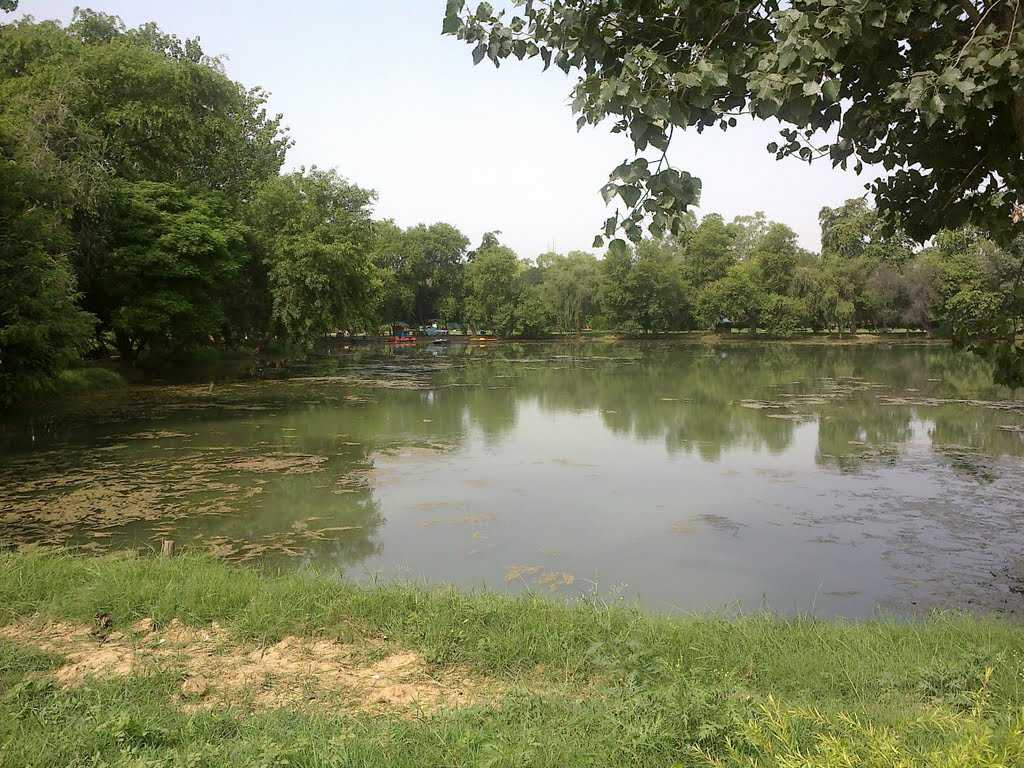
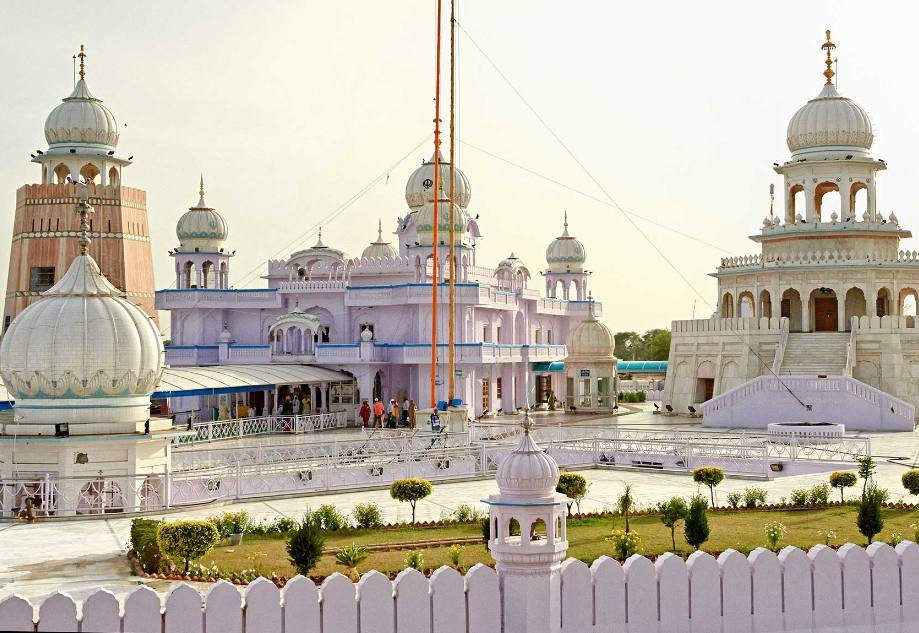
The best time to visit Sirhind is in winter between the months of October to March.

In the next post, we will explore more cities and towns in Punjab.