Recipes: Kosamali Salad

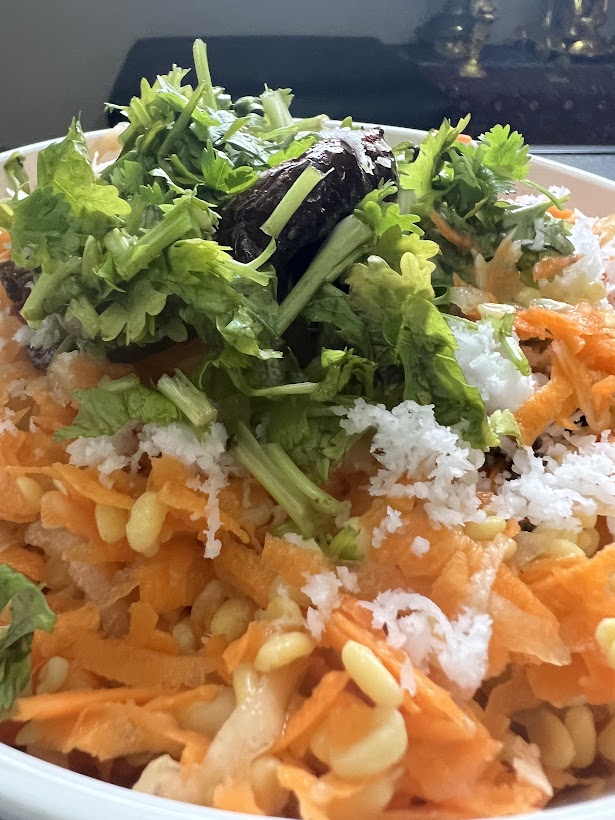
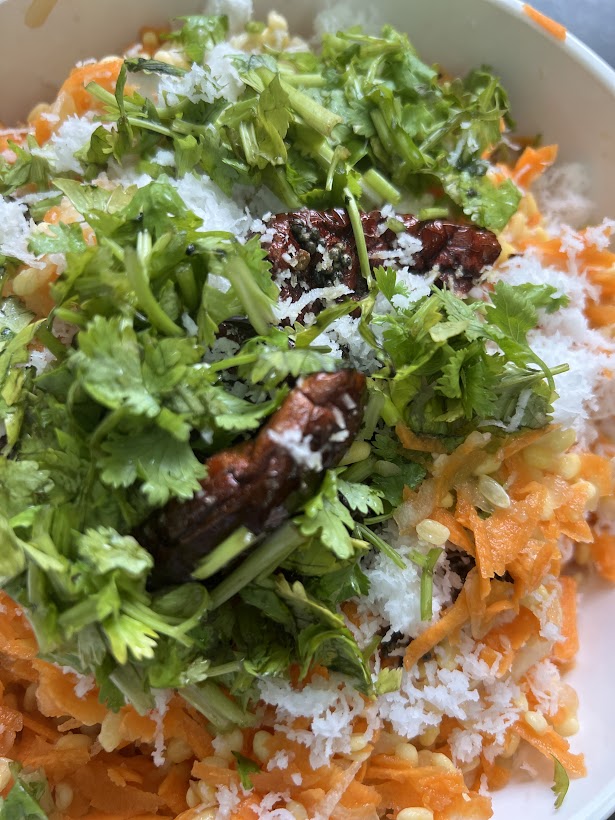
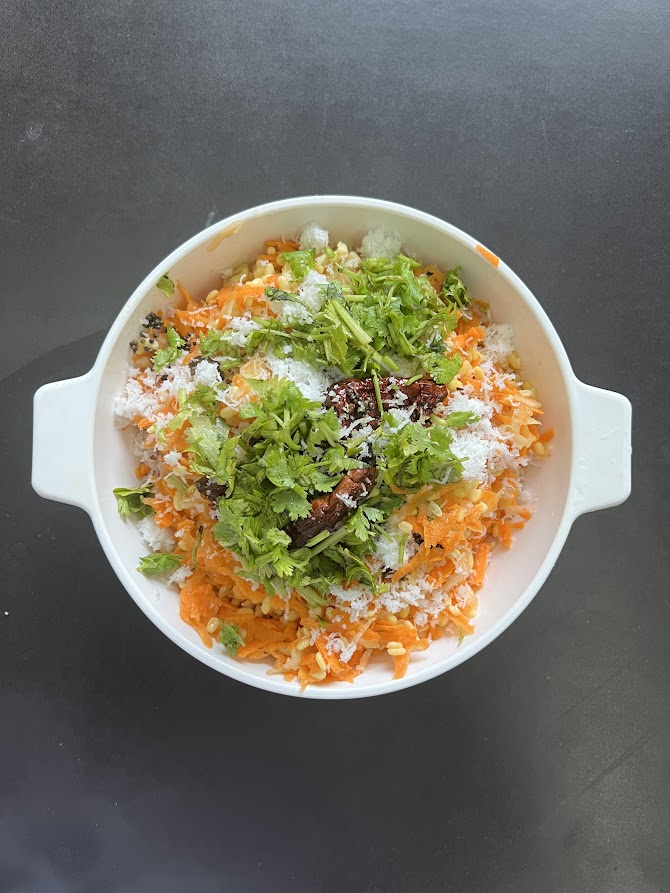
Also known as Koshambari, Kosamalli is a no-cook protein-rich salad that is made as a neividhyam for Rama Navami and also served in certain Tamil Brahmin weddings. It’s a super easy recipe to make, but one which I have never made. So in April, during the Tamil New Year, since I had my mother with me, I learned how to make it from her. And since it has been super hot in Singapore (no surprise there, right?), I also added in some raw mangoes which added a nice tinge of sourness to the salad.

Kosamali Salad

Ingredients:

  • ½ cup grated carrots
  • ½ cup grated cucumber
  • ¼ cup grated raw mango
  • ¼ cup yellow moong dal
  • 6-7 tbsp fresh grated coconut
  • 1 tsp oil or ghee
  • ½ tsp mustard seeds
  • 1/8 tsp asafoetida
  • 2 dried red chillies, broken
  • 4-6 curry leaves
  • 1 tbsp chopped coriander leaves
  • Salt as required
  • 1 tsp lemon juice

Method:

  • Soak the yellow moong dal in a pan in hot water for about 30 mins, then drain completely and keep aside. You can also soak it in normal tap water for about 2 hours and then drain and keep aside. Just make sure when you drain it, all the water is completely drained.
  • In a large bowl, add the drained moong dal, grated carrots, grated mangoes and grated cucumbers and lemon juice and mix well.
  • In a small skillet, add the oil or ghee and when the oil or ghee warms up, add in the mustard seeds and let them pop. Then add the curry leaves and let them splutter for a bit.
  • Then add the dried red chillies, and asafoetida and let it cook for a couple of seconds.
  • Switch off the flame and add the tempering to the mixed dal and vegetables.
  • Now add in the grated coconut and the finely chopped coriander leaves to the salad and cover and keep aside for at least 10 minutes.
  • If you are eating the salad immediately, then add in the salt and mix well and serve.
  • If this salad is meant to be eaten later, or you plan to chill it for a while, add the salt just before serving otherwise the cucumber will start to ooze water.

This was a super delicious salad and will make a good addition to our salad repertoire.

The Art of Pickling: Growing Up with Indian Pickles

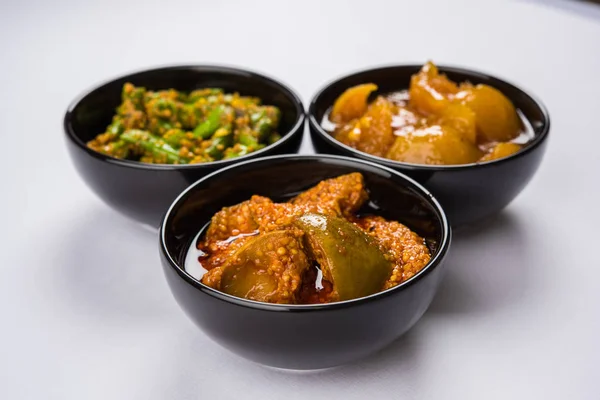
Pickles are an important part of any Indian meal. Known as achar in Hindi and oorgai in Tamil, most Indian households will have at least one kind of pickle in their fridge or larder. Part of the Indian culture and history for more than 4,000 years, it could be argued that the technique of pickling originated in India when people first started salting and curing food in brines to preserve it for long journeys.

Achar, a loanword of Persian origin, entered popular use as the Hindustani term for pickles under the Mughal Empire. In Persian, the word achar is defined as “powdered or salted meats, pickles, or fruits, preserved in salt, vinegar, honey, or syrup.” Early pickle recipes in Ayurvedic and Sangam period texts mention several varieties of pickles, including the earliest known mention of mango pickles. Nalachampu, a Sanskrit epic written by Trivikrama Bhatta in 915, describes pickles made from green mango, green peppercorns, long pepper, raw cardamom, lemon, lime, myrobalan, hog plum, stone apple, and fragrant manjack. Early medieval cookbooks published between 1025 and 1549 AD mention pickle recipes that use green mango, green peppercorns, long pepper, lemons and limes, turmeric root, mango-ginger root, ginger, radish, bitter gourd, cucumber, lotus root, and bamboo shoots. The religious text Lingapurana by Gurulinga Desika, published in 1594 mentions more than fifty kinds of pickles. Unique pickles made from edible flowers are also mentioned in the Ni’matnama cookbook published in 1500.

Chilli peppers were introduced to South Asia by Portuguese traders in ports controlled by the Mughal Empire on the western coast of Gujarat. It is unclear when red chilli peppers came to be used in pickles as they are today since medieval texts do not mention their use in pickles. Before the introduction of chilli peppers by the Portuguese, black pepper, long pepper, and Piper Chaba, in both fresh and dried forms, were the main source of heat in ancient and medieval pickles.

In India, there are two main types of pickles: pickles made with sesame or mustard oil, and pickles made without oil. Pickles without oil use salt to draw out the moisture from green mangoes or lemons to create a brine. A mixture of lemon or lime juice with salt or traditional sugarcane vinegar may also be used as brine. In some pickles from Gujarat and Rajasthan, jaggery is used as the main preserve. Homemade pickles are prepared in the summer. They are matured through exposure to sunlight for up to two weeks with the pickle traditionally covered with muslin while it is maturing.

Despite using the same main ingredients, differences in preparation techniques and spices have led to wide variation in Indian pickles. A mango pickle from South India tastes very different from one made in North India, as the southern states prefer sesame oil and tend to produce spicier pickles, while the northern states prefer mustard oil. In South India, most vegetables are sun-dried with spices, taking advantage of the immensely hot and sunny climate in the region. The sun-drying process naturally preserves the vegetables, along with spices and to speed up the process, vegetables may be cooked before drying.

While I like a good lemon or mixed vegetable pickle, my absolute favourite has to be mango pickles. I loved the different styles of mango pickles from all over the country, including avakkai and thokku from Tamil Nadu, Chunda from Gujarat and Punjabi-style mango pickles. I also love a good instant mango pickle that can be made in less than 15 minutes when one is in the mood for something spicy, but does not have the time to make pickles in the traditional way.

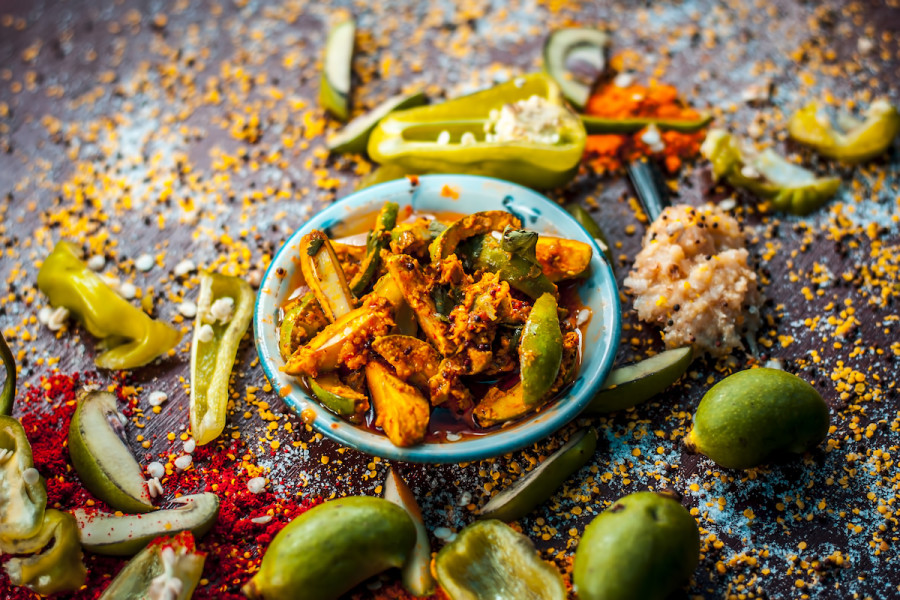
My mother’s signature pickle used to be the vadu mangai. Vadu Mangai or Mavadu is a pickle made from tiny tender baby mangoes and is a Tamil Nadu delicacy. The baby mangoes are pickled in a brine made from salt, red chilli powder and other spices and left in the hot summer sun for a few weeks until the mangoes shrivel up and absorb all the goodness of the brine. When ready, the tender mangoes are salty, spicy and oh-so-delicious and so good on a hot day with some rice and yoghurt. My mother was so famous in our family for this pickle that she used to make a few kgs of the pickle as soon as the baby mangoes come into the market. After making the pickle in large ceramic jars called pickle barnis, she would put aside some for my grandparents on both sides and pass it to them when we went to their homes. Over the years, as people moved away, my mother slowly started reducing the amount of pickle made and stopped making it a few years back. I miss my mother’s pickles but hope to learn how to make them so I can keep the tradition ongoing.

Over the past few years, I have learnt to make a few pickles and these now form a staple in my home. Earlier in the post, I have linked a few of the pickles I have made, so go ahead and check them out to make some quick pickles to spice up your meal.

Recipes: Raw Mango Rice

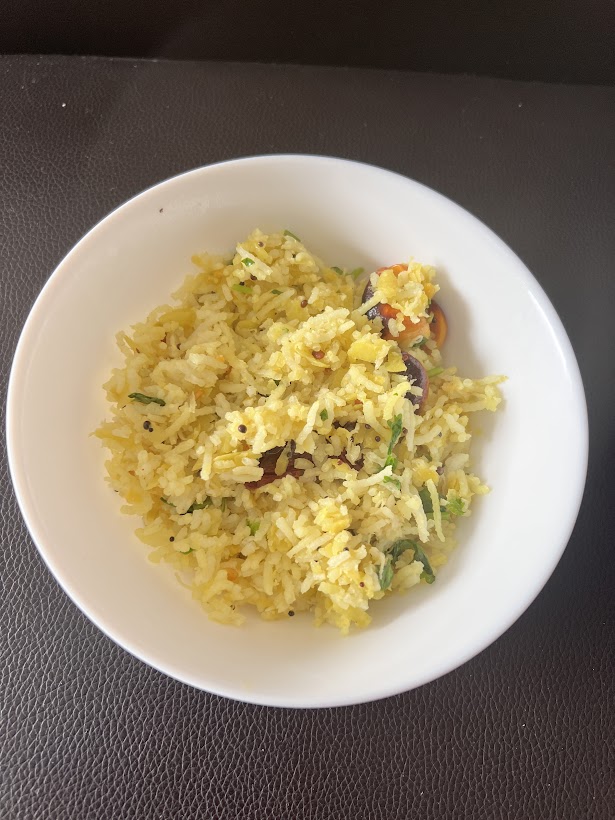
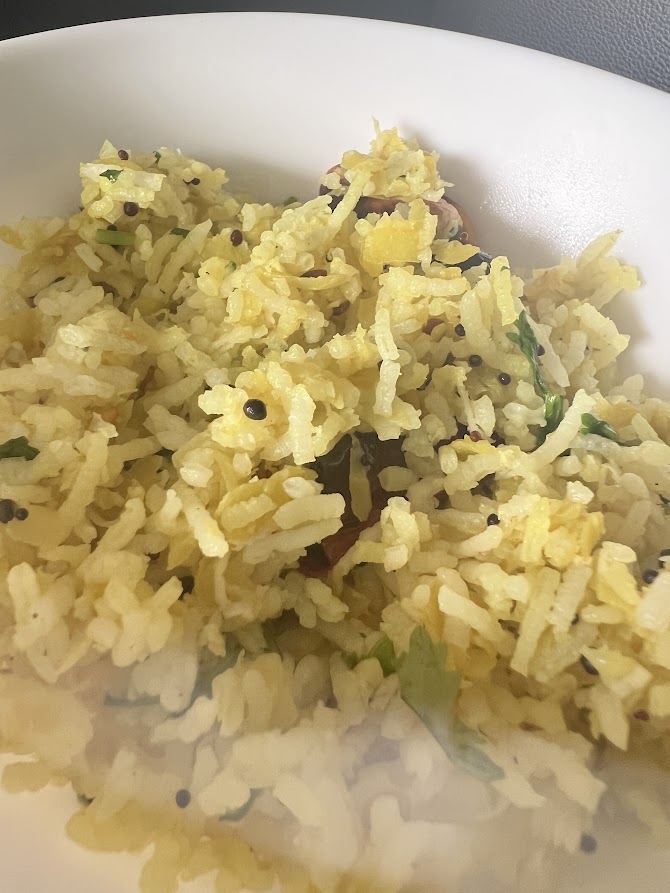
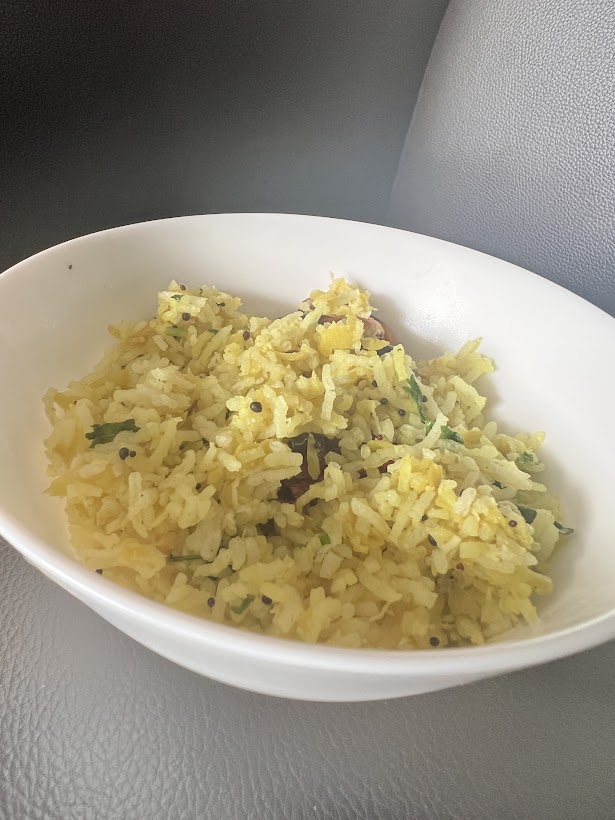
A dish from the state of Karnataka made on special occasions, my mother has been asking me to make this ever since she tasted it in Bengaluru. My sister also makes a version of this rice and kept telling me to try it as it was very tasty. I finally caved in and made it a couple of weeks back when I found some nice raw unripe mangoes in the market. The rice was very tasty and reminded us of lemon rice which is prepared similarly.

Recipes: Raw Mango Rice

Ingredients:

  • 1 raw mango, peeled and grated to get about ½ cup of grated mangoes
  • 1 cup basmati rice, soaked in water for about 30 minutes
  • 2 tbsp oil
  • 1 tsp mustard seeds
  • 1 tsp broken urad dal
  • ¼ tsp turmeric powder
  • 1 tbsp roasted peanuts
  • 6-8 cashew nuts
  • 2 dried red chillies, broken
  • Salt to taste
  • 1 tbsp grated coconut
  • Coriander leaves, finely chopped to garnish

Method:

  • Cook the rice and let it cool. When cool, gently fluff it with a spoon and spread it on a large plate. Keep aside
  • Heat the oil in a pan and when the oil warms up, add in the mustard seeds and let the seeds pop.
  • Next add the turmeric powder, and the urad dal and stir for a few seconds. After this add in the dried chillies, the peanuts and cashew nuts and stir until the cashew nuts start to become golden brown.
  • At this point, add in the grated mango and the salt and stir. Cook covered until the mangoes become tender and cooked.
  • When the mangoes are cooked, add in the rice and gently mix everything. You can check for seasoning at this point and add what is missing.
  • Add in the grated coconut and stir well.
  • Cook covered for a minute or two and serve hot garnished with finely chopped coriander leaves.

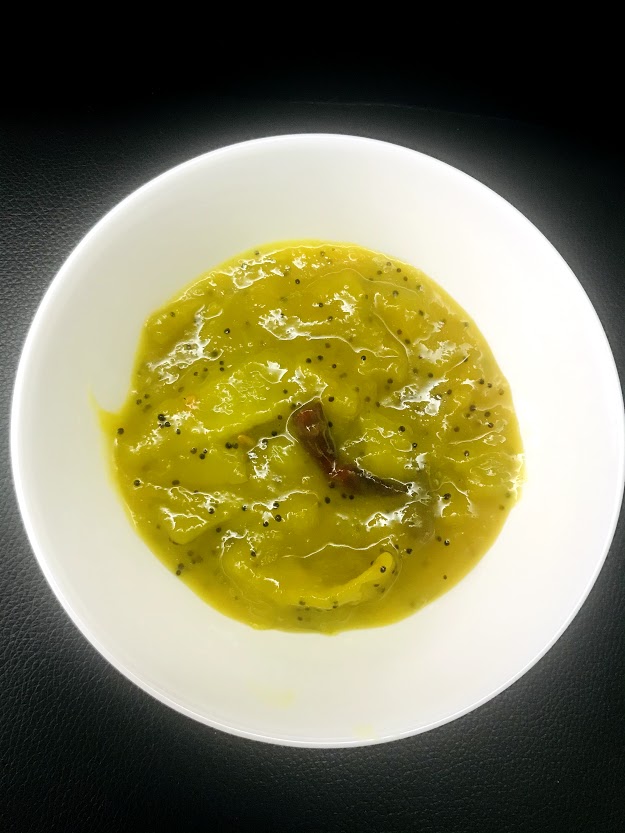
Recipes: Raw Mango Pachadi

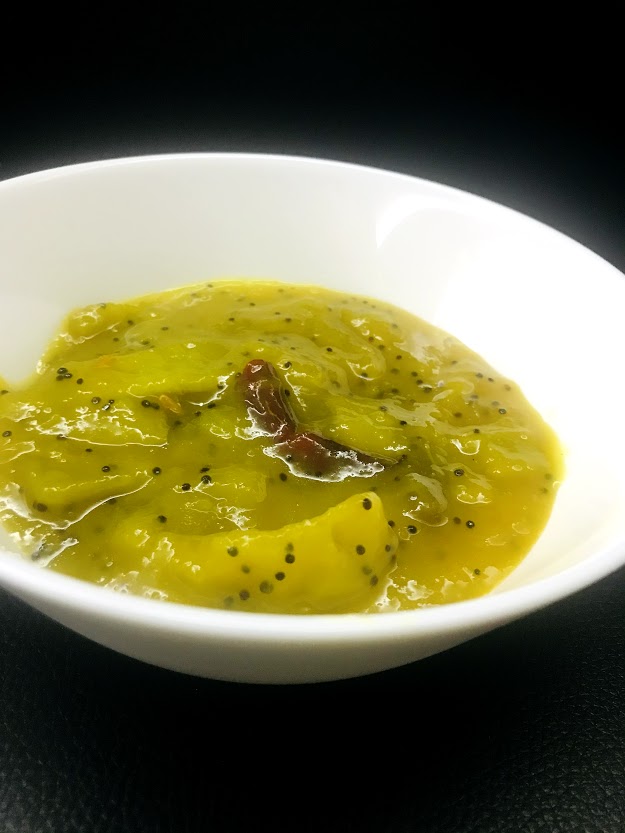
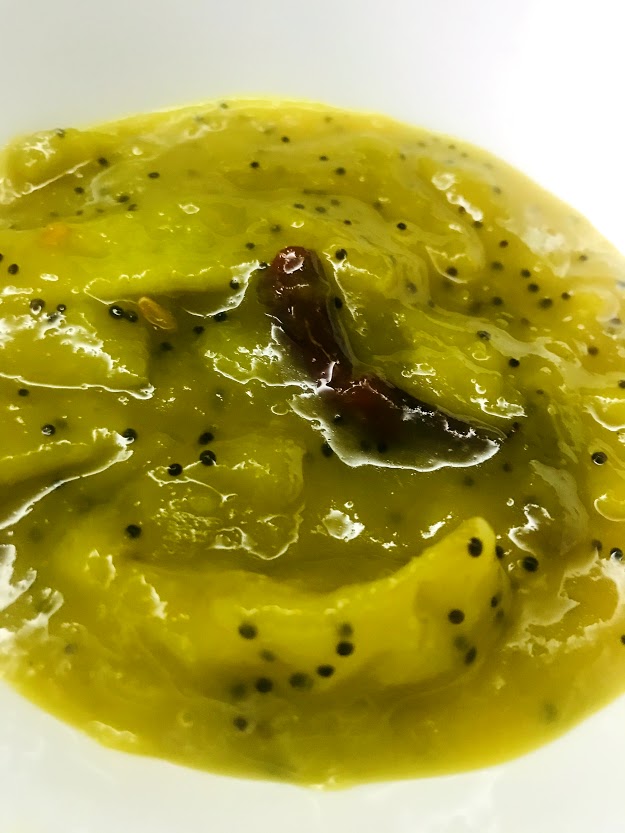
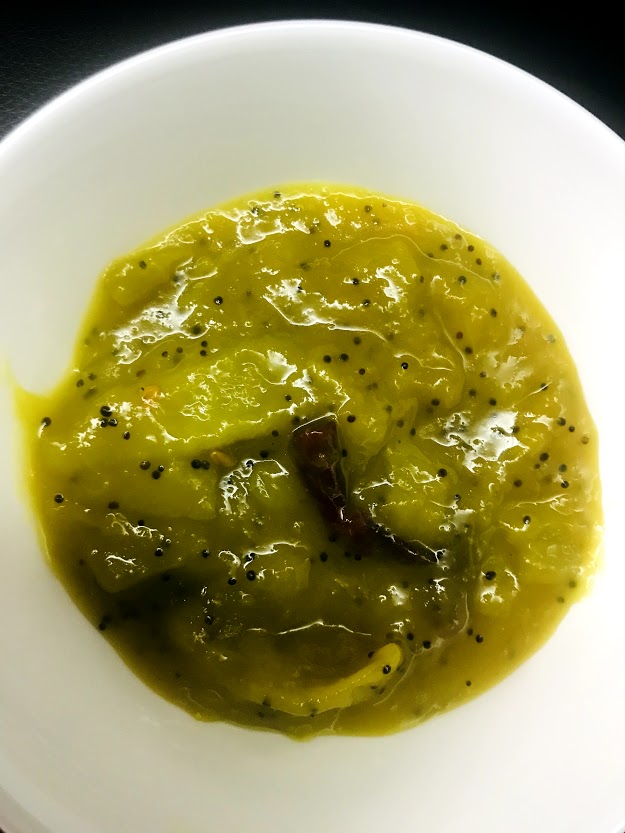
On the occasion of the Tamil New Year, we usually make the raw mango pachadi. This traditional dish is made on the occasion is packed with 6 flavour of tastes like sweet, salt, spicy, bitter, sour and astringent. It is believed that eating this on the new year will ensure that the year ahead will be perfectly balanced with all flavours infused in your life. The dish signifies that life is a combination of different emotions like good, bad, happy, sorrow, victory and defeat and we have to face them equally. Jaggery is used for sweet, salt for salty, dried red chilli for spicy, neem flower or fenureek seeds for bitter, raw mango for sour and turmeric for astringent.

I made this recipe for the first time earlier this year during the Tamil New Year. Actually what triggered this recipe was my mother moaning that she had not been able to get hold of raw mangoes because of the situation in Mumbai and so since I had some mangoes, I decided to make them. It was a huge hit in my house and since then, I have made it a few more times, and each time, it has been gobbled up soon. It’s a very easy recipe and from start to end, should not take more than 30 minutes.

Raw Mango Pachadi

Ingredients:

  • 2 medium sized raw mangoes
  • ½ cup grated jaggery, (more or less depending on the sourness of the mangoes)
  • ¼ tsp turmeric powder
  • 1 pinch salt
  • 1 tsp oil
  • 1 tsp mustard seeds
  • ¼ tsp fenugreek seeds or 1 tbsp fresh or dried neem flowers
  • 2 dried red chillies, broken into half each

Method:

  • Peel and chop the mangoes into largish pieces and then in a pan, add a bit of water, just enough to cover the mangoes, and the turmeric and cook till the mangoes are cooked, but still retain some of their shape.
  • While the mangoes are cooking, in a separate pan, add the jaggery and 1-2 tbsps of water and let the jaggery dissolve into a syrup. Let the syrup cool down.
  • When the mangoes are cooked, strain the jaggery syrup into the mangoes using a strainer. This is so that none of the impurities found in the jaggery make their way to the dish.
  • Let the mangoes and jaggery come to a nice rolling boil. Add the salt, stir well and switch off the gas.
  • Using a smaller skillet, heat the oil and when the oil becomes warm, add the mustard seeds, fenugreek seeds or neem flowers, dried red chillies and stir for a few seconds each before you add the next ingredient. Stir for about 10 seconds in total and pour this over the mango pachadi.
  • Serve hot with any south Indian meal and enjoy a beautiful blend of flavours.
  • Served cold, this can also be served as a cold salad or starter or even a dip with your starter.
  • You can also cook the mangoes in a pressure cooker. If using a pressure cooker, cook the mango with a bit of water and turmeric and pressure cook for 2 whistles.