Rajma Paratha – Indian Red Kidneybean Flatbread

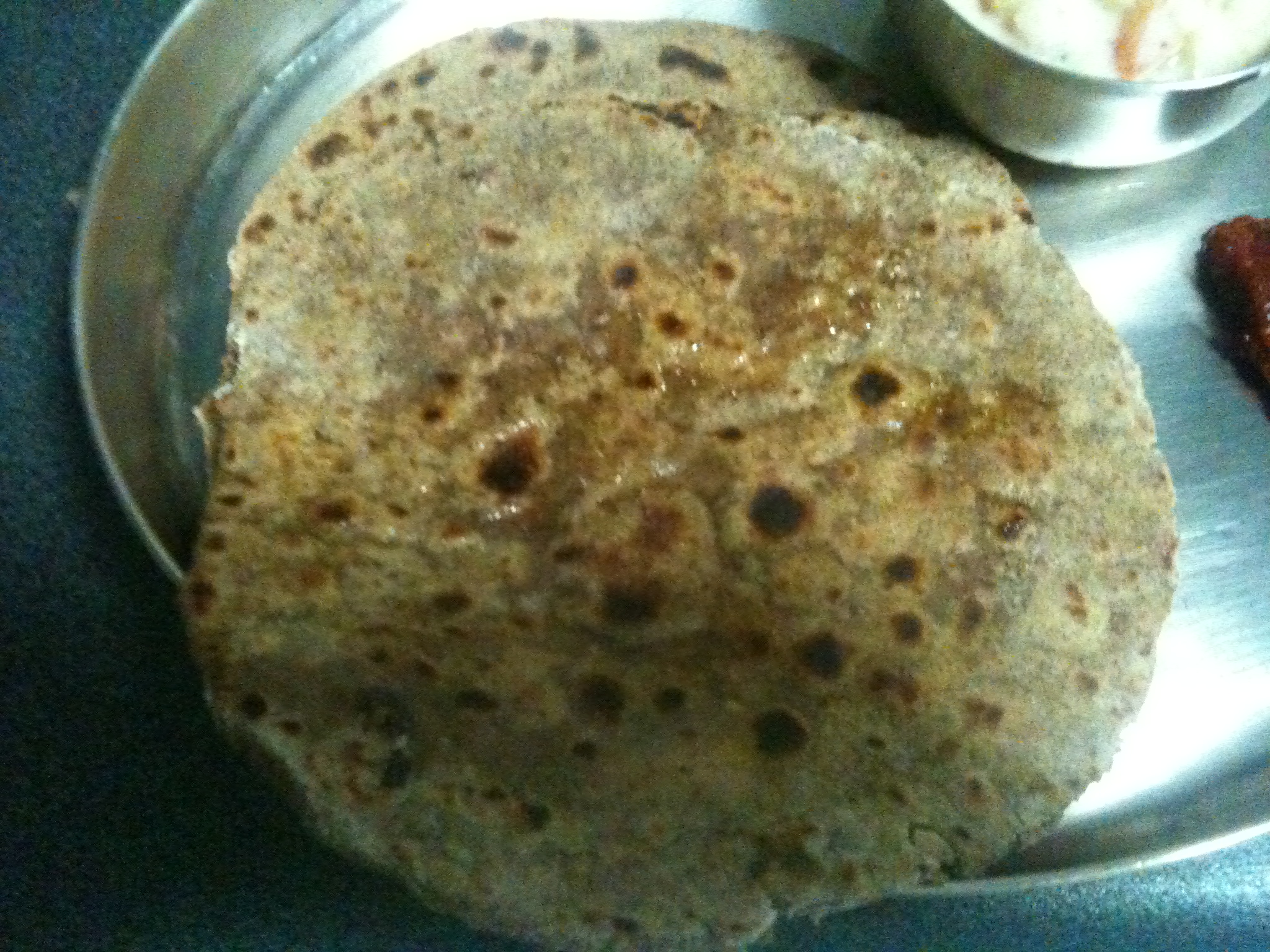
I had made Rajma over the weekend and as usual made too much for all of us to eat. We had leftovers and I didn’t know what to do with them. I love Rajma, so thought I will eat them with rotis when I chanced upon this recipe by The Steaming Pot. I tweaked it a bit and voila – spicy, tasty rajma parathas which we had with a dash of ginger pickle and a quick raita of baby cucumbers, tomatoes and onions.

Rajma Parathas
Ingredients:

  • 1.5 cup pre-made rajma masala, blended and pureed well to make it a smooth paste
  • 3 cups whole wheat flour
  • Some warm water to kneed the dough
  • 1 tsp oil for the dough
  • ghee/oil for the parathas (optional)

Method:

In a large dish mix the pureed rajma and the wheat flour and if needed, use the warm water to make it a smooth dough. Use 1 tap oil at the very end and mix into the dough to avoid stickiness.

Roll out into slightly thicker than usual parathas. In a non-stick tava, put the parathas in medium high heat and once the first side is done, flip and put a few drops of ghee in the first side. Repeat for the second side and remove and eat hot!

3 cups of wholewheat flour gave me around 12 parathas.

In My Hands Today…

The Essential Marathi Cookbook – Kaumudi Marathe

The Essential Marathi Cookbook, a modern, easy-to-use introduction to several Marathi sub-cuisines, travels across the regions and religions of Maharashtra to bring out the most authentic and appetising recipes from the state. Journalist and chef Kaumudi Marathe presents a varied and nuanced selection ranging from the delectable entrees long associated with Maharashtra to appetising and unusual side dishes, and a plethora of desserts, as well as lesser-known but equally tantalising family and regional specialities which have never before appeared in an English-language cookbook.

The comprehensive introduction describes Marathi cooking basics, ingredients and techniques, and also explains the special spices used in Marathi kitchens along with the methods for their best use in seasonings. Packed with personal anecdotes and food memories from the author and other contributors to the book, The Essential Marathi Cookbook is the definite guide to Marathi food and customs.

Recipes include Pithla-Bath (zesty gram flour sauce with hot rice), Shiryachi Poli (sweet semolina-stuffed bread), Ambyacha Loncha (green mango-mustard pickle), Spicy Kolhapuri Mutton, Suranachi Koshimbir (elephant’s foot yam salad), Kelphulachi Bhaji (banana blossom stir-fry), Pach Dalichi Amti (five lentil stew), Mugache Kadhan (Konkan lentil-coconut pudding), Bol Marie (East Indian coconut pie), Pathare Prabhu Baked Karanjis (Coconut crescents), Kharvas (first-milk custard), Khudi (sauteed East Indian style chicken), Ukad Shengule (sorghum pasta), Kaumudi’s Grandmother’s Lettuce Salad.

Pulao/Biryani With A Twist

I recently read somewhere in the Internet about the street foods in Mumbai and that started a nostalgic tone for me. I love the street food that Mumbai has to offer, be it vada pav, or the ubiquitous bhel puri, sev puri and pani puri or Mumbai’s very own pav bhaji. Vendors who sell this yummy dish also make a rice dish with the vegetables that go into the bhaji making a fairly different type of pulao/biryani. This pulao is therefore inspired by the pav bhaji pulao.

Pulao/Biryani with a Twist

Ingredients:

  • 11/2 cups basmati rice, washed and soaked for atleast 20 minutes
  • 2 medium sized onions, chopped finely
  • 1 fairly big potato, peeled and cubed into bite-sized pieces
  • 1 carrot, peeled and cubed into bite sized pieces
  • 1/2 cup frozen green peas
  • 1 green capsicum, cut into bite-sized pieces
  • 4 medium sized tomatoes, finely chopped
  • 2 flakes of garlic, finely chopped
  • 1 inch piece of ginger, peeled and finely chopped
  • 1 tsp cumin seeds
  • 1/4 tsp turmeric powder
  • 1 tsp (or more) red chilli powder
  • 1 tsp cumin seed powder
  • 1 tsp coriander seed powder
  • 2 tsps (or more) pav bhaji masala
  • 1 tsp sabzi masala (optional)
  • Salt to taste
  • 2 tbsps oil

Method:
Heat oil in a pan and when it is fairly hot, put in the cumin seeds. When it splutters, add the garlic, stir for a few seconds, then add the ginger and give it a quick stir.

Next, add the onions, capsicum, carrots, peas and potatoes in the following order making sure you give a quick stir before you add the next vegetable. Now add the tomatoes and the spices and stir well. Once all the vegetables have been nicely coated with the spices, add the rice from which the water has been completely drained.

Stir and let the rice mix well with the vegetables and let it cook for a couple of minutes.

Now transfer everything to a rice cooker, add around 2.5 cups of water and let it cook.

When the rice is done, keep it covered for another 10 minutes, then fluff lightly with a fork, garnish with coriander leaves and serve hot.

Paneer in a Minty Yoghurt Sauce

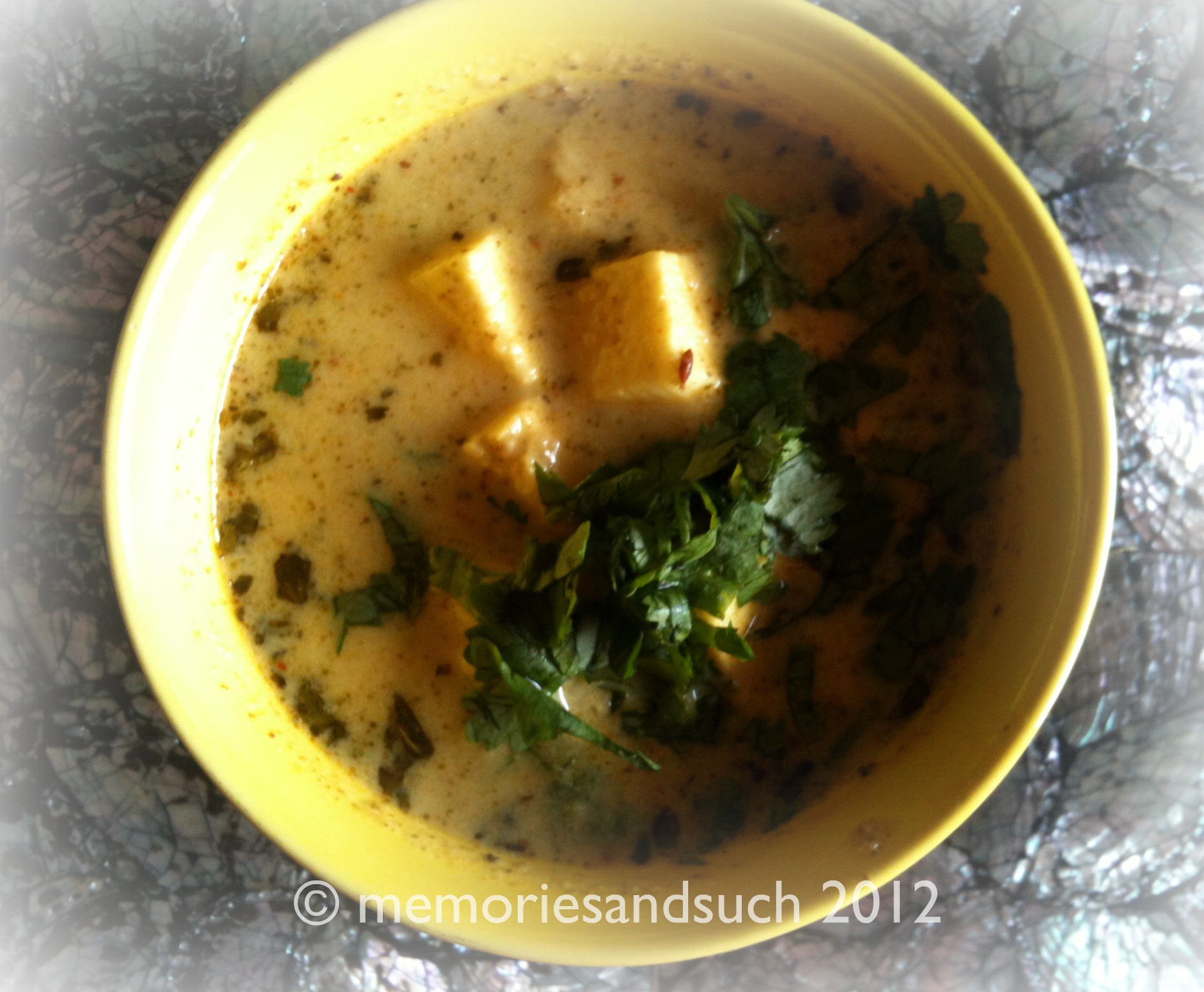
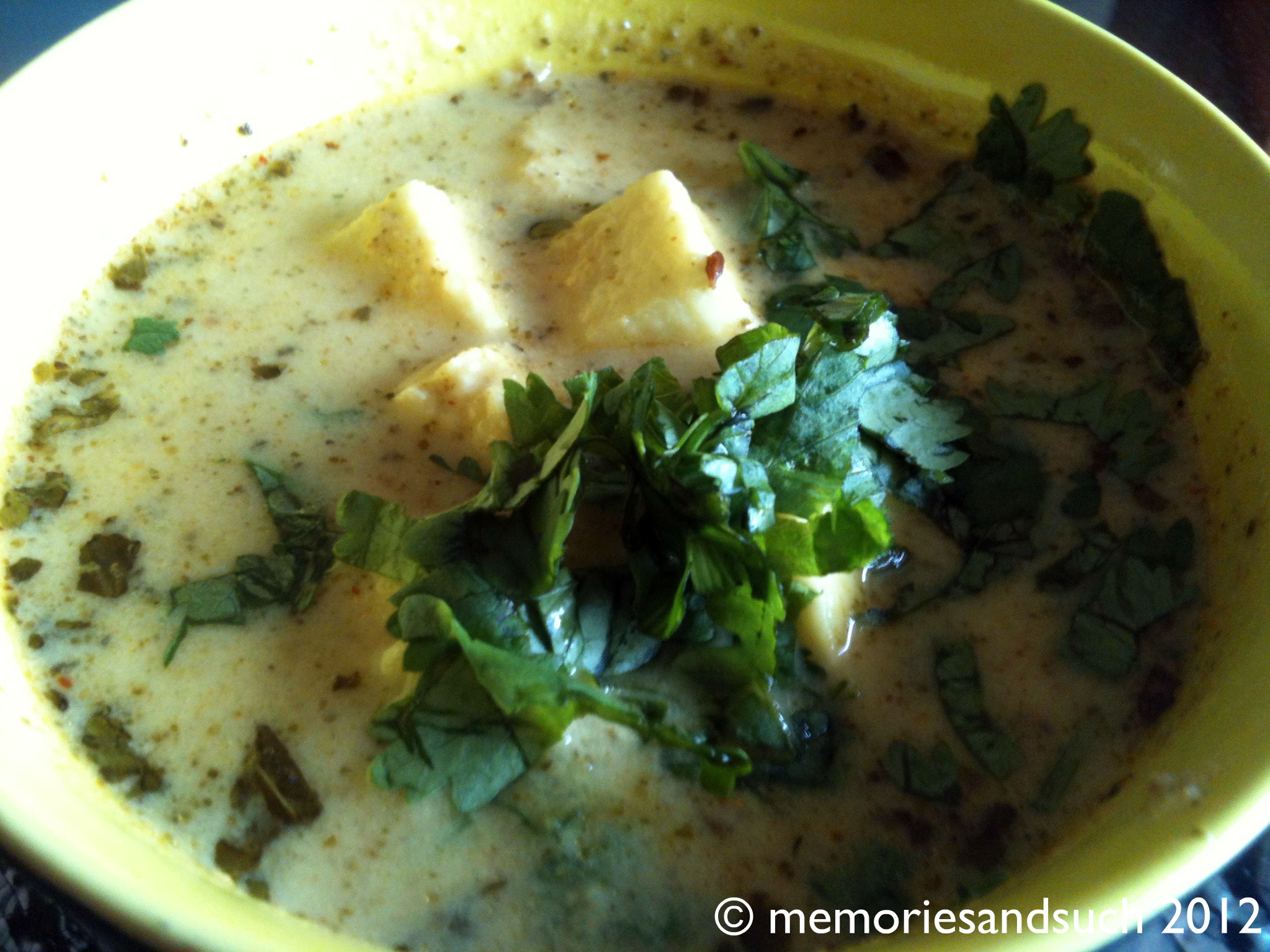
I’ve been on a roll recently and have been experimenting a lot in the kitchen. Hope this continues on after I’m done being a career woman and started my break. Today’s recipe is a variation on a standard paneer recipe that I tweaked. Everyone in my home, especially BB love paneer and I make some sort of paneer recipe atleast twice a month. The result was this delicious paneer in a minty yoghurt sauce.

Paneer in a Minty Yoghurt Sauce

Ingredients:

  • 2 cups frozen paneer, (cubed if not already done so)
  • 2 medium sized onions
  • 2 medium sized tomatoes
  • 3 flakes garlic
  • 1 inch size ginger
  • 3 fresh green chillies
  • 1/2 cup mint leaves
  • 2 cups yoghurt
  • 2 tbsps kasoori methi (dried fenugreek leaves)
  • 2 tsps oil
  • 1 tsp cumin seeds
  • salt to taste
  • 1/4 tsp turmeric powder
  • 2 tsps sabzi masala (I used Everest)
  • Coriander to garnish

Method:

Put the frozen paneer in a largish dish and pour hot water over it to soften it. This will take around 10 minutes. You can do the other prep work while the paneer softens.

In a grinder/blender zip the following ingredients and make it into as smooth a paste as you can – garlic, ginger, onions, tomatoes, green chillies, mint. You can use some of the yoghurt instead of water if you need.

Heat oil in a pan and when it is hot enough add the cumin seeds. When the seeds splutter,  put in the turmeric powder and then pour in the blended paste and let it cook for a while. When the paste is cooked and starts leaving the sides of the pan, add the paneer and turn a few times to make sure all the paneer pieces are coated with the paste. Now add some more yoghurt to this (as thin as you like it to be) and then lightly crush the kasoori methi in your palms and add it to the mixture. Add salt to taste and the sabzi masala and let the mixture bubble well.

Transfer to a serving bowl, garnish with coriander leaves and eat with rice or rotis.

Verdict: The recipe was a bit different due to the mint added which gave a slight minty taste to the paneer. Good to eat with pulao and rotis, but if I was going to eat it with rotis, I would make it a bit more thicker that I made it today. Definitely something to try again.

Arachavitta Sambhar

This is a very traditional South Indian recipe. Archavitta literally means with ground spices. This sambhar is different from the usual one we make on a regular basis in that there is no sambhar powder used.

I have wanted to make this for a few weeks now. The last time I tried making it, I found I didn’t have coconut at home and so had to postpone making it. I finally made it with the basic recipe from my bible of tam bram cooking – Cook and See by S. Meenakshi Ammal. I used the recipe from Book 1 of Cook and See and tweaked it a bit using advice given to me by my mother and mother-in-law.

Arachivitta Sambhar

Ingredients:

  • ½ cup red gram dal (toor dal)
  • 1 small lime sized ball of tamarind, soaked in water and the pulp squeezed out
  • 1 cup shallots
  • 1-2 carrots, peeled and cut into big pieces
  • ½ a yellow pumpkin, peeled and cut into big cubes
  • 4-5 potatoes, cut into largish cubes
  • 2-3 tsps oil
  • 1 tsp mustard seeds
  • Salt to taste
  • Coriander leaves to garnish

To be ground into a paste:

  • 6-8 dried red chillies
  • 2 tsps coriander seeds
  • 1 tsp Bengal gram seeds (chana dal)
  • 1 tsp fenugreek seeds
  • 4-5 shallots
  • ½ cup fresh, grated coconut

Method:

In a small pressure cooker, pressure cook the toor dal with a pinch of turmeric powder till it is soft and the dal has broken down. This usually will take around 3 whistles in the cooker.

Heat 1 tsp of oil in a pan and one by one add the ingredients to be gound into a paste and roast them till the coconut is golden and the water in it evaporates. Transfer to a mixer and when cool, grind it to a fine paste using a bit of water. Keep aside.

In the same pan, heat the remaining oil and add the mustard seeds. When they pop, put in the shallot and stir for a few minutes. Then add the potatoes, carrots and pumpkin and fry for a few minutes.

Now add the gound paste and stir into the vegetables. Once it is all mixed in, pour in the tamarind water and add salt to taste.

Let this boil for around ten minutes. Check to see if the vegetables are cooked. When the vegetables and shallots reached the almost cooked stage, add the cooked dal.

Let it boil well, check for seasoning and switch off the gas. Garnish with coriander leaves and serve hot with white rice.