
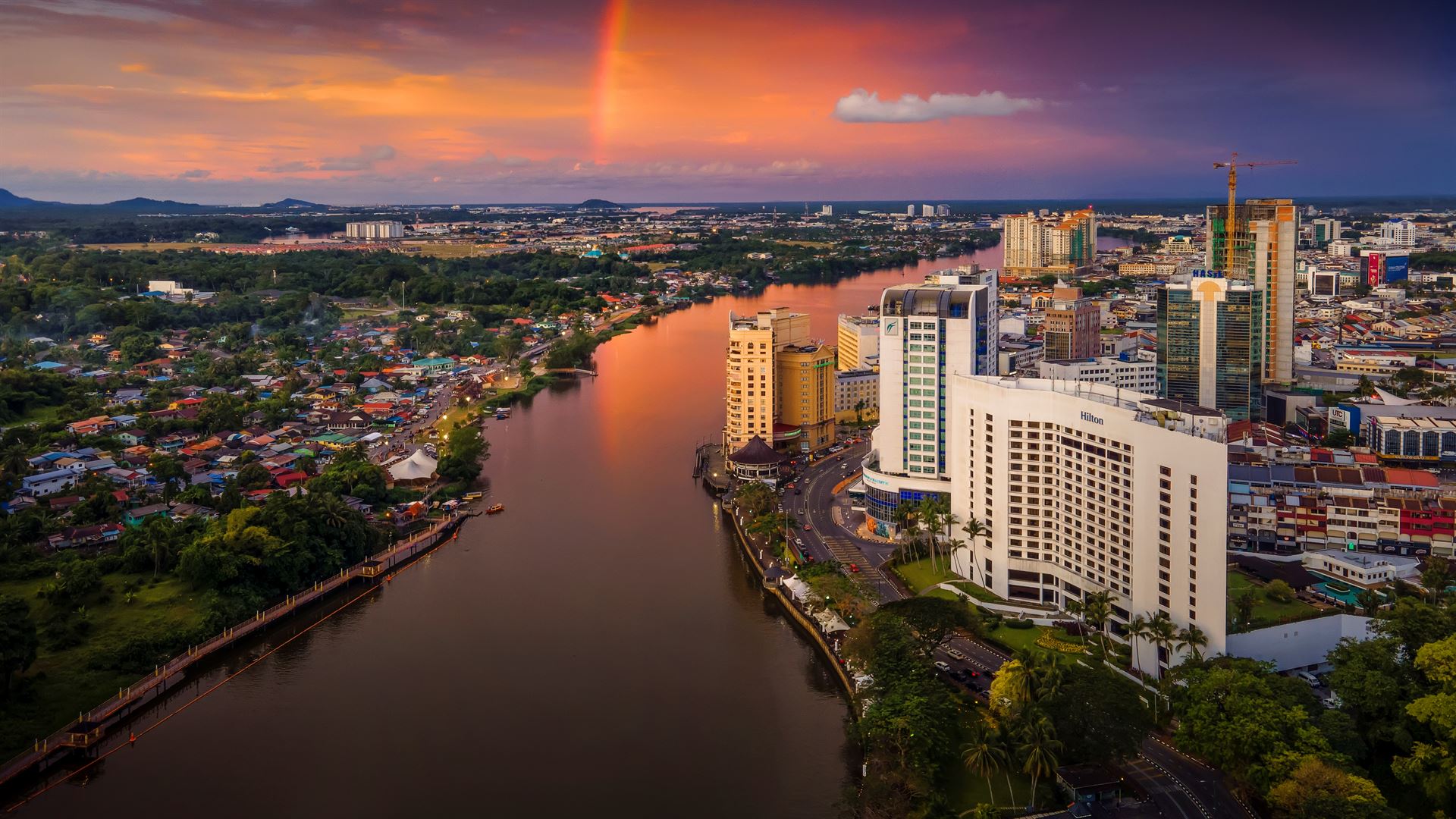
Kuching
Officially the City of Kuching, Kuching is the capital and the most populous city in Sarawak. The city is on the Sarawak River at the southwest tip of Sarawak on the island of Borneo and covers an area of 431 sq km. Kuching was the third capital of Sarawak in 1827 during the administration of the Bruneian Empire. In 1841, Kuching became the capital of the Kingdom of Sarawak after the territory in the area was ceded to James Brooke for helping the Bruneian empire in crushing a rebellion, particularly by the interior Borneo dwelling Land Dayak people who later became his loyal followers after most of them were pardoned by him and joined his side. The town continued to receive attention and development during the rule of Charles Brooke such as the construction of a sanitation system, hospital, prison, fort, and a bazaar. In 1941, the Brooke administration had a Centenary celebration in Kuching. During World War II, Kuching was occupied by Japanese forces from 1942 to 1945. The Japanese government set up a Batu Lintang camp near Kuching to hold prisoners of war and civilian internees. After the war, the town survived intact. However, the last Rajah of Sarawak, Sir Charles Vyner Brooke decided to cede Sarawak as part of the British Crown Colony in 1946. Kuching remained as capital during the Crown Colony period. After the formation of Malaysia in 1963, Kuching retained its status as state capital and was granted city status in 1988. Since then, the Kuching city has been divided into two administrative regions managed by two separate local authorities. Kuching is a member of UNESCO’s Creative Cities Network in the field of gastronomy. Kuching is also the main gateway for travellers visiting Sarawak and Borneo. The city has become one of the major industrial and commercial centres in East Malaysia.
The name Kuching was already in use for the city by the time Brooke arrived in 1839. There are many theories as to the derivation of the name Kuching. It was perhaps derived from the Malay word for cat, kucing or Cochin, an Indian trading port on the Malabar Coast and a generic term in China and British India for trading harbour. However, another source reported that the Kuching city was previously known as Sarawak before Brooke arrived. The settlement was renamed Sarawak proper during the kingdom’s expansion. It was only in 1872 that Charles Brooke renamed the settlement Kuching.
There was one unlikely theory based on a story on miscommunication. According to the story, James Brooke arrived in Kuching on his yacht Royalist. He then asked his local guide about the name of the town. The local guide mistakenly thought that Brooke was pointing towards a cat, and so had said the word Kuching. However, ethnic Malays in Sarawak have always used the term pusak for cats, instead of the standard Malay word kucing. Despite this etymological discrepancy, Sarawakians have adopted the animal as a symbol of their city, and it features in statues as well as the municipal council’s coat of arms – an example of heraldic canting.

Some sources also state that it was derived from a fruit called mata kucing, a fruit that grows widely in Malaysia and Indonesia. There was also a hill in the city that was named after the fruit, which is called Bukit Mata Kuching. Harriette McDougall writing to her son in the 19th century, stated that the name was derived from a stream of the same name, called Sungai Kuching or Cat River in English. The stream was situated at the foot of Bukit Mata Kuching and in front of the Tua Pek Kong Temple. In the 1950s, the river became very shallow because of silt deposits in the river which was later filled to make way for roads. There is another theory that Kuching is made up of Ku which means old and Ching or well which makes it old well in Chinese. During the Brooke administration, there was no water supply and water-borne diseases were common. In 1888, an epidemic broke out which later was known as the Great Cholera Epidemic. A well situated in the present day China Street in Main Bazaar helped to combat the disease by providing a clean water supply. Due to increased demand for a water supply, the role of the well was later replaced by a water treatment plant on Bau Road.
Sarawak was part of the Bruneian Empire since the reign of the first Sultan, Muhammad Shah and Kuching was the third capital of Sarawak, founded in 1827 by the representative of the Sultan of Brunei, Pengiran Indera Mahkota. Before the founding of Kuching, the two past capitals of Sarawak were Santubong, founded by Sultan Pengiran Tengah in 1599, and Lidah Tanah, founded by Datu Patinggi Ali in the early 1820s. Pengiran Raja Muda Hashimit later ceded the territory to a British adventurer, James Brooke as a reward for helping him to counter a rebellion. The rebellion was crushed in November 1840, and on 24 September 1841, Brooke was appointed as the Governor of Sarawak with the title of Rajah. Since that time, Kuching became the seat of the Brooke government.
As an administrative capital, it became the centre of attention and development including a sanitation system. By 1874, the city had completed several developments, including the construction of a hospital, prison, Fort Margherita, and many other buildings.

The Astana or palace, which is now the official residence of the governor of Sarawak, was constructed next to Brooke’s first residence. He had it built in 1869 as a wedding gift to his wife. Kuching continued to prosper under Charles Vyner Brooke, who succeeded his father as the Third Rajah of Sarawak. In 1941, Kuching was the site of the Brooke Government Centenary Celebration. A few months later, the Brooke administration came to a close when the Japanese occupied Sarawak.
During the Second World War, six platoons of infantry from the 2/15 Punjab Regiment were stationed at Kuching in April 1941. The Regiment defended Kuching and the Bukit Stabar airfield from being destroyed by the Japanese. However, on 24 December 1941, Kuching was conquered by the Japanese forces and Sarawak was ruled as part of the Japanese Empire for three years and eight months, until the official Japanese surrender on 11 September 1945. From March 1942, the Japanese operated the Batu Lintang camp, for POWs and civilian internees, 5 km outside Kuching.
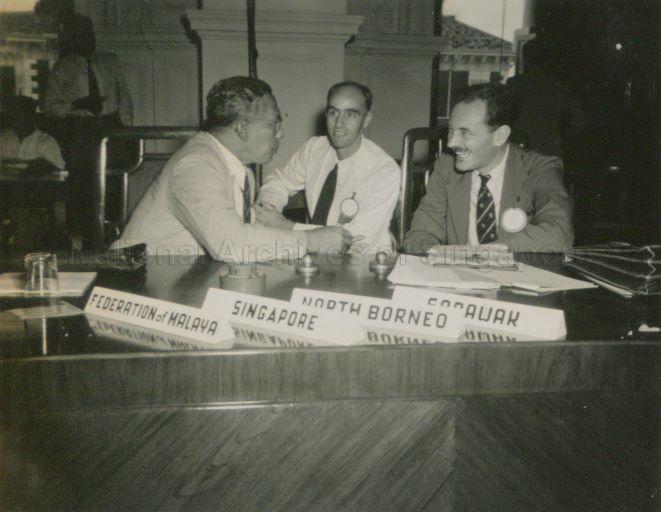
After the end of World War II, the town survived and was wholly undamaged. The third and last Rajah, Sir Charles Vyner Brooke later ceded Sarawak to the British Crown on 1 July 1946. Kuching was revitalised as the capital of Sarawak under the British colonial government. When Sarawak, together with North Borneo, Singapore and the Federation of Malaya, formed the Federation of Malaysia in 1963, Kuching kept its status as the state capital and was granted a city status on 1 August 1988. On 29 July 2015, Kuching was declared a City of Unity by the One Malaysia Foundation for racial harmony that existed in the city because of cross-racial marriages, multi-racial schools, fair scholarship distributions, and balanced workforce patterns.

Kuching is located on the banks of the Sarawak River in the northwestern part of the island of Borneo and has a tropical rainforest climate, moderately hot but very humid at times and receives substantial rainfall. Kuching is the wettest populated area, on average in Malaysia, with an average of 247 rainy days per year. The city is one of the main industrial and commercial centres for Sarawak.
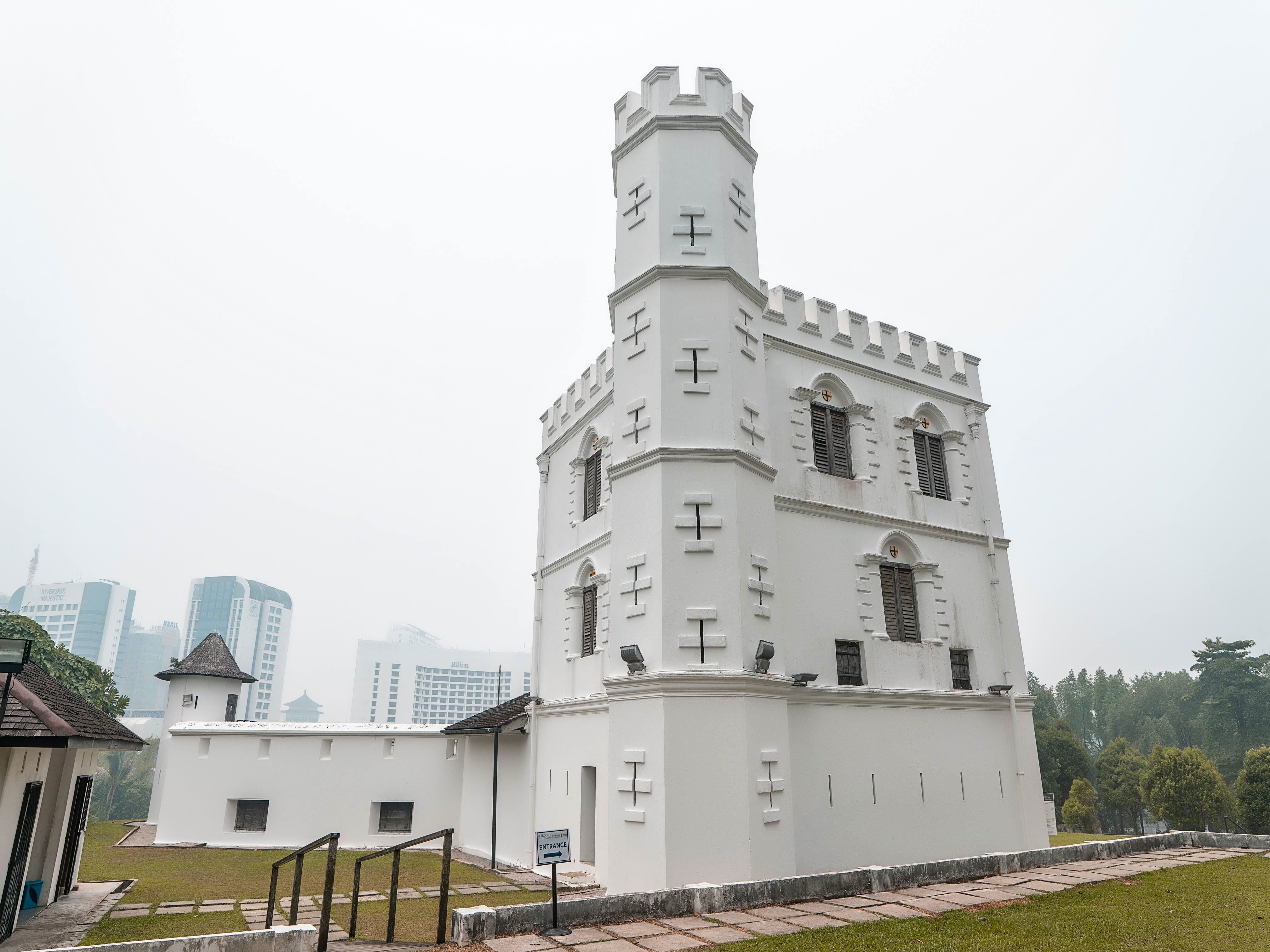
Located across the Sarawak River, near the Astana, Fort Margherita was a fortress that is now converted into the Brooke Gallery which houses rare memorabilia of the Brooke family and history of Sarawak. Built by Charles Brook, then the ruler of Sarawak, the beautiful yet sturdy fortress is a multifaceted structure. Fort Margherita had been used for various important purposes through the years making it one of the most historical landmarks in Malaysia. Built on a hillock across the Sarawak River, the design and architecture of Fort Margherita are heavily influenced by the English Castle styles. The fort has a three-storeyed chief tower which is connected to the side of the fort instead of being constructed at the centre like the other traditional castles. The fort is guarded by high walls which are inset with glass shards with rough, jagged edges to prevent any enemy from trespassing. There are small openings and wooden windows throughout the body of the fort where cannons could be set in such a way that it wasn’t visible to any outsider and this was one of their key attacking methods. Fort Margherita also has a special execution courtyard built inside it where all the criminals, pirates and other enemies were executed.

The Brooke Gallery opened in 2016 to let visitors know more about the lives of the White Rajahs, who were the dynastic monarchy of the British Brooke Family. The various artefacts, books and belongings are displayed throughout the gallery with fun facts and description boards set up at intervals which transport us directly to the times when the Brooke Family was in its prime. The Brooke Gallery walks us through stories of the might of the Brooks and generates a feeling of awe and respect within the minds of the visitors.
Visitors should try to visit Fort Margherita during the Gawai Dayak Festival as the fort is traditionally decorated during those days and is truly a sight to behold. The best time to visit the fort is during the drier months of April to October as the Sarawak River is less choppy during those months. So, the boat rides will be smoother and more frequent. Entry fees are RM 40 per person and the combined ticket for Fort Margherita and Brooke Gallery is RM 30.
The Kuching Cat Museum or Muzium Kucing Kuching is reputed as the world’s first cat museum. Founded in 1993, it is owned by the Kuching North City Hall (DBKU). Located to the north of Kuching in the City Hall, it boasts more than 4000 artefacts including photos, exhibits, and souvenirs displayed in four different galleries. The most prominent exhibits at the museum include a mummified Egyptian cat, five wild cat species from Borneo, as well as, an entire gallery of cat-related advertising. These were brought to Kuching from the National Museum in Kuala Lumpur and were acquired by the DBKU officials. The Kuching Cat Museum is responsible for the collection and presentation of the country’s rich heritage which is valuable and intriguing. Gallery A gives a detailed history of the region including different cat breeds across the country, gallery B contains valuable cat paintings, Gallery C and D are dedicated to felines of different species and showcase prominent cartoon cat characters. The exhibits flaunt the rarest species of mummified cats that cannot be found anywhere else. The museum is open from 9 am to 5 pm daily and has an entry fee of RM 1 which includes the entry fee and one DBKU cat museum keychain. Camera fees are EM 3 while to use video cameras, it will cost RM 5.

The Sarawak State Museum is one of the oldest and most comprehensive natural history museums in Borneo. Inspired by the Normandy townhouse, the museum building houses ethnographic collections and natural history displays. The museum was a temporary settlement until the late 19th century when a more permanent structure was created. The museum has flora and fauna that are indigenous to the region and also includes the daily lifestyles and habitats of the tribes and ethnic groups of Sarawak. Some parts of the museum might be closed for restoration work, so one must make sure to follow the museum map to prevent one from getting lost. The museum is open from 9 am to 4:45 pm, Monday to Friday and over the weekend, it is open from 10 am to 4 pm. It is closed on certain public holidays and has no entry fees.

The Sarawak Islamic Heritage Museum provides a deep insight into the rich cultural heritage of Sarawak’s Muslim community. The seven galleries are the main attraction of this museum which give visitors an insight into Islamic architecture, literature, science, decorative arts, and costumes. Each of these galleries features a different theme. The museum features a Bornean-Malay style of architecture. While the museum is made out of concrete and timber, the roof is made out of bricks. This museum is adorned with a central courtyard garden, Arabic calligraphy, astrolabes, musical instruments and wood carvings. The main aim of establishing the Islamic Heritage Museum was to develop a greater sense of appreciation and understanding of Islam among the masses. While this museum was initially built for a school, it later came to be known as the James Brooke Malay College. In 1930, the museum was renamed Madrasah Melayu Sarawak. In 1992, the Chief Minister of Sarawak named it the Islamic Heritage Museum. The museum is open from 9 am to 4:45 pm, Monday to Friday and over the weekend, it is open from 10 am to 4 pm. It is closed on certain public holidays and has no entry fees.

Established by Charles Brooke the Second Rajah in 1860, the Sarawak Natural History Museum pays homage to the great naturalist Alfred Russell Wallace. Open daily, it is the oldest museum in Borneo. There are two floors displaying specimens of Sarawak fauna like reptiles, mammals, birds, ethnographic artefacts of the indigenous people, musical instruments and handicrafts. The museum is open daily from 9 am to 5 pm.
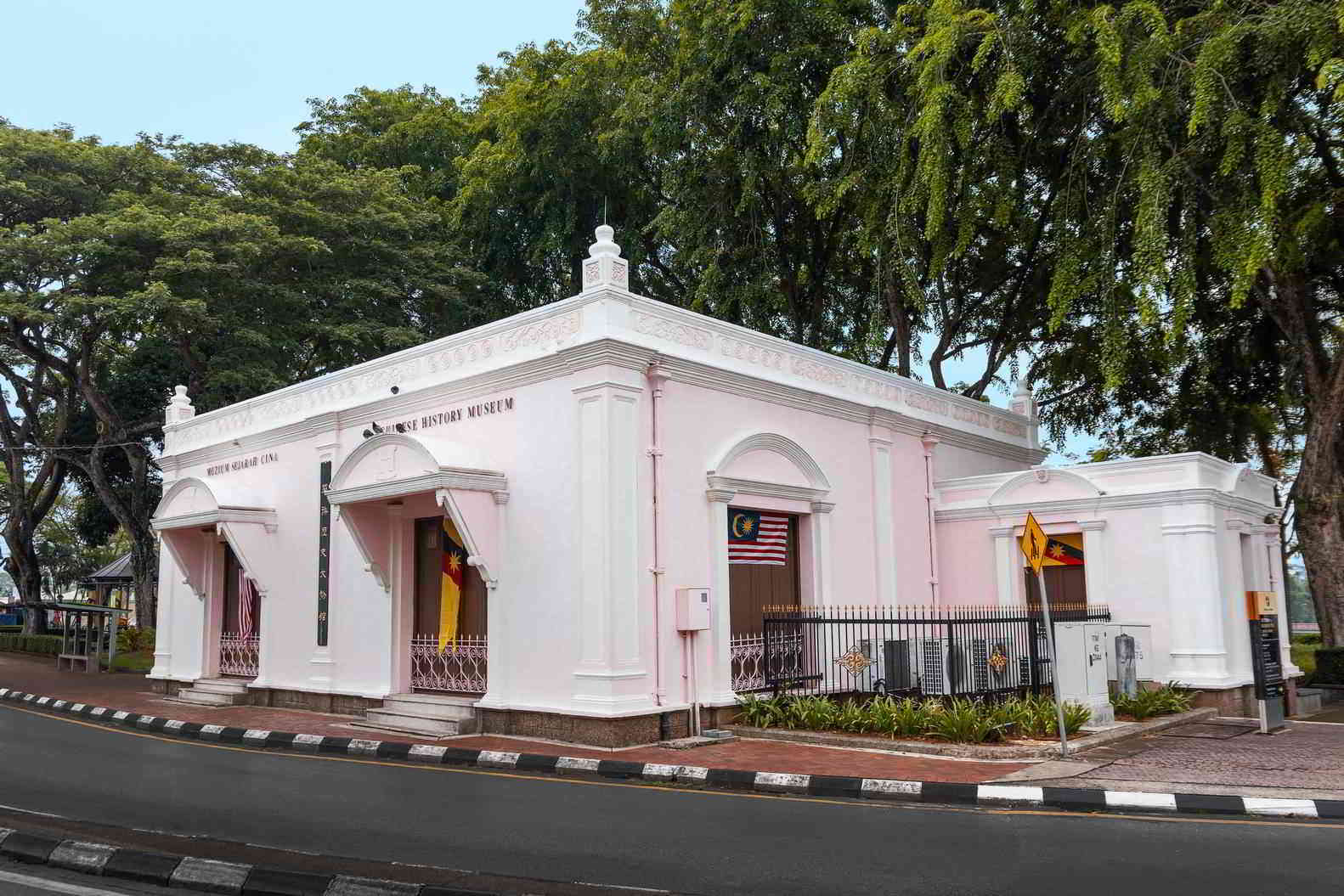
The Chinese History Museum Kuching or the Muzium Sejarah Cina Kuching showcases the history of the Chinese people in Sarawak. The museum building was constructed in 1912 and used to be the headquarters of the Sarawak Chinese Chamber of Commerce until 1921. It was later converted into the Chinese History Museum Kuching and officially opened to the public on 23 October 1993. In 2010, the museum exhibition underwent renovations which now includes short videos. The museum displays various artefacts related to Chinese affairs of Sarawak during the White Rajah era, such as musical instruments, jade, ceramics, photos etc.

The Textile Museum Sarawak is a textile museum originally built in 1907 as a medical centre. It later housed the Education Department of the Sarawak State Government. In August 2000, it was eventually turned into the Textile Museum Sarawak. The museum is housed in a three-storey building with a colonial British Renaissance theme named the Pavilion Building. The upper two floors house the permanent exhibition. The museum displays the textiles made by local communities in Sarawak, as well as traditional costumes and accessories. It also showcases the stages of textile manufacturing processes.

The Sultan Iskandar Planetarium is the first planetarium to be constructed in Malaysia. Constructed along with the Kuching Civic Centre, the planetarium was opened to the public on 1 March 1989. The planetarium has a sitting capacity of 172, is equipped with a white dome of 15 metres in diameter, fitted with four projectors, and has lighting facilities. It uses a German-made Zeiss projector which can show 5000 stars, a moon, and several special effects. The programmes organised by the planetarium include school holiday space science programmes, entourage to Sabah solar eclipse observations, camps, astroquizes, Astronomy Day, exhibitions and roadshows. The planetarium also offers industry training programmes for information technology, science, and social science students.
The Astana lies on the north bank of the Sarawak River, opposite the Kuching Waterfront. It is the official residence of the Yang di-Pertua Negeri Sarawak, the governor of Sarawak. The name is a variation of istana, meaning a palace. It was built in 1870 by the second White Rajah, Charles Brooke, as a wedding gift to his wife, Margaret Alice Lili de Windt. The palace is not normally open to the public, although the landscaped gardens are, which can be reached by a boat ride across the Sarawak River. It is part of the Kuching Heritage Trail.
The Astana, then called Government House, was built in 1870 by the second White Rajah, Charles Brooke, as a wedding gift to his wife, Margaret Alice Lili de Windt. The royal couple then occupied Astana as their main home. Brooke is said to have cultivated betel nut in a small plantation behind the Astana, so that he could offer fresh betel nut to visiting Dayak chiefs. The residence was originally three separate buildings, with each connected to the other by short and narrow passageways. Astana has since undergone major renovations and alterations befitting it as the official residence of the governor of Sarawak.
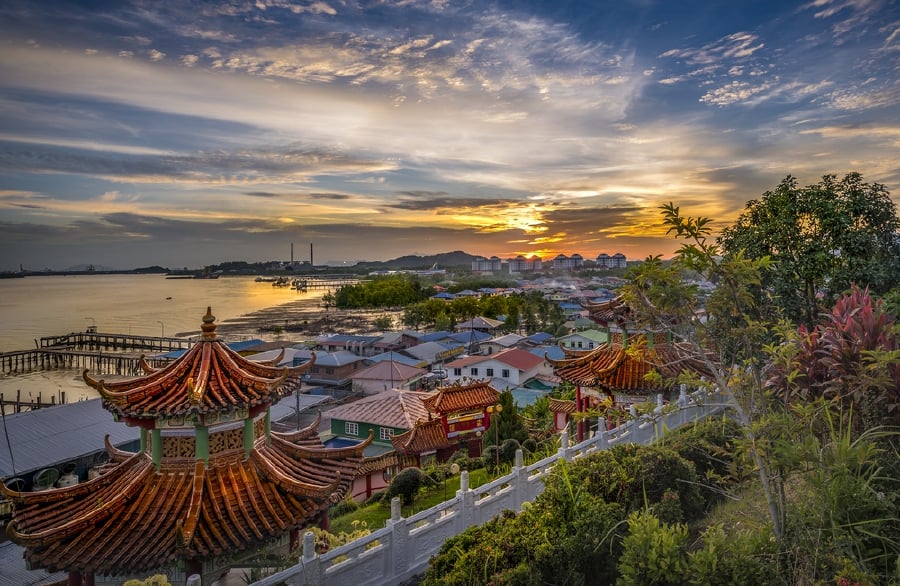
Hai Gan Street in Kuching’s Chinatown was the oldest street in the city. Today, known as Main Bazaar, the street which used to mean at the edge or lip of the sea is where visitors can find wharves and jetties. The Hong San Si Temple and the Old Court House are located at the two ends of the street. In 1839, while Sarawak was still under the Bruneian Empire administration, the area was inhabited by only a few households while the surroundings were covered by forests. The earliest settlers in the area were the Hokkien businessmen who stayed near the Tua Pek Kong temple. By 1872, when the name Sarawak was changed to Kuching, Hai Chun Street shophouses were rebuilt by using red bricks and clay tiles. In the 1880s, Rajah Charles Brooke built a new market at Gambier Street while trying to shift traders from the old market at Hai Chun Street to here. Hainanese people came later than the Hokkien and Teochew people. The first Siang Ti Temple was built by the Teochews at Carpenter Street but was razed to the ground in 1884. A new temple was built in 1889 with a Chinese opera theatre, named Yang Choon Tai built directly opposite the temple. The Chinese Opera was built to hold thanksgiving ceremonies to the deities on the first day and the middle of every month. The theatre is still used to stage Chinese opera to this day, especially on the birthday of the deity Hiang Thian Siang Ti.
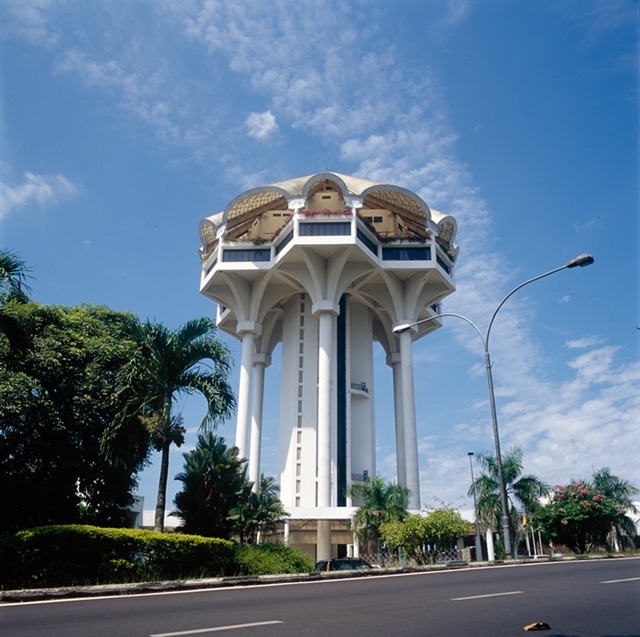
The Kuching Civic Centre is a major landmark in the city. The building was officially opened on 1 August 1988 following the proclamation of Kuching as a city status. The viewing platform at the top of the futuristic Civic Centre tower offers the best all-around views of Kuching and the surrounding areas. The city and its hinterland, Mount Serapi, Mount Santubong and even the mountains of Kalimantan are visible on a clear day.
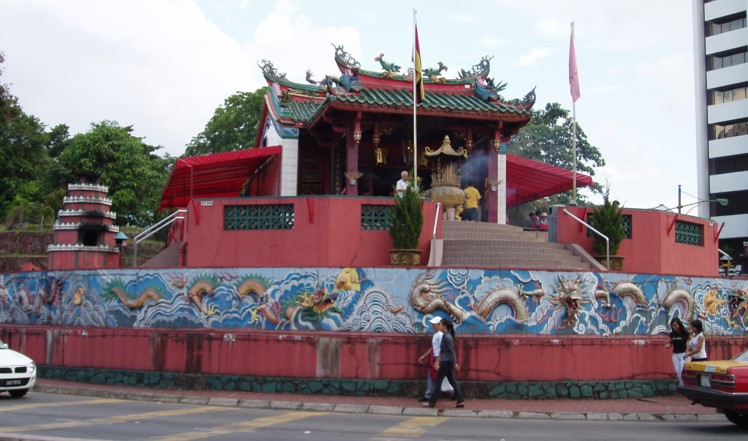
The Tua Pek Kong Temple is an old Chinese temple situated atop a foothill, opposite the Kuching Esplanade. The focal point for the entire Chinese community in Kuching, and the oldest temple in the city, this temple serves as a major tourist attraction. Apart from the rich Chinese culture that one can explore here, the views of the river and main bazaar that the temple offers are equally enticing. The ornately decorated temple and its architecture are worth taking a look at. The temple is believed to be strong, for it is one of the few buildings that survived the 1884 Great Fire of Kuching. Another popular belief surrounding the temple is that it has the best Feng Shui location in the city. The primary deity of the temple is Tua Pek Kong, a Malaysian Chinese deity who is worshipped as the God of Prosperity. Other deities worshipped in this temple are the Bodhisattvas such as Guan Yin and Kshitigarbha. Elaborate celebrations such as the famous Wang Kang Festival is celebrated every year in the temple to commemorate the dead. The four major festivals held at this temple annually are the birthday of Tua Pek Kong, the birthday of Tua Pek Kong’s tiger that he rides on, the Hungry Ghost Festival, and the Ascension Day of Tua Pek Kong. It is ideal to visit the temple during the times of festival celebrations. The temple is open daily between 6 am to 6 pm.

The St Thomas Cathedral is an Anglican church that features a Basilian style of architecture with a bright red barrel-vaulted ceiling. The Calvary steps, Narthex, Tower and Western Courtyard are the main features of this church. St Thomas Cathedral is supported by 12 pillars, each of which is marked with consecration crosses. The white pillars are thin at the bottom and thick at the top. The church is further adorned with beautiful arches that breathe at a height of about 48 feet. The Rood Beam houses the figure of the Crucified Lord, flanked by Saint John and Saint Mary. The first series of 12 steps symbolises the childhood of the Lord up until he attained the age of 12. It symbolises the time when the Lord paid his first visit to the Temple during the Feast of the Passover. The next series of seven steps represents the adolescence of the Lord. It represents the years during which Christ attained wisdom and stature. The pilgrim ends at the 19th step since the Lord was 19 when Joseph passed away. This made the Lord responsible for his mother, Mary as well as his family business at Nazareth. The next 11 steps represent the hidden years of Jesus the Carpenter. These steps make man realise the dignity of everyday work. The final three steps represent the Ministry of Christ. It symbolises the time when Jesus began to preach at the age of 30. The church is open from 8 am to 5 pm on Monday to Friday and from 8 am to 12 noon on Saturday. It is closed on Sunday.
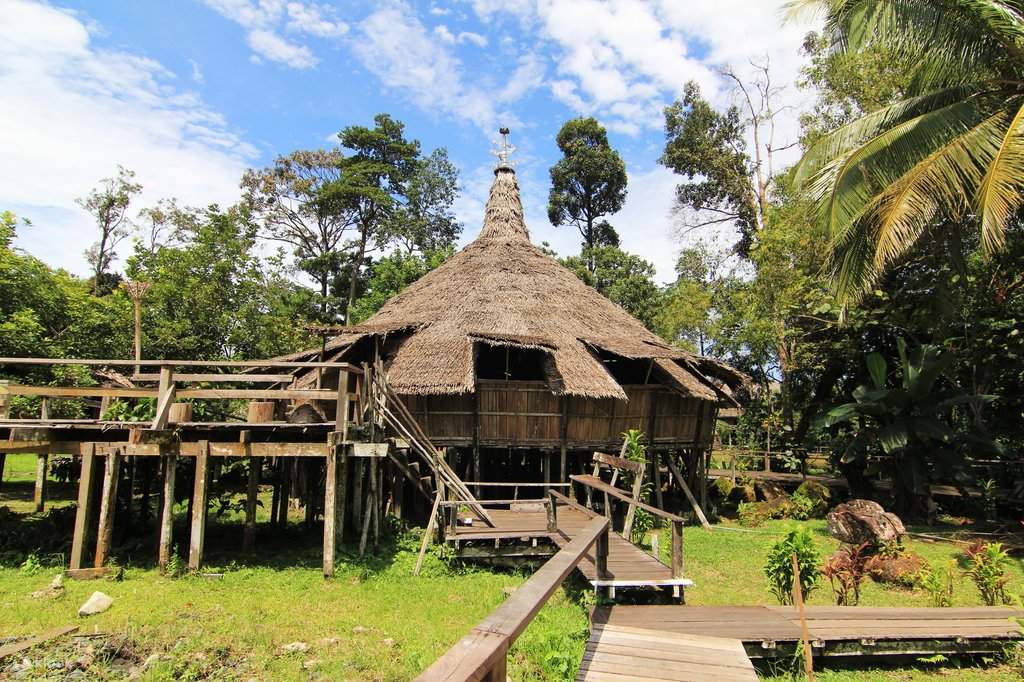
The Sarawak Cultural Village is a living museum that gives visitors a glimpse of the state’s indigenous tribes living in their traditional dwellings. It is located at Pantai Damai, 32 kilometres from Kuching. The village showcases the lifestyle of the major tribes of the state namely Iban, Bidayuh, Orang Ulu, Melanau, Penan, Chinese and Malay. The longhouses are the homes of these ethnic groups where they live and carry out their day-to-day activities. Today, 150 tribal people are living here who take part in folk dances to entertain the visitors. Cultural performances and interactive workshops are organised daily. Sarawak Cultural Village is also the venue for the iconic Rainforest World Music Festival.

Spread across 900 metres along the southern bank of the Sarawak River, the Kuching Waterfront is lined with hotels, restaurants, souvenir shops, entertainment areas and various historically significant buildings making it one of the most popular attractions. The walkway has excellent views of the river and the Malay kampung or village across it during the day and is an excellent spot for watching the sunset in the evening. Attractions located near the waterfront include the monument of late Charles Brooke, the first White Rajah of Sarawak, the Chinese History Museum, the iconic Square Tower, the Tua Pek Kong Temple, the Old Sarawak Steamship building, and the Darul Hana Bridge which connects the Kuching Waterfront with the North side of the river and forms the path to the Astana building.
Unarguably one of the most visited places in the city, Kuching Main Bazaar is the one-stop marketplace with the highest concentration of ethnic handicrafts and antique shops in the city. The bazaar is adjacent to the Waterfront, in the heart of old Kuching. The Main Bazaar is located on the oldest street in the city and brims with antiques and collectables. Apart from shopping, one can also enjoy the excellent views of the Sarawak River and dine at various restaurants and cafes all around the place.

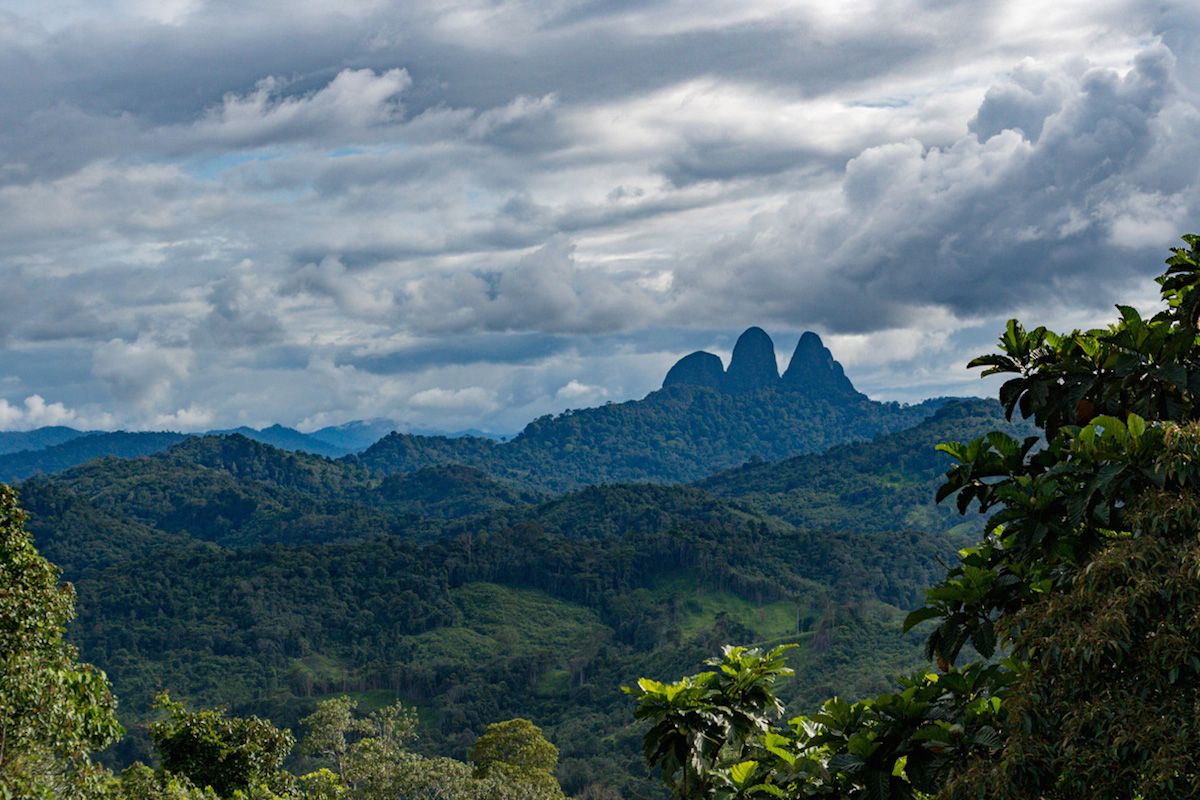
Located about 35 km north of Kuching, Mount Santubong lies within a gazetted national park of the same name. Entry to the park is now via the temporary Sarawak Forestry Corporation park headquarters entrance. In 1855 a British naturalist, Alfred Russel Wallace who was staying at Santubong while collecting specimens in Sarawak, wrote a paper called Sarawak Law which can be considered as a precursor to the biological theory of evolution.
Mount Santbong rises out from the sea which is formed after a collision between the oceanic and the continental crusts. However, legends believe that this mountain has a mythological origin dating back to the centuries. A princess was punished by the king for fighting with her sister and she was cursed into Mount Santubong. Mount Santubong’s name may have been derived from the Iban word for coffin, but various Chinese derivations have also been suggested, as well as the Bidayuh, in whose lands the names of many hills start with S. Investigators have made ascents of the steep mountain to find places of archaeological interest. Around its foot are signs of Hindu occupation which are hundreds of years old and have been investigated by the Sarawak Museum. It was also the home of the early Sarawak Malays until they were driven up to Kuching in about the 1850s owing to continual attacks from the powerful Saribas Dayaks.
The mountain is made of sandstone, although it has been confused by many with limestone tower karst, or a volcanic plug: smaller versions of both appear not far inland. For a long time, it interested those in search of gold but without success. There used to be an old theory that all the gold in the First Division of Sarawak lies in a straight line between Bau and Santubong which has some support in that there is a certain amount of gold in the mountain since fishermen in the past used to depend for their livelihood during the landas season, when the sea was too rough for fishing, by panning gold in the small mountain streams from which they could expect to gain an average of twenty dollars a month.
Trekking to the summit of Mount Santubong is a much-loved activity by visitors and locals alike. This trek is often considered challenging and takes around 4 hours to reach the top and more or less the same time to descend. There are several entry points from where one can start the trek. The trek will take one through the thick tropical rainforest that is enriched with flora and fauna. One might also spot many small animals that live here. Small huts are strategically built at various points where trekkers can take shelter during thunderstorms and downpours. As one climbs higher, the gradient gets steeper and one has to climb a rope ladder to get to the top. After reaching the Mount Santubong summit, one is rewarded with sweeping views of the South China Sea and the village. There are also many tourist spots at the foot of the mountain and they look mesmerising from the top.
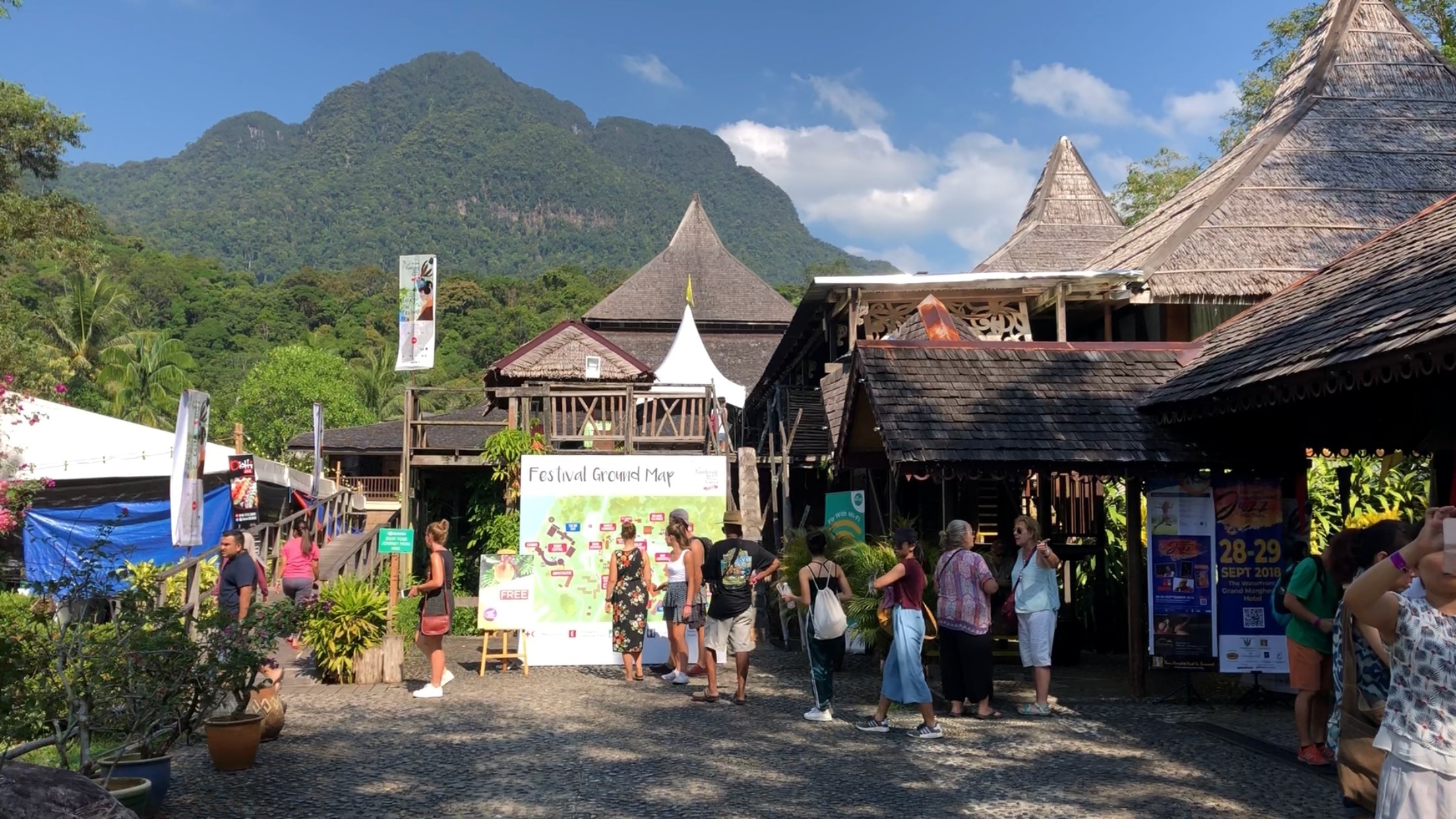
The town of Santubong sits under the peak of Mount Santubong and is famous for its huge expanse of sandy beaches. One must visit the town to see the Irrawaddy river dolphins and if lucky also spot the Indo-Pacific humpback or finless porpoises. Buntal fishing village is also a popular tourist attraction for its seafood and Belacan, or shrimp paste. In front of Damai Central is the very famous and busy Damai Beach known for kayaking. Other major attractions include Batu Buaya which has a myth attached to it where a mystical crocodile was killed and its face got cemented into a stone over time. Batu Bergambar, Bong Kisam and Sultan Tengah Mausoleum are among other historically known tourist spots. February to April is the pleasant weather in Santubong and hence the best time to visit. November to January is the monsoon season which must be avoided as the rainfall is very high making it ill-suited for a vacation.


 Memories and Such