In My Hands Today…

Outlive: The Science and Art of Longevity – Peter Attia with Bill Gifford

Wouldn’t you like to live longer? And better? In this operating manual for longevity, Dr. Peter Attia draws on the latest science to deliver innovative nutritional interventions, techniques for optimizing exercise and sleep, and tools for addressing emotional and mental health.

For all its successes, mainstream medicine has failed to make much progress against the diseases of aging that kill most people: heart disease, cancer, Alzheimer’s disease, and type 2 diabetes. Too often, it intervenes with treatments too late to help, prolonging lifespan at the expense of healthspan, or quality of life. Dr. Attia believes we must replace this outdated framework with a personalized, proactive strategy for longevity, one where we take action now, rather than waiting.

This is not “biohacking,” it’s science: a well-founded strategic and tactical approach to extending lifespan while also improving our physical, cognitive, and emotional health. Dr. Attia’s aim is less to tell you what to do and more to help you learn how to think about long-term health, in order to create the best plan for you as an individual. In Outlive , readers will discover:

  • Why the cholesterol test at your annual physical doesn’t tell you enough about your actual risk of dying from a heart attack.
  • That you may already suffer from an extremely common yet underdiagnosed liver condition that could be a precursor to the chronic diseases of aging.
  • Why exercise is the most potent pro-longevity “drug”—and how to begin training for the “Centenarian Decathlon.”
  • Why you should forget about diets, and focus instead on nutritional biochemistry, using technology and data to personalize your eating pattern.
  • Why striving for physical health and longevity, but ignoring emotional health, could be the ultimate curse of all.

Aging and longevity are far more malleable than we think; our fate is not set in stone. With the right roadmap, you can plot a different path for your life, one that lets you outlive your genes to make each decade better than the one before.
In My Hands Today…

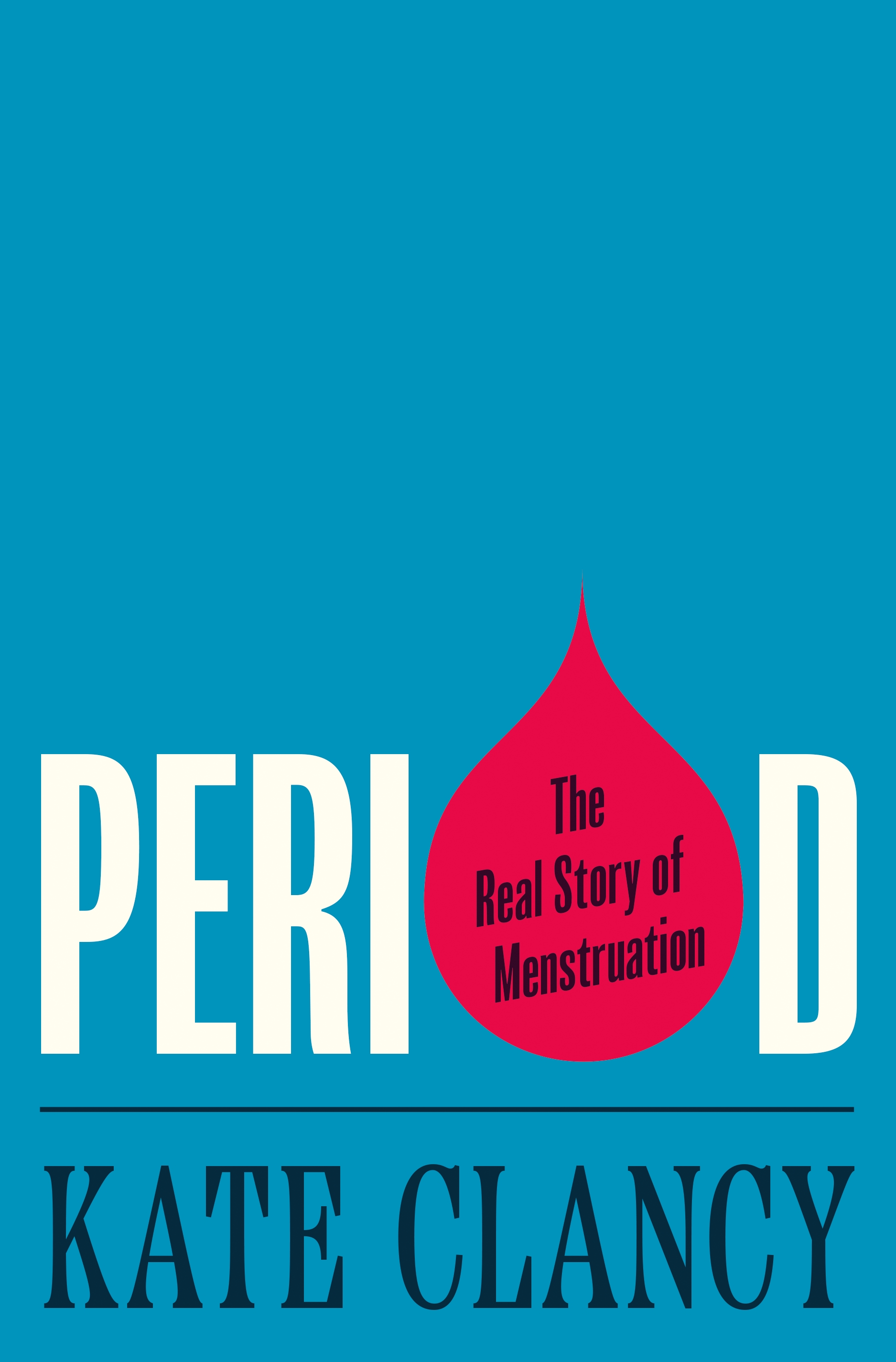
Period: The Real Story of Menstruation – Kate Clancy

Menstruation is something half the world does for a week at a time, for months and years on end, yet it remains largely misunderstood. Scientists once thought of an individual’s period as useless and some doctors still believe it’s unsafe for a menstruating person to swim in the ocean wearing a tampon. Period counters the false theories that have long defined the study of the uterus, exposing the eugenic history of gynecology while providing an intersectional feminist perspective on menstruation science.

Blending interviews and personal experience with engaging stories from her own pioneering research, Kate Clancy challenges many of the myths and false assumptions that have defined the study of the uterus. There is no such a thing as a “normal” menstrual cycle. In fact, menstrual cycles are incredibly variable and highly responsive to environmental and psychological stressors. Clancy takes up a host of timely issues surrounding menstruation, from bodily autonomy, menstrual hygiene, and the COVID-19 vaccine to the ways racism, sexism, and medical betrayal warp public perceptions of menstruation and erase it from public life.

Offering a revelatory new perspective on one of the most captivating biological processes in the human body, Period will change the way you think about the past, present, and future of periods.

In My Hands Today…

The Earth Transformed: An Untold History – Peter Frankopan

Global warming is one of the greatest dangers mankind faces today. Even as temperatures increase, sea levels rise, and natural disasters escalate, our current environmental crisis feels difficult to predict and understand. But climate change and its effects on us are not new.

In a bold narrative that spans centuries and continents, Peter Frankopan argues that nature has always played a fundamental role in the writing of history.

From the fall of the Moche civilization in South America that came about because of the cyclical pressures of El Nino to volcanic eruptions in Iceland that affected Egypt and helped bring the Ottoman empire to its knees, climate change and its influences have always been with us.

Frankopan explains how the Vikings emerged thanks to catastrophic crop failure, why the roots of regime change in Eleventh-Century Baghdad lay in the collapse of cotton prices resulting from unusual climate patterns, and why the western expansion of the frontiers in North America was directly affected by solar flare activity in the eighteenth century. Again and again, Frankopan shows that when past empires have failed to act sustainably, they have been met with catastrophe. Blending brilliant historical writing and cutting-edge scientific research, Climate will radically reframe the way we look at the world and our future.

In My Hands Today…

What If? 2: Additional Serious Scientific Answers to Absurd Hypothetical Questions – Randall Munroe

The millions of people around the world who read and loved What If? still have questions, and those questions are getting stranger. Thank goodness xkcd creator Randall Munroe is here to help. Planning to ride a fire pole from the moon back to Earth? The hardest part is sticking the landing. Hoping to cool the atmosphere by opening everyone’s freezer door at the same time? Maybe it’s time for a brief introduction to thermodynamics. Want to know what would happen if you rode a helicopter blade, built a billion-story building, made a lava lamp out of lava, or jumped on a geyser as it erupted? Okay, if you insist.

Before you go on a cosmic road trip, feed the residents of New York City to a T. rex, or fill every church with bananas, be sure to consult this practical guide for impractical ideas. Unfazed by absurdity, Randall consults the latest research on everything from swing-set physics to airplane-catapult design to clearly and concisely answer his readers’ questions. As he consistently demonstrates, you can learn a lot from examining how the world might work in very specific extreme circumstances.

Filled with bonkers science, boundless curiosity, and Randall’s signature stick-figure comics, What If? 2 is sure to be another instant classic adored by inquisitive readers of all ages.

In My Hands Today…

Humankind: A Hopeful History – Rutger Bregman, translated by Elizabeth Manton and Erica Moore

If one basic principle has served as the bedrock of bestselling author Rutger Bregman’s thinking, it is that every progressive idea — whether it was the abolition of slavery, the advent of democracy, women’s suffrage, or the ratification of marriage equality — was once considered radical and dangerous by the mainstream opinion of its time. With Humankind, he brings that mentality to bear against one of our most entrenched ideas: namely, that human beings are by nature selfish and self-interested.

By providing a new historical perspective of the last 200,000 years of human history, Bregman sets out to prove that we are in fact evolutionarily wired for cooperation rather than competition, and that our instinct to trust each other has a firm evolutionary basis going back to the beginning of Homo sapiens. Bregman systematically debunks our understanding of the Milgram electrical-shock experiment, the Zimbardo prison experiment, and the Kitty Genovese “bystander effect.”

In place of these, he offers little-known true stories: the tale of twin brothers on opposing sides of apartheid in South Africa who came together with Nelson Mandela to create peace; a group of six shipwrecked children who survived for a year and a half on a deserted island by working together; a study done after World War II that found that as few as 15% of American soldiers were actually capable of firing at the enemy.

The ultimate goal of Humankind is to demonstrate that while neither capitalism nor communism has on its own been proven to be a workable social system, there is a third option: giving “citizens and professionals the means (left) to make their own choices (right).” Reorienting our thinking toward positive and high expectations of our fellow man, Bregman argues, will reap lasting success. Bregman presents this idea with his signature wit and frankness, once again making history, social scie