In a world increasingly dominated by fast-paced lifestyles and processed foods, mindful eating has emerged as a powerful antidote. This practice encourages individuals to cultivate awareness around their food choices, fostering a deeper connection between the mind and body.
What is mindful eating? Mindful eating is the practice of being fully present and aware during the eating process. It involves paying attention to the sensory experience of eating, including the taste, texture, aroma, and appearance of food. This approach encourages individuals to slow down, savour each bite, and listen to their body’s hunger and satiety cues.
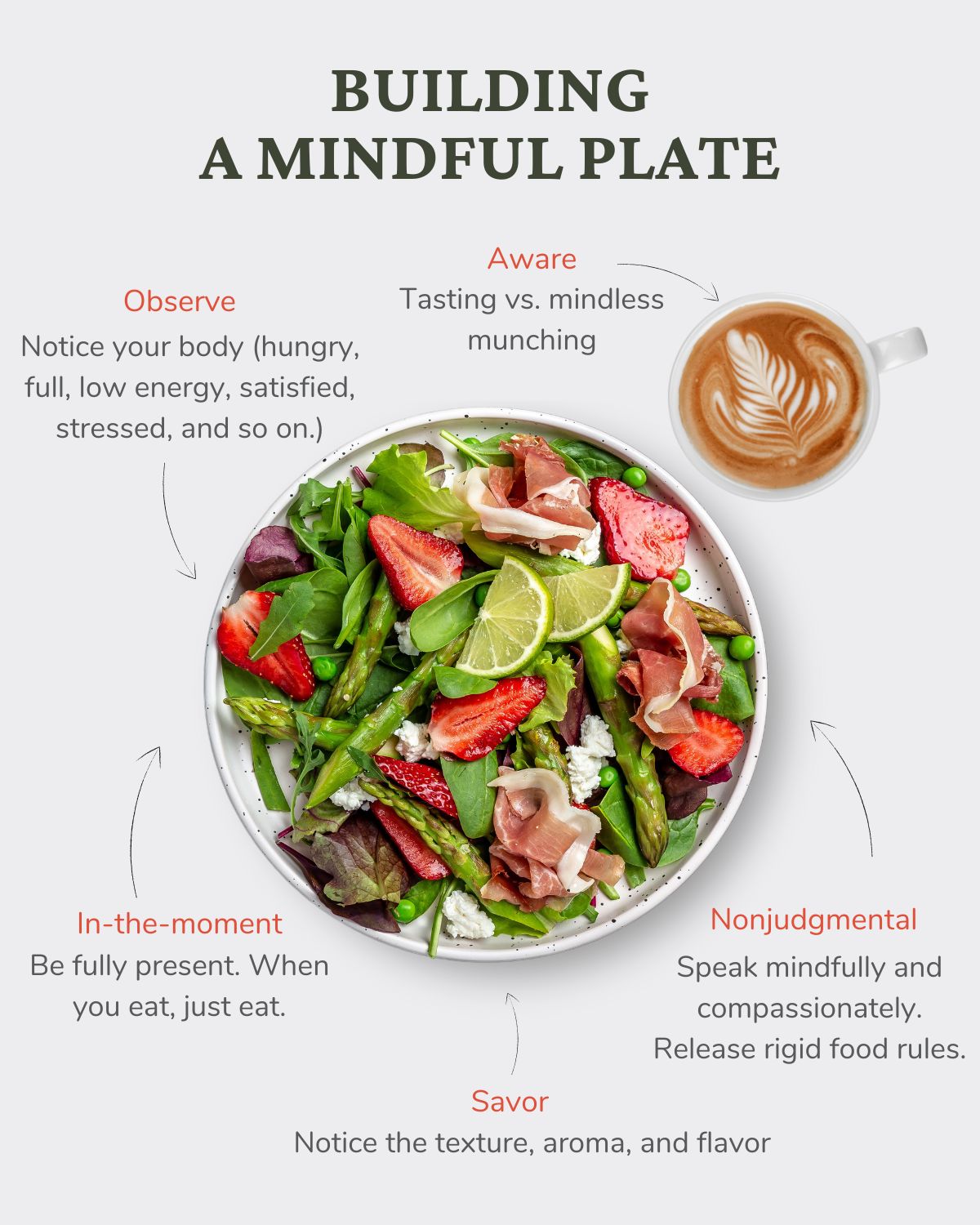
The core principles of mindful eating include being aware and conscious of the food one eats and the sensations associated with it; being non-judgmental and accepting one’s eating experiences without criticism or guilt; savouring and taking the time to enjoy one’s food, enhancing the pleasure of eating; and listening to the body and recognising and responding to hunger and fullness signals.
Origin of Mindful Eating The term “mindful eating” is rooted in the broader concept of mindfulness, which has its origins in Buddhist meditation practices. Mindfulness emphasises living in the present moment and being aware of one’s thoughts, feelings, and surroundings. In the late 20th century, the application of mindfulness to eating began to gain traction, particularly through the work of researchers and dietitians.
A pioneer in the field of mindfulness, Jon Kabat-Zinn developed the Mindfulness-Based Stress Reduction (MBSR) program in the late 1970s, which helped popularise mindfulness in the West. In her book, “Mindful Eating,” Dr. Jan Chozen Bays outlines practical strategies for incorporating mindfulness into eating habits, emphasising awareness and compassion.
Benefits of Mindful Eating Mindful eating offers a wide range of benefits for both physical and mental health. Here are some key advantages:
Improved Digestion: Eating slowly and mindfully allows one’s body to properly digest food. When one eats quickly, they may swallow air and have difficulty recognising when they’re full, leading to overeating. Mindful eating encourages thorough chewing and salivation, aiding digestion.
Enhanced Relationship with Food: Mindful eating fosters a positive relationship with food. By eliminating guilt and judgment, individuals can enjoy their meals without anxiety. This can lead to a more balanced and healthy attitude toward food choices.
Weight Management: Research indicates that mindful eating can contribute to weight loss and management. By being aware of portion sizes and listening to hunger cues, individuals are less likely to overeat and more likely to make healthier food choices.
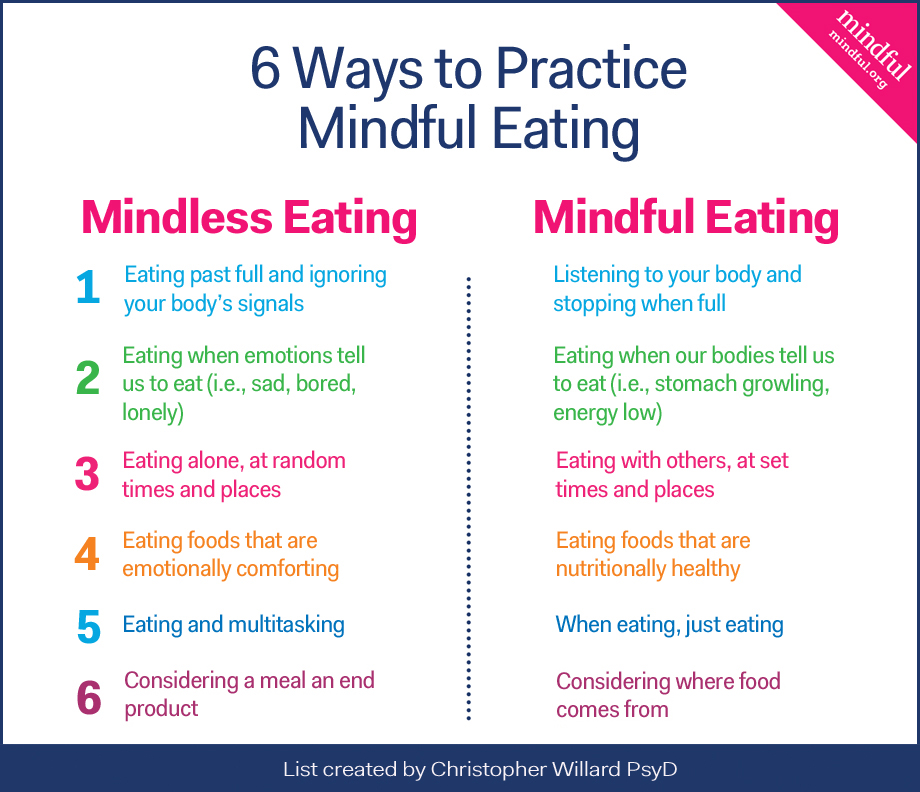
Reduced Emotional Eating: Mindful eating helps individuals recognise emotional triggers that lead to overeating. By developing awareness around these feelings, people can address emotions in healthier ways rather than turning to food for comfort.
Increased Satisfaction: Taking the time to savour food can lead to greater satisfaction with smaller portions. When one truly enjoys their food, they may find that one needs less to feel full and satisfied.
How to Practice Mindful Eating? Incorporating mindful eating into one’s daily routine doesn’t have to be daunting. Here are some practical steps to get started:
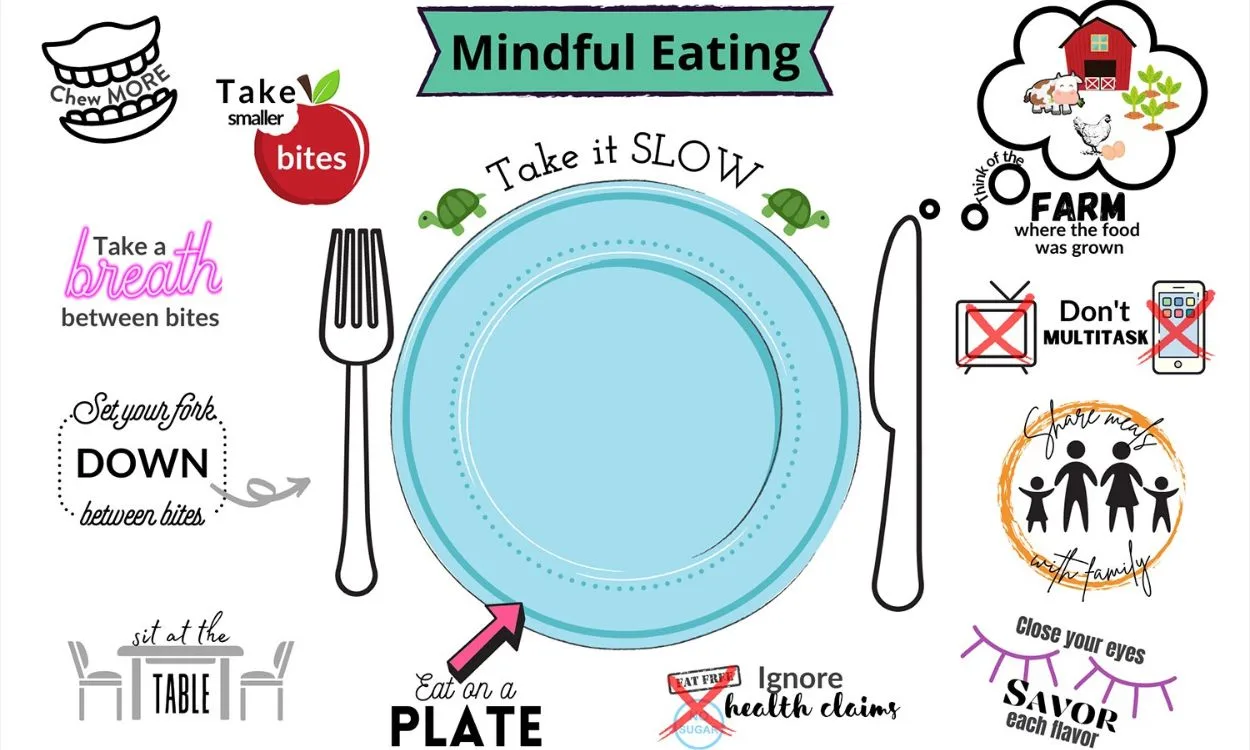
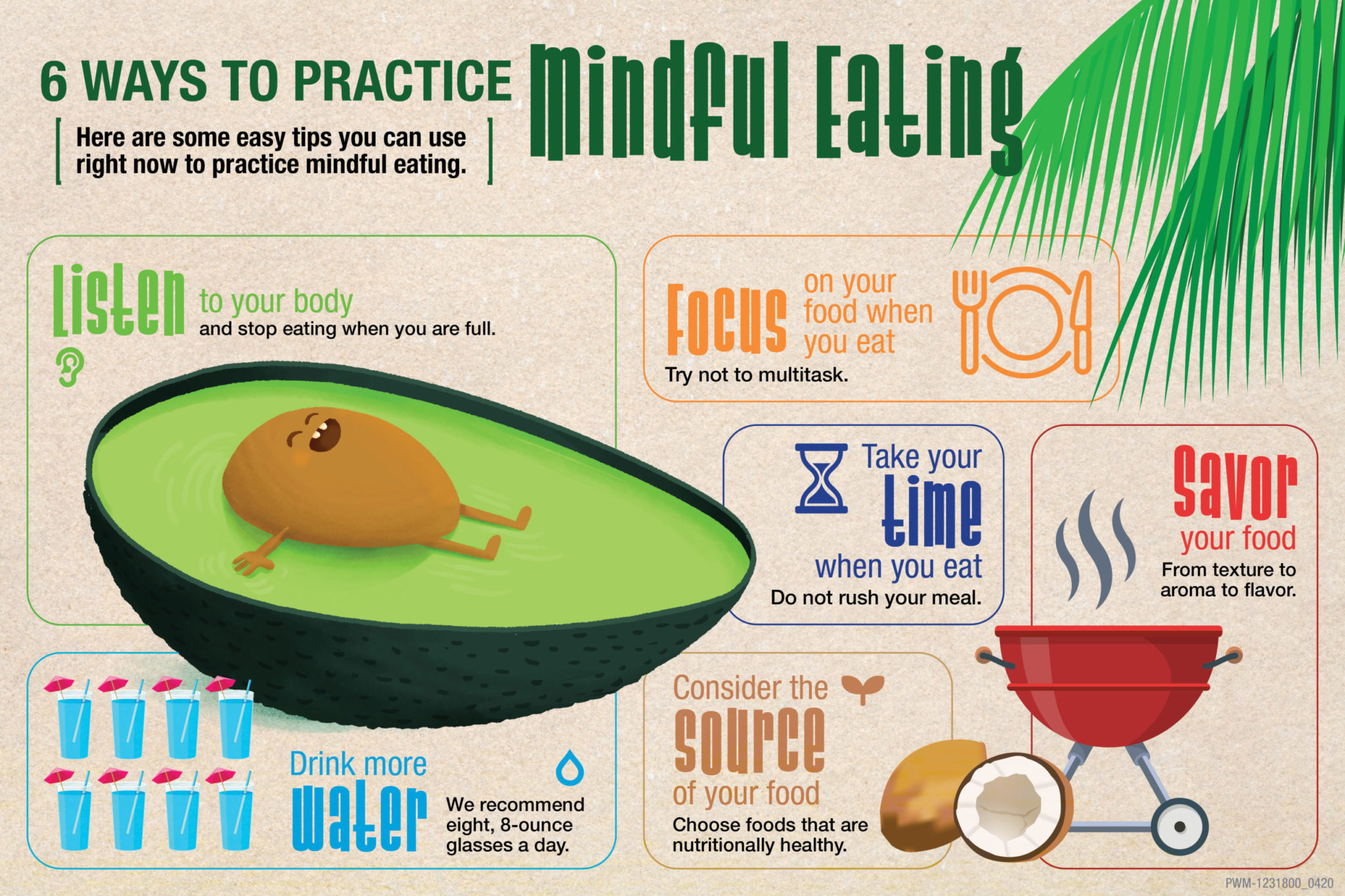
Create a Mindful Eating Environment: Set the stage for mindful eating by minimising distractions. Turn off electronic devices, find a quiet space, and focus solely on the meal.
Engage the Senses: Before one eats, take a moment to observe one’s food. Notice its colours, textures, and aromas. As one eats, one should pay attention to the sensations of taste and the feeling of each bite in one’s mouth.
Slow Down: Take time while eating. Chew each bite thoroughly and place the utensils down between bites. This not only enhances the eating experience but also gives the brain time to register fullness.
Listen to the Body: Tune in to the body’s signals. Ask oneself if one is truly hungry before reaching for food. During the meal, check in with one’s hunger and fullness levels, and stop eating when one feels satisfied.
Practice Gratitude: Before meals, take a moment to express gratitude for the food. Acknowledging the effort that went into preparing the meal can enhance the enjoyment and appreciation of it.
Keep a Mindful Eating Journal: Consider keeping a journal where one can reflect on one’s eating experiences. Note how certain foods make one feel, any emotional triggers one notices, and one’s hunger levels throughout the day.
Mindful Eating and Weight Loss For those looking to lose weight, mindful eating can be an effective strategy. Here’s how it can help:
Awareness of Portions: Mindful eating encourages portion control. By paying attention to how much one eats and recognising when one is full, one can avoid overeating, which is often a major barrier to weight loss.
Better Food Choices: When one practices mindful eating, one is more likely to choose foods that nourish one’s body. One may find oneself gravitating toward whole, unprocessed foods that provide better nutrition compared to processed options.
Reduced Cravings: By understanding one’s body’s hunger signals, one can better distinguish between physical hunger and emotional cravings. This awareness can help reduce mindless snacking and emotional eating.
Sustainable Habits: Mindful eating fosters a long-term, sustainable approach to health and weight management. It promotes a balanced relationship with food rather than a cycle of restrictive dieting and bingeing.
Mindful eating is more than just a method for losing weight; it is a holistic approach to nourishing the body and mind. By fostering awareness, reducing emotional eating, and cultivating a positive relationship with food, individuals can experience profound benefits that extend beyond the dining table. As one embarks on their journey toward mindful eating, remember that it is a practice—one that requires patience and self-compassion. By taking small steps to incorporate mindfulness into one’s meals, one can transform their eating habits and, ultimately, their relationship with food. Whether one aims to lose weight, improve one’s digestion, or simply savour the joy of eating, mindful eating can help achieve their health goals while enhancing their overall well-being. Embrace the journey, and enjoy each bite!
We all have an inner voice that whispers in our ears, offering commentary on our thoughts, actions, and decisions. For some, this voice is a gentle guide, nudging us towards growth and self-improvement. But for many, this inner voice takes on a more sinister form – the inner critic. This relentless, negative self-talk can be a formidable foe, undermining our confidence, sabotaging our efforts, and holding us back from reaching our full potential.
What is the Inner Critic? The inner critic is the voice of self-doubt, self-judgment, and self-criticism that resides within each of us. It’s the nagging voice that tells us we’re not good enough, smart enough, or worthy enough. It’s the voice that magnifies our flaws, minimizes our accomplishments, and perpetuates a cycle of negative self-talk. This inner critic is often rooted in our past experiences, societal conditioning, and the internalization of external criticism. It can stem from childhood experiences, where we may have been criticised or made to feel inadequate, leading to the development of a harsh inner voice that echoes those early messages. While the inner critic may have initially served as a protective mechanism, helping us to conform to societal norms or avoid potential dangers, it can quickly spiral out of control, becoming a relentless tormentor that undermines our self-worth and hinders our personal growth.
The inner critic’s negative influence can manifest in various aspects of our lives, leaving a trail of destruction in its wake. The constant barrage of self-criticism can erode our self-confidence, making us doubt our abilities and question our worth. This lack of confidence can prevent us from taking risks, pursuing opportunities, or stepping out of our comfort zones. The inner critic’s voice can be so overwhelming that we become paralyzed by fear of failure or criticism. This can lead to procrastination, avoidance of challenges, and a reluctance to put ourselves out there, ultimately hindering our personal and professional growth. The inner critic often sets unrealistic standards and demands perfection, leading to a constant state of dissatisfaction and self-criticism. This perfectionism can be crippling, preventing us from taking action or celebrating our achievements. The inner critic’s negative self-talk can become a vicious cycle, where we ruminate on our perceived flaws and shortcomings, perpetuating a negative mindset and limiting our potential. The inner critic’s influence can extend beyond our personal lives, impacting our relationships with others. When we constantly doubt ourselves and engage in negative self-talk, it can create distance, mistrust, and communication breakdowns with those around us.
How do you identify and recognise your inner critic? Notice the critical, negative self-talk in your mind. Pay attention to thoughts that are harsh, judgmental, or demeaning towards yourself. The inner critic often uses words like “should”, “never”, and “always”, and makes overgeneralised negative statements. 2. Observe when the inner critic gets triggered. It may arise after making a mistake, receiving criticism from others, or when you are feeling insecure or vulnerable. Identifying the situations that activate the inner critic can help you recognise its voice. Listen for absolute, black-and-white thinking. The inner critic tends to view things through an all-or-nothing lens, with no room for nuance or grey areas. It makes blanket statements like “You’re a total failure” or “You’ll never succeed.” Note if the voice is from a critical person in your past. For some, the inner critic is an internalised voice of an authority figure, parent, teacher or someone else who was harsh or demeaning. Check if the voice is focused on particular insecurities. Different inner critics may hone in on insecurities about your worth, abilities, appearance, productivity etc. Identifying the themes can reveal which type of critic it is. Observe if it triggers intense negative emotions. The inner critic often provokes feelings of shame, anxiety, insecurity or low self-worth when it pipes up. See if it’s resistant to contradictory evidence. The inner critic tends to dismiss or explain away any facts that contradict its negative judgments.
Silencing the inner critic is not an easy task, but the rewards are immense. When we quiet this negative voice, we open ourselves up to a world of possibilities and personal growth. By quieting the critical voice, we create space for self-acceptance and self-compassion. We learn to embrace our flaws and imperfections, treating ourselves with kindness and understanding. Without the constant barrage of self-criticism, we can cultivate a healthier sense of self-confidence and self-esteem. This newfound confidence empowers us to take risks, pursue our dreams, and embrace new challenges. When we silence the inner critic, we free ourselves from the shackles of self-doubt and fear of failure. This liberation allows our creativity and innovation to flourish, enabling us to explore new ideas and approaches without the weight of self-criticism holding us back. By quieting the critical voice, we become more present and authentic in our relationships. We can communicate more effectively, build deeper connections, and foster a greater sense of trust and understanding with those around us. The constant self-criticism and negative self-talk can take a toll on our mental and emotional health. By silencing the inner critic, we reduce stress, anxiety, and negative emotions, paving the way for greater overall well-being and a more positive outlook on life.
Silencing the inner critic is a journey, and it requires a multifaceted approach. The first step in silencing the inner critic is to become aware of its presence. Practice mindfulness and observe your thoughts without judgment. When you notice the critical voice arising, acknowledge it, but don’t engage with it. Challenge the inner critic’s negative thoughts and replace them with more positive, realistic, and compassionate self-talk. Question the validity of the critical voice and reframe your perspective to a more balanced and constructive one. Treat yourself with the same kindness and understanding you would extend to a loved one. Practice self-care activities that nourish your mind, body, and soul, and cultivate a sense of self-acceptance and self-love. Counter the inner critic’s negative messages with positive affirmations and self-talk. Remind yourself of your strengths, accomplishments, and inherent worth. Surround yourself with positive reminders and mantras that reinforce a more compassionate inner dialogue. Share your struggles with trusted friends, family members, or a mental health professional. Talking about the inner critic can help diminish its power and provide you with valuable perspectives and coping strategies. Recognise that perfection is an unrealistic and unattainable goal. Embrace your imperfections and celebrate the unique qualities that make you who you are. Strive for progress, not perfection. Write a letter to yourself from the perspective of a compassionate friend or loved one. Express understanding, kindness, and encouragement, offering the support and reassurance you need to silence the inner critic.
Silencing the inner critic is a journey of self-discovery, self-acceptance, and personal growth. It requires patience, perseverance, and a commitment to cultivating a kinder, more compassionate relationship with yourself. By quieting the critical voice within, you open the door to a life of authenticity, confidence, and limitless possibilities. You should remember, that the inner critic is not who you are; it’s a voice that has been conditioned by past experiences and societal pressures. By recognizing its presence and actively working to silence it, you reclaim your power and pave the way for a life lived on your terms, free from the shackles of self-doubt and self-criticism.
Being mindful of the inner critic’s tone, content, triggers, and your emotional reactions to it can help you recognize when that critical inner voice is active. With awareness, you can then apply strategies to challenge and quiet it down. So, embrace the journey of self-discovery, and embark on the path to silencing the inner critic. The rewards are immeasurable – a deeper sense of self-acceptance, improved mental and emotional well-being, and the freedom to pursue your dreams without the weight of self-criticism holding you back.
After my poem on the same topic, I became inspired to write more about Self Discovery.
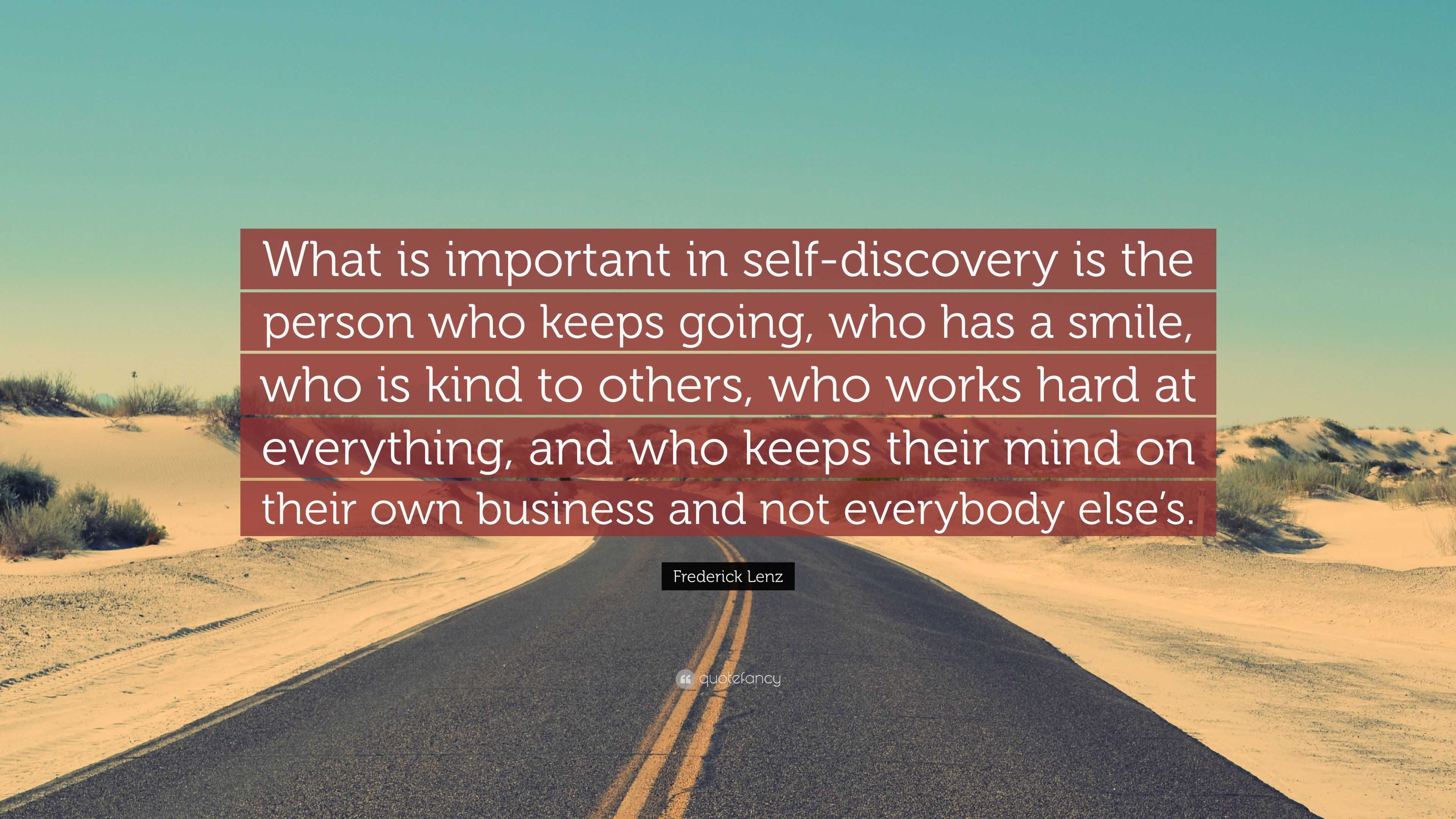
Self-discovery is the process of understanding one’s true self and is a journey that we all undertake at some point in our lives. It’s the process of getting to know oneself, including values, beliefs, strengths, weaknesses, and one’s purpose in life. Self-discovery can be a difficult process, but it’s worth taking because it can lead to a more fulfilling and purposeful life. Going deeper into self-discovery can transform your life. True self-discovery starts when one evaluates their life and thinks about what’s energising and what’s not, what will bring more joy into their life and probably the most important question, what inspires one to jump out of bed each morning.
So what exactly is Self-Discovery? Self-discovery is the process of exploring and understanding who one is as a person. It involves gaining insight into their thoughts, emotions, behaviours, and motivations. It’s a process of introspection that can help one understand what makes them unique, what drives them, and what they want to achieve in life.
Self-discovery is not a one-time event. It’s an ongoing process that can continue throughout their life. As one grows and evolves, their understanding of themselves will also change. Self-discovery is about staying curious and open to learning about oneself and the world around them. Self-discovery needs courage and resilience to stick with the process and in the process of looking inward, one may learn things about themselves that one finds hard to accept. Discovering the inner self also requires lots of self-awareness, otherwise known as self-knowledge. Self-knowledge usually refers to their knowledge of their feelings, beliefs, and desires. If one has more of this in their life, they’ll have better emotional regulation and this helps them better their personal and work relationships and improve stress management. Knowing more about the way the mind works also improves empathy, helps exercise better self-control, be more creative, and have higher self-esteem. One also becomes more honest as a result.
Why is Self-Discovery Important? Self-discovery is important for several reasons. Firstly, it can help understand one’s own needs and desires. When one knows themselves well, one can make decisions that are aligned with their values and goals, leading to greater fulfilment and happiness in life. Secondly, self-discovery can help to develop a sense of purpose. When one understands their strengths and weaknesses, one can identify areas where one can make a meaningful contribution, giving life direction and meaning. Lastly, self-discovery can help build better relationships. When one understands themself, one can also understand others better. This can lead to more empathy, better communication, and stronger connections with the people around them.
When one cannot live in alignment with their true self, one must spend energy attempting to deny and distort one’s experiences to make sense of a pervasive lack of happiness and personal fulfilment. According to experts, this ongoing effort can go so far as to produce psychological states and conditions such as depression. The goal in life should not be to pursue imagined or externally derived ideals, but rather to develop a more realistic understanding of one’s strengths and limitations. By doing so, one can avoid negative psychological states and self-actualise, feel contentment, and make better contributions to the world. This is why self-discovery is so important.
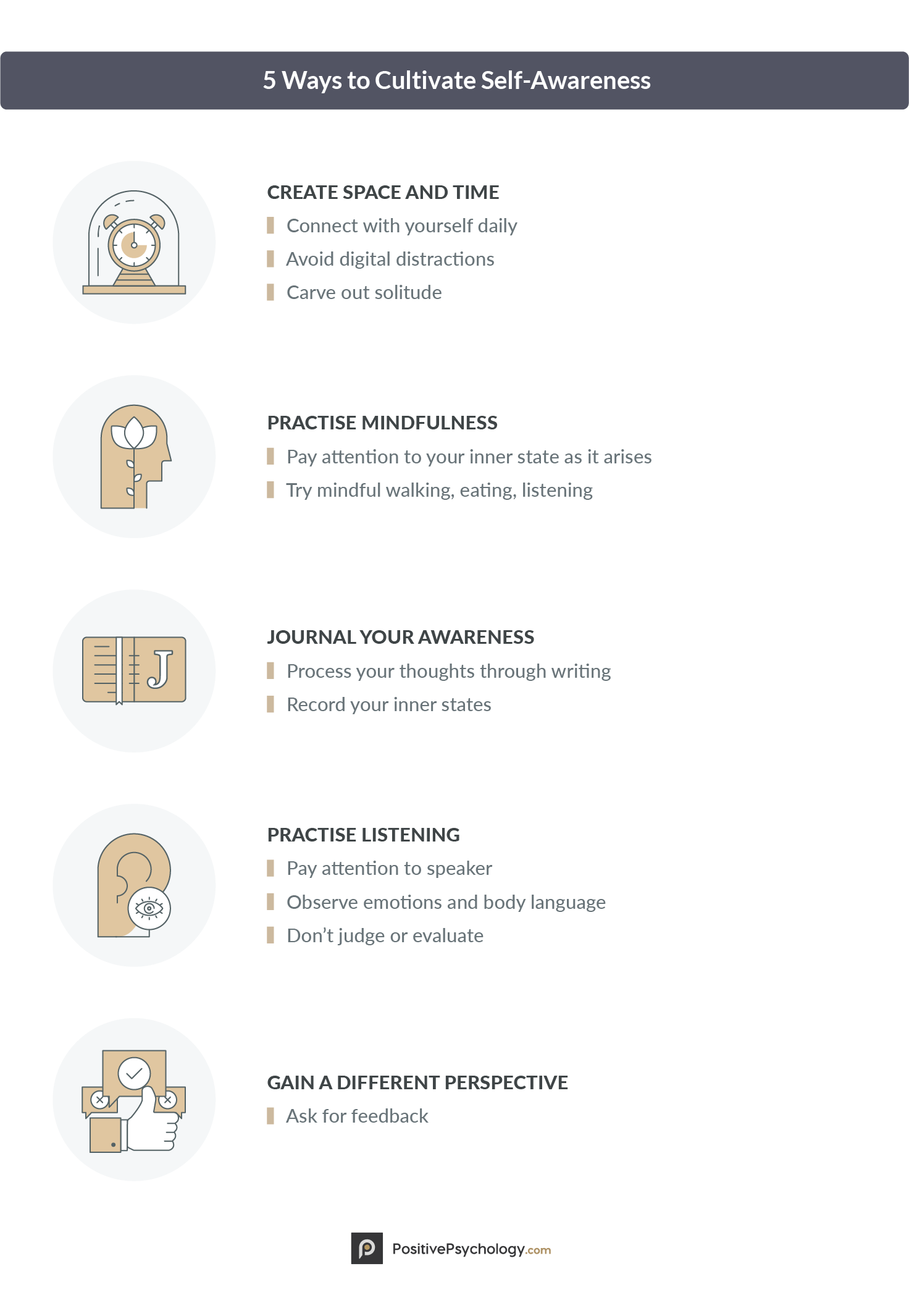
How to Embark on a Self-Discovery Journey? Embarking on a self-discovery journey can be a daunting task, but it’s worth taking. Here are some steps one can take to get started:
Reflect on life experiences: The first step in self-discovery is to reflect on one’s life experiences. Think about the things that have shaped one as a person. What were the defining moments? What were the biggest challenges and what did one learn from these experiences? Reflecting on one’s life experiences can help one understand their values and beliefs. It can also help identify patterns in their behaviour that may be holding them back.
Identify strengths and weaknesses: Identifying one’s strengths and weaknesses is an important part of self-discovery. One’s strengths are the things that come naturally, while weaknesses are the areas where one needs to improve. Understanding one’s strengths and weaknesses can help one identify areas where one can excel. It can also help identify areas where one needs to work on themself.
Practice mindfulness: Mindfulness is the practice of being present and aware of the moment. It involves paying attention to thoughts, emotions, and physical sensations without judgment. Practising mindfulness can help one become more aware of their thoughts and emotions. This can help identify patterns in one’s behaviour that may be holding one back.
Try new things: Trying new things is an important part of self-discovery. It can help one step out of their comfort zone and discover new things about themself. Trying new things can be as simple as taking a different route to work or trying a new hobby. It can also involve travelling to a new place or learning a new skill.
Seek feedback from others: Seeking feedback from others can be a valuable part of self-discovery. Other people can often see things that they can’t see in themselves. One can ask friends, family, or colleagues for feedback on their strengths.
So, start working on the road to self-discovery and work to be the best self each day, no matter what. Take risks and try new things. Self-discovery is a journey that can lead to a more fulfilling and purposeful life. It involves gaining insight into one’s thoughts, emotions, behaviours, and motivations. The process of self-discovery is ongoing and can continue throughout one’s entire life. It’s important to reflect on one’s life experiences, identify one’s strengths and weaknesses, practice mindfulness, try new things, and seek feedback from others. By taking these steps, one can gain a better understanding of themselves, their values, and purpose in life. Remember, self-discovery is a process that requires patience, curiosity, and openness to learning. The journey may be difficult, but it’s worth taking because it can lead to a more fulfilling and meaningful life.
Success, the very word conjures up images of someone who is wealthy or famous or maybe someone who does very well in school or work. Or maybe it is someone who has a wonderful relationship with their spouse, parents or children. Or it could be someone in a combination of the above.
We live in a consumer-driven society and the culture we live in places a big emphasis on making money and defines success by how much we own. Advertising messages communicate that having certain luxury brands is the definition of success. So what makes one successful in this society? Is it hitting a specific income bracket or living in a specific zip code or driving a particular car model? But the question then arises is if success is only an outward manifestation or is it something deeper, something that is intrinsic to what is most important to us?
Every individual has their definition of success and what is important to them. While we need to do some things for the sake of earning an income, it is important to balance responsibilities with activities we enjoy doing. That means having enough free time to spend with people we love as well as time for practising self-care. For this to happen, we need to check if we can balance our lives to do what we enjoy doing and if not, what steps we can take to achieve a more balanced lifestyle.
One thing to be able to achieve that balance is to be secure and stable financially because while one need not be excessively wealthy to be happy, having a healthy bank balance will allow us to design our life in ways we want and a healthy bank balance will give financial stability that can mean success. What this means is that you need to figure out exactly how much you need to live a comfortable lifestyle and use that number to hit your financial goals.
Success is not all about what you do or don’t have. Someone who wants to live a life caring for others without being financially successful and achieves that is successful in their definition of success. Success is also not about big achievements, getting that ultimate promotion which will change all the time. Instead, think of success as small goals which are the ladders to the main big goal. These goals can be small, short-term wins which also give you the impetus to get to the larger goals.
Our definitions of success will change over time because our priorities change and what seemed important back then may become trivial now. Our values and needs evolve and with this, the definition of success will be revised and adjusted.
What is my version of success? It’s pretty simple actually. To me, I will consider myself successful if I am financially stable so that S and I can retire in peace, give my children a good upbringing and education and inculcate in them the values and character that make them excellent human beings and good citizens.
At the end of the day, success is being able to look at yourself in the mirror and feel good about the choices you’ve made. No person is without their mistakes, but you learn and grow through the process. Your version of success doesn’t have to look like anyone else’s, but it must be a definition you feel good about and that is meaningful to you. Ultimately, the way that you define success will lead you toward living a more contented life that is aligned with your values.
A couple of weeks back, I attended a webinar that spoke about positive psychology and what I heard intrigued me enough that I wanted to learn more about the topic. This blog post is the result of that learning and research.
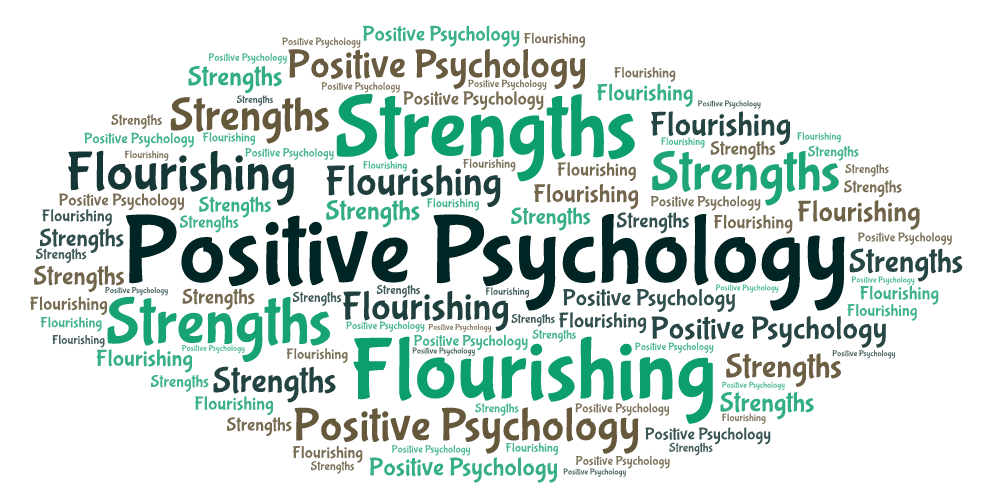
Positive psychology is the scientific study of what makes life most worth living, focusing on both individual and societal well-being. It studies “positive subjective experience, positive individual traits, and positive institutions and aims to improve the quality of life.” A new domain of psychology, positive psychology began in 1998 when Martin Seligman chose it as the theme for his term as the president of the American Psychological Association.
Positive Psychology is a reaction against past practices, which have tended to focus on mental illness and emphasised maladaptive behaviour and negative thinking. It builds on the humanistic movement by Abraham Maslow, Rollo May, James Bugental, and Carl Rogers, which encourages an emphasis on happiness, well-being, and positivity, thus creating the foundation for what is now known as positive psychology. It is a scientific approach to studying human thoughts, feelings, and behaviour, with a focus on strengths instead of weaknesses, building the good in life instead of repairing the bad, and taking the lives of average people up to great instead of focusing solely on moving those who are struggling up to normal.
Positive psychologists have suggested several factors may contribute to happiness and subjective well-being. Social ties with a spouse, family, friends, colleagues, and wider networks; membership in clubs or social organizations; physical exercise; and the practice of meditation can help. Spirituality can also be considered a factor that leads to increased individual happiness and well-being. Happiness may rise with increasing financial income, though it may plateau or even fall when no further gains are made or after a certain cut-off amount.
Positive psychology focuses on eudaimonia, an ancient Greek term for the good life or good spirit and the concept of the reflection on the factors that contribute the most to a well-lived and fulfilling life. Eudaimonia is considered an essential element for the pursuit of happiness and good life and emphasises cherishing that which holds the greatest value in life and other such factors that contribute the most to having a good life. While not attempting a strict definition of what makes up a good life, positive psychologists agree that one must be happy, engaged, and meaningful with their experiences. Martin Seligman refers to the good life as using your signature strengths every day to produce authentic happiness and abundant gratification. Positive psychologists often use the terms subjective well-being and happiness interchangeably.
Positive psychology complements, without intending to replace the traditional fields of psychology and has placed a significant emphasis on fostering positive self-esteem and self-image. The basic premise of positive psychology is that human beings are often driven by the future more than the past. It also suggests that any combination of positive experiences/emotions, past or present, leads to a pleasant, happy life.
Positive psychology isn’t limited to feeling a sense of individual well-being itself, rather proponents of this science often refer to the Three Levels of Positive Psychology which include the Subjective level that centres around feelings of happiness, well-being, optimism, and similar emotions or feelings as they relate to your daily experience, the Individual level that combines the subjective level feelings of well-being with the qualities or virtues that make you a well-rounded person, such as forgiveness, love, and courage and the Group level which focuses on positive interactions with the community, and includes traits like altruism, social responsibility, and other virtues that strengthen social bonds.
Those who practice positive psychology attempt psychological interventions that foster positive attitudes toward one’s subjective experiences, individual traits, and life events to minimise pathological thoughts that may arise in a hopeless mindset and develop a sense of optimism toward life. Positive psychologists seek to encourage acceptance of one’s past, excitement and optimism about one’s future experiences, and a sense of contentment and well-being in the present.
According to Seligman and Peterson, positive psychology addresses three issues: positive emotions, positive individual traits, and positive institutions. Positive emotions are concerned with being content with one’s past, being happy in the present and having hope for the future. Positive individual traits focus on one’s strengths and virtues. And, positive institutions are based on strengths to better a community of people.
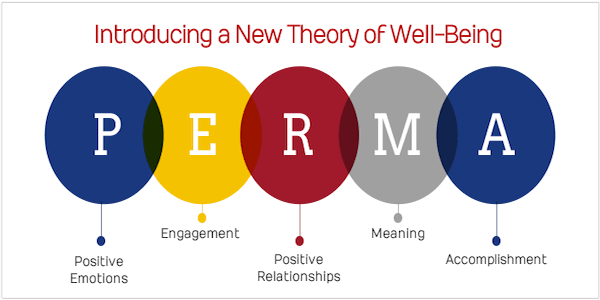
Seligman proposed the PERMA model to explain and define well-being in a broader sense. PERMA is an acronym for the five elements of well-being, and it has become a widely recognised model in the field of positive psychology. In the PERMA model,
P stands for Positive emotions – Experiencing positive emotions has a major impact on boosting well-being. Positive emotions may spring from fostering gratitude and forgiveness about past events, enjoying oneself at the moment, and being optimistic about the future.
E stands for Engagement – To enhance well-being, it is also important to develop a sense of engagement which can be done by completely absorbing oneself while doing something they enjoy and excel at. This sense of engagement produces an experience known as ‘flow’, a sensation one has when their skills are sufficient for a particular challenge with a particular goal in mind. The concept of “flow” was coined by Mihaly Csikszentmihaly, a leading figure in the field of positive psychology.
R stands for Relationships – As social beings, individuals often rely on building connections with other people to thrive, and the support they derive from these connections can give life purpose and meaning.
M stands for Meaning – Experiencing positive emotions alone is not enough to lead a happy life. Seligman suggests that finding meaning is the highest form of happiness. Meaning can be achieved by applying their strengths to the service of something larger — like a social cause — a substantial contribution to a community they’re a part of or a charitable duty.
Lastly, A stands for Accomplishment – There is no doubt that when one achieves their goals and succeeds, they feel a sense of fulfilment. If the drive to accomplish these goals doesn’t exist, a true sense of well-being is difficult to attain.
Positive psychology’s main aim is to encourage people to discover and nurture their character strengths, rather than channelling their efforts into correcting shortcomings. Positive psychology highlights the need for one to shift their negative outlook to a more optimistic view to improve quality of life. Each of us routinely experiences both good and bad outcomes but it often feels easier to focus on the negative outcomes, ignoring the ways we could harness the effect of good things to remedy the bad. Positive psychology is important because discovering what leads people to live more meaningful lives can translate to better strategies for managing mental illness, correcting negative behaviours, and increasing happiness and productivity.
In general, the greatest potential benefit of positive psychology is that it teaches the power of shifting one’s perspective. This is the focus of many techniques, exercises, and even entire programs based on positive psychology because a relatively small change in one’s perspective can lead to astounding shifts in wellbeing and quality of life. Injecting a bit more optimism and gratitude into your life is a simple action that can give you a radically more positive outlook on life.
So how do we incorporate positive psychology into our daily lives?
Practise Gratitude – Gratitude is one of the most popular positive psychology approaches and for good reasons. People who practice gratitude regularly experience more positive emotions, feel more alive, sleep better, express more compassion and kindness, and even have stronger immune systems. I’ve spoken about keeping journals before, so you could incorporate a few things you are grateful for in your daily journal. I started doing this at the beginning of the year, then missed writing my daily gratitude for a few months now, so this is a reminder for me to restart practising daily gratitude. Gratitude is a great buffer against negative emotions because it involves a focus on the present moment and appreciating what is instead of focusing on what could be.
Practise Mindfulness – I’ve written about mindfulness and mindful meditation many times, but one of the easiest ways to incorporate positive psychology daily is to practise mindfulness. Mindfulness meditation is a focus on the present moment achieved through the directing of attention towards one’s immediate experiences, thoughts, feelings, emotions, and sensations. It involves paying attention to thoughts and feelings with a sense of acceptance and non-judgment. In very simple terms it implies that instead of focusing on what one should be feeling or experiencing, they are present and aware of how they are feeling. It is not about trying to change anything, just tuning in to the experience of the moment.
Use more Humour – There’s a reason that videos of laughing babies and goats in pyjamas are so popular, they make us feel better by quickly shifting our focus onto something fun, hopeful, and uplifting. We all know from experience that laughter is good medicine and research confirms that laughter reduces physical pain, improves mood, counteracts stress, and increases resiliency. So, spend some time daily laughing as much as you can, it’s a time well spent!
Smile more – It turns out that one doesn’t need to have a good belly laugh to experience mental and physical health benefits. The simple act of smiling can shift the mood from negative to positive. Smiling not only increases happiness and emotional well-being but also reduces stress, makes one more likeable and appear more competent, and is associated with longer-lasting and more fulfilling marriages. To harness some of the amazing powers of smiling, all one has to do is smile more. Since smiling is contagious, try to spend more time around others who smile often. One can also watch something funny or do something silly to get smiling.
Be more self-compassionate – Most people are incredibly hard on themselves and are judgmental and critical, finding fault with every little imperfection. By fixating on and amplifying mistakes and flaws, they train themselves to focus on the negatives. Not only does this damage their self-esteem and self-confidence, but it also dampens the mood and interferes with their ability to enjoy positive experiences and events in their lives. Self-compassion is the natural antidote for self-criticism. When one treats themselves with kindness and grace, they are acknowledging their imperfections and struggles and loving themselves anyway. People who practice self-compassion are less likely to suffer from depression, insomnia, and physical aches and pains. And self-compassion is associated with greater psychological well-being, motivation, and greater relationship satisfaction.
Visualise success – Another way to stay motivated and think positively is to visualize oneself acting in new ways. This creates a mental picture of success which strengthens their confidence and reinforces optimistic thinking. To do this, find a quiet place to sit, relax the body, and close the eyes. Paint a mental picture of yourself completing the big work assignment or giving a presentation with confidence. Tune in to all the details from the voice and posture to self-talk. Visualisation exercises help to relax the body and mind and create a sense of calm and well-being that can translate into greater confidence and focus and less stress and tension. If this is difficult, visualise a desired state of mind, such as relaxation, contentment, or peace of mind. Imagine yourself in a comfortable, pleasant place someplace that you associate with your desired mood and create a visual image of yourself in this place by imagining every detail and using all your senses. Notice how your muscles relax, you breathe deeply, and you feel a deep sense of peace and contentment. A guided visualisation like this is a mini-vacation for the mind.
Anticipate, Savour and Remember – There are three simple ways to increase the enjoyment of pleasurable experiences. One can boost happiness using anticipation by spending time anticipating the job of an upcoming enjoyable event. All activities leading to the event should be seen as part of the enjoyment rather than as chores. The second part of amplifying happiness is to savour the good times. Life is so rushed that it’s easy to let things pass without fully engaging in them. The idea behind savouring an experience is to be fully present. So put everything aside and enjoy the moment at hand. And the final way to increase pleasure is to look back and reflect on the good times. Most of us do this by looking at photos and retelling stories. One can also make scrapbooks, keep a journal or make videos. Remembering in these ways helps sharpen the memories and allows us to re-experience some of the joy that was felt when the event first occurred.
Other ways one can be happier are focusing less on attaining wealth and spending more on experiences rather than on physical and material possessions. Oxytocin may provoke greater trust, empathy, and morality in humans, meaning that giving hugs or other shows of physical affection may give one a big boost to one’s overall well-being and the well-being of others. Those who intentionally cultivate a positive mood to match the outward emotion they need to display benefit by more genuinely experiencing the positive mood. In other words, putting on a happy face won’t necessarily make one feel happier, but putting in a little bit of effort likely will.
Someone who practices a positive psychological outlook in life is more likely to be successful, be it at home or work. Not only does success make us happier, but feeling happy and experiencing positive emotions increases our chances of success.
Here are a couple of Ted Talks from the people who brought us positive psychology that I hope you will find as interesting and useful that I did.
















 Memories and Such