In My Hands Today…

Number Go Up: Inside Crypto’s Wild Rise and Staggering Fall – Zeke Faux
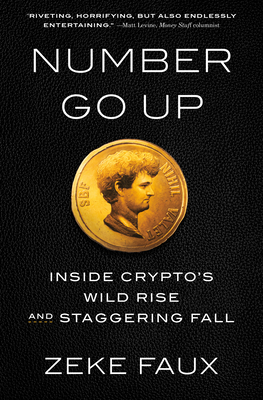
In 2021 cryptocurrency went mainstream. Giant investment funds were buying it; celebrities like Tom Brady endorsed it; and TV ads hailed it as the future of money. Hardly anyone knew how it worked—but why bother with the particulars when everyone was making a fortune from Dogecoin, Shiba Inu, or some other bizarrely named “digital asset”?

As he observed this frenzy, investigative reporter Zeke Faux had a nagging feeling: Was it all just a confidence game of epic proportions? What started as curiosity—with a dash of FOMO—would morph into a two-year, globe-spanning quest to understand the wizards behind the world’s new financial machinery. Faux’s investigation would lead him to a schlubby, frizzy-haired twenty-nine-year-old named Sam Bankman-Fried (SBF for short) and a host of other crypto scammers, utopians, and overnight billionaires.

Faux follows the trail to a luxury resort in the Bahamas, where SBF boldly declares that he will use his crypto fortune to save the world. Faux talks his way onto the yacht of a former child actor turned crypto impresario and gains access to “ApeFest,” an elite party headlined by Snoop Dogg, by purchasing a $20,000 image of a cartoon monkey. In El Salvador, Faux learns what happens when a country wagers its treasury on Bitcoin, and in the Philippines, he stumbles upon a Pokémon knockoff mobile game touted by boosters as a cure for poverty. In an astonishing development, a spam text leads Faux to Cambodia, where he uncovers a crypto-powered human-trafficking ring.

When the bubble suddenly bursts in 2022, Faux brings readers inside SBF’s penthouse as the fallen crypto king faces his imminent arrest. Fueled by the absurd details and authoritative reporting that earned Zeke Faux the accolade “our great poet of crime” from Money Stuff columnist Matt Levine, Number Go Up is the essential chronicle, by turns harrowing and uproarious, of a $3 trillion financial delusion.
In My Hands Today…

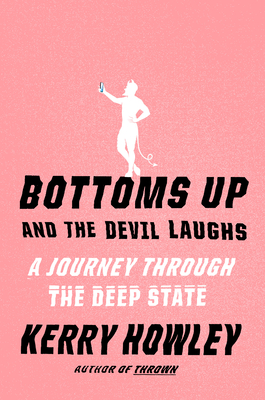
Bottoms Up and the Devil Laughs: A Journey Through the Deep State – Kerry Howley

Who are you? You are data about data. You are a map of connections–a culmination of everything you have ever posted, searched, emailed, liked, and followed. In this groundbreaking work of narrative nonfiction, Kerry Howley investigates the curious implications of living in the age of the indelible. Bottoms Up and the Devil Laughs tells the true story of intelligence specialist Reality Winner, a lone young woman who stuffs a state secret under her skirt and trusts the wrong people to help. After printing five pages of dangerous information she was never supposed to see, Winner finds herself at the mercy of forces more invasive than she could have possibly imagined.

Following Winner’s unlikely journey from rural Texas to a federal courtroom, Howley maps a hidden world, drawing in John Walker Lindh, Lady Gaga, Edward Snowden, a rescue dog named Outlaw Babyface Nelson, and a mother who will do whatever it takes to get her daughter out of jail. Howley’s subjects face a challenge new to history: they are imprisoned by their past selves, trapped for as long as the Internet endures. A soap opera set in the deep state, Bottoms Up and the Devil Laughs is a free fall into a world where everything is recorded and nothing is sacred, from a singular writer unafraid to ask essential questions about the strangeness of modern life.

In My Hands Today…

Code Dependent: Living in the Shadow of AI – Madhumita Murgia

A riveting story of what it means to be human in a world changed by artificial intelligence, revealing the perils and inequities of our growing reliance on automated decision-making

On the surface, a British poet, an UberEats courier in Pittsburgh, an Indian doctor, and a Chinese activist in exile have nothing in common. But they are in fact linked by a profound common experience—unexpected encounters with artificial intelligence. In Code Dependent , Murgia shows how automated systems are reshaping our lives all over the world, from technology that marks children as future criminals, to an app that is helping to give diagnoses to a remote tribal community.

AI has already infiltrated our day-to-day, through language-generating chatbots like ChatGPT and social media. But it’s also affecting us in more insidious ways. It touches everything from our interpersonal relationships, to our kids’ education, work, finances, public services, and even our human rights.

By highlighting the voices of ordinary people in places far removed from the cozy enclave of Silicon Valley, Code Dependent explores the impact of a set of powerful, flawed, and often-exploitative technologies on individuals, communities, and our wider society. Murgia exposes how AI can strip away our collective and individual sense of agency, and shatter our illusion of free will.

The ways in which algorithms and their effects are governed over the coming years will profoundly impact us all. Yet we can’t agree on a common path forward. We cannot decide what preferences and morals we want to encode in these entities or what controls we may want to impose on them. And thus, we are collectively relinquishing our moral authority to machines.

In Code Dependent , Murgia not only sheds light on this chilling phenomenon, but also charts a path of resistance. AI is already changing what it means to be human, in ways large and small, and Murgia reveals what could happen if we fail to reclaim our humanity.

In My Hands Today,,,

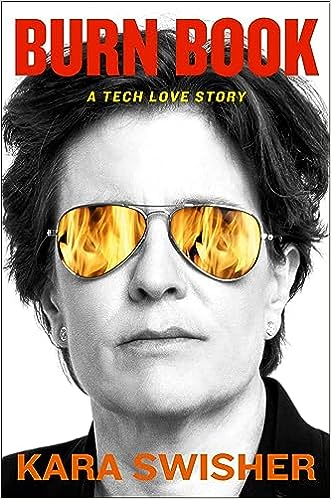
Burn Book: A Tech Love Story – Kara Swisher

Part memoir, part history, Burn Book is a necessary chronicle of tech’s most powerful players. This is the inside story we’ve all been waiting for about modern Silicon Valley and the biggest boom in wealth creation in the history of the world.

When tech titans crowed that they would “move fast and break things,” Kara Swisher was moving faster and breaking news. While covering the explosion of the digital sector in the early 1990s, she developed a long track record of digging up and reporting the facts about this new world order. Her consistent scoops drove one CEO to accuse her of “listening in the heating ducts” and prompted Facebook’s Sheryl Sandberg to once observe: “It is a constant joke in the Valley when people write memos for them to say, ‘I hope Kara never sees this.’”

While still in college, Swisher got her start at The Washington Post, where she became one of the few people in journalism interested in covering the nascent Internet. She went on to work for The Wall Street Journal, joining with Walt Mossberg to start the groundbreaking D: All Things Digital conference, as well as pioneering tech news sites.

Swisher has interviewed everyone who matters in tech over three decades, right when they presided over an explosion of world-changing innovation that has both helped and hurt our world. Steve Jobs, Jeff Bezos, Elon Musk, Bill Gates, Sheryl Sandberg, Bob Iger, Larry Page and Sergey Brin, Meg Whitman, Peter Thiel, Sam Altman, and Mark Zuckerberg are just a few whom Swisher made sweat—figuratively and, in Zuckerberg’s case, literally.

Despite the damage she chronicles, Swisher remains optimistic about tech’s potential to help solve problems and not just create them. She calls upon the industry to make better, more thoughtful choices, even as a new set of powerful AI tools are poised to change the world yet again. At its heart, this book is a love story to, for, and about tech from someone who knows it better than anyone.

In My Hands Today…

Filterworld: How Algorithms Flattened Culture – Kyle Chayka

A history and investigation of a world ruled by algorithms, which determine the shape of culture itself.

From trendy restaurants to city grids, to TikTok and Netflix feeds the world round, algorithmic recommendations dictate our experiences and choices. The algorithm is present in the familiar neon signs and exposed brick of Internet cafes, be it in Nairobi or Portland, and the skeletal, modern furniture of Airbnbs in cities big and small. Over the last decade, this network of mathematically determined decisions has taken over, almost unnoticed—informing the songs we listen to, the friends with whom we stay in touch—as we’ve grown increasingly accustomed to our insipid new normal.

This ever-tightening web woven by algorithms is called “Filterworld.” Kyle Chayka shows us how online and offline spaces alike have been engineered for seamless consumption, becoming a source of pervasive anxiety in the process. Users of technology have been forced to contend with data-driven equations that try to anticipate their desires—and often get them wrong. What results is a state of docility that allows tech companies to curtail human experiences—human lives—for profit. But to have our tastes, behaviors, and emotions governed by computers, while convenient, does nothing short of call the very notion of free will into question.

In Filterworld, Chayka traces this creeping, machine-guided curation as it infiltrates the furthest reaches of our digital, physical, and psychological spaces. With algorithms increasingly influencing not just what culture we consume, but what culture is produced, urgent questions What happens when shareability supersedes messiness, innovation, and creativity—the qualities that make us human? What does it mean to make a choice when the options have been so carefully arranged for us? Is personal freedom possible on the Internet?

To the last question, Filterworld argues yes—but to escape Filterworld, and even transcend it, we must first understand it.