In My Hands Today…

A City on Mars: Can We Settle Space, Should We Settle Space, and Have We Really Thought This Through? – Kelly Weinersmith and Zach Weinersmith

Earth is not well. The promise of starting life anew somewhere far, far away—no climate change, no war, no Twitter—beckons, and settling the stars finally seems within our grasp. Or is it?

Critically acclaimed, bestselling authors Kelly and Zach Weinersmith set out to write the essential guide to a glorious future of space settlements, but after years of research, they aren’t so sure it’s a good idea. Space technologies and space business are progressing fast, but we lack the knowledge needed to have space kids, build space farms, and create space nations in a way that doesn’t spark conflict back home. In a world hurtling toward human expansion into space, A City on Mars investigates whether the dream of new worlds won’t create nightmares, both for settlers and the people they leave behind. In the process, the Weinersmiths answer every question about space you’ve ever wondered about, and many you’ve never considered:

Can you make babies in space? Should corporations govern space settlements? What about space war? Are we headed for a housing crisis on the Moon’s Peaks of Eternal Light—and what happens if you’re left in the Craters of Eternal Darkness? Why do astronauts love taco sauce? Speaking of meals, what’s the legal status of space cannibalism?

With deep expertise, a winning sense of humor, and art from the beloved creator of Saturday Morning Breakfast Cereal, the Weinersmiths investigate perhaps the biggest questions humanity will ever ask itself—whether and how to become multiplanetary.
In My Hands Today…

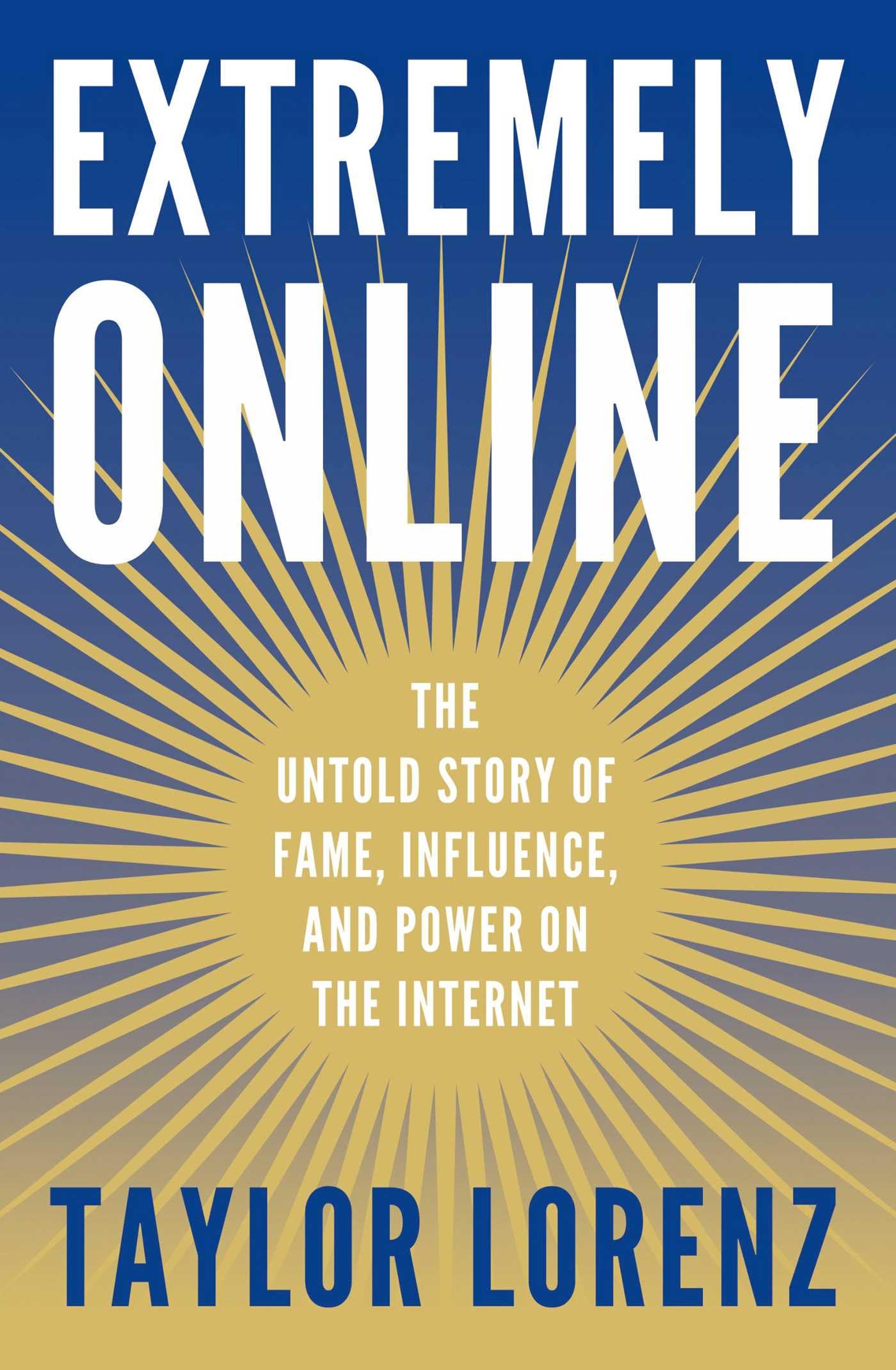
Extremely Online: The Untold Story of Fame, Influence, and Power on the Internet – Taylor Lorenz

For over a decade, Taylor Lorenz has been the authority on internet culture, documenting its far-reaching effects on all corners of our lives. Her reporting is serious yet entertaining and illuminates deep truths about ourselves and the lives we create online. In her debut book, Extremely Online, she reveals how online influence came to upend the world, demolishing traditional barriers and creating whole new sectors of the economy. Lorenz shows this phenomenon to be one of the most disruptive changes in modern capitalism.

By tracing how the internet has changed what we want and how we go about getting it, Lorenz unearths how social platforms’ power users radically altered our expectations of content, connection, purchasing, and power. Lorenz documents how moms who started blogging were among the first to monetize their personal brands online, how bored teens who began posting selfie videos reinvented fame as we know it, and how young creators on TikTok are leveraging opportunities to opt out of the traditional career pipeline. It’s the real social history of the internet.

Emerging seemingly out of nowhere, these shifts in how we use the internet seem easy to dismiss as fads. However, these social and economic transformations have resulted in a digital dynamic so unappreciated and insurgent that it ultimately created new approaches to work, entertainment, fame, and ambition in the 21st century.

Extremely Online is the inside, untold story of what we have done to the internet, and what it has done to us.

In My Hands Today…

Going Infinite: The Rise and Fall of a New Tycoon – Michael Lewis

When Michael Lewis first met him, Sam Bankman-Fried was the world’s youngest billionaire and crypto’s Gatsby. CEOs, celebrities, and leaders of small countries all vied for his time and cash after he catapulted, practically overnight, onto the Forbes billionaire list. Who was this rumpled guy in cargo shorts and limp white socks, whose eyes twitched across Zoom meetings as he played video games on the side?

In Going Infinite Lewis sets out to answer this question, taking readers into the mind of Bankman-Fried, whose rise and fall offers an education in high-frequency trading, cryptocurrencies, philanthropy, bankruptcy, and the justice system. Both psychological portrait and financial roller-coaster ride, Going Infinite is Michael Lewis at the top of his game, tracing the mind-bending trajectory of a character who never liked the rules and was allowed to live by his own―until it all came undone.

In My Hands Today…

The Coming Wave: Technology, Power, and the Twenty-first Century’s Greatest Dilemma – Mustafa Suleyman and Primary Contributor Michael Bhaskar

We are approaching a critical threshold in the history of our species. Everything is about to change.

Soon you will live surrounded by AIs. They will organise your life, operate your business, and run core government services. You will live in a world of DNA printers and quantum computers, engineered pathogens and autonomous weapons, robot assistants and abundant energy.

None of us are prepared.

As co-founder of the pioneering AI company DeepMind, part of Google, Mustafa Suleyman has been at the centre of this revolution. The coming decade, he argues, will be defined by this wave of powerful, fast-proliferating new technologies.

In The Coming Wave , Suleyman shows how these forces will create immense prosperity but also threaten the nation-state, the foundation of global order. As our fragile governments sleepwalk into disaster, we face an existential unprecedented harms on one side, the threat of overbearing surveillance on the other.

Can we forge a narrow path between catastrophe and dystopia?

This groundbreaking book from the ultimate AI insider establishes “the containment problem”—the task of maintaining control over powerful technologies—as the essential challenge of our age.

In My Hands Today…

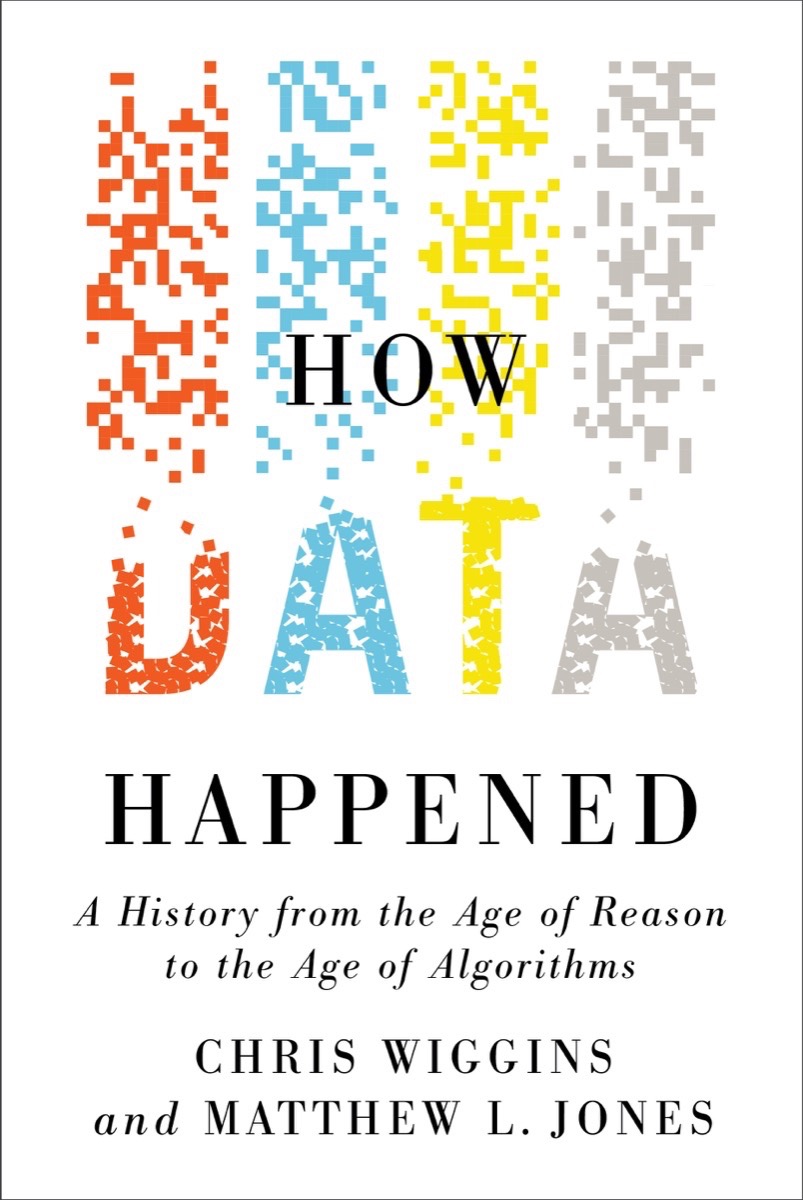
How Data Happened: A History from the Age of Reason to the Age of Algorithms – Chris Wiggins and Matthew L. Jones

From facial recognition—capable of checking us onto flights or identifying undocumented residents—to automated decision systems that inform everything from who gets loans to who receives bail, each of us moves through a world determined by data-empowered algorithms. But these technologies didn’t just appear: they are part of a history that goes back centuries, from the census enshrined in the US Constitution to the birth of eugenics in Victorian Britain to the development of Google search.

Expanding on the popular course they created at Columbia University, Chris Wiggins and Matthew L. Jones illuminate the ways in which data has long been used as a tool and a weapon in arguing for what is true, as well as a means of rearranging or defending power. By understanding the trajectory of data—where it has been and where it might yet go—Wiggins and Jones argue that we can understand how to bend it to ends that we collectively choose, with intentionality and purpose.