
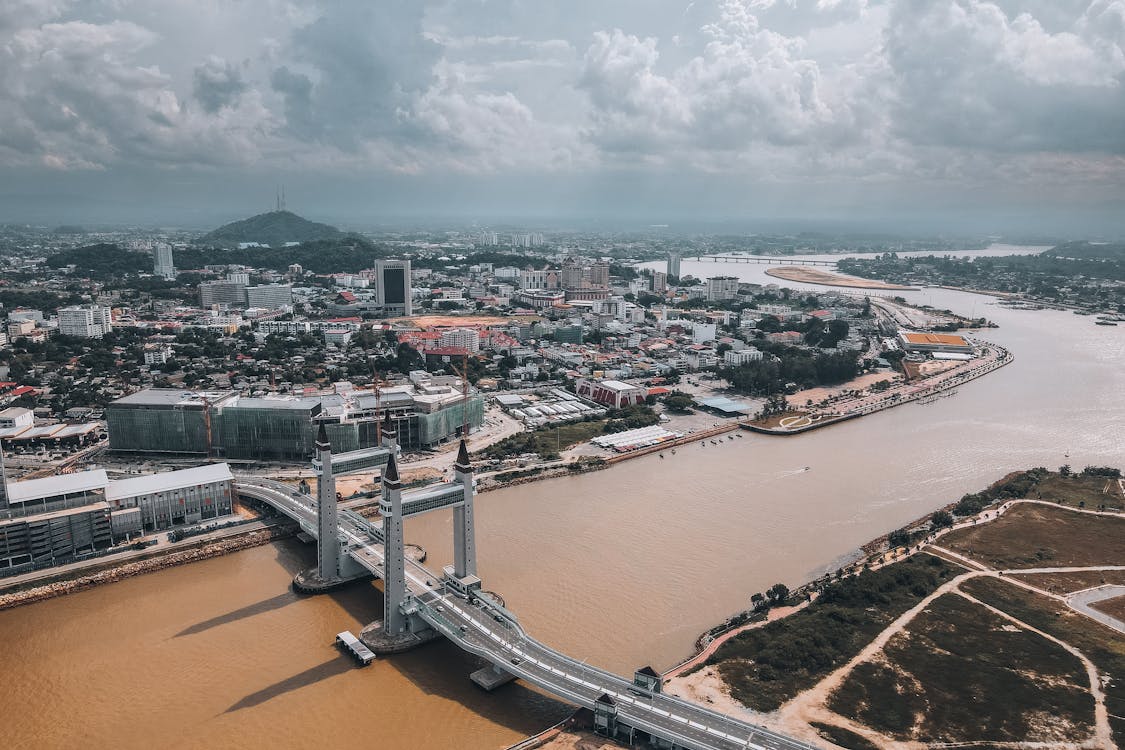
Colloquially known as KT, Kuala Terengganu is the administrative, economic, and royal capital of the state. It is also the only royal capital among the nine royal states of the country to bear its state’s name. Kuala Terengganu is located about 440 km northeast of Kuala Lumpur on the East Coast of Peninsular Malaysia. The city is situated at the estuary of the Terengganu River, facing the South China Sea. Kuala Terengganu was awarded city status as well as the title Bandaraya Warisan Pesisir Air or Waterfront Heritage City on 1 January 2008.
Kuala Terengganu continued to be Terengganu’s capital when it was still a vassal state of Siam and during the early years of the British colonisation of Malaya. Terengganu fell under the administration of Britain through the Bangkok Treaty of 1909 and was forced to accept a resident British advisor. Terengganu, along with four other states were grouped under the term of Unfederated Malay States. The British maintained its rule on Terengganu until the Japanese occupation in World War II. On 18 October 1943, Terengganu was annexed by Thailand as part of an agreement with the Japanese and after the war, the British regained control of Terengganu.
Kuala Terengganu was a major fishing port and one of the important trading ports in Malaya. The chief export commodities were coffee, gambier, gold, ivory, pepper, and tin. They were mainly traded for rice, tobacco, cotton goods and opium.
Kuala Terengganu’s economy is mostly made up of small-scale manufacturing industries such as traditional textile making, local food industries, arts and craft factories, and agriculture, with most of them centred around residential areas or villages. As the principal gateway for tourists to the state, tourism remains one of the economic sources for Kuala Terengganu.
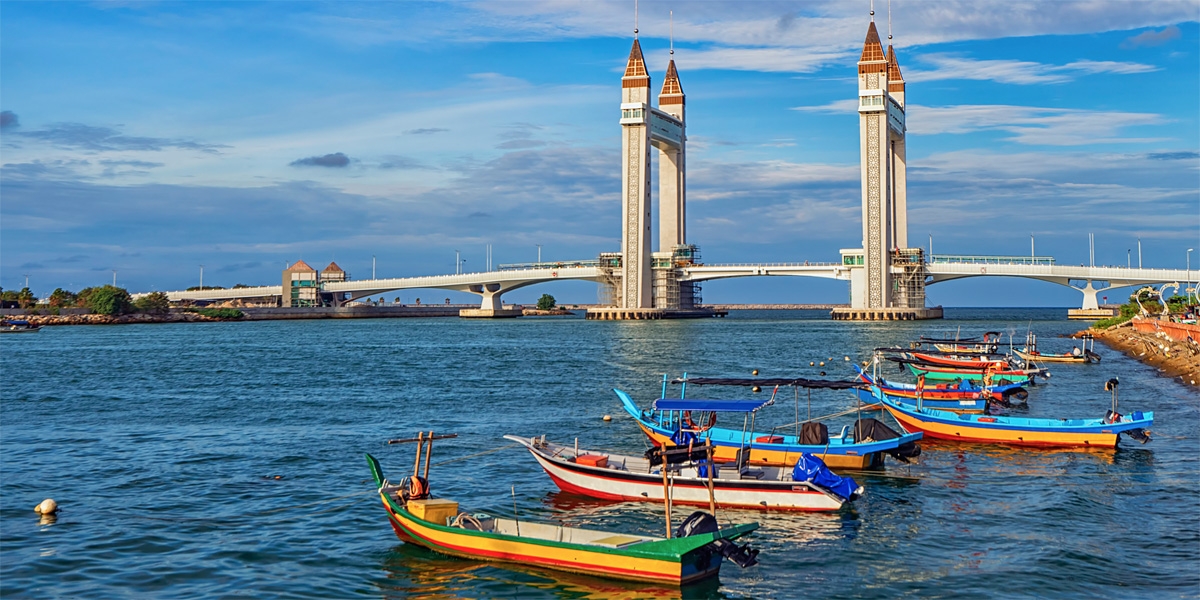
The Terengganu River is a beautiful river that originates from Lake Kenyir in Hulu Terengganu and flows through Kuala Terengganu, leading up to the South China Sea. This beautiful river has several bridges namely the Sultan Mahmud Bridge, the Manir Bridge, the Pulau Sekati Bridge, and the Kuala Terengganu Drawbridge. Several cruises also operate at the site which provides an enjoyable experience to visitors. A boat ride in this beautiful river will enable one to witness traditional fishing boats, traditional silt houses, as well as wonderful wildlife creatures.

A small hill known as Bukit Puteri can be found close to Pasar Payang. The hill is located near the banks of the Terengganu River and because of its strategic location, it was used as a fortification by the sultans of the state. Old artefacts, a graveyard, and monuments can be found on top of the hill. During the Islamic holy month of Ramadan, a century-old brass bell known as genta will be rung to signify that it is time for iftar or the end of the fasting on that day.

Pulau Duyong is a river island located at the Terengganu River estuary known for its traditional boat-making activities. Pulau Duyong also contains a historical monument known as Kota Lama Duyong or Duyong Old Fort, which is a traditional Malay house built with local and European elements. Rumah Warisan Haji Su or Haji Su Heritage House, a complex of two traditional Malay houses located in mukim Losong, is another historical and cultural attraction of the city.

The Chinatown of Kuala Terengganu is the centre of the Peranakan Chinese in the city. One of the main tourist attractions of Kuala Terengganu, this settlement consists of two rows of shophouses from the prewar era, with some of them dating back to the 1700s. Most of the houses are 2 stories high, mainly made of bricks or concrete, with wooden flooring for the second storey. Some have kept the intricate wood carving windows, huge, heavy wooden front doors, and old plaques. The centuries-old buildings now consist of sundry shops, local coffee shops, offices, souvenir shops, restaurants, kopitiam, and other services. It is home to two Chinese temples, Ho Ann Kiong and Tien Hou Kong, which were built in 1801 and 1896. The Hoi Ann Temple houses a statue of Mazu, the Goddess of the Sea. Another landmark is the 19th-century Low Tiey water well, erected in 1875, which still supplies clean water to Chinatown’s residents. The recent attractions in Kampung China are its back alleys, many of which are transformed into thematic lanes containing various information, decorations, and murals. Turtle Alley is a beautiful back alley that portrays a lot of information about turtles, with turtle-themed walls and floor mosaics. Another thematic lane, the Tuake Wee Seng Hee Cultural Lane, is old-styled with a colonial-era telephone booth and a classic red cast iron post box, which is still used today. The walls of the lane are filled with a collection of old signs from shops in Chinatown and Han Dynasty-era poems. This is one of the most popular photography spots in Chinatown. Chinatown is popular for the various local delicacies such as roti paong, durian cake, Pulut Dipa and the white keropok lekor, which is made out of wolf herring or ikan parang.
The architecture in Chinatown shows influences of traditional Southern Chinese architecture along with neoclassical or Art Deco. The shophouses have distinguishing façades. While the older buildings have bland designs, the neoclassical buildings have a more ornate architecture. The shophouses were not made singularly, but rather connected with other shophouses to form a long structure, separated by numerous back alleys. They are mostly two-story buildings. Families using the shophouses for commercial purposes dedicate the ground floor to business and trade and live on the top floor. One of the most significant and common details of all these buildings is the covered passageway in front of the buildings, known as kaki lima or the five-foot way.

Bazaar Warisan contains vendors selling traditional fabrics such as batik and songket. The double-storeyed Pasar Besar Kedai Payang or Central Market, more commonly known as Pasar Payang is the main market of the city and houses different kinds of goods. One of Terengganu’s famous attractions, the market is located in the heart of Kuala Terengganu on the banks of the Terengganu River. The market building comprises two floors and can accommodate up to 1,000 traders. There is a great variety of products on display at the market, including those that depict the heritage of the stage and are thus sold in keeping with the Terengganu culture. The stalls on the ground floor sell wet goods as well as some delicious traditional cakes, in addition to selling grocery items. On the first floor, one will find shops selling copper products, songket fabrics, clothes, brocade, batik, and brassware, as well as a variety of bronze art items and accessories.

Malaysia’s first floating mosque, the Tengku Tengah Zaharah Mosque, is located near the banks of Kuala Ibai Lagoon, just 4 km from Kuala Terengganu. The 25-year-old mosque was built by the late Sultan of Terengganu in memory of his mother. Built in a Moorish architectural style, the mosque is made of shimmering white marble, along with Bomanite paving and mosaic work, and looks even more attractive during the night. While the main prayer hall is downstairs and allows only males to enter, the hall on the upper level allows females. Winning the Aga Khan Award for exceptional architecture in 1994, Tengku Tengah can accommodate 2000 attendees in its 5 acres of circumference. The pristine white 125-foot-tall minaret of the mosque against the peeping South China Sea on one side makes the Tengku Tengah Zaharah Mosque a major attraction. Non-Muslims are not permitted to enter during prayer hours.

Nestled in the Islamic Heritage Park, the Crystal Mosque is a unique and popular attraction. Constructed between 2006 and 2008, the mosque encompasses several modern architectural elements. The crystal mosque boasts four minarets that appear to radiate a golden hue during the daytime. The exterior is made up of glass, crystal, and steel, and the interiors are adorned with ginormous crystal chandeliers. The corridor is decorated with magnificent latticework, and the gorgeous yellow mihrab has calligraphy engraved on it. The mosque can accommodate up to 1500 people at any point in time. The mosque is open between 6 am and 11 pm.

The Abidin Mosque is the old state royal mosque whose history dates back to 1793. It was built by Sultan Zainal Abidin II and is also referred to as the Big Mosque or the White Mosque. Abidin Mosque boasts nine domes and intricately decorated latticed windows. The gigantic structure can accommodate up to 2500 people at any time. The old Royal Mausoleum is also situated nearby.

Ho Ann Kiong is the oldest Chinese temple in Chinatown, Kuala Terengganu. This beautiful temple is adorned with red and golden architectural elements and marvellous stone carvings. One can also admire the gigantic wishing tree that can be found behind the temple premises. The history of this temple dates back to 1801, when it was built by the early Hokkien community. Unfortunately, this temple was destroyed by fire in 2010 and fully restored in 2012. UNESCO has assigned heritage value to the temple.

The Terengganu State Museum is one of the largest museum complexes in Malaysia and Southeast Asia, with an area of 75,000 sq m. The architecture is based on the traditional Terengganu Malay house known as rumah tele. It has eight different galleries across four buildings and other open-air exhibits such as the Petronas Gallery, the Maritime Gallery, the Islam Gallery, exhibits of traditional Terengganuese houses, and many others. The museum is also the home of the Terengganu Inscription Stone, the oldest artefact with Jawi writing in the country. This museum is adorned with concrete stilts, landscaped gardens, ponds, and beautiful roofs. Some of the other attractions of the museum include the rumah tele gifted by King Mongkut of Thailand, the Batu Bersurat inscription stone, traditional weapons, Islamic artistic elements, and traditional real houses. The museum is open from 9 a.m. to 5 p.m. on Saturdays and Thursdays, from 9 a.m. to 12 noon and then from 3 p.m. to 5 p.m. on Fridays. Entry fees for Malaysians are RM 5 for adults, RM 2 for children and RM 1 for students in uniform. For foreigners, it is RM 15 for adults and RM 10 for children.

The Batu Bersurat, Batu Bersurat Terengganu or the inscribed stone of Terengganu can be found in the Terengganu State Museum. This stone provides one of the oldest pieces of evidence of Jawi writing, which is the Arabic alphabet used in Malaysia. The stone was found near the Teluk Gedong waterfront and was listed as a United Nations Memory of the World.
To date, the stone’s replica can be found in Kampung Buluh, Kuala Berang and Ladang Roundabout in Kuala Terengganu. Its inscriptions prove that Islam was the state religion. The stone rises to a height of about 89 cm and weighs about 214.8 kg. The Batu Bersurat bears 3 facades and its four sides bear inscriptions in opposite directions. While the inscriptions talk about the spread of Islamic culture, they also provide insight into the lives of Malaysian people during the 10th and 11th centuries. A proclamation by the ruler of Terengganu can also be found in the Batu Bersurat. In this proclamation, the ruler urges his subjects to uphold Islam and he also states the 10 basic Sharia laws. A symbol of the Dutch East India Company is also carved on the stone. Information about regional trade is also inscribed on it. Further, it also bears the depiction of a tiger that appears to be stealing a child. The Batu Bersurat stone was found in Terengganu, Malaysia. It was founded by the locals during a flash flood and taken to a mosque, where it was used as a platform for ablutions. Here, it was discovered by Syed Hussin, who took the stone to the Sultan of Terengganu to obtain more information about it.
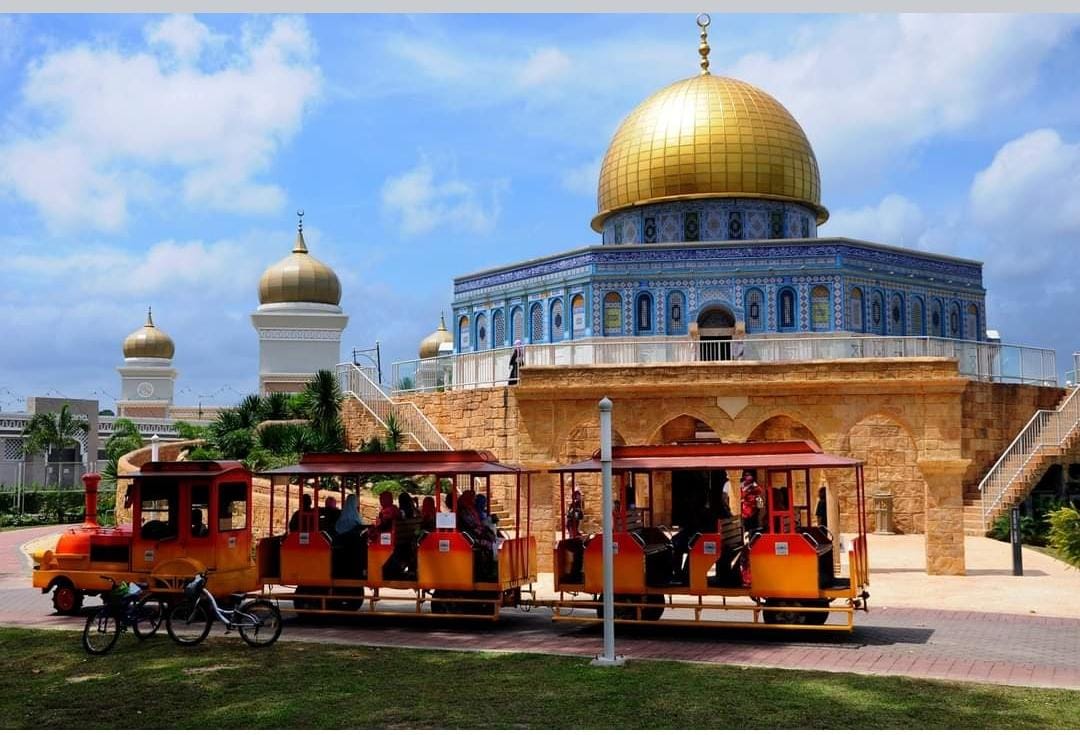
Taman Tamadun Islam or the Islamic Heritage Park, was opened in 2008 and is located on Wan Man Island. The star attraction is the congregation of various Islamic historical monuments from around the world. There are several offers and packages of attractions bundled together that enable visitors to get the maximum value for their money. There is a river cruise that operates from 10 am to 6 pm on Mondays, Wednesdays and Thursdays, and from 9 am to 6 pm on Fridays, Saturdays, Sundays and selected holidays. Monument Park and the Taman Tamadun Islam River Cruise remain closed on Tuesdays except for school and selected public holidays. The Friday prayer break timing is from 11:30 am to 2:30 pm. Entry fees are RM 20 for adults and RM !5 for children between seven and twelve. For Monument Park, the entry fees are RM 24.10 for adults and RM 17.80 for children between 7 and 12. The public park is open to all, free of charge. There are 22 replicas of world-famous mosques, architectural structures and monuments of Islamic influence and importance, like India’s Taj Mahal, Saudi Arabia’s Masjidil Haram and Egypt’s Alabaster Mosque, to name a few. It is also lit up in the evening with a splendid light show.


 Memories and Such