
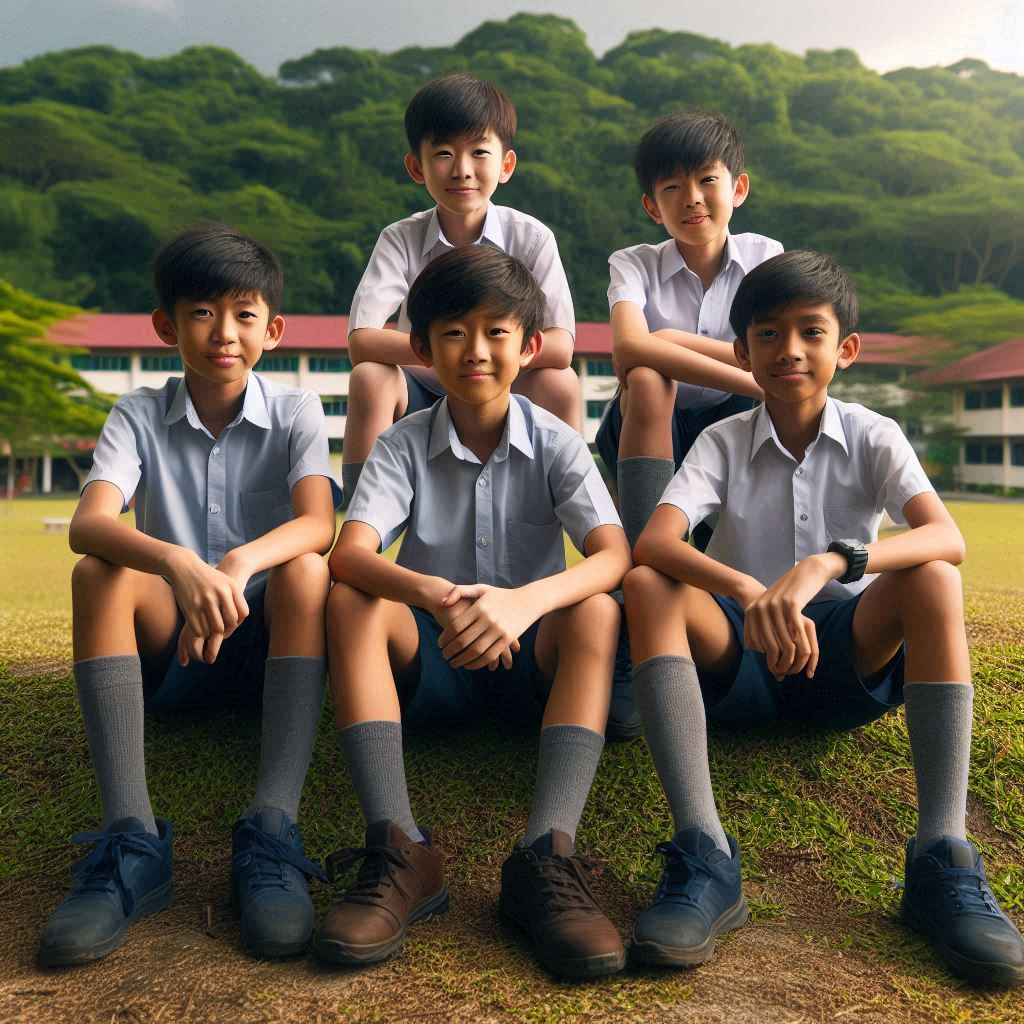
Benji, Salman, Atharva, and Thomas sat on the steps of their primary school, sweat beading on their foreheads in the sweltering June heat. The school grounds were eerily quiet, a stark contrast to the usual cacophony of children’s laughter and shouts. It was the middle of the school holidays, and most of their classmates were at home, enjoying a well-deserved break from the rigorous PSLE preparation that had consumed their lives for months.
“I can’t believe we’re spending our holiday studying,” Benji groaned, closing his math textbook with a thud. “My brain feels like it’s going to explode.” Salman nodded in agreement, absentmindedly doodling in the margins of his science notes. “Yeah, but we can’t slack off now. The PSLE is just a few months away.”
Atharva stretched his arms above his head, his eyes wandering to the dense forest that bordered their school. “You know what we need? An adventure. Something to take our minds off all this studying.” Thomas followed Atharva’s gaze, a mischievous glint in his eye. “Are you thinking what I’m thinking?”
The four boys exchanged knowing looks, a mix of excitement and apprehension coursing through their veins. They all knew what Thomas was suggesting – the forbidden forest. “But we’re not allowed in there,” Salman protested weakly, even as he began packing up his books. “Come on, Salman,” Benji urged, already on his feet. “We’ve been cooped up studying for weeks. What’s the harm in a little exploration?” With a collective nod, the boys made their decision. They quickly gathered their belongings and headed towards the forest’s edge, glancing over their shoulders to ensure no teachers were around to catch them.
As they stepped into the cool shade of the trees, a sense of exhilaration washed over them. The forest was a world apart from their orderly school life – wild, mysterious, and full of possibilities. “This is so cool,” Thomas whispered, his eyes wide as he took in the lush greenery surrounding them. They walked deeper into the forest, the sounds of civilisation fading behind them. The air grew thick with humidity, and the chirping of birds and rustling of leaves created a natural symphony.
After about twenty minutes of walking, Atharva suddenly stopped in his tracks. “Guys, look at that!” he exclaimed, pointing to something partially hidden beneath a tangle of vines. The boys crowded around, their curiosity piqued. As they brushed away the foliage, they gasped in unison. There, half-buried in the earth, was what appeared to be an old metal container.
“What is it?” Salman asked, his voice hushed with awe. Benji knelt down examining the object closely. “It looks like… a World War II relic,” he said, his voice filled with excitement. “Remember those pictures we saw in our history textbook?” Thomas nodded eagerly. “Yeah, from the Japanese occupation! This must be from that time.”
With renewed energy, the boys began to clear away more of the surrounding vegetation. As they worked, the full extent of their discovery became clear. It wasn’t just a single container – they had stumbled upon what appeared to be a small cache of World War II artefacts.
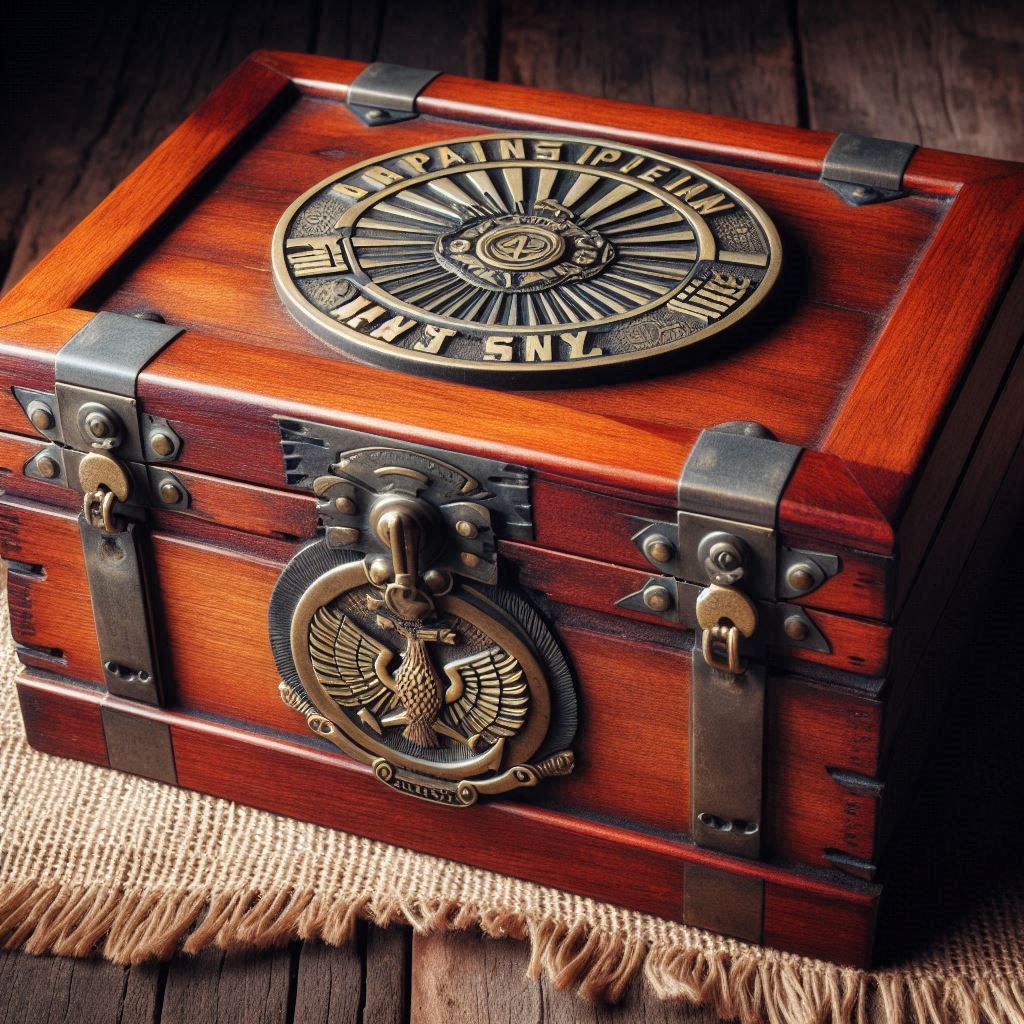
“Look, there’s some kind of insignia on this one,” Atharva pointed out, brushing dirt off a rusty metal box. Salman peered at it, his brow furrowed in concentration. “It looks like the Imperial Japanese Navy symbol. We learned about that in class, remember?” As the boys continued to unearth more items, their excitement grew. They found old canteens, a tarnished compass, and even what looked like parts of an old radio.
“This is incredible,” Benji breathed, carefully turning over a weathered leather pouch in his hands. “It’s like we’ve discovered a piece of history.” But as they delved deeper into their find, Thomas suddenly let out a yelp of pain. “Ouch!” he cried, jerking his hand back from one of the containers. “What happened?” Salman asked concern etched on his face.
Thomas held up his hand, revealing a small cut on his palm. “I think I cut myself on something sharp inside that box,” he explained, wincing. The mood suddenly shifted as the reality of their situation sank in. They were in a forbidden area, handling potentially dangerous artefacts from a war that had ended decades before they were born.
“Maybe we should go back,” Salman suggested, his earlier reservations returning. “We don’t know if these things are safe to touch.” Atharva nodded in agreement. “Yeah, and what if there’s unexploded ordnance or something? We learned about that in history class too.” The boys looked at each other, their earlier excitement now tempered with fear. They had been so caught up in their discovery that they hadn’t stopped to consider the potential dangers. “But we can’t just leave it here,” Benji argued. “This could be important. What if it gets destroyed or someone else finds it and doesn’t report it?”
As they debated what to do, they heard a sound that made their blood run cold – voices coming from the direction of the school. “Oh no,” Thomas whispered, his eyes wide with panic. “Someone’s coming!” The boys scrambled to gather their belongings, their hearts pounding in their chests. But as they prepared to flee, Benji made a split-second decision.
“We have to tell someone about this,” he said firmly. “It’s the right thing to do.” Despite their fear of punishment, the others nodded in agreement. They couldn’t just pretend they hadn’t made this significant discovery. With trepidation, they made their way towards the approaching voices. As they emerged from the treeline, they came face to face with Mr. Tan, their history teacher, and Mr. Lee, the school’s discipline master.
“Boys!” Mr. Lee exclaimed, his face a mixture of relief and anger. “What on earth are you doing in there? You know the forest is off-limits!” Before any of them could respond, Benji stepped forward. “Sir, we’re sorry for breaking the rules, but we found something important in the forest. We think it’s from World War II.”
Mr. Tan’s eyebrows shot up in surprise. “World War II relics? Are you sure?” The boys nodded vigorously, and Atharva added, “There are containers with the Imperial Japanese Navy symbol and lots of old equipment.” Mr. Tan and Mr. Lee exchanged glances, their anger giving way to curiosity and concern.
“Show us,” Mr. Tan said firmly. The boys led the teachers back to their discovery site. As Mr Tan examined the artefacts, his expression grew increasingly serious. “This is indeed a significant find,” he said, carefully inspecting one of the containers. “These appear to be genuine World War II relics, possibly from a Japanese naval outpost or supply cache.”
Mr. Lee, who had been silent until now, spoke up. “Boys, while I’m impressed by your discovery, I hope you understand the gravity of your actions. Entering the forest was not only against school rules but potentially very dangerous.” The four friends hung their heads, the weight of their transgression settling on their shoulders.
“However,” Mr. Lee continued, his tone softening slightly, “your decision to come forward and report your find was the right one. It shows responsibility and maturity.” Mr. Tan nodded in agreement. “Indeed. This discovery could be of historical importance. We’ll need to contact the proper authorities to handle these artefacts safely.”
Over the next few hours, the quiet school became a hive of activity. Police were called, and soon after, a team from the National Heritage Board arrived to assess the discovery. The boys watched in awe as professionals carefully excavated and documented each item they had stumbled upon.
As the day wore on, the full significance of their find became clear. The cache contained not only military equipment but also personal effects and documents that offered new insights into the Japanese occupation of Singapore during World War II.
Dr Lim, the lead archaeologist from the National Heritage Board, approached the boys with a smile. “You’ve made an incredibly important discovery,” she told them. “These artefacts will help us better understand a crucial period in our nation’s history.” Despite their initial fear of punishment, the boys found themselves at the centre of attention, recounting their adventure to officials and even a few reporters who had gotten wind of the story.
As the sun began to set, Mr. Lee gathered the boys for a final word. “While I can’t condone your breaking of school rules,” he began, his tone stern but not unkind, “I am proud of how you handled the situation once you realised the importance of your discovery.”
He paused, looking each boy in the eye. “There will be consequences for entering the forbidden area – you’ll each write an essay on the importance of following rules and the potential dangers of unexplored areas.” The boys nodded, accepting their punishment without complaint.
“However,” Mr. Lee continued, a small smile playing at the corners of his mouth, “in light of the significance of your find, I think we can arrange for you to be involved in the research process if you’re interested. It would be an excellent learning opportunity.” The boys’ faces lit up at this unexpected turn of events. What had started as a reckless adventure had turned into something far more meaningful.
In the weeks that followed, Benji, Salman, Atharva, and Thomas found themselves balancing their PSLE preparations with visits to the Heritage Board, where they learned more about the artefacts they had discovered and the historical context surrounding them. Their find made headlines in local newspapers, and they even featured in a short segment on the evening news. At school, they went from being known as troublemakers to local heroes, with younger students looking up to them in awe.
As the new school term began and the PSLE loomed closer, the boys found themselves changed by their summer adventure. They approached their studies with renewed vigour, understanding now more than ever the importance of knowledge and the excitement of discovery.
On the eve of their PSLE, as they gathered for one last study session, Benji looked around at his friends with a grin. “You know,” he said, “I never thought I’d say this, but I’m kind of glad we broke the rules that day.” The others laughed, nodding in agreement. “Just don’t make a habit of it,” Salman quipped, earning more chuckles from the group.
As they turned back to their books, each boy silently reflected on their extraordinary adventure. They had learned valuable lessons about responsibility, the importance of history, and the unexpected places where knowledge can be found. And as they faced the challenge of the PSLE, they did so not just as students, but as young explorers who had already made their mark on the world.
 Memories and Such