Short Story: When the City Sleeps

(Mumbai, late 1980s)

By the time the last local groaned into Marine Lines, Ramesh’s ledger lines were still dancing in his head like impatient ants. Columns that refused to add up, numbers that snickered at him from the margins. He had stayed back again, Junior Clerk (Probation) at Mehta & Sons Exporters, Fort, because Mr. Mehta had started dropping words like “tightening belts” and “rationalisation,” which were dignified ways of saying “some of you are unnecessary.” Ramesh had never liked the feeling of being unnecessary. It followed him to the train like a stray dog.

He stepped onto the platform and swallowed the tang of sea salt and iron. The station, which earlier in the evening had pulsed with elbows and voices and bodies, now yawned like a huge mouth catching its breath. One stall was still open, its owner scraping burnt tea leaves from a vessel, the air fragranced with cardamom and something singed. A bored constable leaned against a pillar, tapping a stick gently on his calf, eyes distant. Somewhere above the glass roof, a gull scolded something invisible, and then the sound was gone.

Ramesh adjusted the cloth bag at his shoulder. It held the day’s leftovers: a steel tiffin dabba with the last smear of baingan bharta, a fountain pen with its cap cracked, and his worries, which seemed to take the most space.

Outside the station, a kaali-peeli idled under a sputtering streetlamp. The driver’s turban had slipped, the fabric a little tired at the edges. He dozed with his mouth half open, the ghost of a bidi clinging to his fingers. A few steps away, the tea stall that never slept, the one everyone called “Karim’s,” though the painted board claimed “Lucky Tea & Snacks”, was open, as it always was, regardless of storms, cricket matches, or election nights.

“Arre, Ramesh bhai,” called Karim without lifting his eyes from the kettle. He had memorized his regulars’ footsteps long ago. “Late again?”

“Hmm,” Ramesh said, the sound falling somewhere between a yes and a sigh.

Karim poured chai into a glass so thin it was almost cruel, tied a knot with his rag, and slid it across the counter. “Sugar less today. Your face is already sweet sad.”

Ramesh smiled despite himself. “Bas, Karim bhai. Aap bhi na.”

He cupped the glass and let the heat bite his palm just enough to remind him he was alive. Behind him, the sea growled and spat, throwing foam at the tetrapods as if annoyed by the very idea of concrete. A boy pedalled by, wobbling slightly, newspapers stacked so high they orbited him like a satellite. He would soon deliver headlines to doors still heavy with sleep, ringing small bells that said everything and nothing at once: Wake up, something’s happened again.

“Office?” Karim asked. He didn’t look up, just listened to the pitch of Ramesh’s breathing, to the city’s residual hum. The kettle hissed. A moth auditioned for suicide against the yellow tube light.

“Office,” Ramesh said. “Figures don’t behave.”

“Figures are like people,” Karim said, stirring. “They behave if you hold them gently and threaten them at the same time.” He grinned, revealing a gold tooth that caught the light like an extra star.

Ramesh laughed, the sound surprising himself. He finished the tea and placed the glass upside down, respectful. The habit came from his father, who had believed that the way you left things mattered: a glass, a conversation, a day.

He ambled toward Marine Drive. At this hour, it belonged to dogs and whisperers. Yellow pearls of light looped the curve of the Queen’s Necklace, the streetlamps leaning like sleepy sentries. On a bench, an old man stared so hard at the horizon it seemed he might pull dawn up by its ears. A couple walked shoulder to shoulder, not touching, measuring a distance only they understood.

Ramesh sat on the seawall and let the damp creep into his trousers. He watched the moon wipe its face on a passing cloud. He wondered, not for the first time, if he should give up and go back to Nagpur. There was safety back there: a mother who would still scold, a sister who saved the crispest bhakris for him, an old bicycle with a bell that sounded like a cough. But the thought also made him restless in a way that felt like suffocation.

He looked at his palm lines. Somewhere in them, a fortune-teller had once said, there was water. “You will live near water. Or drown in it,” the man had added, noncommittal, as if hedging his bets against karma.

The taxi under the streetlamp coughed awake. The driver rubbed his face and squinted at the road. He spotted Ramesh and raised his chin in inquiry.

“Girgaon,” Ramesh said, getting up. “Near Thakurdwar.”

“Chalo,” the driver said, patting the seat in a way that suggested the car was a temperamental animal that needed soothing.

As the taxi nudged into motion, the driver flicked the radio on. A woman’s voice floated, Lata, as soft and inevitable as the ocean. Advertisements for Nirma and Rasna elbowed their way in between. The city’s soundtrack, even at this hour, asked you to buy and believe.

“Late night?” the driver asked.

“Late year,” Ramesh said before he could simplify the truth. The driver chuckled.

They glided past an Irani café with its shutters half down. A solitary man sat on a chair outside, smoking into a notebook. Grant Road’s corners still held their secrets; a line of posters: Mithun’s dance pose, Amitabh’s fist, a sari-clad heroine with eyes like dark lakes, wrinkled in the damp.

At a red light, obedient to rules because it was too sleepy to think otherwise, the taxi slowed. A group of young men in shirtsleeves pushed a stalled truck, laughing at their own effort. From a nearby building, a night watchman’s whistle punctured the air at timed intervals. A rooftop flapped with laundry long forgotten.

“Nights suit you?” Ramesh asked the driver, surprising himself again with a question.

“Nights suit my face,” the driver replied, tapping the mirror. “Less scrutiny.”

Ramesh looked properly at him now. He had the kind of face that had once been beautiful and then decided to become interesting: cheekbones chipped by life, eyes like old coins. He wore a thin gold chain with a tiny Ganesha that lurched with the car’s movements.

“I am Shankar,” the driver said, as if meeting in darkness demanded some exchange of names. “And you?”

“Ramesh. Clerk. Mehta & Sons.”

“Ah,” said Shankar, as if this explained some philosophy. “I used to be a clerk in my first life. Textile mill. Parel side.”

“What happened?”

Shankar smiled without teeth. “Bombay happened,” he said. “Then taxi happened. To drive is to be in motion even when life stalls.”

The signal changed to green as if in agreement. The taxi slid forward like a yawn. As they approached Charni Road, a burst of light exploded from a paan shop shuttering itself; tin clapping like a cymbal. Ramesh thought of Mr. Mehta’s watch: thin, silver, cutting seconds into obedient slices. He sometimes felt he lived inside that watch.

A boy darted across the road suddenly, a stack of newspapers teetering in his arms. Shankar braked gently. The boy wobbled, steadied, but a single paper escaped, skittering to the median and plastering itself there like a tired fish.

“Tomorrow’s truths, scattering,” Shankar murmured. “Every night I think of the boys. They are the first to know and the first to be forgotten.”

They were two lanes from Girgaon when the taxi shuddered, complained, and died. Shankar petted the steering wheel. “Bas, bas, darling,” he muttered, then sighed. “She wants tea.”

He pulled over near a small island of a tea stall, the flame underneath a blackened kettle painting the faces around it with a mythic glow. The board read “Sagger Cold Drinks & Tea,” but nothing could be more ironic. It was pure heat.

“Two cutting,” Shankar said, lifting two fingers. Ramesh pulled out money reflexively.

“Arre, Ramesh-bhai,” called the tea boy. It was Karim’s cousin, as it seemed every tea seller in the city was. “Second shift? You’re becoming a bat.”

“Bas yaar,” Ramesh said, and leaned on the counter. Tea arrived: bitter, sweet, scalding. He felt it spread through him as a small courage.

Next to him, a man in a watchman’s cap blew into his hands. His whistle dangled from a braided rope like an amulet. He nodded at Shankar, then at Ramesh. “Night is long if you watch it alone,” he said. “Name’s Lobo.”

“Ramesh.”

“Shankar.”

Introductions done, the city ticked forward by another, different measure.

“What building?” Shankar asked.

“Art Deco one,” Lobo said, jerking his head toward a handsome facade with curves like a thoughtful woman. “We call it ‘Seaview,’ but the sea is shy behind other buildings now. Once upon a time you could see ships.”

“Ships are like promises,” Shankar said. “When you see them, you believe. When they go behind buildings…”

“You keep believing,” Lobo finished. He laughed, and the laugh made them like him.

“Any ghosts?” Ramesh asked lightly, unsure if the question was the kind of night question that would make morning regret it.

“Plenty,” Lobo said cheerfully. “Mostly of rent-controlled tenants. They never leave.”

Ramesh imagined these gentle, stubborn ghosts bristling at renovations, at VCR stores, at the first whispers of satellite television like contraband.

A small commotion erupted near the PCO booth on the corner, a glass cubicle with a phone that ate coins and gave back hope. A woman in a faded sari was banging the receiver cradle repeatedly. “Koi nahi uthata!” she hissed. No one is picking up.

“Problem?” Lobo asked, approaching with a professional authority he wore lightly.

“My husband,” she said. Her voice carried exhaustion and a dignity that refused to outsource itself to panic. “Taxi driver. He should have been home by now. Whole evening gone. I called the stand. They say he left. Where is he to go? Our boy…fever.”

“What’s the taxi number?” Shankar asked, stepping forward.

“MH-01 G something something,” she said, flustered, wiping her forehead with the edge of her sari. “I forget. It is always the same and then today…”

“We’ll help,” Shankar said, as if the city had deputised him. “Come, sit. Drink water.” He looked at Ramesh, then at Lobo. The unspoken math was simple: three people divide the night into manageable parts.

“Which stand?” Ramesh asked. “Where does he usually take last fare?”

“Near Crawford,” she said. “Sometimes Opera House. He does vegetable market mornings.”

Shankar glanced at his car. “She’ll start,” he said, patting the bonnet, making a promise he had no right to make. He slid into the seat, turned the key, whispered something that sounded like a prayer, and the engine answered like an old lion, grumpy but game.

“You come,” Shankar said to Ramesh. “Two eyes more. Lobo?”

“I will be here if the police van comes, to direct,” Lobo said, tapping his whistle. “I’ll speak to Sub-Inspector if needed. And I’ll keep the phone line for you.”

The woman hesitated, then nodded. “I am Savita,” she said. “Thank you.”

“Chalo,” said Shankar. “We’ll go Crawford first.”

They slid into the lane, the city obliging by making space because it always did, somehow, even when it insisted there was none. The roads wore monsoon’s leftover scars, potholes like bad memories. At an intersection, two dogs conducted a long conversation in barks that sounded like philosophy.

“What is his name?” Ramesh asked gently.

“Ravindra,” Savita said. “He complains of back. He says he will leave taxi and go back to village. But the village…” She didn’t finish the sentence, and she didn’t have to.

Crawford Market rose from the darkness like a red-brick ship anchored in a sea of crates. It smelled of coriander dreams and fish arguments and wet jute. A few men squatted on upturned baskets, playing cards by the light of a single dangling bulb. A tea seller sloshed hot liquid from glass to glass like a magician passing light through his fingers.

Shankar slowed at the taxi stand. A man in a vest approached, scratching his chest theatrically. “Kya hua?”

Shankar described Ravindra as best he could with Savita feeding details. The man nodded as information slotted into a mental register he kept more reliable than any notebook. “Haan, haan, he took a fare to Opera House, then said he will drop taxi here later. But a police nakabandi is near Lamington Road. Maybe he got stuck.”

“Lamington then,” Shankar said, and they were off, the engine developing a companionable clatter that suggested it had accepted its role in this small crusade.

Lamington Road was a sleeping dragon. Electronic shops with names like “Sancheti Radios” and “Vijay Time” had pulled their shutters like eyelids. A paan stain on a wall glistened, surprisingly elegant in the lamplight. A constable waved them down at a makeshift barricade.

“Routine checking,” he said, peering in. “Theft at Grant Road. You from where?”

“Looking for a driver,” Shankar said, his voice both humble and official. He explained rapidly, oiling the facts with familiarity. The constable muttered into a walkie-talkie that crackled back a universe of half-heard instructions.

“Two taxis detained for papers,” he said finally. “Take left, go towards Opera House. Maybe he is waiting near the Irani on the corner. Or at police chowky.”

Opera House held itself like a dowager, elegant even in the rain’s afterthought. The Irani café on the corner had its shutters up halfway, enough for a boy to sneak in and out with bun maska for the policemen inside the chowky. A small group had gathered: a driver gesticulating, an officer making notes lazily, and a boy with a black-and-white puppy cradled in his arms.

“Ravindra!” Savita cried, and the driver’s head whipped around. His eyes were bleary with hours and worry.

“Ai, Savita!” He grabbed her shoulders as if to confirm she wouldn’t evaporate. “I tried calling, but line busy. I stopped at chowky to report; there’s a boy I found near Kalbadevi, lost. He wouldn’t speak. Only the dog would wag its tail. So I brought him.”

“Boy speaks now,” said the Sub-Inspector mildly, chewing on a pencil. “Name is Selvam. He ran away. He says he lives, what is it, Grant Road chawl, near the tailoring shop with Amitabh poster. Father drinks. Mother cries. He got bored of it today and followed puppy.”

The boy stared at the floor, embarrassed at having ended up the subject of adult narratives. The puppy sneezed.

“We will take him home,” the Sub-Inspector said. “I sent constable. These are everyday things at night. The day has headlines. Night has footnotes.” He looked at Ramesh and Shankar and Savita. He nodded, a small gratitude.

Ravindra fished at his pocket, came up with a paper-wrapped parcel. “I brought medicines,” he told Savita. “For fever. The pharmacist near Majestic gave discount. He knows us.”

“You didn’t come home,” she said, the reprimand dilute with relief. “I was scolding you in my mind and worrying at the same time.” She swatted his arm with two fingers and then squeezed that same arm, both acts having equal force.

“Come, come,” said Shankar. “Let us leave the police to their footnotes.”

Outside, the city seemed to have shifted again. The sky had paled by a degree you could only measure with a night worker’s eye. The first BEST bus sighed awake somewhere far and near. A rooster, imported perhaps by mistake into Mumbai’s logic, crowed from a corrugated roof.

They sat in the taxi for a moment, all four of them, and listened to the engine, which seemed to have acquired a heart.

“Come home,” Savita said to Ravindra, the words plain but landing like a warm blanket. “Then you can go again.”

Ramesh watched them go, a pair that made sense even when the city did not. He looked at Shankar.

“You drive nights to be alone?” he asked.

“I drive nights to remember I am not,” Shankar said, and smiled with his eyes.

They returned to the tea stall, which had welcomed crises and reunions for years without committing to either as a policy. Lobo was there, of course, pouring tea into saucers for two constables who were pretending not to enjoy the decadence. He waved. “All sorted?”

“All sorted,” Shankar said. “Boy followed a dog. Man followed a conscience. Woman followed a fear. We followed them.”

“City followed itself,” Lobo said, satisfied. He pushed a cup toward Ramesh. “It’s on me. Actually it’s on the building’s watchman fund. Same thing.”

They drank, all of them, the cup a small anchor against the flood of time. Ramesh felt the tea move into him with authority. Around them, the city tested its limbs, flexing the parts that would soon need to run: the baker lighting ovens, the first dabbawalas tying their white Gandhi caps and aligning their tiffin codes like mantras, the milkman rattling aluminum cans like bells. The streets corresponded with the sky in a language that was not taught but inherited.

“Sometimes I think of leaving,” Ramesh said, surprising himself for the third time in one night. “Nagpur. My mother is there. She’ll be happy if I come back. The city will not notice if I leave. The city has too many faces to miss one.”

Lobo nodded, a slow, sympathetic metronome. “I’m from Vasai,” he said. “Came in seventy-nine, when the trains still believed in empty seats. I have left Mumbai many times, on days off, for weddings, for funerals. Each time I arrive back at Churchgate, my feet accelerate on their own. That is how I know I belong to the city. Not the other way around.”

Shankar scratched the back of his head. “We think city is a machine,” he said. “But it is a net. If you fall, someone catches. Not always with soft hands. But still catches.”

Ramesh thought of the night’s choreography: Karim’s cousin’s tea, Shankar’s engine prayers, Lobo’s whistle diplomacy, the PCO’s stubborn dial tone, the chowky’s footnotes, a lost boy and a found dog. He felt, for a precise second, the city’s pulse line up with his own. It was not romantic. It was mechanical and magnificent, like a lung.

“I am a clerk,” he said softly, perhaps only to himself. “I make columns add up. Maybe I can make something else add up.”

“Arre wah,” Lobo grinned. “Listen to poet-saab. You write?”

“Sometimes,” Ramesh said, thinking of a notebook under his mattress where he collected sentences like bus tickets.

“Write about us,” Shankar said, patting the dashboard. “Write about the city when it is pretending to be asleep.”

They parted like people on a platform; tidily and forever and for now. Lobo returned to his building, where a tenant would soon complain about the lift’s noble decision to rest between floors. Shankar slid back into the stream, his taxi’s meter clicking into moral ambiguity. Ramesh walked toward Girgaon, his bag lighter, though he had not removed anything.

At the mouth of his lane, a man in a lungi hosed down the front step in a ritual that declared: new day, old dust, we will do this again. A woman on a balcony shook a doormat as if punishing it for its hospitality. The faint drift of agarbatti threaded the air. An elderly neighbor, a Parsi auntie with her hair in a stubborn bun, wiped her glasses with the end of her sari and said, “Good morning?” like a question that suspected it knew the answer.

“Good morning,” Ramesh said, and meant it.

Inside his kholi, he put his tiffin on the shelf, peeled his shirt off, and washed his face with water so cold it argued with his sleepiness. In the mirror, his eyes looked like they belonged to an older man and a younger boy at the same time. He reached under the mattress and pulled out his notebook.

He wrote quickly, before the day’s logic marched in with its boots: When the city sleeps, it is not silence. It is a low hum, a hand on your shoulder telling you to keep breathing. A dog leads a boy home. A watchman’s whistle is a metronome for faith. A taxi requests tea and receives it. A clerk decides to do sums that cannot be written in ledgers.

He paused and drew the edge of his thumb along the paper, savouring the grain. He flipped to a new page.

Then, for reasons he would later explain as borrowed bravery, he wrote a plan. Not poetry, not anything fine. Just a list of neat, practical steps like the ones he imagined the dabbawalas must use in their heads each day:

  • Review the dispatch registers at Mehta & Sons; spot bottlenecks like a watchman spots shadows.
  • Suggest a dabba-code system for consignment tracking. Simple marks. No fancy machines.
  • Volunteer to coordinate between back office and drivers. Be the knot in the net.
  • Ask for a trial week. Promise measurable outcomes. Numbers that do behave.
  • If they laugh, smile. If they listen, work. If they refuse, leave with dignity and join someone who understands nets.

He closed the notebook and lay down, the city’s sounds pinwheeling into a lullaby: a vendor calling “doodh!”, the temple bell just down the lane offering its daily deal to god, the train in the distance rehearsing its promise of return. He slept with his mouth slightly open, like a man who has let something go.

When he reached the office later that morning, wrinkled shirt ironed by the pressure of resolve, Mr. Mehta was already in. He wore a tie that had prevented him from entirely swallowing his moustache. “Late again?” he said, checking his watch for drama rather than information.

“Sir,” Ramesh said, standing in the doorway with his cloth bag clutched politely. He felt the usual stage fright, the feeling of being a small character auditioning for a generous role. Then he remembered Shankar’s calm and Lobo’s grin and Savita’s blended scold-love, and the feeling dissolved like jaggery in hot tea.

“I have a suggestion,” he said. “For reducing dispatch delays. No cost, small system. One week trial. You can fire me if it fails.”

Mr. Mehta took his glasses off. It made him human for exactly three seconds at a time. “You?” he said, not unkindly, just surprised to see a clerk misbehave with initiative. “Explain.”

Ramesh explained. He drew the marks on a scrap of paper: circles and slashes, dots in quadrants. He spoke of routes and rhythm, of stitching two departments with string rather than rope. He did not use big words. He did not apologise for small ones.

Across the window, Fort peeped at them with its colonial eyebrows. The noon bell from a church somewhere cleared its throat respectfully.

“Hmm,” Mehta said at last, the syllable like a suitcase being unlatched. “We can try. One week. You will coordinate. I will not pay extra. If it fails, you will not cry.”

Ramesh shook his head. “No crying, sir,” he said, and thought of the sea’s refusal to apologize for its moods.

The week that followed felt like balancing on a bamboo stick held up by two acrobats. He listened to drivers who had developed skepticism the way others developed ulcers. He learned the names of loaders whose backs held the city like invisible scaffolding. He mapped the building’s stubbornly independent floors into a partnership. He stood at the godown door, at the dispatch gate, at the office window, and drew dots on paper that ended up being more persuasive than a memo.

At night, he still walked past Marine Lines, sometimes. Karim would look up and say nothing, which was his way of saying everything. Shankar flashed by occasionally, two fingers lifted in a salute that belonged to a shared country. Lobo’s whistle kept time with the city’s arterial beat. The boy Selvam, it turned out, had been enrolled in a night school run by a church and delivered newspapers in the morning with the same puppy (now named Raja) trotting like a secretary. Ravindra and Savita waved sometimes from a corner near Opera House, their marriage looking like a busy shop: crowded but open.

By Friday, Ramesh’s code had begun to bite. The numbers arranged themselves like mild-mannered guests. A consignment that had previously sulked for hours in the courtyard now made it from receiving to loading with the efficiency of a rumor. The drivers nodded at him with something like respect, which in Mumbai was more precious than any recommendation letter.

On Saturday, Mr. Mehta called him in. Ramesh stood again in the doorway, the hallway fans chopping the air into obedient squares.

“Not bad,” Mehta said, his moustache dislodging the syllables gently. “We saved thirty-seven minutes on an average per consignment. This is not a small thing. Who taught you this?”

“Night taught me,” Ramesh said, then realized how it sounded and corrected himself without correcting himself. “The city taught me, sir.”

Mehta stared at him. The gaze lasted exactly as long as it takes a ledger line to accept a correction. Then he nodded. “You will oversee dispatch for two weeks,” he said. “Then we will talk. Do not make me regret believing a clerk.”

“I won’t,” Ramesh said, and meant it so precisely that the sentence could have balanced on a fingernail.

That night, he walked again to the sea. The sky had decided to be generous with stars, an act it rarely performed in the city out of what Ramesh suspected was a commitment to realism. He sat on the seawall, trousers damp in the usual places, and listened.

The city was, again, in that half-sleep that belonged to it like a habit: one eye closed, the other on duty. Somewhere a radio sang of unfulfilled love in a voice that made unfulfillment sound like a virtue. A bus rattled by, half full of people who did not owe the morning any explanation. On a bench, a woman in a cotton sari unwrapped a foil packet and ate quietly, each bite measured, her eyes on nothing in particular. Two friends argued about cricket with the seriousness that had saved whole neighborhoods from despair.

Ramesh thought of Nagpur, of his mother, of letters written and not sent. He thought of boys with puppies. He thought of nets that did not look like nets, and of columns that held up buildings as well as pages. He thought of the way the city, even when it looked away, still watched you enough to keep you standing.

“When the city sleeps,” he whispered into his sleeve, “it is learning your name.”

The sea obliged him with a salty nod. The lights along Marine Drive blinked, each doing its little job of burning without complaint. The old man on the bench from nights ago was not there, but Ramesh could imagine him anyway, waiting for horizons to behave.

He got up. He had a day to meet halfway. Behind him, the city rolled onto its other side, adjusted its pillow, and kept its ear open, listening for the footfalls of all those who belonged to it, whether they admitted it or not.

Short Story: The Forgotten Vows

Part I – The Pune Beginning

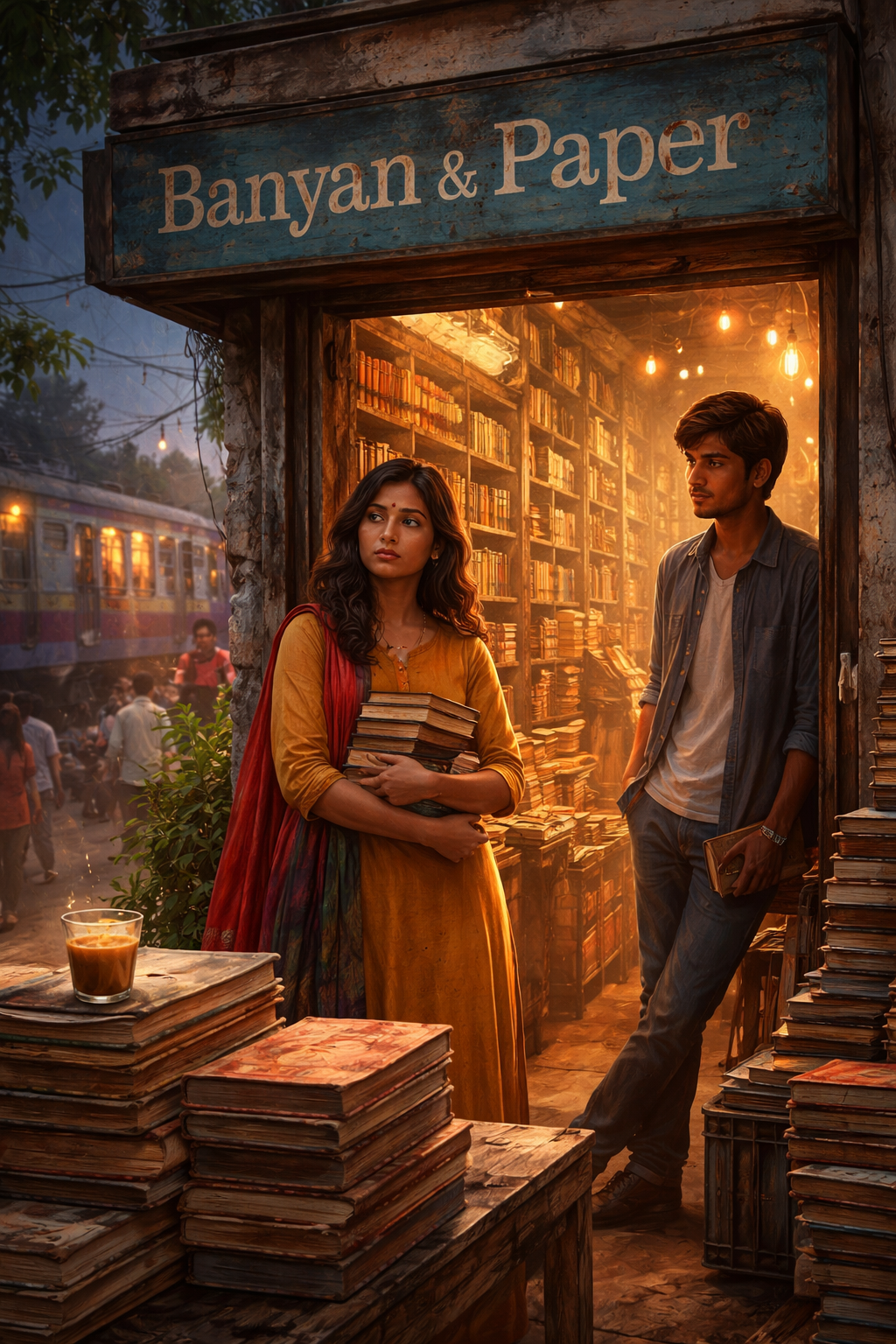
The monsoon had washed Pune clean that July, leaving behind a city strung with dripping bougainvillaea and the faint smell of wet earth. Mira stood at the entrance of an NGO’s learning centre, clutching a folder of sketches for their new brochures. She was a freelance designer, hopping from project to project, but this assignment felt different. Here, the work was about teaching women to sell their products online, not about logos that popped.

“Are you here for the entrepreneurship class?” a man asked, stepping out of a rickshaw and shaking rain off his shoulders.

He wore a plain cotton shirt, sleeves rolled neatly, and dark trousers. There was nothing about him that shouted wealth or privilege,  except perhaps the effortless confidence in his bearing.

“I’m here to design posters,” Mira replied, smiling.

“Then we’re colleagues,” he said, offering a hand. “Ari. I help with training.”

Later, she would remember that handshake: firm, warm, unhurried. As if he had all the time in the world.

Ari was unlike anyone she’d worked alongside. He wasn’t loud or self-important. He listened. He explained marketing terms to women who had never heard of a “customer base” with the same patience Mira used when teaching her nephew to read.

Sometimes, after class, they would grab cutting chai from the corner stall. Mira would complain about clients who wanted “more vibrancy” without knowing what they meant, and Ari would laugh, eyes creasing at the corners. He told her he was freelancing too; consulting for small ventures while taking time away from “family business pressures.”

She never asked further. She liked the man who turned up for chai in dusty loafers, not the ghost of whatever family weighed behind him.

By winter, friendship had melted into love. They rented a small flat near Deccan Gymkhana, its terrace peeling paint like sunburned skin. They bought second-hand chairs, quarreled over curtains, and celebrated victories as small as the landlord agreeing to fix the leaking tap.

On a Tuesday afternoon, in a registrar’s office that smelled faintly of ink and impatience, they married. Two friends signed as witnesses. Ari slid a simple silver band with two tiny leaves etched inside onto Mira’s finger. “Two lives, one stem,” he whispered, embarrassed by his own sentimentality.

Mira laughed and hugged him. It was not the wedding her mother would have wanted, nor the spectacle his background would have demanded, but it was enough.

For six months, they built a life out of late-night tea, morning rushes for the bus, and whispered promises on their small terrace. Mira never met his parents. Ari only said, “It’s complicated.” She didn’t press. Love, she thought, was proof enough.

Part II: The Accident

It happened on an ordinary evening in January. Ari had gone to meet a contact for a potential training programme. He texted her a quick *Back soon, want samosas?*

He never returned.

A lorry, swerving to avoid a motorbike, hit him at a junction. He was rushed to Sassoon General Hospital. His helmet saved his life, but a head injury left him unconscious.

When he woke the next day, the nurse asked gently, “Name?”

“Aarav Shah,” he murmured, surprising himself with the clarity.

Biometrics confirmed the match. Within hours, calls were made. By the next morning, the Shahs of Mumbai, industrialists with roots in textiles and wings in finance, had arrived. His father’s voice was steel; his mother’s eyes were damp with relief.

Aarav recognised them instantly. He remembered boarding school, Harvard lectures, and boardrooms in Nariman Point. But when the doctor asked, “Do you recall the last six months?” his brow furrowed. Blankness stretched before him like fog.

“No,” he whispered. “Only… fragments. Nothing clear.”

The Shahs didn’t correct him. They never mentioned Pune, never asked if he had a wife. To them, this was a second chance: their son had come back.

That night, while Mira waited with two cups of chai on their terrace, Aarav was driven down the expressway to Mumbai, to the world he had once tried to escape.

Part III: Mira Alone

The first days were madness. Mira called hospitals, police stations, and friends. She filed a missing person report: *Ari, no surname, about thirty, last seen near Camp.* The officer gave her a sympathetic smile. “People leave, madam. Maybe he went back to his family.”

Back to his family? What family? Ari had never said.

Weeks bled into months. Rent kept rising. Work was scarce. With a heavy heart, Mira packed their flat into boxes, slipped Ari’s ring onto a chain around her neck, and moved back with her parents in Nashik.

Eventually, she found steadier work, a job in a Mumbai agency that serviced big corporate clients. She told herself it was time to start over. Yet every night, when she unclasped her chain, she whispered into the dark: *Come back to me, Ari.*

Part IV: The Corporate Reunion

A year later, Mira sat in a glass-walled conference room in Lower Parel, nerves taut. Her agency was pitching for a massive account: Shah Group Industries. If they won, it would change everything for her career.

The door opened. Executives filed in. And then…

Her heart stopped.

Aarav Shah walked in, tall in a tailored suit, with a faint scar by his temple. He carried himself with polished authority, every inch the heir to billions.

Her Ari.

But his eyes slid past her with polite disinterest. He didn’t recognise her.

“Good morning,” he said, voice clipped. “Let’s begin.”

Mira forced herself to focus, though her hands trembled over the slides.

To her horror and secret relief, her agency won the account. She was assigned as an account manager. Which meant she would be working directly with Aarav Shah. The man who had once been her husband, now treating her like a stranger.

Part V: Working With a Stranger

The weeks that followed were agony.

In meetings, Aarav was courteous but detached. He praised her ideas when they were good, challenged them when they weren’t. To the rest of the team, it was professional respect. To Mira, it was a knife twisted daily.

Late nights in his office were the hardest. He would lean over her laptop, frown at a campaign line, and for a second, just a second, she would glimpse the man who teased her about fonts over chai. Then he would pull back, professional mask intact.

One evening, reviewing designs, she used a phrase she hadn’t spoken aloud in months: “Less glitter, more water.”

Aarav froze. His eyes flickered, unsettled. “Where did you pick that from?”

“It’s just something I say,” Mira lied quickly.

“Strange,” he murmured, shaking his head. “Feels… familiar.”

Over the next weeks, other moments surfaced. Her absent-minded humming of an old tune. The leaf motif she used in a draft campaign logo. The way she clasped her hands when thinking. Each time Aarav reacted, a flicker of recognition, quickly suppressed.

Mira, torn between hope and despair, kept silent. She couldn’t risk his scorn.

Part VI: Cracks in the Wall

The dam finally burst during a creative workshop. Mira presented a mock-up featuring a silver band with two etched leaves, repurposed as a campaign symbol for sustainability.

Aarav stared at it, blood draining from his face. He pressed his temple as if in pain. “This… I’ve seen this before.”

He left the room abruptly. Mira followed, heart pounding.

In the empty corridor, she said softly, “You have. You made it.”

He turned, eyes sharp. “What do you mean?”

She reached into her blouse, pulled out the chain, and held up the ring. “This is yours. You gave it to me when we married. In Pune. You called yourself Ari.”

The silence between them was deafening. Aarav’s gaze fixed on the ring, then on her face. Memories flooded: blurred but insistent. Rain. Chai. A small terrace. Laughter. A registrar’s stamp. Her voice whispering, *Two lives, one stem.*

His hand trembled. “Mira…”

Part VII: Truth and Confrontation

That night, Aarav confronted his parents. They sat in the sprawling Malabar Hill living room, city lights twinkling below.

“Why didn’t you tell me?” he demanded. “I was married. To Mira. I asked if there was anyone in Pune. You said no.”

His mother’s eyes glistened. “Beta, you nearly died. You remembered nothing. We thought it was a mistake, a phase…”

“A mistake?” His voice cracked. “The happiest months of my life, and you erased them?”

His father’s jaw hardened. “You are a Shah. You cannot throw away your future for—”

“For love?” Aarav shot back. “For choosing who I want to be?”

Silence fell. His mother wept quietly. His father’s face was unreadable. Aarav stood taller, voice steady. “I will not lose Mira again. She is my wife. And if the company wants me, it takes me on my terms.”

Part VIII: A Life Reclaimed

The weeks that followed were not easy. There were cold dinners, tense board meetings, and relatives whispering. But Aarav refused to back down. He carved out a new division in Shah Group, one focused on social ventures and sustainability, where his values and Mira’s creativity found a home.

Mira continued at her agency, though now she worked with him openly, no longer pretending to be a stranger. At first, colleagues gossiped, then grew used to the idea.

Slowly, even his parents softened. His mother began attending Mira’s NGO workshops, quietly proud. His father, grudgingly impressed by the profits of the new division, began to respect the marriage he had once dismissed.

Part IX: Happily Ever After

One evening, a year later, Aarav and Mira sat on the balcony of their Mumbai apartment, city lights flickering like restless fireflies. A kettle whistled in the kitchen. On the table between them lay the same ring, now firmly on her finger again.

“Do you remember everything now?” Mira asked softly.

“Not everything,” Aarav admitted. “Some days it’s foggy. But the feeling…” He reached for her hand. “The feeling never left. Even when I didn’t know your name.”

She smiled, tears glinting. “That’s enough.”

They sipped tea, the noise of Mumbai humming around them, and for a moment it felt like their Pune terrace, except higher, brighter, steadier.

Love had survived memory, class, and the weight of a dynasty. It had come back, not as glitter, but as water: steady, essential, unstoppable.

Short Story: Second Chances

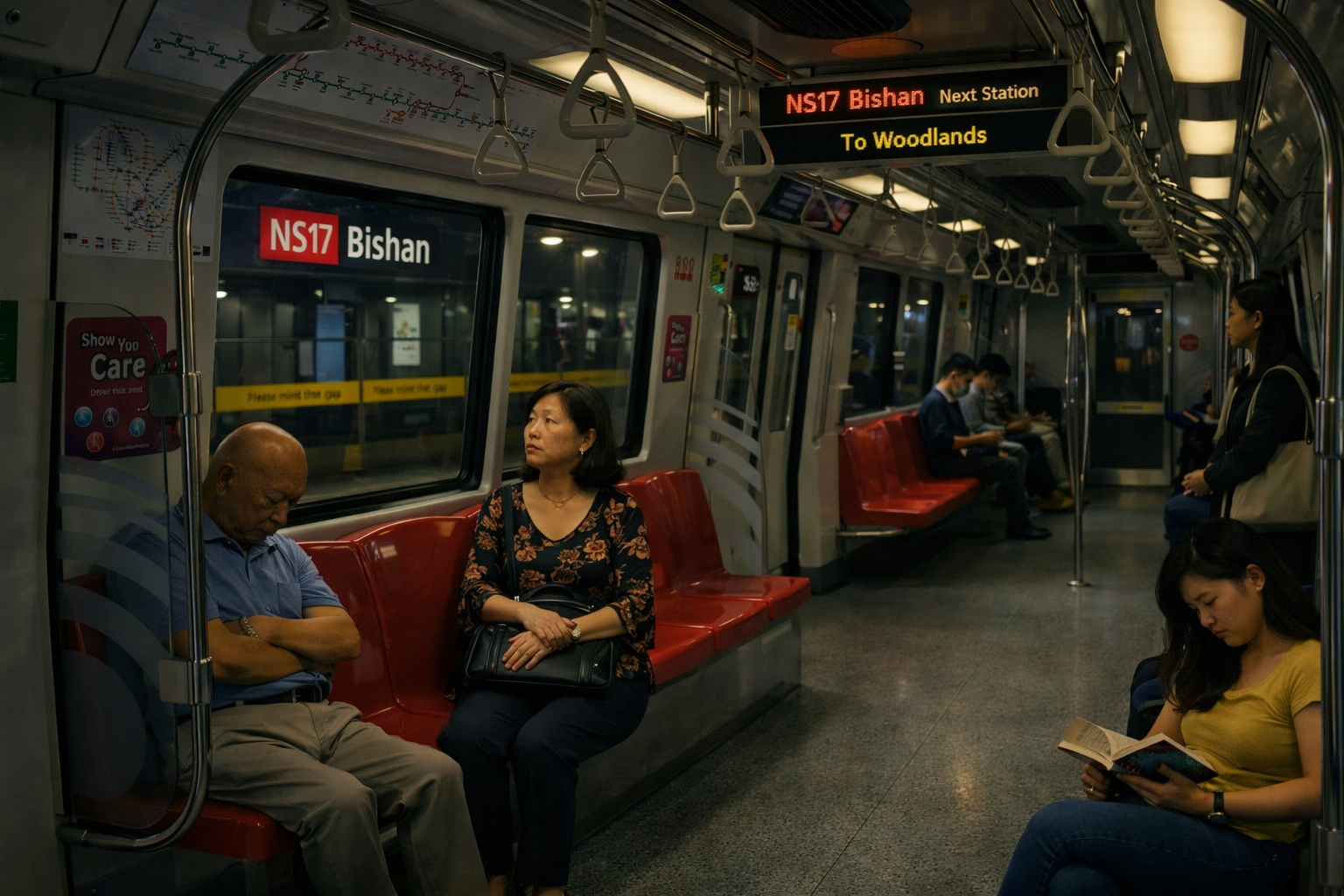
The conference room on the thirty-eighth floor of the Raffles Place tower buzzed with polite conversation as executives filtered in for the quarterly review meeting. Marcus Lim straightened his tie and checked his watch. He was early, as always. The acquisition of NexaFlow had been his project from the start, and today’s meeting would finalise the partnership that could make his career.

He was scrolling through his tablet when she walked in.

The woman commanded attention without trying. Her navy blazer was perfectly tailored, accentuating curves that spoke of confidence rather than apology. Dark hair swept into an elegant chignon, framing a face that was striking in its intelligence; sharp cheekbones, full lips, and eyes that seemed to see everything. When she spoke to her assistant, her voice carried the kind of authority that came from earning respect, not demanding it.

Marcus found himself staring. She was easily the most captivating woman he’d ever seen.

That’s Priya Kumar,” whispered his colleague, Wei Ming. “She built NexaFlow from nothing. Brilliant woman. A bit intimidating, though.”

Priya. The name suited her. Marcus watched as she took her seat at the head of the table, directly across from him. When their eyes met, he offered his most charming smile. She looked at him for a long moment, something flickering across her features, before nodding politely and turning away.

The meeting proceeded smoothly. Priya’s presentation was flawless, her responses to questions sharp and insightful. Marcus found himself genuinely impressed, not just attracted. This wasn’t just beauty and confidence; this was brilliance in action.

Mr. Lim,” Priya’s voice cut through his thoughts. “I believe you had some concerns about our data security protocols?

He recovered quickly, launching into his prepared questions. But throughout the discussion, he couldn’t shake the feeling that her dark eyes were studying him, measuring him against some invisible standard.

After the meeting, Marcus lingered, hoping to catch her alone.

Ms. Kumar?” He approached with what he hoped was professional interest. “I was wondering if you’d like to grab dinner tonight. To discuss the partnership, of course.”

For just a moment, something raw and vulnerable flashed in her eyes. Then it was gone, replaced by polished professionalism.

I don’t think that would be appropriate, Mr. Lim. All business matters can be handled during office hours.

The rejection stung more than it should have. “Of course. Professional boundaries. I respect that.

As he walked to his BMW in the Marina Bay Financial Centre car park, Marcus couldn’t understand why he felt like he’d failed some test he didn’t know he was taking.

Ten years earlier

Priya Raj pushed her thick glasses up her nose and clutched her textbooks tighter as she navigated the crowded NUS campus. At nineteen, she was already carrying more responsibility than most of her classmates could imagine: working two part-time jobs to help with family expenses while maintaining her first-class honours in computer science.

She’d learned to make herself invisible. It was easier that way.

Alamak, is that the same blouse she wore yesterday?” The voice carried across the Arts Link, followed by barely suppressed laughter.

Priya’s cheeks burned, but she kept walking. The blouse was one of three she owned, all carefully maintained but obviously not from Orchard Road boutiques. She’d learned not to react to comments from Marcus Lim’s circle, the golden boys and girls who seemed to glide through university on charm and family connections.

Marcus himself had never been cruel, not directly. He simply… didn’t see her. When Professor Tan paired them for a programming project, Marcus had looked right through her as if she were furniture, immediately suggesting they meet at the coffee shop in the Science canteen where she worked, not knowing, of course, that she’d be serving him while trying to discuss their code.

Can I get you anything else, ah?” she’d asked after bringing him his third kopi-O.

Just working on this project with…” He’d glanced around vaguely. “Some girl from class lah. She’s supposed to be here.”

Priya had stood there in her coffee-stained uniform, textbook tucked under her arm, invisible.

Three weeks into the partnership negotiations, Marcus was no closer to understanding Priya Kumar. She was professional, brilliant, and completely unreachable. Every attempt at conversation beyond business was met with polite deflection. Every invitation was declined with perfect courtesy.

It was driving him crazy.

You’re obsessing, bro,” Wei Ming observed over lunch at a trendy CBD restaurant. “It’s not like you. Usually, they’re all over you.”

Marcus poked at his laksa, watching the busy street through the floor-to-ceiling windows overlooking the Singapore River. “She’s different.”

Maybe that’s the point. Maybe she sees right through your usual charm.”

That afternoon, Marcus found himself really looking at the people around his Shenton Way office. His secretary, who always seemed nervous. The junior associates who laughed too loudly at his jokes. The cleaning auntie who hurried past him as if afraid to be noticed.

When had he stopped seeing people as individuals?

The question haunted him through another sleepless night in his Sentosa Cove penthouse.

The breakthrough came during a crisis. A cybersecurity breach at one of Lim Holdings’ subsidiary companies threatened to derail not just the NexaFlow partnership, but several other major deals. Marcus worked through the night, coordinating responses from his corner office overlooking Marina Bay, when his phone rang.

Mr. Lim? It’s Priya Kumar. I heard about the breach. I’m sending over my team.”

You don’t have to—

My reputation is tied to this partnership now. We fix this together.”

For the next eighteen hours, they worked side by side. Marcus watched Priya command her team with quiet authority, solving problems with elegant efficiency. She ordered zi char for everyone, remembered the security uncle’s name, and somehow made the crisis feel manageable.

Around dawn, they found themselves alone in the conference room, surrounded by empty coffee cups and whiteboards covered in code, the Marina Bay Sands and Singapore Flyer silhouetted against the pink sunrise beyond the windows.

Why?” Marcus asked quietly. “Why help when I know you don’t even like me?

Priya looked up from her laptop, fatigue softening her carefully maintained composure. “Because it was the right thing to do.”

I feel like I know you,” he said suddenly. “Like we’ve met before.”

Her fingers stilled on the keyboard. “We have.”

When? I would remember…

Would you?” Her voice was soft, almost sad. “National University of Singapore. Computer Science. Professor Tan’s Advanced Programming module.”

The pieces clicked into place with sickening clarity. The Science canteen coffee shop. The project partner he’d barely acknowledged. The girl whose name he’d never bothered to learn.

Oh God. Priya. You’re…

The same person I always was.” She closed her laptop with a quiet snap. “Just visible now.”

Marcus felt like the floor had dropped away. “I was such an asshole.

You were twenty.” Her voice was matter-of-fact. “We all were someone different then.”

No, I was worse than that. I was blind. I was…

You were a product of your environment.” Priya stood, gathering her things. “But that doesn’t mean I have to forget.”

She paused at the door. “The crisis is handled. I’ll have my legal team finalise the partnership documents. We don’t need to work together directly anymore.”

Marcus sat alone in the conference room as the sun rose over Singapore’s skyline, finally understanding why her eyes had seemed to see straight through him. She’d been measuring him against the boy who had looked right through her, and he’d been found wanting.

The question was: what was he going to do about it?

Marcus started small. He learned the names of everyone in his building: security guards, cleaning staff, and the uncle who ran the kopi tiam on the ground floor. He instituted monthly team meetings where junior associates could present ideas directly to leadership. He volunteered to mentor students at NUS, particularly those on financial assistance.

But mostly, he tried to become worthy of a second chance he wasn’t sure he’d ever get.

Two months later, he ran into Priya at a tech industry charity gala at the ArtScience Museum. She looked stunning in a midnight blue cheongsam, commanding attention in a room full of Singapore’s most influential people. Marcus approached carefully, his heart hammering.

Priya.”

She turned, and for the first time since their reunion, her expression wasn’t guarded. “Marcus. I heard about your mentorship program.

Word travels fast in Singapore.”

I fund three scholarships at NUS. I hear things.” She studied his face. “Why?”

Because I finally realised that the world doesn’t revolve around people like me. And I wanted to do something useful with that realisation.”

They talked for an hour. Really talked. About their work, their families, their hopes for Singapore’s tech scene. When the evening ended, Marcus found the courage to ask again.

Dinner? Not as a business meeting. As… whatever you’re comfortable with.”

Priya was quiet for so long, he thought she’d say no. Then: “There’s a place I like in Chinatown. Nothing fancy.

Perfect.”

The restaurant was a hole-in-the-wall zi char stall tucked away in a back alley near Tanjong Pagar, with plastic chairs and the kind of authentic Hokkien food that couldn’t be found in trendy Clarke Quay establishments. Priya had changed into jeans and a simple blouse, and Marcus had never seen her look more beautiful.

I used to come here during university,” she said, expertly manoeuvring her chopsticks around the sweet and sour pork. “It was the only place I could afford that felt special.”

What was it like?” Marcus asked quietly. “Uni, I mean. For you.”

Priya considered the question. “Lonely, mostly. I was so focused on survival, academically and financially, that I forgot to be young. I watched people like you having experiences I couldn’t afford, and I told myself I didn’t want them anyway.”

“I’m sorry I was part of that.”

“You weren’t cruel, Marcus. You just… existed in a different world. One where people like me didn’t matter.”

“They did matter. I was just too stupid and self-absorbed to see it.”

She smiled then, the first genuine smile she’d given him. “We were both different people then.”

“I’d like you to know the person I am now.”

I think,” Priya said slowly, “I’d like that too.”

Their courtship was careful, deliberate. Marcus learned that Priya had built her company not just from ambition, but from a desire to create opportunities for people who’d been overlooked the way she had been. She’d hired dozens of first-generation university graduates, funded coding bootcamps in heartland communities, and quietly revolutionised the way Singapore’s tech industry thought about talent.

Priya learned that Marcus’s newfound awareness wasn’t performative. He’d restructured his company’s hiring practices, implemented blind resume reviews, and somehow managed to do it all without seeking credit or recognition.

You’ve changed,” she told him one evening as they walked along the Marina Barrage, the city lights reflecting off the reservoir, six months into whatever they were calling their relationship.

Not changed,” Marcus said. “Just finally became who I was supposed to be.”

And who is that?

He stopped walking and turned to face her. “Someone worthy of you.”

Priya’s breath caught. In the glow of the Singapore skyline, she could see the boy he’d been in the man he’d become, but this version was better, deeper, marked by empathy and genuine humility.

I was so angry for so long,” she whispered. “At you, at everyone who made me feel invisible. I built my whole life around never being that powerless again.”

You were never powerless, Priya. You were just surrounded by people too blind to see your strength.”

When he kissed her, it tasted like forgiveness and possibility and the kind of love that comes from truly seeing another person.

One year later

The engagement party was held at the same conference room where they’d reconnected; Priya’s idea and characteristically perfect. Their two worlds had blended seamlessly: his family’s Peranakan heritage mixing with her chosen family of employees, mentees, and the professors who’d believed in her when no one else had. The catering was a mix of their favourites, from high-end hotel fare to zi char dishes that reminded them of their roots.

Marcus found Priya on the outdoor terrace, looking out over the glittering lights of the Marina Bay area.

Having second thoughts?” he asked, wrapping his arms around her from behind.

About marrying you? Never.” She leaned into him. “I was just thinking about that girl in the Science canteen. How she never could have imagined this moment.”

She deserved it even then.”

Maybe. But she wasn’t ready for it then. Neither of us were.”

Marcus turned her in his arms. “And now?”

Priya smiled, the expression transforming her face with joy. “Now we’re exactly who we’re supposed to be.”

As they kissed under the stars, the Singapore skyline sprawling endlessly below them, it felt like the best kind of second chance; not a revision of the past, but a bold new story written by two people who had finally learned how to truly see each other.

Some love stories begin with love at first sight. The best ones, perhaps, begin with sight at first love, the moment when two people finally become visible to each other, not as they were, but as they chose to become.

Short Story: The Silver Lighter

The Bangkok heat clung to everything, even at seven in the evening on Christmas Eve. Sophie wiped sweat from her forehead as she navigated through the crowded Chatuchak Weekend Market, her sister Emma trailing behind, camera in hand.

“This is mental,” Emma laughed, dodging a motorbike taxi. “Christmas in thirty-five degrees. Mum would have a fit seeing us in shorts and tank tops right now.”

Sophie smiled, fingering the small silver lighter in her pocket. Their grandfather’s lighter—the one thing she’d insisted on bringing to Thailand, despite Emma’s protests about unnecessary baggage. The engraved initials “J.H” caught the light from the market stalls as she turned it over in her palm.

They’d planned this trip for months. Two weeks in Thailand, escaping the dreary December rain of Manchester, escaping the first Christmas without their grandfather. The old man had been obsessed with travel stories, filling their childhood with tales of places he’d never quite managed to visit himself.

“Look at this,” Emma called, holding up a Buddha statue made of recycled glass. “Grandpa Joe would have loved this market. All these little treasures.”

Sophie nodded, but her throat felt tight. That’s exactly what he would have said—little treasures. He’d collected them from the few places he had managed to reach: a wooden spoon from Scotland, a pressed flower from Ireland, and a smooth stone from Wales. His mantelpiece had been a museum of modest adventures.

They bought Pad Thai from a street vendor and found a plastic table under string lights. The familiar ache of missing their grandfather settled between them as they ate in comfortable silence. Around them, Thai families laughed and ate together, children running between the stalls with sticky fingers and bright smiles.

“I keep expecting him to text me,” Emma said quietly. “Asking for photos, you know? Making me describe everything in detail.”

Sophie pulled out the lighter, setting it on the table between their steaming plates. The silver caught the warm glow of the market lights.

“I brought this because… I thought maybe I’d leave it somewhere. Like, scatter his ashes or something symbolic.” She gave a small laugh. “Stupid, really. It’s just a lighter.”

Emma reached across and touched the worn metal. “It’s not stupid. Remember how he always carried it? Even after he quit smoking twenty years ago.”

“Emergency fire,” they said in unison, mimicking their grandfather’s gravelly voice. He’d claimed you never knew when you might need to start a campfire or light someone’s way in the dark.

A group of Thai teenagers at the next table burst into laughter, and one of them, a girl about Emma’s age with bright pink hair, caught Sophie’s eye and smiled. Before Sophie could think too much about it, she found herself walking over.

“Excuse me,” she said in careful English. “My sister and I are here for Christmas. We’re from England. Do you… Would you like to share our table? It’s Christmas Eve.”

The pink-haired girl’s eyes lit up. “Oh! Yes, please!” Her friends gathered around, chattering in rapid Thai mixed with English. Their names tumbled out: Nim, Ploy, Bank, and Kao.

Soon, both tables were pushed together, and the teenagers were helping Sophie and Emma order more food, teaching them to say “Merry Christmas” in Thai: “Suk San Wan Christmas.” The lighter sat forgotten on the table as stories were shared through a mixture of languages, Google Translate, and lots of gesturing.

Nim, the pink-haired girl, was studying in Bangkok but was originally from a small village north of the city. She was spending Christmas Eve at the market because she couldn’t afford to travel home until New Year’s.

“Family is very important,” she said, her English careful but warm. “But sometimes… friends are family too, yes?”

Emma and Sophie exchanged glances. Their grandfather had always said that chosen family could be just as precious as blood family.

As the evening wore on, Bank produced a small Bluetooth speaker and played a mix of Thai pop and Christmas songs. When “White Christmas” came on, Nim giggled and pointed at Sophie and Emma.

“You miss white Christmas?” she asked.

“Actually,” Sophie said, surprising herself, “I think I prefer this. The warmth, the food, the…” she gestured around the table, “the people.”

Ploy noticed the lighter then, picking it up carefully. “Very beautiful,” she said.

Sophie found herself explaining about their grandfather, about the trip they’d taken in his memory, and about how she’d planned to leave the lighter somewhere meaningful. As she spoke, she realised the ache in her chest had softened somehow.

“But you know,” she continued, looking around the table at their new friends, “I think he would have loved this. This exact moment.”

Emma nodded, tears in her eyes. “He always said the best souvenirs were the people you met.”

When midnight approached, they all walked to a nearby temple where families had gathered for late-night Christmas prayers, Buddhist families celebrating the Christian holiday with the same spirit of love and togetherness that transcended specific traditions.

Standing there under the temple lights, surrounded by the gentle murmur of prayers in Thai and the warm presence of both strangers and new friends, Sophie made a decision. She pulled out her grandfather’s lighter and handed it to Nim.

“I’d like you to have this,” she said. “My grandfather would have wanted it to travel, to see the world he never got to explore.”

Nim’s eyes widened. “I cannot… this is too precious.”

“Please,” Sophie insisted. “Promise me you’ll carry it somewhere beautiful. Light someone’s way.”

Nim held the lighter reverently, then smiled. “I promise. Emergency fire, yes?”

“Emergency fire,” Sophie laughed, and Emma joined in.

As they exchanged contact information and promised to stay in touch, Sophie realised that this Christmas, sweat-drenched and thousands of miles from home, felt more full of joy and connection than any she could remember. Their grandfather’s lighter was beginning a new adventure, and somehow, so were they.

Walking back through the quieter streets to their hostel, Emma took Sophie’s hand.

“I think Grandpa Joe got his Christmas wish after all,” Emma said.

“What’s that?”

“He always wanted to travel the world and meet interesting people. I think he just did.”

Sophie squeezed her sister’s hand and looked up at the Bangkok sky, where no snow would fall, but where the warmth of human connection felt like the most perfect Christmas gift imaginable.

Short Story: The Red Maruti

The ceiling fan creaked its familiar rhythm above the dining table as Ramesh spread the morning’s Deccan Herald across the wooden surface. The monsoon had finally retreated from Bangalore, leaving behind the kind of crisp October morning that made the city feel like a hill station. Through the open windows of their Jayanagar home, the sounds of the awakening neighbourhood drifted in: the milk vendor’s bicycle bell, the vegetable seller’s melodic calls, and somewhere in the distance, the gentle hum of a BMTC bus navigating the tree-lined streets.

“Appa, look at this,” Ramesh called to his father, Krishnamurthy, who was performing his morning surya namaskars in the small front yard. He pointed to a full-page advertisement that had caught his eye. A gleaming red car dominated the page, with bold letters proclaiming: “MARUTI 800 – A CAR FOR THE MIDDLE CLASS.”

Krishnamurthy finished his final salutation to the sun and walked over, adjusting his steel-rimmed glasses. At seventy-two, he moved with the measured dignity of a retired government clerk who had spent four decades navigating the bureaucratic corridors of Vidhana Soudha. “Twenty-eight thousand rupees,” he read aloud, his voice carrying the weight of consideration. “That’s more than your annual salary, kanna.”

“But Thatha, think about it,” piped up Kavitha, the younger of Ramesh’s two daughters. At twelve, she possessed an infectious enthusiasm that could convince anyone of anything. “No more waiting for buses in the rain. No more walking to the market when Amma’s back hurts.”

Her older sister Priya, sixteen and perpetually practical, looked up from her mathematics textbook. “And how exactly do we afford it? We can barely manage Kavitha’s school fees.”

Sunita emerged from the kitchen, wiping her hands on her cotton saree. After seventeen years of marriage to Ramesh, she had learned to read the dreamy expression that crossed his face whenever he encountered something that represented progress, modernity, or simply the possibility of a better life for his family. This morning, that expression was unmistakable.

“You’re actually considering this, aren’t you?” she asked, settling beside him at the table.

Ramesh worked as an engineer at Bharat Electronics Limited, one of the few government jobs that paid well enough to support a joint family in middle-class comfort. Their house in 4th Block, Jayanagar, two bedrooms, a hall, a kitchen, and the luxury of a separate bathroom, represented years of careful saving and his father’s prudent investment in real estate when the area was still considered the outskirts of Bangalore.

“The waiting list is already six months long,” Ramesh said, continuing to study the advertisement. “If we don’t book now, it’ll be two years before we see one.”

Krishnamurthy settled into his chair with a thoughtful grunt. He had witnessed India’s transformation from British rule through independence, and now, at the tail end of the 1980s, he was watching his country embrace modernity with unprecedented enthusiasm. The Maruti factory in Gurgaon, the result of Indira Gandhi’s collaboration with Suzuki, represented something he had never imagined in his youth: mass-produced cars that ordinary families might actually afford.

“In my day,” he began, and Kavitha rolled her eyes affectionately, “a man was proud to own a bicycle. Your uncle Venkatesh saved for three years to buy his Hercules.”

“But times are changing, Appa,” Sunita said gently. “The children’s school is getting farther as the city grows. And my arthritis makes those bus rides increasingly difficult.”

Priya closed her textbook with a decisive snap. “If we’re going to dream, let’s dream properly. I’ve heard that the car comes in different colours. Red, white, blue…”

“Red,” Kavitha declared immediately. “It has to be red. Like the hibiscus flowers in Lalbagh.”

Over the next few weeks, the Maruti became the gravitational centre around which all family conversations orbited. Ramesh visited the showroom in Malleshwaram three times, each visit revealing new details that he would share over dinner. The car had a four-stroke engine, unlike the temperamental two-stroke scooters that dominated Bangalore’s roads. It could seat five people comfortably, well, four adults and one child. The fuel efficiency was extraordinary: twenty kilometres per litre.

Krishnamurthy accompanied his son on the fourth visit, partly out of curiosity and partly out of paternal duty to ensure that Ramesh wasn’t being swept away by sales rhetoric. The showroom itself was a revelation: gleaming white tiles, air conditioning, and salesmen in pressed shirts who spoke about “features” and “specifications” with the enthusiasm of cricket commentators.

“Sir, the Maruti 800 represents the future of Indian transportation,” the salesman explained to Krishnamurthy with respectful deference to his age. “Reliable, economical, and built with Japanese technology adapted for Indian conditions.”

Krishnamurthy ran his weathered hands over the smooth red surface of the display model. The paint was flawless, the chrome bumpers caught the showroom lights perfectly, and the interior smelled of new vinyl and possibility. Despite himself, he was impressed.

The family held a formal meeting that evening, seated in a circle on the cool terrazzo floor of their front room. This was how the Krishnamurthy household had always made important decisions, democratically, with even the youngest member having a voice.

“The mathematics are challenging but not impossible,” Ramesh began, consulting a notebook filled with calculations. “The down payment is eight thousand rupees. We have six thousand in savings, and I can borrow two thousand from the office cooperative society.”

“What about the monthly payments?” Priya asked. Her practical nature had blossomed into a genuine aptitude for numbers, much to her father’s pride.

“Four hundred and fifty rupees for four years. Plus insurance, registration, and maintenance.”

Sunita looked worried. “That’s nearly half your salary, Ramesh.”

“But think of what we’ll save,” Kavitha interjected. “No more auto-rickshaw fares. No more bus tickets. Amma, you could come to school for my annual day without worrying about the heat.”

Krishnamurthy had remained silent throughout this discussion, but now he cleared his throat. “There is another consideration,” he said slowly. “What will the neighbours think?”

This was not vanity speaking, but practical social wisdom. In the close-knit community of 4th Block Jayanagar, where everyone knew everyone else’s business, the arrival of a car would mark the family as either admirably prosperous or dangerously extravagant, depending on one’s perspective.

“Mrs. Lakshmi next door will probably faint,” Sunita said with a smile. “She still thinks our telephone is an unnecessary luxury.”

“But Mr. Rao across the street has been talking about buying a scooter,” Priya pointed out. “And the Sharmans in the corner house just bought a television.”

The decision, when it finally came, was typically understated. Krishnamurthy simply nodded and said, “If it will make life easier for my daughter-in-law and granddaughters, then we should proceed.”

The booking was made on a Tuesday morning in November. Ramesh took leave from work, dressed in his best white shirt and pressed trousers, and accompanied his father to the showroom. The formalities were surprisingly complex: forms to be filled, documents to be verified, and a waiting list number to be assigned: 2,847.

“Six to eight months for delivery,” the salesman explained. “Demand is very high, sir. The entire country wants a Maruti.”

The wait began.

Winter settled over Bangalore with its characteristic gentleness, cool mornings that warmed into pleasant afternoons, clear skies that revealed the distant Nandi Hills, and evenings perfect for long walks around the neighbourhood. The family’s anticipation grew in parallel with the passing months.

Kavitha developed the habit of walking past other Maruti cars whenever she spotted them on the street, studying their features and comparing them to her memory of the showroom model. She became an expert on the subtle differences between the various colours, the advantages of the deluxe model over the standard, and the proper pronunciation of “Suzuki.”

Priya, meanwhile, had begun learning to drive on her uncle Venkatesh’s scooter, arguing that someone in the family should be prepared to handle their new automobile. Her grandfather watched these lessons with a mixture of pride and terror, remembering when women in his family had rarely left the house unaccompanied, let alone operated motorised vehicles.

Sunita found herself calculating and recalculating the family budget, shifting small amounts between savings and expenses to ensure they could meet the monthly payments without compromising on education or healthcare. She also began scouting locations for a parking space, since their narrow house had no garage.

Ramesh threw himself into research with the dedication of an engineer. He borrowed books about automobile maintenance from the BEL library, studied traffic rules with the intensity of a law student, and began a notebook documenting every Maruti owner he met and their experiences with the car.

Spring arrived early in 1989, bringing with it the jasmine season and a telephone call that sent Kavitha racing through the house like a messenger from the gods.

“It’s ready! It’s ready! The showroom called, our car is ready!”

The delivery was scheduled for a Saturday morning, allowing the entire family to participate in this momentous occasion. They dressed as if for a wedding: Krishnamurthy in his silk dhoti and cream kurta, Sunita in her best Mysore silk saree, the girls in matching pavadai-davani sets that their grandmother had stitched specially for the occasion.

The showroom had transformed their transaction into a celebration. The red Maruti 800 sat in the centre of the display area, draped with marigold garlands and adorned with a small silver Ganesha idol on the dashboard. A photographer captured the moment as Ramesh accepted the keys from the showroom manager, his family gathered around him with expressions of joy and pride.

“Congratulations, sir,” the manager said formally. “May this car bring your family many years of happiness and safe travels.”

The drive home was a journey of barely three kilometres that felt like an odyssey. Ramesh gripped the steering wheel with both hands, maintaining a steady speed of twenty kilometres per hour while his passengers provided a constant stream of commentary.

“The engine is so quiet!” Sunita marvelled.

“Look how smoothly it turns!” Priya observed.

“Everyone is staring at us!” Kavitha announced with unabashed delight.

And indeed, their progress through Jayanagar resembled a slow-motion parade. Neighbours emerged from their houses to wave and smile. Children on bicycles rode alongside them for short distances. Even the traffic constable at the 4th Block intersection offered a salute as they passed.

Back home, a crowd had gathered. Mrs. Lakshmi from next door stood with her hands folded in namaste, genuinely happy for her neighbours despite her initial scepticism about their extravagant purchase. The Sharmans brought sweets. Mr. Rao from across the street walked around the car twice, examining it with the thoroughness of a prospective buyer.

“Beautiful colour,” he declared finally. “Very auspicious.”

Krishnamurthy performed a small puja, breaking a coconut near the front wheel and sprinkling the car with holy water from their morning prayers. It was a synthesis of ancient ritual and modern technology that perfectly captured the spirit of changing India.

The first family outing came the following day, a Sunday drive to Lalbagh Botanical Gardens. What had previously been a complex expedition involving bus connections and considerable walking was now a simple matter of driving to the parking area and walking directly to the glasshouse.

They spent the afternoon among the flower displays, but the real entertainment was watching other families admire their car in the parking lot. The red Maruti had developed a small court of admirers, children who pressed their noses against the windows, adults who walked around it appreciatively, and fellow car owners who struck up conversations with Ramesh about mileage and maintenance.

“It’s like owning a celebrity,” Sunita whispered to her husband as yet another stranger approached to ask about their driving experience.

The car transformed their daily routines in ways both large and small. Grocery shopping became a family affair, with weekend trips to Russell Market that would have been impossible with public transportation. Sunita’s visits to the temple expanded from the neighbourhood Ganesha temple to the grand Dodda Ganesha Temple in Basavanagudi. The girls’ social world expanded as drop-offs and pick-ups from friends’ houses became feasible.

Most importantly, the car seemed to expand their sense of possibility. When Kavitha’s school announced a field trip to Mysore, the family was able to offer to drive some of her classmates, turning the journey into an adventure rather than an expensive impossibility. When Priya received admission to the prestigious National College for her pre-university studies, the daily commute became manageable rather than prohibitive.

Six months after the delivery, Ramesh calculated that they had driven nearly eight thousand kilometres, trips to relatives in Mysore, weekend outings to Nandi Hills, and countless small journeys that had previously required careful planning and considerable expense.

“The car has paid for itself in saved bus fares and auto-rickshaw rides,” he announced at dinner one evening.

“No,” Krishnamurthy corrected gently. “The car has paid for itself in possibilities we never imagined.”

As 1989 drew to a close, the red Maruti had become as much a part of the family as any human member. It had its own personality, a slight reluctance to start on particularly cold mornings, a preference for being parked in the shade, and a tendency to attract admiring glances wherever it went.

On New Year’s Eve, as fireworks lit up the Bangalore sky and the family stood in their front yard reflecting on the year that had passed, Kavitha made an observation that would be repeated in family stories for years to come.

“You know,” she said, leaning against the warm red hood of their car, “I think this is the year we stopped just dreaming about the future and started driving toward it.”

The adults smiled at her earnestness, but privately, each of them acknowledged the truth in her words. The little red Maruti had done more than provide transportation—it had carried them into a new version of themselves, a family unafraid to embrace change and confident enough to believe that better days lay ahead.

In the distance, a church bell tolled midnight, welcoming not just a new year but a new decade. The 1990s stretched ahead, full of promise and possibility, and the Krishnamurthy family was ready for the journey.