
After Chennai, let’s visit some of the other major cities and towns in the state.

Coimbatore:
Also known as Kovai and Koyamuthur, Coimbatore is the second largest city in Tamil Nadu. It is located on the banks of the Noyyal River and surrounded by the Western Ghats. In addition to being the second largest city in Tamil Nadu after Chennai, it is also the 16th largest urban agglomeration in India. The city is one of the largest exporters of jewellery, wet grinders, poultry and auto components; the “Coimbatore Wet Grinder” and the “Kovai Cora Cotton” are recognised as Geographical Indications by the Government of India.
Coimbatore was part of Kongu Nadu during the Sangam period between c. 1st and the 4th centuries CE and was ruled by the Cheras as it served as the eastern entrance to the Palakkad Gap, the principal trade route between the west coast (Kerala) and Tamil Nadu). Coimbatore was located along the ancient trade route that extended from Muziris to Arikamedu in South India. The medieval Cholas conquered the Kongu Nadu in the 10th century CE. The region was ruled by Vijayanagara Empire in the 15th century followed by the Nayaks who introduced the Palayakkarar system under which Kongu Nadu region was divided into 24 Palayams. In the later part of the 18th century, the Coimbatore region came under the Kingdom of Mysore and following the defeat of Tipu Sultan in the Anglo-Mysore Wars, the British East India Company annexed Coimbatore to the Madras Presidency in 1799. The Coimbatore region played a prominent role in the Second Poligar War (1801) when it was the area of operations of Dheeran Chinnamalai.
So what can you see in Coimbatore? There’s the Marudamalai Murugan Temple, a hilltop temple dedicated to God Murugan and considered as one of the seven houses of Lord Murugan in South India. Another temple, the Perur Pateeswarar Temple is dedicated to Lord Shiva, was built by Karikala Chola. The temple has statue of Nataraja, Arasambalavanar Shrine and shrine dedicated to Ganesha and is also a popular sightseeing spot in Coimbatore. Another popular place is the Adiyogi Lord Shiva Statue at the Isha Yoga Center, which is the largest bust sculpture in the world, weighing around 500 tonnes and standing at 112 feet tall at the foothills of the Velliangiri Mountains. The Velliangiri Mountains, which are located close to the Tamil Nadu Kerala border are also known as Kailash Mountain of the South India and is part of the Nilgiri Biosphere Reserve.
You can also visit the Siruvani Waterfalls which is located 35km from Coimbatore, the Singanallur Lake which is one of the nine large lakes fed by the canals of the Noyal river as well as the Tamil Nadu Agricultural University Botanical Garden of Coimbatore located near Maruthamalai. This garden is spread over 300 hectares and is home to many varieties of plants and birdlife.
An interesting museum in Coimbatore is the Gedee Car Museum, the only classic car museum of its kind located in the city. The museum has a collection of unique cars not to be seen anywhere else in India. The cars are a private collection of G D Naidu Charities, a social trust founded by late Sri. G D Naidu of Coimbatore, who was a renowned inventor, educationalist and philanthropist of his time.
The best time to visit this under-rated city is between July to March.
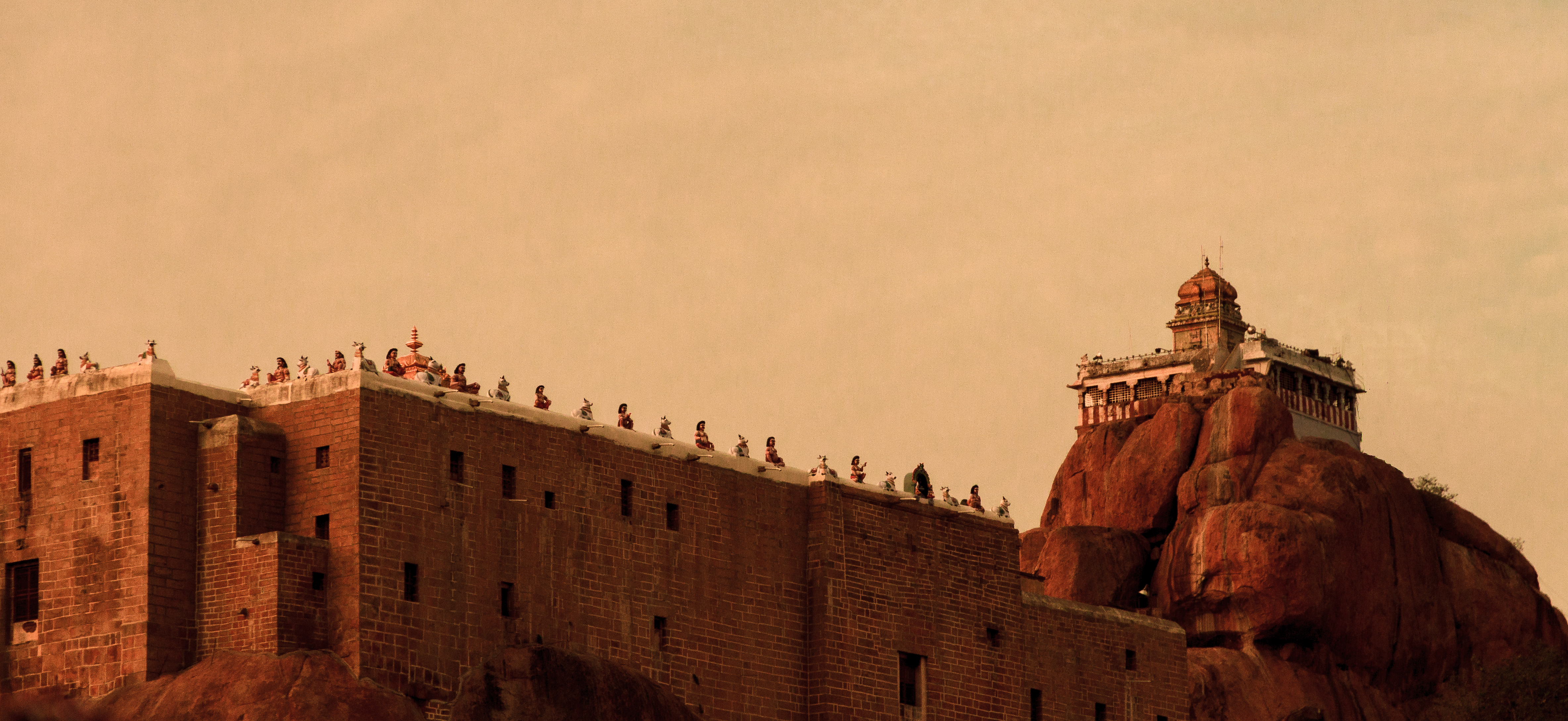
Tiruchirappalli
Tiruchirappali or Trichy is the fourth largest city in Tamil Nadu and is located on the banks of the Cauvery River. The history of Tiruchirappalli begins in the 3rd century BC, when it was under the rule of the Cholas. It was a stronghold of the early Cholas which later fell to the Pallavas. But the Pallavas never really managed to retain control of this strategic city and lost it to the Pandyas several times. Trichy continued to be in the possession of Cholas until the decline of the empire after which it became a Vijayanagara stronghold. Trichy came under the rule of Nayaks of Madurai after the collapse of Vijayanagara, later to the Marathas of Tanjore, the Nawabs of Carnatic, the French and finally the British. Trichy flourished under Madurai Nayaks and prospered to be the city that it is today. The city played a critical role in the Carnatic Wars (1746-1763) between the British and the French East India companies.
Tiruchirappalli is internationally known for a brand of cheroot known as the Trichinopoly cigar. The city is very popular for its cigars, handloom saris and stone-studded jewelry, Pith models and cheroots. According to the National Urban Sanitation Policy (2010), Tiruchirappalli was one of the ten cleanest cities in India.
The city is an important educational centre in the state and houses nationally recognised institutions. The presence of a large number of energy equipment manufacturing units in and around the city has earned it the title of “Energy Equipment and Fabrication Capital of India”.
Tiruchirappalli is home to numerous historical monuments and temples that attract tourist and pilgrims from all parts of the country throughout the year. Sri Ranganathaswamy Temple is one of the most famous temples in South India, constructed in the Dravidian style of architecture. Built across an area of 156 acres, this temple is dedicated to Ranganatha, a reclining form of Hindu deity, Lord Vishnu. This temple lies on an island formed by the twin Rivers Cauvery and Kollidam. Though the temple existing since 2nd century BC, the archaeological inscriptions are available only from the 10th century CE. During the invasion of Malik Kafur in 1310-1311, the idol of the deity was stolen and taken to Delhi. In a daring exploit, devotees of Srirangam ventured to Delhi and enthralled the emperor with their histrionics. Moved by their talent, the emperor was pleased and returned the statue of the deity of Srirangam. During second invasion in 1323 AD, the deity was taken away before the invading troops reached Srirangam. The deity was kept in the hills of Tirumala Tirupati for 6 decades until their reinstatement in 1371. It is believed that 13,000 devotees laid down their lives in the fierce battle to protect the temple. This temple is the biggest functioning Hindu temple in India. The vimana over the sanctum of the temple is made up of gold and so is protected by an electric fence. The 236-feet Rajagopura (tower) is the tallest temple tower in India. There is also a royal temple tower, which covers a base area of 32500 sq. ft and has a height of 196 ft. It also comprises a hall containing 1000 pillars. Intricate sculptures are the most attractive part of the hall. The Hall was built during the Vijayanagara period (1336-1565). The second enclosure contains the shrine of Ranganayaki, an incarnation of Goddess of Lakshmi.
Another famous and very popular Trichy landmark is the Rockfort Ganpati Temple. The temple derives its name from its unique building style. The temple structure comprises a huge rock, which is believed to be the oldest rock in the world, even older than The Himalayan Mountains. After climbing 344 steps, the devotees reach the main temple area. The temple has two sub parts- the Thayumanaswamy, which is dedicated to Lord Shiva and the Pillayar, which is dedicated to Lord Ganesha. The origins of the temple are traced back to the 7th century. The Shiva temple contains the Lingam form of the Lord.
At the Brahmapureeswarar Temple, the Lord enshrined is in the form of a Swayambu Lingam as he is believed to have changed the destiny of Lord Brahma. Predominantly a Shiva temple, it is local myth that one can change his own fate of he seeks blessings in this temple. Lord Brahma has a separate shrine where he sits in a meditative pose in his signature lotus flower. Goddess Parvathi is also worshipped in the temple.
The Thiruvanaikoil Temple, also known as Jambukeshwarar Temple is one of the holiest places in Tamil Nadu, India. It is one of the Panchabhoota Temples (signifying the 5 elements of nature) and represents the water element (Neer). It is situated on an island surrounded by rivers Cauvery and Coleroon. The temple is also called “Appu Sthalam” and the Shiva Lingam here is called “Appu Lingam”.
Located at a distance of only 15 km from Tiruchirapalli, the Kallanai Dam is built across the flowing River Kaveri. It spans over 1079 feet and is over 66 feet wide! This ancient dam was originally constructed about 2000 years ago, and it is the oldest functional water regulator structure in the entire country. It may not have much else to offer, but the mesmerising view is surely going to be worth taking a detour. The dam also serves as an inspiration for modern-day dams due to the excellent engineering behind it. Also known as Grand Anicut, the enormous dam is famous not only because it is pertinent to the living of thousands of households around it, but also because of its unmatched scenic beauty.
Puliyancholai Waterfalls are situated at the base of Kolli Hills in Tiruchi. The mesmerizing waterfalls are a popular site of tourism and receives a huge influx of visitors. The waterfalls are truly a spot of peace and tranquility and offers solitude like nowhere else. Another majestic falls in the Kolli hills range are the Agaya Gangai Waterfalls which fall from a massive height of 300 feet, The waterfalls can be reached through a trek or by climbing almost a 1000 steps. The waterfalls are best visited during monsoons.

Tiruppur
Tiruppur or Tirupur is the fifth largest urban agglomeration in Tamil Nadu and is located on the banks of Noyyal River. It has been ruled at different times, by the Early Pandyas, Medieval Cholas, Later Cholas, Mysore Kingdom and the British. It is situated at the centre of the South Indian Peninsula and is a major textile and knit wear hub contributing to 90% of total cotton knit wear exports from India.
Make sure you don’t miss the Thirumoorthy Dam & Temple when you visit Tiruppur. Located on the Thirumoorthy hills, the Thirumoorthy Temple, Thirumoorthy Dam and Panchalingam waterfall are Tirupur’s most famous sightseeing locations. The name Thirumoorthy signifies the three Hindu deities namely, Lord Vishnu, Lord Shiva and Lord Brahma. Right outside the temple is a huge rock which is believed to have rolled down during a flood and has a sculpture of a Jain priest carved upside down. At just a short walk of about 1.2 miles (2 km) you will reach the Dam where you can spend some time boating. While you are at it, trek 1.8 miles (3 km) uphill to see the exotic Panchalingam falls.
Maintained by the Architectural Society of India (ASI), the ancient Sugriveswar temple is believed to have been built between the 10th-12th century on the banks of the Noyyal River. Also known as the Sukreeswarar Temple, it is situated at Sarkar Periyapalayam on the outskirts of Tiruppur city. The temple consists of two towers – Vimanam for Lord Shiva and Amman. The Amman temple boasts neatly carved stone architecture from the Pandya dynasty while the Vimanam Shiva temple reflects the architectural style of the Chola Dynasty. This temple is renowned for having two Nandi statues in front of the Shiva Temple, five Lingas outside the temple, one of which is invisible and the main gate opens in the south direction instead of the east.
The Indira Gandhi Wildlife Sanctuary also known as the Annamalai Wildlife Sanctuary, is one of India’s unexplored terrains. It is a vast expanse, encompassing different ranges, including grasslands, plateaus, deep valleys, farms, waterfalls, national parks, teak forests and water reservoirs. It also contains several endangered species and has various peaks over 6,500 feet (1981 meters).
Locally known as the Karunaiyaaththaal Temple, Avinasilingeswarar Temple and Avainasiappar Temple, the Avinashi temple is dedicated to the Hindu god, Shiva and Goddess Parvati. Reflecting architecture reminiscent of ancient India this temple was built in the Chola dynasty.
The best time to visit Tiruppur is between September and January.

Tirunelveli
Located on the west bank of the Thamirabarani River, the district of Tirunelveli is where both sides of my grandparents migrated to Mumbai in the early forties.
Also known as Nellai and during British rule as Tinnevelly, Tirunelvi’s downtown is located on the west bank of the Thamirabarani River; its twin Palayankottai is on the east bank. Palayamkottai is called as the Oxford of the south India as it is a hub of many schools, colleges and many important government offices. Tirunelveli is an ancient city, and is more than 2000 years old. The city is believed to be an ancient settlement of great importance. It has been ruled at different times by the Early Pandyas, the Medieval and Later Cholas, the later Pandyas, the Ma’bar , the Vijayanagar Empire, the Madurai Nayaks, Chanda Sahib, the Karnatic kingdom and the British. The Polygar War, involving Palaiyakkarars led by Veerapandiya Kattabomman and forces of the British East India Company, was waged on the city’s outskirts from 1797 to 1801.
When in Tirunelveli, don’t miss the Nellaiappar temples, the origins of which this temple dedicated to the Hindu deity Shiva are found in the ancient texts of the Puranas. The gopuram of Nellaiappar Temple is said to be built by Muluthukanda Rama Pandiyan and the rest of the Nindraseer Nedumaran. The two temples were linked in 1647 AD by Thiru Vadamalaiappa Pillaiyan by building the chain Mandapam. The Dravidian architecture is well exemplified in this temple and the musical pillars are one of the amazing aspects of the design aesthetics of the temple.
Another ancient temple is the Sankaranarayanan koil, another temple dedicated to Lord Shiva which is said to be 900 years old. The main deity here is the Sankaranarayanan which is a combined form of Shiva and Vishnu. The gopuram is a massive dome which is 135 feet high and has 9 tiers. The temple is best visited during the festival of Adi Tapas which is celebrated between the months of July and August.
Located in the temple village of Krishnapuram, the Venkatachalapathy Temple is one of the major temples in the city. The temple site although is considered to be 9000 years old the current structure dates back to being 700 years old. The temple is adorned with a brightly coloured gopuram and is one of the few temples dedicated to Venkatachalapathy, a form of the Hindu deity Lord Vishnu.
The small town of Papanasam is one of the most popular picnic spots in Tirunelveli. Large acres of lush green paddy fields surround the town and the town is a home to 108 types of medicinal herbs that are not found anywhere in the world. The various dams, rivers and waterfalls here are considered to be major tourist attractions and are a home to several species of migratory birds. The Manjolai Hills are a must visit to experience amazing views of the surrounding landscapes.
The Kutralam falls also is also a favourite of the people of Tirunelvi. More details about this in a separate post.
The best time to visit Tirunelveli is between October and February
 Memories and Such