In My Hands Today…

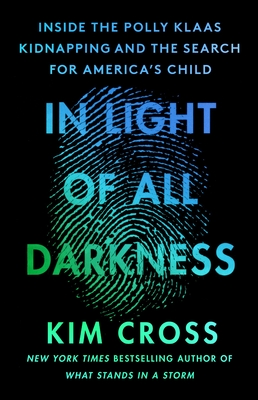
In Light of All Darkness: Inside the Polly Klaas Kidnapping and the Search for America’s Child – Kim Cross

On October 1, 1993, a 12-year-old girl was kidnapped at knifepoint from her bedroom in Petaluma, California, during a sleepover with two friends, while her mother slept soundly in the room next door. This rarest of all kidnappings—a stranger abduction from the home—triggered one of the largest manhunts in FBI history.

Many Americans remember Polly’s face, which appeared on the national news every night, on the cover of People magazine, and on more than 8 million flyers distributed as far as China. The emotional gravity of Polly’s story touched every agent, police officer, and forensic technician who worked on her case. Many of these investigators have never shared their stories—until now.

New York Times bestselling author Kim Cross has written the first comprehensive account of what happened on that fateful night in October, as well as how the case forever transformed the Bureau’s approach to solving crimes. With unprecedented access to case files, crime scene photos, a videotaped murder confession, and inside sources, In Light of All Darkness follows the investigators who pieced together the evidence that led to the arrest and conviction of the kidnapper—and made the victim a household name and a girl who will never be forgotten.

In My Hands Today…

Going Infinite: The Rise and Fall of a New Tycoon – Michael Lewis

When Michael Lewis first met him, Sam Bankman-Fried was the world’s youngest billionaire and crypto’s Gatsby. CEOs, celebrities, and leaders of small countries all vied for his time and cash after he catapulted, practically overnight, onto the Forbes billionaire list. Who was this rumpled guy in cargo shorts and limp white socks, whose eyes twitched across Zoom meetings as he played video games on the side?

In Going Infinite Lewis sets out to answer this question, taking readers into the mind of Bankman-Fried, whose rise and fall offers an education in high-frequency trading, cryptocurrencies, philanthropy, bankruptcy, and the justice system. Both psychological portrait and financial roller-coaster ride, Going Infinite is Michael Lewis at the top of his game, tracing the mind-bending trajectory of a character who never liked the rules and was allowed to live by his own―until it all came undone.

In My Hands Today…

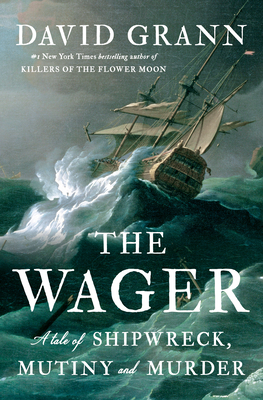
The Wager: A Tale of Shipwreck, Mutiny and Murder – David Grann

On January 28, 1742, a ramshackle vessel of patched-together wood and cloth washed up on the coast of Brazil. Inside were thirty emaciated men, barely alive, and they had an extraordinary tale to tell. They were survivors of His Majesty’s Ship the Wager, a British vessel that had left England in 1740 on a secret mission during an imperial war with Spain. While the Wager had been chasing a Spanish treasure-filled galleon known as “the prize of all the oceans,” it had wrecked on a desolate island off the coast of Patagonia. The men, after being marooned for months and facing starvation, built the flimsy craft and sailed for more than a hundred days, traversing nearly 3,000 miles of storm-wracked seas. They were greeted as heroes.

But then … six months later, another, even more decrepit craft landed on the coast of Chile. This boat contained just three castaways, and they told a very different story. The thirty sailors who landed in Brazil were not heroes – they were mutineers. The first group responded with countercharges of their own, of a tyrannical and murderous senior officer and his henchmen. It became clear that while stranded on the island the crew had fallen into anarchy, with warring factions fighting for dominion over the barren wilderness. As accusations of treachery and murder flew, the Admiralty convened a court martial to determine who was telling the truth. The stakes were life-and-death–for whomever the court found guilty could hang.

In My Hands Today…

The Angel Makers: Arsenic, a Midwife, and Modern History’s Most Astonishing Murder Ring – Patti McCracken

The horror occurred in a rustic farming enclave in modern-day Hungary. To look at the unlikely lineup of murderesses–village wives, mothers, and daughters–was to come to the shocking realization that this could have happened anywhere, and to anyone. At the center of it all was a sharp-minded village midwife, a “smiling Buddha” known as Auntie Suzy, who distilled arsenic from flypaper and distributed it to the women of Nagyrév. “Why are you bothering with him?” Auntie Suzy would ask, as she produced an arsenic-filled vial from her apron pocket. In the beginning, a great many used the deadly solution to finally be free of cruel and abusive spouses.

But as the number of dead bodies grew without consequence, the killers grew bolder. With each vial of poison emptied, a new reason surfaced to drain yet another. Some women disposed of sickly relatives. Some used arsenic as “inheritance powder” to secure land and houses. For more than fifteen years, the unlikely murderers aided death unfettered and tended to it as if it were simply another chore–spooning doses of arsenic into soup and wine, stirring it into coffee and brandy. By the time their crimes were discovered, hundreds were feared dead.

Anonymous notes brought the crimes to light in 1929. As a skillful prosecutor hungry for justice ran the investigation, newsmen from around the world–including the New York Times–poured in to cover the dramatic events as they unfolded.

In My Hands Today…

A Taste for Poison: Eleven Deadly Molecules and the Killers Who Used Them – Neil Bradbury

As any reader of murder mysteries can tell you, poison is one of the most enduring—and popular—weapons of choice for a scheming murderer. It can be slipped into a drink, smeared onto the tip of an arrow or the handle of a door, even filtered through the air we breathe. But how exactly do these poisons work to break our bodies down, and what can we learn from the damage they inflict?

In a blend of popular science, medical history, and true crime, Dr. Neil Bradbury explores the morbidly captivating method of murder from a cellular level. Alongside real-life accounts of murderers and their crimes—some notorious, some forgotten, some still unsolved—are the stories of the poisons involved: eleven molecules of death that work their way through the human body and, paradoxically, illuminate the way in which our bodies function.

Drawn from historical records and current news headlines, A Taste for Poison weaves together the tales of spurned lovers, shady scientists, medical professionals and political assassins to show how the precise systems of the body can be impaired to lethal effect through the use of poison. From the deadly origins of the gin & tonic cocktail to the arsenic-laced wallpaper in Napoleon’s bedroom.