In My Hands Today…

Difficult Women: A History of Feminism in 11 Fights – Helen Lewis

Well-behaved women don’t make history: difficult women do.

Feminism’s success is down to complicated, contradictory, imperfect women, who fought each other as well as fighting for equal rights. Helen Lewis argues that too many of these pioneers have been whitewashed or forgotten in our modern search for feel-good, inspirational heroines. It’s time to reclaim the history of feminism as a history of difficult women.

In this book, you’ll meet the working-class suffragettes who advocated bombings and arson; the princess who discovered why so many women were having bad sex; the pioneer of the refuge movement who became a men’s rights activist; the ‘striker in a sari’ who terrified Margaret Thatcher; the wronged Victorian wife who definitely wasn’t sleeping with the prime minister; and the lesbian politician who outraged the country. Taking the story up to the present with the twenty-first-century campaign for abortion services, Helen Lewis reveals the unvarnished – and unfinished – history of women’s rights.

Drawing on archival research and interviews, Difficult Women is a funny, fearless and sometimes shocking narrative history, which shows why the feminist movement has succeeded – and what it should do next. The battle is difficult, and we must be difficult too.

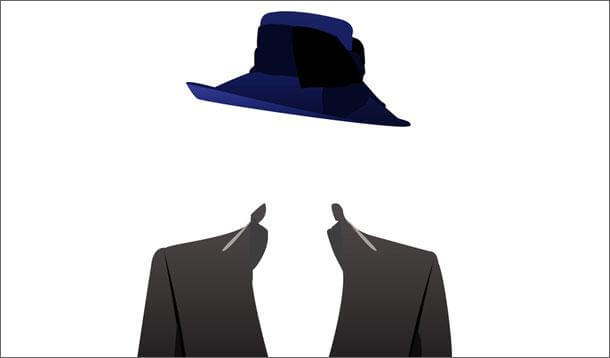
The Invisible Woman Syndrome

The Invisible Woman Syndrome is a social phenomenon where women in their 40s and 50s disappear from public view, in shops, on public transport, at work and in television and film. The invisible woman might be the actor no longer offered roles after her 40th birthday, the 50-year-old woman who can’t land a job interview, or the widow who finds her dinner invitations declining with the absence of her husband. She is the woman who finds that she is no longer the object of the male gaze—youth faded, childbearing years behind her, social value diminished.

At the half century mark, men are typically viewed as being at the zenith of their professional and personal lives, often leading organizations and companies and are viewed as accomplished and experienced. This is in contrast to women whose main stock in trade is assumed to be their physical appearance, which we’re sold and told should be youthful and appealing to the male gaze.

A survey that studied 2,000 women revealed that by the time they reach the age of 51, many women believed they had become invisible to men. Only 15% of the women felt that they had high or very high confidence in any area of their lives and 46% thought no one understood or addressed what aging and older women go through.

According to researchers, many women feel more and more invisible as they age with this issue being quite difficult for some women while for others, it’s not a problem. For those who have always been someone who’s very involved, noticed it especially more. This subtle form of cultural isolation is pervasive yet largely unnoticed by anyone who isn’t a female on the other side of 40. Women may be passed over for service in a department store, overlooked for a spare seat on the train or passed over for a promotion in the office.

On television and in film the absence of women of a certain age is perhaps more visible. Research by the University of Southern California found women were cast as just 26 per cent of characters aged 40 or older in 414 films and television shows aired in 2014 and 2015.

At work, women are opting to stay below the radar over concerns that asserting themselves may lead to negative consequences, according to a recent Stanford study. In that study, three sociologists spent two years immersed in a female professional development scheme at a large, US non-profit, where they conducted interviews with 86 participants and observed 36 discussion groups, plus 15 programme-wide meetings. Many of the women in the study felt a double bind: If they worked on the side-lines, they could be overshadowed by their colleagues and overlooked for job promotions, but having a more assertive presence in the office, could also backfire. Instead, they adopted a strategy that the researchers called intentional invisibility, a risk-averse, conflict-avoidant approach to navigating unequal workplaces. While the women in the study recognised that being less visible in the office could hurt their odds of a promotion or other career opportunities, they acknowledged that violating feminine norms, like being assertive or authoritative when they are expected to be nice, collaborative and communal could have the same effect. As a result, to craft careers that felt rewarding, women sought to reduce the chances for interpersonal conflict and to increase opportunities for friendly relationships within their work teams.

So, what is it about older women that society find so unpalatable, and why can’t the same be said for men?

Our society traditionally expects men and women to play different roles, and a woman’s role in a very conservative society, which even though many of our societies have evolved, we are still traditional in many aspects, is to be attractive and to perhaps have the role of a mother. If a woman starts to no longer be attractive, which is what some people consider if a woman ages, then she becomes less relevant. The same doesn’t apply to men because as they get older, they get more respect, if anything, and it doesn’t really matter what they look like. According to some researchers, women are seen to have lost their influence in middle age, because culture and history says an older woman is no longer powerful and therefore has nothing to offer.

But there is also a positive side to being invisible. According to Doris Lessing “And then not expecting it, you become middle-aged and anonymous. No one notices you. You achieve a wonderful freedom. It is a positive thing. You can move about, unnoticed and invisible.”

So how can women who have become invisible counter this syndrome. There are four ways to be seen and heard according to performance coach, Louise Mahler

Learn to attract attention: A female CEO in the superannuation industry uses sudden movements in meetings, says Mahler. When she is not being heard, she announces she wants a coffee, jumps out of her seat, gets one, and then remains standing. Then, when she speaks, people tend to listen.

Equalise the height: Corporate coach and former managing director of Apple Australia, Diana Ryall, just scrapes in at five foot three and says she asks people to sit down when they talk to her, so that she is not at a disadvantage.

Use movement: Mahler says she uses a technique developed by actors to draw attention, movement followed by standing still. “It is time to start playing the games,” she says.

Mindfulness: Find ways to deal with other people’s rudeness. “I use a mantra to not get angry,” says Mahler. “Forgive them Lord they know not what they do”.

Not only do we owe it to ourselves to remain visible, but we also owe it to younger women who are learning that their value is tied to a timeline that suspiciously coincides with changes in physical appearance. To any woman facing invisibility, remember that while attitudes towards ageing and female beauty are persistently stubborn, voices don’t age, so use your voice to be heard and don’t think you’re inconsequential because you’re not.

In My Hands Today…

Crazy Love – Leslie Morgan Steiner

At 22, Leslie Morgan Steiner seemed to have it all: a Harvard diploma, a glamorous job at Seventeen magazine, a downtown New York City apartment. Plus a handsome, funny, street-smart boyfriend who adored her. But behind her façade of success, this golden girl hid a dark secret. She’d made a mistake shared by millions: she fell in love with the wrong person.

At first Leslie and Conor seemed as perfect together as their fairy-tale wedding. Then came the fights she tried to ignore: he pushed her down the stairs of the house they bought together, poured coffee grinds over her hair as she dressed for a critical job interview, choked her during an argument, and threatened her with a gun. Several times, he came close to making good on his threat to kill her. With each attack, Leslie lost another piece of herself.

Gripping and utterly compelling, Crazy Love takes you inside the violent, devastating world of abusive love. Conor said he’d been abused since he was a young boy, and love and rage danced intimately together in his psyche. Why didn’t Leslie leave? She stayed because she loved him. Find out for yourself if she had fallen truly in love – or into a psychological trap. Crazy Love will draw you in — and never let go.

In My Hands Today…

It’s Not About the Burqa – edited by Mariam Khan

When was the last time you heard a Muslim woman speak for herself without a filter?

In 2016, Mariam Khan read that David Cameron had linked the radicalization of Muslim men to the ‘traditional submissiveness’ of Muslim women. Mariam felt pretty sure she didn’t know a single Muslim woman who would describe herself that way. Why was she hearing about Muslim women from people who were neither Muslim, nor female?

Years later the state of the national discourse has deteriorated even further, and Muslim women’s voices are still pushed to the fringes – the figures leading the discussion are white and male.

Taking one of the most politicized and misused words associated with Muslim women and Islamophobia, It’s Not About the Burqa is poised to change all that. Here are voices you won’t see represented in the national news headlines: seventeen Muslim women speaking frankly about the hijab and wavering faith, about love and divorce, about feminism, queer identity, sex, and the twin threats of a disapproving community and a racist country. Funny, warm, sometimes sad, and often angry, each of these essays is a passionate declaration, and each essay is calling time on the oppression, the lazy stereotyping, the misogyny and the Islamophobia.

What does it mean, exactly, to be a Muslim woman in the West today? According to the media, it’s all about the burqa.

Here’s what it’s really about.

International Women’s Day

Today is the International Women’s Day. And while I do wonder why we do need one single day to celebrate women, when every day should be a celebration of what women are and can do, in today’s world where millions of girls and women are still downtrodden, perhaps it is for them we should have this one day when they are celebrated, honoured and venerated.

87,000 women are killed every year just because they are women. 111 countries have no repercussions for husbands who rape their wives. 2.7 billion women are legally restricted from having the same choice of jobs as men. 45 countries do not have specific laws against domestic violence and 35% of women globally have experienced sexual or physical violence

The International Women’s Day is a day to join with people around the world and shout the message for equal rights loud and clear and to say with emphasis that women’s rights are human rights! Today is the day to celebrate all women, in all their diversities, to embrace their facets and intersections of faith, race, ethnicity, gender or sexual identity, or disability, to celebrate those who came before us, those who stand beside us now, and those who will come after. Today is the day to celebrate the achievements of women, whether social, political, economic or cultural.

International Women’s Day is a day which celebrates on a global scale the social, economic, cultural and political achievements of women. The day also marks a call to action for accelerating gender parity. Significant activity is witnessed worldwide as groups come together to celebrate women’s achievements or rally for women’s equality. The day is important because worldwide celebrations are held to celebrate women’s achievements, raise awareness about women’s equality, lobby for accelerated gender parity and fundraise for female-focused charities

While reading about the IWD, I found two separate themes for the day. The theme from the UN is Women in leadership: Achieving an equal future in a COVID-19 world. This theme celebrates the tremendous efforts by women and girls around the world in shaping a more equal future and recovery from the COVID-19 pandemic. which calls for women’s right to decision-making in all areas of life, equal pay, equal sharing of unpaid care and domestic work, an end all forms of violence against women and girls, and health-care services that respond to their needs. Women stand at the front lines of the COVID-19 crisis, as health care workers, caregivers, innovators, community organizers and as some of the most exemplary and effective national leaders in combating the pandemic. The crisis has highlighted both the centrality of their contributions and the disproportionate burdens that women carry.

Women leaders and women’s organizations have demonstrated their skills, knowledge and networks to effectively lead in COVID-19 response and recovery efforts. Today there is more acceptance than ever before that women bring different experiences, perspectives and skills to the table, and make irreplaceable contributions to decisions, policies and laws that work better for all. Majority of the countries that have been more successful in stemming the tide of the COVID-19 pandemic and responding to its health and broader socio-economic impacts are headed by women. For instance, Heads of Government in Denmark, Ethiopia, Finland, Germany, Iceland, New Zealand and Slovakia have been widely recognized for the rapidity, decisiveness and effectiveness of their national response to COVID-19, as well as the compassionate communication of fact-based public health information.

Yet, women are Heads of State and Government in only 20 countries worldwide. In addition to persistent pre-existing social and systemic barriers to women’s participation and leadership, new barriers have emerged with the COVID-19 pandemic. Across the world, women are facing increased domestic violence, unpaid care duties, unemployment and poverty. Despite women making up a majority of front-line workers, there is a disproportionate and inadequate representation of women in national and global COVID-19 policy spaces. To uphold women’s rights and fully leverage the potential of women’s leadership in pandemic preparedness and response, the perspectives of women and girls in all of their diversity must be integrated into the formulation and implementation of policies and programmes in all spheres and at all stages of pandemic response and recovery.

The second theme is from the official IWD website whose theme is Choose To Challenge. A challenged world is an alert world, and from challenge comes change. Individually, we’re all responsible for our thoughts and actions – all day, every day. We can choose to challenge and call out gender bias and inequality and can choose to seek out and celebrate women’s achievements. Collectively, all of us can help create an inclusive world.

So why does the International Women’s Day matter? It matters because we’re still not there yet! Today is a day to recognise how far we’ve come towards gender equality, and also how far we have left to go. It may seem strange today, but back in 1911, only eight countries allowed women to vote, equal pay for equal work was unheard of – if women were allowed to work at all – and reproductive rights were non-existent. Even supposedly western and first world countries like Switzerland only allowed women to vote in 1971 at the federal level! And middle-eastern countries like Bahrain, Kuwait, Saudi Arabia, the United Arab Emirates have only allowed women to vote in the 21st century with Saudi Arabia only allowing women to vote just six years back in 2015!

Today the world has come a long way. Where once women couldn’t vote, they are now leading countries, where women faced restrictions on working, they’re running corporations now. Even though in many countries, women have rights their grandmothers could only have dreamt about, there is still no complete equality. And the majority of the world’s women are still treated as second or third-class citizens.

More than 100 years ago, when women marched for the first time, that first march was about ending harmful workplace conditions, equal rights, equal pay, and an end to exploitation. But in all these years, nothing has changed much and the reasons women march are still relevant today. Because the rights of women are not secure. When rights for women take two steps forward, more often than not, it’s accompanied by a step back and even if laws and rights are established, in many countries these rights are ignored.

The International Women’s Day is a yearly chance to remind those in charge and everyone else that progress has not been equal. This day is an opportunity to acknowledge the compounded challenges faced by women everywhere, be it women of colour, women with disabilities, and queer or trans women, and stand in partnership with them.

Because sometimes we need to remember we’re not alone. Happy International Women’s Day to all the lovely women and the men who support and motivate their women!