

Impostor syndrome (also known as impostor phenomenon or fraud syndrome or the impostor experience) is a concept describing individuals who are marked by an inability to internalize their accomplishments and a persistent fear of being exposed as a “fraud”. The term was coined in 1978 by clinical psychologists Pauline R. Clance and Suzanne A. Imes. Despite external evidence of their competence, those exhibiting the syndrome remain convinced that they are frauds and do not deserve the success they have achieved. Proof of success is dismissed as luck, timing, or as a result of deceiving others into thinking they are more intelligent and competent than they believe themselves to be. While early research focused on the prevalence among high-achieving women, impostor syndrome has been found to affect both men and women, in roughly equal numbers
 We’ve all been there, done that – convinced we’ve gotten a job or a project because we’ve faked it or perhaps you are getting an award for something and all you can hear in your head is a voice telling you that you will soon be outed for being a fraud! This is nothing but classic imposter syndrome and today’s post is all about that. Why this particular syndrome you may ask? Well, it’s because I am convinced I am 100% guilty of perpetuating this on myself.
Initially, it was thought that more women than men suffered from imposter syndrome, but later it was found to affect both sexes equally. When you are afflicted, you very strongly internally believe that you are not intelligent and you got (insert activity here) by luck or fluke and so you are so incompetent and unworthy of the activity that you will soon be outed as a fraud. I strongly suspect that this is what happened to me in my last position and this is why we parted ways so soon.
 The most common symptoms are negative self-talk; a need to constantly check and re-check work; shying away from attention in the workplace; and forms of overcompensation like staying late at work or not setting appropriate boundaries around workload. Internally, people struggling with the syndrome experience persistent feelings of self-doubt and fear being found out as phoney. They over-internalize and blame themselves for failures, even when other factors played a role.
I particularly feel more women than men, especially Asians, suffer from this syndrome as we are generally conditioned to not take credit for our work and also diminish it when we get complimented for anything we do. As I was researching this post, I realised a lot of famous people, both men and women also had moments when they felt they were a complete fraud and it was just time till people figured them out for what they thought they were!
So when you get these pangs, here are some of the things you can do to overcome it:
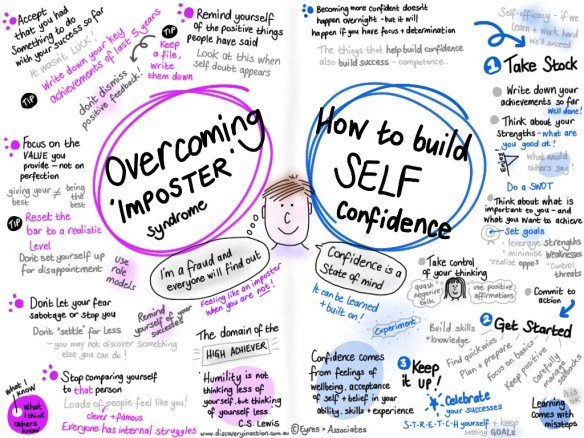 Accept that you are in this position because you did something that caused people to put you there. Learn to internalise your success and own it. Be proud of your achievements.
Focus on what you bring to the table. When you are a perfectionist, the chances of you believing that you are a fraud is very high because you set such high standards for yourself. Loosen up a bit and learn to accept that sometimes you need not be the best in everything you do. Hyper-competitive people (me included) see every little thing in life as a competition and this is what causes you immense grief where when you can’t attain the lofty self-goal you have set for yourself, you fall down to the depths and think you are a complete failure. So learn to let go, it will make life easier for you in the long run.
Stop comparing yourself to others. This is probably the most important point in overcoming this syndrome. As author Iyanla Vanzant once said, “Comparison is an act of violence against the self”, when you compare and measure yourself against someone, usually more successful than yourself, you start to internalise all your failures (against the said person) and this, in turn, makes you less confident about your own abilities and does not let you celebrate successes.
Celebrate success. When you get complimented for anything, accept it gracefully and with a smile. Most of us, and especially those of us who have internalised this syndrome. The normal reaction to a compliment is to brush it aside as something inconsequential, but the truth is that when someone compliments you for something, it’s because they appreciate what you have done, so accept it and internalise it.
Journal regularly. As an addendum to the previous point, it may help to keep a success journal which highlights all your successes. You could also add in the compliments and kudos you receive, be it work or play and when you need affirmations, all you need to do is go to your journal and read it. Personally, I would prefer to have something online or in the cloud, like perhaps Google Docs so I can access it anywhere and anytime. But if you prefer a physical notebook to record successes, then go ahead and buy the prettiest book you can find!
I am going to practice what I have just preached and start doing all these points so that I sooner than later overcome my sense of being a fraud all the time. What about you? Do you have any more tips that I can use? Please comment below.
I am ending this post with some TED Talks on how we can overcome our sense of being imposters.
 Memories and Such