2026 Week 22 Update

Today’s quote by Yoshida Kenkō, a Japanese Buddhist monk, essayist, and poet best known for Tsurezuregusa (Essays in Idleness), one of the classic works of Japanese literature, reflects on the restless nature of human desire. No matter how much we achieve, there is often another goal waiting beyond it. One success leads to another ambition. One milestone creates the desire for the next. Kenkō’s quote quietly observes that ambition, by its nature, tends to keep expanding rather than settling.

This isn’t necessarily a criticism of ambition itself. Ambition can inspire growth, creativity, discipline, and progress. It pushes people to explore their potential and strive for meaningful achievements. But the quote also carries a subtle warning: if we are not careful, ambition can become endless striving, where satisfaction is always postponed into the future. Many people believe they will finally feel fulfilled once they reach a certain level of success, recognition, or security. Yet often, after achieving one thing, the mind quickly moves on to the next desire. This creates a cycle where contentment becomes difficult because the finish line keeps shifting.

Kenkō’s insight encourages balance. It asks us to reflect on whether our ambitions are enriching our lives or consuming them. There is value in striving, but there is also value in pausing to appreciate what already exists. Without that awareness, life can become an endless chase rather than an experience to be lived fully. The quote ultimately speaks to human nature itself. Desire is deeply woven into us, and ambition may never completely disappear. But wisdom lies in learning how to pursue goals without losing peace along the way.

This week felt like a continuation of learning how to hold many things at once: responsibility and uncertainty, momentum and exhaustion, hope and realism. There has been movement, conversations, planning, and the quiet pressure of trying to shape what comes next, even while parts of life still feel unresolved. Some days felt productive, others slower and heavier, but perhaps that is what real life looks like outside curated versions of it.

The world, meanwhile, continues at full speed. Technology keeps evolving faster than most people can process, global tensions remain unsettled, economies fluctuate, and headlines change almost hourly. And yet, amidst all of that noise, ordinary people everywhere are still waking up, doing their work, caring for their families, worrying about the future, and trying to build meaningful lives in small, human ways. Maybe that’s what this week has quietly been about: resilience that doesn’t look dramatic. Just the steady act of continuing. Of showing up despite uncertainty. Of trying again even when clarity hasn’t fully arrived yet.

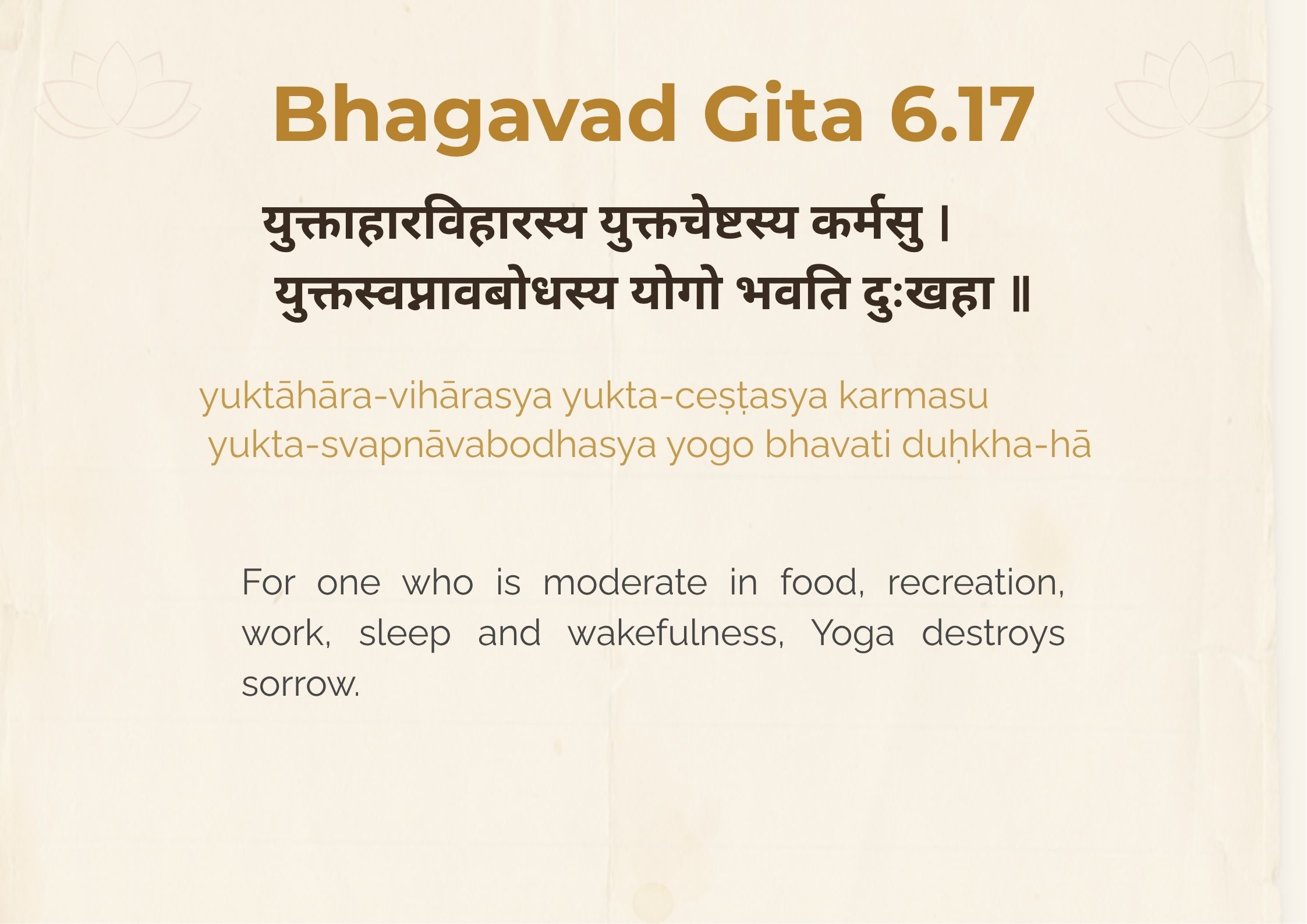
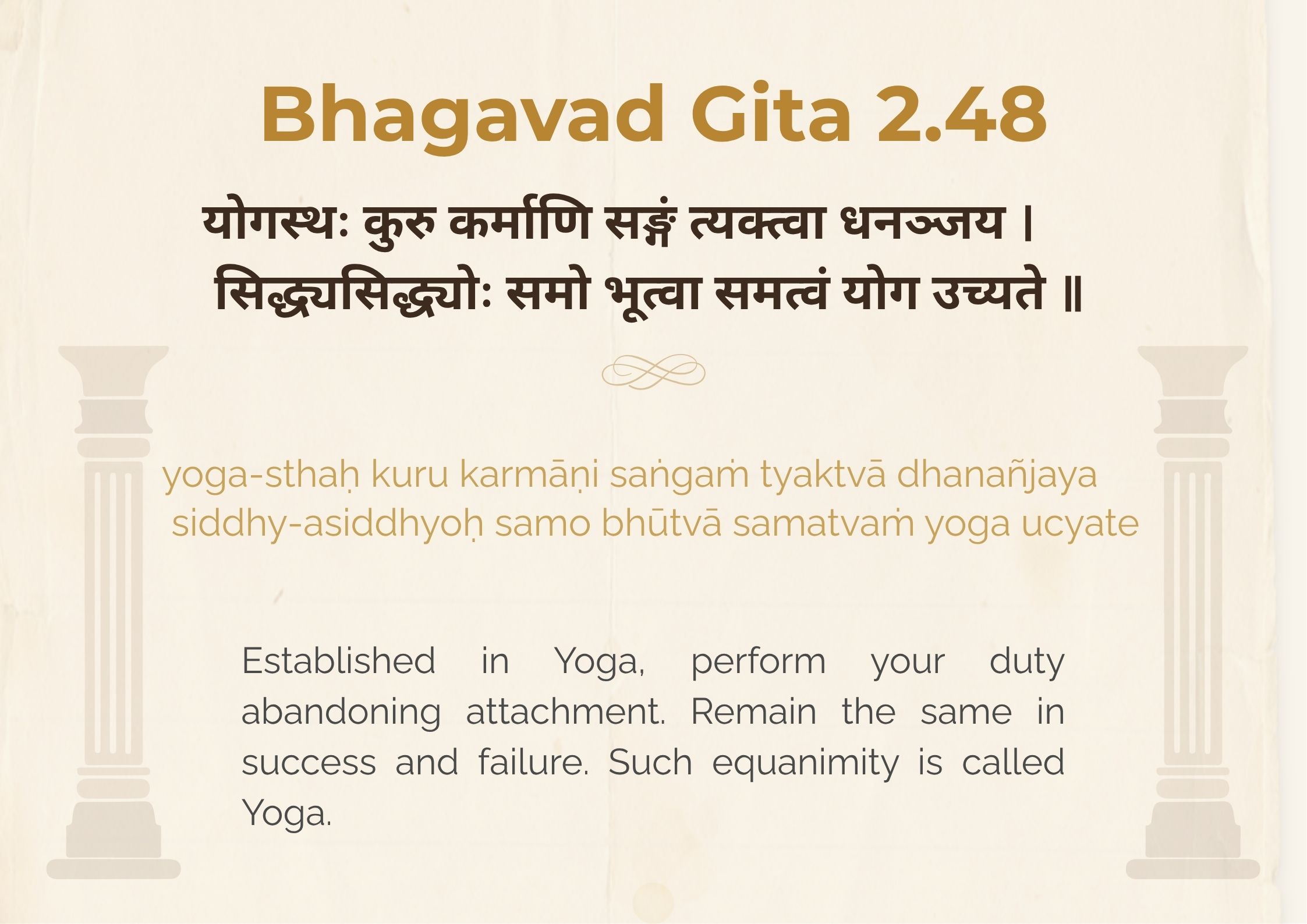
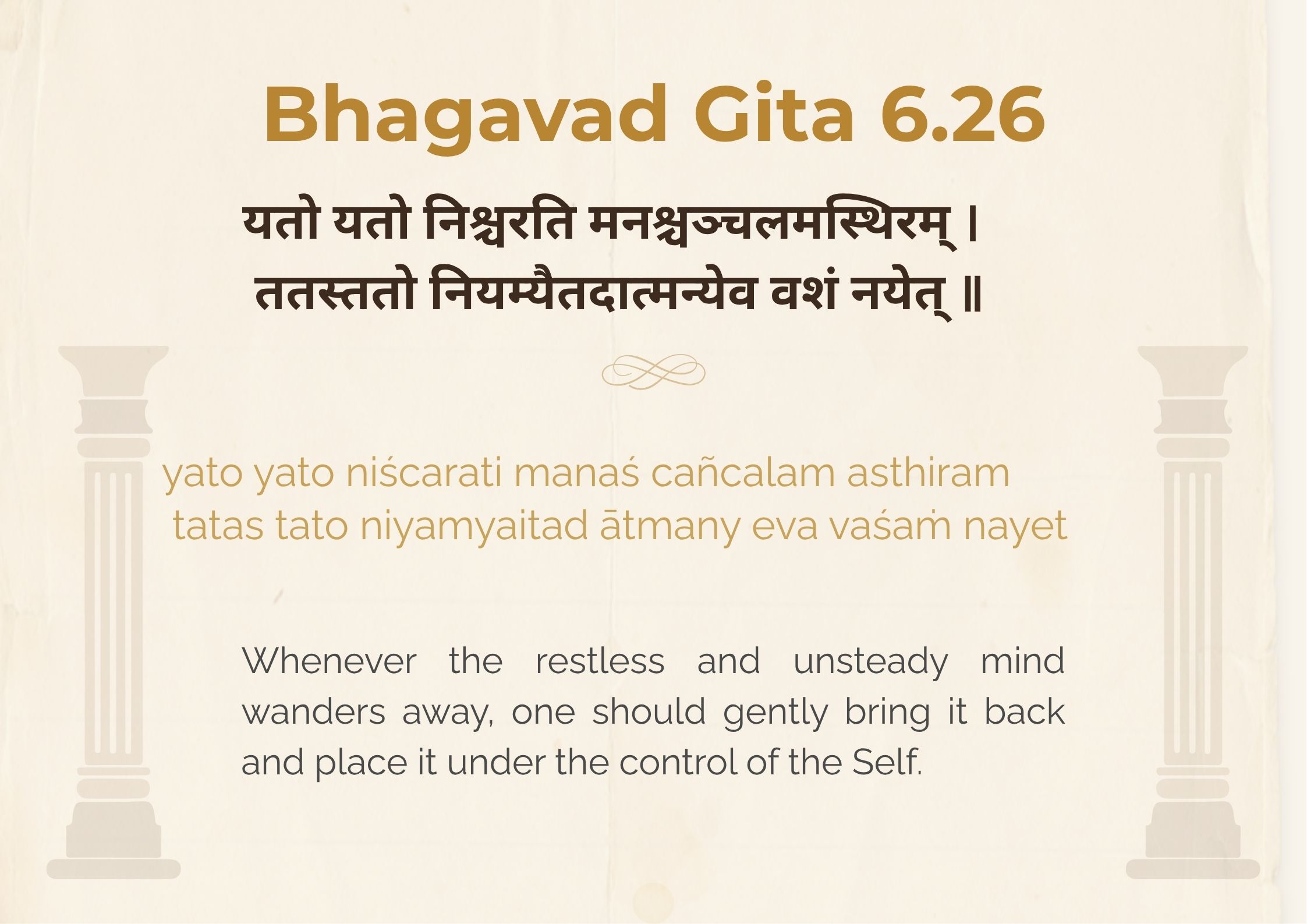
This week, verse 12.20 from the Bhagavad Gita is about constancy, not intensity. It is about faith, consistency, and alignment. Devotion is not a single act of surrender; it is adherence to a way of living. To remain steady on this path, without agitation and without spectacle, is itself fulfilment. The Gita ends its devotional description not with grandeur, but with affection. Exceedingly dear. That is the quiet promise.

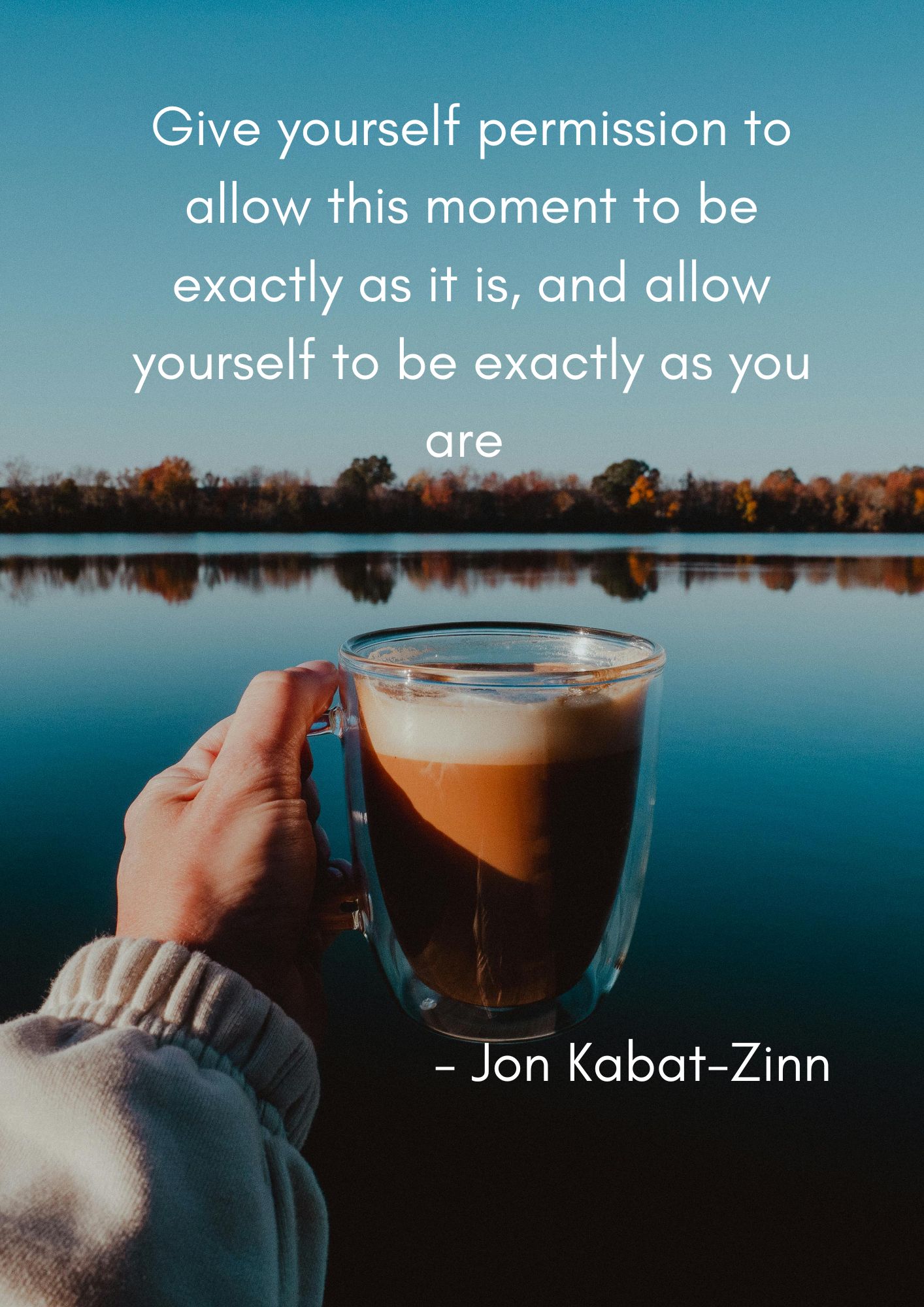
In this week’s motivation, you are free to release the thoughts that weigh heavily on your heart. Don’t overanalyse or rush ahead; just drop those thoughts and return to the present. Stay rooted in trust, even when it feels scary. Choose the inner peace that’s always been within you, over the noise of ego-driven thoughts. Being open to embracing a new normal can change everything. Allow the pause and the waiting to transform you.

Hello, June. Half the year is almost here already, which feels both impossible and strangely believable at the same time. June arrives quietly, without the intense energy of beginnings or endings, but perhaps that’s its gift. It feels like a month for recalibration, for checking in with yourself, adjusting your pace, and remembering that progress does not always have to be loud to be meaningful.

Maybe this is the month to move a little more intentionally. To protect your peace where you can, to stop carrying what no longer needs to be carried, and to trust that not every answer has to arrive immediately. There is still time for things to unfold. Still time for growth, change, healing, and unexpected moments of joy. That’s all from me this week. Stay safe, stay positive, and keep smiling!

2026 Week 21 Update

Today’s quote is by American philosopher and psychologist William James, one of the founding thinkers of modern psychology and a leading figure in the philosophical movement known as pragmatism, which focused on the practical consequences of ideas and actions. The quote is a simple but powerful reminder that our actions matter, even when the impact is not immediately visible. Many people underestimate the effect they have on others and on the world around them. We assume that change only comes from grand gestures, major achievements, or people in positions of power. William James challenges that idea directly.

The quote encourages intentional living. The way we speak to someone, the kindness we show, the effort we put into our work, and the choices we make every day, all of these create ripple effects. A small act of encouragement can change someone’s day. A moment of patience can prevent conflict. A decision to keep going despite discouragement can inspire others quietly, without us ever knowing. There’s also a deeper psychological truth here. When people believe their actions matter, they tend to live with greater purpose and responsibility. But when they believe nothing they do makes a difference, they can become passive, detached, or hopeless. James reminds us that meaning is often created through action itself. By showing up fully and acting with intention, we participate in shaping the world around us.

Importantly, the quote does not promise immediate results. Sometimes the impact of what we do may not be visible for years. But that does not make it insignificant. Every action contributes to the atmosphere we create around us — in families, workplaces, friendships, and communities.

Today’s verse from the Bhagavad Gita, verse 18.66, is the culminating instruction of the Gita. Surrender here is not negligence. It is relinquishment of egoic ownership. To take refuge is to recognise limitation without losing dignity. The instruction “do not grieve” is not dismissal. It is a protection offered. Devotion reaches maturity when control is released. Not abandonment of action, but abandonment of self-claim over the result. There is freedom in refuge.

This week was very productive, what with my work and personal work being on fire! The week was like one of those in-between spaces: not dramatic, not particularly loud, but quietly full. The days moved quickly, with small wins and checking off my to-do list, as well as moments of reflection. The world outside continues to move at its relentless pace: politics shifting, conflicts unfolding, technology racing ahead, headlines changing by the hour, and yet everyday life still asks the same simple things of us: to show up, to keep going, to care for the people around us, and to hold on to some sense of meaning amidst the noise. Perhaps that’s what this week really felt like: learning how to stay grounded while everything else keeps moving.

That’s all I have for this week. Stay calm, stay happy, and keep smiling!

2026 Week 20 Update

Today’s quote by someone anonymous offers a deeply human definition of “wealth.” In a world where success is often measured by money, possessions, or status, the quote shifts the focus toward something far more meaningful: love, trust, and emotional connection. The image is simple but powerful. The man’s hands are empty, meaning he has nothing material to offer in that moment: no gifts, no money, no outward symbols of success. Yet his children still run toward him with joy and affection. Their love is not based on what he can provide financially but on who he is to them. That kind of bond cannot be bought. It is earned through presence, care, patience, and genuine love over time.

The quote also reminds us that relationships are often the truest measure of a life well lived. A person may accumulate great wealth and still feel emotionally poor if they lack a meaningful connection. On the other hand, someone with modest means may be deeply “rich” because they are surrounded by love, trust, and belonging. There’s a quiet lesson here about priorities. Children remember how safe they felt, how seen they were, and whether someone truly showed up for them. Emotional availability, kindness, and time often matter more than material abundance. Ultimately, the quote suggests that the greatest legacy we leave behind is not what we owned but how deeply we loved and were loved in return.

The Middle East continues to be unstable, especially the Iran conflict and its ripple effects across the global economy, with oil prices remaining high, shipping routes staying under pressure, and many countries quietly preparing for wider economic consequences. Even if people are far removed geographically, conflicts like these affect fuel prices, inflation, markets, and everyday costs around the world. Climate concerns also made headlines this week, with scientists warning about record global fire outbreaks and worsening heat extremes linked to climate change and an emerging El Niño pattern. I can attest to this, as it’s been so hot in Singapore that we just want to sit inside air-conditioning the whole day, which in itself is also not the right thing to do.

This week’s verse from the Bhagavad Gita, verse 9.22, speaks of assurance. Devotion does not remove responsibility. It removes isolation. There is dignity in effort made without anxiety. There is strength in trusting that not everything must be secured alone. “Yoga-kṣema,” what is gained and what is preserved, is here described as carried by the Divine. The devotee does not become passive. The devotee becomes unburdened. Trust does not weaken discipline. It steadies it.

These lines that I read a few months back made me save them, and I want to share them with you in the hope that they will bring the same assurances to you that they did to me. You’ve endured years of struggle. You’re tired of holding it all together. Helplessness, envy, and anger have started to creep into your heart. You just want to skip the waiting and get to the good part. When your inner world is in turmoil, it’s hard to be patient with yourself and with others. When you’ve been waiting for good news year after year, it’s hard to feel joy for someone else. But impatience makes you forget your true power. Beyond the dark clouds of unpleasant thoughts, assumptions, and fears, there’s a clear sky of trust. Reach for it.

Life is going on, and we’ve reached the middle of another month. Some days are full of promise, while others are a study in wishing for the day to end. And on that note, here’s hoping you have a fabulous week, filled with positivity and joy!

The Art of Intentional Endings: Using Planned Obsolescence as a Life Tool

Planned obsolescence usually makes us roll our eyes. It’s the reason our phones die mysteriously right after the warranty period ends. It’s why laptops are slow to the pace of a sleepy turtle for no good reason. It’s why appliances that once lasted a decade now last three years if we’re lucky. Companies love the idea. Consumers don’t. And honestly, fair enough. But somewhere along the way, I started wondering if this annoying business tactic had something useful to teach us. Not about products, but about ourselves.

Because if we’re being brutally honest, we cling to outdated versions of our lives far longer than any company ever could. We hold on to relationships that expired quietly years ago. We stay in roles that no longer fit simply because they used to. We keep beliefs and habits like old software: patched, buggy, slow, but still running because we haven’t bothered to upgrade.

So here’s the twist: What if planned obsolescence is actually a brilliant life strategy, just misbranded? What if the same principle companies use to keep products moving forward can help us keep ourselves moving forward? Today’s life requires versions of us that yesterday’s logic can’t always support. Just like tech, we evolve. And yet, unlike tech, we resist updates. It’s time to rethink that.

Let’s pull the idea apart. In business, planned obsolescence is designed to trigger action. Not because the product suddenly collapses, but because a better version exists, or will soon exist. You replace, upgrade, and refresh. But in life, we tend to upgrade only when we break. Burnout. A painful ending. A major life shake. A decision that comes too late. And that’s what makes the concept worth rescuing. What if we didn’t wait for collapse?

What if we practised intentional, thoughtful obsolescence: letting go of what has completed its purpose, even when it’s still working, just not working well? Businesses use planned obsolescence to keep profits flowing. We can use it to keep growth flowing. It’s not manipulation. It’s maturity.

Every phase of our lives comes with a toolkit. The version of you in your twenties needed certain beliefs, behaviours and patterns to survive and make sense of the world. You needed energy, flexibility, endurance, and the ability to say yes to almost everything.

But decades later, when priorities shift and emotional bandwidth tightens, those same habits don’t serve you. Yet you keep them out of loyalty, familiarity, or plain inertia. It’s like insisting on using Windows XP in 2025. Sure, it opens, but that’s not the point.

The point is: Your life upgrades faster than your habits do. When the mismatches pile up, you start feeling the symptoms: resentment, exhaustion, confusion, restlessness, stagnation, the sense that something is “off” but you can’t put your finger on it. That’s your internal software whispering: “This system is outdated. Please update.”

Planned obsolescence gives you a neat way to frame this. Not as a failure. Not as loss, but as natural succession. There are parts of you that carried you through tough chapters. They were necessary. Even heroic. But they’re retired staff. Not meant to be dragged along indefinitely. Let’s name a few:

The People-Pleaser: She helped you survive group projects, complicated families, messy workplaces, and fragile friendships. She protected you through silence and over-compromise. But now she’s draining your energy faster than a five-year-old smartphone battery. She needs to go.

The Over-Responsible One: This version handled everything. Emotional labour, logistics, crises, expectations. She took pride in doing the work of three people. Now? She’s exhausted, brittle and quietly resentful. She has served enough lifetimes for ten humans.

The Perfectionist: This one thinks life is a checklist where every box must be ticked neatly with the correct pen. She stops you from experimenting. She edits your work before it even exists. Her contract has expired. She doesn’t know it yet.

The “Safe” Dreamer: The one who thinks small, stays within predictable boundaries, and believes stability comes from avoiding risk. She means well, but she’s holding back the version of you who’s ready to live more boldly.

These versions aren’t wrong. But they’re outdated. They belong to older chapters, the ones that shaped you but shouldn’t confine you.

Planned obsolescence says: Thank them. Retire them. Upgrade yourself.

You’d think we’d be quicker to let things go. But no, humans cling like cling wrap. Why?

  • Familiarity feels safe: Even if the pattern is draining, at least you know it well. We rarely fear discomfort as much as we fear the unknown.
  • Identity gets tangled into everything: If you’ve spent 20 years being “the reliable one,” letting that version expire feels like losing a limb.
  • We worship longevity: Friendships should last forever. Jobs should last decades. Beliefs should stay unchanged. That’s the message we grow up with. But longevity is not proof of relevance.
  • Hope keeps us stuck: We tell ourselves things will improve. Just wait. Just tolerate. Just be patient. Hope is lovely, but sometimes it’s a velvet trap.
  • Endings feel like failure: If something ends, we assume it means we messed up. But endings are often the most responsible choice we can make.

Planned obsolescence reframes endings not as failure, but as lifecycle completion. Just because something doesn’t last forever doesn’t mean it wasn’t meaningful.

  • How to spot when something has quietly become obsolete? The signs are subtle at first, and then suddenly not subtle at all. Here’s what to look for:
  • You have to overwrite your instincts to stay.
  • You feel small in a space that used to excite you.
  • Your conversations feel repetitive.
  • You’re learning nothing new.
  • You’re staying out of loyalty, not alignment.
  • You fantasise about detaching, but feel guilty.
  • You’ve outgrown what the situation can offer.
  • The most telling sign? You feel yourself shrinking instead of expanding.

Obsolescence, in life, isn’t about usefulness. It’s about fit. And fit changes as we do.

How do we practice planned obsolescence in life? This is where the idea becomes practical. Not philosophical, not abstract, actionable. Here’s how to use planned obsolescence as a life tool.

Introduce Review Dates for Your Life: Jobs come with appraisals. So do products. But we rarely review our lives with the same discipline. Choose a date each year to ask: Is this still working for who I am now, not who I was? Careers, relationships, habits, commitments, all fair game. It’s not harsh. It’s honest.

Retire Beliefs That No Longer Fit: We don’t question our beliefs enough because we assume age equals correctness. But beliefs also expire. Examples include, “I have to do everything myself.” “I can’t disappoint people.” “Everyone will be upset if I change.” “I’m too old to try something new.”, and “Success must look a certain way.” These are old operating systems running on modern hardware. They cause more glitches than growth. Replace them with beliefs that match your current bandwidth, values and aspirations.

Let Relationships Evolve Instead of Forcing Them to Stay Frozen: Not all friendships need to maintain their original frequency. Some shift into seasonal contact. Some gently fade. Some stay but change shape. This isn’t betrayal. Its lifecycle. Planned obsolescence doesn’t mean ruthlessly cutting people off. It means recognising when a dynamic needs to upgrade or downshift. You can love someone and still acknowledge that the form of the relationship has expired.

Upgrade Your Coping Mechanisms: Overthinking, overworking, avoiding, shutting down: these coping tools belong to past versions of you. Instead of patching them, replace them. Old coping mechanisms may be to avoid conflict; the upgrade is to communicate early, clearly, and calmly. The old coping mechanism is to overprepare; the upgrade is to prepare enough. The old coping mechanism is to say yes automatically, while the upgrade means to pause, assess, and decide. Every upgrade frees emotional bandwidth.

Stop Treating Your Goals Like Museum Artefacts: Just because you once wanted something doesn’t mean you must carry that desire for the next 40 years. It’s fine to outgrow dreams, it’s fine to replace ambitions, it’s fine to retire goals that belonged to earlier versions of you. Life isn’t a museum where everything must be preserved untouched. It’s a living space. And living spaces need refreshing.

Version Your Life Like Software Updates: This is the simplest and most liberating idea of all. Think of yourself as a series of versions. Version 1.0 is learning the rules, version 2.0 is testing boundaries, version 3.0 is building stability, version 4.0 is rewriting definitions, and the current version is stronger, clearer, braver, and more intentional. Every version ends, not because it failed, but because you grew. A new version doesn’t erase the old one. It builds on it. That’s the beauty of planned obsolescence: retirement, not rejection.

What happens when you start living this way? Things shift, quietly at first, then dramatically. You stop dragging emotional clutter around. You notice what genuinely matters. You become more present. Your decisions sharpen. Your relationships clarify. Work feels more aligned. Life feels less chaotic because you’re not trying to maintain expired systems. You create space. And space invites possibility. Most people are so busy holding on that they forget life isn’t a storage unit. It’s a flow. Things come in, things go out. Nothing needs to remain forever to be meaningful. Planned obsolescence teaches you to honour the exit as much as the entry.

Next, let’s talk about the fear of letting go too soon. This fear is natural. Endings carry weight. But letting go intentionally isn’t rash. It’s incredibly mindful. It requires clarity and honesty, two things we rarely extend to ourselves. Letting something expire early isn’t failure. It’s stewardship. And here’s the truth: Most of the things we fear losing are already half-gone. We’re just pretending not to notice. When you release them, you’re not being irresponsible. You’re being real.

Planned obsolescence isn’t about discarding everything. It’s about recognising lifecycle, respecting timing, creating room for growth, not forcing permanence, and allowing evolution to happen smoothly instead of chaotically. It’s about gently closing chapters instead of dragging them until they fall apart. When you start doing this, something surprising happens: Your life becomes lighter. Not empty. Just uncluttered. Clarity comes. Momentum comes. Energy returns. Curiosity replaces dread. You become someone who adapts instead of someone who endures.

Life isn’t a forever project. We’re taught to value longevity as if the length of something is the best indicator of its worth. But some of our most important moments are brief. Some of our most transformative relationships last only a season. Some of our boldest decisions appear “too soon” to outsiders. Longevity is not the goal. Alignment is. Everything in life has a natural expiry: habits, jobs, routines, connections, identities. Instead of fearing that truth, planned obsolescence invites us to work with it. It encourages us to evolve gracefully instead of reacting desperately. Life doesn’t move in straight lines. It moves in cycles.
And each cycle deserves a clean beginning, not a leftover ending.

The best part, you get to choose what expires next. That’s the quiet power in this idea. Businesses dictate the expiry date of their products. But you get to dictate the expiry date of the parts of your life that no longer serve you. You choose what stays. You choose what retires. You choose what gets upgraded. It’s intentional, freeing and strangely calming. And once you start treating some things as temporary: beliefs, roles, patterns, you also start treating other things as possibilities. New habits, new relationships, new dreams, and new versions of yourself. Planned obsolescence, when translated into real life, simply means this: Stop waiting for things to fall apart. Choose your endings. Shape your transitions. Own your upgrades. It’s not a corporate trick, it’s a life skill. And it might just be the one thing that helps you move more lightly, more honestly and more courageously through the chapters waiting ahead.

2026 Week 19 Update

Hello mid-May! This week, I worked from home but worked so hard that I barely had any time to work on my personal projects. The main reason to take on a fractional role was to have time for personal projects, mainly my writing, but this week did not leave me any time for that. Let’s hope the next week is better, but I don’t hold any high hopes for this, what with a couple of physical meetings lined up!

Today’s quote by British spiritual teacher, writer, and co-founder of the Findhorn Foundation in Scotland, a community focused on spirituality, sustainable living, and personal growth, Eileen Caddy, speaks about the importance of purpose and direction in life. A rudder guides a ship, helping it stay on course even through changing tides and rough waters. Without it, the ship simply drifts wherever the currents take it. In the same way, Caddy suggests that without a meaningful aim or guiding vision, a person can feel directionless, moving through life without clarity or intention.

A “high aim” does not necessarily mean fame, wealth, or grand achievement. It can be something deeply personal: living with integrity, creating meaningful work, helping others, growing spiritually, or becoming the best version of oneself. What matters is having something that gives your life focus and meaning beyond daily routines and distractions. The quote also highlights how purpose helps us navigate difficult times. When challenges arise, a clear sense of direction can anchor us. It reminds us why we keep going and what truly matters. Without that inner compass, it becomes easier to feel lost, restless, or disconnected.

There is also an invitation here to think beyond survival. Many people move through life reacting to circumstances instead of consciously choosing a path. Caddy encourages us to lift our gaze higher, to live with intention rather than drift passively through time. Ultimately, the quote reminds us that purpose gives shape to our lives. It does not eliminate uncertainty, but it helps us move through it with greater clarity and meaning.

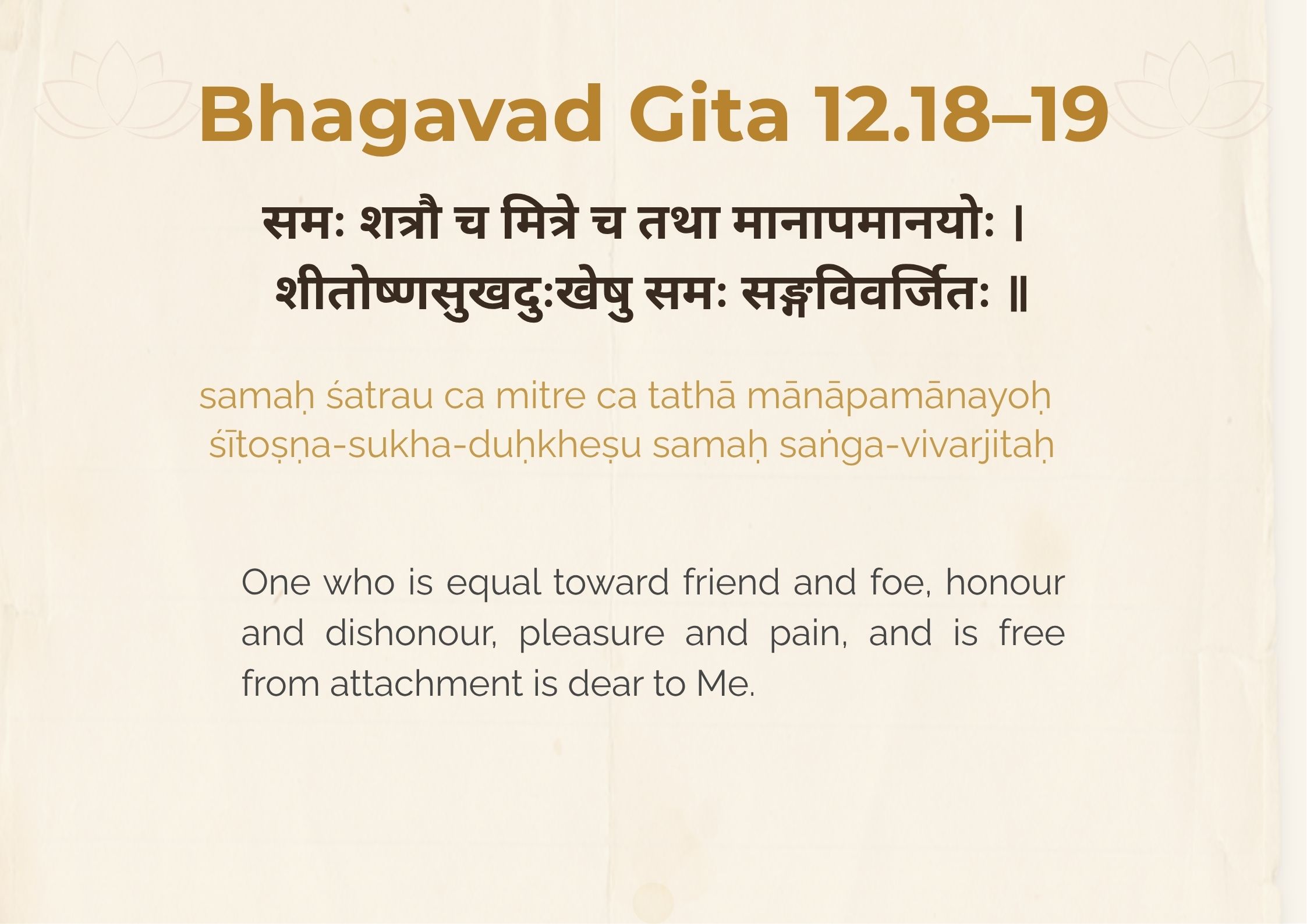
In today’s verse from the Bhagavad Gita, verse 12.13-14, devotion is defined through character. No hatred, no possessiveness, no ego. The Gita makes devotion ethical before it makes it emotional. To be steady in pleasure and pain is not indifference. It is maturity. To forgive is not weakness. It is under control. Devotion is measured by how one lives, not how one appears. The heart aligned with the Divine is visible in conduct.

This weekend also marks Mother’s Day, a quiet reminder to pause and acknowledge the women who have nurtured, guided, protected, and loved us in ways both big and small. Mothers and mother figures often carry entire worlds within their care, giving so much of themselves in ways that can easily go unnoticed in the rush of everyday life.

It is a day to celebrate not just biological mothers, but also grandmothers, aunts, mentors, caregivers, and all those who have stepped into nurturing roles with generosity and love. Sometimes their greatest acts are the quietest ones: showing up consistently, offering comfort, holding families together, and believing in us even when we struggle to believe in ourselves.

If you are fortunate enough to still have these people in your life, perhaps this is the moment to tell them what they mean to you. And for those carrying memories instead of presence, Mother’s Day can also be a gentle space for remembrance, gratitude, and love that continues beyond absence.

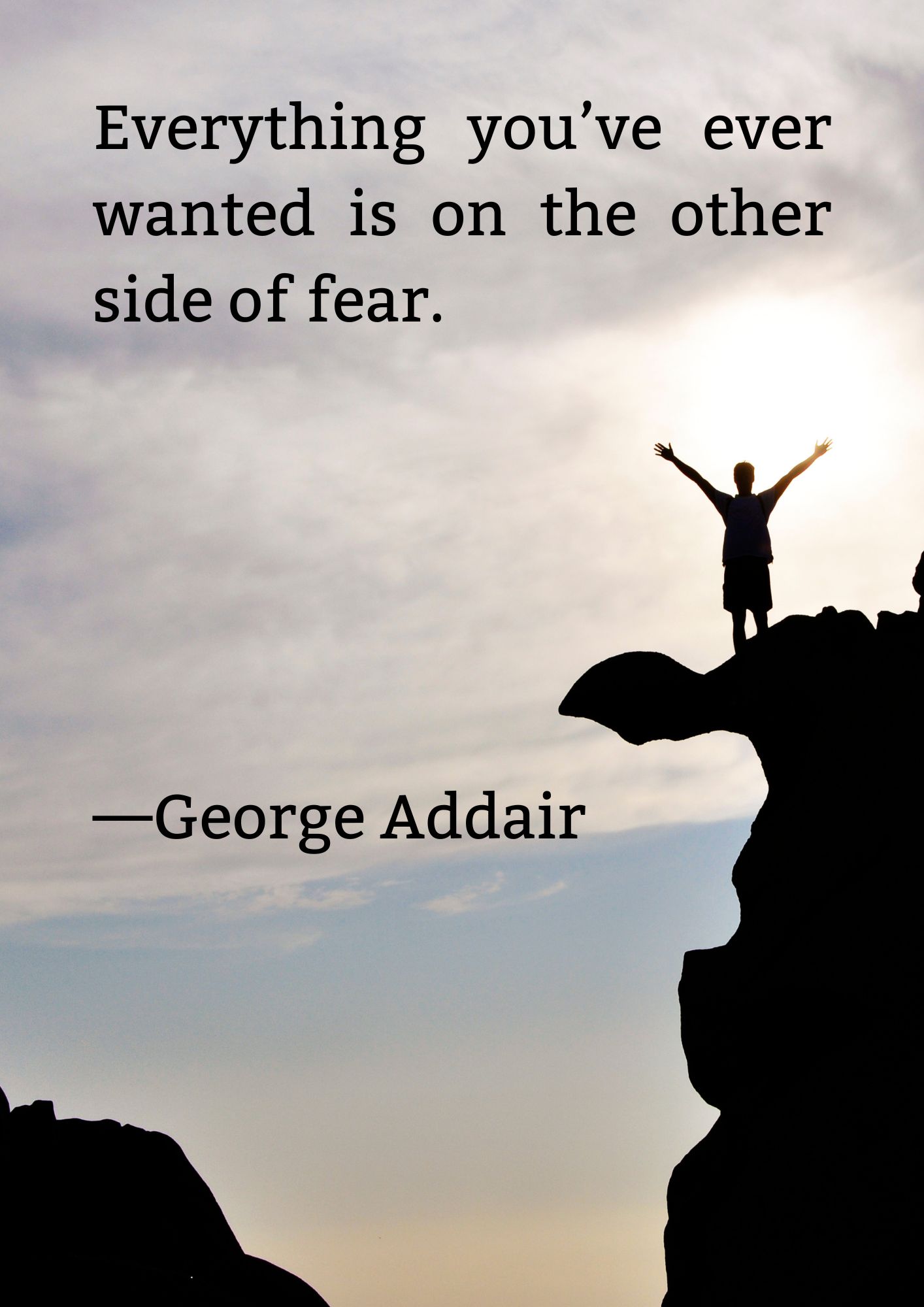
Something I learned about myself this week, I thought of sharing in the hope that maybe it may help someone else. A few unpleasant moments don’t have to define your entire day. Practice letting them go and move forward with a clean slate. Pausing is the key to actively recognising your emotions and releasing them consciously. This gives you the power to regain control of your responses and return to a calmer, more rational state. Just a few minutes of mindfulness can make the difference between a healthy and a broken relationship or between a fulfilling and a missed opportunity. Stay grounded in the pure awareness of your true self. When you live in harmony with that awareness, you become unshakable, no matter what happens in your external world.

This week’s state assembly election results in India felt like one of those reminders that, no matter how predictable politics can sometimes seem, it can still surprise people. There were a few major upsets across states, with long-established political strongholds suddenly looking less certain and newer players making unexpected gains. In places like West Bengal and Tamil Nadu, especially, the results seemed to signal shifting moods among voters and a growing willingness to rethink old loyalties.

For many ordinary people watching from the sidelines, it felt less about party politics and more about change itself. Voters appear restless, impatient for results, jobs, stability, and a sense that everyday concerns are being heard. Some of the outcomes also reflected how much personality and perception now shape modern politics, with newer faces and alternative narratives gaining traction in ways that would have seemed unlikely a few years ago.

At the same time, the elections also highlighted how divided and emotionally charged public discourse has become. The reactions across television, social media, and public conversations showed how deeply politics now intersects with identity, economics, and culture.

And on that note, have a wonderful week and see you again in this space next week!