2026 Week 25 Update

Today is Father’s Day, a time to honour the fathers and father figures who have shaped our lives through their guidance, sacrifice, and unwavering support. Often, their love is expressed not through grand declarations but through countless everyday acts of care, responsibility, and presence. Whether they are still with us or live on in our memories, Father’s Day offers an opportunity to pause, reflect, and appreciate the role they have played in helping us become who we are. Sometimes the greatest gift we can give is simply our gratitude, our time, and the acknowledgement that their efforts mattered more than they may ever know. To all the fathers and father figures reading this, here’s wishing you a very happy Father’s Day!

This week’s quote is by American motivational author and founder of Hay House Publishing, Louise Hay, best known for her bestselling book You Can Heal Your Life, which explored the connection between thoughts, beliefs, and well-being. The quote reflects a powerful philosophy of openness, trust, and active participation in life. At its heart, the quote suggests that our attitude toward life influences what we experience. When we approach life with curiosity, optimism, and a willingness to engage, we often become more receptive to opportunities, relationships, and personal growth. Saying “yes to life” does not mean agreeing with everything that happens or pretending that difficulties do not exist. Rather, it means choosing not to close ourselves off because of fear, disappointment, or past setbacks. It is about meeting life with an open heart instead of a defensive one. When we say yes to learning, change, new experiences, and even uncertainty, we expand our world and allow new possibilities to enter.

The quote also highlights the connection between mindset and perception. Two people can encounter the same situation and experience it very differently. Someone who approaches life with openness is more likely to notice opportunities, solutions, and moments of joy. In contrast, someone who expects disappointment may overlook those same possibilities. In this sense, life often reflects back the energy and attention we bring to it. There is also a gentle reminder here about trust. Not everything will go according to plan, but saying yes to life means believing that even challenges can teach us something valuable. It is a commitment to participation rather than withdrawal.

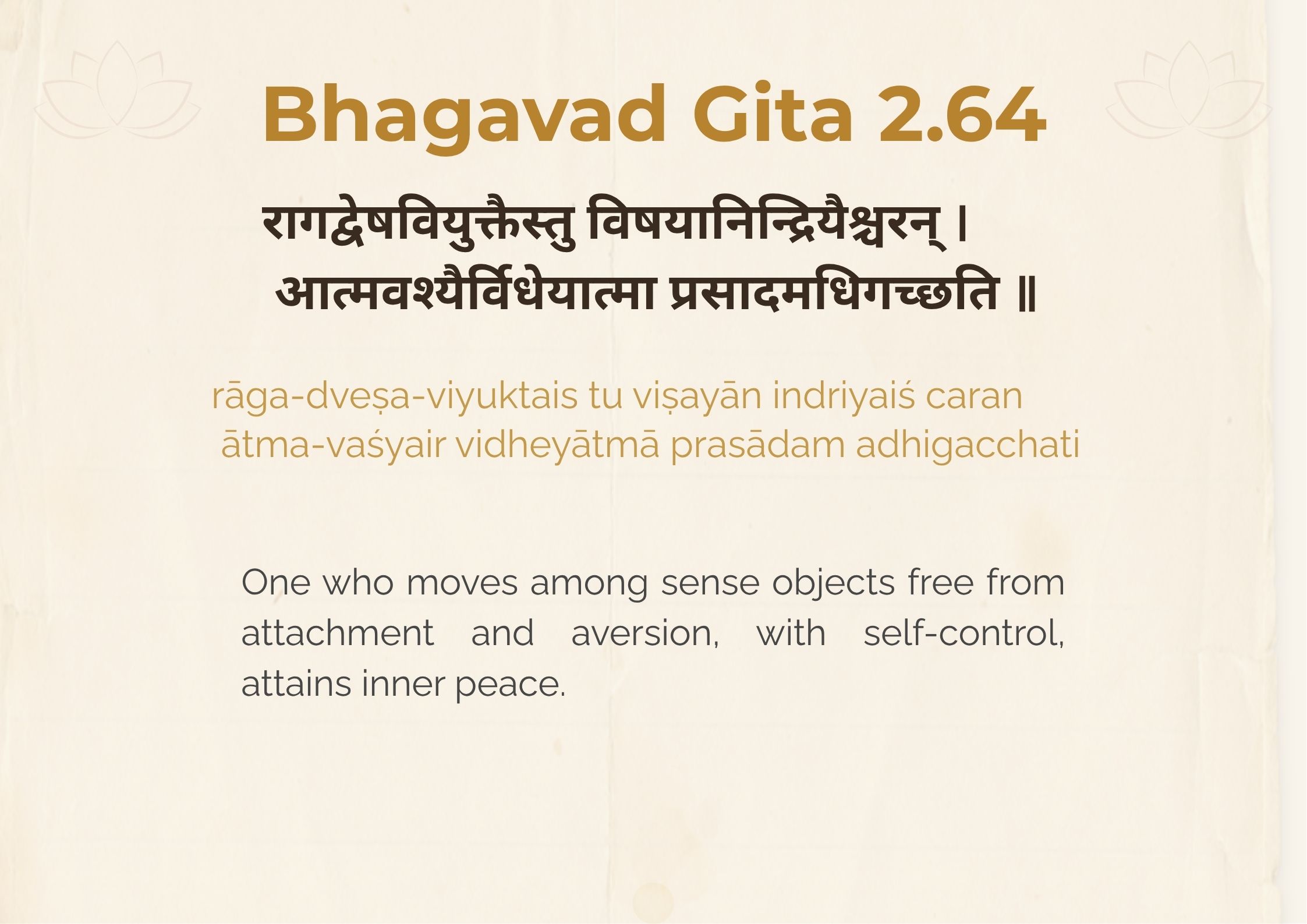
In verse 4.40 of the Bhagavad Gita, the Gita is not sentimental about doubt. Unresolved, habitual doubt paralyses action and fractures stability. This is not a condemnation of inquiry. It is a warning against indecision rooted in fear. Discernment clarifies; doubt immobilises. Knowledge dispels hesitation. It does not amplify it. Clarity demands commitment.

This week I learned that rushing down a path that isn’t meant for you is futile. However, in stillness, we reconnect with what truly aligns with our soul. From that space, you can cultivate a sense of relaxed awareness. The best outcomes will always unfold in their own time. They cannot be forced or rushed. Rather than obsessing over what could be, use this waiting season to uncover hidden strengths. Embrace gratitude, and make space for the lessons that come along the way. You are always connected to the goodness of life.

This week felt like one of steady progress rather than dramatic breakthroughs. There were conversations to be had, ideas to refine, relationships to nurture, and plans gradually taking shape. Some days moved quickly, filled with activity and momentum, while others invited a slower pace and a chance to reflect. It was the kind of week that reminded me that meaningful progress often happens quietly, built through small actions repeated consistently rather than grand gestures. There was also a sense of looking ahead. Mid-year is approaching, and with it comes the natural urge to take stock of where we are, what is working, and what deserves more attention in the months to come. Not everything is settled, and not every effort has produced visible results yet, but there is value in trusting the process and continuing to show up. As the week draws to a close, perhaps the theme is appreciation: for progress that is unfolding, for relationships that sustain us, and for the people who have quietly helped guide us along the way.

2026 Week 24 Update

This week, Richard Bach, an American writer and former pilot best known for his inspirational novella Jonathan Livingston Seagull, gives us a quote that is a thought-provoking observation about the stories we tell ourselves. It suggests that our own beliefs often reinforce the limits we experience. When we repeatedly tell ourselves that we can’t do something, aren’t capable enough, aren’t talented enough, or that success is meant for other people, we begin to accept those ideas as facts. In doing so, we unintentionally create the very boundaries that hold us back.

The keyword here is argue. Bach isn’t talking about simply having limitations; everyone has them. He is referring to the habit of defending them. When we justify why we can’t change, why we can’t learn, or why something is impossible, we strengthen those mental barriers. Over time, they become part of our identity. This doesn’t mean that positive thinking alone can overcome every obstacle. Real-world constraints exist. However, Bach is highlighting how often the first obstacle is internal rather than external. Before we test our abilities, we may have already decided what is and isn’t possible. That mindset can become a self-fulfilling prophecy.

The quote encourages curiosity over certainty. Instead of saying, “I can’t do this,” we might ask, “What if I could?” Instead of assuming failure, we might allow room for growth. Many achievements begin when people stop defending their limitations and start challenging them. Ultimately, Bach reminds us that while we may not control every circumstance, we do have influence over the beliefs that shape our actions. And sometimes, changing those beliefs is the first step toward changing our lives.

This week felt like one of quiet transitions and gentle reminders about what truly matters. Professionally, there was a sense of laying foundations, nurturing relationships, and moving a few important pieces into place. Not every effort produced an immediate result, but there was steady forward motion, the kind that often goes unnoticed until you look back and realise how much ground has been covered.

Personally, the week carried a softer, more reflective tone. There was time spent adjusting to changing rhythms, appreciating familiar routines, and recognising how life continues to evolve in ways both large and small. One thought that surfaced repeatedly was how the relationship between parents and children changes over time. There comes a stage when the people who once cared for every aspect of our lives begin to need a little more care themselves. It’s a quiet role reversal that arrives gradually, often without announcement.

Caring for ageing parents can be both a privilege and a responsibility. It asks for patience, presence, and an understanding that time has become precious. The conversations may be familiar, the concerns repeated, the routines unchanged, yet there is value in showing up, listening, and being available. These moments rarely make headlines in our lives, but they are often among the most meaningful.

Perhaps that was the theme of this week: recognising that a life well lived is built not only through achievements and ambitions, but also through the people we continue to care for along the way. Sometimes progress looks like moving forward. Sometimes it looks like staying connected to what matters most.

This week, verse 4.39 from the Bhagavad Gita teaches us that knowledge requires qualification, faith, discipline, and focused effort. Wisdom does not settle in a restless mind, and pace here is not withdrawal from life. It is the result of right understanding. Ignorance agitates, but knowledge stabilises. Clarity and calm are not separate outcomes; they are linked.

This week I learned that you might not see the outcomes yet, but that doesn’t mean they’re not taking shape. Every moment of gratitude strengthens your trust. Trust that you are attracting experiences meant to make your heart sing. What isn’t happening now doesn’t mean it never will. Great things can happen in the most unlikely ways. A small change in your perspective can catapult your life in a new direction. There is still hope for the future. Trust in the greater flow of your life. Cultivate goodness within you. So much of life is beyond our control.

And on that note, take care and see you soon. Keep smiling!

The Domestic Divide and the Birth Rate Question

Every few years, the same anxiety resurfaces. Fertility rates are falling. People are marrying later. Women are having fewer children, or none at all. Governments commission reports. Economists debate incentives. Newspapers run op-eds heavy with concern and light on imagination. And then, almost as an aside, a finding appears that feels too small to carry such weight. When men do more unpaid work at home, fertility rates tend to rise. Not intentions. Not aspirations. Actual births.

This is often framed as an interesting correlation, a sociological curiosity. But it should unsettle us far more than it does. Because if this link holds, even partially, it suggests that declining fertility is not simply about money, housing, or childcare costs. It is about how life feels inside a home. Who is stretched thin. Who carries the invisible load? Who gets to remain a person once parenting enters the picture? And perhaps most confronting of all, it suggests that fertility is not falling because people dislike children, but because they dislike the conditions under which children are raised.

The quiet dishonesty of the word “help”
Language matters here because it exposes the problem before the data ever does. We often say men “help” around the house. They help with the cooking. Help with the kids. Help when asked. Help when reminded. Help when it fits around their real responsibilities. But help implies that the work belongs to someone else. You help a neighbour move house. You help a friend during a rough patch. You help with something that is not fundamentally yours.

A home, however, is not a favour. It is a shared responsibility. Or at least, it should be. In many patriarchal societies, including the ones I grew up observing closely in India, the contradiction is sharper still. The house is culturally and often legally the man’s. His name is on the deed. His family name defines the household. And yet the labour of maintaining that house, physically and emotionally, is treated as women’s work. Expected. Endless. Largely unacknowledged. So when a man washes dishes or manages bedtime, it is applauded as a sign of progress. When a woman does the same, it disappears into the background noise of daily life.

This imbalance persists even with education or professional success. I have seen highly qualified women, including doctors, come home from demanding jobs and immediately step into a second shift that includes cooking, caregiving, emotional management, and the care of ageing in-laws. Their husbands, meanwhile, move through domestic life with remarkable lightness, as if the household runs on autopilot. The assumption that education alone dismantles patriarchy collapses very quickly at the kitchen sink.

Why does housework have anything to do with fertility
At first glance, the link between housework and fertility sounds almost absurd. Surely people do not decide to have children based on who loads the washing machine. But that is not the decision being made. The real question couples are asking, often without articulating it, is this: What will my life look like if we have another child?

Not the milestone photos. Not the well-meaning congratulations. The daily reality. Who will wake up at night? Who will remember school forms and vaccination schedules? Who will coordinate childcare? Who will absorb the stress when work deadlines collide with sick days and family obligations?

In households where domestic and caregiving labour is shared more equally, the answer to that question looks difficult but manageable. In households where one partner, usually the woman, is already operating at capacity, another child feels less like joy and more like self-erasure.

This is where the uncomfortable truth needs to be stated plainly. Women will not have more children if having children means losing themselves. Loss of self is not always dramatic. It is cumulative. The steady disappearance of rest. The constant mental scanning of needs. The knowledge that someone else’s comfort depends on your vigilance. If men’s fuller participation at home changes fertility outcomes, it is not because housework is romantic. It is because shared responsibility makes life feel survivable.

The invisible work that shapes everything
One of the most misleading moves in conversations about domestic labour is focusing only on visible chores. Who cooks. Who cleans. Who does school drop-offs. These matter, but they are only the surface.

The heavier burden is cognitive. Knowing what needs to be done before it becomes urgent. Remembering preferences, schedules, social obligations, and emotional fault lines. Anticipating problems before they become crises. Holding the household together not through action, but through attention. Many men participate in chores and still leave this mental load untouched. They wait to be told. They complete tasks without owning outcomes. They perform competence without carrying responsibility.

From the outside, the household looks balanced. From the inside, one person is still running the system. This distinction matters deeply for fertility. Because you can outsource cleaning. You can hire help. You cannot outsource the constant low-level vigilance that drains people over time. When that vigilance rests primarily on women, the prospect of another child feels less like expansion and more like collapse.

Desire, resentment, and the parts we rarely say out loud
There is another layer people are often reluctant to acknowledge. Unequal domestic labour reshapes attraction. Resentment does not create intimacy. Exhaustion does not invite closeness. Feeling like someone’s caretaker does not nourish desire.

When men step fully into domestic responsibility, not as a performance but as ownership, it shifts how women experience the relationship. Not as a manager supervising tasks, but as a partner sharing the weight. This is not about rewarding men with affection for doing basic adult work. That framing trivialises the issue and misses the point. The shift is psychological. It is about no longer being alone inside a shared life. Fertility does not increase because chores are seductive. It increases because equality stabilises relationships.

Where the argument needs discipline
It is important not to overclaim. Some of the most gender-equal societies in the world still have low fertility rates. This tells us immediately that domestic equality alone does not raise fertility. It is one part of a larger system. Time matters. Money matters. Housing matters. Work culture matters.

In Singapore, long working hours collide brutally with family life. The expectation of constant availability leaves little room for caregiving, especially for men. In India, childcare is often informal and heavily reliant on women’s unpaid labour, reinforced by extended family structures that frequently increase, rather than reduce, women’s responsibilities. In both contexts, involved fatherhood is praised in theory and penalised in practice.

If your workplace quietly punishes men for leaving early to care for children, do not act surprised when women decide not to have more children. If your culture celebrates fatherhood rhetorically but undermines it structurally, fertility statistics will reflect that contradiction.

Policy, performance, and what societies actually reward
Governments tend to favour solutions that do not require cultural change. Financial incentives. Tax benefits. One-off bonuses. These help at the margins, but they do not alter the daily texture of life. They do not redistribute time, energy, or responsibility.

Parental leave for fathers is a good example. On paper, it signals progress. In reality, many men take little or none of it, not because they do not care, but because workplaces subtly discourage it. Until caregiving is normalised for men, rather than treated as exceptional or optional, policy will remain performative. Fertility is shaped by what societies reward in practice, not by what they claim to value in speeches.

The harder truths we should not avoid
Any honest conversation about fertility must make space for complexity. Not everyone who wants children can have them. Fertility discussions can be painful. They can reopen grief. This reality should not be used to silence discussion, but it should temper it with care.

It is also true that some women continue to have children in deeply unequal setups. Their choices are shaped by love, hope, culture, and constraint. Acknowledging this does not undermine the argument. It reminds us that people adapt to systems even when those systems are unfair.

And yes, there are men who genuinely want to do more and feel trapped by work expectations or cultural norms. Structural change matters precisely because individual goodwill is not enough.

Responsibility, plainly stated
If declining fertility is treated as a public problem, then domestic labour is a public issue. Not a private quirk of individual marriages. Not a lifestyle choice to be negotiated quietly behind closed doors. Men need to do more unpaid work at home because they are adults who live there. Not because it boosts birth rates. Not because it earns praise. Because fairness is the baseline, not the reward. Housework should not be gendered. Caregiving should not be exceptional. Mental load should not default to one person simply because she has always carried it. And societies that refuse to redistribute care should stop demanding growth from the very people they exhaust.

For couples navigating this in real time
For those living this tension personally, the work does not begin with perfection. It begins with ownership. Who notices when things fall apart. Who plans ahead. Who absorbs anxiety. Who carries responsibility even when no one is watching.

Rebalancing is not about doing more tasks. It is about holding responsibility differently. About moving from “tell me what to do” to “this is mine to manage”. These conversations are rarely comfortable. But neither is burnout. And pretending otherwise only postpones the reckoning.

A mirror, not a crisis
Fertility decline is often framed as a crisis to be solved. It may be more honest to see it as a mirror. A reflection of how societies organise work, care, and value. A signal of what people are willing, and unwilling, to give up. When men step fully into domestic life, fertility sometimes rises not because babies are the goal, but because life feels possible again. And if that possibility depends on equality, then the question is not why fertility is falling.

The question is why we are still surprised.

2026 Week 23 Update

This quote by the author of one of my favourite books, “The God of Small Things,” Arundhati Roy is a powerful expression of hope in times of uncertainty. At first glance, it may seem poetic and abstract, but at its heart lies a profound belief that change is possible, even when the evidence is not yet visible. Roy personifies the future as a living presence, describing a better world as “she” — something already emerging, not merely imagined. The quote suggests that progress often happens quietly, beneath the surface of headlines and daily frustrations. While it may seem that injustice, conflict, and division dominate the world, there are also countless unseen acts of kindness, courage, creativity, and resistance taking place every day. These are the early signs of that “other world” making its way into existence.

The phrase “On a quiet day, I can hear her breathing” is especially striking. It implies that hope is easiest to detect when we step back from the noise and pay attention. Change rarely arrives all at once. It grows gradually through individuals, communities, and ideas that challenge the status quo. The future begins long before it becomes obvious. The quote is also a reminder against cynicism. It acknowledges that the world is imperfect but refuses to accept that things must remain that way. Hope, in Roy’s view, is not passive optimism. It is the conviction that human beings can imagine and create something better.

The first few days of June have felt less like a dramatic new beginning and more like a continuation of several stories already in motion. There has been work to advance, conversations to follow up on, plans to refine, and opportunities that are still taking shape rather than fully revealing themselves. Much of the week has been spent balancing the practical demands of the present with hopes for the future. There has also been a noticeable thread of transition running through these days. Some long-term decisions have moved closer to completion, bringing a sense of satisfaction and anticipation. At the same time, other areas remain in that familiar space between effort and outcome, where patience is required because the next chapter has not yet fully unfolded. Family life has continued its quiet evolution too. The people closest to you are increasingly living their own lives, pursuing their own paths and responsibilities, creating that mixture of pride, affection, and occasional nostalgia that accompanies changing seasons of life.

Professionally, there has been a recurring theme of building rather than harvesting. Much of the work has involved laying foundations, strengthening relationships, creating systems, and investing effort whose rewards may not be visible immediately. It has been a week that required faith in the process. Personally, there has been a growing awareness that 2026 is moving quickly. The first half of the year is nearly behind you. There is a sense of taking stock: What has worked? What needs adjusting? What deserves more attention during the months ahead?

Perhaps the best way to describe this week is that it has been about quiet momentum. Not spectacular breakthroughs. Not major crises. Just the steady accumulation of actions, decisions, and conversations that, taken together, are gradually shaping the rest of the year. And sometimes, those are the weeks that matter most, even if they don’t feel remarkable while you’re living them.

This week, in verse 4.38, we learn that knowledge in the Gita is not information; it is purification. It removes confusion, illusion, and misidentification. It clears the fog that makes the transient appear permanent. Clarity does not arrive through intensity. It arrives through steady discipline and time. Knowledge is not borrowed. It is realised. The month begins here, with the reminder that understanding transforms more deeply than emotion.

In this week’s motivation, uncertainty challenges the illusion of control we cling to. Yes, it’s uncomfortable, but within that discomfort lies the seeds of growth. These moments teach us how to navigate unease with intention and awareness. Though it may feel like this season of waiting is taking so much from you, it is actually equipping you with unshakeable strength that only grows with time. You’re building an arsenal of tools to navigate uncomfortable thoughts and emotions. You’re learning to better respond to unexpected situations.

That’s all I have for this week. Take care and keep smiling!

2026 Week 22 Update

Today’s quote by Yoshida Kenkō, a Japanese Buddhist monk, essayist, and poet best known for Tsurezuregusa (Essays in Idleness), one of the classic works of Japanese literature, reflects on the restless nature of human desire. No matter how much we achieve, there is often another goal waiting beyond it. One success leads to another ambition. One milestone creates the desire for the next. Kenkō’s quote quietly observes that ambition, by its nature, tends to keep expanding rather than settling.

This isn’t necessarily a criticism of ambition itself. Ambition can inspire growth, creativity, discipline, and progress. It pushes people to explore their potential and strive for meaningful achievements. But the quote also carries a subtle warning: if we are not careful, ambition can become endless striving, where satisfaction is always postponed into the future. Many people believe they will finally feel fulfilled once they reach a certain level of success, recognition, or security. Yet often, after achieving one thing, the mind quickly moves on to the next desire. This creates a cycle where contentment becomes difficult because the finish line keeps shifting.

Kenkō’s insight encourages balance. It asks us to reflect on whether our ambitions are enriching our lives or consuming them. There is value in striving, but there is also value in pausing to appreciate what already exists. Without that awareness, life can become an endless chase rather than an experience to be lived fully. The quote ultimately speaks to human nature itself. Desire is deeply woven into us, and ambition may never completely disappear. But wisdom lies in learning how to pursue goals without losing peace along the way.

This week felt like a continuation of learning how to hold many things at once: responsibility and uncertainty, momentum and exhaustion, hope and realism. There has been movement, conversations, planning, and the quiet pressure of trying to shape what comes next, even while parts of life still feel unresolved. Some days felt productive, others slower and heavier, but perhaps that is what real life looks like outside curated versions of it.

The world, meanwhile, continues at full speed. Technology keeps evolving faster than most people can process, global tensions remain unsettled, economies fluctuate, and headlines change almost hourly. And yet, amidst all of that noise, ordinary people everywhere are still waking up, doing their work, caring for their families, worrying about the future, and trying to build meaningful lives in small, human ways. Maybe that’s what this week has quietly been about: resilience that doesn’t look dramatic. Just the steady act of continuing. Of showing up despite uncertainty. Of trying again even when clarity hasn’t fully arrived yet.

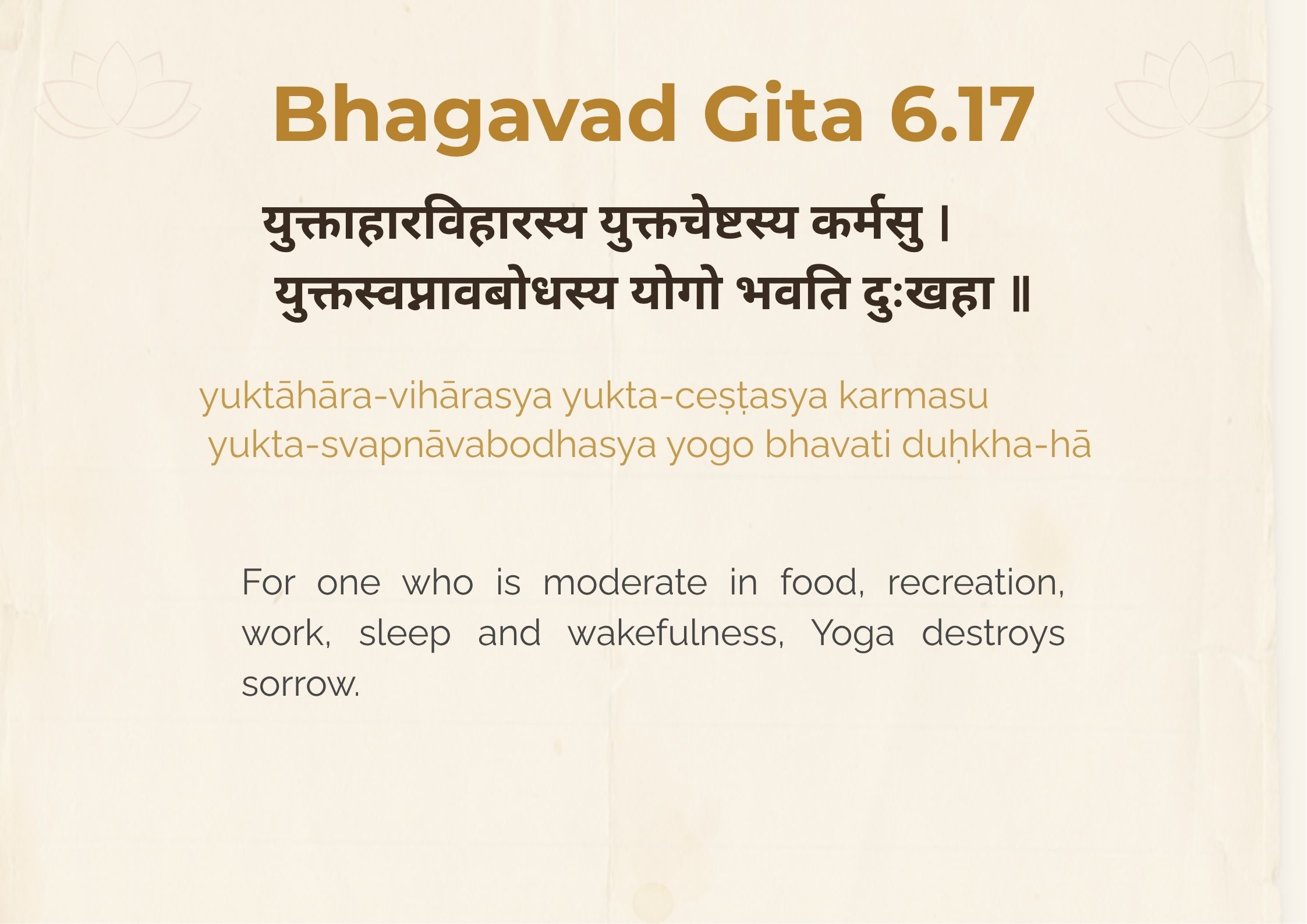
This week, verse 12.20 from the Bhagavad Gita is about constancy, not intensity. It is about faith, consistency, and alignment. Devotion is not a single act of surrender; it is adherence to a way of living. To remain steady on this path, without agitation and without spectacle, is itself fulfilment. The Gita ends its devotional description not with grandeur, but with affection. Exceedingly dear. That is the quiet promise.

In this week’s motivation, you are free to release the thoughts that weigh heavily on your heart. Don’t overanalyse or rush ahead; just drop those thoughts and return to the present. Stay rooted in trust, even when it feels scary. Choose the inner peace that’s always been within you, over the noise of ego-driven thoughts. Being open to embracing a new normal can change everything. Allow the pause and the waiting to transform you.

Hello, June. Half the year is almost here already, which feels both impossible and strangely believable at the same time. June arrives quietly, without the intense energy of beginnings or endings, but perhaps that’s its gift. It feels like a month for recalibration, for checking in with yourself, adjusting your pace, and remembering that progress does not always have to be loud to be meaningful.

Maybe this is the month to move a little more intentionally. To protect your peace where you can, to stop carrying what no longer needs to be carried, and to trust that not every answer has to arrive immediately. There is still time for things to unfold. Still time for growth, change, healing, and unexpected moments of joy. That’s all from me this week. Stay safe, stay positive, and keep smiling!