
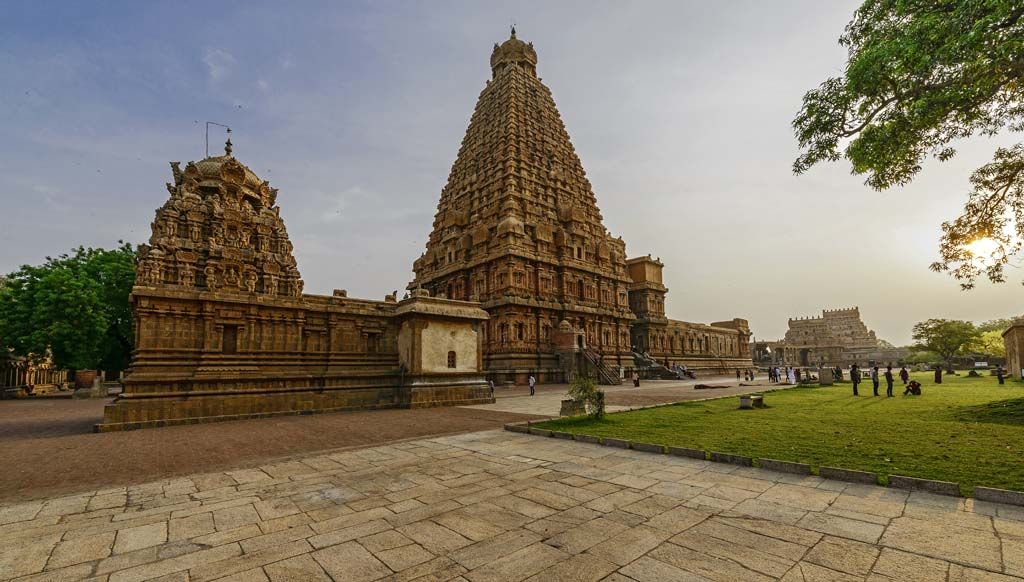
Tamil Nadu is well known for its beautiful and serene temples. There are many towns and cities which are famous as temple towns which is what we are going to see in today and Wednesday’s posts.

Kanchipuram
Kanchipuram, also known as Kanchi or Kancheepuram, is a temple city located on the banks of the Vegavathy river. The city has been ruled by the Pallavas, the Medieval Cholas, the Later Cholas, the Later Pandyas, the Vijayanagara Empire, the Carnatic kingdom, and the British, who called the city “Conjeeveram”. Historically, Kanchipuram was a centre of education and was known as the ghatikasthanam, or “place of learning”. The city was also a religious centre of advanced education for Jainism and Buddhism between the 1st and 5th centuries. It is the headquarters of the Kanchi matha, a Hindu monastic institution believed to have been founded by the Hindu saint and commentator Adi Sankaracharya, and was the capital city of the Pallava Kingdom between the 4th and 9th centuries.
Hindus regard Kanchipuram to be one of the seven holiest cities in India, the Sapta Puri. According to Hinduism, a kshetra is a sacred ground, a field of active power, and a place where final attainment, or moksha, can be obtained. The Garuda Purana says that seven cities, including Kanchipuram are providers of moksha. The city is a pilgrimage site for both Saivites and Vaishnavites and has close to 108 Shiva temples.
The Ekambareswarar Temple in northern Kanchipuram, dedicated to Shiva, is the largest temple in the city. Its gateway tower, or gopuram, is 59 metres or 194 ft tall, making it one the tallest temple towers in India. The temple is one of five called Pancha Bhoota Stalams, which represent the manifestation of the five prime elements of nature; land, water, air, sky, and fire. The Ekambareswarar temple represents earth.

The Kailasanathar Temple, dedicated to Shiva and built by the Pallavas, is the oldest Hindu temple in existence and is declared an archaeological monument by the Archaeological Survey of India. It has a series of cells with sculptures inside. In the Kamakshi Amman Temple, goddess Parvati is depicted in the form of a yantra, Chakra or peetam (basement). In this temple, the yantra is placed in front of the deity. Adi Sankara is closely associated with this temple and is believed to have established the Kanchi matha after this temple.
The Muktheeswarar Temple, built by Nandivarman Pallava II (720–796) and the Iravatanesvara Temple built by Narasimhavarman Pallava II (720–728) are the other Shiva temples from the Pallava period. Kachi Metrali – Karchapeswarar Temple, Onakanthan Tali, Kachi Anekatangapadam, Kuranganilmuttam, and Karaithirunathar Temple in Tirukalimedu are the Shiva temples in the city revered in Tevaram, the Tamil Saiva canonical work of the 7th–8th centuries.
Kumarakottam Temple, dedicated to Muruga, is located between the Ekambareswarar temple and Kamakshi Amman temple, leading to the cult of Somaskanda (Skanda, the child between Shiva and Parvati). Kandapuranam, the Tamil religious work on Muruga, translated from Sanskrit Skandapurana, was composed in 1625 by Kachiappa Shivacharya in the temple.
Varadharaja Perumal Temple, dedicated to Vishnu and covering 23 acres, is the largest Vishnu temple in Kanchipuram. It was built by the Cholas in 1053 and was expanded during the reigns of Kulottunga Chola I (1079–1120) and Vikrama Chola (1118–1135). It is one of the divyadesams, the 108 holy abodes of Vishnu. The temple features carved lizards, one platted with gold and another with silver, over the sanctum. Clive of India is said to have presented an emerald necklace to the temple. It is called the Clive Makarakandi and is still used to decorate the deity on ceremonial occasions.
Ashtabujakaram, Tiruvekkaa, Tiruththanka, Tiruvelukkai, Ulagalantha Perumal Temple, Tiru pavla vannam, Pandava Thoothar Perumal Temple are among the divyadesam, the 108 famous temples of Vishnu in the city. There are a five other divyadesams, three inside the Ulagalantha Perumal temple, one each in Kamakshi Amman Temple and Ekambareswarar Temple.
Tiru Parameswara Vinnagaram is the birthplace of the azhwar saint, Poigai Alvar. The central shrine has a three-tier shrine, one over the other, with Vishnu depicted in each of them. The corridor around the sanctum has a series of sculptures depicting the Pallava rule and conquest. It is the oldest Vishnu temple in the city and was built by the Pallava king Paramesvaravarman II (728–731).
The Kanchi Matha is a Hindu monastic institution, whose official history states that it was founded by Adi Sankara of Kaladi, tracing its history back to the 5th century BCE. A related claim is that Adi Sankara came to Kanchipuram, and that he established the Kanchi mutt named “Dakshina Moolamnaya Sarvagnya Sri Kanchi Kamakoti Peetam” in a position of supremacy, namely Sarvagnya Peetha, over the other mathas (religious institutions) of the subcontinent, before his death there. Other historical accounts state that the mutt was established probably in the 18th century in Kumbakonam, as a branch of the Sringeri Matha, and that it declared itself independent.
Another mutt which was famous in ancient times was the Upanishad Bramham Mutt, located near Kailasanathar temple, Kanchipuram. It has the Mahasamadhi of Upanishad Brahmayogin, a saint who wrote commentaries on all the major upanishads in Hinduism. It is said that the great Sage, Sadasiva Brahmendra took to sanyasa at this mutt.
Buddhism is believed to have flourished in Kanchipuram between the 1st and 5th centuries. According to a popular tradition, Bodhidharma, a 5th/6th-century Buddhist monk and founder of Shaolin Kung Fu was the third son of a Pallava king from Kanchipuram. However, other traditions ascribe his origins to other places in Asia. Buddhists institutions from Kanchipuram were instrumental in spreading Theravada Buddhism to the Mon people of Myanmar and Thailand who in return spread the religion to the incoming Burmese and Thai people. A number of bronzes unearthed at Kurkihar (Apanaka Vihara, near Gaya in Bihar) mention that the majority of the donors were from Kanchi, indicating that Kurkihar was a major center for the visitors from Kanchi during 9th to 11th century,
Kanchipuram had been a major center of Jainism and is associated with several famous Jain Acharyas like Samantabhadra and Akalanka. It is thought that Jainism was introduced into Kanchipuram by Kunda Kundacharya (1st century). The Pallava kings, Simhavishnu, Mahendra Varman and Simhavarman (550–560) followed Jainism, until the advent of Nayanmars and Azhwars during the 6th and 7th centuries. Mahendravarman I converted from Jainism to Hinduism under the influence of the Naynamar, Appar, was the turning point in the religious geography. The two sects of Hinduism, Saivism and Vaishnavism were revived under the influence of Adi Sankara and Ramanuja respectively. Later Cholas and Vijayanagara kings tolerated Jainism, and the religion was still practised in Kanchi. The original set of the Jina Kanchi institution Mutt was in Kanchipuram. Its original site is now represented by the Trilokyanatha/Chandraprabha temple at Thiruparthikundram. It is a twin Jain temple that has inscriptions from Pallava king, Narasimhavarman II and the Chola kings Rajendra Chola I, Kulothunga Chola I and Vikrama Chola, and the Kanarese inscriptions of Krishnadevaraya. The Jina Kanchi Mutt was later shifted to Melsithamur in the 16th century. There exist many historical Jain sites in the vicinity of Kanchipuram in several villages that still has some Jain population.
The city is well known for its hand woven silk sarees and most of the city’s workforce is involved in the weaving industry.
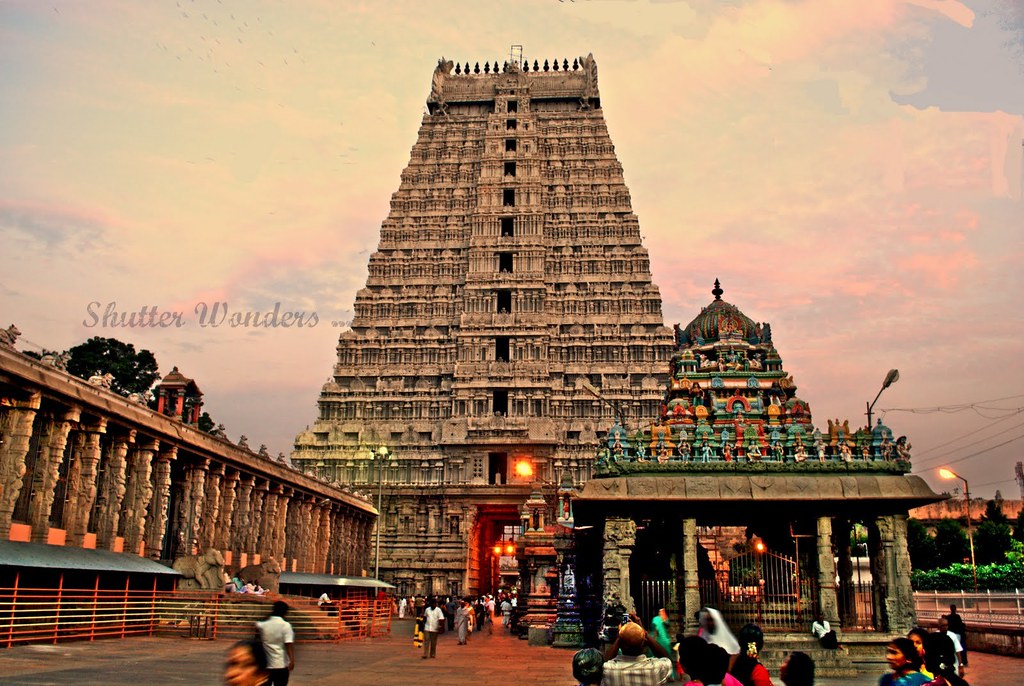
Tiruvannamalai
The town of Tiruvannamalai is named after the central deity of the Annamalaiyar Temple, Annamalaiyar. Located on the foothills of Annamalai hills, Tiruvannamalai has been ruled by the Pallavas, the Medieval Cholas, the Later Cholas, Hoysalas, the Vijayanagar Empire, the Carnatic kingdom, Tipu Sultan, and the British. It served as the capital of the Hoysalas. The town is built around the Annamalaiyar Temple like other Nayak capitals.
The Annamalaiyar Temple is the most prominent landmark of Tiruvannamalai. The temple complex covers an area of 25 acres, and is one of the largest temples in India. It houses four gateway towers known as gopurams. The temple has numerous shrines, with those of Annamalaiyar and Unnamulai Amman being the most prominent. The temple complex houses many halls; the most notable is the thousand-pillared hall built during the Vijayanagar period. The Annamalaiyar temple is one of the Pancha Bhoota Stalas, or five Shiva temples, with each a manifestation of a natural element: land, water, air, sky or fire. In Annamalaiyar temple, Shiva is said to have manifested himself as a massive column of fire, whose crown and feet could not be found by the Hindu gods, Brahma and Vishnu. Aathara Stala are Shiva temples which are considered to be personifications of the Tantric chakras of human anatomy. The Annamalaiyar temple is called the Manipooraga stalam, and is associated with the Manipooraga chakra. The temple is revered in Tevaram, the Tamil Saiva canon and classified as Paadal Petra Sthalam, one of the 276 temples that find mention in the Saiva canon.
The Karthigai Deepam festival is celebrated during the day of the full moon between November and December, and a huge beacon is lit atop the Annamalai hill. The event is witnessed by three million pilgrims. On the day preceding each full moon, pilgrims circumnavigate the temple base and the Annamalai hills in a worship called Girivalam, a practice carried out by one million pilgrims yearly. Apart from other temples, there are 8 important shiva temples facing 8 important directions on the (side) path of Girivalam. All the Shivlings of these 8 temples are believed to have formed naturally.
Tirumalai is an ancient Jain temple complex in the outskirts of Tirvannamalai that houses three Jain caves, four Jain temples and a 16 feet high sculpture of Neminatha dated from the 12th century and the tallest Jain image in Tamil Nadu.

Chidambaram
Also known as Thillai, Chidambaram’s name comes from the Tamil word Chitrambalam which means the small hall or stage of wisdom. According to legend, it was once a forest of thillai, a mangrove species of trees. There was once a small shrine on the banks of a tank. The saints Vyagrapada and Patanjali are said to have worshipped at this shrine, now called Thirumoolanathar. It is believed that their penance attained perfection with the revelation of Shiva’s cosmic dance by Lord Nataraja on the auspicious Thai Poosam day.
The town has been ruled, at different times, by the Pallavas until 9th century, Medieval Cholas, Later Cholas, Later Pandyas, Vijayanagar Empire, Marathas and the British. The town is known for the Thillai Nataraja Temple, and the annual chariot festival held in the months of December–January (In the Tamil month of Marghazhi known as “Margazhi Urchavam”) and June to July (In the Tamil month of Aani known as “Aani Thirumanjanam”)
The Chidambaram Nataraja Temple was built during the 11th century and is one of the most celebrated Shaivite Temples in South India. Lord Nataraja is the family deity of Vikrama Chola (1128 CE) and his successors. The golden hall of dance was built and covered with gold plates by Jatavarman Sundra Pandya. Chidambaram Temple has great religious as well as historic and cultural significance. This is one of the Panchabhoota Stalas signifying the five elements of wind (Kalahasti), water (Tiruvanaikka), fire (Tiruvannamalai), earth (Kanchipuram) and space (Chidambaram). Lord Vishnu as Lord Govindaraja Perumal is worshipped in the same temple complex. Brahmotsavam, Ani Thirumanjanam, Thai Poosam and Arudra Dharshan are some of the Chidambaram temple festivals that attract large crowds from far and nearby places. Natyanjali Dance Festival is a major festival held in the month of February. Many eminent dancers give their performances during this festival.
Thillai Kaali Amman Temple, Pichavaram, Sattanathar Temple, Bhuvanagiri, Parangipettai, Annamalai University, the Kollidam River and Poompuhar are the other attractions in and around Chidambaram.
The best time to visit Chidambaram during July and between October to March while the peak season is July and December to February. The Chidambaram Natraja temple is open from 6 am to 12:30 pm and from 4:45 to 9 pm.

Vaitheeshwaran Kovil
Vaitheeswaran Kovil or Pullirukkuvelur is a Hindu temple dedicated to the Lord Shiva. Shiva is worshipped as Vaidyanathar or Vaitheeswaran meaning the “God of healing” and it is believed that prayers to Vaitheeswaran can cure diseases. Vaitheeswaran is a Tamil derivative from vaidya (Doctor) and Ishvara (God/Master). The presiding deity is Sri Vaidyanathan, facing towards West whereas East side is the common one. He is the God of Healing. When pronouncing in Tamil, it sounds like “vaideeswaran”. It is one of the nine Navagraha (nine planets) temples and is associated with the planet Mars (Angaraka). The temple and town are located 27 km from Chidambaram and 110 km from Thanjavur.
The holy waters of the Siddhamirtham tank within the temple complex contains nectar, and a holy dip is believed to cure all diseases. The temple is revered by the Tevaram hymns of 7th-century Saiva nayanars – Tamil saint poets and is also classified as a Paadal Petra Sthalam (temple revered by the nayanars).
Devotees take a holy dip in the temple tank before worshipping Vaitheeswaran in the temple. It is also a local belief that dissolving jaggery in the waters cures skin diseases. The practise of jamming salt and pepper in front of the temple mast and the pot near the temple tank is also followed. Unlike other temples in South India, where each shrine has a priest, each priest in the temple associates themselves with the devotees and perform worship on their behalf. The holy soil rounded with ash is treated as medicine and believed to cure all the diseases. It is a practice to purchase silver-plated images of body parts to put in the Hundi or the vessel for offering to fix ailments one might be having. The Veeraraghavaswamy temple at Thiruvallur is considered the Vaishnavite temple equivalent of healing abilities of the presiding deity to that of the Saivite Vaitheeswaran Kovil. The annual festival or Brahmotsavam is celebrated during January/February.
 Memories and Such