
Continuing the Kathmandu series.
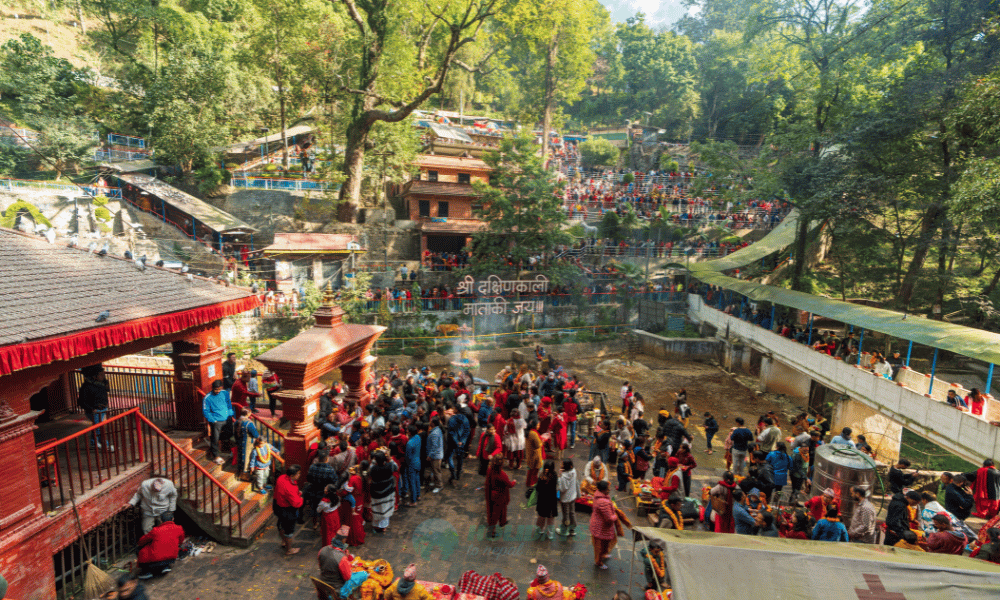
Located a km from the village of Pharping, the Dakshinkali Temple is one of the most important temples in Nepal and is dedicated to the fierce and feared goddess Kali. Twice a week, animals are sacrificed at this temple—uncastrated male goats and cockerels in particular—as an offering to the ferocious spouse of Lord Shiva. The Dakshinkali Temple derives its name from a compound of the words Dakshin, which means south, and the name Kali, which signifies the deity that is worshipped here. The idol of the goddess is seen standing on top of a corpse, portraying the triumph of good over evil. Embellished with a sword in one hand, a skullcap in another, and a severed head in the third, the four-armed idol represents an image of a strong, empowered divine being who has arrived to conquer evil and emerge as victorious. The temple was built in 1855 by Rani Rashmoni, a devotee of Kali.
The temple is decked with bright lights and fragrant garlands during the Dashain Festival, which is the Nepalese version of Durga Puja that falls in September or October every year and goes on for fifteen days. During this festival, thousands of people come to pray and light incense sticks while several other bring animals along with them as an offering to the Goddess. The temple management arranges grand feasts during these weeks. The mystical aura of the temple is enhanced by the loud chants and the resounding echoes of the musical instruments including the drums, bells, cymbals and conches. It is the best time for people to visit the temple.
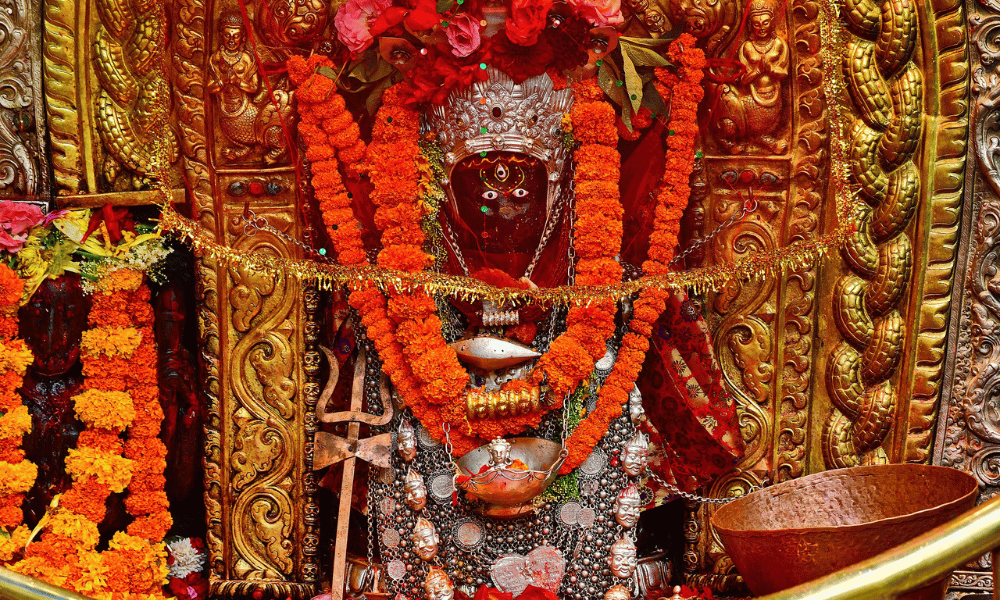
The Goddess Mahakali is an intriguing incarnation of the Goddess Parvati, the consort of Lord Shiva, who is also known as Mahakala or Pashupatinath. It is believed that the Goddess Kali appeared in a dream of the Malla ruler who reigned over Nepal in the 14th century. The goddess supposedly ordered the king to construct a temple which would be devoted to her. The king then set out to follow her orders immediately, and the temple was built with an image of the deity carved out from stone positioned in the shrine.
Devotees of the Goddess Kali are firm believers of animal sacrifice as a way to please her and have their wishes come true. Lined in front of the religious place of worship are numerous stalls which sell roosters and goats so that people can sacrifice them on the premises of the temple. This ritual takes place once in the morning and again in the afternoon every Tuesday and Saturday. After the morning sacrifice, the temple gates are closed for a short period to purify the temple before the afternoon sacrifices begin. The sacrificial ceremony lasts just a few seconds for each animal, after which their limp bodies are processed in the temple complex by the priests who are skilled at it. After that, the owners take the meat to their homes for a meal. The temple is open from 6 am to 9 am daily.

The magnificent Taleju temple, located in Durbar Square in Kathmandu, is dedicated to the clan goddess of the Malla kings, Devi Taleju Bhawani. Traditionally, entry into the temple was restricted to kings but has now been extended to all Hindus. It is believed that the temple was constructed in the shape of a Yantra, a form of Mandala, as was directed by the Devi herself. In the middle of Durbar Square, the temple, set atop a pedestal, is a stunning sight. On the ninth day of Dasain, Hindu devotees can enter to offer prayers to the Goddess. Everyone else can explore the shrine from the outside.
Before Nepal was founded, Kathmandu was majorly ruled by the Newars who were ardent worshippers of Goddess Taleju who was believed to be an incarnation of Goddess Durga and the guardian of the kings. She is, therefore, considered to be a powerful deity and is worshipped in the region since the 14th century. Also known as Taleju Bhavani, Goddess Taleju is believed to contain all other Goddesses worshipped by Hindus in the region. According to a legend, Gods fought many demons once but later, when they left to rest, a demon named Mahishasura noticed that the Gods were away resting and declared himself the Lord of the Heaven and the ruler of the Universe. All the gods got angry when they heard this declaration from Mahishasura. In rage, they shot beams of bright light from their foreheads. These beams converged a little distance away and formed an eruption of light from which Goddess Durga was born.
In Kathmandu, the Goddess is worshipped by the Newars who ruled the region before Nepal was established and is said to be the guardian of the Kings of the Malla Dynasty. The temple was built during the reign of King Mahendra Malla. Legend states that the mantra of the goddess ensured the ruler’s succession and victory and therefore after the Shah dynasty dethroned the Mallas, they also started worshipping Goddess Taleju.
The temple is a 35-metre high monument that stands prominently on a pedestal with twelve levels or steps made of stone. On the eighth level, a wall has been built all around the shrine that acts as a compound for the temple. There are 12 smaller shrines in front of this wall. On the other side, there are four more shrines other than the main one. This ancient place of worship has traditional pagoda-style architecture with a three-tiered roof, wooden doors and window frames decorated with intricate carvings.
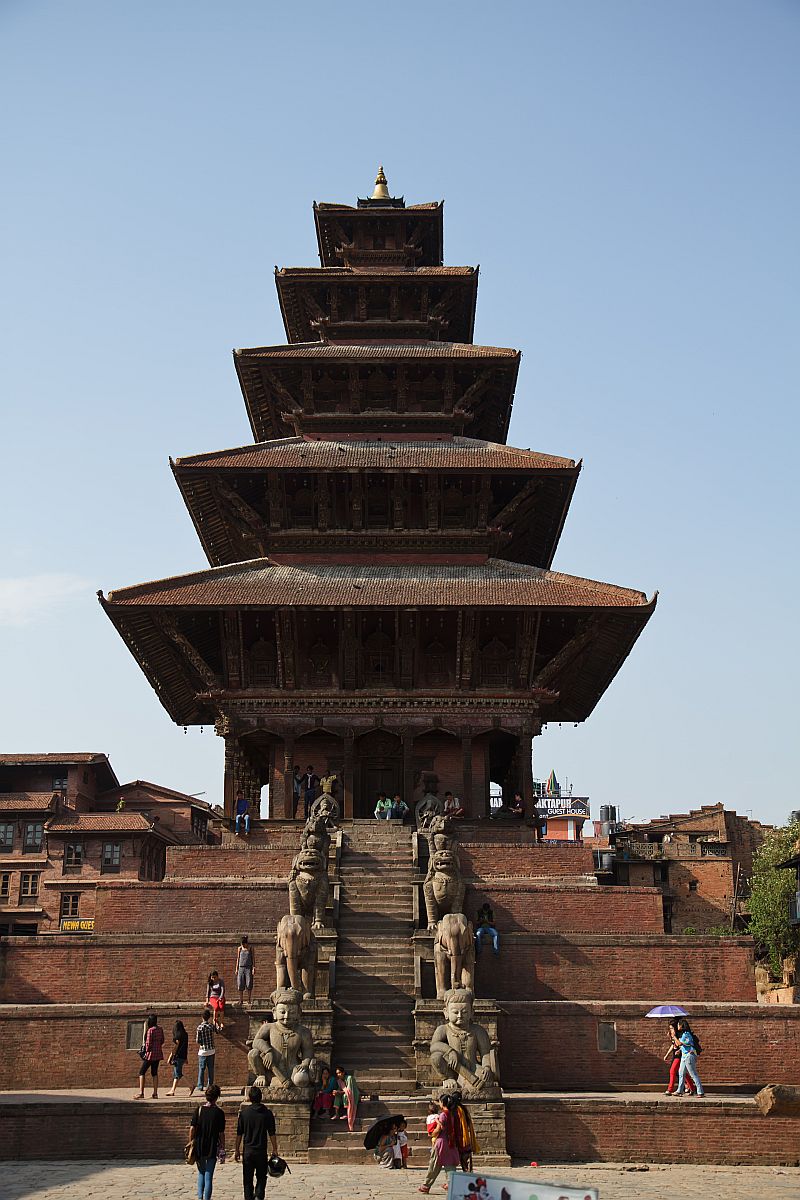
The Nyatapola Temple is an 18th-century temple located in Bhaktapur. It is the tallest building in the valley and the tallest temple in the country. The temple was built in 1702 and is dedicated to Goddess Siddhi Lakshmi, an incarnation of Goddess Parvati. The idol of the Goddess, which is installed in the sanctum sanctorum, is believed to be extremely fearsome. Although only the temple priests enter the sanctum sanctorum, visitors can explore the rest of the temple. The monument has survived two major earthquakes in the region and has suffered minor damages. It is also, therefore, known for its structural strength.
The temple was built during the reign of King Bhupatindra Malla who belonged to the Malla Dynasty and ruled Bhaktapur between 1692 and 1722. The temple has traditional pagoda-style architecture with a five-storey roof that makes it a strikingly tall building in the region. It took about seventeen months to build the temple during the time. The Goddess it is dedicated to is believed to be Tantric and hence, is also called Tantric Lakshmi.

The Nyatapola Temple is built according to the traditional pagoda style of architecture. The monument has a five-tiered roof. From the bottom till the top of the pagodas, it measures about 30 m highl. The temple is placed over five platforms or terraces built one on top of the other. In the middle of the yard, a stone staircase stretches leading to the temple entrance. Each level has stone statues of mythical protectors, elephants and tigers on either side. Inside, there is a sanctum sanctorum where the idol of the Goddess is placed. Across the remaining temple, Goddess and legendary incarnations in relation the goddess are carved.
According to legend, Lord Bhairava or Lord Shiva once caused havoc in the region. Seeking help, the people called upon Goddess Parvati to help them. The Goddess appeared in the avatar of Siddhi Lakshmi. She is said to be more potent than Lord Bhairava and carried him to control him. The temple was thus built in her honour. And because she is believed to be stronger than Lord Bhairava, her temple was made sturdier and taller than the Bhairava Temple located nearby.

Located on a hilltop, the Vajrayogini or Bajrayogini Temple is a tantrik temple dedicated to the Buddhist Tantric Goddess. It is also known as Bodhisattva’s Temple and is situated in Sankhu, a small place in the Kathmandu Valley. One needs to climb a stone stairway to reach the temple complex, but once there, everyone will be fascinated with the beauty of the temple complex that includes stonework, wood carvings, metalwork, smaller temples, caves and a stupa belonging to the time of Buddha Shakyamuni.
In 2015, the temple was struck by a massive earthquake and its structure took a major hit. Some sections have been restored, but some run a risk of crashing down. Most of it is supported with wooden planks. Tourists, however, can observe them from the outside and even click pictures.
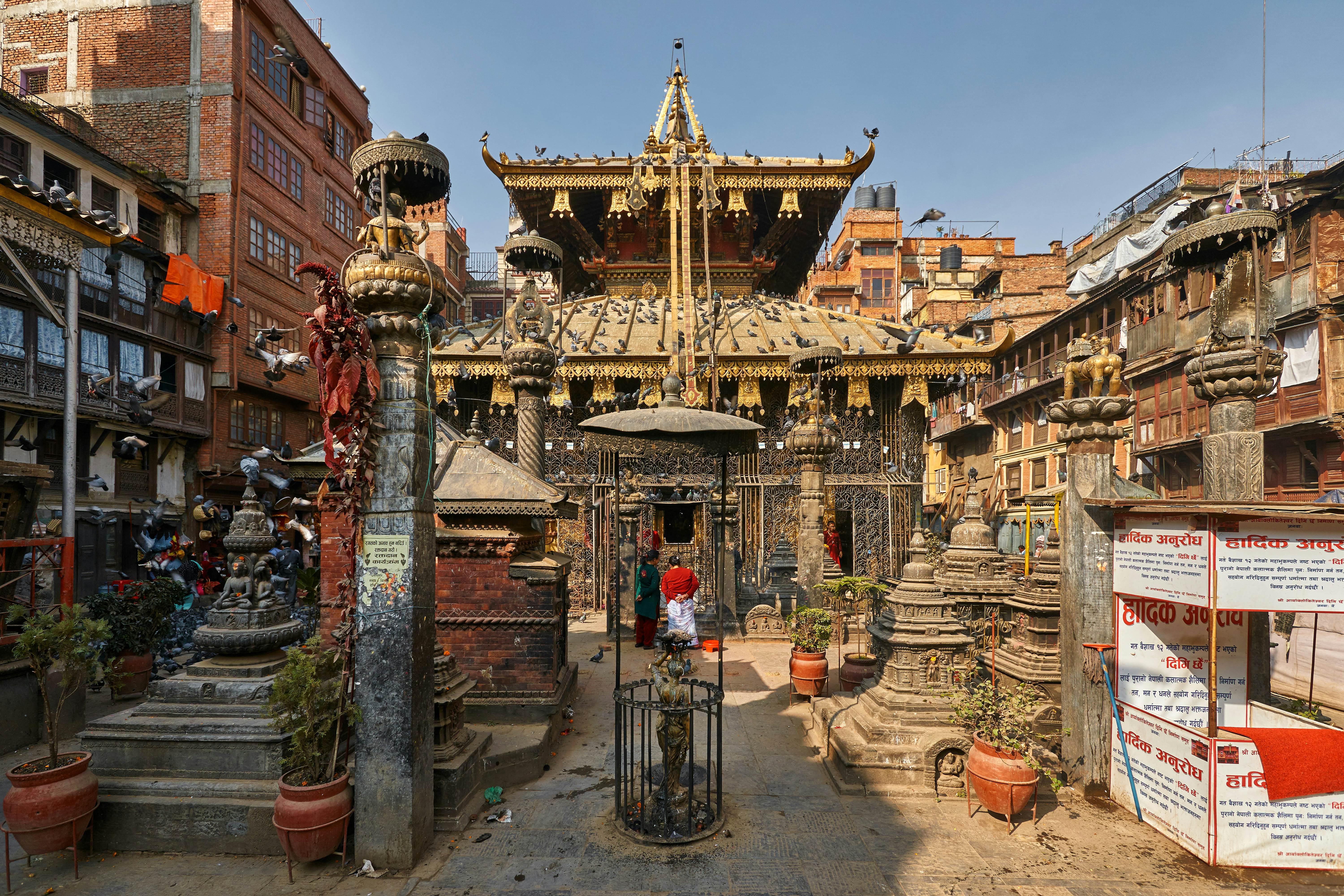
The Seto Machindranath Temple is a Hindu and Buddhist temple located in Jana Bahal. The temple is believed to be built around 10th century and houses the idol of Seto Machindranath, also known as Janabaha Dyo. During the month of Chaitra, a three days long chariot procession festival of the Lord is held here.
The Akash Bhairav is also known as the Lord of the Sky. Located 5 mins from Durbar Square, Akash Bhairav is worshipped because it is believed that worshipping him ensures strength, safety and goodwill for Nepal and its people. Indra Jatra, an annual 8-day festival devoted to the god, is also celebrated with great enthusiasm. Followers from all over the world come to Kathmandu to be a part of the important pooja rituals performed during this time of the year. The temple is open from 6 am to 7 pm every day.
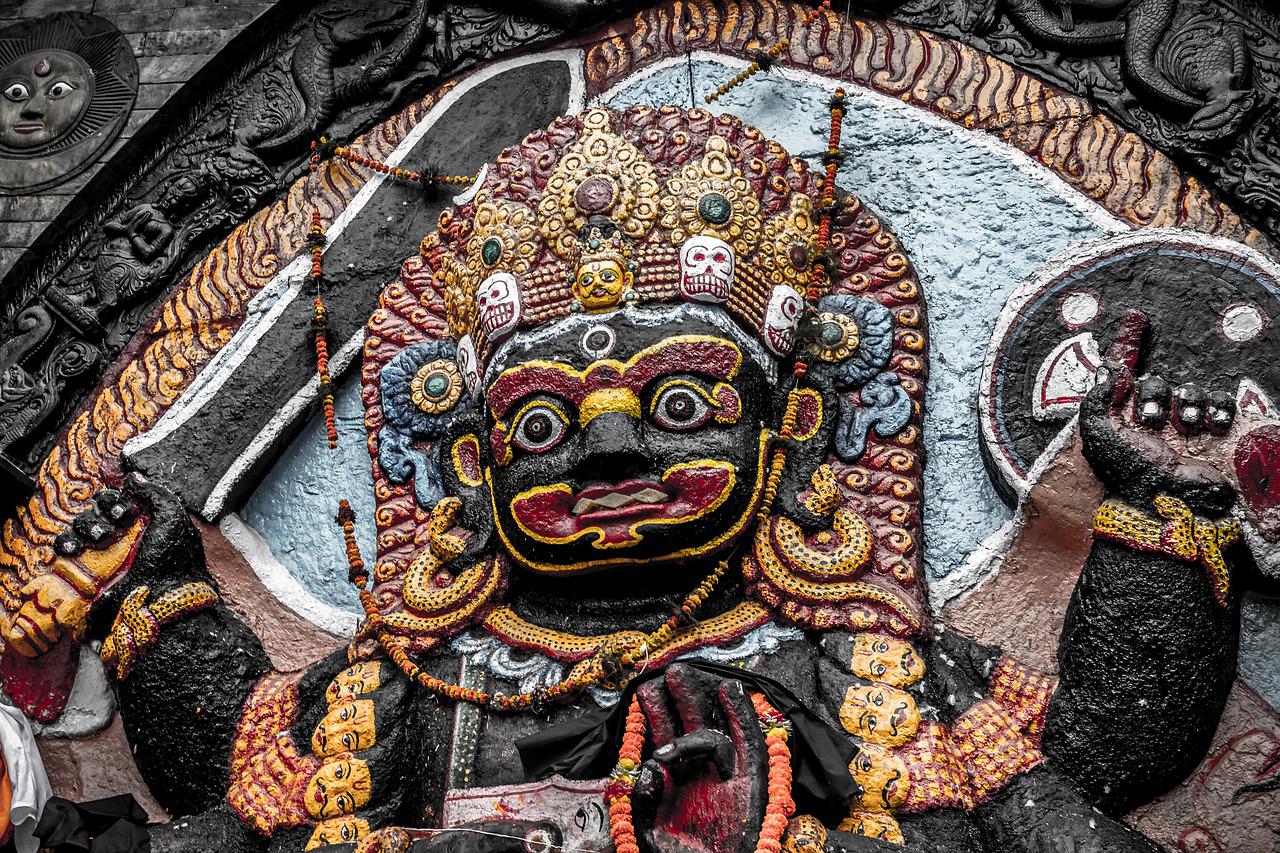
Kala Bhairav is a grand temple located at Durbar Square in the Hanuman Dhoka complex and is dedicated to a fierce manifestation of Lord Shiva. It is an open-air area in the complex and has a gigantic 12-foot-tall idol of Kala Bhairav sculpted in the 6th century, regarded as the largest in the world. The idol and the structures that surround it are made of stone and were carved in the 5th century. It was discovered by King Pratap of the Malla dynasty amidst paddy fields in the 17th century. At that time, it was believed that anyone who would lie down in front of the idol would attain freedom from their lives, which may not be necessarily true. However, locals still continue worshipping this grand and fierce incarnation of Lord Shiva. Kala Bhairav is the terrifying avatar of Lord Shiva who is also called the Lord of Time and Death. He is worshipped by the Hindus as the guru of Lord Shani who is ruled by the planet Saturn and as Manjusri, Heruka, Yamantaka, and Vajrabhairava in Vajrayana Buddhism. The idol of Kala Bhairav is seen standing in a violent form, stepping over a dead body holding a decapitated head in one hand.
According to legend, Kala Bhairav had decapitated one of Lord Brahma’s five heads and as punishment, was made to carry that head and roam around for many years till he was forgiven. This avatar of Lord Shiva is fierce and unforgiving. He is mostly associated with vetala or ghouls and pisaca or ghosts. The name Bhairava literally means a terrifying form that is not afraid of anything. Thus, he can protect his devotees. He is also believed to be the supreme one after Lord Vishnu and can create, sustain, and dissolve life on earth. The temple is open between 10 am and 5 pl daily.
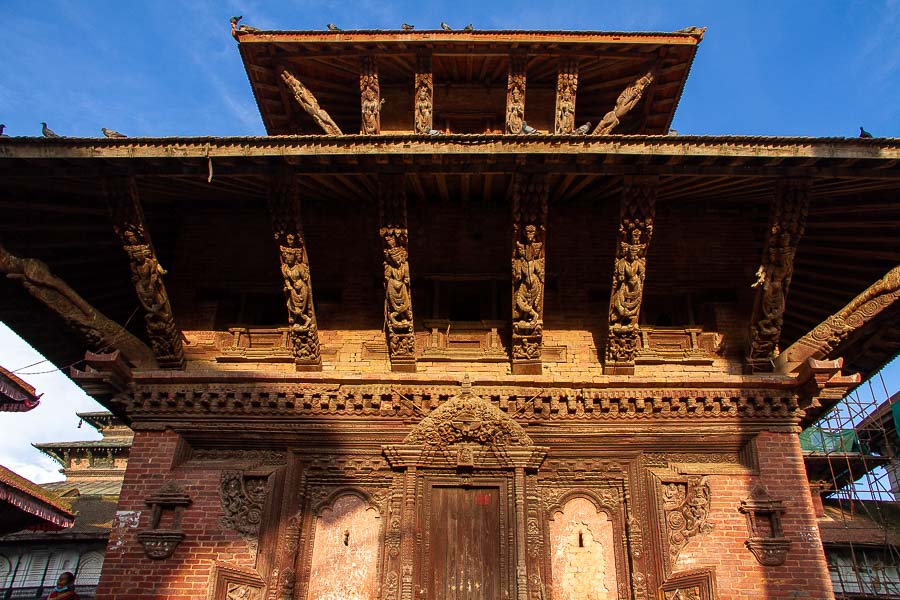
Also located in Darbar Square, the Jagannath Temple is famous for its architecture and religious significance. It is a two-story building raised over a platform and built in traditional pagoda-style architecture, mostly made of wood and bricks. Some parts of the temple were damaged in the 2015 earthquake. However, some portions have been restored and are open for tourists to explore.
A tourist draw at the temple are the exquisite erotic carving all over the structure. It was built in the early 16th century during the reign of King Mahendra of the Mala dynasty and is one of the oldest shrines in the city. The temple is open from 10:30 am and 5 pm.

The glorious temple of Lord Shiva and his Consort Goddess Parvati, the Shiva Parvati Temple, is located in Durbar Square. It is as important as the Kumari Bahal or the Kasthamandap and is often visited by pilgrims and tourists. Built in the 18th century by Bahadur Shah, every inch of the temple wall is covered in immensely intricate carvings.
From a distance in the outer portion of Durbar Square, one would notice someone looking down a window of a two-story pagoda-style building that opens into a courtyard. It is, in fact, the idols of Shiva and Parvati installed in the window right in the center of the top floor of the temple. The striking idols colored in white and blue are seen wearing colorful accessories and blessing the visitors.

The grand building has been built over a raised three-level platform which resembles an ancient performance stages at Durbar Square. One can climb up a small flight of stairs at the entrance where two ancient stone statues of lions are installed and explore the shrine as they circumambulate. It is believed that the lions guard the temple. As one explores further, they would notice how beautiful the intricate carvings on the wood are. There are different forms of Lord Shiva, Goddess Parvati and other captivating traditional designs on the structure too. This area of Kathmandu is usually traversed on foot and shouldn’t be missed when in Durbar Square.

The Annapurna Temple located at Asan Tole is dedicated to Goddess Annapurna, the goddess of abundance. Her name stands for food or anna and fulfilment or purna and symbolises that her blessings fulfil every wish and always provides abundance. At the temple, an old bowl full of grain sits at the centre, representing the Goddess. It is believed that walking around the shrine, touching a coin to the heads and then throwing it into the temple will bring prosperity and abundance of all worldly goods.

Durbar Square means a place of palaces and so like its name there are three preserved Durbar Squares in Kathmandu Valley and one unpreserved in Kirtipur. The Kathmandu Durbar Square is in the old city and has heritage buildings representing the four kingdoms: Kantipur, Lalitpur, Bhaktapur, Kirtipur; the earliest being the Licchavi dynasty. The complex has 50 temples and several palaces and courtyards and is distributed in two quadrangles of the Durbar Square. The outer quadrangle has the Kasthamandap, Kumari Ghar, and Shiva-Parvati Temple; the inner quadrangle has the Hanuman Dhoka palace. The squares were severely damaged in the April 2015 earthquake.
While the southern part of the complex houses the open Basantapur Square area, the central Durbar Square area occupies the western portion. For many years, the former used to be stable, which housed royal elephants. Today, it is a site that houses souvenir stalls. In the northeast part of the complex runs the second part of the square. In this area, the entrance to the glorious Hanuman Dhoka Complex is planted, with a beautiful assortment of temples nestled behind it. The place is an active walkway that connects many streets together for the general public. Even though the durbar is no longer used for coronations, it is thronged by people during festivals like Dashain, Indra Jatra, Machhindranath Jatra, and Gaijatra. The entire Durbar Square complex was gazetted as a World Heritage Site by UNESCO in 1979.
Hanuman Dhoka is a complex of structures with the royal palace of the Malla kings and of the Shah dynasty. It is spread over five acres. The eastern wing with ten courtyards is the oldest part, dating to the mid-16th century. It was expanded by King Pratap Malla in the 17th century with many temples. The royal family lived in this palace until 1886 when they moved to Narayanhiti Palace. The stone inscription outside is in fifteen languages.

Kumari Ghar is a palace in the centre of the Kathmandu city, next to the Durbar square where a royal Kumari selected from several Kumaris resides. Kumari or Kumari Devi, is the tradition of worshipping young pre-pubescent girls as manifestations of the divine female energy or devi in South Asian countries. In Nepal, the selection process is very rigorous. Previously, during the time of the monarchy, the queen and the priests used to appoint the proposed Kumari with delicate process of astrological examination and physical examination of 32 gunas. The china, an ancient Hindu astrological report of the Kumari and the reigning king, being said to be similar. The Kumari is believed to be a bodily incarnation of the goddess Taleju, the Nepali name for Goddess Durga until she menstruates, after which it is believed that the goddess vacates her body. Serious illness or a major loss of blood from an injury also causes her to revert to common status. The current Kumari, Trishna Shakya, age three at the time of appointment, was installed in September 2017 succeeding Matina Shakya who was the first Kumari of Kathmandu after the end of the monarchy.
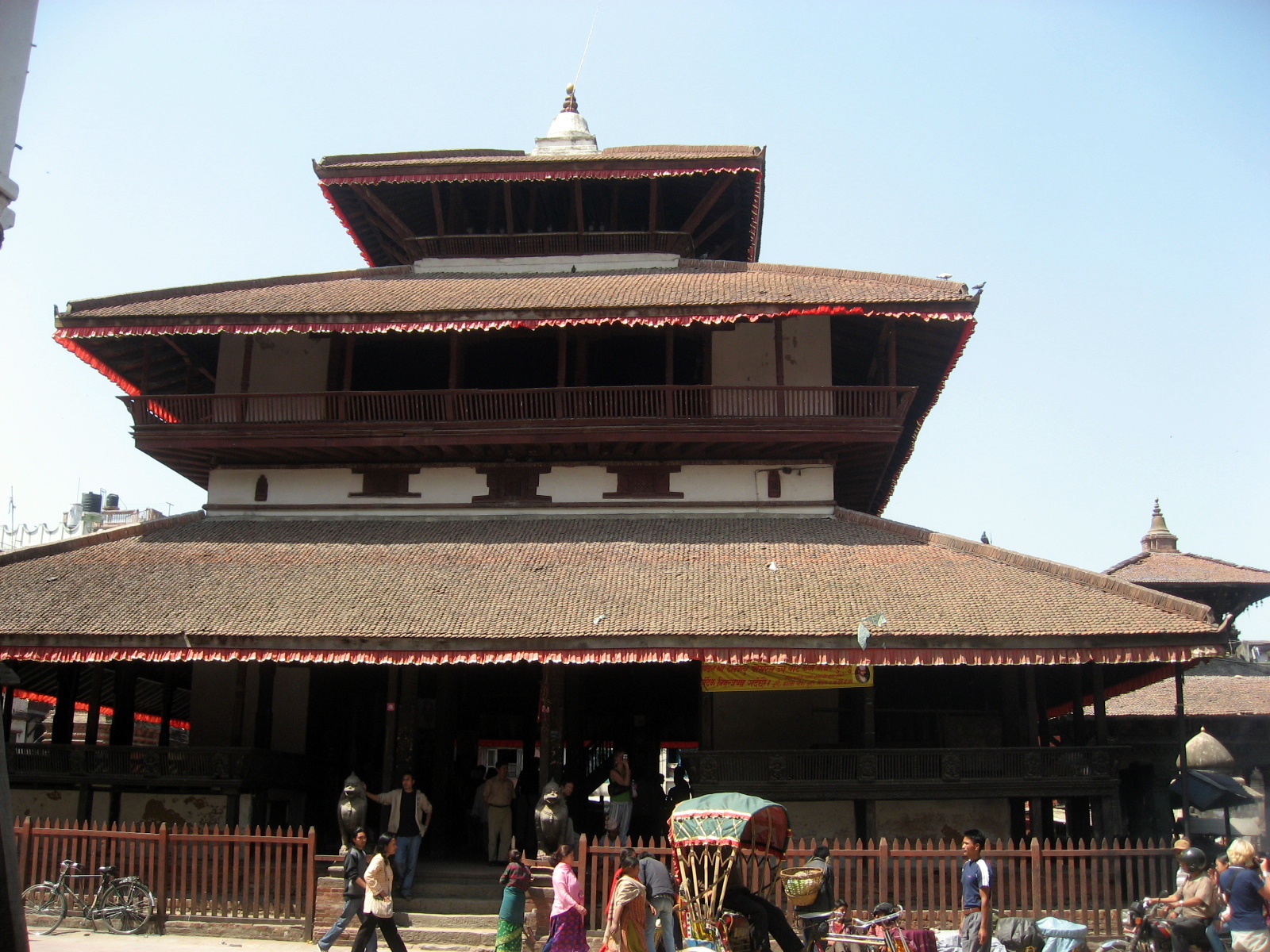
Kasthamandap is a three-storeyed temple enshrining an image of Gorakhnath. It was built in the 16th century in the pagoda style. The name of Kathmandu is a derivative of the word Kasthamandap. The temple was built under the reign of King Laxmi Narsingha Malla. Kasthamandap stands at the intersection of two ancient trade routes linking India and Tibet at Maru square. It was originally built as a rest house for travellers.
Singha Sattal or Silyan Sattal is a traditional rest house. Inside the Sattal is a shrine of Natyeshwar, the God of Dance. It was originally built in the 12th century. The Kabindrapul Temple is a 17th century wooden temple houses the God of Music and is also known as Dhansa Dega. Also known as Maru Ganesh, Ashok Binayak is a small Ganesh shrine located at the Eastern part of Kathmandu Durbar Square. The shrine is single-storeyed and has bars around it. The inside walls are gold-plated. Gaddi Baithak is a building located right opposite the Kumari Ghar. The monument is now restored after the 2015 earthquake. It is a white coloured neo-classical building originally built in 1908 AD by Prime Minister Chandra Samsher Rana. The Kotilingeshwara Mahadev Temple is one of the most important monuments built by King Pratap Malla in the 17th century. The temple has a circular plan and three metallic circular roofs. The Bhagwati Temple located at Durbar Square was originally a Narayan temple. It was built by Jagajaya Malla in the eighteenth century. The Narayan idol is believed to have stolen by Prithvi Narayan Shah and replaced by an image of Bhagwati.

The Great Bell was built by King Rana Bahadur Shah in 1797. This ornate bell is located next to the Degutaleju temple and is rung during the puja at the temple. King Pratap Malla’s column or Pratap Dhwaj is a stone pillar that had the King’s statue looking towards the Degutaleju temple. The pillar remains but the statue has broken down in the earthquake of 2015. As the name suggests, this temple is dedicated to Lord Indra. However, inside there’s a Lingam, suggesting the temple is dedicated to Lord Shiva. There’s also a Garuda is the Southern side suggesting the temple is dedicated to Lord Vishnu. The Tana Deval Temple is located in front of the Taleju temple. The temple has three carved doorways and painted struts with the Mother Goddess. The temple is surrounded by a wall.
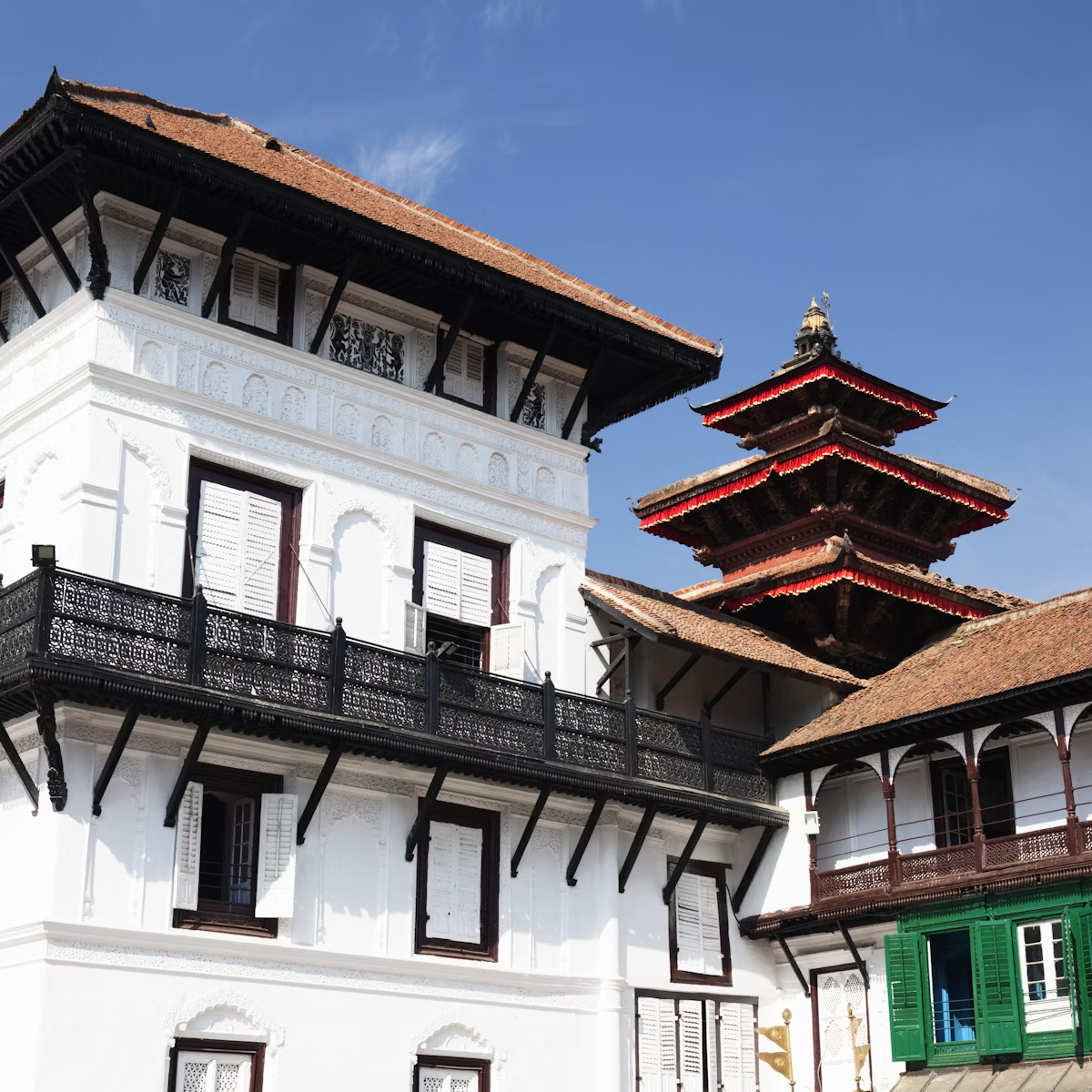
After a devastating earthquake of 2015, a massive chunk of the southern section of the Durbar Square was torn down, and physical cracks and crevices became prominent in the buildings that remained intact. Kathmandu Durbar Square had fallen victim to a massive earthquake in 1934 previously, but was restored.
There is a ticket counter at the entrance. Foreigners need to pay NPR 1000, SAARC nationals pay NPR 150 and Nepalis enter for free. Darbar Square is closed on Saturdays and is open from 10 am to 5 pm on other days.
Basantapur Tower was the tallest tower in Kathmandu Durbar Square. It has nine stories, the top two floors of which were destroyed in the 2015 earthquake that hit Nepal. The levels have been restored, and tourists can explore the tower from the outside and the inside. The tower is an 18th-century monument built during the reign of King Prithvi Narayan of the Shah Dynasty. Most of it is hidden behind scaffoldings, and one needs to take a closer look to see the ancient carvings on the restored wooden structure. The entrance is through Lohan Chowk up a narrow staircase, and one can enjoy a fabulous view of Kathmandu through the windows on every floor. Entry fees which are included in the entry fee for Darbar Square is NPR 1200 for foreigners, NPR 240 for SAARC nationals and free for students.
Keep reading for more Kathmandu next week!
 Memories and Such
The culture is still original
Yes, absolutely! Thanks for reading and commenting