
Growing up in the 1980s and 1990s in Mumbai, we mostly took the BEST bus and the Mumbai train to school, college, or work.
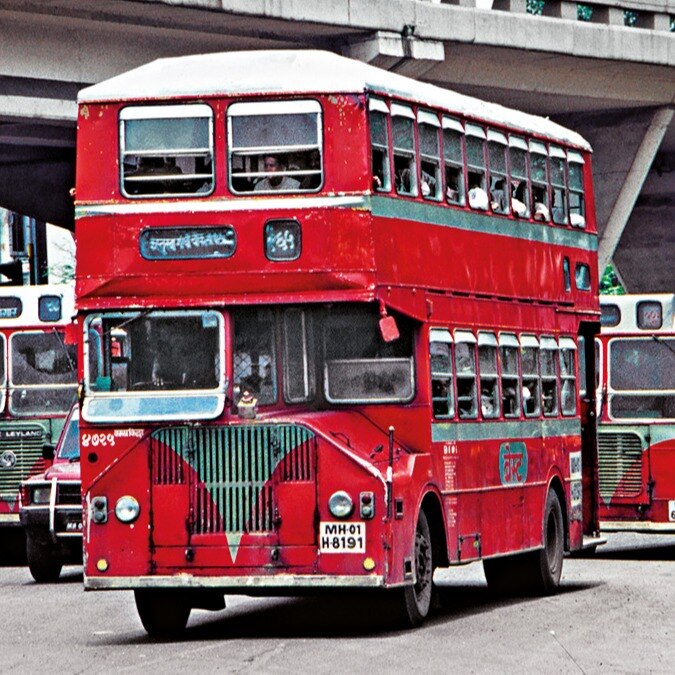
The red BEST or Brihanmumbai Electric Supply and Transport Undertaking, along with Mumbai’s train lines, are the lifeline and heartbeat of the city. For any Mumbaikar, the memory of the city is incomplete without recalling the daily dramas and quiet moments lived out aboard these iconic buses.
Since its inception in 1873, originally as a horse-drawn tram service, BEST has evolved into one of India’s most extensive bus systems, ferrying millions through the city’s bustling arteries every day. With over 3,800 buses and more than 440 routes, the system stretches far beyond the city’s traditional limits, reaching into the far suburbs like Thane, Navi Mumbai, and Mira-Bhayandar. Whether you’re braving the monsoon or the peak summer heat, the sight of a red double-decker lurching through traffic is a sign of Mumbai’s indomitable spirit. Stepping into a BEST bus is to step into a true cross-section of Mumbai society. Amidst the constant jostle, you hear the familiar clang of coins in the conductor’s pouch as they dispense paper tickets. There’s a heritage to BEST that transcends function. The city even hosts a dedicated BEST Transport Museum at Anik depot, where you can find miniatures and memorabilia tracing the journey from electric trams to today’s modern fleet.
When I was in school, we used to take a school bus and then started walking to school as we grew older. I used to take the bus sometimes when coming or going to tuition, but this was rare. It was only when I started college that I became a regular bus commuter. Every bus had a driver who sat up front and one or two conductors. If it were a single-decker, there would be a single conductor, while a double-decker would have two conductors, one on each deck. These conductors were responsible for collecting fares, giving out tickets and maintaining the decorum of the bus. Even though I had a few buses that would take me to the bus stop nearest my college, I almost always took one particular bus number. College started at 7:30 am, and I would take the bus from my bus stop at 7 am. And because I always took that particular bus, a double-decker where I would always sit in the lower deck, the conductor became a fixture in my life, and I became recognisable to him. We would greet each other, and if I didn’t take the bus for a few days at a time, he would check on me the next time I took the bus. Because of the bus’s timing, it was popular with students as there were multiple schools and colleges on its route. Two stories come to mind about this conductor.

Both stories took place in a three-year time period, when I was doing my degree. In the first instance, I boarded the bus as usual and paid my fare and took my ticket. I don’t know how it is now, but in those days, it used to be a paper ticket with your stop punched. Sometime between taking the ticket and halfway to college, a ticket checker got into the bus and immediately went to the upper deck to check. I checked my bag for my ticket so I could show it to the checker and get down, and that’s when I realised I had dropped my ticket somewhere. I was frantic and started checking my bag, between my books and inside my wallet. I didn’t want to get caught by the ticket checker as the fine would be too much for a poor college student, not to mention the humiliation that went with it. The conductor saw me being agitated and came to ask him what had happened. I mentioned that I couldn’t find my ticket and that the ticket checker was going to come down anytime to check tickets. At that moment, the bus stopped at a scheduled stop and someone started to get down. Immediately, the conductor asked him for his ticket and passed it to me. The fare would be something similar, as this person apparently got in a couple of stops before me and got off two stops before mine. I was thankful to both the conductor and the passenger, and showed the ticket checker my ticket before alighting to go to college.
The second story was also in the same period. My sister had purchased a new watch and I wanted to wear it. After pleading and cajoling her, I finally got permission to wear it to college. I proudly wore it and boarded my bus. The watch was shaped like a bangle, and unknown to me, the clasp was not very secure. I got on the bus and sat in one of the seats that face sideways, close to the entrance of the bus, in the lower deck. The same conductor as the story above was on duty that day. After a few stops, I looked down and to my horror, the watch was missing! I started looking everywhere, below the seat, in my bag and even patted my clothes, but the watch was not to be found. I was almost in tears. I knew not only would my sister blame me for losing her new watch, and rightly so, but my parents would also not let it go. I would hear about this for years to come. Again, the conductor came to my rescue. After asking me what happened and learning about the watch, he got more information from me about how it looked. Then he made an announcement to the lower deck about my lost watch and got everyone to look for it beneath their seats and near them. The whole bus was busy for the next few minutes trying to locate it. Finally, someone found it close to the other end of the bus. It seemed that the watch fell down when I was sitting and got kicked inside the bus as other passengers got in and found seats. Again, I was so thankful to the conductor when I was handed my watch and was able to go to college in a much lighter mood..
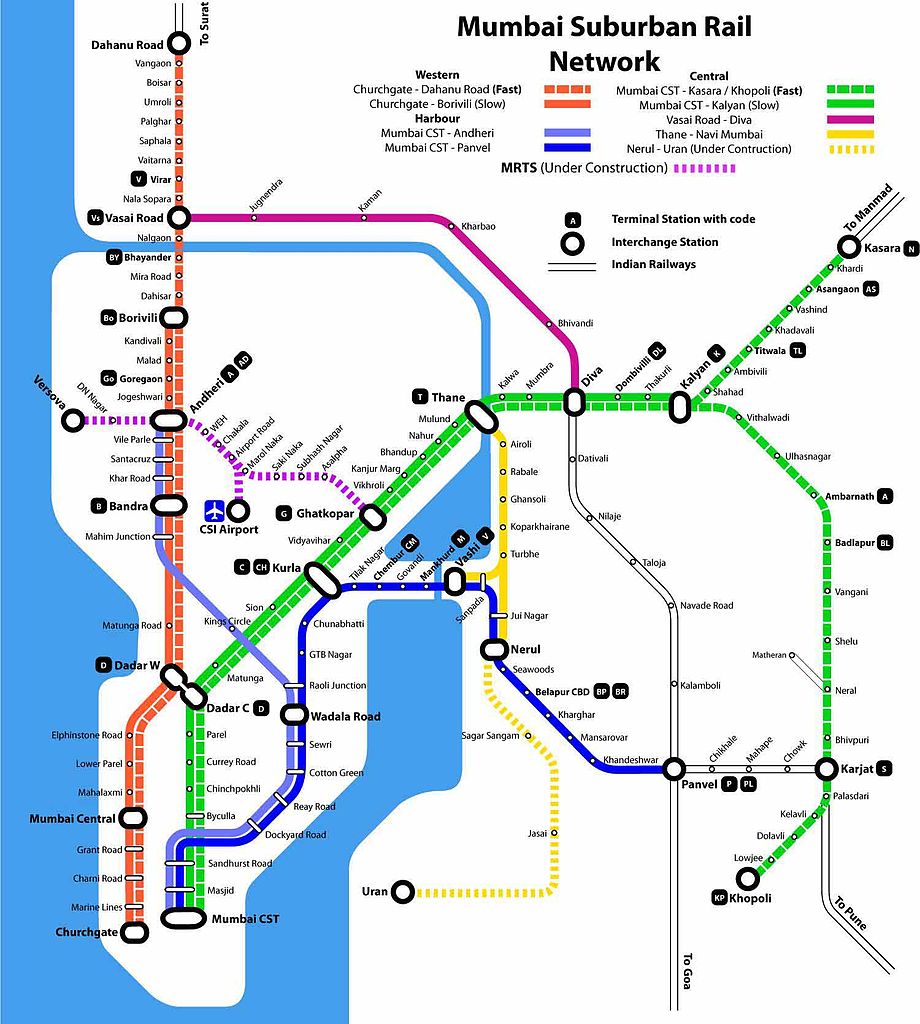
I only started taking the train when I started my second job. I used to take a local to Andheri and then a bus to work and the reverse in the evening. Because I only went to the office three days a week (the other days, I used to go to our office in the city, in the opposite direction), I was never a regular, and so I don’t have stories to share.
For every Mumbaikar, the local train is more than transportation; it is the pulse of daily life, dictating schedules, shaping friendships, and weaving together countless stories along the city’s expansive rail corridors. Regular train commuters, especially those travelling long distances, have created communities and train friend is a Mumbai special friendship. Some train friendships have traversed the divide, and these train friends have not only become friends in real life, but in many instances, they have become relatives, having siblings, children or other relatives married to each other or their relatives.
Mumbai’s suburban railway, often lovingly called the “local,” is the oldest and busiest commuter rail system in India and among the world’s top in daily passenger volume, ferrying over 7.5million commuters every single day. First run in 1853, the system stretches across approximately 465km and is divided among six major lines: the Western, Central, Harbour, Trans-Harbour, Vasai Road–Roha, and the Nerul–Uran lines. It connects the heart of Mumbai to distant suburbs like Virar, Dahanu, Kalyan, Khopoli, and Panvel, truly earning the moniker “the city’s lifeline.”
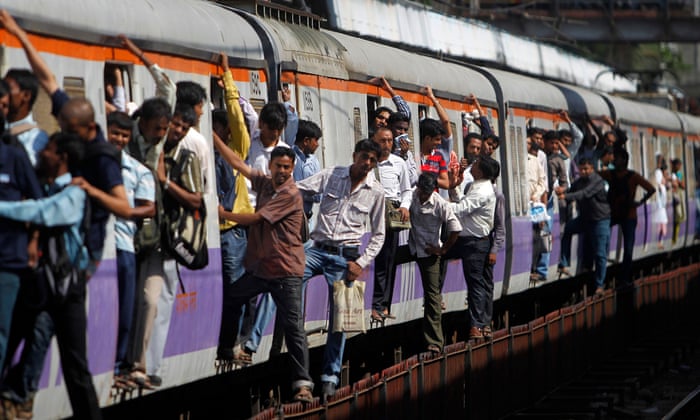
The western line: runs from Churchgate in South Mumbai through posh neighbourhoods northwards, ending at Dahanu Road. This route is a lifeline for thousands who journey from the extended suburbs into the southern business districts each day. The central line begins at Chhatrapati Shivaji Maharaj Terminus (CSMT), branching out at Kalyan toward Kasara and Khopoli, capturing the hustle of commuters travelling to and from eastern and northeastern corridors. The harbour line, which is the one that stops at the station closest to my home, links CSMT to Panvel through Navi Mumbai; less crowded but vital for east-west connectivity, this line opens up the satellite city for daily business and education. The harbour line also has a branch line that connects the central and western lines, branching out after Wadala and moving to the western line at Mahim, and when I used it, it used to end at Andheri. Today, the western branch of the harbour line ends at Goregaon.
Locals run from before dawn with the first training rolling out at 4 am until late at night, with most lines’ last train running at 1 pm, and some services ending even later. The stations are the stages for daily dramas: the surge onto the platform as the train approaches, the precise choreography to catch a footboard, and the silent understanding to make space for one more commuter in the already-packed compartment.
Trains are designated “fast” or “slow,” with the former skipping minor stations to speed up long-distance travel, and the latter stopping at every halt, accommodating the needs of neighbourhoods, both big and small. Special ladies’ compartments offer safe passage for women, while luggage compartments are a godsend for vendors and small traders transporting goods across the city.
Each ride on a Mumbai local imprints memories, sights of the city whizzing past open windows, street vendors plying their trade at major junctions, or quiet philosophical moments watching the city transform in the monsoon. Rail maps stuck to station walls and painted on signboards become sacred: they are, to many, a navigational scripture. The fast local between Churchgate and Virar or the crisscrossing services out of CSMT are more than routes; they are lifelines, their rhythm marking the intervals of a Mumbai day.
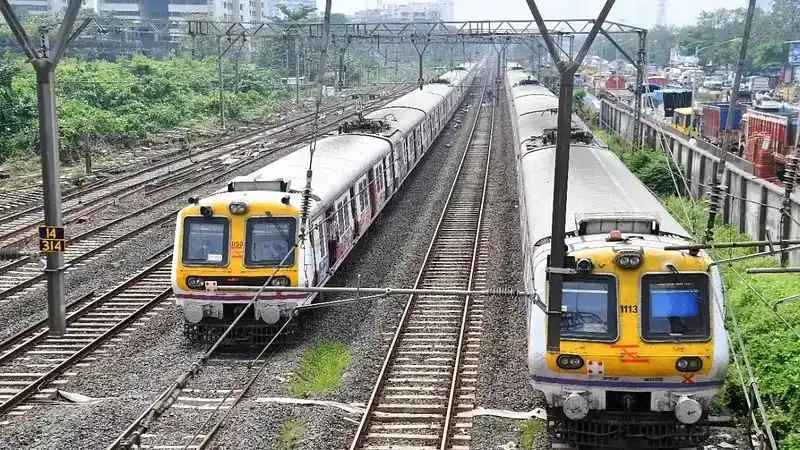
What began with simple steam trains in the 19th century now operates as a massive, modern fleet of electrical multiple units (EMUs), seamlessly blending history with the scale demanded by a modern megacity. Indian Railways continues to advance, phasing out old rolling stock for modern, more efficient carriages and electrifying the entire network for speed and sustainability.
BEST buses don’t just move people, they move stories. For years, they have connected the city’s extremes, providing a democratic, affordable way to traverse the chaos and beauty that is Mumbai. It’s hard not to get nostalgic about the local. Even with the rise of metro lines and air-conditioned buses, the Mumbai train network remains unparalleled in its reach and spirit, a thread uniting millions in the great urban tapestry that is Mumbai.
Both the BEST buses and the local train network are more than functional necessities; they are an essential part of Mumbai’s memoryscape: resilient, chaotic, joyful, and eternally moving forward. So if you are ever in Mumbai, maybe you should take a trip in a BEST bus or a local, but be prepared for the chaos and the spirit of the city.
 Memories and Such