Mumbai Memories: Amma and the Quiet Art of Making

One of my earliest memories from when I began school is of my mother waiting for me at the corner of the road just outside our building, a cloth bag looped over her arm, filled with stitching implements I did not yet understand but instinctively respected. Our building was a simple three-floor Mumbai walk-up, the kind where everyone knew who lived on which floor, and as soon as I got off the school bus, there she was.

We never lingered.

I would spot her, she would take the bag more firmly into her grasp, and we would quickly walk back and climb the three flights of stairs to our home. It was a small, repeated moment, but it carried a quiet certainty. She would be there.

Let me backtrack a little.

My sister is about a year and a half younger than I am, and after she was born, my father hired a mother’s helper. It was a practical decision. An infant and a toddler can turn any day into a small storm. But what it also did, quietly and without announcement, was create a small pocket of time for my mother. A rare thing, especially in those years.

My father, in his own way, wanted her to continue her education. There was a path he could see clearly: college, a degree, something formal and recognised. But my mother did not want that life. Not out of inability, but out of instinct. She chose differently.

The compromise they arrived at now feels telling. Not resistance, not submission, but something more thoughtful. She decided to learn stitching.

I still remember the name of the class she went to. Zarapkars. The word itself carried a certain solidity, as though it belonged to a world of skill, repetition, and quiet mastery. The classes were about a ten to twelve-minute walk from our home. Close enough to fit into a day. Far enough to feel like a destination.

Her routine settled into a rhythm. I would be sent off to school in the morning. My sister would be fed and put down for a nap. And in that window, my mother would step out, her time briefly belonging to her.

I do not remember the inside of those classes. I never saw Zarapkars. But I remember their afterlife.

In the evenings, our home would shift. Patterns would be spread out, measurements taken, fabric folded and refolded. Much of this happened in the enclosed balcony of my parents’ bedroom, a space that had quietly been repurposed into her sewing corner. It was small, but it was hers.

And then there was the machine.

She began with a hand-cranking machine, the kind that required both coordination and patience, before eventually moving to a foot-pedal one. The machine sat steady, almost dignified, as though aware of its role in the household. During the hotter months or the monsoon, she would sometimes bring it inside, adjusting the space to the weather, but never the work.

The sound it made was constant and reassuring. Not loud, not intrusive. Just there. A rhythm that stitched itself into the background of our growing up.

After she finished her course, this did not remain a hobby. It became part of the structure of our lives.

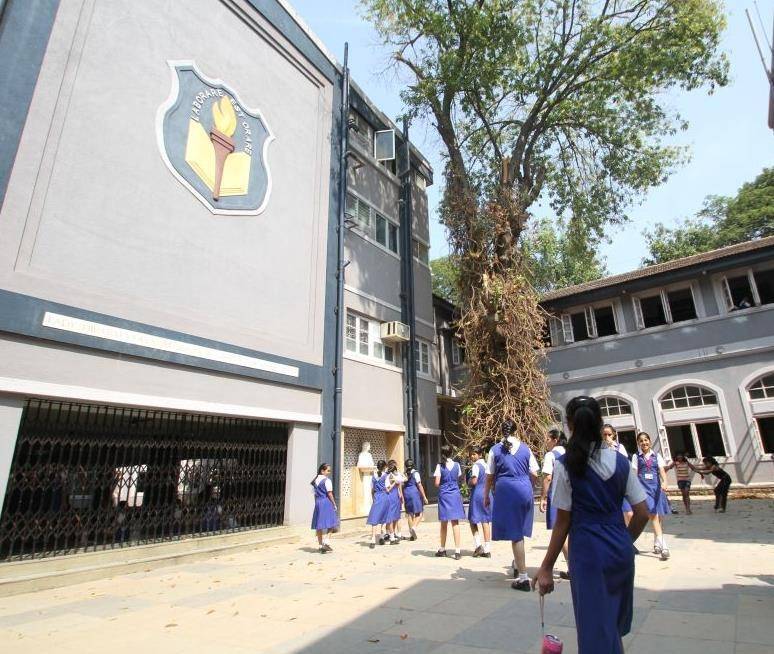
For many years, in fact, all the way until we finished school, my mother sewed our uniforms on that trusted sewing machine. There is something quietly extraordinary about that, though I did not think so at the time. Our uniforms were simple: the kind you would not look at twice, but to us, they were the best.

From kindergarten to class ten, everyone wore the same uniform. The only difference lay in the collar. The younger children had rounded collars, soft and almost decorative, while the older students graduated to proper shirt collars. It was a small shift, but it carried meaning. You could tell where someone stood just by that detail.

Our uniforms were not bought off racks or altered by tailors we barely knew. They were measured, cut, and assembled at home. Every pleat, every hem, every slightly uneven stitch carried the imprint of her hands.

Source

Beyond uniforms, her stitching entered our school life in other ways, too.

My school placed a surprising emphasis on extracurricular activities, and stitching was one of them. It never felt unusual to us then, though I suspect it might now. There were projects to be completed, small assignments that required patience more than talent, and this was where my mother stepped in again.

She would sit with us, guiding without taking over. Showing us how to hold the fabric, how to keep the line straight, how not to rush through something that required care. There was no formal teaching in the way she did it. Just a quiet correction, repetition, and the expectation that we would learn by doing.

Because of that, both my sister and I picked up the basics almost without realising it.

Even now, that knowledge stays.

I can do simple mending. Fix a loose hem. Stitch something back into place before it becomes unusable. Small things, easily overlooked, but quietly useful. The kind of skills that do not announce themselves but make life just a little more manageable.

And somewhere along the way, I began to feel that this is something everyone should know. Not as a hobby, not as nostalgia, but as a basic life skill. The ability to repair, to make, and to extend the life of something with your own hands. It is a small form of independence and a quiet act of care.

Beyond this, she experimented. Skirts, tops, dresses, and nightwear. Sometimes following patterns, sometimes improvising. Occasionally, something would not turn out quite right, but that never seemed to matter. The act of making itself had its own dignity.

Looking back now, I realise that what she created was not just clothing. She created a kind of quiet abundance. Not the abundance of excess, but of self-sufficiency. Of knowing that what you needed could, with patience and effort, be made.

Of course, like most things, this too changed.

There came a point when we wanted more “stylish” clothes. Trends began to matter. What others were wearing began to matter. And slowly, without any formal decision, the home-stitched wardrobe receded. Shops replaced patterns. Ready-made replaced hand-cut.

But the skill did not disappear.

My mother continued to sew her saree blouses, each one fitted not just to her body but to her comfort. She continued with small stitching projects. Repairs, adjustments, quiet fixes that extended the life of things. The sewing machine did not fall silent. It simply spoke less often.

What stays with me, more than the clothes themselves, is the shape of that period. A woman who did not choose the obvious path but still chose to learn. A skill that entered the home and stayed. A rhythm of making that sat alongside the rhythms of everyday life. And a childhood that, without realising it, was surrounded by acts of creation.

It is easy, in hindsight, to romanticise such things. To turn them into symbols of simplicity or “old ways.” But that would miss something important. This was not nostalgia. This was work. Repetition. Discipline. A willingness to sit with something long enough to become good at it.

And yet, there was also something else. A quiet kind of pride. Not announced, not displayed, but present. In a well-fitted uniform. In a neatly finished hem. In the simple fact that something had been made, and made well.

Even now, when I see a sewing machine, I do not just see a tool. I hear that steady rhythm. I see that small balcony corner. I see my mother, bent slightly forward, focused, patient, building something one line at a time. And I realise that long before I began writing, before I understood the satisfaction of shaping words into something whole, I had already witnessed what it means to make.

Mumbai Memories: Our Household Helpers

Growing up in India, everyone had a daily helper who came in for a few hours a day to clean the house and maybe do a bit of cooking or help. This was completely normal to us, and pretty much everyone had someone come in and help with chores. The truly rich had live-in helpers, while we middle-class people had the daily helpers.

The first helper I remember was Maria, a mother’s helper who worked with us as a mother’s helper when my sister was born, and if I remember correctly, she worked until I started school. Her main role was playing with me and helping my mother with any chores related to my sister and me. She was a young girl and worked with us until I started kindergarten, and she also moved away after she got married. I don’t have a lot of memories about her; I only vaguely remember her face and remember that she used to play with me.

Our other helper during Maria’s time was a middle-aged Maharashtrian lady whose name I never learned. We called her “Bai,” and that’s all I remember of her name. She was a solid, no-nonsense lady who worked in my house, along with a few more in the area. She would come twice a day to sweep, mop and clean the dishes as well as do some dusting and heavy-duty cleaning. Her husband worked in a mill, but her biggest sorrow was her sons. She had two of them, and both gave her grief. The oldest got into the wrong company and was also arrested by the police once. The younger hated going to school and would skive at any opportunity he got. She worked for us for a long time, maybe 10ish years. Then, she decided to retire and move back to her village in the Konkan district. She did keep in touch with my mother and would drop by when she was in Mumbai, and she also invited my mother to her older son’s wedding, which my parents attended. I wonder how she is doing now.

After Bai, we had a couple of transient helpers who did not stay long, and so I don’t have many memories about them. There was this Telugu family who lived in the area who worked for many families, and so when my mother was looking for a new helper, she asked that family, and they agreed to work in our home. This family is truly an inspiration to everyone. The parents were not educated, maybe even illiterate, but they had high hopes and dreams for their children, two boys and a girl, especially the boys. They did any and every job that came their way and made sure to educate their sons. I don’t think they spent a lot of time thinking about their daughter, who was maybe 5-8 years younger than me. She dropped out of school early and used to come with her mother to work in people’s homes, and as she grew older, she also started working in homes. The sons, on the other hand, spent their time studying, though they did help in washing cars and other chores before school started. After school, they moved to college, and the daughter was married off. Last I heard, both sons had completed their MBAs, and one was working in a bank in Hyderabad, and the other was in the Middle East; both were married and with their own families. Truly, this family was the epitome of what hard work, dedication, and a growth mindset can do for you. The parents moved in with the son in Hyderabad and are enjoying their retirement. The daughter still lives in Mumbai. She is happy with her life, though I wonder if she sometimes resents her family for not giving her the same chances her brothers got.

After this family, we had two helpers who came as a package deal, probably. The first was someone whom I called Susheela Aunty, who was recommended by my mom’s friend. She started working for my mom in the late nineties. I had already started working by then, so I didn’t interact much with her. She is a lovely person, and her story is also one of struggle. She has three sons, of whom one passed away recently due to cirrhosis of the liver; the middle son is married, and his wife, who comes from a higher social strata, does not want to have anything to do with her in-laws; and the youngest son had a fractured education and is now trying to finish his studies, balancing work while doing it. Susheela aunty stopped working in our home a couple of years after starting because she got a job in a nearby school and got her friend Mary to work in her stead. But she still kept in touch with my parents and was there when they needed help, so much so that she was also authorised to open the flat when my parents travelled, if anyone needed access to our home.

Mary aunty is another person who is close to my parents. She used to call them the equivalent of “mother” and “father” in Tamil, her native language, and her children called them their grandparents. She would spend hours in the house, making sure the house was spick and span, and my mother had to tell her to go to her next job. They could sleep when she was at home, knowing the house was safe and she, along with Susheela Aunty, had full access to the house; they were that trusted. Even today, after almost four years of moving out of Mumbai, both sides call each other, and when I am in Mumbai, they come to see me and call me if there is anything they need to share.

So this was a short tribute to the women who helped us and who, to a large extent, helped shape my personality. I have learned so much from them that I am always grateful to them and the lessons I learned from them.

Mumbai Memories: Start of the School Day

It’s been a while since I shared any story about my school, so today is the day when I do that. In Singapore, next to my home is a primary school. Every day at 7:25 am, on the dot, I can hear the school announcement asking the children to stop doing whatever they are doing and stand up for the national anthem. The Singapore national anthem is followed by the national pledge, and this school then follows it up with their school pledge, and on some days, it is followed by the school song. This routine of the national anthem, followed by the pledge, is seen across all primary, secondary, and junior colleges in Singapore. Most primary and secondary schools have an official start of 7:30 am, though some days, they may have a later start. 

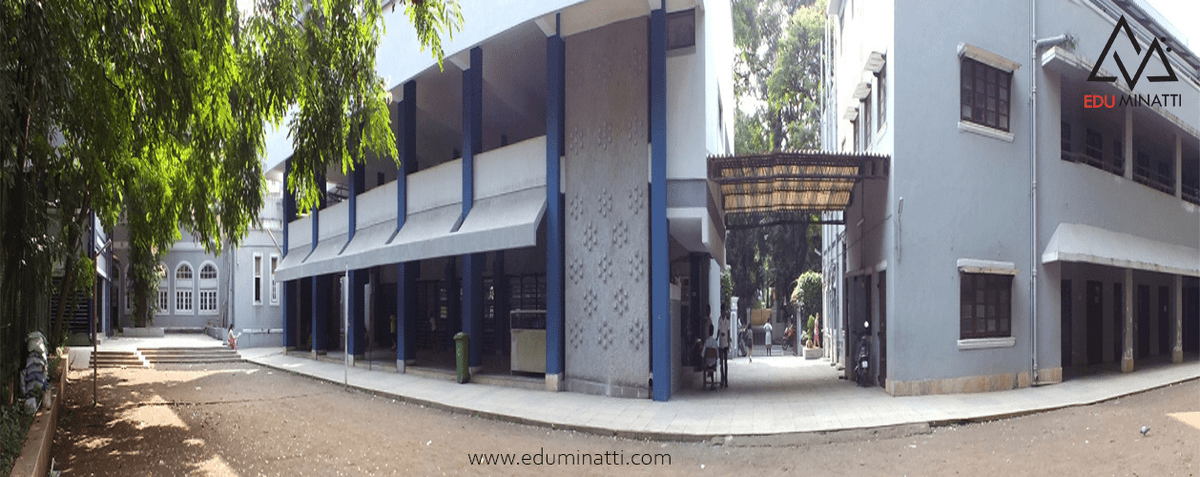
This made me think about how we started our school day in Mumbai. Growing up, most schools started the day with the national anthem, but my school was different. In my school, which was a Parsi school and was very proud of its secular roots, every day was a different prayer. Also, my school had a public announcement system in each classroom, and the infant (aka kindergarten) and primary systems were separate from the secondary ones. 

Once we reached school, we were expected to go straight to our classroom and keep our bags on our desks. Then, if you were early enough, you could go and play outside, which was something the kindergarteners or early primary students did. Most of us spent the time inside the classroom, chatting with friends, catching up on homework, or reading. 

The school’s official start time was about 8:30 am, which was common across all classes. But for the older students, say starting from class 6 or 7, we had what was called a morning class. This was period 0, which started around 8 am but did not have a starting bell. Given that it was widespread, most students would be dropped off at school before 8 am, and those who didn’t have a morning class had an extra 30 minutes to themselves. 

At 8:25 am, the first bell would ring, and everybody had to rush to their class to get ready for morning prayers. My school did not believe in the national anthem daily; that was reserved for special days and national holidays. Instead, we had prayers from all religions on a rotating basis. Some days, it would be Parsi prayers; some days, it would be Hindu prayers in Sanskrit or Tamil or Gujarati or Marathi; or some days, we would have Jain prayers. Sometimes, we would have parents come and say the morning prayers, especially if they had something special to share. This was for both the primary and secondary schools. The only exception to the rule was when any sad news was announced. On those occasions, one of the teachers would recite a special Parsi prayer—the Yatha Ahu Vairyo, a Zoroastrian prayer, widely regarded as something of a talisman, a very potent charm, capable of producing extraordinary effects. On trying to learn more about this prayer, I’ve learned that it is recited by Zoroastrians for the protection and benefit of departed souls, particularly during the mourning period following a death. The prayer’s powerful, primordial nature is believed to offer comfort and aid to the soul on its journey after death. I’ve heard this prayer so many times during my years in school that when writing this paragraph, I unconsciously found myself saying the prayer! After the prayer, we would wish our teacher well and start our day.

At the end of the school day, this was repeated. But because different sections ended their days at different times, the infant school had their prayer at noon, the primary school at 2:30 pm, and the secondary school at 3-3:30 pm. The close of the day prayer would be a short one, and after wishing the teacher well, we would be released.

Next to my home in Mumbai is a school. Growing up, they started much later than me, so I don’t really remember much about their start days. But recently, the school has expanded and now works on a shift system. This means their first shift starts around 6:45 am and the second shift around noon. So during our trips to Mumbai, we have been sometimes awakened to both the Indian national anthem, some Sanskrit shlokas and other national songs at 6:30 am, then again around noon when the first shift ends their day, followed by the second shift around 1 pm and then again around 6 pm when the second shift ends their day. Then I knew how people living around my school probably felt, though we had strict instructions not to make any noise, and any noise complaints by residents in the buildings close to my school were taken very seriously!

Writing this blog post brought back so many memories of a time when we were innocent and carefree, and I wrote this with a huge smile on my face. Thanks for allowing me to share my memories with you…

Mumbai Memories: The Preservation of the Agraharam Tamil Dialect

Growing up, everyone around me spoke Tamil or a Malayalam-tinged Tamil, and I didn’t think anything was amiss. This was my normal. I did hear a slightly different Tamil in the movies, but I didn’t really think too much about it, assuming it was normal for films to sound that way. However, after I moved to Singapore, I experienced culture shock in terms of the Tamil language spoken. The first one came from S and his family, who spoke Tamil, but it was slightly different from what I spoke and had heard spoken all my life. When I asked them, they said their Tamil is the Tamil of the masses, and when they spoke the Tambram dialect, they were teased and made fun of in school and outside, so over the years, the Tambram community in Singapore slowly stopped speaking that dialect and instead switched to the more locally spoken version.

But I am adamant about preserving my heritage, and so far have refused to succumb to subsuming my dialect into the standard Tamil. I don’t speak a lot of Tamil here in Singapore, but when I do, it’s the Tambram Tamil I spoke while growing up. Even with GG & BB, I always spoke to them in this dialect, but given their mostly English language usage, there’s not much hope that they will continue to speak this dialect, and so, at least in my family, the dialect will end with me.

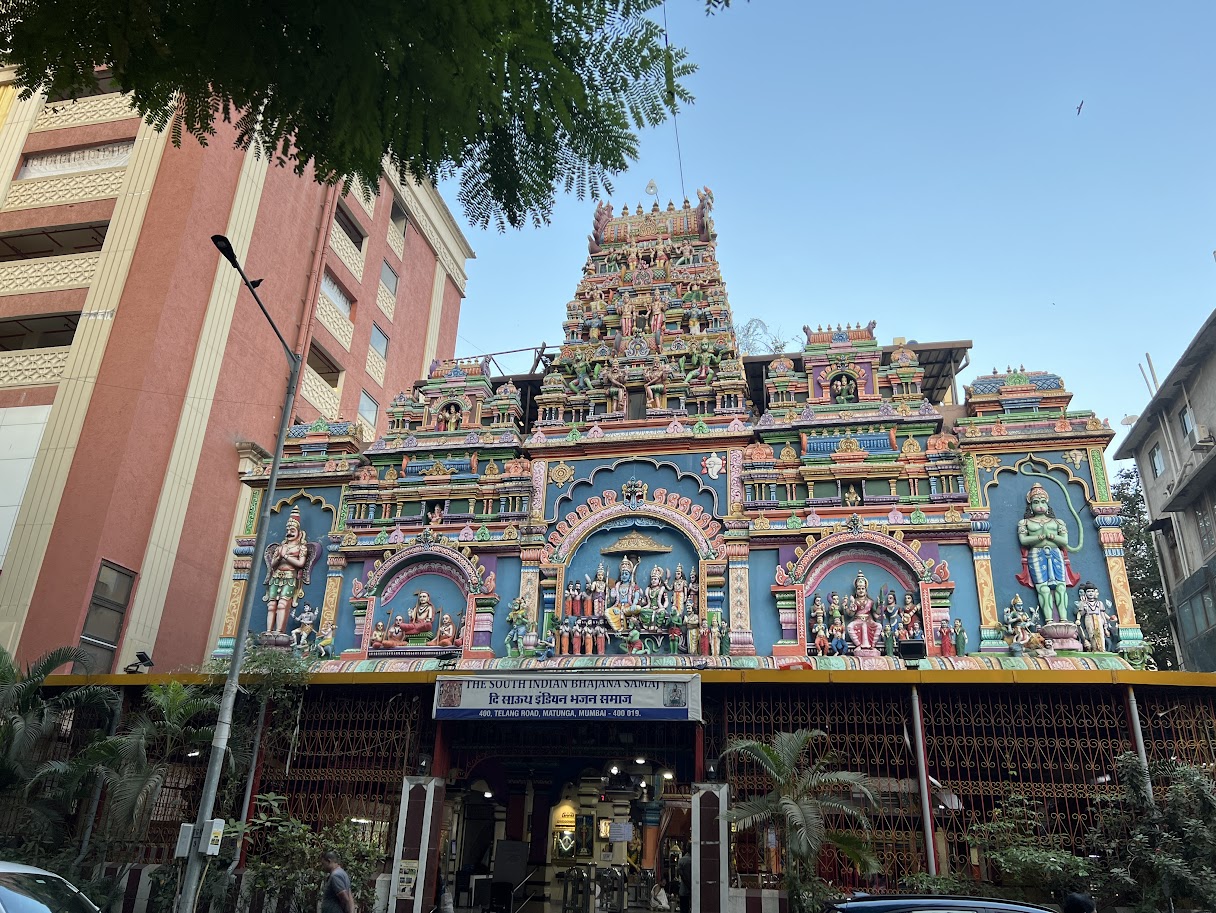
However, the Tamil Brahmins from Tamil Nadu and Kerala who migrated to Mumbai in the 1930s, 1940s, and 1950s have remarkably preserved their Agraharam-style Brahmin Tamil dialects, setting them apart from their counterparts who remained in South India and gradually adapted their speech to local influences. This linguistic retention became a hallmark of communities in areas like Matunga and Chembur, where strong social bonds and cultural traditions reinforced the continuity of dialect and identity across generations.

The migration of Tamil Brahmins to Mumbai was driven by economic opportunities, education, and employment, especially in the early to mid-20th century. Communities from Palakkad in Kerala and Tanjore in Tamil Nadu settled in “urban agraharams” in Mumbai, where they recreated their traditional neighbourhoods with proximity to temples and strong community networks. These settlements fostered a unique microcosm reminiscent of their ancestral villages, creating an environment conducive to linguistic and cultural preservation.

Unlike Brahmins in Tamil Nadu and Kerala, who gradually incorporated elements of regional dialects and accents due to increased interaction with other linguistic communities, those settled in Mumbai retained the Brahmin Tamil dialect, often marked by Sanskritised vocabulary, specific pronunciation patterns, and unique idiomatic expressions. This form of speech, sometimes referred to as “Brāhmik” or “Agraharam Tamil,” remained virtually unchanged for decades because within these tight-knit Mumbai communities, Tamil was spoken largely among themselves, with limited outside influence.

Agraharam Tamil, as spoken by Mumbai’s Tamil Brahmin community, is distinguished by specific lexical, phonetic, and grammatical features that have remained remarkably consistent over decades. Vocabulary features include the extensive use of Sanskrit loanwords or Sanskritised Tamil vocabulary, even for everyday terms (e.g., “upahara” instead of “tiffin” or “snack”); a preference for traditional Brahmin Tamil words such as “aathu” (home) instead of the more common “veetu”; and words and phrases for family, kinship, and rituals that retain old usage (e.g., “aaththu manushaa” for family members).

Pronunciation and phonetic features include the retention of retroflex and “zh” sounds, as in “Tamizh”; here, the older pronunciation is kept alive. Pronunciation is stricter with consonant stress and word-final vowels that are preserved, sometimes more closely adhering to Sanskrit or North Indian phonology (e.g., “Bhāratham” rather than “Bāratham”). The word-final “u” pronounced as a full back vowel in specific contexts.

Grammatical distinctions include specific verb conjugations unique to Brahmin Tamil, such as “varela?” (Are you coming?) versus “vareengla?” in non-Brahmin Tamil. The imperatives use “vaango” (please come) instead of “vaanga”, while the third person plural is often merged with feminine forms, maintaining certain archaic grammatical constructions.

Idiomatic and register features include the frequent use of polite, honorific forms and respectful address stemming from Agraharam culture (words like “mama” and “mami” used for elders or equals), and idioms, greetings, and proverbs rooted in traditional religious or familial contexts.

Social features of the Agraharam Tamil include the use of the dialect within the community for cultural, religious, and domestic discourse, but a code-switch to standard Tamil, English, or Hindi in broader Mumbai society. These features set Mumbai’s Agraharam Tamil apart from both non-Brahmin Tamil and the evolving Tamil of South India, preserving an older, Sanskritised, culturally distinctive dialect in a modern urban setting.

Matunga, Chembur, and similar neighborhoods facilitated daily use of Tamil in religious, social, and family settings. Social gatherings, festivals, and temple activities provided communal reinforcement, allowing younger generations to hear and use the traditional dialect frequently. The cultural insularity of these groups, everyone known as “mama” (uncle) or “mami” (aunt), further insulated their speech patterns from citywide influences, slowing language attrition compared to other urban South Indian populations.

First-generation migrants spoke fluent Palakkad or Tanjore Tamil and often Malayalam, while their children balanced multilingualism, learning Hindi, Marathi, and English for school and work but still using traditional Brahmin Tamil at home. Over time, the third generation adopted more of Mumbai’s urban culture, leading to some language shift, but remnants of the original dialect persist in family conversations, proverbs, and religious contexts.

Brahmins remaining in Tamil Nadu and Kerala were more exposed to local non-Brahmin speech and urban Tamil developments. Political changes and cultural movements led to linguistic adaptation, and many Brahmin families shifted towards regionally dominant accents. In contrast, Mumbai’s Tamil Brahmins maintained a diaspora-style “mini Madras,” echoing older, more formal acculturations of Tamil.

Brahmin Tamil is generally characterised by an elevated use of Sanskrit borrowings, a conservatism in pronunciation and grammar, distinct idiomatic expressions, greetings, and terms, and the retention of certain words, sentences, and intonations associated with temple rituals or traditional family interactions.

These urban agraharams not only preserved language but also traditional food, dress (such as “pavadai” for girls), festivals, and rituals, further reinforcing linguistic distinctiveness. The synergy between physical environment (temple proximity, cohesive housing) and social activities ensured that dialect and culture remained intertwined and resistant to outside change for many decades.

The enduring legacy of the Agraharam-style Tamil dialect among Mumbai’s Tamil Brahmins is a testament to the resilience of cultural identity in the face of migration and urbanization. These communities have preserved not just a way of speaking, but a way of being, deeply rooted in tradition, even as they embraced the cosmopolitan vibrancy of Mumbai.

Mumbai Memories: Calling Her by Name

Tamil kinship terminology is among the most nuanced in the world, distinguishing not only between maternal and paternal relatives but also between older and younger siblings, in-laws, and even parallel and cross cousins. Within this system, “manni” specifically denotes the wife of an elder brother. Other names are Anna, who is the older brother; chitappa, your father’s younger brother or your mother’s younger sister’s husband; and chitti, the wife of your father’s younger brother or your mother’s younger sister. Athai is your father’s sister, and Athimber is her husband. “Athimber” could also refer to the husband of your older sister. The use of these terms is not arbitrary but is deeply embedded in the social fabric, reinforcing respect, hierarchy, and the roles expected of each family member.

The “manni” traditionally occupies a unique position. She is often seen as a secondary maternal figure to her husband’s younger siblings, especially in large joint families. The respect accorded to her is both a reflection of her status as the wife of the eldest son and a recognition of her role in maintaining familial harmony and upholding traditions.

In the patriarchal structure of Tamil Brahmin families, the use of kinship terms such as “manni” is a way of codifying respect and maintaining the social order. The elder brother’s wife is, by her position, to be respected, and the term “manni” is both an acknowledgement of her seniority and a subtle reinforcement of the family hierarchy. This practice also reflects gendered expectations. While the elder brother commands respect as “Anna,” his wife, as “Manni,” is expected to embody dignity, authority, and nurturing, often mediating between the younger siblings and the older generation.

Tamil Brahmin families, especially the Iyers and Iyengars, have historically been fastidious about ritual purity and the correct observance of customs. The use of proper kinship terms was, and in some cases still is, considered part of this ritual correctness. Addressing the elder brother’s wife by her name, rather than as “manni,” could be seen as a breach of decorum, potentially undermining the carefully maintained social order.

However, the latter part of the 20th century saw significant social and economic changes. Urbanisation, the rise of nuclear families, and increased exposure to cosmopolitan values began to erode the rigid hierarchies of the past. As families became smaller and more egalitarian, the need to maintain strict forms of address diminished. Younger generations, influenced by modern education and global culture, began to prioritise individual identity and personal relationships over traditional roles.

My mother’s paternal family is large, and as I have mentioned previously, they lived in a joint family for years before each brother moved out. Even though they moved out, the old joint family home was still the family headquarters, and connections between cousins were very tight. Also, as most tambram families were in the sixties and seventies in Mumbai, they were still conservative and held on tightly to their rituals and culture, especially with the second generation, who were, for the most part, born and lived in the bustling metropolis that Bombay was becoming.

In this context, and this is something I only realised recently, was the fact that none of the cousins called their brother’s wives “Manni.” Instead, they used her given name. Growing up, I thought this was normal and never gave it a second thought. But when I thought about this recently, I thought this was something so liberal and progressive. None of the older generation objected to this, and I am guessing none of the new brides, especially the first one, insisted on being called “manni!” And this percolated to how I perceived relationship nomenclature.

When I got married, S’s younger sister called me “Manni” and still calls me that, even after all these years, even though I told her to call me by my given name. Some of S’s cousins started by calling me manni and then shifted to my given name, while some others call me akka, which means older sister. I am ok with either “manni,” my name, or akka, as I believe at the end of the day, it’s the respect that’s more important, rather than what you are called.

Addressing sisters-in-law by name, rather than as “manni,” can be seen as a subtle but powerful assertion of equality. It signals a move away from rigid hierarchies and towards relationships based on mutual respect and personal connection.

Tamil Brahmin identity has undergone a profound transformation over the past century. Once defined by strict adherence to ritual, vegetarianism, and caste-based hierarchies, the community has become increasingly cosmopolitan, embracing modernity and global values. The decline of practices such as addressing the elder brother’s wife as “manni” is part of this broader shift. Women in Tamil Brahmin families have played a crucial role in this transformation. As they gained access to education and employment, their roles within the family and society changed dramatically. The authority of the “manni” was no longer derived solely from her position as the elder brother’s wife but from her own achievements and personality.

Ultimately, the choice of how to address a sister-in-law is a personal one, shaped by family dynamics, individual preferences, and broader social trends. What matters most is the quality of the relationship, not the form of address.