In My Hands Today…

The Third Gilmore Girl – Kelly Bishop

Kelly Bishop’s long, storied career has been defined by landmark achievements, from winning a Tony Award for her turn in the original Broadway cast of A Chorus Line to her memorable performance as Jennifer Grey’s mother in Dirty Dancing. But it is probably her iconic role as matriarch Emily in the modern classic Gilmore Girls that cemented her legacy.

Now, Bishop reflects on her remarkable life and looks towards the future with The Third Gilmore Girl. She shares some of her greatest stories and the life lessons she’s learned on her journey. From her early transition from dance to drama, to marrying young to a compulsive gambler, to the losses and achievements she experienced—among them marching for women’s rights and losing her second husband to cancer—Bishop offers a rich, genuine celebration of her life.

Full of witty insights, The Third Gilmore Girl is a warm, unapologetic, and spirited memoir from a woman who has left indelible impressions on her audiences for decades and has no plans on slowing down.

Sacred Stones, Spaces and Stories: Shakthipeeta Part 20

Nalhateswari Temple, Nalhati, West Bengal
The Nalateswari Temple, located in Nalhati, Birbhum district is dedicated to Maa Nalateswari, a form of Goddess Sati, and Lord Shiva is worshipped here as Jogesh Bhairava. It is believed that the larynx or nala of Goddess Sati fell at this site.

The temple’s history dates back to the 16th century, with its construction attributed to the Malla kings. However, local legends suggest that the temple was rediscovered by Ram Sharam Devsharma, a devotee who found the larynx of Maa Sati in the dense forests of Nalhati. Over time, the temple became a centre of devotion and was later renovated by Rani Bhavani and Maharaja Ranajit Singh of Nashipur in the late 19th century. The name Nalateswari derives from Nala or larynx and Ishwari or goddess. The temple also served as a refuge for freedom fighters during India’s independence movement.

The sanctum sanctorum houses a self-manifested or swayambhu stone idol of Maa Nalateswari adorned with vermilion, sindoor, a silver crown, and three golden eyes or trinayan. Her golden-red tongue symbolizes her fierce aspect. Below her idol lies the sacred nala or throat of Sati. It is believed that no matter how much water is poured on it, it never overflows or dries up. Devotees often hear a gulping sound resembling human swallowing when water flows through it. A sacred pond known as Lalita Kund lies within the temple premises. Pilgrims take a holy dip in this pond before entering the shrine to purify their souls. The temple features traditional Bengali architecture with a raised pinnacle, a shikhara, above its sanctum. Its design includes a natmandir, a prayer hall, and smaller shrines dedicated to Lord Shiva, Lord Ganesha, and Lord Hanuman. A mysterious neem tree near the temple is considered sacred by devotees. It is said to possess healing powers and is often worshipped alongside Maa Nalateswari.

Daily worship at the temple include the morning and evening aartis. Navratri is celebrated twice a year with grand rituals honoring Maa Nalateswari’s nurturing aspect. Devotees observe fasting during these nine days to seek blessings for prosperity and protection. Kali Puja is celebrated with great fervor at Nalateswari Temple. Elaborate rituals are conducted to honor Maa Durga’s fierce aspect as Kali. Devotees offer red hibiscus flowers symbolic of power and victory over evil forces. Every full moon or Purnima, a grand fair is held within the temple grounds. This event includes cultural programs, stalls selling handicrafts, and community feasts. On new moon or Amavasya nights, special Tantric rituals are conducted by priests to invoke Maa Nalateswari’s protective energy.

According to legend, Kamdev, the Hindu god of love, dreamt about the existence of Maa Sati’s larynx in the forests of Nalhati. Guided by his vision, he discovered the sacred spot where her nala lay buried beneath layers of earth. This marked the beginning of worship at this Shakti Peetha. Devotees believe that pouring water on Maa Nalateswari’s throat produces a gulping sound resembling human swallowing—a phenomenon considered miraculous by pilgrims who visit this shrine. During India’s struggle for independence, freedom fighters used the temple premises as a hideout due to its remote location and supportive priests who provided them shelter and food.

The Nalateswari Temple offers visitors a unique spiritual experience rooted in mythology and devotion. It is a must visit for those seeking solace or want to explore India’s rich cultural heritage.

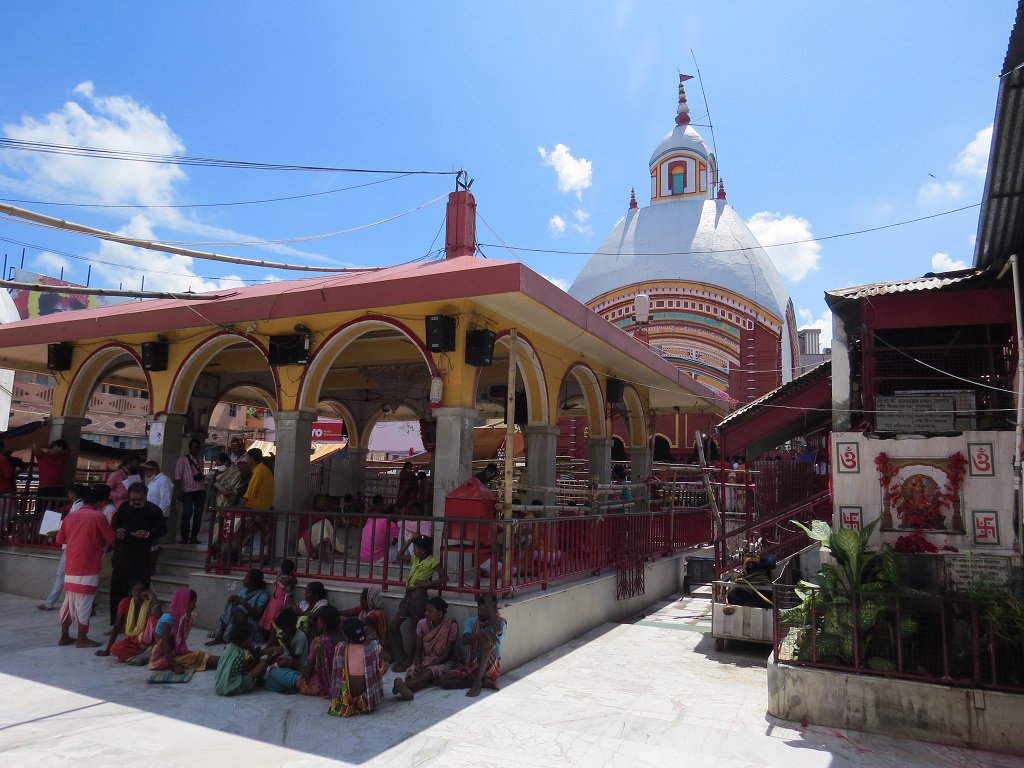
Tarapith, Rampurhat, West Bengal
Recognised as one of the Shakti Peethas, the Tarapith Temple, located in Rampurhat is dedicated to Goddess Tara, a fierce and compassionate form of Shakti. At Tarapith, it is said that the third eye of Sati fell, sanctifying the location as a center of immense spiritual energy. The temple is closely associated with tantric practices and the mystic saint Bamakhepa, whose life and devotion to Tara are legendary.

The temple is said to have been established in the 13th century and has undergone several renovations over time. The current structure was built in 1225 by Jagannath Ray of Mallarpur village. The temple’s name derives from Tara which means star or eye in Bengali, symbolizing the divine vision of Goddess Tara. Tarapith has been a centre for tantric practices for centuries and is regarded as a Siddha Pitha, a site where devotees can attain enlightenment and supernatural powers or siddhis. The temple’s proximity to the cremation ground further enhances its significance for tantric practitioners.

Goddess Sati is worshipped here as Maa Tara, symbolising protection, compassion, and divine wisdom. Lord Shiva is revered as Akshobhya Bhairava, representing his role as a guardian and protector. The third eye or netra of Sati is believed to have fallen at this site.

The main idol of Maa Tara depicts her suckling Lord Shiva as a child. This unique form symbolises her nurturing aspect while also embodying her fierce power. The idol is adorned with a silver crown, red vermilion or sindoor, and garlands made from skulls or mundamala, emphasising her tantric association. Tarapith is renowned as one of India’s most important centres for tantric worship. Tantriks perform esoteric rituals in the adjoining cremation ground to invoke Maa Tara’s blessings. Offerings such as liquor and meat are made during specific rituals, reflecting ancient tantric traditions.

The cremation ground near the temple is considered highly sacred and serves as a hub for tantric practices. Devotees believe that Maa Tara resides here in her ferocious form. Many pilgrims visit this site to meditate or perform ancestral rites or tarpan. The temple is closely linked to the mystic saint Bamakhepa, who spent his life worshipping Maa Tara. His ashram near the temple continues to attract devotees seeking spiritual guidance.

The temple features an eight-roofed structure, an aatchala, with intricate carvings depicting scenes from Hindu epics like the Mahabharata and Ramayana. Its simplicity contrasts with its profound spiritual energy.

Daily pujas are performed by priests who offer flowers, bananas, coconuts, sweets, liquor, and even meat to Maa Tara. Morning Aarti begins at sunrise with chanting of hymns like Durga Saptashati, while evening Aarti concludes with lighting oil lamps around the temple premises. Kamalakanta Kali Puja is the annual festival dedicated to Maa Kali that attracts thousands of devotees who gather for night-long prayers and rituals. Special offerings like red sarees and garlands made from hibiscus flowers are presented to Maa Tara during this time.

Devotees perform tarpan or ancestral rites at the cremation ground near the temple to honor their ancestors and seek their blessings. Tantriks perform esoteric rituals during auspicious nights like Amavasya or the new moon, to invoke Maa Tara’s blessings for spiritual growth or supernatural powers. Devotees often seek healing from ailments by offering prayers at Maa Tara’s shrine or taking a dip in the sacred tank adjacent to the temple.

According to legend, Sage Vashishtha performed intense penance at Tarapith to please Goddess Tara. Despite reciting her mantra 300,000 times, he failed to invoke her presence. On Lord Buddha’s advice, Vashishtha adopted tantric practices, vamachara, and successfully pleased Maa Tara. She appeared before him in her nurturing form—breastfeeding Lord Shiva—and turned into a stone idol that became enshrined in the temple.

Known as the mad saint, Bamakhepa was one of Maa Tara’s most ardent devotees. He spent years meditating in the cremation ground and was said to possess miraculous healing powers granted by Maa Tara herself. Once when priests denied him food before offering it to Maa Tara, she appeared in a queen’s dream demanding that Bamakhepa be fed first as her beloved son. The sacred tank near the temple is believed to have healing properties. Devotees often bathe here before entering the temple premises or collect its water for use in rituals.

The Tarapith Temple offers visitors a unique spiritual experience rooted in mythology and devotion. Its unique features like tantric practices emphasise ancient traditions while preserving spiritual heritage.

Shrinkala Devi Temple, Pandua, West Bengal
The Shrinkala Devi Temple, once located in Pandua, West Bengal, is shrouded in controversy and uncertainty. Unlike many other Shakti Peethas, this sacred site has a complex history that has led to debates about its current location and status.

Originally situated in Pandua, Hooghly district, the Shrinkala Devi Temple was considered one of the 51 Shakti Peethas and was believed to be the spot where Sati’s stomach fell. However, the original temple structure no longer exists. Historical records indicate that it was destroyed by Muslim invaders, likely during the Delhi Sultanate period. A minar was subsequently built at the site, possibly by Zafar Khan Gazi, a general of Sultan Alauddin Khalji in the late 13th century.

The destruction of the original temple has led to several controversies and competing claims about the true location of the Shrinkala Devi Shakti Peetha. Some believe that the original site in Pandua remains the true Shakti Peetha, despite the absence of a temple structure. The Archaeological Survey of India now maintains the site. Another claim suggests that Rishyasringa Maharshi, on the goddess’s command, moved the deity to Sringeri in Karnataka. Some devotees believe the Shakti Peetha is present in the Ganga Sagar region, also known as Adinath Kshetra. There are also claims that the temple might be located in Chotila, Gujarat while some sources suggest the temple might be near the Somnath temple in Prabhas Pattan.

In recent years, there have been efforts by Hindu organisations to reclaim and revive the worship of Shrinkala Devi. The Sanyukta Hindu Front initiated a campaign in 2022 to restore the significance of the Shrinkala Devi temple. They have started performing regular pujas on Amavasya or new moon days and are seeking information from the Archaeological Survey of India about the original site in Pandua.

Despite the absence of a physical temple, devotion to Shrinkala Devi continues. Given the uncertainty of the temple’s location, many devotees worship Shrinkala Devi in a formless aspect. An annual 30-day festival called Mela Tala is celebrated near the original site in Pandua during the month of Magha, around February. The Sanyukta Hindu Front has encouraged devotees to perform small pujas in their homes or offices on Amavasya days.

As efforts continue to reclaim and revive the worship of Shrinkala Devi, this Shakti Peetha serves as a poignant reminder of the complex interplay between faith, history, and cultural preservation in modern India. It challenges us to consider how spiritual traditions can endure and evolve even in the absence of physical structures, and how devotees can maintain connections to sacred sites across vast distances and through centuries of change.

In My Hands Today…

Cleopatra’s Daughter: From Roman Prisoner to African Queen – Jane Draycott

The first modern biography of one of the most influential yet long-neglected rulers of the ancient world: Cleopatra Selene, daughter of Antony and Cleopatra.

As the only daughter of Roman Triumvir Marc Antony and Egyptian Queen Cleopatra VII, Cleopatra Selene was expected to uphold traditional feminine virtues; to marry well and bear sons; and to legitimize and strengthen her parents’ rule. Yet with their parents’ deaths by suicide, the princess and her brothers found themselves the inheritors of Egypt, a claim that placed them squarely in the warpath of the Roman emperor.

“Supported by a feast of visual and literary references” (Caroline Lawrence), Cleopatra’s Daughter reimagines the life of Cleopatra Selene, a woman who, although born into Egyptian royalty and raised in her mother’s court, was cruelly abandoned and held captive by Augustus Caesar. Creating a narrative from frescos and coinage, ivory dolls and bronzes, historian and archaeologist Jane Draycott shows how Cleopatra Selene navigated years of imprisonment on Palatine Hill―where Octavia, the emperor’s sister and Antony’s fourth wife, housed royal children orphaned in the wake of Roman expansion―and emerged a queen.

Despite the disrepute of her family, Cleopatra Selene in time endeared herself to her captors through her remarkable intellect and political acumen. Rather than put her to death, Augustus wed her to the Numidian prince Juba, son of the deposed regent Juba I, and installed them both as client rulers of Mauretania in Africa. There, Cleopatra Selene ruled successfully for nearly twenty years, promoting trade, fostering the arts, and reclaiming her mother’s legacy―all at a time, Draycott reminds us, when kingship was an inherently male activity.

Adulting 101: Navigating the Job Market – Resume Writing, Interviews, and Networking

The job market can be intimidating, especially for young adults entering the workforce for the first time. Whether fresh out of university or looking for a new role, knowing how to craft a standout resume, ace interviews, and network effectively are critical skills for landing the right job.

Why is navigating the job market important? Entering the job market can be overwhelming, but it’s also an opportunity for growth, exploration, and building your dream career. Here’s why mastering the process is vital. Understanding what employers look for and presenting yourself effectively can set you apart from other candidates. Securing the right job opens doors to new opportunities, mentorships, and long-term career development. Navigating the job market successfully helps you gain confidence in your abilities and value as a professional. Equipped with the right skills, you can make the transition into the workforce more manageable and rewarding. Let’s start by focusing on the first element: creating a powerful resume.

Part 1: Resume Writing – Crafting a Standout Application
Your resume is your first point of contact with potential employers. It’s a snapshot of your professional story that showcases your skills, accomplishments, and experiences. Here’s how to craft a winning resume:

  • The purpose of a resume: The resume’s purpose is to summarise your qualifications and convince hiring managers to invite you for an interview. It should be tailored to highlight the skills and experiences that are relevant to the specific role you’re applying for.
  • Key components of a resume: A well-structured resume typically includes contact information like name, phone number, email address, and LinkedIn profile. Ensure your email is professional. It should also include a brief overview of your qualifications and career goals. Highlight relevant technical and soft skills that align with the job description. List your work experience in reverse chronological order, focusing on accomplishments rather than duties. Mention your degrees, institutions, and graduation dates and include any certifications, awards, or recognitions that boost your credibility for the role.
  • Resume writing tips: Follow these tips for a polished and impactful resume. Customise your resume for each job application by emphasising skills and experience relevant to the role. Start bullet points with strong action verbs like “implemented,” “led,” “optimised,” or “achieved.” Use numbers to quantify achievements (e.g., “Improved sales by 20%” or “Managed a team of 5”). Limit your resume to one page unless you have extensive experience. Check for spelling or grammar mistakes. Errors can make a bad impression.
  • Avoid common resume mistakes: Be mindful of these pitfalls: Avoid cluttering your resume with irrelevant details. Focus on what’s important. Use a clean, professional layout with clearly labeled sections. Replace vague objectives with a professional summary showcasing your value.

Part 2: Interview Preparation – How to Shine in the Spotlight
Securing an interview means that your resume has done its job. Now, it’s time to shine in person (or virtually) by showcasing your skills, personality, and enthusiasm for the role.

  • Types of job interviews: Understanding the types of interviews can help you prepare better. Traditional interviews are one-on-one conversations with hiring managers, while in panel interviews, multiple interviewers ask questions in a formal setting. Behavioural interviews focus on past experiences and how you’ve handled specific situations. Virtual interviews are conducted via video platforms like Zoom or Teams, while group interviews involve interaction with other candidates and assessing your teamwork skills.
  • Preparing for the interview: Preparation is the key to interview success. Study the company and research its mission, values, products, and services to familiarise yourself with the industry and competitors. Understand the role. analyse the job description to identify key responsibilities and required qualifications, and prepare to discuss how your skills align with the role. Practice common interview questions, including “tell me about yourself”, “what are your strengths and weaknesses”, “why do you want to work here”, and “describe a challenge you’ve faced and how you overcame it.”
  • Prepare STAR responses: Use the STAR method when answering behavioral questions. S stands for Situation, where you describe the context of the example. T stands for Task, where you explain the goal or challenge. A stands for Action, which details the steps you took to address the situation. R stands for Result, or the outcome and what you learned. Dress professionally and choose attire appropriate for the company culture (business formal or smart casual). Avoid noisy jewelry or overly casual clothing. Practice mock interviews and practice interviews with friends or mentors to refine your answers and boost your confidence.
  • Performing well during the interview: Make a lasting impression by showcasing professionalism and enthusiasm. Arrive on time. If it’s virtual, test your tech setup and video connection beforehand. For in-person interviews, arrive early. Be engaged and actively listen to questions and respond thoughtfully.
  • Highlight your value and focus on how you can contribute to the company rather than just describing your skills. Ask questions and prepare thoughtful questions about the role or company to show genuine interest. Express gratitude and thank the interviewer for their time and opportunity.

Part 3: Networking – Building and Leveraging Connections
Networking is one of the most powerful tools for career advancement. Building professional relationships and tapping into your network can lead to job opportunities, mentorships, and collaboration.

Networking is crucial for several reasons. Many jobs are not publicly listed but filled through referrals. Networking allows you to learn about industries, roles, and companies from experienced professionals. Consistently connecting with others helps you establish your reputation in your field.

Networking doesn’t mean randomly handing out business cards. It’s about building meaningful connections. Start with your existing network and inform friends and family about your career goals; they may have valuable connections. Reach out to former professors or alumni networks for advice and introductions. Attend conferences, workshops, or seminars in your field. Participate in job fairs to connect with recruiters and learn about opportunities.

Leverage online platforms like LinkedIn by optimising your profile and engaging with professionals by commenting on posts, joining groups, and messaging connections. Build connections at work by connecting with colleagues and building relationships with coworkers by collaborating effectively and supporting team efforts. Seek mentorship by finding experienced colleagues who can share insights and guidance. Practice professional communication and be genuine when networking authentically rather than self-promotion. Follow up and send thank-you emails or messages after meetings or introductions.

Introverted individuals can excel at networking by leveraging their strengths. Focus on one-on-one interactions rather than large groups, and prepare talking points to ease conversations. Use written communication (emails or LinkedIn messages) to connect thoughtfully.

Putting It All Together
Navigating the job market takes effort, strategy, and resilience. By mastering the three pillars—resume writing, interviews, and networking—you can position yourself for success. Here’s how to integrate these strategies:

  • Build a strong foundation by crafting a polished resume and tailoring it for each job application.
  • Prepare for opportunities and practice for interviews thoroughly to showcase your skills confidently.
  • Cultivate relationships and dedicate time to build a network that supports your career goals.
  • Stay persistent because rejections are inevitable in any job search, but persistence is key. Learn from setbacks and keep improving.

Navigating the job market as a young adult is a vital step in personal and professional growth. By focusing on writing a standout resume, preparing thoroughly for interviews, and building a strong network, you can create the foundation for a successful career. Remember, each step in your journey is an opportunity to learn, connect, and grow. With dedication and the strategies outlined here, you’ll be ready to tackle the job market and achieve your goals!

In My Hands Today…

Foolproof: Why Misinformation Infects Our Minds and How to Build Immunity – Sander van der Linden

Informed by decades of research and on-the-ground experience advising governments and tech companies, Foolproof is the definitive guide to navigating the misinformation age.

From fake news to conspiracy theories, from inflammatory memes to misleading headlines, misinformation has swiftly become the defining problem of our era. The crisis threatens the integrity of our democracies, our ability to cultivate trusting relationships, even our physical and psychological well-being―yet most attempts to combat it have proven insufficient.

In Foolproof , one of the world’s leading experts on misinformation lays out a crucial new paradigm for understanding and defending ourselves against the worldwide infodemic. With remarkable clarity, Sander van der Linden explains why our brains are so vulnerable to misinformation, how it spreads across social networks, and what we can do to protect ourselves and others.

Like a virus, misinformation infects our minds, exploiting shortcuts in how we see and process information to alter our beliefs, modify our memories, and replicate at astonishing rates. Once the virus takes hold, it’s very hard to cure. Strategies like fact-checking and debunking can leave a falsehood still festering or, at worst, even strengthen its hold. But we aren’t helpless.

As van der Linden shows based on award-winning original research, we can cultivate immunity through the innovative science of “prebunking”: inoculating people against false information by preemptively exposing them to a weakened dose, thus empowering them to identify and fend off its manipulative tactics. Deconstructing the characteristic techniques of conspiracies and misinformation, van der Linden gives readers practical tools to defend themselves and others against nefarious persuasion―whether at scale or around their own dinner table.