
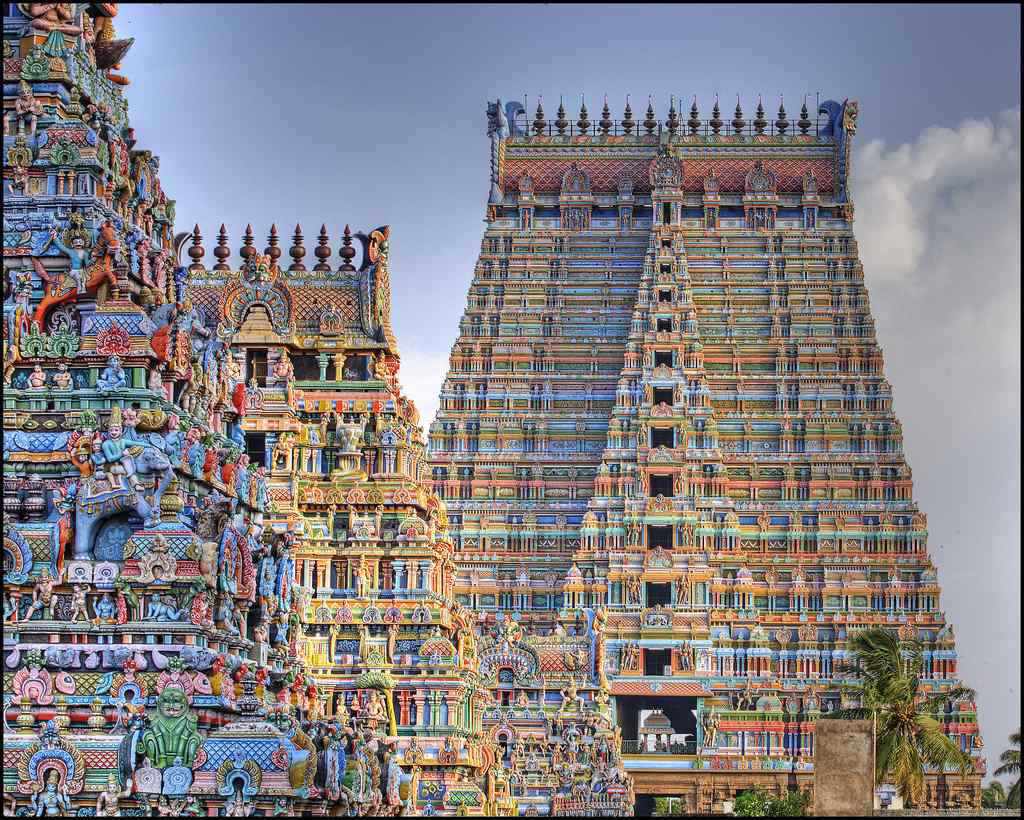
Temples do more than mark places on a map. Some, like the Divya Desams, become the living heart of a tradition: sites layered with history, myth, and a sense of the divine that shapes what Vaishnava devotees believe and do.
What are Divya Desams?
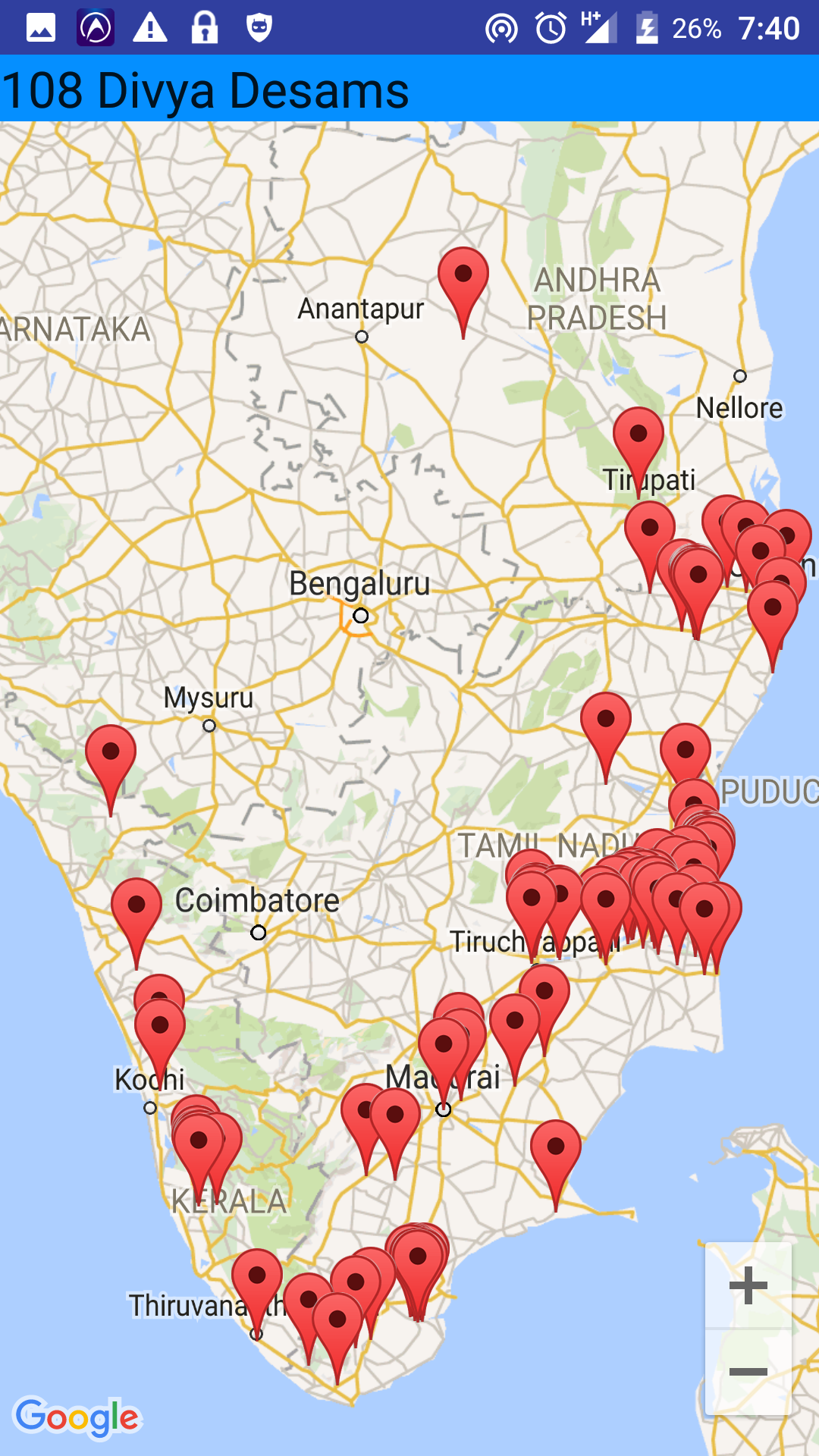
Divya Desam comes from two Sanskrit-Tamil words: divya, meaning “divine” or “heavenly,” and desam, meaning “place” or “abode.” So literally, a “divine abode”. These are 108 temples dedicated to Lord Vishnu. The sites are scattered across India, though most rest in Tamil Nadu. The term in the Vaishnava tradition of South India came to refer to the set of shrines dedicated to Vishnu (and Lakshmi) that were specifically praised in the hymns of the Āḻvārs: the Tamil saint-poets of Bhakti. The concept isn’t just about bricks and pillars. For believers, these temples are windows onto the eternal, through which they glimpse the god who preserves the universe. A temple qualifies as a Divya Desam if the presiding deity is Vishnu (or a form thereof), the consort goddess (Lakshmi) has a visible shrine, and one of the Alvars has composed verses (pasurams) praising that deity and place. Because of this, these temples are often regarded as “earthly Vaikuṇṭhas” (Vaishnava heavenly abodes), sacred portals between the everyday world and the divine.
Why 108 temples? The number 108 holds deep meaning in Hindu practice. It shows up everywhere: in the beads of a prayer mala, the number of sacred sites, in the distance between the Earth and Sun, which is roughly 108 times the Sun’s diameter, in the Sanskrit alphabet, which has 54 letters, each with masculine and feminine forms, making it 108 in total, and the repetitions of a mantra for spiritual completeness. With 108 abodes, the Divya Desam list isn’t random. It reflects a tradition that ties cosmic ideas: the zodiac, planets, and cycles, to the quest for spiritual wholeness. So when the Vaishnavas defined 108 Divya Desams, they weren’t just counting temples; they were mapping a cosmic mandala of Vishnu’s presence across the subcontinent.

The Alvars and their hymns
The 12 Alvars, 11 male and 1 female, who lived between the sixth and ninth centuries CE are central to this. The Alvars weren’t elite priests or hereditary leaders; their stories say some came from humble backgrounds, chosen for devotion rather than pedigree. These saints wandered across South India, composing thousands of verses called the Nalayira Divya Prabandham. In their poetic visions, they described encounters with Vishnu and sang the glory of his temple abodes, setting the foundation for what later became Sri Vaishnavism. These poet-saints did not limit themselves to Sanskrit scholarship; they wrote in Tamil, their language, and thus brought spirituality into everyday life, temple culture and accessible devotion. Because many temple-shrines had become focal points of local devotion, pilgrimage, and legend, the Āḻvārs naturally visited them (or were associated with them) and composed hymns in praise of Vishnu in those places. Those temples thus gained a special mark; they were not simply local shrines but became celebrated in the corpus of devotional literature. This wasn’t a movement of passive worship. The Alvars’ hymns are intense, filled with longing, joy, and philosophical searching. The poems make each temple a site for meeting the divine; Vishnu isn’t locked away in myth, but available to anyone through devotion.
Over time, temple administrators, theologians, and pilgrim traditions formalised the collection of places sung by the Āḻvārs. The hymns were compiled into the Tamil corpus called the Nālaīra Divya Prabandham (literally “4,000 [verses] of Divine Praise”).
In turn, the shrines mentioned in the hymns were designated as the Divya Desams, forming a canonical pilgrimage list and reinforcing the intimate link between temple and poet, place and pasuram, and devotion and geography.
From a practical-cultural point of view, for devotees, having a defined set of sacred destinations offers an organised pilgrimage route; for temples, being part of the 108 adds prestige, patronage, and reference in liturgy; for theology, it emphasises that the divine can be encountered in fixed locations, not only in the cosmos.
Divya Desams aren’t just historical; myth shapes every stone. According to tradition, the first Divya Desam originated at Tirukkovalur. The story goes like this: three of the earliest Alvars, the so-called Mudal Alvars, ended up at an ashram on a stormy night, seeking shelter. The space was tiny, but the rain forced them together. Suddenly, the saints sensed a fourth presence. By singing their unique hymns, the three lit up the dark, and there, with his consort, stood Vishnu, an unplanned, divine gathering, launching a tradition where devotion itself becomes a way to summon the god.
Each temple comes with its own tale. Some legends feature Vishnu resting on a serpent in a cosmic ocean, called “Bhuloka Vaikuntham,” or heaven brought to earth. Others have sacred objects or idols springing forth in a celestial drama, guided to earth by Garuda or Adisesha, the mythic eagle and serpent. Yet there are other stories of curses or boons, where Vishnu appears in response to intense prayer, the demands of fate, or the suffering of a devotee.
The Sriranga Mahathmya tells of a time when Brahma, through deep penance in the Milky Ocean, was granted the Sriranga Vimana by Vishnu. This sacred structure was carried by Garuda, shielded by Adisesha, and passed through divine hands. Brahma established this deity in Satyaloka, but, moved by devotion, allowed the King of Ayodhya to install it on earth. Eventually, Rama gifted the Vimana to Vibheeshana, who tried to carry it back to Lanka, only for fate (and Ganesh in disguise) to anchor it in Tamil Nadu, where the Srirangam temple now stands.

Some stories push the boundaries of the everyday. Mathura and Ayodhya, the birthplaces of Krishna and Rama, become Divya Desams. Naimisaranya appears in ancient texts as a spot where epic events unfolded. At Tirumala, legend says Vishnu became Venkateshwara after a sage’s curse. Later, Ramanujacharya, a famous teacher, rescued the temple’s lost idol after a vision. Here, temples don’t just mark geography; they are woven into the fabric of myth, often blending real events with flights of imagination.
Why did the concept arise? It’s easy to see the Divya Desams as just a list, but the idea came about for a reason. By the early medieval period, India’s religious landscape was competitive. Temples meant power and influence. The Sri Vaishnava tradition responded by defining its sacred geography. Instead of a single holy site, it claimed 108 spots, each connected to a story, a saint, and a devotional experience. This made the tradition more accessible; anyone could reach a Divya Desam nearby or aspire to visit all for spiritual merit.
The movement also cemented a network of belief. Devotees journeyed between temples, spreading ideas, stories, and cultural practices. Over time, these places became centres of worship, art, and education. The Divya Desams anchored a wide and diverse tradition, connecting people across regions and social backgrounds.
Not everyone sees the Divya Desams the same way. Some historians argue that temple lists like this often change over time, depending on politics or sectarian rivalry. Temples rise and fall in popularity; some are rebuilt, others fade. The mythic stories, for all their beauty, sometimes clash with archaeological evidence or records from different traditions. While Vaishnavism claims these 108 as unique, other branches of Hinduism see their own sacred places as equally important.
Several stories seem to blend the divine with daily life: heroes, saints, and gods interact, but who’s to say where fact stops and fiction begins? Did the Alvars really experience visions as described, or were these tales made to inspire devotion later? Most traditions admit that myth isn’t meant to be literal history. Its job is different: to inspire, to make sense of the world, to guide how believers respond to suffering or joy. The Divya Desams succeed at that. But if you’re after provable facts, the story gets murkier.
Now the temples mark routes for passionate pilgrims and curious travellers. Devotees see visiting all 108 as a way to reach moksha, spiritual liberation. But most settle for those nearby, drawn by the hope of blessings, healing, or peace. Festivals light up these temples; thousands gather, old stories come alive, and the cycle continues. Temples, too, serve the world outside. Many participate in charitable acts, like feeding devotees or providing shelter. These traditions root faith in everyday kindness, making the divine not just a distant ideal but a living, breathing part of the community.
So join me as I explore, question, and walk the line between faith and doubt, challenge the limits of mythic tradition, but see why, even now, these abodes matter.
 Memories and Such