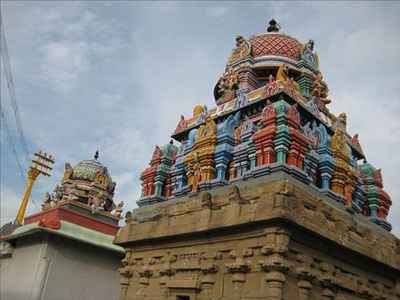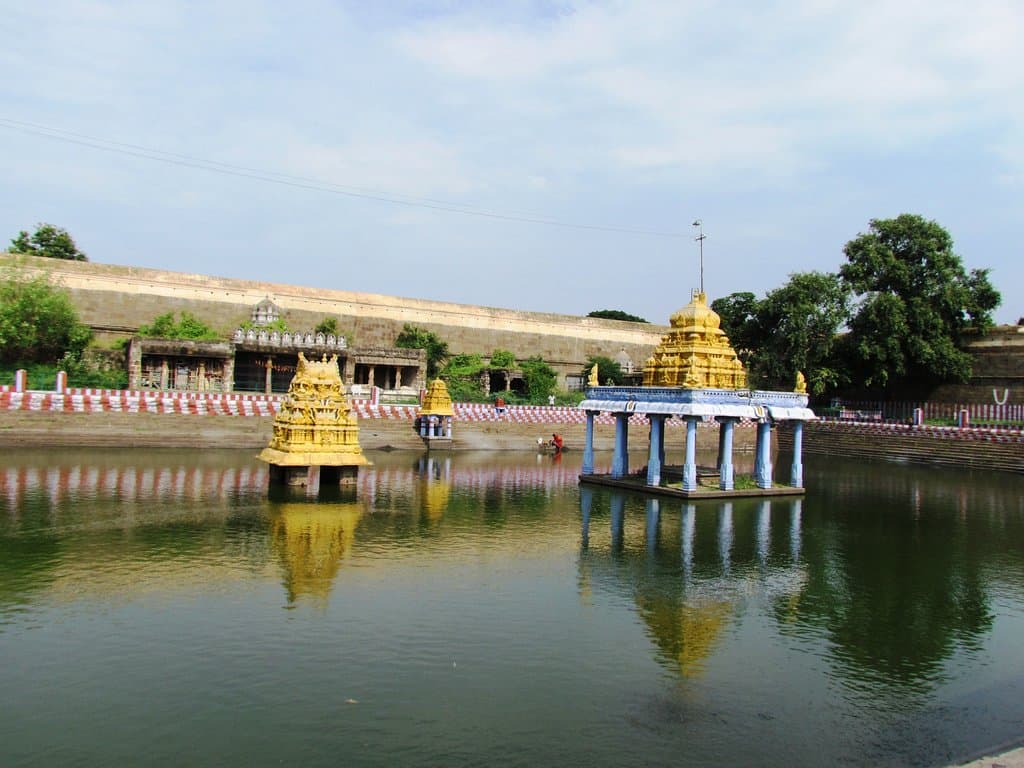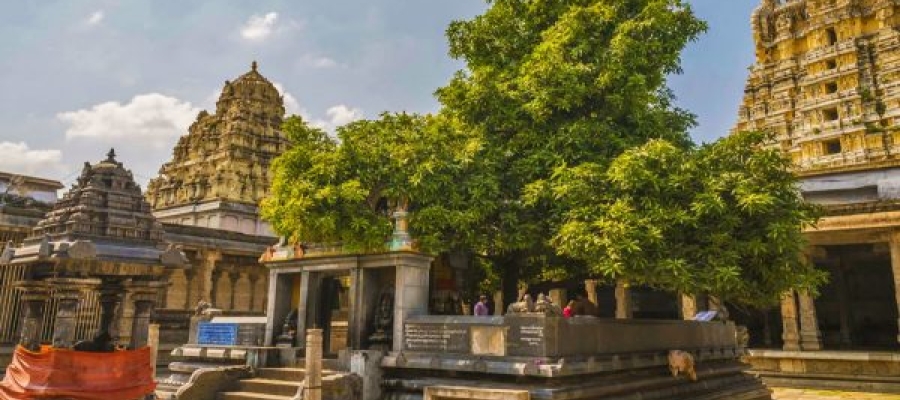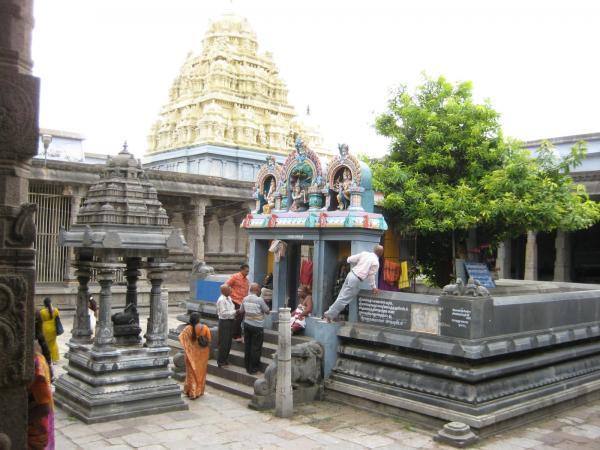
Thiru Parameswara Vinnagaram Temple, Kanchipuram, Tamil Nadu
Moving away from Kanchipuram town and its tightly clustered Divya Desams, Thiruputkuzhi feels quieter and more open, but no less important. This temple, dedicated to Vijayaraghava Perumal and Maragathavalli Thayar, stands in a place shaped by grief, loyalty and dignity. It is one of those temples where the central story is not only about Vishnu in his divine majesty, but about what happens when the divine pauses for sorrow. Thiruputkuzhi is tied to the Ramayana, and more specifically to the death of Jatayu, the great bird who gave everything he had trying to save Sita. That alone gives the temple a different emotional tone. It is not mainly a temple of victory, though the Lord here is called Vijayaraghava. It is a temple of compassion shown in the middle of loss. In that sense, it feels deeply human.
The core legend of Thiruputkuzhi begins at one of the most painful moments in the Ramayana. When Ravana abducted Sita and carried her away, Jatayu, old and weakened by age, still rose to stop him. He fought not because he expected to win, but because it was the right thing to do. He could not simply watch wrongdoing and remain still. Ravana cut off his wings and left him mortally wounded. Later, as Rama and Lakshmana searched desperately for Sita, they found Jatayu lying on the ground. With his last breath, he told Rama what had happened. The story could have ended there, with the death of a loyal ally in the wilderness. But it does not. Rama, recognising Jatayu’s sacrifice, performed the bird’s last rites with the honour due to a father. That act is what gives Thiruputkuzhi its heart. The Lord did not move on quickly. He stopped. He mourned. He honoured courage.
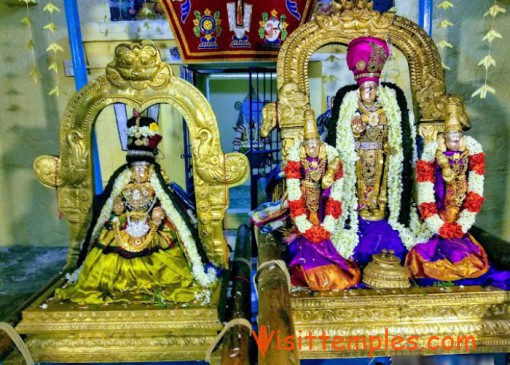
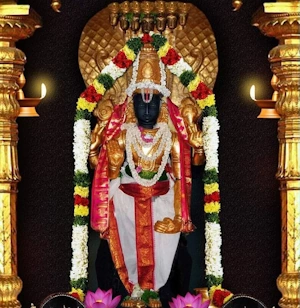
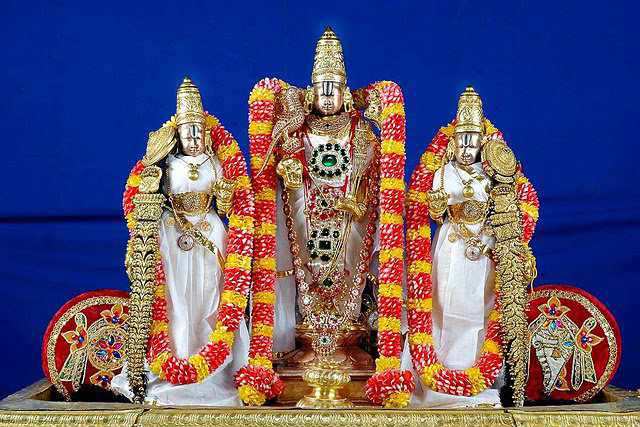
That moment shapes the identity of the deity here. Vijayaraghava Perumal is understood as Rama in a form touched by grief and compassion. In the sanctum, the Lord is shown in seated posture, and temple tradition remembers him as the one who granted moksha to Jatayu and performed the final rites himself. There is also a striking local detail connected with the iconography. Sridevi and Bhudevi, who usually appear in a familiar arrangement on either side of the Lord, are said here to be positioned differently, reflecting the sadness of the moment. That detail matters because it shows how deeply the temple’s mood has been built around this episode. The central feeling here is not triumph after battle. It is tenderness after sacrifice. The divine is not distant from death and grief. It enters them and gives them dignity.
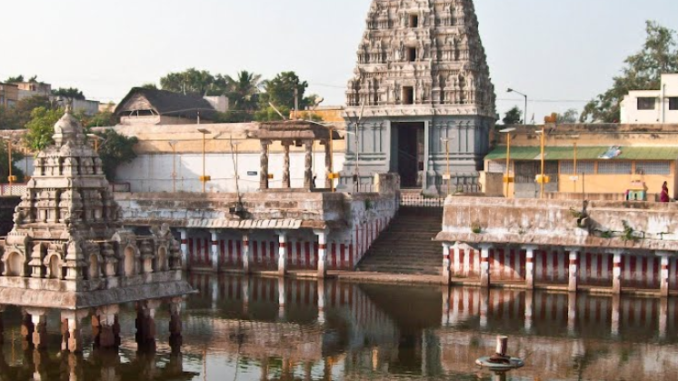
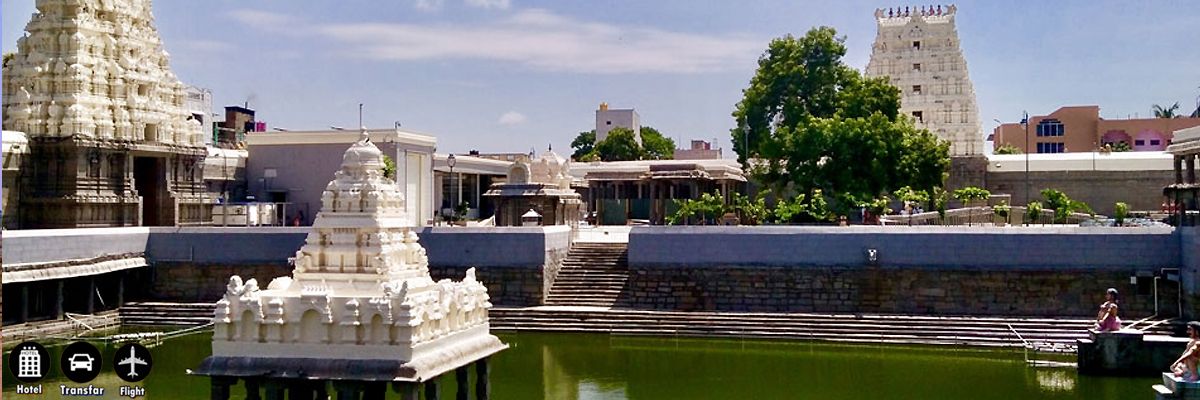
The name Thiruputkuzhi itself is linked to the legend. One common explanation is that Jatayu belonged to the pul or bird lineage, and that he was laid to rest in a kuzhi, meaning pit or burial place, which over time became Thiruputkuzhi. Whether one takes this as strict etymology or devotional memory, the meaning is clear enough. This is a place where sacrifice was not forgotten. That memory stays with the site even now. The temple tank is often associated with Jatayu and his final moments, and the entire landscape feels shaped by that single act of honouring the fallen.
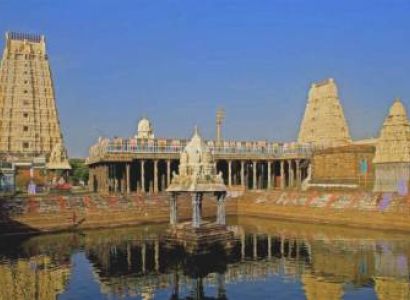
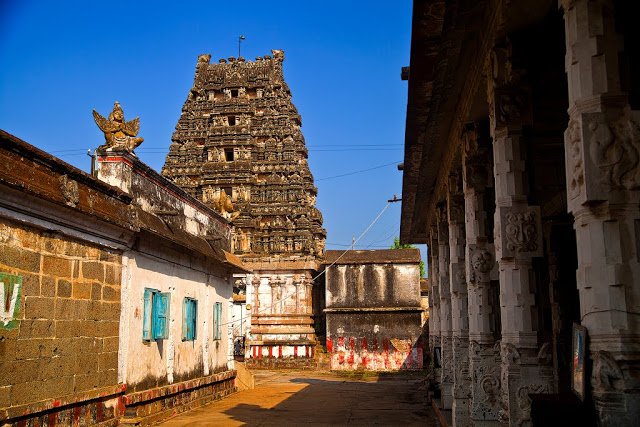
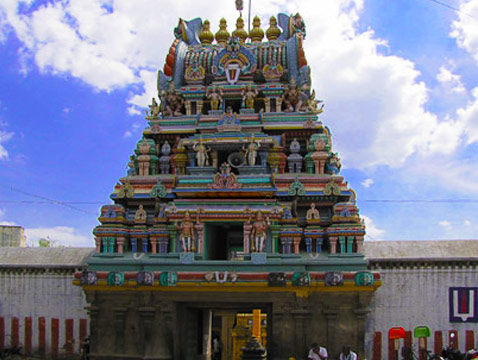
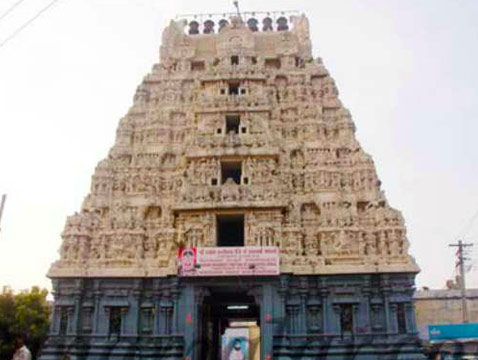
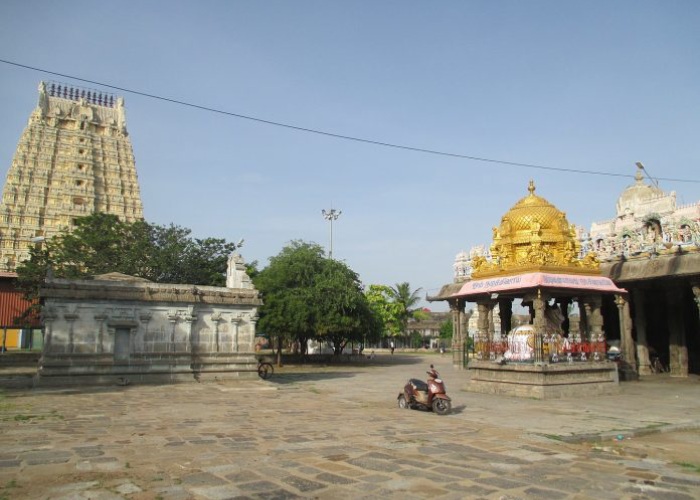
Historically, Thiruputkuzhi carries traces of several periods of Tamil temple building. The temple is generally associated with Pandya beginnings, while later Chola inscriptions and Nayak contributions point to ongoing additions and restoration over time. Like many South Indian temples, it was not built in one moment and left untouched. It grew through patronage, memory and repeated acts of repair. The structure seen today reflects that continuity. There is a five-tiered rajagopuram, granite walls enclosing the temple, and a layout that is recognisably Dravidian without feeling excessive. The scale is dignified rather than overwhelming. It suits the story. This is not a temple that needs grandeur to make its point. Its power lies in the emotion carried by the sanctum.
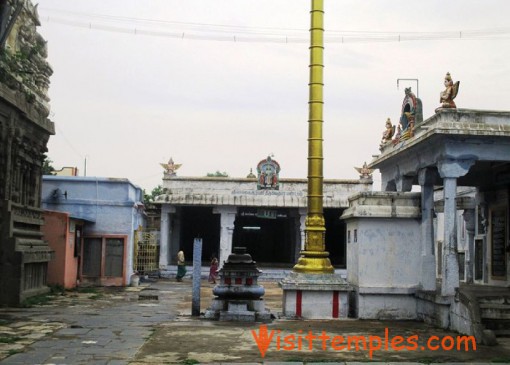
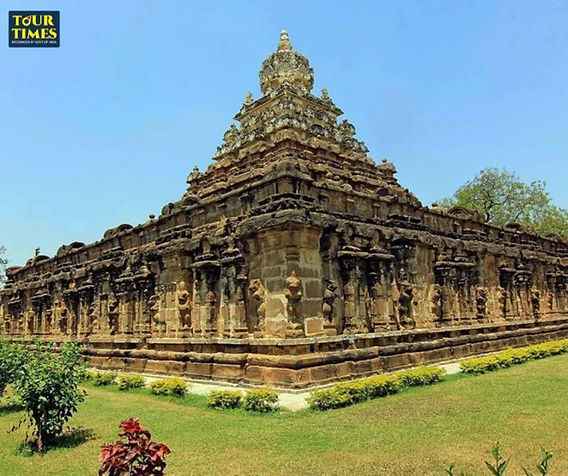
Architecturally, the temple has a quiet balance to it. The main shrine houses Vijayaraghava Perumal in seated form, and there is a separate shrine for Maragathavalli Thayar. There is also a shrine for Ramanuja, which adds another layer of significance to the site, because the temple is linked in local memory with his early years of study. Thiruputkuzhi is also associated with Yadava Prakasa, Ramanuja’s teacher, which means the temple belongs not only to epic memory but also to the history of Sri Vaishnavite thought. This is one of those places where literary tradition, philosophical history and devotional practice overlap quietly without competing with one another.

The daily worship at Thiruputkuzhi follows the established Vaishnavite rhythm, with multiple pujas performed through the day. The temple observes six daily rituals, and major festivals include Brahmotsavam in the month of Masi, Theppotsavam in the month of Thai, Pavitrotsavam in the month of Avani, and Vaikuntha Ekadasi in Margazhi. These observances keep the temple rooted in living practice. It is not just remembered because of one Ramayana episode. It continues because people still come, still pray, still fold that old story into present-day lives. There is also a local practice connected with fertility and blessing, where women seek the grace of Maragathavalli Thayar with hope and faith. That, too, tells you something about how temples live. Their meanings expand beyond mythology and settle into everyday longing.
The pilgrimage experience at Thiruputkuzhi feels slower than in bigger temple towns. The temple lies a little away from the dense sacred clustering of Kanchipuram, and that distance helps its mood. You arrive not into noise, but into space. The village setting and the relative quiet around the temple allow the Ramayana story to sit more heavily in the mind. Standing before Vijayaraghava Perumal, one does not think first of kingship or cosmic acts. One thinks of loyalty, loss and the strange nobility of Jatayu’s final fight. Something is moving about a temple built around a being who did not “win” in any worldly sense, but who acted with complete moral courage. The temple preserves that kind of victory, which is deeper and harder to forget.
Culturally, Thiruputkuzhi has held its place through the hymns of Thirumangai Alvar, who sang of the temple and ensured its place in the Divya Desam tradition. Later acharyas also strengthened their standing. Vedanta Desika is associated with the temple through hymns and lineage memory, and the broader Sri Vaishnavite world has long treated Thiruputkuzhi as a site of both devotion and learning. This matters because the temple is not only a local shrine tied to a moving story. It is part of a much wider spiritual map in which memory, theology and poetry sustain one another.
What makes Thiruputkuzhi stand out in the Divya Desam journey is the kind of divinity it presents. In some temples, the Lord protects. In some, he teaches. In some, he measures the worlds, grants clarity or rests in yogic calm. Here, he grieves without losing dignity. He performs the duty that love demands. He honours the fallen with his own hands. That is why the temple lingers in the mind. It suggests that compassion is not secondary to divinity. It is central to it.

Thiruputkuzhi ultimately represents a form of grace that takes sorrow seriously. Vijayaraghava Perumal is not remote from suffering here. He responds to it, honours it and transforms it. Jatayu’s story gives the temple its emotional centre, but the larger lesson extends beyond the Ramayana. Courage is not always successful in visible terms. Loyalty is not always rewarded with survival. And yet neither is wasted. The temple says, quietly but firmly, that nothing offered in truth is lost. In the wider Divya Desam journey, Thiruputkuzhi stands as a temple of remembrance, dignity and the kind of compassion that stops long enough to perform the final rites.
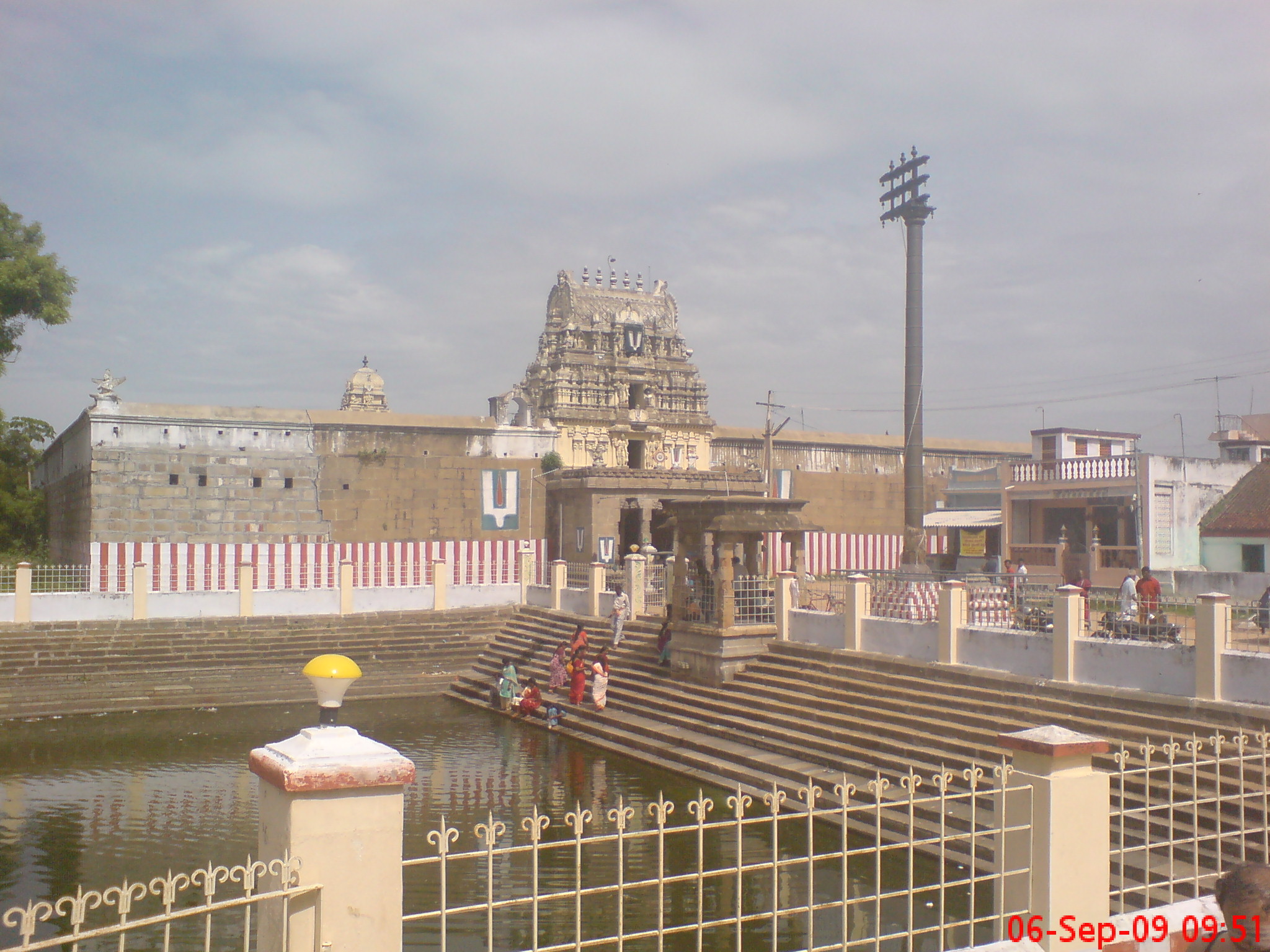
Thiruputkuzhi Temple, Thiruputkuzhi, Tamil Nadu
Thirunindravur, near present-day Chennai in Tamil Nadu, is one of those Divya Desams whose story begins not with conquest or spectacle, but with a quiet act of staying. The presiding deity here is Bhaktavatsala Perumal, and the goddess is Sudhavalli Thayar, who is also remembered in local tradition as Ennai Petra Thayar, the Mother who claimed me as her own. The name Thirunindravur is often understood through that central image of the goddess standing her ground. Nindra means stood, and the place is remembered as the sacred spot where she remained. That already tells you something about the mood of the temple. This is not a shrine built around speed, force or dramatic intervention. It is built around relationship, hurt, reconciliation and the kind of devotion that does not walk away easily.
The core legend of the temple is tied to Varuna, the god of the waters, and to his daughter. According to temple tradition, Sudhavalli was born as the daughter of the oceanic powers and was married to Vishnu. At some point, a disagreement arose between her and her father, and in that moment of emotional rupture, she chose not to return with him. Instead, she remained at this place. Because she stood here and made it her own, the place came to be known as Thirunindravur. The emotional centre of the story is not anger in the usual sense. It is dignity. The goddess does not disappear into silence. She remains, and her staying transforms the place into sacred ground. Varuna, burdened by regret, later came here to seek forgiveness and to worship Vishnu. The Lord responded with grace, and that act of response gave him the name Bhaktavatsala, the one who is deeply affectionate toward his devotees. Tradition remembers the site as the place where Varuna worshipped Vishnu, and that memory remains one of the temple’s defining features.
That legend gives Thirunindravur its deeper tone. The temple is not simply about a god granting blessings. It is about what happens when hurt is acknowledged and healing is allowed to take shape. Sudhavalli Thayar is central here, not secondary. Her presence changes the way the temple is experienced. Even the title Ennai Petra Thayar carries unusual warmth. It suggests not just divine motherhood in the abstract, but a personal claiming. She is not only the goddess of the temple. She is the mother who says, in effect, ” “You are mine”. That emotional intimacy gives the shrine a softness that stays in the mind. Bhaktavatsala Perumal, in turn, is not mainly remembered here as a cosmic ruler or warrior. He is the Lord who receives the devotion of those who come with sincerity and responds with tenderness rather than distance.
Historically, Thirunindravur belongs to the older sacred map of northern Tamil Nadu. The temple is a recognised Divya Desam praised by Thirumangai Alvar, and that alone places it firmly within the early Vaishnavite devotional tradition. The site likely took shape under the broad influence of the Pallavas and later the Cholas, whose patronage helped establish many Vishnu temples in this region. Like many temples that remain active over long stretches of time, it was not built all at once and left untouched. It grew by stages, through donations, renovations and local care. Today, the temple is administered under the Tamil Nadu Hindu Religious and Charitable Endowments system, and tradition also connects it in practical stewardship to the Pedda Jeeyar of Tirupati as permanent trustee, which adds another layer to its continuing religious life.
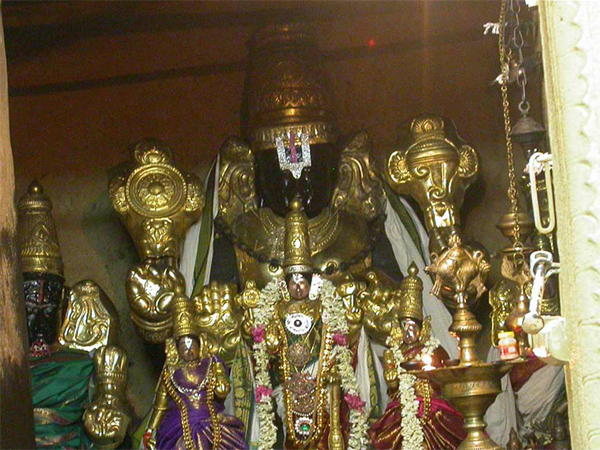
Architecturally, the temple does not depend on excess to make an impression. The structure follows the familiar Dravidian pattern, with a gopuram, enclosed prakarams and the usual progression inward toward the sanctum. The mood, however, is gentler than grand. Bhaktavatsala Perumal stands in the sanctum in a composed posture, holding the conch and discus. The form is stately, but not severe. The very name of the deity shapes how one sees the image. This is the Lord who loves his devotees, so the visual presence of the idol feels welcoming rather than distant. Sudhavalli Thayar’s shrine deepens that atmosphere. In many temples, the goddess’s shrine offers emotional balance, but here she feels even more central because of the legend that explains the temple’s name. Her staying is what gives the place its memory. Her presence is not merely an accompaniment to the Lord’s. It is one half of the temple’s meaning.
There is also a striking image of Hanuman in the temple, shown carrying Rama and Lakshmana on his shoulders. That detail may seem small, but it adds another note to the shrine’s devotional world. Hanuman, the bearer and servant, fits naturally within a temple dedicated to loving devotion. Service, loyalty and emotional closeness are not side themes here. They are everywhere, woven into the temple’s visual and ritual life.
The ritual life of the temple remains active and structured. The temple follows the Tenkalai tradition of Sri Vaishnavism and the Pancharatra mode of worship. Daily pujas are performed six times a day, from the morning through the night, with each service including decoration, food offering and the waving of lamps for both Bhaktavatsala Perumal and Sudhavalli Thayar. As in many Tamil Vishnu temples, the soundscape matters too. During worship, the nagaswaram and tavil accompany the ritual atmosphere, while Vedic recitations continue the old liturgical rhythm. Weekly, fortnightly and monthly observances are also maintained, which tells you that this is not a temple remembered only because of its literary importance. It is still very much lived in through worship.
Its festivals also reflect that continuity. The temple’s important celebrations include Chitra Pournami, Tiruadyana Utsavam in Margazhi and Brahmotsavam in Panguni. Other observances such as Sri Jayanthi, Navaratri, Vijayadasami, Deepavali, Makara Sankranti, Thai Pongal, Ratha Saptami, Masi Magam and Vaikunta Ekadasi keep the temple firmly woven into the seasonal religious life of the community. Dinamalar’s temple record also notes Panguni Tiruvonam as an important festival date, along with celebrations connected to acharyas and Alvars. This range of observances matters because it shows the temple is not frozen inside one legend. It continues to meet the year as it unfolds, carrying old meanings into present time.
The pilgrimage experience at Thirunindravur has its own pace. Unlike the tightly packed temple clusters of Kanchipuram, this shrine feels a little more open in its setting, even though it lies within a growing urban region. Pilgrims often come here as part of a northern Tamil Nadu Divya Desam route, but the mood shifts once one enters the temple. The story invites inwardness. One thinks less about spectacle and more about relationships: between parent and child, between devotee and Lord, between hurt and forgiveness, between staying and returning. That is one reason the temple stays in memory. It carries a domestic emotional truth inside a sacred frame. The divine world here does not feel abstract. It feels recognisably human in its emotional texture, and that makes the grace of the place more accessible, not less.

Culturally, Thirunindravur holds its place because of Thirumangai Alvar’s praise and because the temple embodies a devotional value that runs deep in Tamil Vaishnavism: the Lord’s affection for the devotee. Bhaktavatsala is not just a name. It is a theological statement. In this shrine, devotion is not transactional. The devotee is not one more supplicant in a queue. The relationship is warm, almost familial. That is why the temple’s goddess being remembered as Ennai Petra Thayar matters so much. Together, the Lord who loves the devotee and the Mother who claims the devotee create a complete emotional world.
In modern terms, the temple continues to draw both local worshippers and pilgrims following the Divya Desam circuit. Its management remains active, the festivals continue, and the rituals have not lapsed into museum-like formality. The temple still functions as a living sacred space. For a visitor today, especially one used to temples framed mainly through architecture or tourist significance, Thirunindravur offers something different. It reminds you that the emotional idea behind a shrine can be stronger than sheer scale.
Thirunindravur ultimately represents the kind of grace that grows through a relationship. Sudhavalli Thayar stays, and that act of staying becomes a sacred memory. Varuna returns in repentance, and that return becomes part of the temple’s healing story. Bhaktavatsala Perumal receives devotion with affection, not distance, and that becomes the temple’s spiritual centre. In the wider Divya Desam journey, this shrine adds something deeply tender. It reminds us that divine love is not always revealed in miracles or cosmic acts. Sometimes it appears in the simple fact that someone stays, someone returns, and someone is received with grace.