

The Lai Haraoba Festival is one of the oldest and most important events in Manipur, India. Rooted in the beliefs of the Meitei people, this festival is deeply connected to their earliest stories about the world’s creation. Every part of the festival, from its dances and music to its careful rituals, is a living link to ancient times. But it’s also a festival that keeps changing with each generation.
Lai Haraoba means “Merry-making of the Gods” or “Pleasing the Deities.” The festival started long before Hindu traditions arrived in Manipur. It goes back to a time when the Meiteis followed their own religion, Sanamahism, and honored a vast group of native deities called Umang Lai, meaning “forest gods.”
Lai Haraoba isn’t just a celebration for the gods. It’s a reenactment of the Meitei creation story. Performers act out how the world was formed: land, water, plants, animals, and humanity all came to life according to Meitei myth. And it’s not just one single deity who’s honoured. There are about 364 Umang Lai, each with their own legends and special rituals in villages and neighborhoods across Manipur.
Central to Lai Haraoba is the creation myth. In these stories, godly figures such as Sanamahi, Nongpok Ningthou, and Panthoibi are credited with creating the universe and everything within it. According to legend, the gods once performed Lai Haraoba themselves on Kubru Hill so that their descendants, humans, would know how to honour and imitate them. The rite shows how close the relationship is between the people and their deities, as well as between the residents of Manipur’s hills and plains.
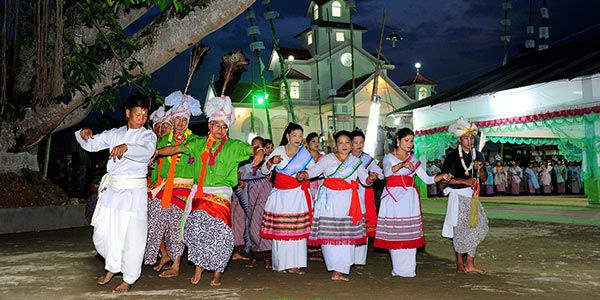
Much of the festival plays out the love story of Nongpok Ningthou and Panthoibi. This divine couple symbolises cosmic forces and the cycle of creation. Their courtship, love, and union are performed in ritual dance and song, showing how the world’s forces come together to create and sustain life.
There are four main types of Lai Haraoba, each with its own local traditions:
- Kanglei Haraoba: Common in many parts of Manipur’s valley region.
- Moirang Haraoba: Centred in Moirang.
- Kakching Haraoba: Celebrated in Kakching.
- Chakpa Haraoba: Held in villages like Andro, Phayeng, Sekmai, and others.
The main structure of the festival is similar everywhere, but the details, specific hymns, dances, and local customs can differ. This variety keeps the festival both rooted and flexible from one community to another.
The celebration of Lai Haraoba is carefully structured into three major parts: the beginning (Lai Eekouba), the middle (Haraoba), and the end (Lairoi). The order and number of days can vary, from just a few to more than three weeks.
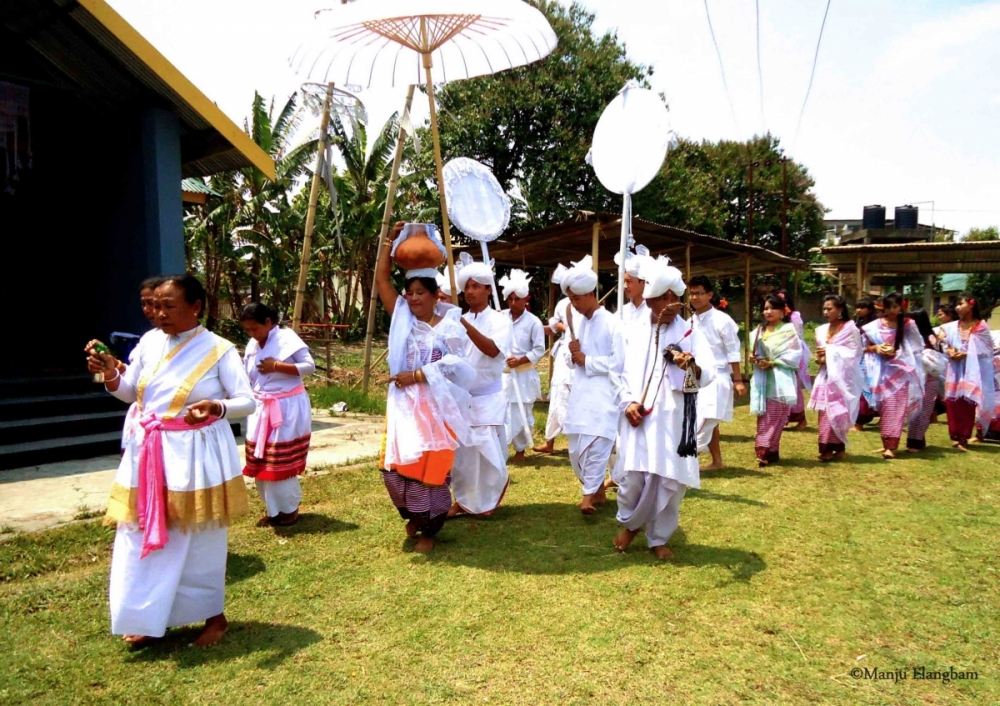
Opening the Shrine or Lai Eekouba: The festival starts by opening the usually locked doors of the community shrine, an action considered highly sacred. The inside is cleaned and prepared, with special songs and ritual washing of sacred objects and clothes. Sometimes, preparations start days beforehand, such as fermenting rice for rice beer, a key ritual item.
A procession led by the maibi (priestess) and sometimes maiba (male priest) heads to a river or pond. They bring sacred objects, make offerings, and invite the deity’s presence through water and chanting. The maibi might enter a trance and deliver oracles from the gods. The night ends with the pena, a traditional fiddle, playing music intended to “rest” the deities.
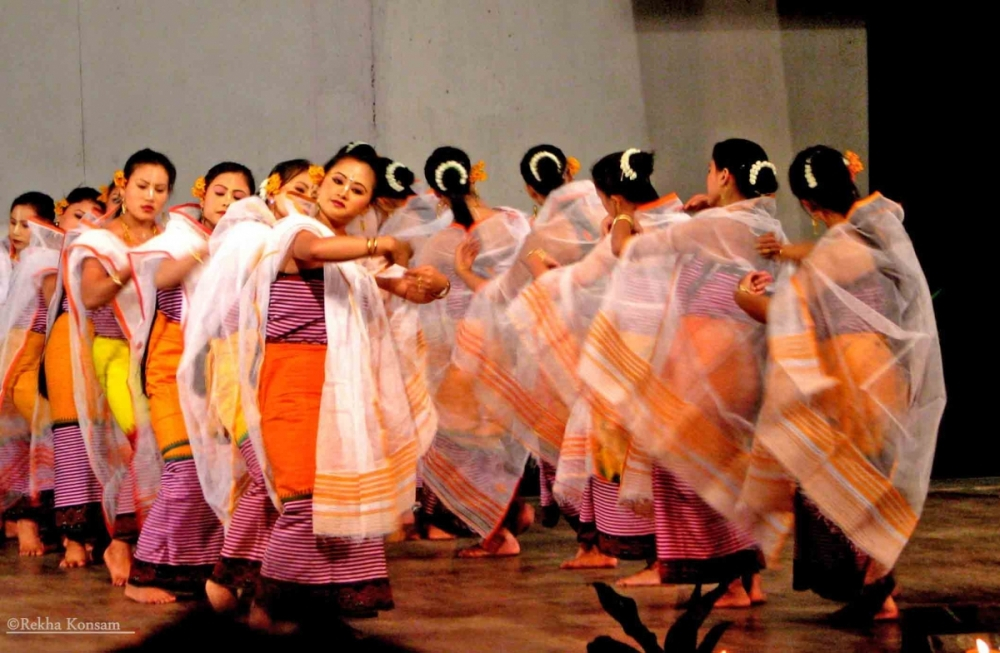
The Ritual Dance of Creation or Laibou: Dances and rituals performed during Lai Haraoba are called laibou, meaning “work done for the gods.” These are the heart of the festival, staged before the assembled village, often near the shrine or a sacred tree. Every aspect of human life and creation is re-enacted through dance, forming the human body, birth, farming, spinning, weaving, house-building, and other necessities. Each process, even the act of drawing the baby’s eyes or forming a fist, is acted out slowly and symbolically by the maibi.
Following the creation story, the ritual dances proceed through making a house, growing and weaving cotton, and preparing clothing. At one point, fishing is performed as a symbol of adulthood and desires. All the movements are slow, careful, and filled with ancient meaning.
Music is a constant feature. The pena, a simple fiddle, is played every day, marking morning and evening rituals. There are collective songs such as the “hoi laoba” and “wakol laoba,” with all participants shouting or singing together. The maibi delivers oracles: messages said to come straight from the deities. These can include advice for the year, warnings, or encouragement.
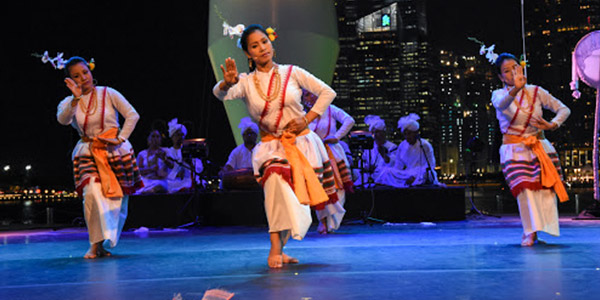
Several ritual dances have become icons of Lai Haraoba. The most significant are
- Laiching Jagoi: Performed by maibis to “invite” the gods.
- Khamba-Thoibi Jagoi: Tells the story of legendary lovers Khamba and Thoibi, replacing the older Panthoibi Jagoi in some places.
- Tang Jagoi: A dance with fire and holy knives to drive out evil spirits.
- Panthoibi Jagoi: The original romantic duet dance that honors the divine love story.
Modern celebrations can also include other folk, martial, and sometimes even Bollywood-inspired dances, adapting to today’s audiences.
The spiritual work of the festival is led by the maibi (woman priest) and maiba (man priest). Maibis, in particular, occupy a unique place as living channels between world and spirit. They lead most of the key rituals, dances, and oracles, sometimes entering trance to “speak” for the gods.
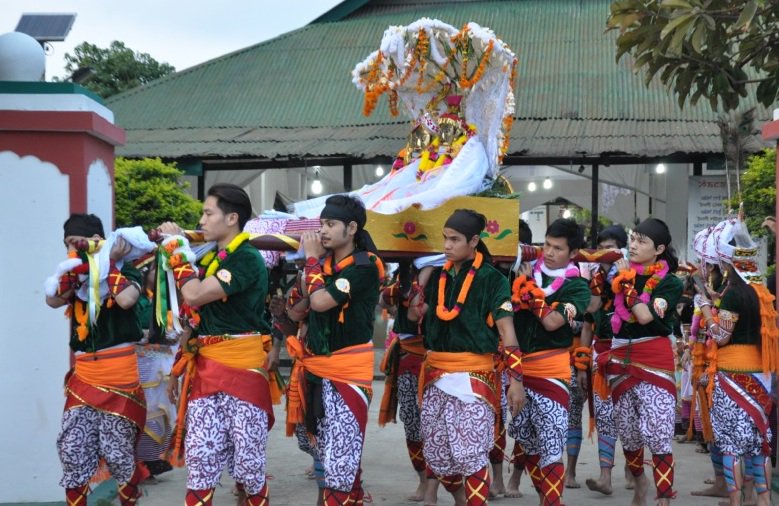
Rice beer, fruits, flowers, and hand-woven cloths are common offerings. The presentation of these gifts is an important act, meant to please the deities and ensure blessings for the coming year. Each offering has its own order and significance and is usually placed on banana leaves or in traditional baskets.
The festival is not just a religious event but a key part of social life. Each family or clan takes responsibility for certain rituals or offerings, and the festival provides a place for all generations to participate, from children to elders. It’s a practical lesson in Meitei life: how to build, weave, farm, worship, and come together as a community.
The story of Nongpok Ningthou and Panthoibi is a favorite, often dramatised as a flirtatious, complex drama. Sometimes, this story is merged with other folk legends, like Khamba and Thoibi of Moirang. In some versions, Panthoibi is portrayed as a Tangkhul (hill tribe) girl, illustrating the ancient bond between the people of the hills and plains. This is just one example of how the festival weaves together history, myth, and lived experience.
Though deeply traditional, Lai Haraoba is not frozen in time. As society evolves, so do the celebrations. Some villages add new performances or blend in more accessible forms of music and dance. The use of modern lighting and sound is more common now. But the old forms still remain at the heart, especially in more remote or tradition-focused communities.
/english-betterindia/media/post_attachments/uploads/2017/05/Milaap-Lai-Haraoba.jpg)
During the festival, certain taboos and customs are observed, like periods of fasting or avoiding “unclean” acts. Community feasts are common, where all take part regardless of social status. Men, women, and children all join in some aspect of the ritual or celebration. And while the festival is religious, it’s also a time for courtship, gossip, settling disputes, and reinforcing social norms.
Lai Haraoba usually happens in the spring and summer, following the local lunar calendar. It can be held at any one of the many neighborhood shrines dedicated to an Umang Lai, so multiple celebrations may happen across Manipur at once, or even, nowadays, in other parts of India and among the Manipuri diaspora.
Lai Haraoba is more than ritual; it’s Manipur’s living cultural memory. It teaches the origins of life, the skills for survival, and the values to live by. Some see it as a form of community education, where children learn through watching, imitating, and participating.
And yet, the festival doesn’t ignore reality. There is room for fun, for complaints, and even for critical jokes about the village’s leaders. It holds both the grave and the playful. For as long as the festival is kept, the past remains present, and Manipur’s stories continue to unfold.

