
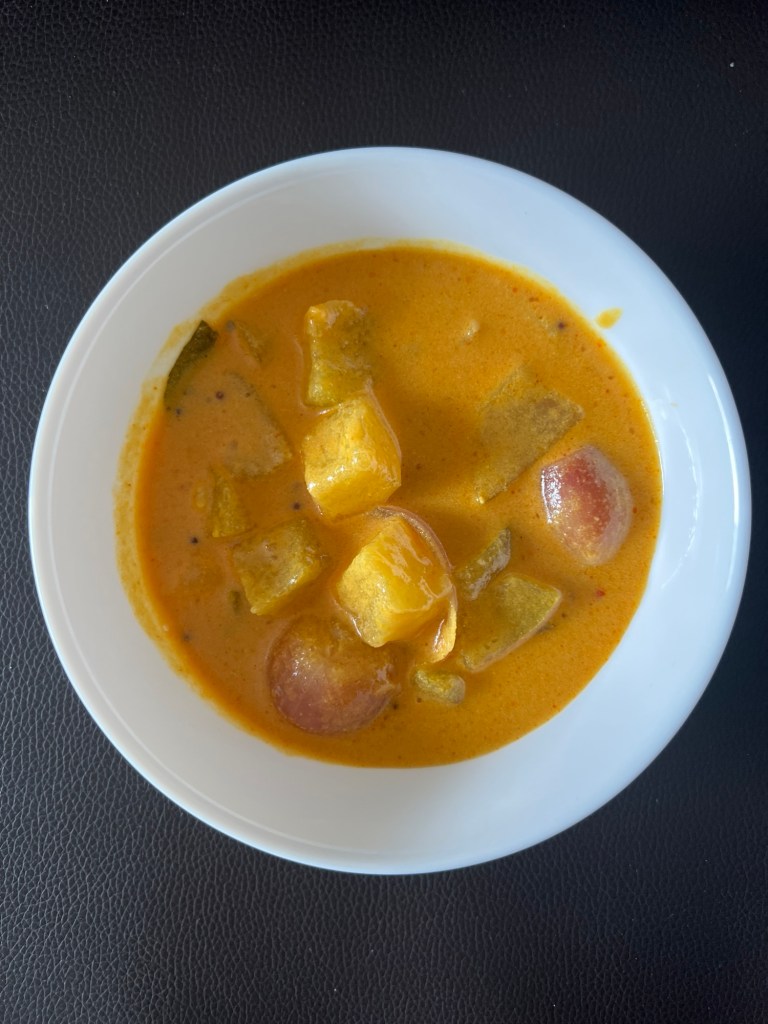
Belonging to the family of kuzambus, Iru Puli Kuzambu is what results from sambar and mor kozambu marrying and having a baby! I heard about this kozambu in the WhatsApp group of the retirement community my parents live in, and everyone was raving about this dish. I was intrigued and decided to find out more.
This is one of those deeply comforting dishes that manages to be both rustic and complex. It’s a beautiful example of heritage Tamil Brahmin cuisine, particularly from the Iyer households of the Thanjavur and Tirunelveli regions. The name “Iru Puli” literally means “two kinds of sourness,” traditionally referring to the combination of tamarind, or puli, and buttermilk, or mor, which are used in the same dish. That’s what makes it unique: it layers tanginess in a way that’s both subtle and rounded.
Iru Puli Kuzambu is considered a heritage recipe, often cooked on special occasions or when families want to use up leftover buttermilk without waste, a very Tamil way of resourcefulness. Many households in the Cauvery delta region, especially in Kumbakonam, Mayavaram, and Tirunelveli, still make this dish exactly as their grandmothers did, without onions, as part of the pathiya samayal or satvik style.
I made it slightly differently because I only had baby onions or sambar onions and white pumpkin at home. You can use any vegetable you use for a sambar, but if you want to go traditional, then don’t use onions or garlic in this recipe.
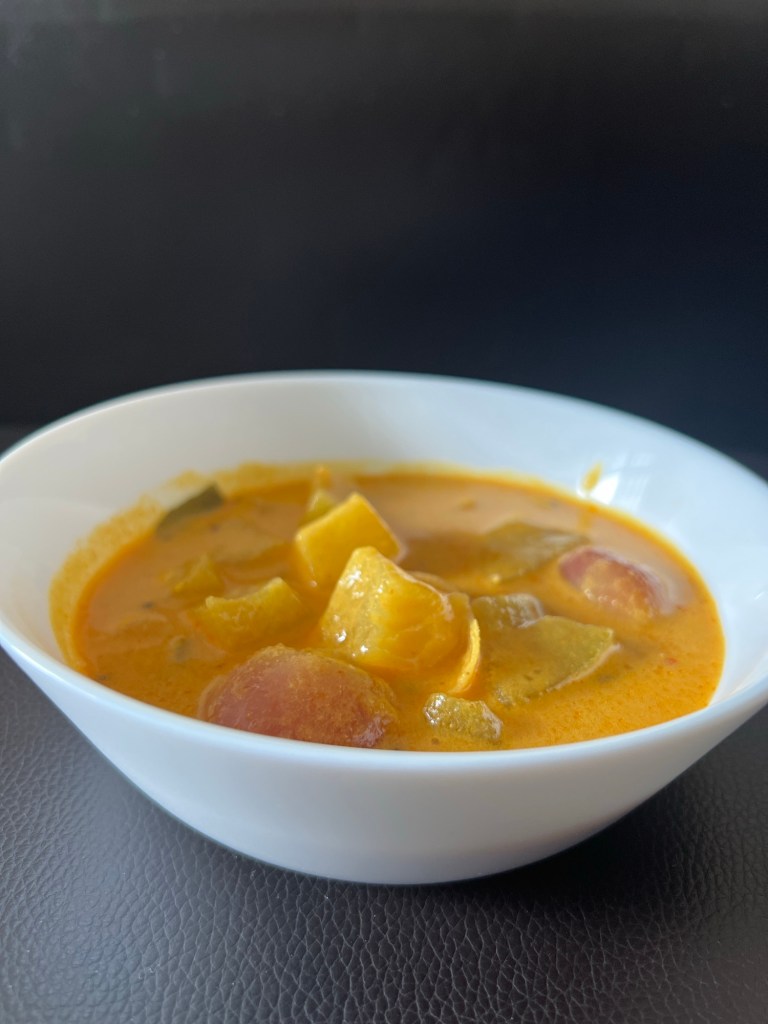
Iru Puli Kuzhambu
Ingredients:
- 3 cups peeled and cubed vegetables
- Lemon-sized ball of tamarind, soaked in warm water for 20-30 minutes
- ½ cup yoghurt, beaten well
- ½ tsp turmeric powder
- Salt to taste
- ¼ cup fresh grated coconut
- 4-5 dried red chillies (adjust according to the chilli’s heat and your spice tolerance)
- ¼ tsp fenugreek or methi seeds
- ½ tsp raw rice, soaked in water for 20-30 minutes
- ½ tsp mustard seeds
- 5-6 curry leaves
- ⅛ tsp asafoetida
- Oil as required
Method:
- Extract the water from the tamarind pulp and keep it aside.
- Whisk the yoghurt and add some water to thin it, and keep it aside.
- Drain the water from the rice and keep it aside.
- In a small pan, add 1 tsp of oil, and once the oil warms up, add the fenugreek seeds and then the red chillies. Let them sauté for a few seconds until the fenugreek seeds turn golden brown. Keep aside.
- Add this to a mixer along with the drained rice and coconut and grind into a fine paste. Add water as needed.
- In the same pan, add 2 tsp oil and add the mustard seeds and let them sputter. Then add the curry leaves and let them crisp a bit.
- Now add the vegetables you plan to use. Sauté for a few seconds, then add the turmeric powder and asafoetida, and continue to sauté.
- Add 1 cup of water and salt, and let the vegetables cook until they are 50% done.
- Now add the tamarind water and cook for an additional five minutes, until the raw smell of the tamarind has dissipated.
- Now add the ground paste, mix well, and add more water if the kuzhambu is thick.
- Let this come to a rolling boil and cook for another 3-5 minutes.
- Lower the flame and add the whisked yoghurt. While adding in the yoghurt, make sure you are continuously stirring the kuzhambu.
- As the kuzambu comes to a boil, let it boil for a minute and switch off the flame.
- Serve with rice and any curry of your choice.
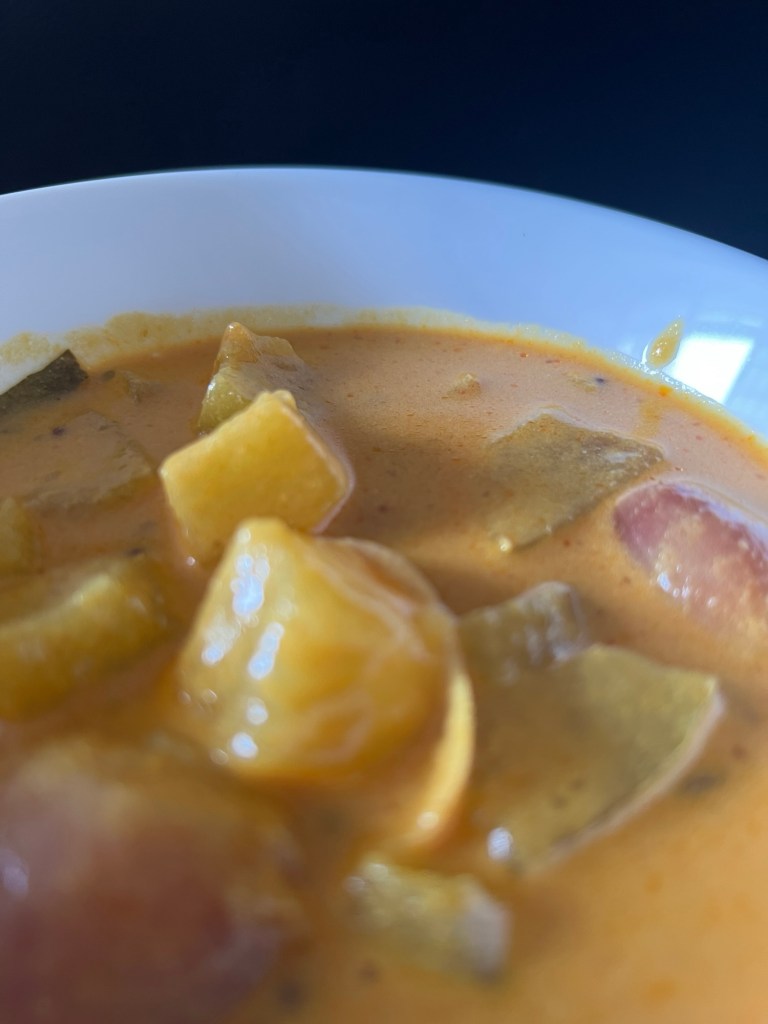
Note: The key to this dish is balance. Too much tamarind and the yoghurt flavour disappears; too much yoghurt and it becomes mor kuzhambu. The ideal ratio is about 2:1 tamarind to buttermilk.

