Recipes: Iru Puli Kuzambu

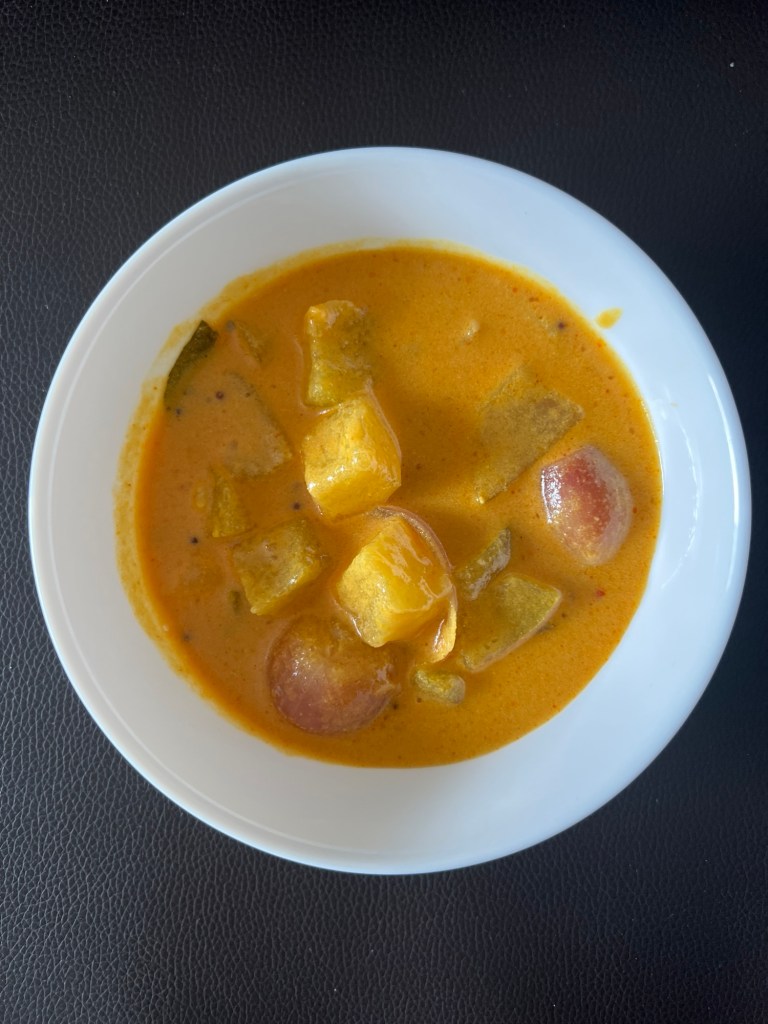
Belonging to the family of kuzambus, Iru Puli Kuzambu is what results from sambar and mor kozambu marrying and having a baby! I heard about this kozambu in the WhatsApp group of the retirement community my parents live in, and everyone was raving about this dish. I was intrigued and decided to find out more.

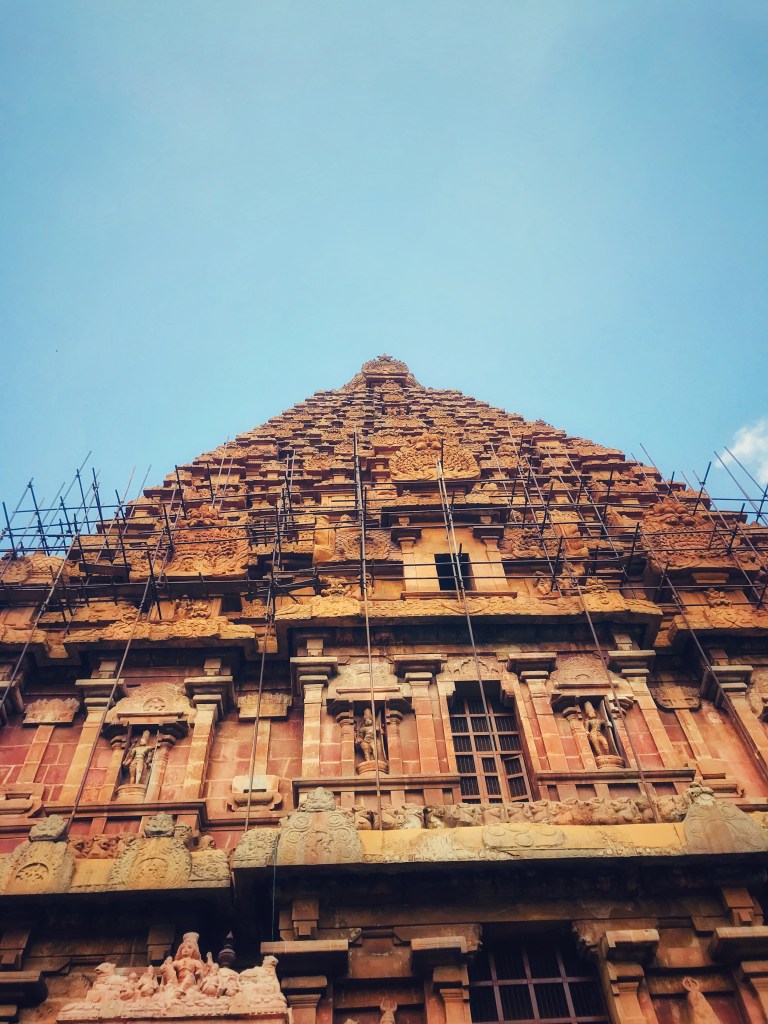
This is one of those deeply comforting dishes that manages to be both rustic and complex. It’s a beautiful example of heritage Tamil Brahmin cuisine, particularly from the Iyer households of the Thanjavur and Tirunelveli regions. The name “Iru Puli” literally means “two kinds of sourness,” traditionally referring to the combination of tamarind, or puli, and buttermilk, or mor, which are used in the same dish. That’s what makes it unique: it layers tanginess in a way that’s both subtle and rounded.

Iru Puli Kuzambu is considered a heritage recipe, often cooked on special occasions or when families want to use up leftover buttermilk without waste, a very Tamil way of resourcefulness. Many households in the Cauvery delta region, especially in Kumbakonam, Mayavaram, and Tirunelveli, still make this dish exactly as their grandmothers did, without onions, as part of the pathiya samayal or satvik style.

I made it slightly differently because I only had baby onions or sambar onions and white pumpkin at home. You can use any vegetable you use for a sambar, but if you want to go traditional, then don’t use onions or garlic in this recipe.
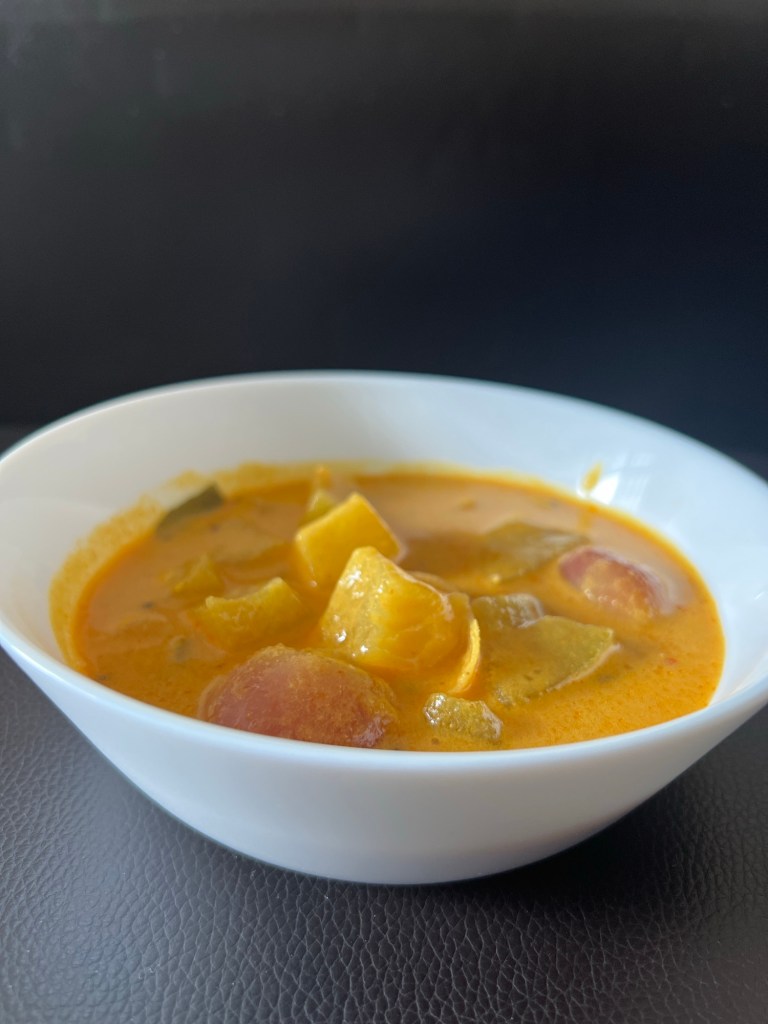
Iru Puli Kuzhambu

Ingredients:

  • 3 cups peeled and cubed vegetables
  • Lemon-sized ball of tamarind, soaked in warm water for 20-30 minutes
  • ½ cup yoghurt, beaten well
  • ½ tsp turmeric powder
  • Salt to taste
  • ¼ cup fresh grated coconut
  • 4-5 dried red chillies (adjust according to the chilli’s heat and your spice tolerance)
  • ¼ tsp fenugreek or methi seeds
  • ½ tsp raw rice, soaked in water for 20-30 minutes
  • ½ tsp mustard seeds
  • 5-6 curry leaves
  • ⅛ tsp asafoetida
  • Oil as required

Method:

  • Extract the water from the tamarind pulp and keep it aside.
  • Whisk the yoghurt and add some water to thin it, and keep it aside.
  • Drain the water from the rice and keep it aside.
  • In a small pan, add 1 tsp of oil, and once the oil warms up, add the fenugreek seeds and then the red chillies. Let them sauté for a few seconds until the fenugreek seeds turn golden brown. Keep aside.
  • Add this to a mixer along with the drained rice and coconut and grind into a fine paste. Add water as needed.
  • In the same pan, add 2 tsp oil and add the mustard seeds and let them sputter. Then add the curry leaves and let them crisp a bit.
  • Now add the vegetables you plan to use. Sauté for a few seconds, then add the turmeric powder and asafoetida, and continue to sauté.
  • Add 1 cup of water and salt, and let the vegetables cook until they are 50% done.
  • Now add the tamarind water and cook for an additional five minutes, until the raw smell of the tamarind has dissipated.
  • Now add the ground paste, mix well, and add more water if the kuzhambu is thick.
  • Let this come to a rolling boil and cook for another 3-5 minutes.
  • Lower the flame and add the whisked yoghurt. While adding in the yoghurt, make sure you are continuously stirring the kuzhambu.
  • As the kuzambu comes to a boil, let it boil for a minute and switch off the flame.
  • Serve with rice and any curry of your choice.
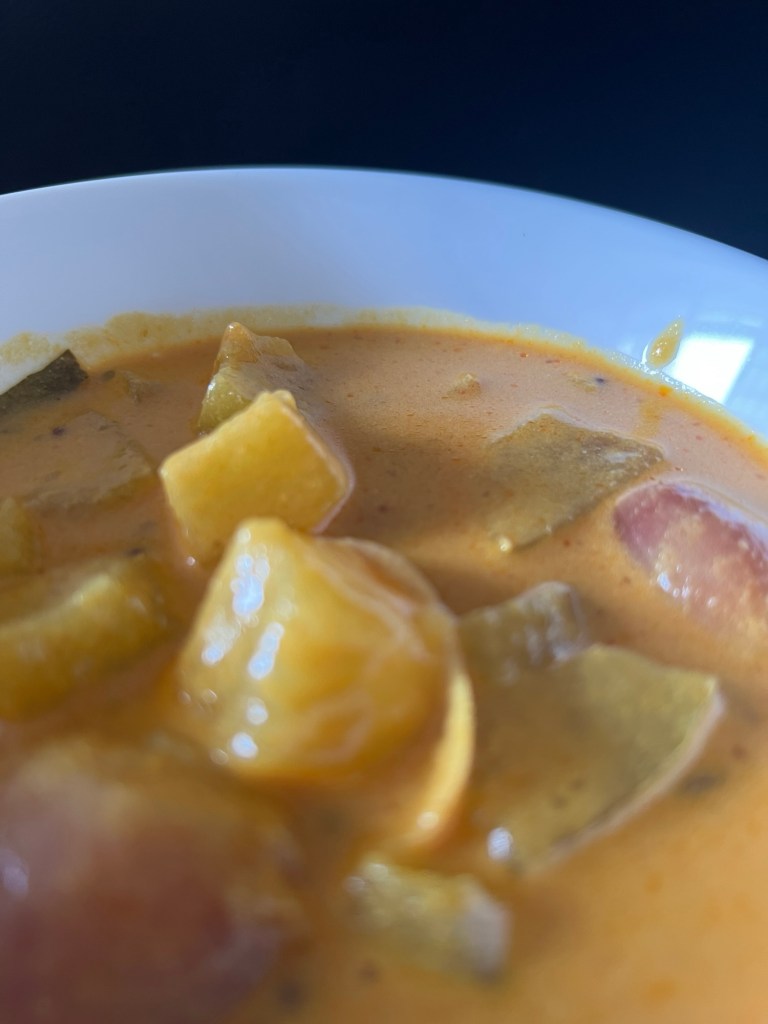
Note: The key to this dish is balance. Too much tamarind and the yoghurt flavour disappears; too much yoghurt and it becomes mor kuzhambu. The ideal ratio is about 2:1 tamarind to buttermilk.
In My Hands Today…

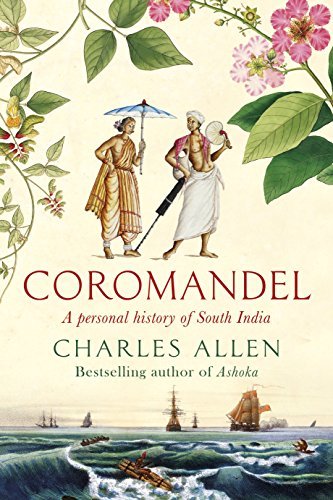
Coromandel: A Personal History of South India – Charles Allen

COROMANDEL . A name that has been long applied by Europeans to the Northern Tamil Country, or (more comprehensively) to the eastern coast of the Peninsula of India.

This is the India that highly acclaimed historian Charles Allen visits in this fascinating book. Coromandel journeys south, exploring the less well-known, often neglected, and very different history and identity of the pre-Aryan Dravidian south.

During Allen’s exploration of the Indian South, he meets local historians, gurus, and politicians and, with their help, uncovers some extraordinary stories about the past. His sweeping narrative takes in the archaeology, religion, linguistics, and anthropology of the region—and how these have influenced contemporary politics.

Known for his vivid storytelling, for decades Allen has traveled the length and breadth of India, revealing the spirit of the subcontinent through its history and people. In Coromandel, he moves through modern-day India, discovering as much about the present as he does about the past.

In My Hands Today…

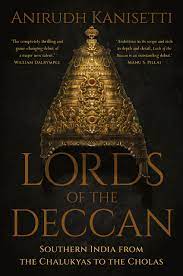
Lords of the Deccan : Southern India from the Chalukyas to the Cholas – Anirudh Kanisetti

The history of the vast Indian subcontinent is usually told as a series of ephemeral moments when a large part of modern-day India was ruled by a single sovereign. There is an obsession with foreign invasions and the polities of the Gangetic plains, while the histories of the rest of the subcontinent have been reduced to little more than dry footnotes. Now, in this brilliant and critically acclaimed debut book, Anirudh Kanisetti shines a light into the darkness, bringing alive for the lay reader the early medieval Deccan, from the sixth century CE to the twelfth century CE, in all its splendour and riotous glory.

Kanisetti takes us back in time to witness the birth of the Chalukyas, a dynasty that shaped southern India for centuries. Beginning at a time when Hinduism was still establishing itself through the Deccan, when the landscape was bereft of temples, he explores the extraordinary transformation of the peninsula over half a millennium. In vivid and colourful detail, Kanisetti describes how the mighty empires of medieval India were made: how temple-building and language manipulation were used as political tools; how royals involved themselves in religious struggles between Jains and Buddhists, Shaivas and Vaishnavas; and how awe-inspiring rituals were used to elevate kings over their rivals and subjects. In doing so, he transforms medieval Indian royals, merchants, and commoners from obscure figures to complex, vibrant people. Kanisetti takes us into the minds of powerful rulers of the Chalukya, Pallava, Rashtrakuta, and Chola dynasties and animates them and their world with humanity and depth.

It is a world of bloody elephant warfare and brutal military stratagems, of alliances and betrayals, where a broken king commits ritual suicide and a shrewd, hunchbacked prince founds his own kingdom under his powerful brother’s nose. This is a world where a king writes a bawdy play that is a parable for religious contestation; where the might of India’s rulers and the wealth of its cities were talked of from Arabia to Southeast Asia; and where south Indian kingdoms serially invaded and defeated those of the north. This painstakingly researched, forgotten history of India will keep you riveted and enthralled. You will never see the history of the subcontinent the same way again.

In My Hands Today…

Three Quarters Of A Footprint: Travels In South India – Joe Roberts

For five months Joe Roberts was a guest of the Trivedi family in their flat in Bangalore’s Baghpur Extension.

Major Trivedi, a military Brahmin, was given to reciting quatrains of Nostradamus; Atul, his 18-year-old son, was more concerned with Guns n’ Roses; while Mrs Trivedi, with her neighbour Mrs Sen, took charge of her visitor’s plans for travelling around Southern India.

Roberts journeyed to the jungle beyond Mysore – a jungle that, contrary to expectations, was only little trees and dappled glades; to the queen of the hill stations, Ootacamund, to which generations of English colonial officers had retreated, transforming an Indian plateau into a passable imitation of Bournemouth; and to Kovalam, which he visited in order to see the Kathakali dancers, but where he also found himself dining with an Australian pornographer. And he also travelled to Cochin, on the Malabar Coast, and shared a railway compartment with a drunken Bristolian who seemed unimpressed with everything but Indian moonshine.

But Roberts always returned to the ground-floor flat in Baghpur Extension, and to his friends the Trivedis. This is his account of his travels.