

For the longest time, if someone had asked me what the word “ritual” meant, I would have probably answered without hesitation. Ritual meant religion. It meant lighting the lamp at home. It meant folding one’s hands before God, prostrating before elders, touching books to the eyes if they had been accidentally stepped on, and following traditions whose meanings were explained to us only in fragments, if at all.
Rituals belonged to temples, festivals, puja rooms, weddings, and the many invisible rules that governed childhood homes. They were the things adults did with seriousness, children copied with curiosity, and teenagers rolled their eyes at with the confidence that only teenagers possess.
But age has a way of softening certainty. It also has a way of sharpening it.
Today, I understand rituals differently. Yes, some rituals still belong to the realm of religion and tradition. But many others live quietly in the corners of ordinary life. Scanning my CGM reader as soon as I wake up is a ritual. My morning coffee in the dark, before anyone else is awake, is a ritual. My morning walk, alone with my meditation app, is a ritual. Writing every day is a ritual. Planning, reading, lighting the lamp, saying a silent prayer, even having conversations with the divine in my own informal way, all these have become part of the rhythm of my days.
Some rituals are comforting and beautiful. Some are outdated and performative. Some bind us to our past. Some help us walk into the future. And some, honestly, continue only because nobody wants to be the first person to stop doing them.
That, perhaps, is where the quiet power of rituals lies. Not in the act alone, but in the meaning we bring to it.

Growing up in a Tamil Brahmin family in Mumbai, rituals were woven into everyday life. Some were grand and visible, tied to festivals and family occasions. Others were so ordinary that they did not announce themselves as rituals at all. Lighting the evening lamp. Not stepping on books. Touching elders’ feet. Eating certain foods on certain festival days. Buying new clothes for festivals, even though new clothes were not traditionally required. Celebrating the star birthday with as much importance, and sometimes more, than the date of birth.
The star birthday is still a source of light-hearted debate in our family. My sister and I continue to have gentle arguments with my father about it. He, of course, belongs to a generation for whom the nakshatra or birth star had meaning and weight. We, having grown up between tradition and modernity, tend to look at both the calendar and the horoscope with one eyebrow slightly raised. Yet the argument itself has become a ritual of sorts. A familiar family script. A way of saying, we remember.
There were also rituals I did not understand then and still cannot fully accept now. The rules around menstruation, for instance. Menstruating women not being allowed into the kitchen or the puja room, women being told to sit apart, stay away, not touch certain things, not participate. Even as a young girl, I instinctively pushed against these rules. I was a feminist long before I knew the word. Something in me knew that a natural biological process should not make a girl or woman impure.
Then there were rituals where only men or boys were allowed to participate. Ceremonies that placed sons at the centre and daughters at the side. The idea of “giving away” a girl in marriage, as though she were property being transferred from one household to another. These rituals may have had historical, social, or symbolic contexts once, but that does not make them immune to questioning. Tradition cannot be used as a shield against discomfort. If a ritual excludes, diminishes, or silences, it deserves to be examined.
This does not mean rejecting everything. It means learning to ask better questions.
For a period in my late teens and early twenties, I dismissed many religious rituals altogether. Going to the temple felt unnecessary, even like a waste of time. Religion and its many accoutrements seemed burdensome. I saw the performance more clearly than the devotion. Perhaps that is a necessary stage for many of us, especially those who grow up surrounded by inherited practices. We first copy. Then we reject. Then, if we are lucky, we return with discernment.

My return to ritual has not been a return to blind obedience. It has been a return to meaning.
Today, I believe in religion, but in a more personal way. I believe in being a custodian of culture, but not a prisoner of it. There is a difference. A custodian preserves what deserves to be preserved. A prisoner follows because there seems to be no other choice. I want to pass on what I can to my children and, one day perhaps, to grandchildren, not because “this is how it has always been done,” but because there is beauty, memory, and identity in some of these practices.
I also know that if we stop everything, there will be nothing left to pass on.
This is especially true when living away from India. Distance changes one’s relationship with culture. In India, culture surrounds you. It is in the street sounds, the temple bells, the vegetable vendor’s calls, the sudden arrival of festival decorations, the smell of jasmine, camphor, and frying sweets. Outside India, culture has to be recreated more deliberately. It does not always arrive at your doorstep. You have to invite it in.
In my own home, I have tried to carry forward some rituals consciously. Lighting the lamp in the morning and evening is one of them. The evening lamp, especially, has a rhythm to it. On or before 6 pm, the flame is lit, and for a few moments the house changes. It may be the same living room, the same day’s clutter, and the same unfinished tasks waiting in the background, but the lamp insists on a pause. It says the day is turning. Acknowledge it.

After BB’s thread ceremony in Mumbai, we arranged for a priest to come home and teach him and S the Sandhyavandanam. S is regular with it. BB, like many young people, tends to forget, and I remind him when he is at home. I cannot force him. Nor do I want to. Rituals forced too hard become battlegrounds. But I can remind, and I can explain. I can offer the thread of continuity and hope that he may pick it up in his own time.
That, I think, is one of the hardest lessons of motherhood. We can introduce rituals, explain their meaning, create the environment, and model the practice. But we cannot control what our children will eventually keep. They may accept some things, question others, and discard a few. This is not failure. This is how culture has always travelled, by adapting itself to each generation.
I have also let go of rituals. The menstruation-related restrictions have no place in my home. I do not observe fasting rituals that suggest a woman’s hunger can somehow extend her husband’s life. I do not believe devotion should be measured by how much discomfort a woman can endure. I no longer make elaborate festival foods and prasadams when I do not have the time or energy. There was a time when such effort may have felt like devotion. But sometimes, if we are honest, it becomes performance.
And performance has a cost.
Too often, women are expected to carry the burden of keeping traditions alive. They must remember the dates, prepare the food, clean the house, decorate the altar, dress the children, call the relatives, and still appear serene while doing it all. If everything goes well, it is tradition. If something is missed, it is her failure. This is not devotion. This is unpaid cultural labour dressed up in silk and flowers.
So yes, there is guilt sometimes. A small tug that asks, “Am I breaking something that was handed to me?” But then another voice asks, must everything handed down be carried forever? Perhaps not. Perhaps the wiser thing is to examine what we inherit and decide what can travel with us.
Some rituals survive because they are meaningful. Some survive because they are beautiful. Some survive because they are useful. And some survive because no one wants to take responsibility for ending them.

The rituals I want to keep are the ones that open rather than close. Lighting lamps during Karthigai, for instance, has always felt deeply beautiful to me. The idea that lamps lit outside the home once helped travellers find their way is powerful. A flame is not just decoration. It is guidance. It is welcome. It is the smallest resistance against darkness.
Kolams and rangolis are another example. They are beautiful, yes, but they are also generous. Traditionally made with rice flour, they feed ants and tiny insects. What looks like art at the threshold is also an offering to life. Touching books when they fall and bringing the hand to the eyes honours learning and Goddess Saraswati. Taking and giving blessings acknowledge that we are not self-made creatures floating alone in the universe. We come from people. We are shaped by others.
These rituals matter because they contain meaning. They connect the hand to the heart.
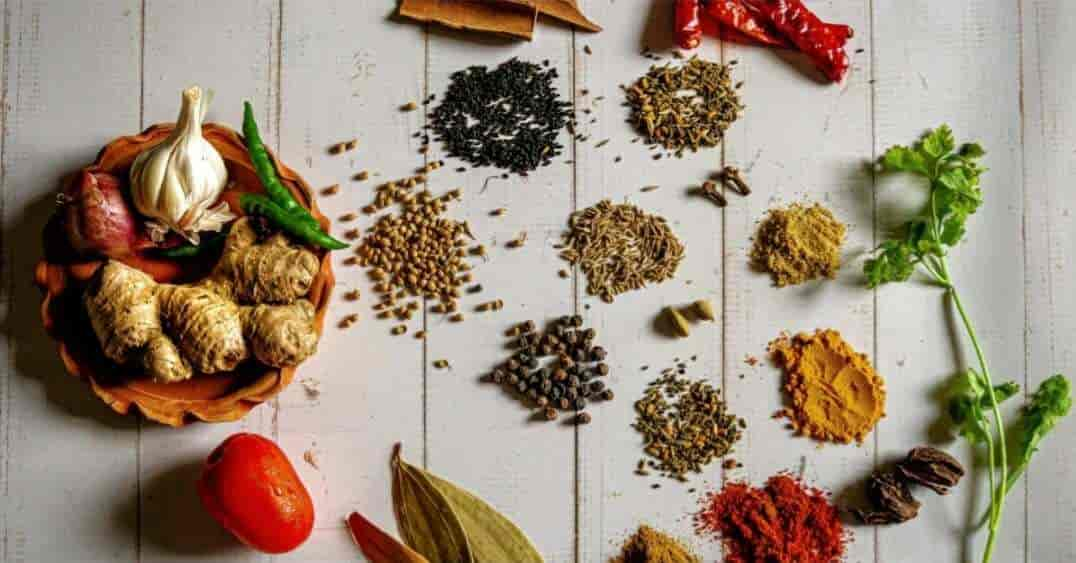
Food, of course, carries some of the strongest rituals of all. Certain foods belong to certain festivals, and no amount of convenience can fully replace that association. Modak for Ganesh Chaturthi. Special sweets and savouries for Deepavali. Festival meals that appear only at particular times of the year. My mother and grandmother made many such foods, especially around key festivals, and even now, the memory of those dishes is not just about taste. It is about season, sound, kitchen heat, steel vessels, banana leaves, and the sense that the house was preparing for something.
I do not have very rigid food rituals now, but I try to incorporate traditional foods into my cooking. Food is memory made edible. A recipe can carry a grandmother’s hand, a mother’s instruction, a childhood festival, a community’s history. To cook a traditional dish in another country, years later, is to tell time that it has not won completely.
There are also rituals of grief, and these may be among the most misunderstood. In the Tamil Brahmin community, the thirteen-day mourning period and the rituals through the first year after a death can seem overwhelming from the outside. They are detailed, structured, and sometimes exhausting. But I have come to believe that they give shape to grief.
When someone dies, language often fails. People do not know what to say. The grieving family does not know what to do. Ritual steps in and says, do this next. Sit here. Eat this. Wear this. Receive people. Pray. Remember. Mark the days. It does not remove grief, but it gives grief a container. In a time when the mind is scattered, ritual offers sequence.
That said, I do not believe in idolising those who have gone. They were human, after all. Loved, flawed, complex, and real. I prefer to let them go, while keeping photos, objects, recipes, places, and memories around me. Who among us does not revisit these things? We return not because we want to live in the past, but because the past still lives in us.
Rituals are not limited to religion or culture. Societies create rituals all the time. Singapore, where I now live, has its own everyday rituals, some charming, some amusing, and some so efficient they could probably be entered into a national productivity dashboard.

Queuing, for instance, is practically sacred. If there is a queue, people join it with faith that something worthwhile must be at the end. The tissue packet used to chope a table at a hawker centre is another social ritual, one that outsiders may find baffling but residents understand instantly. A small packet of tissue becomes a flag, a claim, a silent declaration: this seat has been spoken for.
Then there is the annual spring cleaning before Chinese New Year, which reminds me of the cleaning many Indian homes do before Deepavali. Red packets, green packets, and other festive envelopes mark blessings, goodwill, and social bonds. Visiting during Chinese New Year and Hari Raya echoes the Deepavali visiting of my younger days. National Day songs become part of collective memory. PSLE season has its own rituals of anxiety, assessment books, tuition schedules, and parental nerves. Booking travel during school holidays is almost a competitive sport.
These rituals may not be religious, but they are deeply social. They tell us what a society values: order, family, education, celebration, food, and the ability to plan six months in advance if there is an airfare discount involved.
Indian social rituals are equally rich. Not going to someone’s house empty-handed. Removing footwear before entering a home. Serving guests more food even after they have said no at least four times. Giving money in odd numbers. The elaborate choreography around weddings. The ritual of gossip, because let us not pretend that gossip is not one of the great social adhesives of our civilisation.
Many of these rituals are affectionate. Some are exhausting. Indian weddings, for instance, can be beautiful, but they can also feel like a full-scale military operation conducted in silk, jewellery, and mild emotional blackmail. Still, beneath the noise, there is a desire to gather, bless, witness, and belong.

Modern life has created its own rituals too, though we do not always recognise them as such. Fitness streaks. First-day-of-school photographs. Family video calls. New Year reflections. Birthday messages. Some are sweet. Some are meaningful. Many others are performative. Posting birthday stories on social media, taking photos before eating, announcing every milestone online, and participating in seasonal consumer rituals like 11.11 sales and Black Friday, these too have become repeated acts with social meaning.
But repetition alone does not make something sacred.
A ritual needs belief behind it to matter. Not necessarily religious belief, but some form of inner meaning. A person can light a lamp, cook pongal, attend a wedding, tie a rakhi, or send a condolence message without full belief for a while. But if there is no meaning at all, the act becomes easy to abandon. The minute convenience demands it, the ritual disappears.
This is why understanding matters. I do not think rituals are more powerful when they are mysterious. I think they are more powerful when we know why we are doing them. If the meaning has faded, we can rediscover it. If the meaning no longer applies, we can adapt the ritual. And if the meaning is harmful, we can let it go.
Rituals should serve people, not the other way around.

At this stage of life, I find myself drawn to rituals that are quiet, grounding, and chosen. My daily meditation, my writing, and my conversations with God, informal as they may be. My morning coffee in the dark, my yearly letters to my children, and a nightly gratitude ritual. Travel, too, has become a ritual of renewal for me, a way of stepping out of routine to return to myself.
Perhaps that is what the best rituals do. They bring us back. Back to memory. Back to meaning. Back to the people who came before us. Back to the values we want to carry forward. Back to the small truths that can get lost in the rush of daily life.
Rituals matter because they bind us to our past and offer a path towards our future. But they must be held with both tenderness and intelligence. We do not need to preserve everything. We do not need to destroy everything either. We can keep the lamp and question the shadow. We can honour the book and reject the taboo. We can cook the festival food without exhausting the woman in the kitchen. We can bless our children without binding them too tightly.
The quiet power of rituals we no longer understand is that they ask us to pause and ask, “Why?” And sometimes, in answering that question, we do not just rediscover the ritual.

