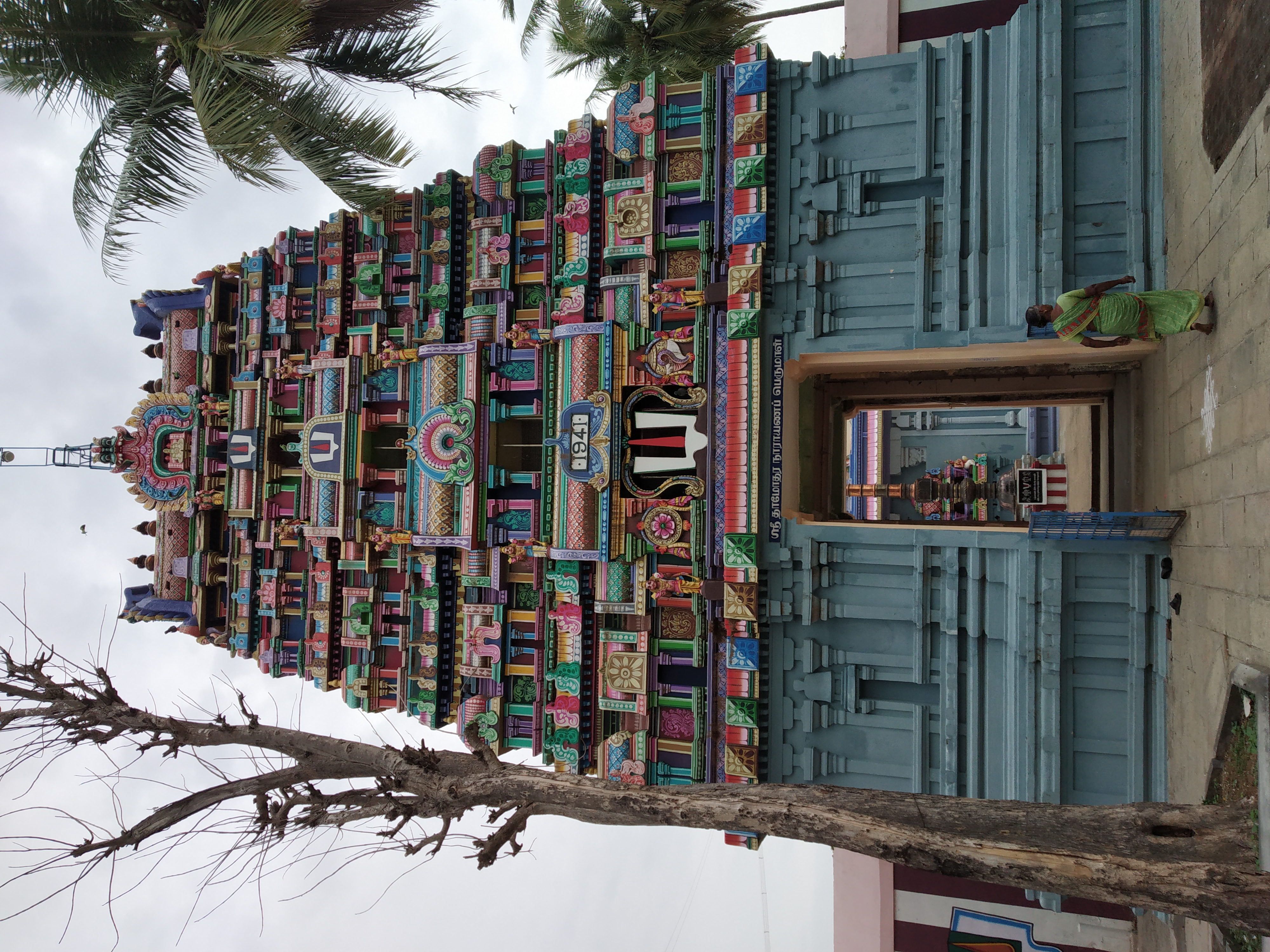
Thirukannangudi Temple, Tirukannangudi, Tamil Nadu
Thirukannangudi Temple stands in the village of Tirukannangudi near Sikkal in the Nagapattinam district. Lord Vishnu appears here as Loganatha Perumal, also called Damodara Narayana, with Loganayaki as his consort. This site is one of the 108 Divya Desams, praised by Thirumangai Alvar in ten paasurams from the Nalayira Divya Prabandham. The temple belongs to the Pancha Krishna Kshetrams, a group that highlights Krishna’s role. Devotees visit for protection, family harmony, and relief from curses.
Sage Vashishta crafted a Krishna idol from butter through deep devotion. The butter stayed solid. Krishna appeared as a child stealing it to test the sage. Vashishta chased him. The child ran to the rishis under a Magizha tree. The rishis, upset, tied Krishna with ropes made from their penance. Krishna then showed his divine form. Vashishta and the rishis bowed in awe. They asked for his standing presence here forever. The name Kannangudi comes from Kannan, the Tamil name for Krishna.
Thirumangai Alvar stole a golden Buddha statue from Nagapattinam for Srirangam. Tired on the way, he rested under a tamarind tree. He buried the gold and commanded the tree to guard it. Leaves rustled the next morning to wake him. That tree, Uranga Puli, never sleeps. Later, Vishnu gave him a brief vision with the conch and discus, then vanished. Thirumangai called himself a thief; the god mirrored that fleeting nature.
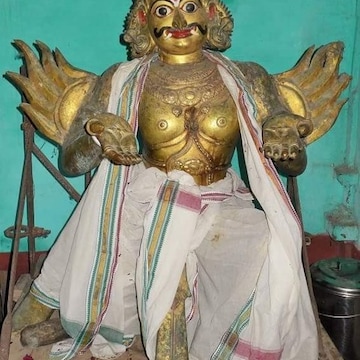
Rishis like Brahma, Brighu, and Gowthama prayed here. Gajendra’s moksha ties in too; the elephant, cursed by Durvasa, crocodile by Agastya, both were freed when Krishna arrived. Vibhishana saw Vishnu’s walking grace after Ranganatha’s sleep. Details vary. Butter idol or stealing a child? Tied Krishna or eternal stand? The stories flip roles. Guru chases disciple. Tree guards are thieves. Child bound by sages. Devotion reverses power. God acts weak to pull you near. But question it. Does binding god show faith, or a need to control?
Chola kings built the core in the late 8th century. Vijayanagara rulers and Madurai Nayaks added expansions. A granite wall protects the site. Inscriptions record land grants and donations. Thirumangai Alvar’s hymns secured their Divya Desam place. Floods damaged it over time. Locals rebuilt. The Pancha Krishna link sets Krishna apart from other Vishnu forms. The Magizha tree serves as Sthala Vriksham. The tamarind, Uranga Puli, marks the Alvar’s rest.
A five-tier rajagopuram faces east at the entrance. Granite forms the base, brick the superstructure. Loganatha stands in the sanctum with Abhaya mudra. Loganayaki has her own shrine. Gajendra Pushkarani tank lies to the east. Kadhanakkruthi Vimana tops the sanctum. Pillars show Krishna stories and Vishnu avatars. The design sticks to Dravidian standards. It stays compact and flood-resistant. Tree shrines link myth to structure.
Priests conduct six pujas each day. They dress the deities, offer food, and wave lamps. Nagaswaram and tavil provide music. Chants from the Divya Prabandham fill the space. Brahmotsavam features chariot processions. Vaikunta Ekadasi opens special gates. Krishna Jayanti brings extra focus. Locals sponsor meals, pull chariot ropes, and light lamps. These acts tie the village to the temple.

Take the Tiruvarur-Nagapattinam highway, then turn 2 km into the village. Paddy fields surround it. Shops near the gate sell flowers and coconuts. Bathe in the tank first. Darshan flows smoothly on weekdays. The Magizha tree offers shade. Locals say, “Alvar slept safe; the tree woke him.” The tied Krishna spot draws families. A breeze carries calm.
Thirumangai Alvar’s paasurams sound in every puja. They inspire bhajans and dances. Tied Krishna appears in plays and art. The village sees itself as Krishna’s playground. The Pancha Krishna group shares stories across sites. Fame stays local, but roots run deep. The reversal theme shapes talks about power shifts.
The HR&CE department manages it. Restorations repair flood damage. Festivals draw locals, with tours adding a few. Devotees seek dosha relief and children. Online services expand reach. The trees get protection.
Thirukannangudi fits the Divya Desams as a site of role reversal. Myths bind god with ropes, wake trees with leaves. Chola walls resist floods. Krishna’s weakness draws devotion. The binding story jars. Faith or force? Pancha Krishna ties sites together. In the circuit, it echoes childlike play. For heritage, reversal teaches humility. Visit the tree. Ask if you chase god or hold him back.
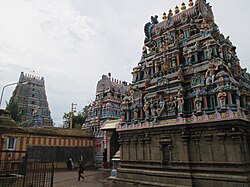
Thirunagai Temple, Nagapattinam, Tamil Nadu
Thirunagai Temple, formally known as Soundararaja Perumal Temple, stands in the coastal town of Nagapattinam, Tamil Nadu. Lord Vishnu reclines here as Soundararaja Perumal, the handsome king, with Soundaravalli Thayar as his consort. This is one of the 108 Divya Desams, sacred sites praised by the Alvars in their Nalayira Divya Prabandham. The temple claims a presence across all four yugas, from Kritha to Kali. Its seven-tier gopuram once served as a lighthouse for Dutch ships. Devotees visit for moksha, curse relief, marriage blessings, and darshan of divine beauty. The site’s legends emphasise form over force, drawing worshippers to its timeless appeal.
Legends root the temple in every yuga. In the Kritha Yuga, Adisesha performed penance. Vishnu made him his bed as a reward. Bhoodevi followed in the Treta Yuga with her own austerities. Sage Markandeya did the same in the Dwapara Yuga. Chola king Salisugan worshipped in the Kali Yuga and married a cursed princess here. Dhruva, the boy prince, sought world dominion. Vishnu appeared on the Garuda vahana. Dhruva saw the lord’s beauty and chose eternal vision over power. He attained moksha on the spot. Nagapattinam’s name comes from Naga Pattinam, marking Adisesha’s serpent worship.
Two eunuchs, Kandan and Sukandan, bathed in the Sara Pushkarani tank. They transformed into full men. The dwarapalakas Sumba and Nigumba may be them in divine form. The princess with three breasts met Salisugan. Her curse vanished at the sight of her future husband. Vishnu blessed their wedding with darshan in standing, sitting, and reclining poses. Thirumangai Alvar beheld the lord’s beauty as if seeing a woman. He burst into song: “Achcho Oruvar Azhagiya Vaa.” Ashtabuja Narasimha, with eight arms, blesses Prahlada while slaying Hiranyakashipu.
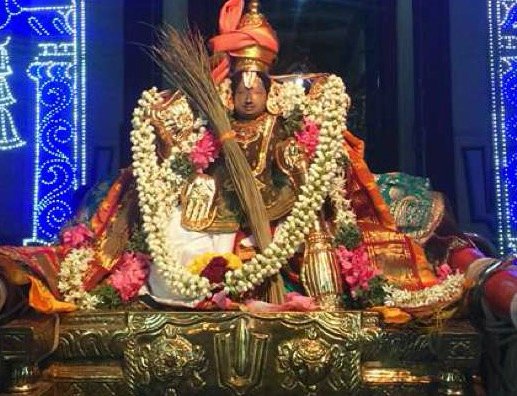
These tales span cosmic time at one site. Four yugas in one place test logic. Why not a single origin story? Dhruva trades empire for a glance? They prioritise allure over conquest. God wins hearts through sight, not strength. But push back. Does visual splendour solve hunger or loss? Or merely distract? The core insight endures: true beauty reorients desire from control to surrender. Form becomes the path to presence. Question the geography. If yugas overlap here, does it make the spot eternal, or just a convenient anchor for scattered myths?
Chola architects built the core in the late 8th century. Two inscriptions record their land grants and donations. Pallavas contributed earlier. The Thanjavur Nayaks expanded in the 17th century. Marathas followed. Dutch traders requested the gopuram as a lighthouse. Nayak ruler Jagul Nayakar obliged, building the tower, halls, and compound wall. His image with wife Lakshmi Ammal stands in a mandapam. Kundo Pandithar added shrines in 1737. Early 20th-century donors like Dratcha Balagurumuthi Chettiyar built halls. The 2004 tsunami devastated Nagapattinam but spared the temple. Thirumangai Alvar’s hymns secured Divya Desam status. Salisugan’s wedding ties it to Chola lore. The lighthouse role links to sea trade. Coastal floods prompted raised platforms and walls. No single upheaval destroyed it. Steady patronage kept it alive.
A seven-tier Rajagopuram dominates the east entrance. Granite base supports brick vimana. Soundararaja reclines on Adisesha in the sanctum, facing east. Sara Pushkarani tank anchors rituals. Narasimha’s eight-armed form kills the demon while blessing Prahlada. Vishnu appears in three poses: standing as Varadaraja, sitting as Govinda Raja, and reclining as Ranganatha. Pillars depict yuga scenes, Garuda, and Alvar figures. A four-pillared hall before Soundaravalli’s shrine shows the architects’ carvings. Nayaka mandapams mimic chariots with wheels. Dravidian style prevails. The gopuram’s dual lighthouse function innovates. Layout suits port life: elevated against tides, compact for crowds. No radical breaks, but scale matches trade hub past.
Six pujas structure the day. Priests adorn deities, offer neivedyam, and perform deepa aradanai. Nagaswaram and tavil accompany Prabandham chants. Brahmotsavam in Chittirai features chariots. Vaikunta Ekadasi opens the paramapada vasal. Navarathri, Panguni Utsavam, and Masi Magham draw crowds. Locals sponsor annadanam, pull chariots, and light lamps. Community roles sustain rites.

Nagapattinam blends fields and the Bay of Bengal coast. Buses from Tiruvarur or Kumbakonam reach it easily. Shops near the gate sell flowers, coconuts. Bathe in Sara Pushkarani for purity. Gopuram looms over residential lanes. Waves crash close. Darshan moves on weekdays. Locals share tsunami tales: “Waters stopped at the gate.” Sea air mixes with incense. Quiet corners suit reflection on yuga beauty.
Alvar Paasurams echo daily. Thirumangai’s beauty verses inspire bhajans, dance. Art shows golden Vishnu, eight-armed Narasimha. Town identity ties to the handsome lord. Lighthouse history fuels stories. Plays reenact yugas, the princess curse. Brahmanda Purana mentions it. Local lore blends trade, tides, and timeless sight. The Tamil Nadu HR&CE administers it. Post-tsunami walls protect, and the gopuram is repainted. Festivals mix locals and port tourists. Devotees seek doshas and marriages.
The Thirunagai temple claims the Divya Desam spot as an eternal beauty site. Myths bridge yugas while the Chola base weathers seas. The lighthouse tower is unique to the temple. Yuga claims to strain space logic. In circuit, it chains coastal shrines. The heritage sight reorients the soul. Visit Sara Pushkarani and test if beauty shifts your chase.

Thiruthanjai Temple, Mamanikoil, Thanjavur, Tamil Nadu
Thiruthanjai Temple, or Thanjai Mamani Koil, sits in Thanjavur, Tamil Nadu. It’s a group of three Vishnu shrines treated as one Divya Desam out of the 108 holy sites praised by the Alvars. This setup stands out because all Alvar hymns mention the three together.
A story from the Brahmanda Purana explains the temple’s start. In the Treta Yuga, three demons: Tanchakan, Tantakan, and Kacamukan, got boons from Shiva. They turned powerful and arrogant. They disturbed sage Parashara during his penance here. Vishnu acted first. He used his Sudarshana Chakra to kill Tanchakan. The demon begged for mercy. Vishnu spared him but named the place Thanjavur after him. Kacamukan faced Vishnu as a yali, a mythical beast. Vishnu slew him that way. Tantakan fled to Srimushnam. Vishnu took the Varaha boar form there to end him. Each shrine marks one victory: Manikundra Perumal for Tanchakan, Veera Narasimha for Kacamukan, and Neelamegha for the overall tale. The core message? Divine power curbs evil when it harms the good.
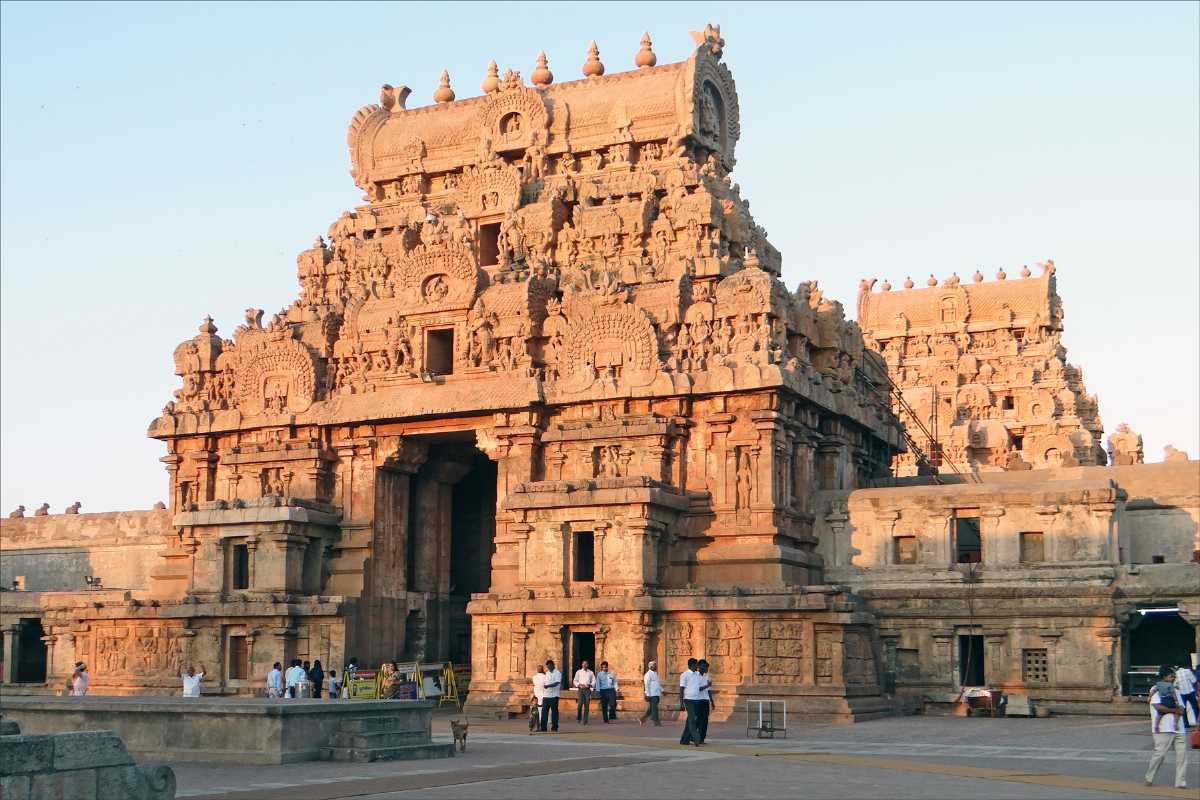
The temples date back far. Medieval Cholas donated land and built parts. Vijayanagara kings and Madurai Nayaks added more later. Granite walls enclose all three shrines now. Thanjavur’s Chola history ties in. Raja Raja Chola I built the nearby Brihadeeswarar Temple in the 11th century. This area saw the Chola rise under Vijayalaya in 850 CE. Marathas took over in 1674 under Ekoji I. No big upheavals hit these shrines directly. But Thanjavur’s royal patrons kept them alive. Alvars like Nammalvar, Thirumangai Alvar, and Bhoothathalvar sang of them in the 7th-9th centuries. That sealed their Divya Desam status.

The three temples hug the Vennaaru River banks. Each faces east with simple designs. No tall gopurams dominate like in bigger Chola spots. The Manikundra Perumal shrine is small. Lord and consort sit together inside. It’s elevated. Nammalvar’s poems point to this one. Ambujavalli Thayar has her own spot nearby. Rama Theertham serves as the tank. Neelamegha Perumal has a three-tiered Rajagopuram. The deity stands in veetrirunda pose. Sengamalli Thayar gets a separate shrine. Images of Hayagreeva, Alvars, Garuda, and Vedanta Desikar line the walls. Amrutha Theertham is the tank. Veera Narasimha Perumal, or Thanjiyali Nagar, shows the lord seated, giving darshan to sage Markandeya. A flat entrance tower leads in. Vedasundara Vimana crowns the sanctum. Surya Pushkarani is the water body. All follow Dravidian style but stay modest.
Priests follow Vadakalai Srivaishnava ways. Three daily pujas run from 7:30 a.m. to 8 p.m. Each has alangaram, food offerings, and lamp waving for Perumal and Thayar. Nagaswaram pipes and tavil drums play. Vedas get chanted. Weekly, monthly, and fortnightly rites add on. Brahmotsavam spans Panguni, Chittirai, and Vaikasi months. Vaikasi’s Garuda Sevai brings 18 Garuda idols from other temples. Diwali, Chitra Purnima, and Vaikuntha Ekadashi draw crowds. Locals join processions. Community cooks prasadam. Iyengar priests handle it all. No special quirks stand out, but the three-in-one worship feels unique.
Reach Thanjavur by train, its station is key. Trichy Airport is 70 km away. Buses and roads link easily from Chennai or elsewhere. The temples sit close to town, near the Big Temple. Walk from Thanjavur bus stand in minutes. Vennaaru River adds calm. Locals offer simple stays or eateries. Devotees share tales of peace here, away from tourist rush. One story lingers: a pilgrim felt three energies merge during sunset darshan. Surroundings mix farms and history. Ride past paddy fields. Thanjavur’s heat demands early visits. Hospitality runs warm, tea stalls chat about Alvar songs.
Alvars shaped its fame. Nammalvar praised Manikundra in pasurams. Thirumangai Alvar hit Mamanikoil. Bhoothathalvar sang of Narasimha. Naalayira Divya Prabandham keeps them alive in recitals. Thanjavur paintings might echo Vishnu forms, though not directly. Local identity ties to Chola glory. Festivals blend with city events. No big music or art tales specific, but it feeds Vaishnava bhakti across Tamil Nadu. Society sees it as a protective spot. Narasimha’s fury with Lakshmi’s calm teaches balance. Legends spread in stories, not epics.
The Hindu Religious and Charitable Endowments Department runs it with Thanjavur Palace Devasthanam. Daily crowds stay steady, mostly locals. Tourism grows with Big Temple visitors, and no major restorations have been noted lately. Festivals pull families. Young folks join Garuda Sevai. Online darshan options popped up post-pandemic. Demographics skew Tamil families, some from cities. Management keeps it clean, but crowds test during peaks. It draws steady pilgrims, no big tourist boom, but the focus stays on worship.
Thiruthanjai fits the Divya Desam circuit as a quiet triple gem. It shows Vishnu’s forms beating demons, linking to 84 Tamil Nadu sites. In India’s spiritual map, it holds Vaishnava roots from the Alvar times. The site reminds one of simple power over evil, and the Chola lands keep it breathing.