In My Hands Today…

On the Map: A Mind-Expanding Exploration of the Way the World Looks – Simon Garfield

Simon Garfield’s Just My Type illuminated the world of fonts and made everyone take a stand on Comic Sans and care about kerning. Now Garfield takes on a subject even dearer to our fanatical human hearts: maps.

Imagine a world without maps. How would we travel? Could we own land? What would men and women argue about in cars? Scientists have even suggested that mapping—not language—is what elevated our prehistoric ancestors from ape-dom. Follow the history of maps from the early explorers’ maps and the awe-inspiring medieval Mappa Mundi to Google Maps and the satellite renderings on our smartphones, Garfield explores the unique way that maps relate and realign our history—and reflect the best and worst of what makes us human.

Featuring a foreword by Dava Sobel and packed with fascinating tales of cartographic intrigue, outsize personalities, and amusing “pocket maps” on an array of subjects from how to fold a map to the strangest maps on the Internet, On the Map is a rich historical tapestry infused with Garfield’s signature narrative flair. Map-obsessives and everyone who loved Just My Type will be lining up to join Garfield on his audacious journey through time and around the globe.
In My Hands Today…

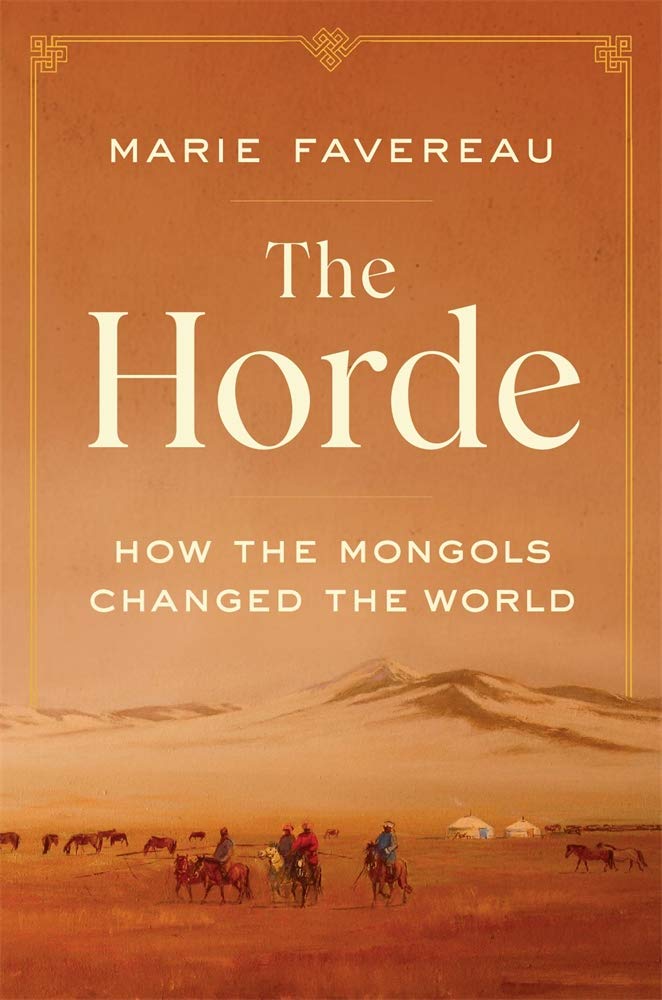
The Horde: How the Mongols Changed the World – Marie Favereau

The Mongols are widely known for one thing: conquest. In the first comprehensive history of the Horde, the western portion of the Mongol empire that arose after the death of Chinggis Khan, Marie Favereau shows that the accomplishments of the Mongols extended far beyond war. For three hundred years, the Horde was no less a force in global development than Rome had been. It left behind a profound legacy in Europe, Russia, Central Asia, and the Middle East, palpable to this day.

Favereau takes us inside one of the most powerful sources of cross-border integration in world history. The Horde was the central node in the Eurasian commercial boom of the thirteenth and fourteenth centuries and was a conduit for exchanges across thousands of miles. Its unique political regime―a complex power-sharing arrangement among the khan and the nobility―rewarded skillful administrators and diplomats and fostered an economic order that was mobile, organized, and innovative. From its capital at Sarai on the lower Volga River, the Horde provided a governance model for Russia, influenced social practice and state structure across Islamic cultures, disseminated sophisticated theories about the natural world, and introduced novel ideas of religious tolerance.

The Horde is the eloquent, ambitious, and definitive portrait of an empire little understood and too readily dismissed. Challenging conceptions of nomads as peripheral to history, Favereau makes clear that we live in a world inherited from the Mongol moment.

In My Hands Today…

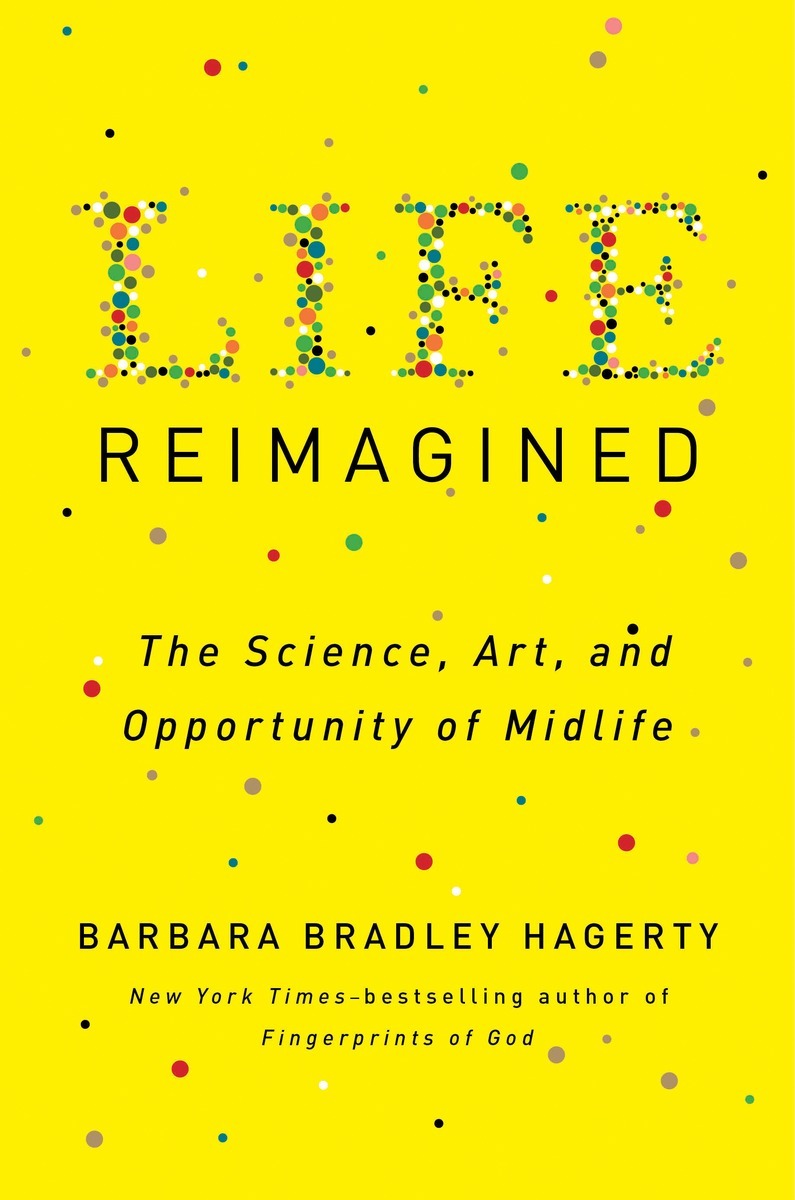
Life Reimagined: The Science, Art, and Opportunity of Midlife – Barbara Bradley Hagerty

A dynamic and inspiring exploration of the new science that is redrawing the future for people in their forties, fifties, and sixties for the better—and for good.

There’s no such thing as an inevitable midlife crisis, Barbara Bradley Hagerty writes in this provocative, hopeful book. It’s a myth, an illusion. New scientific research explodes the fable that midlife is a time when things start to go downhill for everybody. In fact, midlife can be a great new adventure, when you can embrace fresh possibilities, purposes, and pleasures. In Life Reimagined , Hagerty explains that midlife is about It’s the time to renegotiate your purpose, refocus your relationships, and transform the way you think about the world and yourself. Drawing from emerging information in neurology, psychology, biology, genetics, and sociology—as well as her own story of midlife transformation—Hagerty redraws the map for people in midlife and plots a new course forward in understanding our health, our relationships, even our futures.

In My Hands Today…

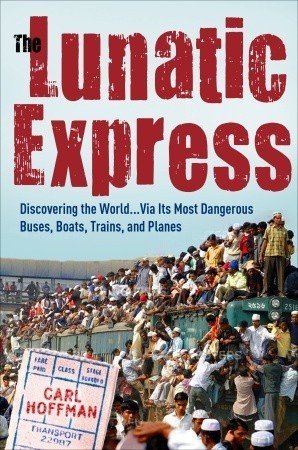
The Lunatic Express: Discovering the World… via Its Most Dangerous Buses, Boats, Trains, and Planes – Carl Hoffman

Indonesian Ferry Sinks. Peruvian Bus Plunges Off Cliff. African Train Attacked by Mobs. Whenever he picked up the newspaper, Carl Hoffman noticed those short news bulletins, which seemed about as far from the idea of tourism, travel as the pursuit of pleasure, as it was possible to get. So off he went, spending six months circumnavigating the globe on the world’s worst conveyances: the statistically most dangerous airlines, the most crowded and dangerous ferries, the slowest buses, and the most rickety trains. The Lunatic Express takes us into the heart of the world, to some its most teeming cities and remotest places: from Havana to Bogotá on the perilous Cuban Airways. Lima to the Amazon on crowded night buses where the road is a washed-out track. Across Indonesia and Bangladesh by overcrowded ferries that kill 1,000 passengers a year. On commuter trains in Mumbai so crowded that dozens perish daily, across Afghanistan as the Taliban closes in, and, scariest of all, Los Angeles to Washington, D.C., by Greyhound.

The Lunatic Express is the story of traveling with seatmates and deckmates who have left home without American Express cards on conveyances that don’t take Visa, and seldom take you anywhere you’d want to go. But it’s also the story of traveling as it used to be — a sometimes harrowing trial, of finding adventure in a modern, rapidly urbanizing world and the generosity of poor strangers, from ear cleaners to urban bus drivers to itinerant roughnecks, who make up most of the world’s population. More than just an adventure story, The Lunatic Express is a funny, harrowing and insightful look at the world as it is, a planet full of hundreds of millions of people, mostly poor, on the move and seeking their fortunes.

In My Hands Today…

On Our Best Behavior: The Seven Deadly Sins and the Price Women Pay to Be Good – Elise Loehnen

Women congratulate themselves when they resist the doughnut in the office break-room. They celebrate their restraint when they hold back from sending an e-mail in anger. They feel virtuous when they wake up at dawn to get a jump on the day. They put others’ needs ahead of their own and believe this makes them exemplary.

In On Our Best Behavior, journalist Elise Loehnen explains that these impulses–often lauded as unselfish, distinctly feminine instincts–are actually ingrained in women by a culture that reaps the benefits, via an extraordinarily effective collection of mores known as the Seven Deadly Sins.

Since being codified by the Christian church in the fourth century, the Seven Deadly Sins–pride, greed, lust, envy, gluttony, wrath, and sloth–have exerted insidious power. Even today, in our largely secular, patriarchal society, they continue to circumscribe women’s behavior. For example, seeing sloth as sinful leads women to deny themselves rest; a fear of gluttony drives them to ignore their appetites; and an aversion to greed prevents them from negotiating for themselves and contributes to the 55 percent gender wealth gap. Loehnen reveals how women have been programmed to obey the rules represented by these sins and how doing so qualifies them as “good.”

This probing analysis of contemporary culture and thoroughly researched history explains how women have internalized the patriarchy, and how they unwittingly reinforce it. By sharing her own story and the spiritual wisdom of other traditions, Loehnen shows how women can break free and discover the integrity and wholeness they seek.